Introduction
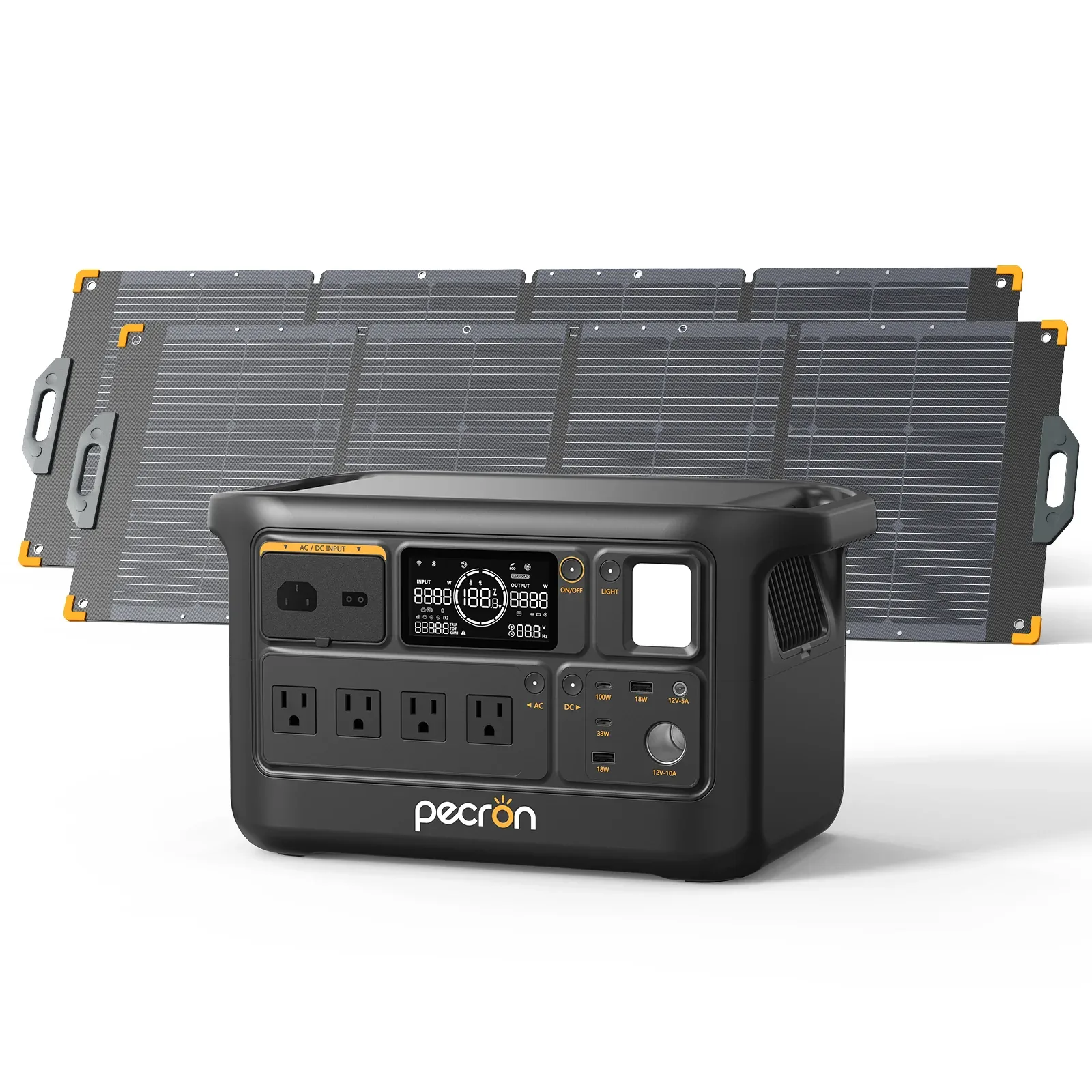
The Pecron F1000LFP gets the important part of a budget power station right: it is easy to put back into service. Its 960Wh LiFePO4 battery is not unusually large, but Pecron rates the unit for 1,000W AC charging and up to 600W solar input, so a weekend battery does not have to become a multi-day recovery project. It also puts four AC outlets, USB-C charging, and the display on the front instead of treating the small details as an afterthought.
This is a current F-series model, not an old stock E-series station in a new color. Pecron's official product feed lists the F1000LFP as published on February 24, 2026, which is the manufacturer-controlled launch record available for this review. The active official listing calls it a 960Wh, 1,500W unit and listed the base station at $399 when checked on September 19, 2026. That price explains the appeal, but it also frames the limitation: this is a fixed-capacity station. Once 960Wh is not enough, there is no compatible expansion battery to rescue the purchase.
The F1000LFP is best for car camping, weekend work away from mains power, and a short emergency run for essentials that you are willing to manage. It is not the right answer for unattended home backup, high-wattage heating appliances, or a buyer who knows they will need more energy next year.
Design, Ports, and Everyday Setup
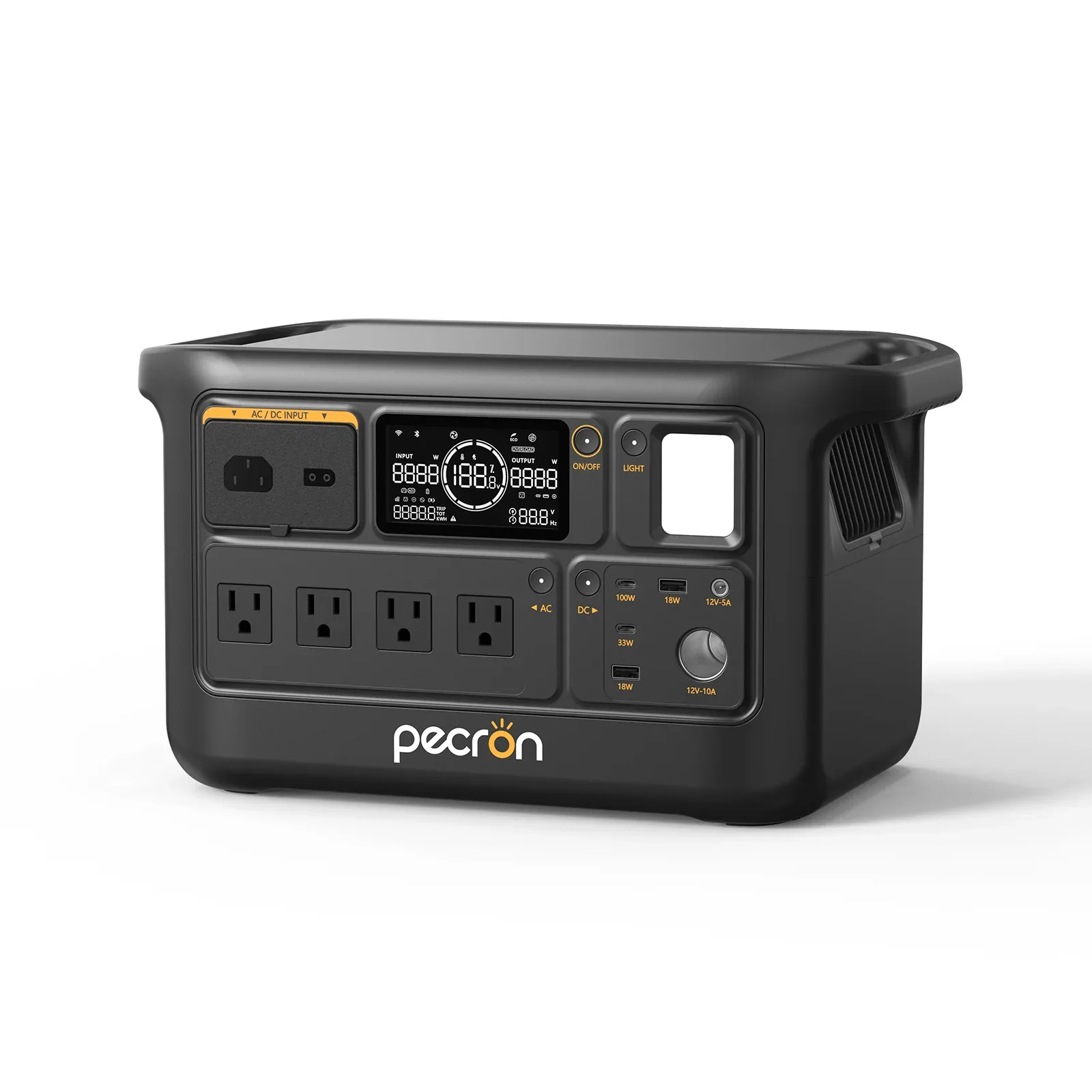
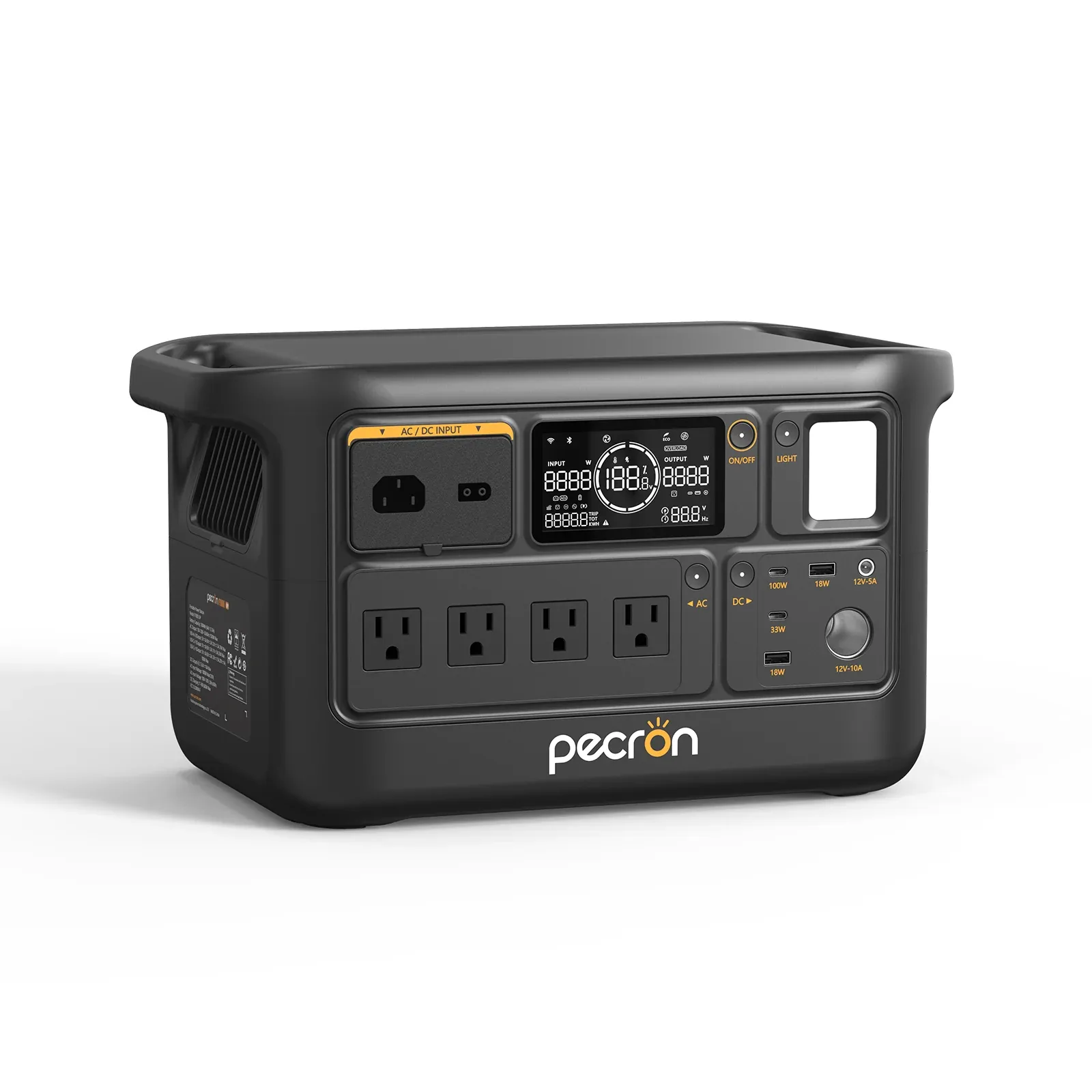
At 24 lb according to the independent review cited below, the F1000LFP belongs in a car, RV, or closet rather than on a hiking trail. That still makes it notably easier to move than many 1kWh-class stations. The case has a built-in light with brightness settings and an SOS mode, a practical upgrade when the station is being carried during an outage rather than admired on a shelf.
Pecron product page (Manufacturer product image)
Pecron product page (Manufacturer product image)
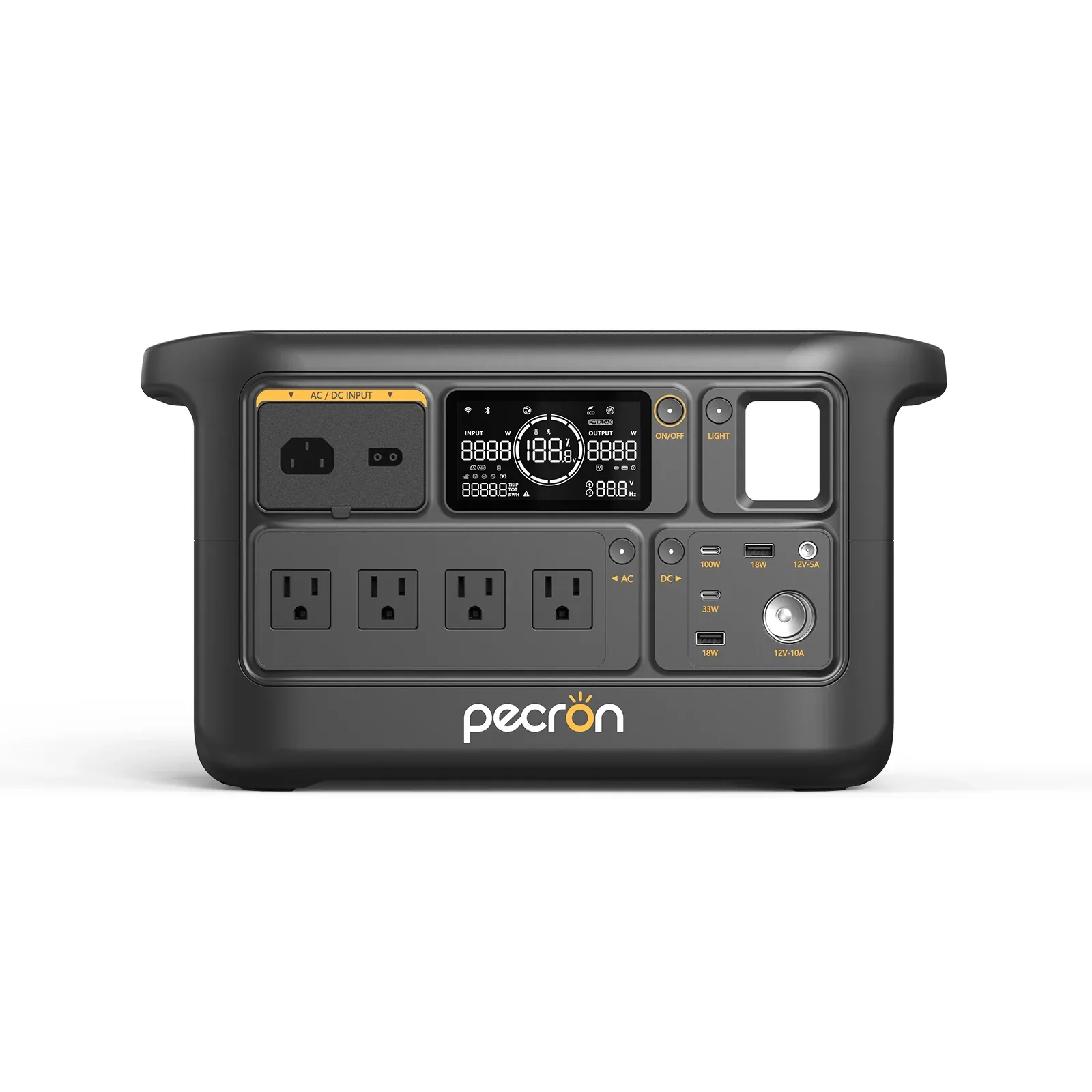
The front-panel layout is the hardware's most persuasive feature. Four 120V outlets, two USB-C ports, two USB-A ports, a 12V car socket, and a barrel connector are all accessible from one face. Pecron describes the station as having 10 outputs, and the published port count supports that total. More important than the count, the AC outlets are spaced so a large laptop brick should not immediately sacrifice an adjacent socket. This is a modest convenience that matters more on a compact station than another decorative feature.
Pecron lists a 100W PD USB-C output, which is useful for a laptop that supports USB-C charging. The app connects by Bluetooth and can monitor power and adjust settings; do not buy the F1000LFP solely for remote control, but the separate access to the app without keeping the AC inverter running is a sound way to avoid unnecessary drain. Pecron also says the box includes the needed AC and solar charging cables, though buyers should confirm the current package contents before ordering.
The published 2+3-year warranty wording deserves a phone call or a read of the current policy before purchase. It is clear that Pecron advertises a warranty, but the concise product-page wording does not explain every registration, region, or service condition a buyer may encounter. That is a less comfortable ownership proposition than a longer, plainly documented warranty program.
Performance, Efficiency, and Charging
Pecron rates the pure-sine inverter at 1,500W continuous and states a 3,000W surge capability. Continuous output is the number to plan around. A refrigerator compressor, pump, or power tool can demand more electricity for a moment than it does while running, and the surge figure alone does not prove that every motor will start. Check the appliance label and leave headroom instead of treating the headline surge number as a universal guarantee.
Pecron product page (Manufacturer product image)
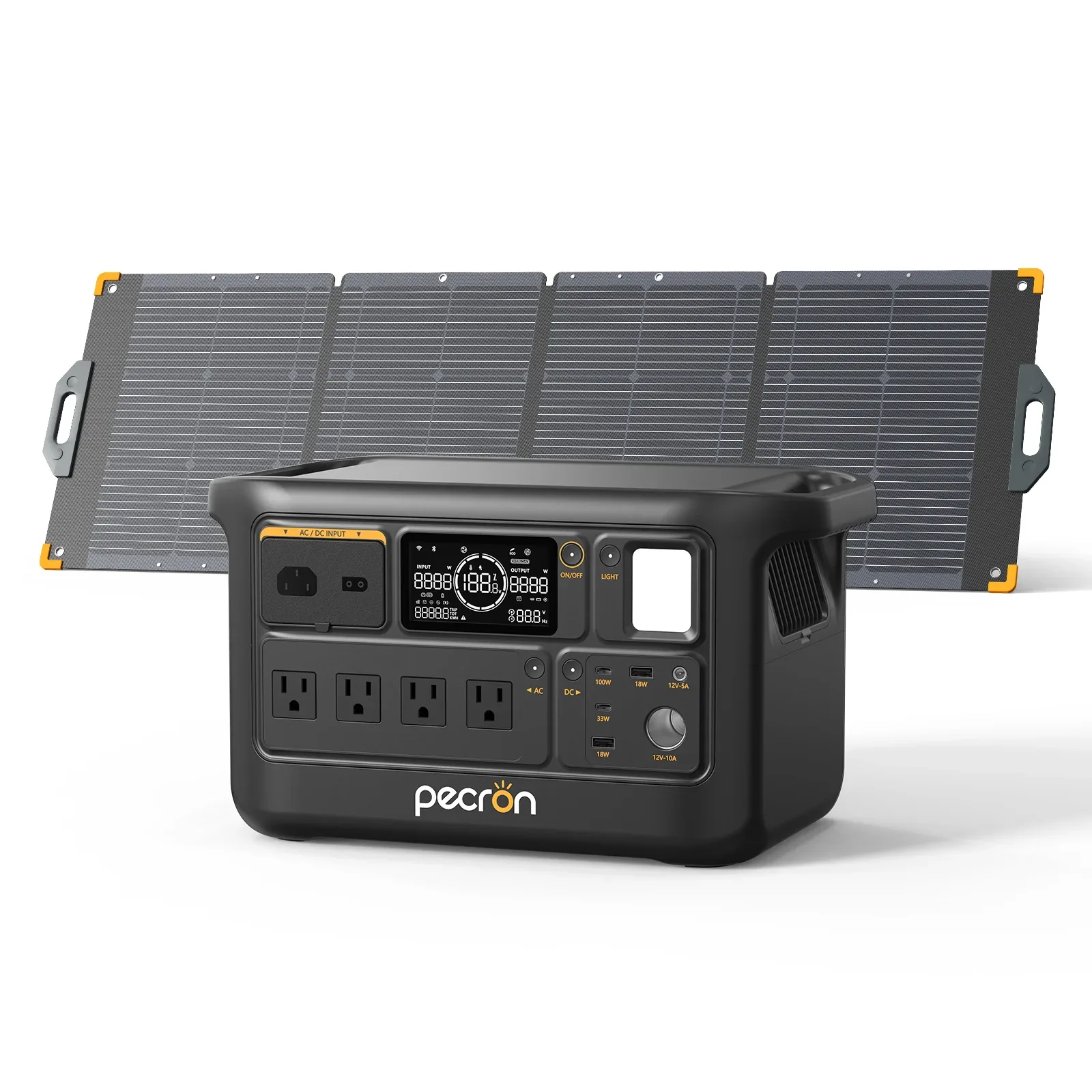
The independent testing from The Solar Lab reported a full AC recharge in 58 minutes from empty. That is a strong practical result for this capacity class and is consistent with Pecron's 1,000W input rating. Pecron advertises 0% to 80% in 50 minutes, so its claim should be read as a manufacturer estimate rather than the same result under every wall circuit or temperature. The same source reported a little over 90 minutes for a full solar charge using approximately 600W of panels in favorable conditions. Real solar time will vary with panel angle, clouds, heat, and the input voltage of the array.
That test also measured roughly 80% efficiency while loading the inverter at its rated output. A 960Wh pack will therefore not deliver 960Wh to an AC appliance; conversion and the station's electronics use part of the stored energy. The measured AC-inverter idle draw was about 14W. That is not catastrophic for a couple of hours while waiting for a fridge to cycle, but leaving the inverter on overnight with nothing connected wastes a material part of this smaller battery. Switch off the AC side when it is not doing work.
Pecron claims 25dB operation below a 500W load and 3,500 or more cycles to 80% capacity. Those are manufacturer specifications, not independent measurements, so they are reasons to investigate rather than guarantees of a particular room noise level or service life. The useful conclusion is simpler: the F1000LFP's fast charging and 600W solar ceiling are genuine strengths, while the buyer must actively manage idle consumption.
How the F1000LFP Compares
The EcoFlow DELTA 2 is the better-known alternative for shoppers who value a deeper accessory ecosystem and expansion-battery options. The F1000LFP's lower official price is attractive when the smaller fixed battery is all you need. Choose EcoFlow if remote monitoring, add-on capacity, and a broader retail footprint are worth spending more for; choose Pecron when a simple 1kWh-class station is the target and the sale price holds.
Pecron product page (Manufacturer product image)
The BLUETTI AC180 is the alternative for buyers who prioritize a larger-capacity class and more conventional home-backup positioning. Its 1,152Wh rating and 1,800W inverter put it above the Pecron on paper, but it is also heavier. The F1000LFP is more compelling for a person who moves the battery frequently and wants fast recharging, not for someone trying to stretch a fixed battery through a long outage.
The Jackery Explorer 1000 v2 is the safer option for a shopper who values a large support and retail presence. Jackery's 1,070Wh rating and 1,500W output are closer to the F1000LFP's intended use than the AC180's, but its ecosystem is a primary reason to pay more. Pecron wins the argument only if its $399 official price leaves enough budget for appropriately sized solar panels and the buyer accepts a smaller support footprint.
Pecron's own E1000LFP is another useful comparison. Its higher 1,800W inverter and a nominally larger battery make it better for a buyer with a known high-output need. The F1000LFP earns its place with lower weight, a more polished front-panel layout, and a built-in light. Neither is a good substitute for a modular home-backup system.
Who Should Buy the Pecron F1000LFP?
Buy the F1000LFP if you want an affordable, carryable station for a vehicle, campsite, shared worktable, or a short outage. The four AC outlets mean it can reasonably handle a router, laptop, lights, phone chargers, and a small appliance without bringing a power strip immediately. The 600W solar limit also makes it sensible for a two-panel portable solar setup when daytime recovery matters.
It is especially compelling for the buyer who uses a power station in bursts. Charge it before a trip, use it for a day or two, then recharge it quickly at home. In that workflow, the 58-minute independently observed AC charge and all-front-facing ports make more difference than a smartphone dashboard.
Skip it if you need expandable energy for recurring outages, a robust substitute for a dedicated UPS, or guaranteed support for medical equipment. The battery cannot grow past 960Wh, and inverter transfer behavior should be confirmed with the exact connected device rather than assumed from the UPS label. Skip it too if your appliances regularly approach or exceed 1,500W. An electric kettle, space heater, or high-startup motor is where a larger station or a generator belongs.
Verdict
The Pecron F1000LFP is a good budget power station because it spends its effort on the parts that make a smaller battery livable: fast AC charging, meaningful solar input, sensible port spacing, and a compact 24 lb form. Its February 2026 launch also means the F-series design and app behavior feel more current than Pecron's older E-series hardware.
The decisive compromise is not subtle. You receive 960Wh and no expansion path. Independent testing also points to about 80% efficiency at full inverter load and a 14W idle draw with AC enabled, so it rewards owners who turn systems off and plan loads rather than leaving it as passive household infrastructure.
At Pecron's observed $399 official base price, the F1000LFP is an easy recommendation for actively managed camping and short, essential-power outages. Pay more for the EcoFlow DELTA 2, BLUETTI AC180, or Jackery Explorer 1000 v2 when expansion, longer-duration backup, or a larger ownership ecosystem matters more than upfront value.
FAQ
When did the Pecron F1000LFP launch?
Pecron's official product feed lists the base F1000LFP as published on February 24, 2026. That is the manufacturer-controlled launch record available for this model, not the publication date of a third-party review.
Is the Pecron F1000LFP a 960Wh or 1,004Wh power station?
Pecron's current product title and specification summary describe the F1000LFP as 960Wh. Some older product references use 1,004Wh in the URL or descriptive copy. This review uses the current official 960Wh rating and recommends confirming the label on the unit you are buying if a retailer presents the other number.
What can the 1,500W inverter run?
It can run many ordinary electronics, lights, chargers, small refrigerators, and appliances whose real demand stays within 1,500W. A device's startup draw can be higher than its running draw, so do not assume every compressor or motor will work simply because Pecron states a 3,000W surge figure.
How quickly does the F1000LFP charge from AC power?
Pecron rates AC input at 1,000W and claims 0% to 80% in 50 minutes. The Solar Lab reported a 0% to 100% AC charge in 58 minutes during its test, a result that will vary with conditions and the available outlet.
How much solar input does it accept?
Pecron specifies a maximum of 600W solar input. That ceiling can support a useful portable array, but panel orientation, weather, temperature, and the array's electrical configuration determine actual charge speed.
Can the F1000LFP be expanded with an extra battery?
No. The F1000LFP is a fixed-capacity station. That is its clearest long-term limitation; buy a larger or expandable model from the beginning if 960Wh is unlikely to remain sufficient.
Does it work as a UPS?
Pecron lists UPS capability, but a portable station is not automatically a replacement for a dedicated, validated UPS. Test the station with the specific router, computer, or other device before relying on it, and do not depend on it as sole backup power for critical equipment.
How much energy is available at the AC outlets?
Less than the 960Wh battery rating. The Solar Lab measured approximately 80% efficiency at a full 1,500W inverter load. Actual usable energy changes with load, temperature, the output type, and whether the inverter is left idling.
Does the F1000LFP waste power when it is turned on?
It can. The Solar Lab measured around 14W of idle consumption with the AC inverter enabled. Turn off the AC output when no AC device needs power, particularly during an overnight or emergency setup.
What warranty does Pecron advertise?
Pecron's current product listing says "2+3 Years Warranty." Read the current warranty terms and confirm any registration or regional-service requirements before buying, because the product summary does not spell out all conditions.