Introduction
The Pecron E3600LFP is the kind of portable power station that earns attention immediately because it checks the biggest boxes on paper: 3,072Wh of LiFePO4 storage, a 3,600W inverter, a 2,400W solar ceiling, and a current list price that is dramatically lower than many established competitors in the same class. It is not trying to be a premium appliance. It is trying to be a lot of energy for a lot less money, and for a buyer who is shopping on specification and value, that is a very strong position.
The earliest official public product listing I could verify is the Pecron storefront itself, which shows the E3600LFP in a late-2024 catalog window. I am using that storefront date as the launch context rather than the discovery review's publication date. That distinction matters. A review site publishing in 2026 does not prove the product launched in 2026. The E3600LFP is a late-2024 product and it remains relevant because the numbers and the value proposition still matter in 2026.
That makes the E3600LFP a credible bargain if you know what you are buying. It is not a small, polished statement piece from a category leader. It is a capacity-first unit with a utilitarian look and a feature set designed to solve the practical problem of moving real power around. The question is whether that utility-first approach is enough to make it a smart buy, or whether the compromises behind the headline specs are bigger than the price suggests.
Design, Ports, and Everyday Use
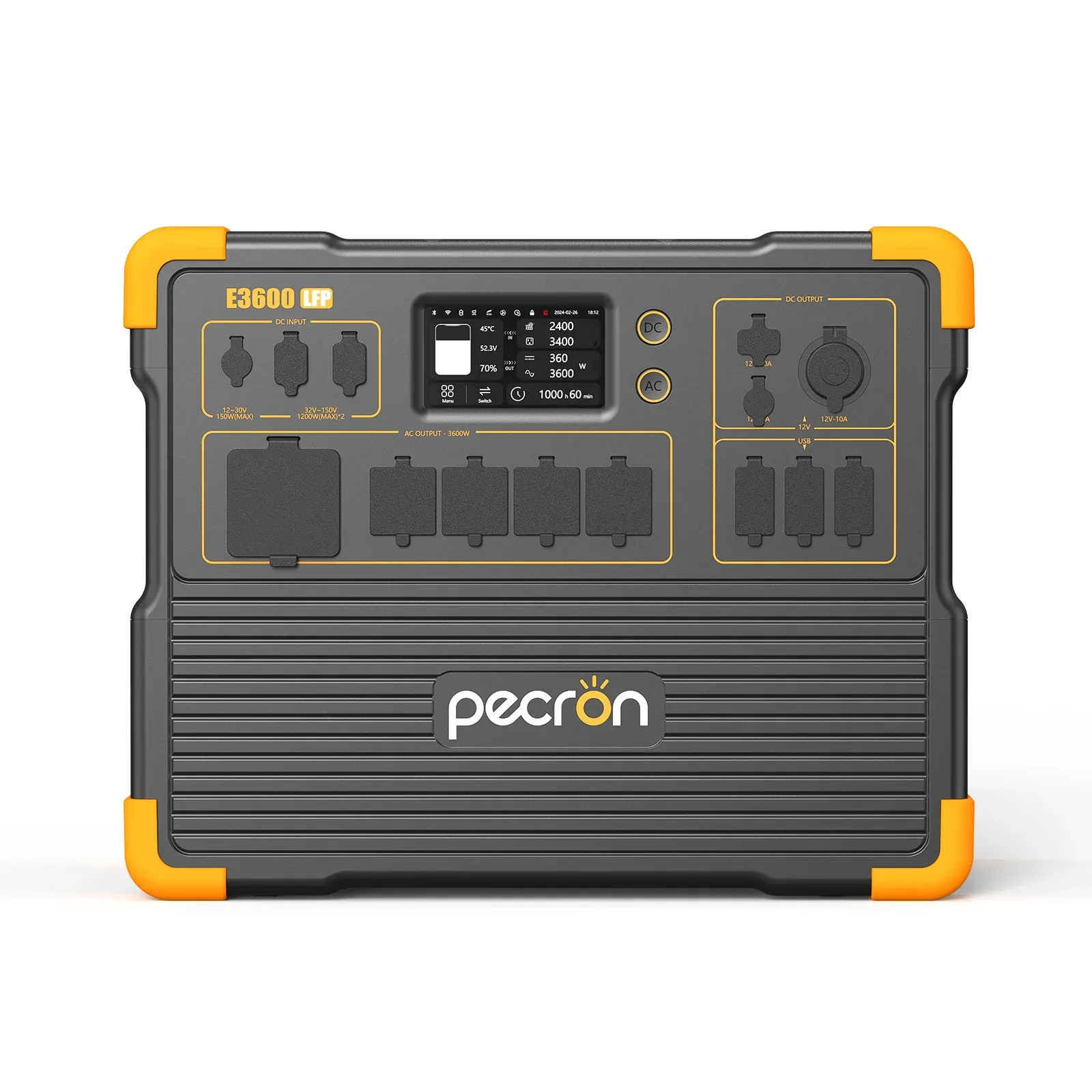
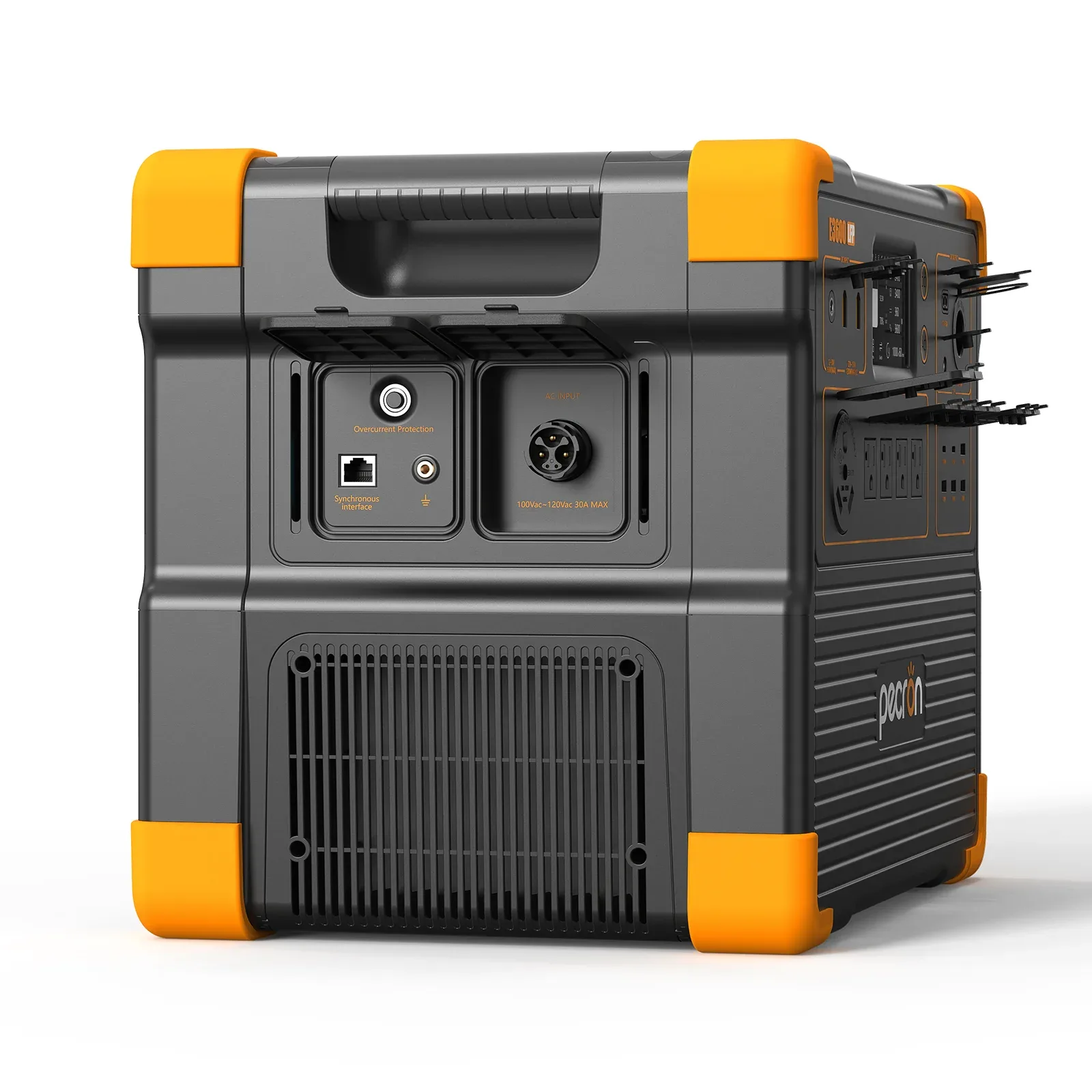
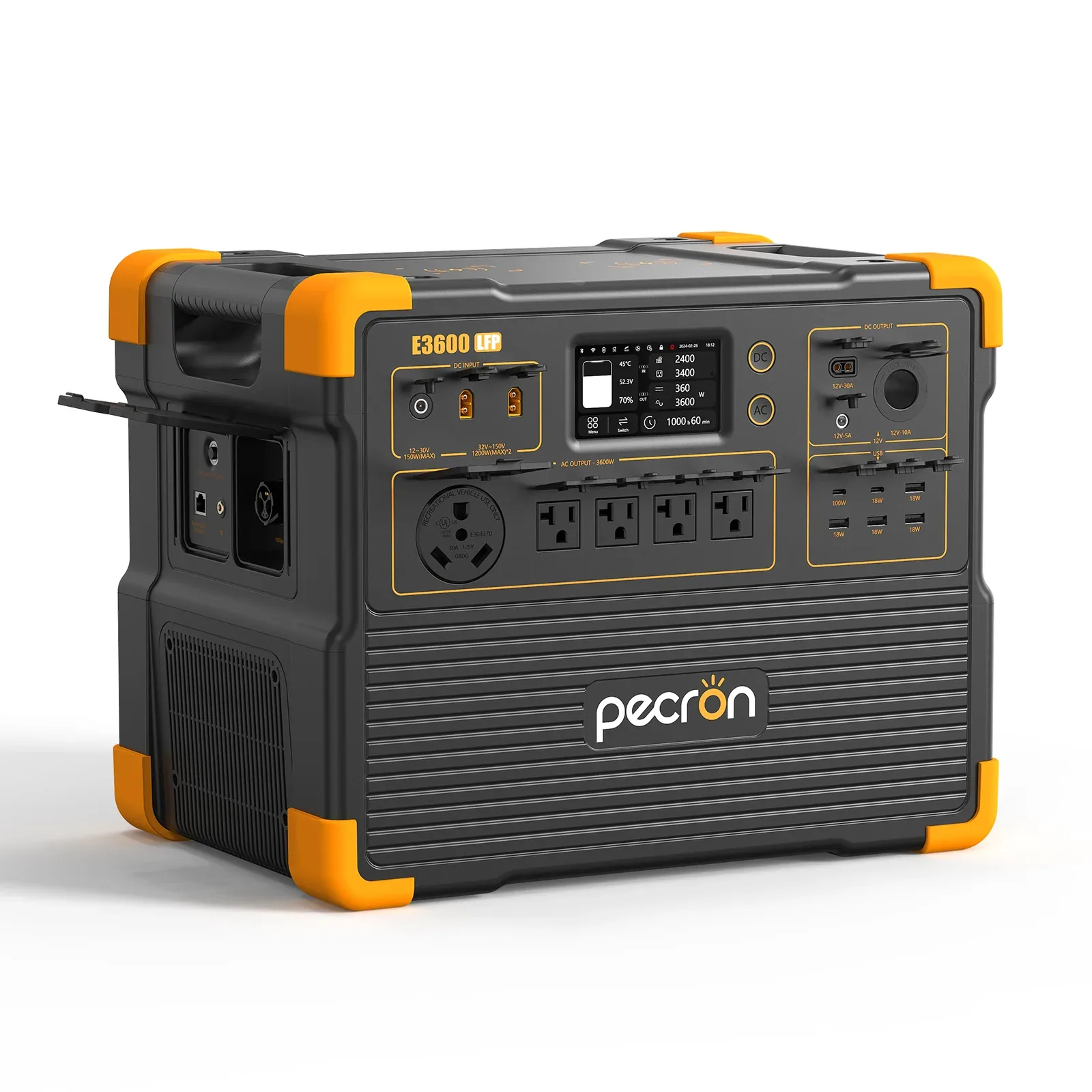
The E3600LFP looks like a product designed for people with a real-world setup rather than a showroom. The product copy positions it as a large-capacity power station with a broad set of outputs, and the feature list supports that impression. Pecron advertises a versatile output layout with 120V AC outputs, DC ports, a 30A high-power output, USB-A and USB-C connections, and a wireless charging pad. That is exactly the kind of mix that matters when a station is meant to run appliances, recharge electronics, and sit in a home, van, or jobsite setup without forcing a separate power strip into every use case.
Pecron product page (Manufacturer product image)
Pecron product page (Manufacturer product image)
The design tone is practical rather than premium. It does not give the same polished, boutique feel as a high-end EcoFlow or BLUETTI product, but it does not need to. Buyers who are tracking megawatt-hours of battery capacity and inverter headroom are not buying the E3600LFP for a living-room statement piece. They are buying it to move power from one place to another with as little friction as possible.
The broad port count is the E3600LFP's strongest design story. In a class where many units offer a handful of AC and USB sockets and call it a day, this product is more ambitious. The official storefront highlights a big battery, a versatile AC layout, and enough USB and DC connectivity to handle a laptop, lighting, USB-C devices, and a few small appliances without immediate cable chaos. That is helpful in a real outage, a camp setup, or a mobile workstation where outlet count matters more than the product's visual polish.
The styling and control experience are more mixed. This is not a model that feels as refined as the premium brands in the category, and that is a meaningful complaint if you care about the experience of living with the unit every day. The E3600LFP's real value is that it is not pretending to be a luxury product. It is built to be practical, and for many buyers that is exactly the right trade-off. You get a lot of output and a lot of ports, even if the interface and finish do not feel like a flagship appliance from a larger brand.
Battery Capacity, Charging, and Solar Input
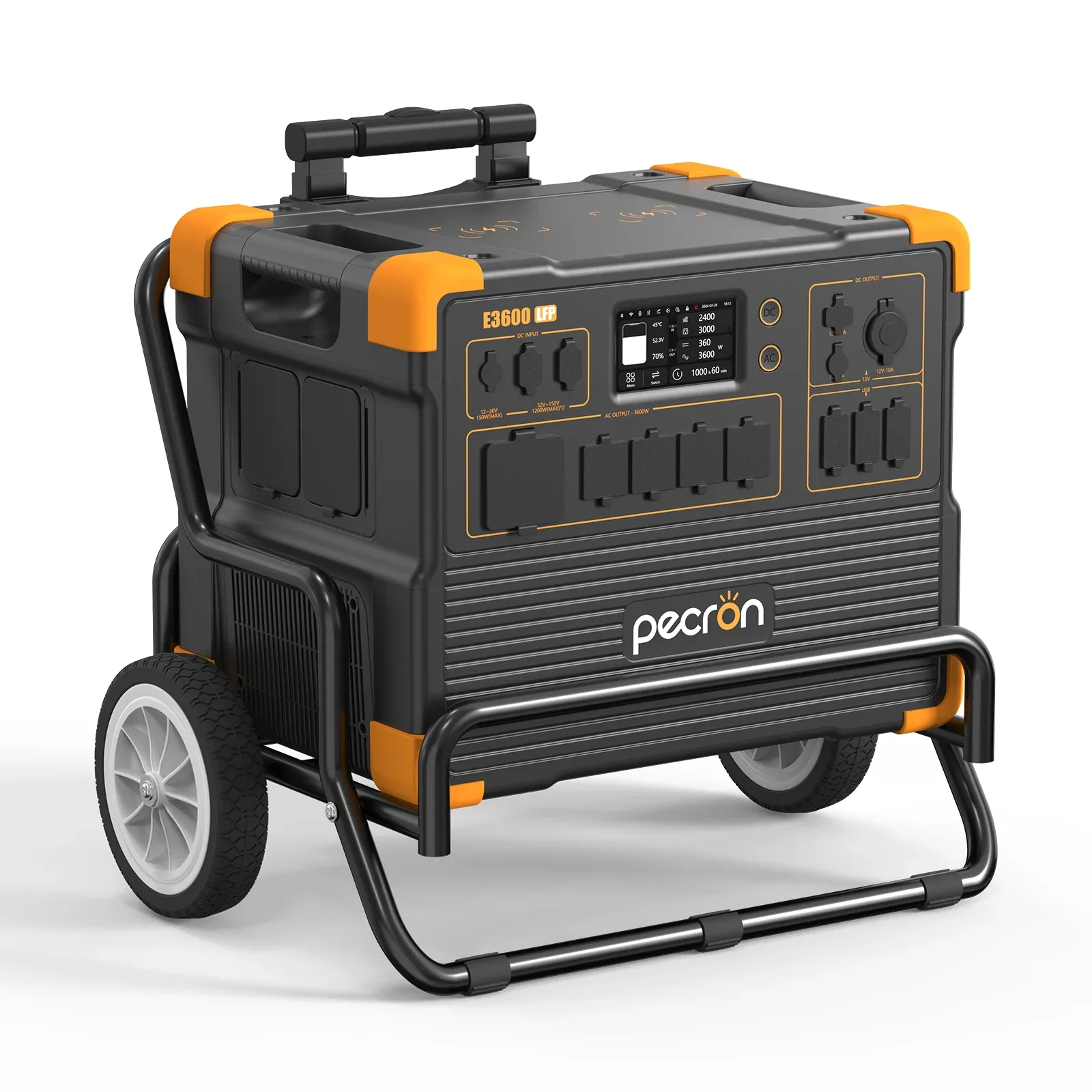
The battery is the core of this product and also the clearest reason to pay attention. Pecron lists the E3600LFP as a 3,072Wh LiFePO4 station, which puts it in the same general class as some of the better value large-format portable stations. A 3kWh battery is large enough to serve as a meaningful quiet backup, a day-use staging battery, or a worksite battery for tools, lights, and chargers. The battery chemistry matters here, too. LiFePO4 is the right direction for a buyer who expects to cycle the unit regularly rather than treat it like an emergency-only box kept in a closet.
Pecron product page (Manufacturer product image)
Pecron's official product page also advertises 3,500+ cycles to 80% capacity, which is a strong claim for a station at this price point. That number matters, because a large battery is not useful if it ages poorly in a couple of years. The E3600LFP is not trying to be a one-use emergency tool. It is pitched as a real battery system, and the chemistry supports that case.
The charging story is the E3600LFP's other big win. Pecron says the unit supports up to 3,200W AC charging with a 30A input cable and also lists a faster wall-charge path than most units in the same class. That is particularly attractive if your goal is to recharge the battery as quickly as possible between use sessions. Fast charging matters because a large portable battery can lose a lot of practical value if it takes all day to refill between outages or camping trips.
The solar input is similarly compelling. Pecron lists up to 2,400W of solar charging, which is a substantial figure and one of the strongest reasons to consider this model if you already have, or plan to add, a sizable panel array. The dual-input approach and XT60-based design are clearly aimed at buyers who want a robust off-grid charging path, not just a small panel for topping off a phone. In a category full of midsize stations that cap out at 1,000-1,500W, the E3600LFP's solar ceiling is a distinct advantage.
There is a real caveat here, though: the feature list is only as good as the equipment and configuration behind it. A 2,400W solar ceiling is exciting on paper, but that headline only matters if your panels, wiring, and charge controller can actually deliver it. For a buyer who wants a plug-and-play station with no solar complexity, the E3600LFP is not the easiest answer. For a buyer who is comfortable building a more serious solar setup, it becomes more compelling.
Performance and Real-World Suitability
The E3600LFP's inverter is where the value story meets the buyer's reality. Pecron rates it at 3,600W continuous output with a 7,000W surge claim, which puts it in the upper middle of the portable-power-station market and competes more with 3kW-class models than with smaller 1kW budget boxes. A 3,600W pure-sine inverter is enough to run a surprising amount of household gear: routers, lights, a refrigerator, a microwave, power tools, and other mid-sized loads. For a buyer who is trying to avoid the frustrating limitations of a tiny station, that kind of headroom is meaningful.
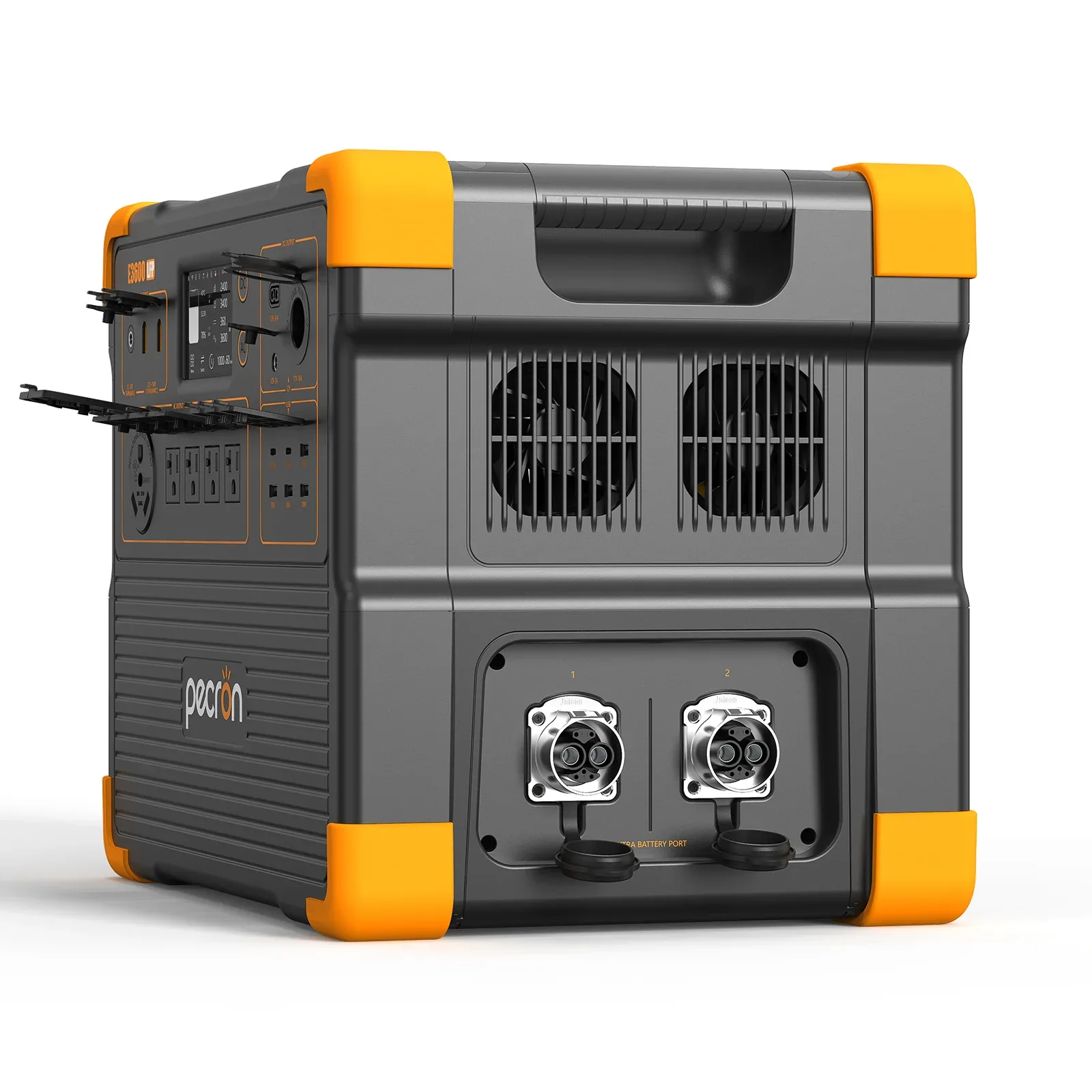
Pecron product page (Manufacturer product image)
The big question is whether the product lives up to the promise when the load gets serious. This is where a buyer should read the spec sheet carefully and not assume that a headline surge figure equals a stable real-world operating ceiling. A 7,000W surge number is a useful marketing number, but the safety margin matters more than the maximum number on the label. In the same way, a 3,600W inverter is only as impressive as the station's thermal behavior, transfer stability, and the quality of the battery-to-inverter path.
This is where the E3600LFP is easiest to recommend to the right buyer and easiest to misjudge for the wrong buyer. It is a strong option for people who want a large station they will actively manage: charge it, use it, turn it down when the load is not needed, and avoid treating it like a silent UPS for a whole home. It is less convincing for a buyer looking for a premium, always-ready home-backup box that silently sits at the ready and behaves impeccably at the top end of its output curve.
The E3600LFP is best thought of as a serious but utility-first battery system. That is not a criticism. It is a definition of the product's role. The station's power and charging outputs are strong enough to justify a buyer's attention, but the whole value equation depends on whether you want a practical energy appliance or a more refined premium ecosystem.
Competitive Analysis
The E3600LFP is often most interesting when compared with the other large-budget stations that also aim to deliver big capacity without a luxury price.
Anker SOLIX F3000 is the clearest premium-tier comparison. Anker is the more polished brand with a stronger support ecosystem and a more mature product experience, but it usually asks for a much higher price. The E3600LFP wins the value argument: it offers similar class energy, a large inverter, and a strong solar ceiling at a significantly lower price if the buyer is comfortable with less polish.
BLUETTI's AC300 + B300 setup is another relevant alternative. BLUETTI is a stronger brand in the ecosystem and support conversation, and buyers often value that safer, more established ownership experience. The E3600LFP does not necessarily beat it on polish, but it does challenge it on price-to-capacity and output-per-dollar.
EcoFlow's DELTA 3 and similar large-format units are also useful comparisons because they occupy a similar buyer intent: a large battery, strong solar charging, and enough AC power to run more than just a few electronics. EcoFlow usually wins on ecosystem and user experience, while Pecron wins on the raw value equation. The buyer's preference matters here: do you value a more mature ecosystem, or do you value a lower-cost power station with the same larger-purpose energy capacity?
That comparison is what makes the E3600LFP interesting. It is not necessarily the most refined solution in the category, but it is one of the more convincing value plays when you are trying to get a lot of usable battery storage and serious output without paying the premium demanded by big brands.
Who Should Buy It?
Buy the Pecron E3600LFP if you want a large portable station for real-world use rather than an ultra-polished lifestyle appliance. It makes sense for a camper, a mobile worker, a contractor, or a homeowner who wants a serious battery for temporary outages, tools, lights, charging, and a few household loads without spending boutique-brand money. The 3,072Wh capacity and 3,600W inverter are both big enough to matter in a practical setup.
It also makes sense for a buyer who is comfortable with a more utilitarian product and who plans to live with the station as a functional tool. If you want a station for weekend trips, jobsite use, a van or cabin, or a generator-like backup when the grid drops, the E3600LFP is easy to justify. The solar input and the broad port mix add real value for anyone already leaning solar or wanting a portable battery with serious recharge potential.
Skip it if you want a premium, low-friction ownership experience. The E3600LFP is not a bad product, but it is not the kind of unit that simply feels smoother, smarter, and more established than its rivals. The support ecosystem, brand maturity, and app experience lag behind the category leaders, and that matters to some buyers. The E3600LFP is best thought of as a value-first battery system rather than the “finest” or most polished unit on the market.
Verdict
The Pecron E3600LFP is a strong value in the large-capacity portable power station market. It delivers a 3,072Wh LiFePO4 pack, 3,600W inverter power, 2,400W solar charging, and a broad feature set at a current list price that is hard to ignore. For buyers who care most about practical capacity and output per dollar, the E3600LFP has a compelling argument.
The trade-off is clear: it is not the most premium, polished, or ecosystem-rich station in the category. The value story is strongest for buyers who want capability without paying a premium for brand cachet and a polished software experience. If your use case is substantial but practical, the E3600LFP earns serious consideration.
My recommendation is straightforward: if you need the capacity and output and are willing to accept a more utilitarian build, the E3600LFP is one of the better value moves in its class. If you want the most premium user experience, the strongest support network, or a more refined day-to-day interface, it is worth paying more for the established names instead.
FAQ
Is the Pecron E3600LFP worth buying?
Yes, if you want a large, value-oriented power station and are comfortable with a less polished product experience. The capacity, inverter rating, and solar ceiling all make the unit compelling for real-world power use.
When did the E3600LFP launch?
The clearest official launch context I could verify is the late-2024 Pecron storefront listing, which is the date I use here instead of the discovery review's publication date. The product is a 2024 model with a current 2026 relevance because its pricing and capacity still matter in the market.
How much battery capacity does it have?
Pecron lists it as a 3,072Wh LiFePO4 station. That is a large enough battery for meaningful off-grid use, outage backup, and a lot of camping or mobile-work scenarios.
Is the 3,600W inverter enough for real appliances?
It is strong enough for a large slice of household and jobsite use, including many refrigerators, tools, and electronics. The right way to think about it is as a serious mid-size inverter, not as a promise that every heavy appliance will behave identically in every setup.
How much solar can it accept?
Pecron lists up to 2,400W of solar input, which is one of the E3600LFP's best arguments if you want to recharge from panels instead of only from AC. That is a meaningful advantage for buyers who are already building a solar setup or want better off-grid flexibility.
Is the battery chemistry a selling point?
Yes. LiFePO4 is a better fit for repeated cycling than older battery chemistries, and Pecron's published cycle claim is a strong part of the product's value story.
Does it feel premium?
Not especially. The E3600LFP is a utility-first product, and that is the main trade-off. It is more about delivering a lot of power efficiently and less about a premium user experience or brand polish.
Is it better than the premium brands?
Not necessarily. Premium brands often win on app polish, support, and user experience. The E3600LFP is better when the buyer is optimizing for value, capacity, and inverter headroom rather than perfect cabin quality.
Is it a good buy for home backup?
It can be, especially if your goal is to cover essential loads for a period of time without stepping up to a much larger and more expensive system. It is less ideal as an always-on, premium UPS-style appliance.
Is the 7,000W surge claim realistic?
It is a useful ceiling figure, not a guarantee that every motor-start event will behave the same. Buyers should treat the surge rating as a capability claim rather than a promise of effortless operation at the limit.
Is it the right fit for camping or van life?
Yes, if you want a station with a large battery and a robust output profile more than you care about a refined control experience. It is one of the better value options for a camper or van user who needs meaningful capacity without entering the premium tier.
What is the biggest reason to buy it?
The strongest reason is simple: it delivers a lot of battery and a lot of inverter power for a current price that makes the category's premium options look expensive by comparison.