Best Action Cameras
Single-lens adventure cameras compared through manufacturer documentation and independent testing, with mounting, stabilization and recording limits explained.
Ranked by our score.
- #1 in Action Cameras
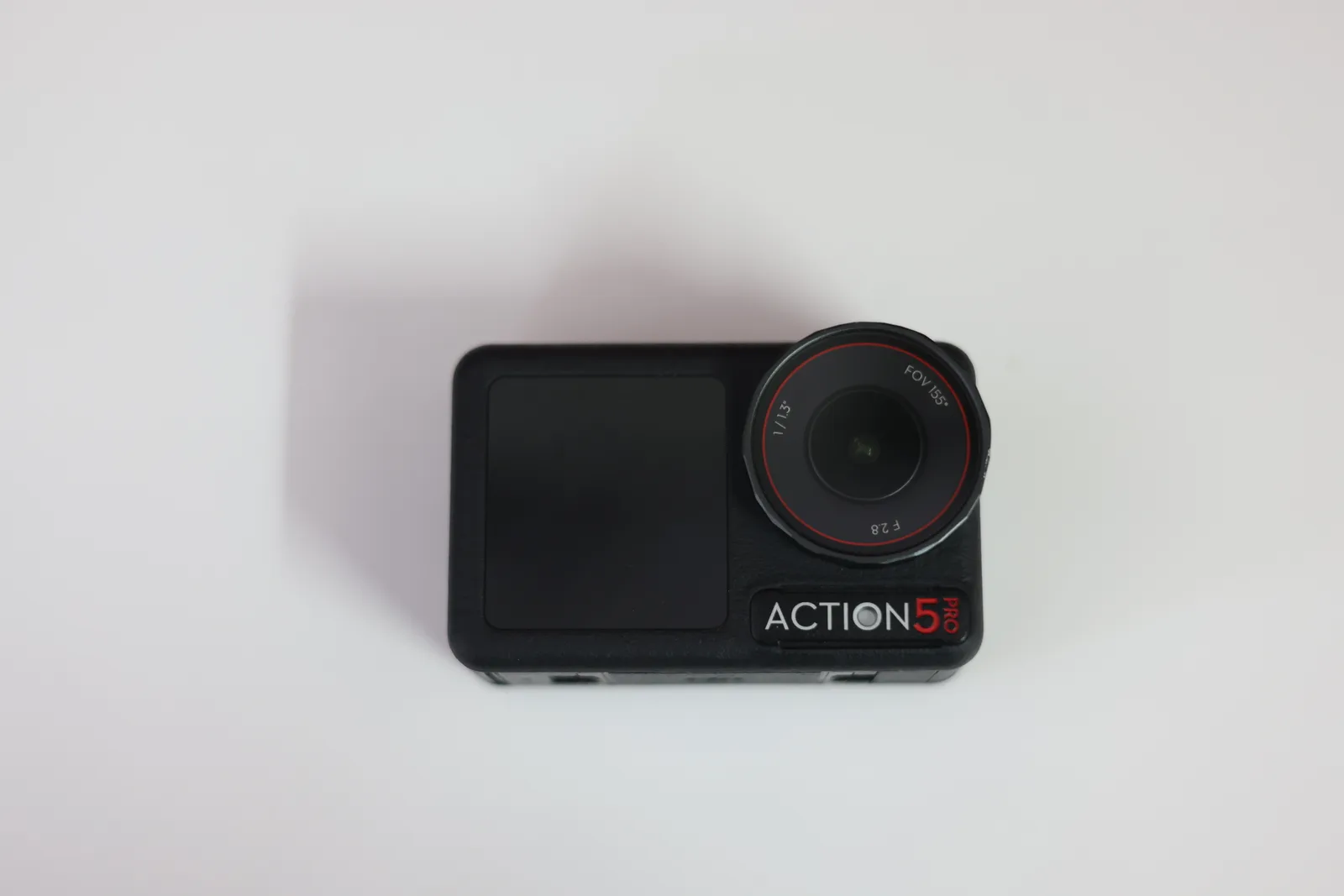
DJI Osmo Action 5 Pro Review: Endurance Is the Reason to Buy
Independent 4K60 testing makes a stronger case than the four-hour headline, while OLED controls and internal storage help on actual trips.
4.4 / 5$349 Standard Combo at September 2024 launch; current price varies - #2 in Action Cameras
DJI Osmo Action 6 Review: More Useful After Sunset, Not Just More Pixels
A variable aperture and square sensor make mixed-format adventure footage easier, but processed night video and 8K workflow restrictions deserve attention.
4.4 / 5€379 Standard Combo at launch; current local price varies - #3 in Action Cameras
GoPro MISSION 1 Review: The Sensible Cinema Upgrade Has an Evidence Caveat
The Type 1 sensor and 4K120 Open Gate offer a strong buying case, but published base-model conclusions rely on testing its Pro sibling.
4.3 / 5$599.99 May 2026 MSRP; $499.99 launch offer for eligible existing subscribers - #4 in Action Cameras
GoPro MISSION 1 PRO Review: Stronger 4K Endurance, Expensive Extreme Modes
PCMag's sustained 4K60 test supports the larger-sensor upgrade; 8K60 and 4K240 still have thermal limits and a heavier production workflow.
4.3 / 5$699.99 May 2026 MSRP; $599.99 launch offer for eligible existing subscribers - #5 in Action Cameras
GoPro HERO13 Black Review: The Lens System Matters More Than a Sensor Upgrade
Strong daylight action, GPS and HB-Series optics favor existing GoPro users; low-light footage and stationary heat behavior need realistic expectations.
4.2 / 5$399.99 September 2024 launch MSRP; current price varies - #6 in Action Cameras
DJI Osmo Action 4 Review: A Discount Camera, Not a Discount Workflow
Good stabilized 4K and useful D-Log M remain relevant, but close focus, card dependence and the published update horizon affect an older-model purchase.
4.0 / 5$399 Standard Combo at August 2023 launch; buy only at a meaningful discount - #7 in Action Cameras
GoPro HERO12 Black Review: A Strong Camera, Not a New One
Excellent stabilization, 8:7 reframing and a much better mount are real upgrades; the unchanged sensor and missing GPS make the HERO11 comparison unavoidable.
4.0 / 5$399.99 U.S. launch MSRP (September 2023); current price varies - #8 in Action Cameras
GoPro LIT HERO Review: A Tiny Camera With an Awkward Trade
The built-in light and 93-gram body are genuinely handy, but app-dependent stabilization and a fixed battery limit its appeal as a primary action camera.
3.3 / 5$269.99 USD launch price announced September 23, 2025; current price not verified - #9 in Action Cameras
GoPro HERO (2024) Review: Tiny Body, Big Editing Compromise
The 86g HERO is easy to mount and refreshingly simple, but app-only stabilization, a sealed battery and entry-level video make it a specialist rather than a cheaper HERO13.
3.1 / 5$199.99 U.S. launch MSRP (announced September 4, 2024); current price not verified - #10 in Action Cameras
GoPro MISSION 1 PRO ILS Review: A Tiny Cinema Body With a Manual-Lens Catch
The MFT mount opens unusual high-speed shooting options, but no electronic lens contacts turn focus, exposure, and rigging into deliberate work.
3.1 / 5Check current availability and price; PetaPixel quoted $700 in its August 2026 review.
Compare
Action Cameras Comparison Table
A quick side-by-side view of the highest-rated action cameras before opening individual reviews.
| Product | Rating | Price | Key Spec | Second Spec | Best For | Main Trade-Off |
|---|---|---|---|---|---|---|
| #1 DJI Osmo Action 5 Pro Convincing independently reported 4K60 endurance | 4.4 | $349 Standard Combo at September 2024 launch; current price varies | Sensor: 1/1.3-inch 4:3 CMOS; 40MP stills | Lens: 155° field of view; f/2.8 | Riders and travelers who prioritize recording endurance over the newest sensor | Smaller sensor and fixed aperture than the newer Action 6 |
| #2 DJI Osmo Action 6 Variable aperture and square capture broaden practical shooting options | 4.4 | €379 Standard Combo at launch; current local price varies | Sensor: 1/1.1-inch square CMOS | Lens: 155° field of view; variable f/2.0–f/4.0 | Travel and outdoor creators delivering both widescreen and vertical video | More flexible capture still brings processing and editing constraints |
| #3 GoPro MISSION 1 Larger-sensor platform without the Pro frame-rate premium | 4.3 | $599.99 May 2026 MSRP; $499.99 launch offer for eligible existing subscribers | Sensor: 50MP Type 1 (1-inch-type), 4:3 | Lens: Fixed lens; 159° field of view | Outdoor filmmakers who want the larger sensor but rarely need extreme frame rates | Published independent conclusions transfer evidence from a tested Pro unit |
| #4 GoPro MISSION 1 PRO Independently supported 4K endurance and a meaningful larger-sensor upgrade | 4.3 | $699.99 May 2026 MSRP; $599.99 launch offer for eligible existing subscribers | Sensor: 50MP Type 1 (1-inch-type), 4:3 | Lens: Fixed lens; 159° field of view | Outdoor filmmakers who can identify a real use for 8K Open Gate or 4K240 | Extreme modes still heat-limit, while the complete system is expensive |
| #5 GoPro HERO13 Black Useful optics ecosystem around an established daylight action platform | 4.2 | $399.99 September 2024 launch MSRP; current price varies | Sensor: 1/1.9-inch 8:7; 27MP stills | Video: 5.3K60; 4K120; high-frame-rate burst modes | Daylight adventure creators who will use GPS or HB-Series lenses | Sensor and low-light performance do not represent a major generational leap |
| #6 DJI Osmo Action 4 Capable 10-bit adventure capture without buying the latest body | 4.0 | $399 Standard Combo at August 2023 launch; buy only at a meaningful discount | Sensor: 1/1.3-inch CMOS; 10MP stills | Lens: 155° field of view; f/2.8; focus from 0.4m | Budget-minded adventure creators buying well below newer-model prices | Its value depends on the discount and older-model ownership compromises |
| #7 GoPro HERO12 Black A proven action-camera design with superb stabilization and unusually useful 8:7 capture | 4.0 | $399.99 U.S. launch MSRP (September 2023); current price varies | Sensor: 1/1.9-inch 8:7 CMOS; 27MP | Video: Up to 5.3K60, 4K120 and 2.7K240 (mode-dependent) | Daylight action shooters who want strong stabilization, high-resolution reframing and a compact rig | Meaningful usability improvements do not change the older sensor or solve heat and low-light limits |
| #8 GoPro LIT HERO A 93g waterproof camera with an integrated light and multiple mounting interfaces | 3.3 | $269.99 USD launch price announced September 23, 2025; current price not verified | Model: GoPro LIT HERO (CHDHF-132 product family) | Video: Up to 4K60; 4:3 video; manufacturer-stated 2× slow motion | Casual daylight clips where pocketability and a built-in utility light matter more than smooth out-of-camera footage | Tiny size comes with a fixed battery, basic controls, and stabilization that happens after recording |
Evaluation Method
How We Evaluate Action Cameras
Every action cameras review is scored against the same category rubric so rankings are comparable instead of one-off impressions.
Real-world fit
We prioritize the use cases people actually buy for, then score how well each product fits those jobs.
Performance and constraints
Specs, benchmark-like signals, limits, and ownership friction are weighed together rather than treated as isolated numbers.
Value and alternatives
A recommendation only makes sense if it beats or clearly differentiates itself from nearby competitors.
Trade-off clarity
Each review has to explain who should skip the product, not just who might like it.
Buying Advice
How to Choose Action Cameras
Use the ranking as a shortlist, then narrow by the constraints that matter most for your setup, budget, and tolerance for trade-offs.
Start with your real use case
A top score does not automatically make a product the right fit. Match the recommendation to the job you need it to do most often.
Compare the trade-offs
The best buy is usually the product with the least painful compromise, not the longest feature list.
Check specs against the verdict
Use the comparison table to confirm whether a product has the practical limits that matter for you.
Read the full review before buying
The guide can narrow the field, but the individual review explains the edge cases, alternatives, and ownership caveats.