Introduction
The Pecron E3600LFP Bundle is the kind of portable power station that wins attention because it reads like a serious value buy on paper: 3,072Wh of LiFePO4 storage, a 3,600W pure-sine inverter, a 2,400W solar ceiling, and a bundle configuration that adds a 300W panel and trolley. That combination makes it interesting to a buyer who wants meaningful off-grid power without paying the premium that category leaders tend to command. On paper, it has the right ingredients for a campsite, a cabin, a worksite, or a main backup path for essential loads.
The launch date matters here because the discovery page's publication date is not evidence of when the product actually appeared. The clearest primary-source evidence I could verify is the official Pecron storefront itself, which shows the E3600LFP product family live in mid-2024. A storefront variant record and product metadata on the official site show the model line already existed by June 2024. I am using that as the real product launch context rather than the 2026 discovery article date, because a review site publishing later does not tell us when the device entered the market.
That difference matters because the E3600LFP Bundle is not a novelty product being hyped in 2026. It is a late-2024 system that remains relevant because the value proposition still holds: large usable battery capacity, strong inverter headroom, and solar charging that is more ambitious than many stations in the same price band. The question is whether the bundle is a smart buy for real buyers or whether the compromises behind the headline specs are more meaningful than the price suggests.
The answer is not a simple yes or no. The E3600LFP Bundle is an attractive option if you prioritize output, battery size, and a practical solar setup over a polished user experience. It is less compelling if you want the more refined app ecosystem, the stronger brand support, or the smoother day-to-day ownership experience that category leaders tend to provide. The E3600LFP Bundle is best thought of as a value-first battery system rather than a luxury appliance.
Design, Bundle, and Everyday Setup
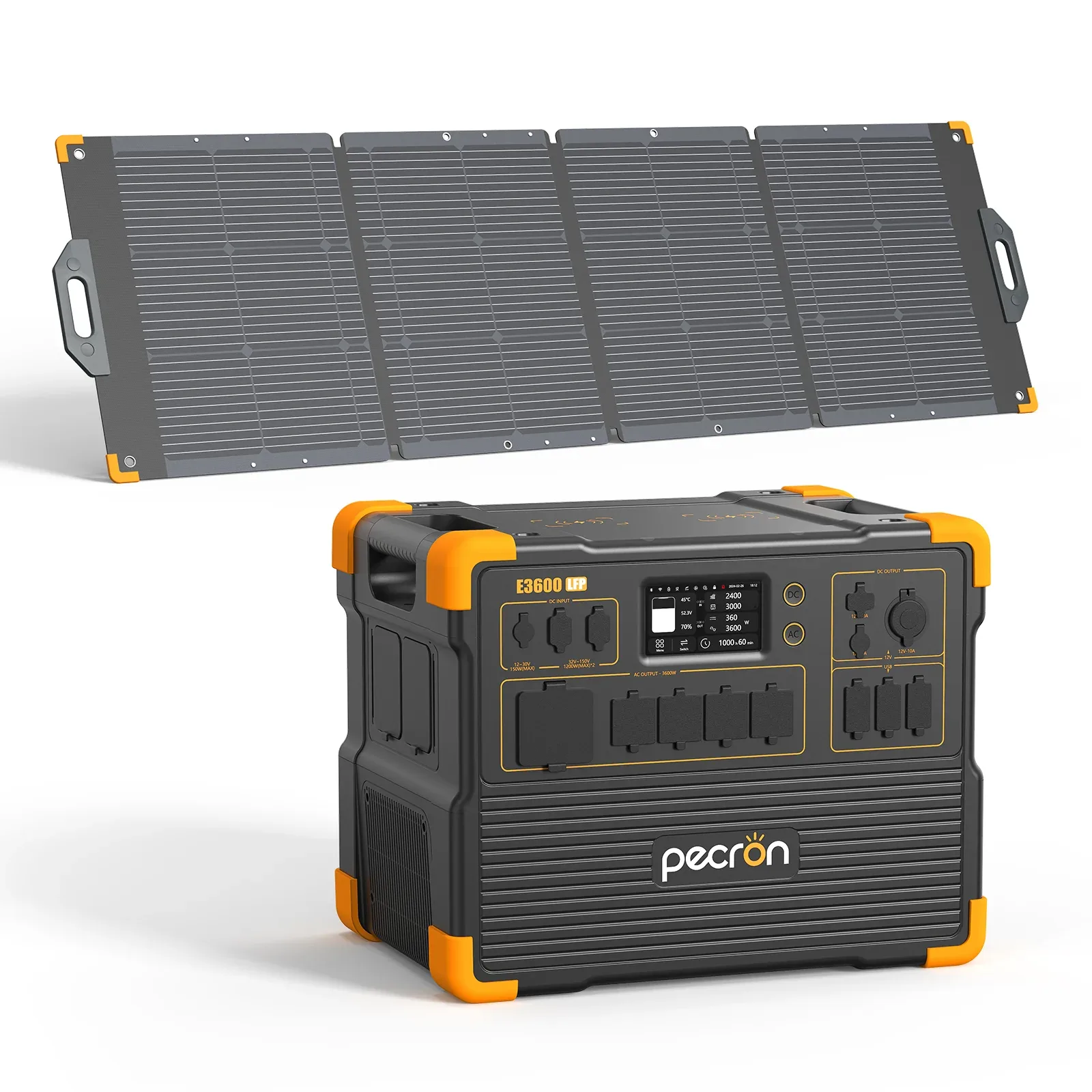
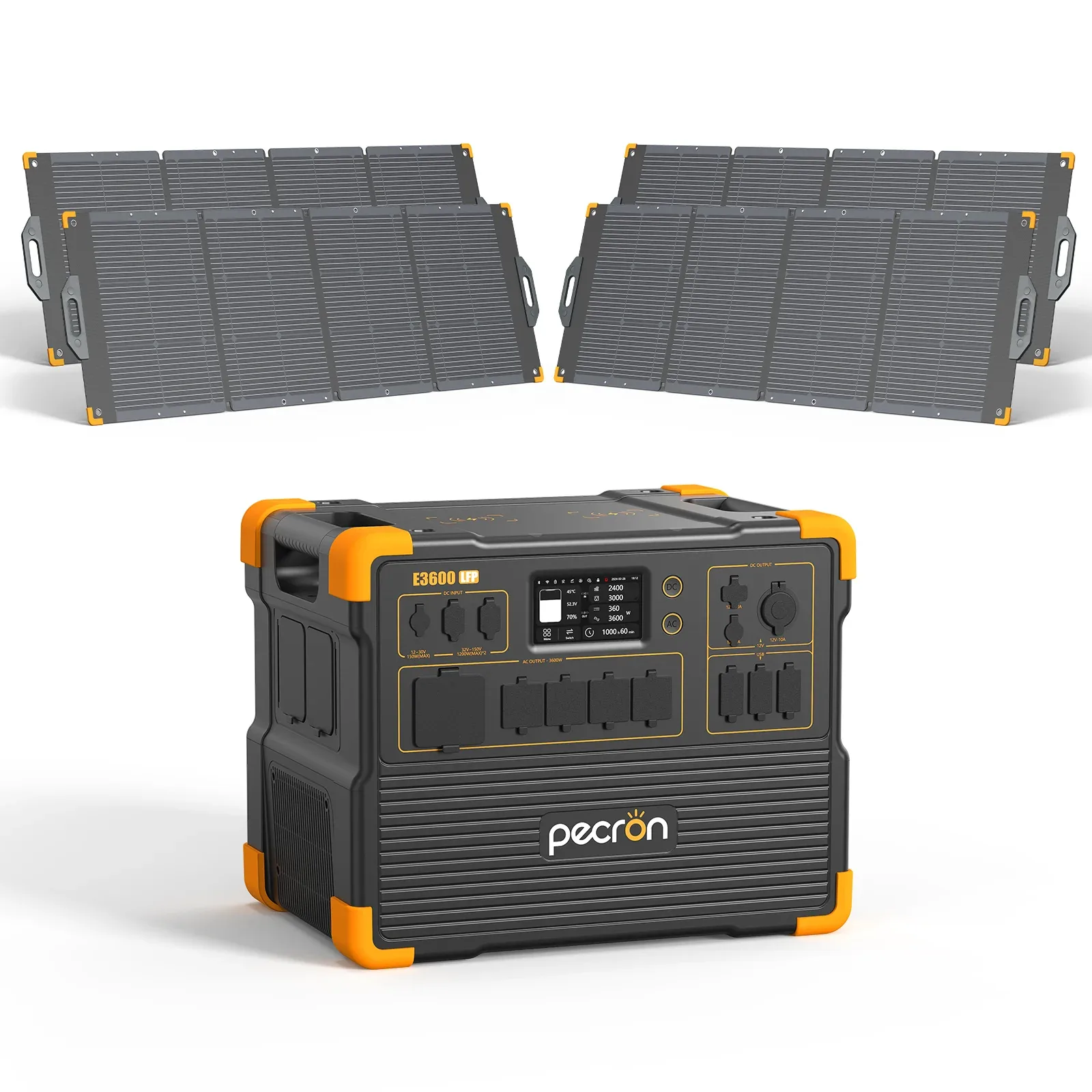
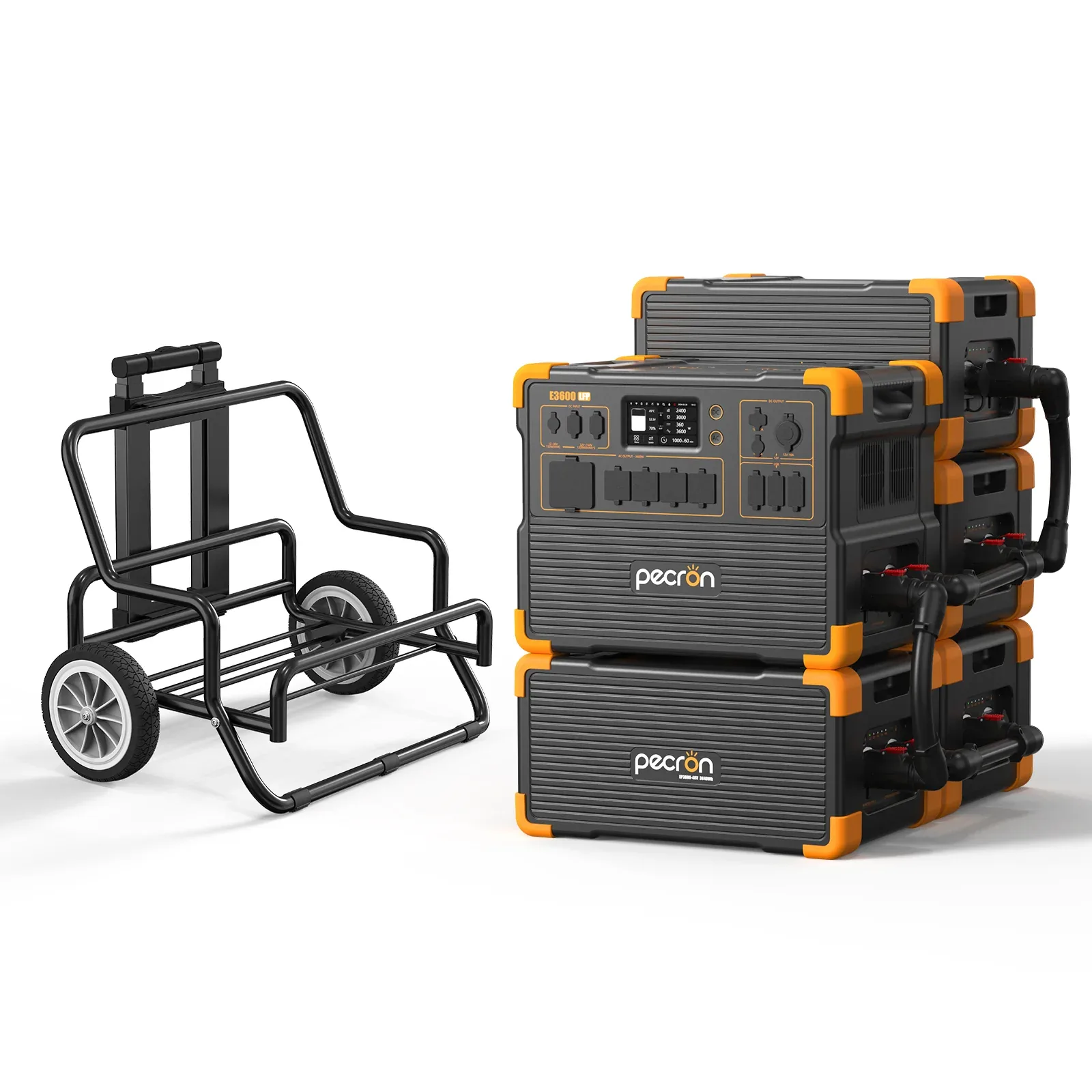
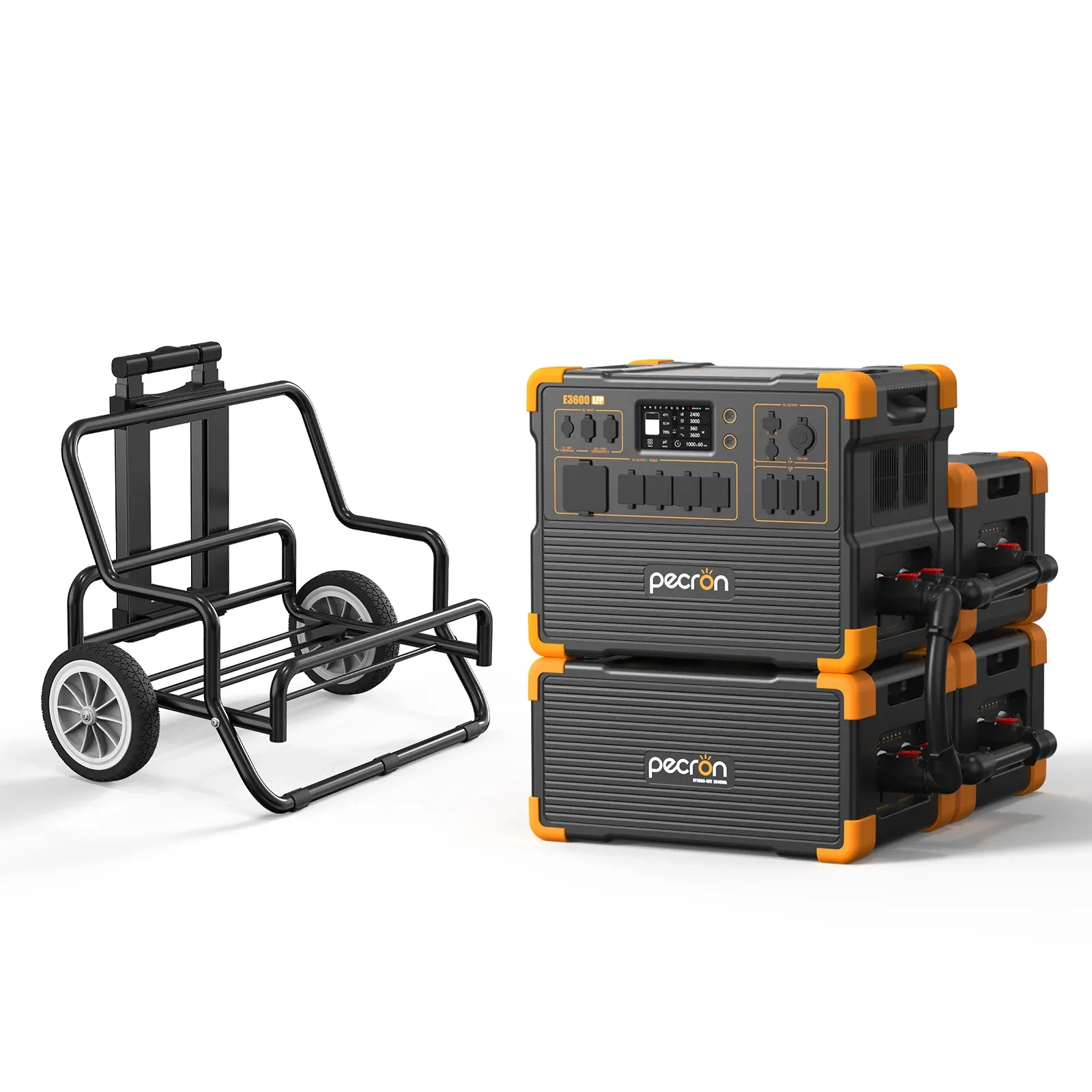
The E3600LFP Bundle looks like it was designed for people who actually need energy, not for buyers chasing a showroom aesthetic. The official store page presents a product family centered on a big battery, broad output selection, and a configuration that makes sense for repeat use. The bundle adds a 300W solar panel and a trolley, which is a meaningful convenience upgrade if your goal is to move the station from a van, garage, worksite, or cabin without dragging a heavy box around.
Pecron product page (Manufacturer product image)
Pecron product page (Manufacturer product image)
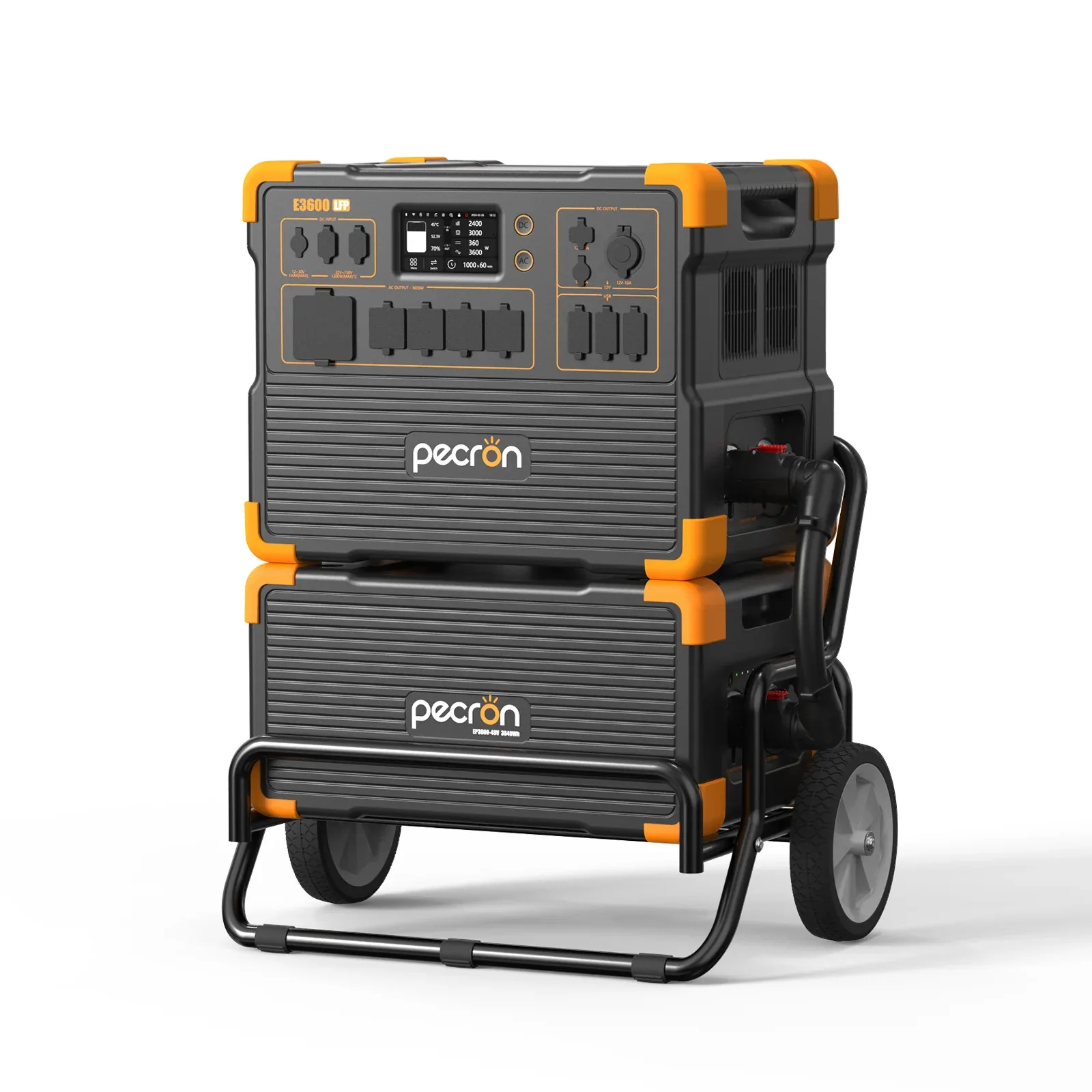
That matters because a large portable station is only as good as how easy it is to use in real life. A trolley is not glamorous, but it is practical. If the system is going to sit in a camper, a cabin, or a home backup area, a wheeled base makes it easier to live with and reduces the difference between “portable” and “only portable in the driveway.” The panel also matters because it turns the product from a battery box into a real solar-ready system, which broadens the station's value beyond a single emergency-use scenario.
Pecron's product copy also highlights a broad output layout: multiple AC outputs, a 30A high-power outlet, USB-A and USB-C connections, DC ports, and a 15W wireless charging pad. That is a compelling mix for a buyer who wants to run a few core loads, charge a laptop, power lights, and avoid stringing extension cords across the room. The station is clearly meant to solve a real-world setup problem rather than simply provide a rough battery with a few ports attached.
The design language is practical rather than premium. It does not feel as polished as the top-tier premium models in the category, and that is a very real trade-off. The big question is whether you care more about raw utility or the extra polish that usually comes with established premium brands. If you want capability first, the bundle is appealing. If you want the best fit-and-finish, the smoothest app, and the strongest support ecosystem, this is where the E3600LFP begins to lose ground.
The bundle is especially useful if you are trying to build a setup around real daily use: a van, cabin, worksite, or backup area where the station is loaded regularly rather than stored “for emergencies only.” In that situation, the trolley and panel are not wasted extras. They are a more user-friendly package that makes the large battery easier to deploy and easier to top up in realistic conditions.
Battery Capacity, Charging, and Solar Input
The battery is the center of the E3600LFP Bundle and the clearest reason to take it seriously. Pecron lists the core power station at 3,072Wh with LiFePO4 chemistry, which is a large-enough battery to matter in both everyday and emergency scenarios. A 3kWh capacity is no small number in the portable-power-station category. It is enough to support a meaningful outage backup, weekend camp power, or a jobsite setup where you need to run tools, lights, and charging gear without a noisy gas generator.
Pecron product page (Manufacturer product image)
The chemistry matters almost as much as the capacity. LiFePO4 is a better fit for repeated cycling than lower-quality lithium chemistries, and Pecron publishes a claim of 3,500+ cycles to 80% capacity. That is a positive signal for a battery this size, because a large station is not useful if it degrades rapidly or only makes sense for a one-off emergency. The E3600LFP is pitched as a real workhorse, and the chemistry supports that idea.
Charging is another area where the bundle is genuinely attractive. The storefront lists AC charging up to 3,200W with a 30A cable, which is fast enough to make the system feel practical rather than slow and inconvenient. For a big station, that matters because recharge time is part of the product experience. A large battery that takes all day to refill loses a lot of practical value. The bundle's solar input is similarly compelling. Pecron advertises up to 2,400W solar charging with dual XT60 inputs, a strong ceiling for a product in this class.
The 300W included panel is a useful but not overwhelming addition to the bundle. It is not the kind of panel that instantly matches the station's full 2,400W solar ceiling, but it is a real step toward a usable renewable charging setup. In practical terms, the bundle is strongest when you are willing to build a solar arrangement around the station rather than expecting the panel alone to power the system every day. That is the right mental model for the product: it is capable, but it is also a system that works best when the user understands the charging logic and the limits of the bundle.
The biggest caveat is simply that a big solar number is not always a useful real-world number. A 2,400W ceiling only matters if the panels, wiring, charge controller, and conditions can actually deliver it. For some buyers, that is a plus because they are shopping for a solar-ready system. For others, it is a complication they do not need. If you want a plug-and-play backup box that works out of the box and then stays there, the E3600LFP Bundle is not quite as easygoing as the premium, polished alternatives in the category.
Performance and Real-World Suitability
The 3,600W inverter is the product's defining performance feature. Pecron rates the unit at 3,600W continuous output with a 7,000W surge claim, which places it in the same general weight class as stronger mid-sized portable batteries rather than small or midsize emergency units. In practice, that means the station can power a real slice of household or worksite gear: router and laptop equipment, some lighting, a refrigerator, power tools, and other moderate loads. The output headroom is strong enough that the bundle will appeal to anyone who is sick of tiny stations that max out with a single appliance.
Pecron product page (Manufacturer product image)
That is the key strength of the bundle: it is not just a battery pack. It is a serious inverter system, and for many buyers, that matters more than a polished instruction manual or a deeper app ecosystem. If you want a station that can handle a meaningful set of loads without constantly feeling constrained, the E3600LFP Bundle is built for that use case.
The caveat is that the surge figure should be treated as a marketing ceiling rather than a promise that every motor-start event will behave perfectly or that the unit is safe to run at the upper limit all day. A portable station with this much output can absolutely be useful, but buyers should still think in terms of sensible load management. The same goes for home backup: a 3,600W inverter can cover a lot, but it will not behave like a premium whole-home UPS if you push it at the top end.
For real-world use, the E3600LFP Bundle makes the most sense when the buyer is deliberately choosing a value-first solution. It fits a van conversion, a cabin setup, a jobsite battery, or a backup system aimed at essential loads. It is less convincing if you want a premium “set it and forget it” home-backup appliance that behaves like a more refined piece of equipment. In that sense, the bundle is more practical than luxurious. That is not a flaw; it is a design choice.
Competitive Comparison
The E3600LFP Bundle's clearest comparison is with premium large-capacity stations such as the EcoFlow DELTA 3 or the BLUETTI AC300 + B300 setup. Those models usually win on user experience, app maturity, and support ecosystem quality. The E3600LFP does not necessarily beat them on polish, but it is much more competitive on price and raw capability. If your buying decision is driven by capacity, output, and solar flexibility per dollar, the bundle's argument gets significantly stronger.
Anker's F3000 and other premium-value competitors are also worth considering. Anker often offers a more polished product experience and a more confident brand story, but the Pecron bundle tends to win on the value equation. The difference is not always about what the system can do. It is about what you are willing to sacrifice in the name of price. The Pecron bundle gives up some refinement, but it asks for less money to get a lot of storage and output.
That is what makes the bundle compelling. It does not necessarily offer the cleanest owner experience, but it is hard to ignore if your priority is getting a lot of usable battery power and a strong solar path without paying an established premium. The comparison is less about a winner and more about a buyer preference: do you want an easier, more polished system, or do you want the better raw value? In a category crowded with premium names, the Pecron E3600LFP Bundle is a very credible answer to the second question.
Who Should Buy It?
Buy the Pecron E3600LFP Bundle if you want a larger station for real-life use rather than a premium home appliance. It is a strong fit for camping, van life, cabin power, weekend where-you-need-power situations, or a worksite setup where you need bigger battery capacity and a serious inverter without paying boutique-brand money. The 3,072Wh battery and 3,600W inverter are both large enough to matter, and the included solar panel and trolley make the configuration more practical than the bare unit alone.
It also makes sense for a buyer who values value more than polish. If you want real capacity and a robust solar-ready system, the bundle's price-to-output ratio is one of its strongest selling points. It is a practical product for someone who wants to solve an electrical problem instead of buying a lifestyle accessory.
Skip it if you want the smoothest possible user experience, the strongest support history, or a premium, elegant backup box. The E3600LFP Bundle is not a bad product, but it is not a “best in class” ownership experience. The support ecosystem and app experience are less established than the most polished brands, and that matters to some buyers. It is best for practical buyers who understand the trade-off: more energy, more value, and a more utility-first product relationship.
Verdict
The Pecron E3600LFP Bundle is a strong purchase for the buyer who wants a large-capacity portable power station with a meaningful solar story and a bundle that is easier to live with than the bare station. It delivers a substantial 3,072Wh LiFePO4 battery, a 3,600W inverter, and a solar-ready configuration that is attractive for van life, cabins, jobsite use, and essential-load backup. At a current official-store bundle price of $1,317, it is hard to ignore if your main priority is capacity and value.
The trade-off is exactly what you would expect from a utility-first power station. The bundle is not the most polished or premium product in its class. It is more practical than luxurious, and the support ecosystem is less established than the leaders in the category. A buyer who wants a premium ownership experience should pay for that experience. A buyer who wants serious energy and a more realistic price will find the E3600LFP Bundle easier to justify.
My recommendation is straightforward: if you need the capacity and output and are willing to accept a utilitarian design and a less refined brand ecosystem, this bundle is one of the stronger value plays in the larger portable-power-station market. If you want the most premium experience in daily ownership or the strongest service network, then the established brands still justify their extra cost.
FAQ
Is the E3600LFP Bundle worth buying?
Yes, if your priority is large-capacity power and value rather than premium presentation or a more mature ecosystem. The bundle's battery size, inverter output, and solar-ready configuration make it one of the more compelling value plays in the class.
When did the E3600LFP launch?
The strongest primary-source evidence I could verify is the official Pecron storefront, where the E3600LFP product family appears in mid-2024, with variants and product metadata showing the line was live by June 2024. I am using that as the launch date rather than the 2026 publication date of a discovery article.
How much capacity does the bundle have?
The core unit is a 3,072Wh LiFePO4 battery. That is a large enough capacity to support meaningful outage backup, off-grid use, or a serious worksite setup.
Is 3,600W enough for real appliances?
It is strong enough for a substantial range of household and worksite loads, including lights, routers, refrigerators, and other moderate gear. It is best thought of as a serious mid-size inverter rather than a whole-home, zero-compromise system.
Is the solar panel bundle useful?
Yes, as part of a real solar setup. The bundle includes a 300W panel, while the station itself supports up to 2,400W of solar input through dual XT60 connections. That makes it much more practical than a bare battery-only unit.
Does the battery chemistry matter?
It matters a lot. LiFePO4 is a better fit for repeated cycling than many cheaper alternatives, and Pecron advertises 3,500+ cycles to 80% capacity. That gives the system more long-term credibility than a bargain station with a shorter-lived battery pack.
Is the bundle easier to live with than the bare station?
Yes, mainly because the trolley helps with mobility and the included panel adds a more complete charge path. It feels less like a box you store in a closet and more like a real setup you can deploy in a van, cabin, or worksite.
Is the product premium-looking or premium-feeling?
Not especially. It is more utility-focused than premium, and the ownership experience is less polished than the big-name alternatives. That is the central trade-off of the bundle.
Is it a better deal than the premium brands?
For buyers who care about value and raw capability, yes. For buyers who care most about app polish, ecosystems, and support, the premium brands still justify the price premium.
What is the biggest reason to buy it?
The strongest reason is simple: it gives you a lot of battery capacity and inverter headroom for a price that is easy to justify when you care about practical output more than luxury features.
What is the biggest reason not to buy it?
The biggest reason is that it is not the most refined or established system on the market. It is a better value play than a premium appliance, but it asks the buyer to accept a more utilitarian experience.
Is it the right choice for a home backup system?
It can be, especially if you are trying to cover essential loads rather than an entire house. It is most compelling as a serious but practical backup setup, not as a premium always-on home-backup appliance.