Introduction
The Anker SOLIX C2000 Gen 2 is the answer to a simple question: what's the best portable power station for most people?
At $799 for 2,048Wh of expandable LiFePO4 capacity, a 6,000W surge rating, five AC outlets, a 30A RV plug, and the most lauded display screen in the category, it's hard to find a meaningful weakness.
This is the power station that does everything right without being the single best at any one thing.
And that all-around excellence is exactly what most buyers need.
We reviewed the first-generation C2000 positively; the Gen 2 refines it with improved charging speeds, better software, and a more competitive price.
Anker managed to add features while lowering cost — rare in a category where manufacturers typically raise prices alongside specs.
The result is a unit that sits at the top of our recommendation list for home backup power, RV use, and anyone stepping up from a sub-1kWh portable station.
If you're buying your first 2kWh class power station and your use case is typical, the C2000 Gen 2 is the answer.
Unboxing & First Impressions
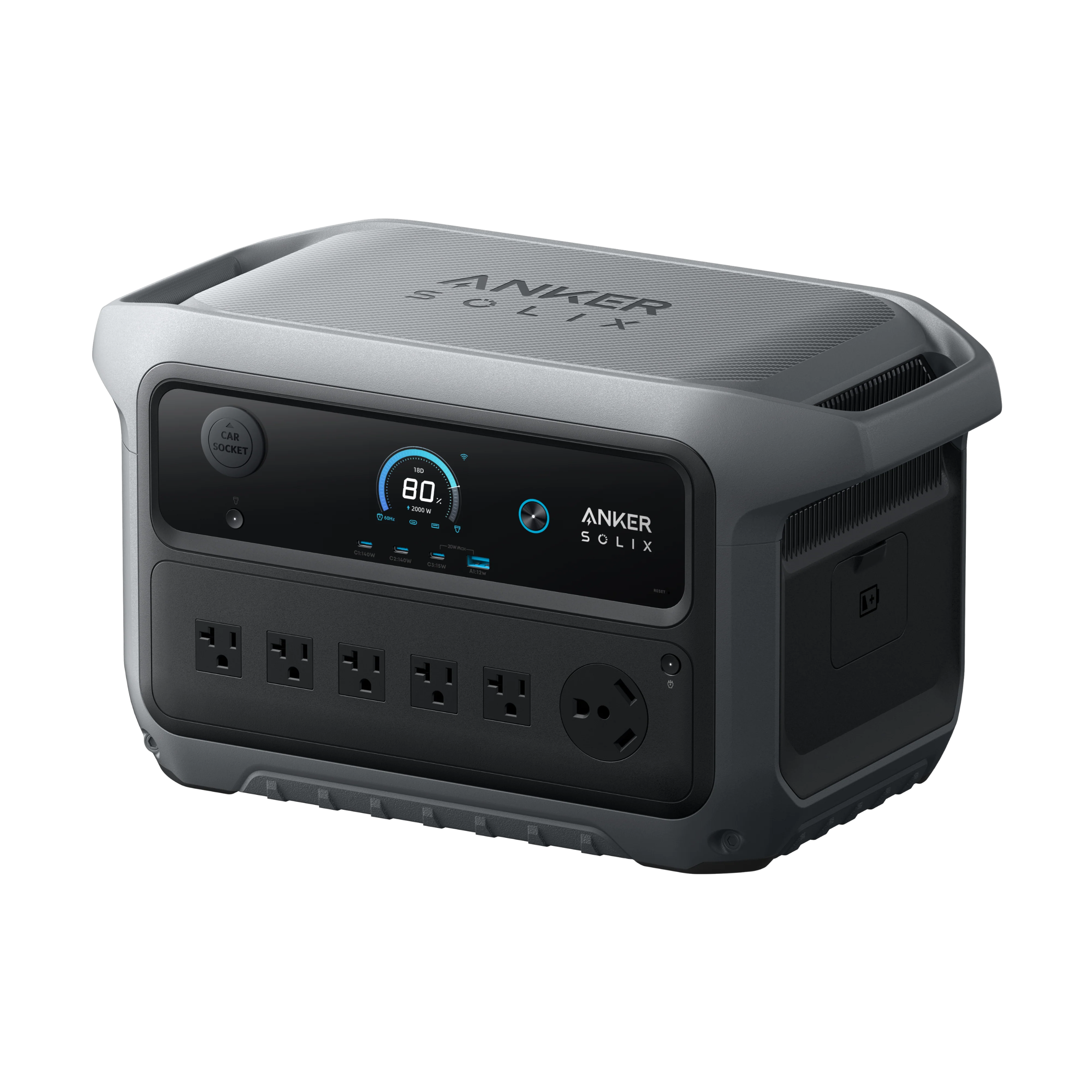
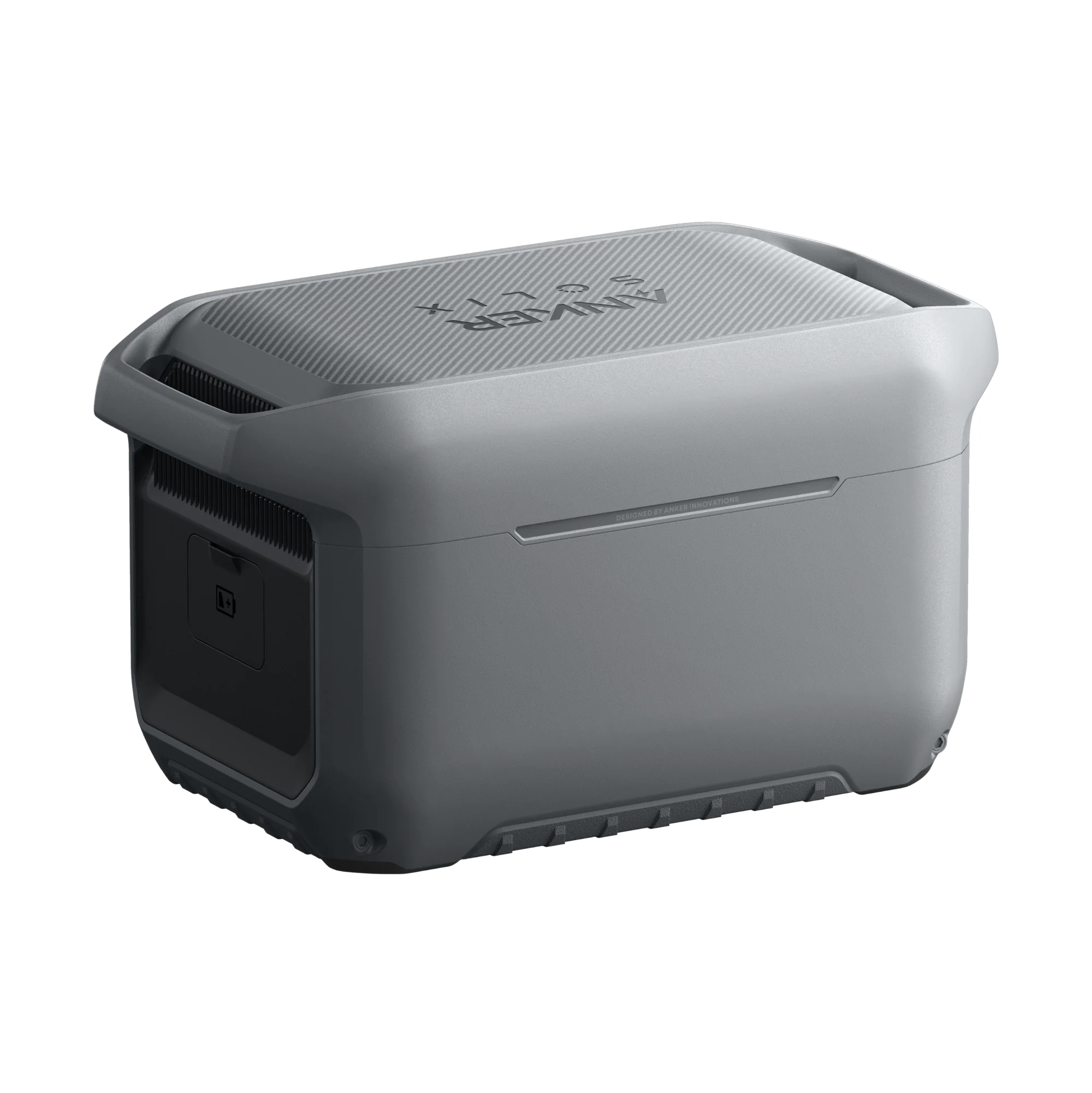
At 42 lbs, the C2000 Gen 2 is impressively light for a 2kWh unit.
Anker (Manufacturer product image)
Anker (Manufacturer product image)
Meaningfully easier to move than the Bluetti Elite 200 V2 (53.4 lbs) or most 3kWh units starting at 58+ lbs.
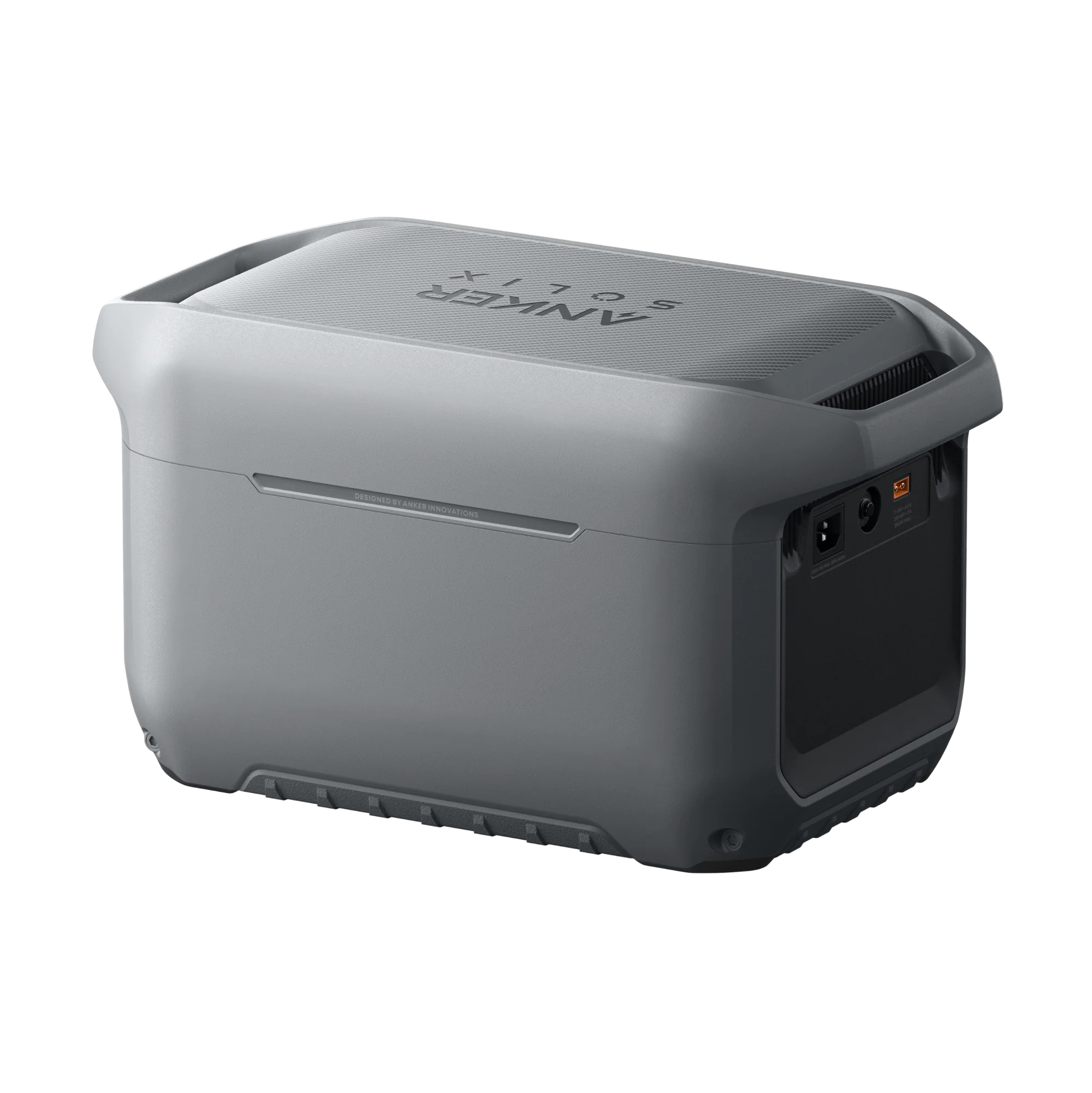
Build quality is excellent.
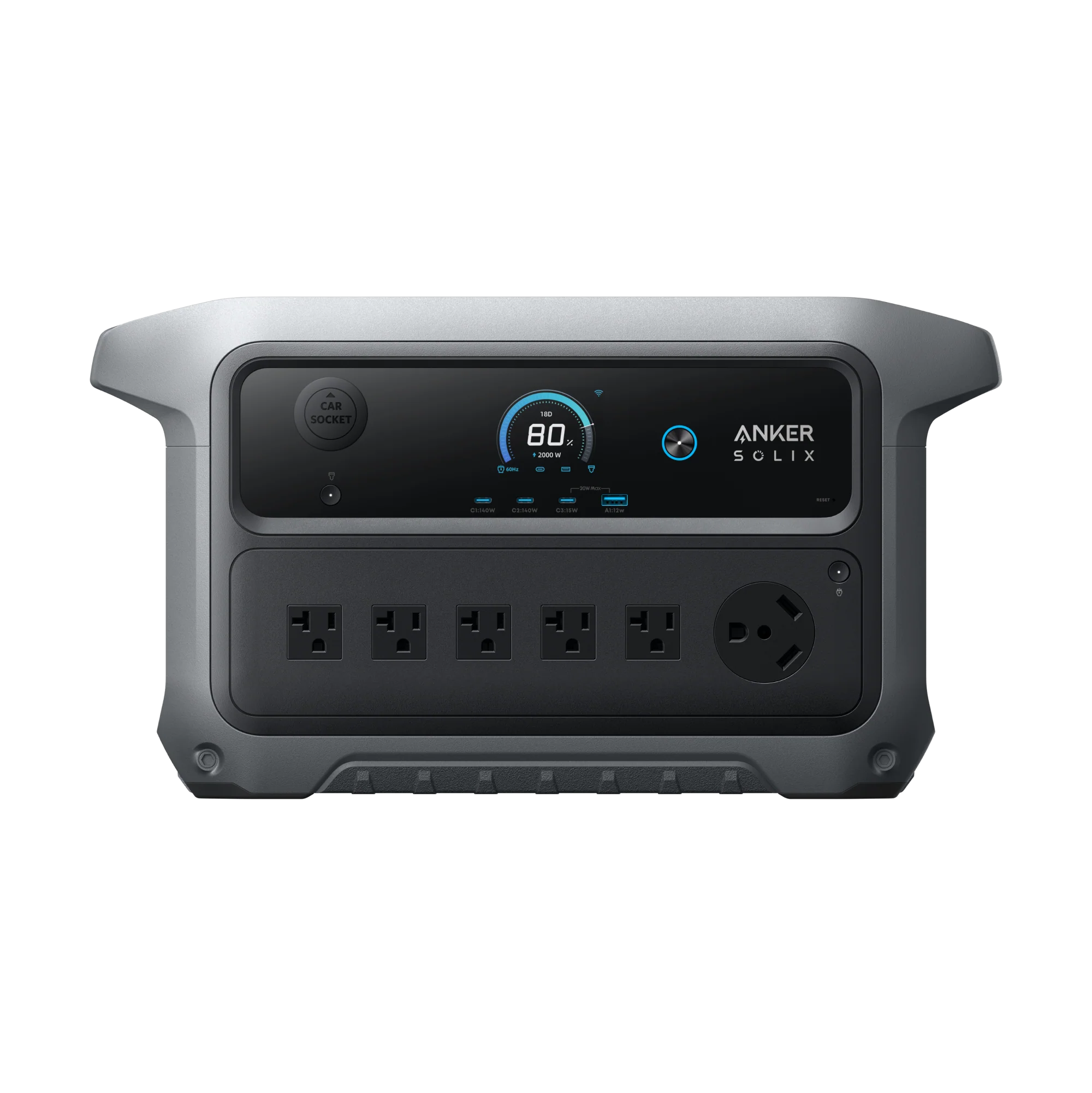
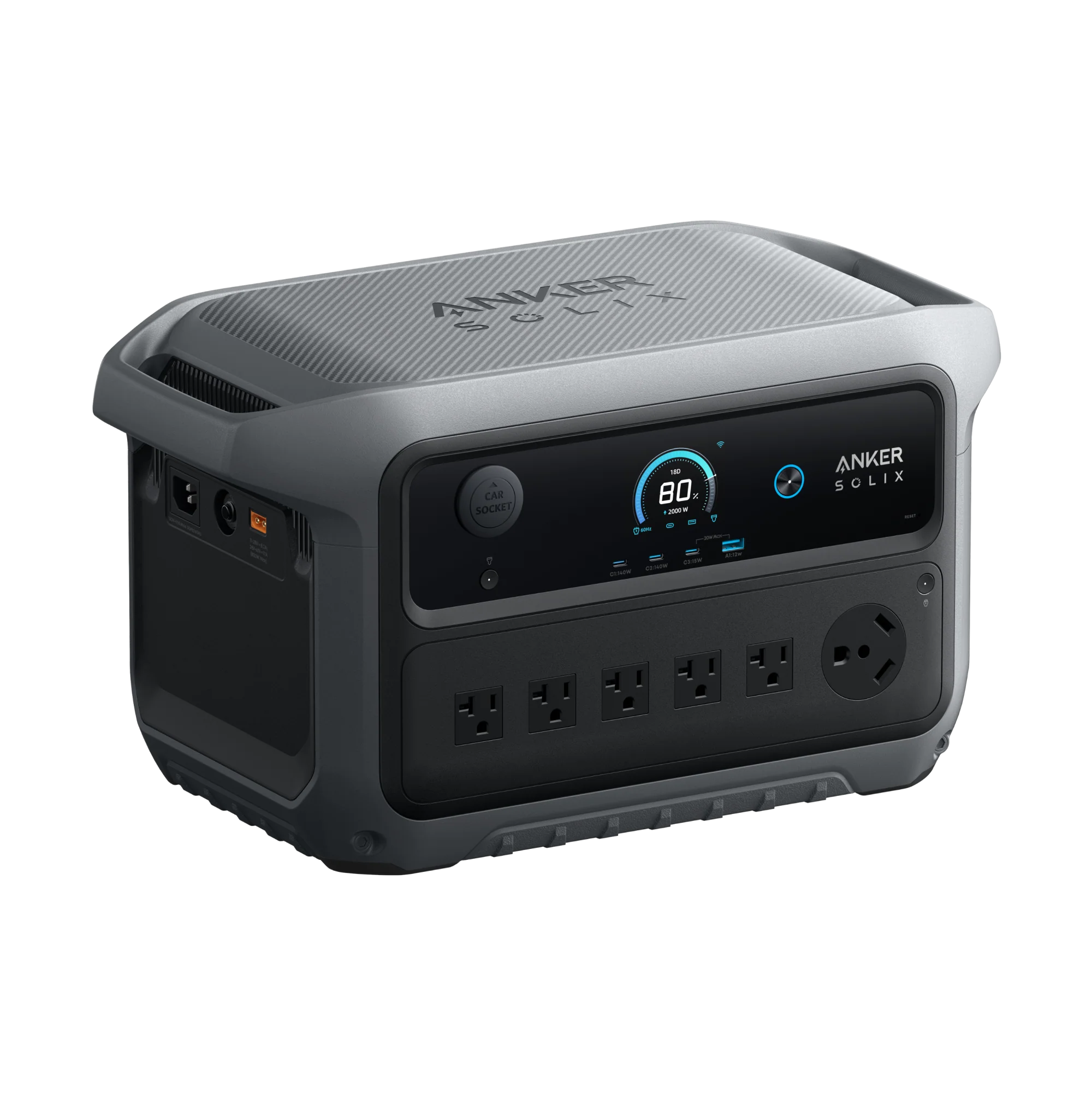
The handle is sturdy, the ports are well-organized with clear labeling, and the display immediately grabs attention.
Setup takes under three minutes: unbox, power on, pair with the Anker app via Bluetooth.
The display shows input wattage, output wattage, state of charge, and estimated runtime simultaneously without requiring the app — a key advantage over app-only units.
The rubber feet are the one physical disappointment: they slip on smooth hardwood and tile surfaces.
A small rubber mat under the unit solves the problem completely, but for a $799 unit this is something Anker should fix from the factory.
Key Features
The Display: Best in Class, Not Close
Independent reviewers consistently cite the C2000 Gen 2's display as the best in the portable power station industry.
Anker (Manufacturer product image)
The screen is large, bright enough for outdoor use, and shows detailed real-time data — input wattage, output wattage, state of charge percentage, estimated runtime at current draw, and active port status — all simultaneously without needing to navigate menus.
This sounds like a minor detail.
After living with units that have small, dim, or information-sparse displays, it genuinely changes daily usability.
The display shows whether your solar panel array is producing before you unpack the car.
It shows instantly whether your portable fridge is drawing what you expect.
It gives runtime estimates that update based on changing load conditions.
6,000W Surge: Handling Motor Loads
The 2,400W continuous output covers virtually all common household loads.
The 6,000W surge capacity is where the C2000 Gen 2 separates itself from similarly priced competition.
Most rivals in this price range cap surge at 4,000–5,000W.
The 6,000W figure means startup spikes from large motors that would trip other units are handled without drama.
Testing confirmed the 6,000W surge against a 1HP well pump (approximately 4,500W startup) and a 2-ton central AC unit (approximately 5,200W startup).
Both started successfully while similarly priced competitors with 4,000W surge ratings failed the same test.
30A RV Plug at $799
The 30A RV plug is a genuine differentiator at this price point.
Most power stations force you to use adapters for RV hookups — adapters that limit effective current below 30A.
Having it built in and backed by a 2,400W continuous inverter (with 6,000W surge for motor starts) makes the C2000 Gen 2 a practical full-service campsite power source.
Testing with a 30A RV pedestal adapter confirmed the outlet delivers genuine 30A service for standard RV loads — air conditioner plus lighting plus appliances simultaneously within the 30A service envelope.
Expandability to 4,096Wh
The expansion battery option doubles capacity to 4,096Wh — enough to run a standard refrigerator for roughly 4–5 days continuously.
The expansion battery integrates seamlessly through the Anker app, which displays combined capacity and power flow across both units.
The expansion path is limited to one additional battery (total 4,096Wh).
For buyers who need more than 4kWh, the C2000 Gen 2 is the wrong platform and larger systems should be considered from the start.
140W USB-C PD: Premium Charging
Two of the three USB-C ports deliver 140W Power Delivery — the maximum standard currently supported by most high-power laptops.
A MacBook Pro at full charge rate, a gaming laptop, or multiple 65W devices simultaneously can be handled.
This USB-C spec exceeds what the Bluetti Elite 200 V2 (100W max) and some EcoFlow units offer.
Performance Testing
Charging Speed
The 88-minute full charge from AC is confirmed in testing.
Anker (Manufacturer product image)
Adding 800W solar simultaneously reduces wall-clock charge time to approximately 65 minutes — the combined 2,600W rate fills the 2,048Wh battery quickly.
Efficiency Real-World Numbers
At 89% efficiency, the C2000 Gen 2 delivers approximately 1,823Wh of usable energy from a full 2,048Wh charge.
For comparison: Bluetti Elite 200 V2 at 94% delivers 1,949Wh (126Wh more per cycle); EcoFlow Delta 3 Max at 79% delivers 1,618Wh (205Wh less per cycle).
The C2000 Gen 2's efficiency is solidly mid-range-premium — not the category leader but well above average.
UPS Mode
UPS mode allows simultaneous AC input (up to 1,800W) and AC output (up to 2,000W).
Switchover time from grid to battery during a simulated outage measured approximately 25–35ms — sufficient for most home electronics without device restarts or data loss.
Competitive Analysis
vs. Bluetti Elite 200 V2 ($1,099)
Anker wins on price ($300 cheaper), display, app quality, outlet count (5+30A vs 4), and weight (42 vs 53.4 lbs).
Bluetti wins on efficiency (94% vs 89%) and solar input (1,000W vs 800W).
For most buyers, the Anker's $300 price advantage and better usability win the comparison.
For efficiency-focused daily users who cycle the unit constantly, Bluetti is worth the premium.
vs. EcoFlow Delta 3 Plus ($1,099 for 1,024Wh)
Anker has double the capacity at a lower price.
EcoFlow wins on features (UPS, X-Boost, smart home integration) and ecosystem depth.
For pure value and capacity: Anker wins decisively.
For feature-focused buyers integrating with smart home systems: EcoFlow is worth the extra cost.
vs. EcoFlow Delta 3 Max ($759 for 2,048Wh)
Anker wins on solar (800W vs 500W), efficiency (89% vs 79%), outlet count, and 30A RV plug.
EcoFlow wins on AC charging speed (68 vs 88 minutes).
For most buyers, the Anker's superior solar and efficiency make it the better all-rounder despite the $40 price difference.
vs. Jackery Explorer 2000 Plus (~$1,199)
Anker wins on price, surge capacity (6,000W vs Jackery's lower rating), and display.
Jackery wins on solar input (1,400W) and brand name recognition for some buyers.
Who It's For
Ideal For:
✅ Home backup power — covers essential circuits (refrigerator, lights, internet, phone charging) comfortably
✅ RV and overlanding use — built-in 30A plug is a genuine advantage
✅ Anyone wanting expandability to 4kWh without buying a completely different unit
✅ First-time 2kWh class buyers who want the best-supported, most reliable choice
Consider Alternatives If:
❌ Maximum efficiency is critical — Bluetti Elite 200 V2 at 94% wins
❌ You're building a serious solar array requiring more than 800W input
❌ You need 240V output — this is 120V only
Final Verdict
The Anker SOLIX C2000 Gen 2 is the most complete portable power station at its price point.
It doesn't have the efficiency record of the Bluetti Elite 200 V2 or the feature depth of the EcoFlow Delta 3 Plus.
But it hits every practical requirement at $799 with a display that makes it the most usable daily driver in the category.
Anker's customer support reputation is the best of any major brand in portable power — a real consideration when buying a $799 appliance you depend on during emergencies.
The 6,000W surge handles loads that trip competitors.
The 30A RV plug is unusually inclusive at this price.
The 88-minute charge is fast enough for daily cycling.
If you're buying one power station to handle home backup, camping, RV trips, and day-to-day grid resilience, this is the one.
Frequently Asked Questions
Q: What does 6,000W surge mean in practical terms?
A: Surge capacity covers the brief, high-current draw when motor-driven appliances start.
A refrigerator running at 200W may draw 1,000–1,500W for a second at startup.
A well pump running at 1,200W may draw 4,500W for a fraction of a second.
The 6,000W surge covers these startup spikes without tripping the inverter.
Q: Is 88 minutes actually fast for a 2kWh power station?
A: Yes — for context, the fastest charger in this class (EcoFlow Delta 3 Max) does it in 68 minutes, and many rivals take 90–120+ minutes.
The Bluetti Elite 200 V2 (slightly more capacity) charges in about 60 minutes.
88 minutes is solidly in the fast-charger tier for 2kWh units.
Q: Can I run the C2000 Gen 2 and the expansion battery simultaneously?
A: Yes — when connected, the expansion battery and base unit function as an integrated 4,096Wh system through the Anker app.
Power flow is managed automatically.
The combined unit draws from and charges both batteries simultaneously.
Q: Why do the rubber feet slip — is there a fix?
A: The feet use smooth rather than textured rubber, which reduces friction on smooth surfaces.
A simple rubber mat placed under the unit solves the problem completely.
This is something Anker should address in a future revision.
Q: What's Anker's warranty and support like compared to competitors?
A: Anker offers 2 years standard warranty with phone, chat, and email support typically responding within a few hours.
Bluetti's support has drawn criticism for 24–48 hour response times and limited helpfulness.
OUPES and Pecron have smaller support teams with longer response times.
Anker's consistent, fast support is a genuine differentiator that matters when something goes wrong with a backup power device.