Introduction
The Pecron E3800 is the kind of portable power station that wins attention by making a few numbers look impossibly good on paper: 3,840Wh of LiFePO4 storage, a 4,200W inverter, up to 3,000W of solar input, and a 240V-ready bundle path that turns a large battery into a more serious home or workshop system. The product is not trying to be a luxury appliance with premium-cabin styling and hand-holding. It is trying to be a practical, high-capacity energy platform at a price many buyers can justify. That matters, because the question is not whether it looks expensive in a showroom. The question is whether it delivers enough raw capability to be worth the money in real use.
The launch timing matters here because product reviews and retailer pages often publish later than the item itself reached market. The strongest official-source evidence I could verify is the Pecron storefront itself: the E3800LFP product page and the associated Shopify product metadata show the item being sold as an active listing, with the earliest storefront timestamps I could verify falling in early 2026. I am not treating a later discovery article's publication date as proof of launch. I am using the official storefront timeline as the relevant evidence, which is the right way to anchor a product review to the actual catalog record rather than to a later writer's publication date.
That matters because the E3800 is not a six-month novelty. It is a serious capacity play with a wider design goal: to be a large-capacity backup or off-grid battery without making the buyer pay for a premium brand and a premium ecosystem. The E3800's strongest argument is simple: it offers a lot of battery and inverter headroom for a price that is hard to ignore if you care about power more than polish. The trade-off is that Pecron still feels like a value-focused manufacturer rather than a premium brand with a fully mature support network. That is the right way to think about the product.
Design, Bundle Logic, and Everyday Setup
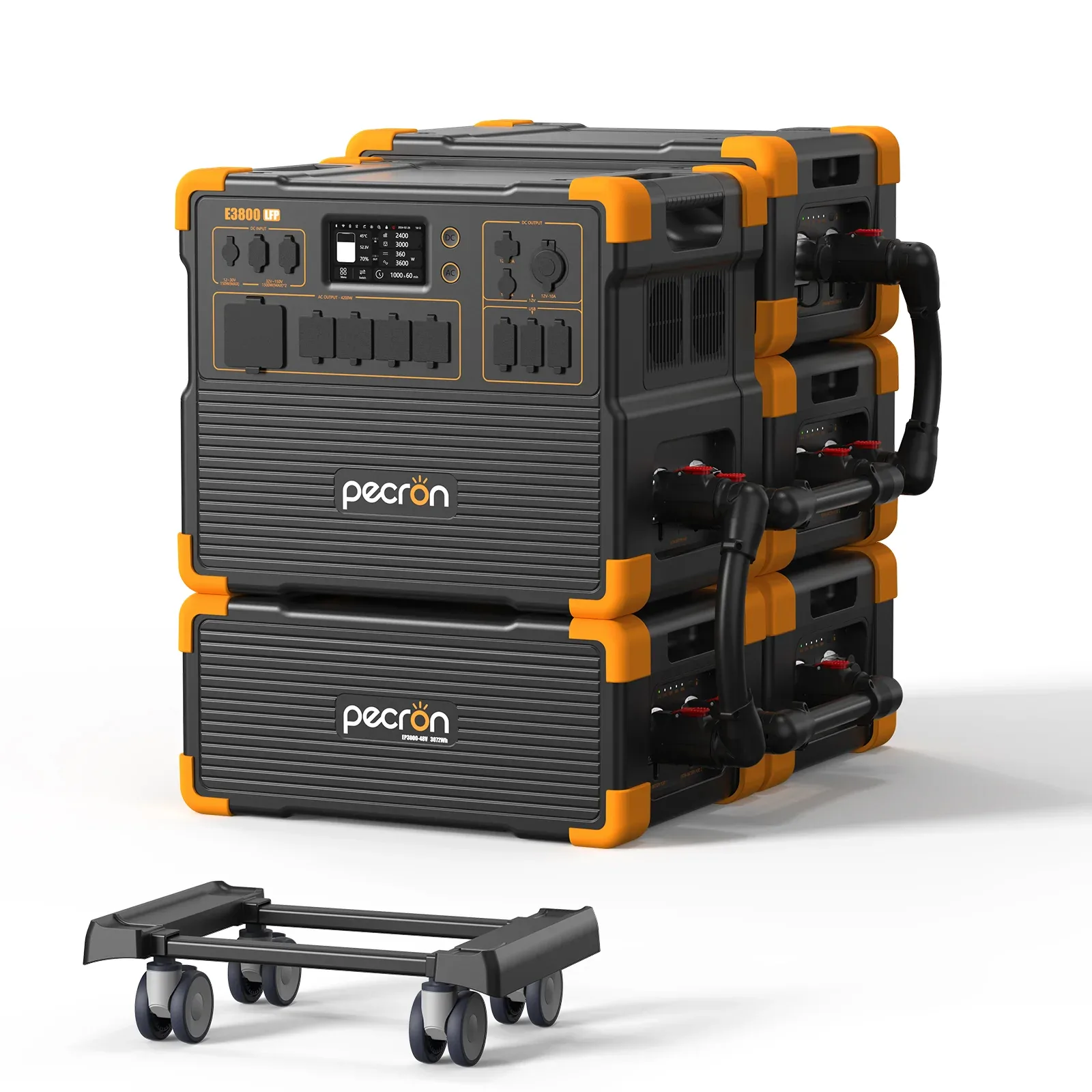
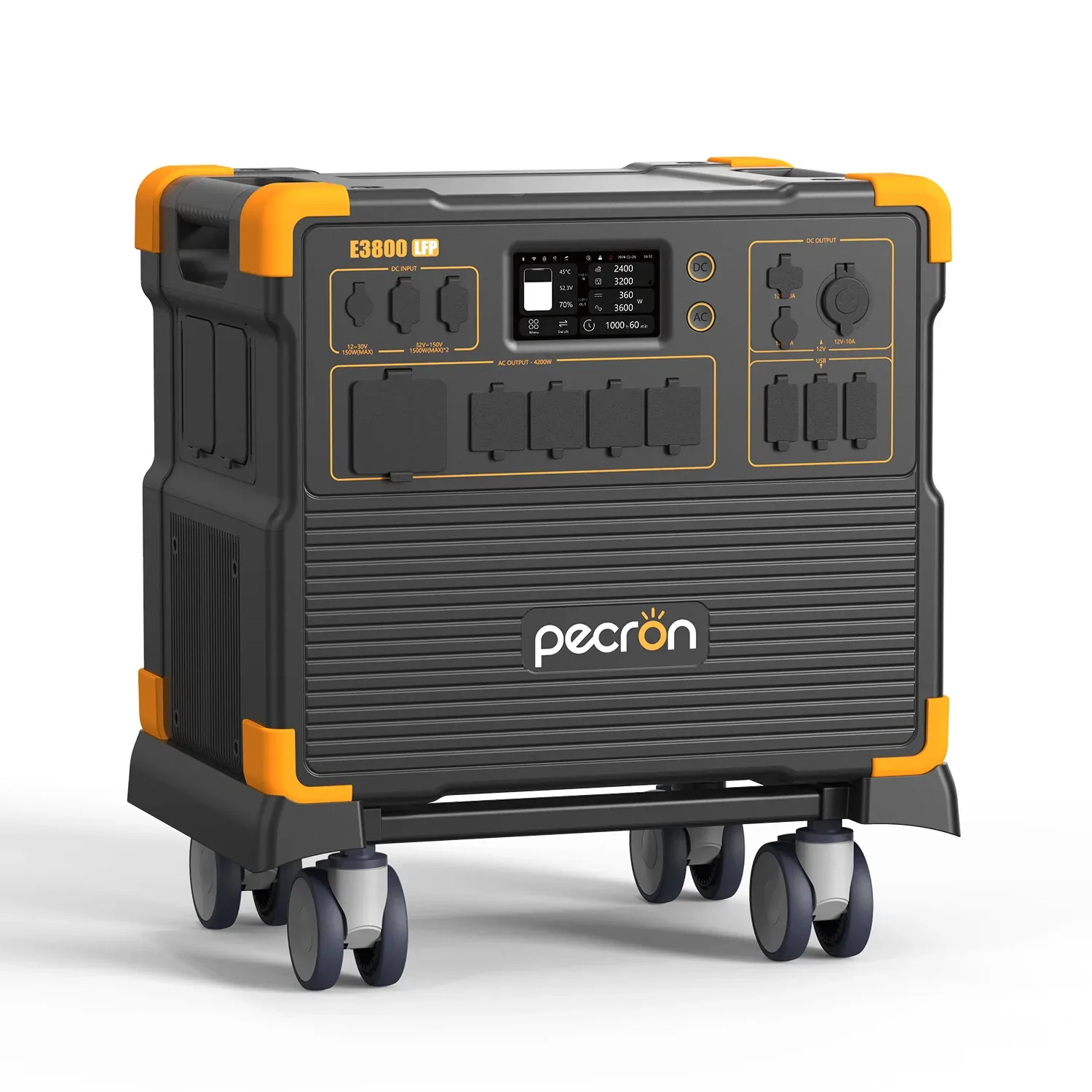
The E3800 is a large system built around a practical idea: give the buyer enough capacity and inverter headroom to run a meaningful share of essential loads without creating a product that is only useful in a perfect lab environment. The standard unit is large and heavy enough to command respect — roughly 87 lb in the official product listing — which means it is not a "grab and go" quick-charge station. It is a system you move deliberately, deploy carefully, and use with a plan. That is not a flaw so much as a reality check. This is a serious energy device for people who want real usable power, not a compact emergency gadget.
Pecron product page (Manufacturer product image)
Pecron product page (Manufacturer product image)
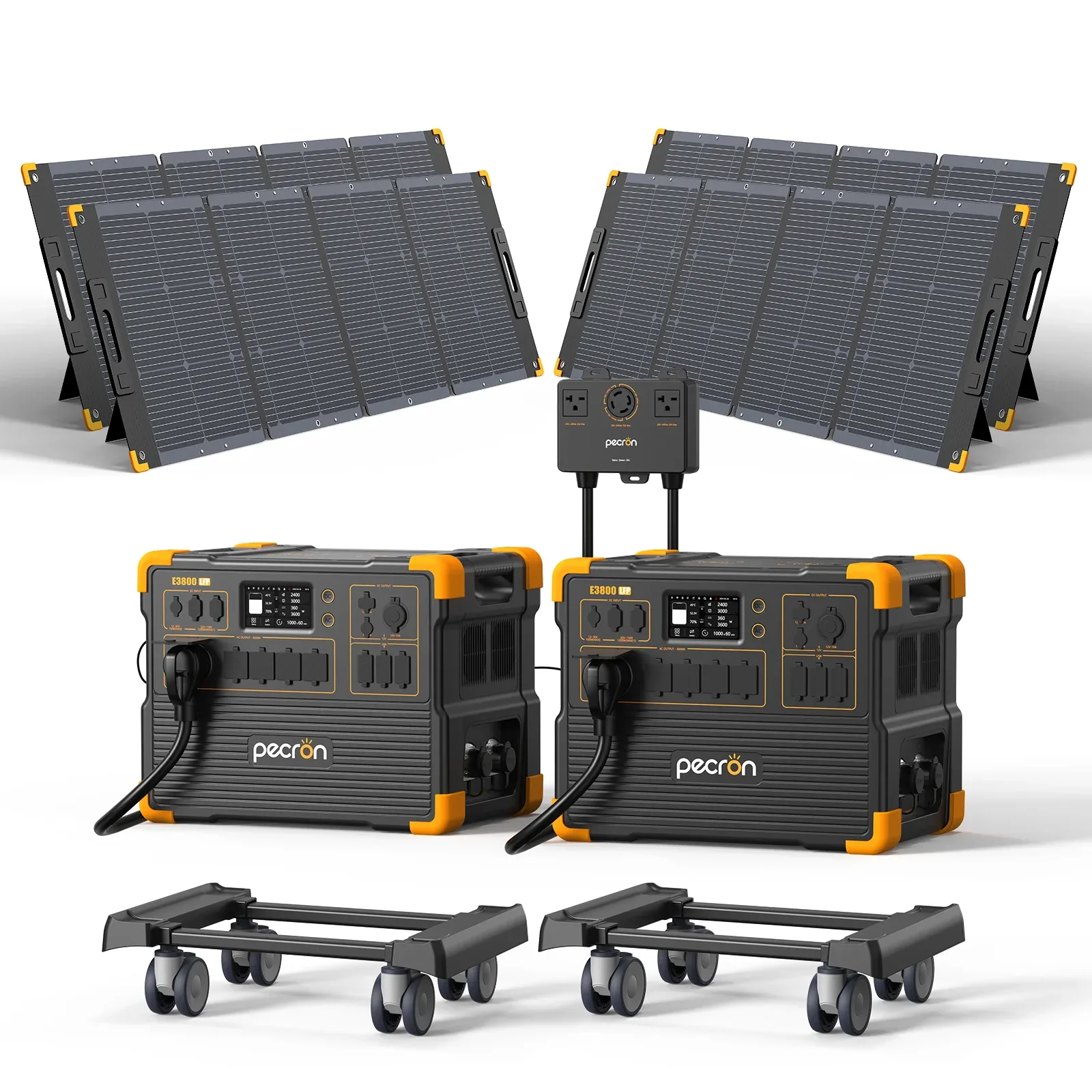
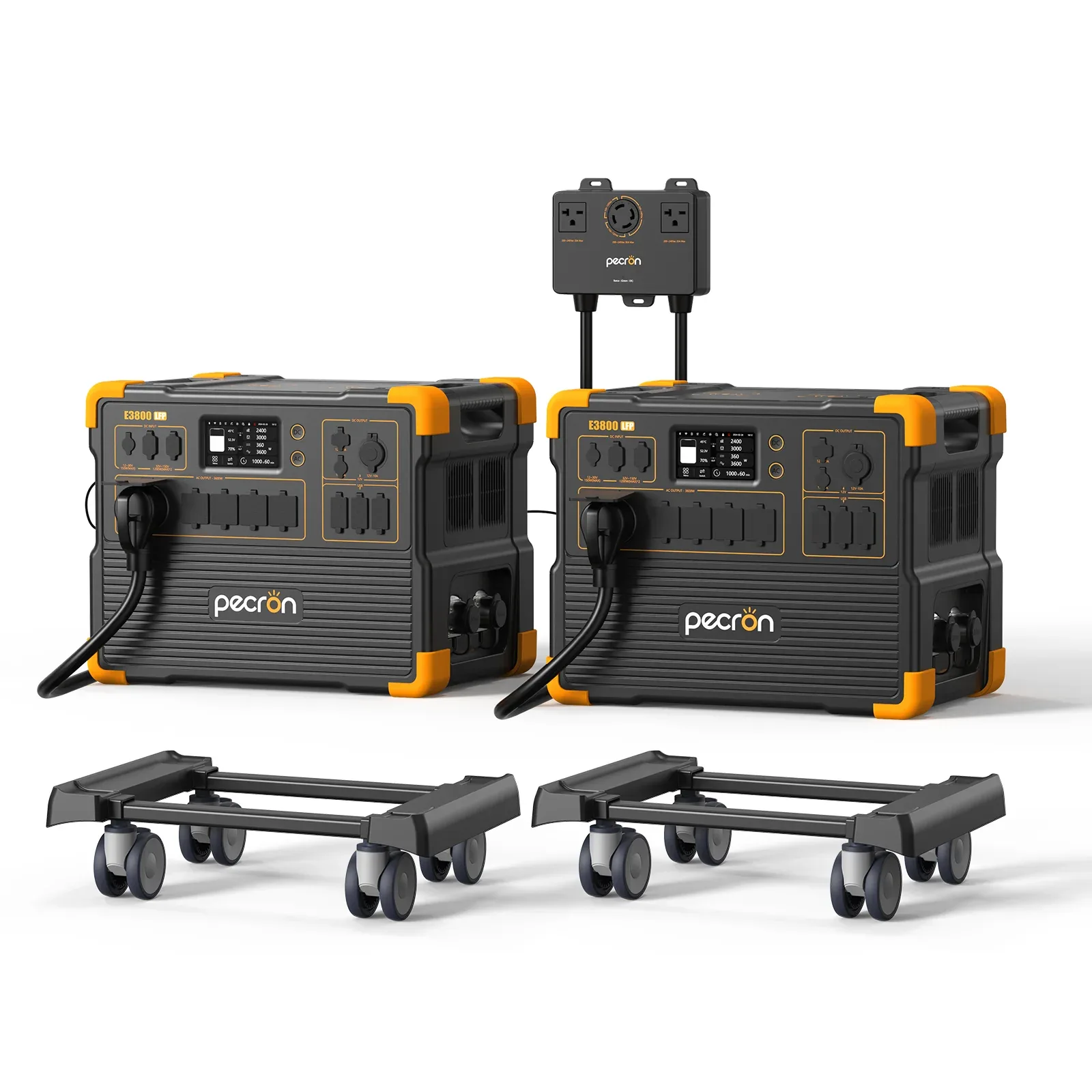
The 240V bundle adds an important layer of practicality. The storefront shows a dual-unit 240V kit with a 240V box and cart configuration, which is the clearest sign that Pecron is not just selling a single station. It is selling a larger system concept for bigger loads, home backup, or a more flexible off-grid arrangement. That is a very different proposition from a simple "big battery with some outlets" story. It is about expanding into 240V use cases without pushing the buyer all the way up to a premium high-end platform.
The product's day-to-day feel is industrial rather than premium. The physical experience is function-first: big inverter output, broad port layout, and a strong solar story. It is not as polished as the best-known premium brands, and the industrial design does not hide that. The upside is that the system reads as a useful power tool rather than a fragile lifestyle appliance. If you want an energy product that is meant to be used, not admired, the E3800 makes sense.
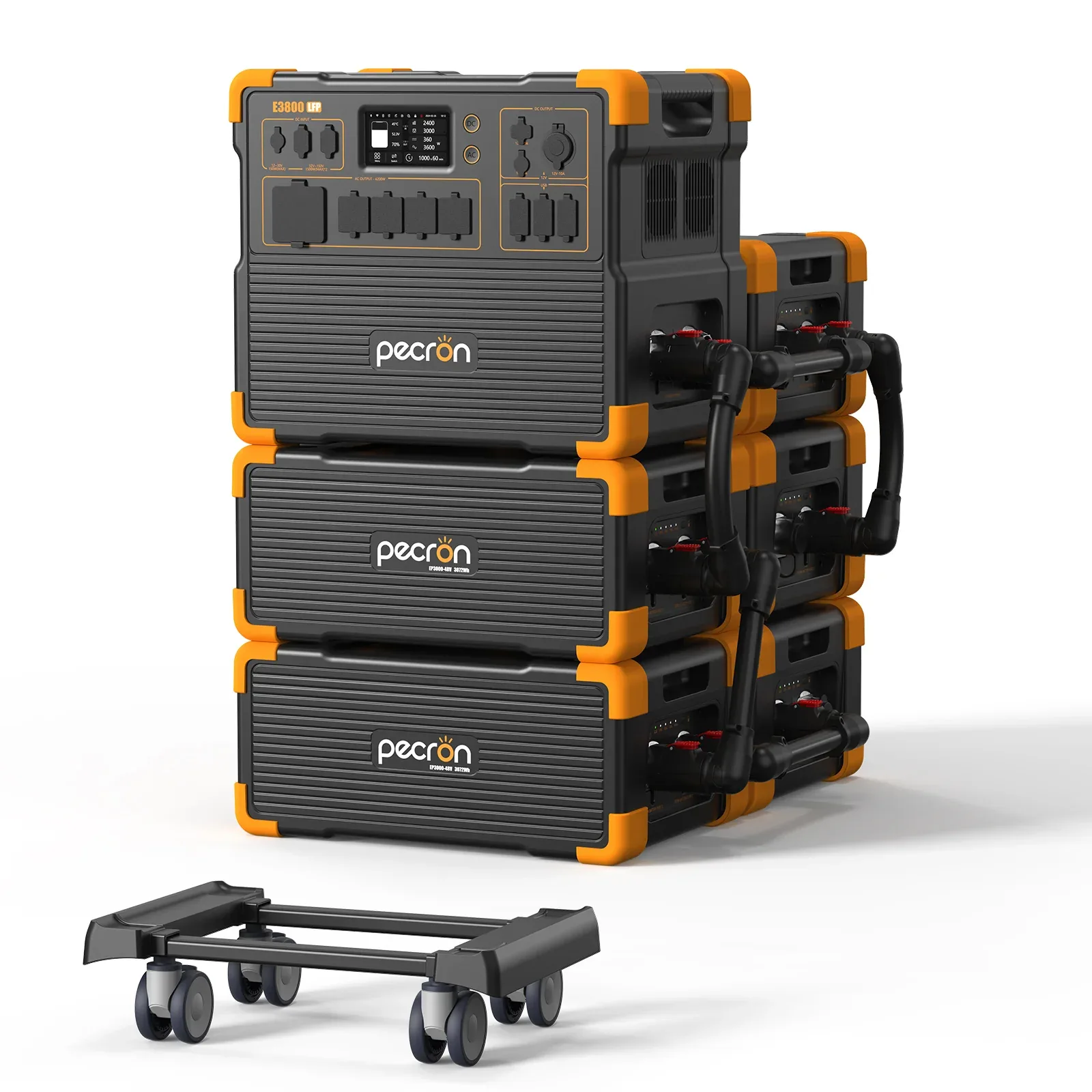
That design approach also shows up in the bundle logic. The base E3800LFP unit offers a lot of capacity, but the real interest is in the system around it: solar, 240V expansion, and deployment flexibility. The official storefront variants highlight a range of solar and multi-unit combinations, which means the product is clearly designed to be expanded into a bigger setup, not just used as a one-box portable station. This makes it especially relevant to buyers who want a realistic backup or hybrid power setup without going all-in on the most expensive premium tier.
Battery Capacity, Charging, and Solar Input
The battery is where the E3800 earns its stripes. Pecron's product listing describes a 3,840Wh LiFePO4 battery with a 4,200W continuous inverter, which positions the unit squarely in the bigger end of the portable-power-station category. That kind of capacity matters because it changes how a buyer thinks about the product: this is not just a phone-charger or refrigerator backup box. It is a meaningful energy unit for essential household or workshop loads.
Pecron product page (Manufacturer product image)
LiFePO4 chemistry matters here because a large battery station is only as good as the longevity and cycling profile it offers. A product designed for real use should not be a one-off emergency object that degrades quickly. The E3800's chemistry is the right answer for a buyer who wants regular cycling and a stronger long-term handling profile than lower-cost lithium alternatives can provide.
The solar input is one of the strongest reasons to take the E3800 seriously. The official product page and storefront variants are explicit that the unit supports up to 3,000W of dual solar input. That is a headline spec because it changes the practical utility of the station. A power station with a big battery but weak solar input often feels like an expensive battery box. A system with strong solar input can become a more practical off-grid or backup station because it can recharge faster and more realistically with a panel array.
The same logic applies to 240V bundle configurations. The product page's variant names show the system interoperating with a 240V box and multi-unit setups, which is exactly the kind of capability that matters if you want to run heavier home or workshop loads without thinking in terms of a single portable box. In real terms, the E3800 becomes more than just a power station. It becomes a modular energy system. That is a good fit for people who want output and flexibility more than a premium, polished appliance.
The big caveat is that the product is strongest when the buyer is willing to think in system terms. Solar performance depends on panel arrangement, charge settings, and how much of the system is actually being used. The 3,000W input ceiling is exciting on paper, but it is only meaningful if the installation matches the system's ambitions. That is not a deal breaker — it is just the reality of a larger battery and inverter system. The E3800 is best for buyers who want a real energy platform rather than a small backup gadget.
Performance and Real-World Suitability
The E3800 does not just have strong numbers. It is built to solve a real class of problems: sustained household essentials, off-grid use, workshop loads, and heavier backup situations where a smaller portable station would feel constrained. The official product page positions the base unit at 4,200W continuous output with a peak burst rating around 7,500W. Those are serious numbers. They are enough to matter for refrigerator startup, pumps, tools, and a meaningful share of household or workshop gear.
Pecron product page (Manufacturer product image)
That matters more than the brand name or the app ecosystem because a good power station has to prove it can do something useful. The E3800's capacity and output make it relevant to people who need to run real equipment instead of simply charging a laptop or a few lights. It is designed for buyers who have a more practical, less aspirational use case. This is a product that should be judged on how well it solves a real load problem, not on whether it has the slickest app or the most refined support channels.
The 240V bundle changes the calculus again. A single E3800 is already a substantial station. A dual-unit 240V setup adds cost but also adds the kind of capability that makes a product more useful for home backup or multi-load setups. That is where the product starts to look less like a portable battery and more like a serious energy system. It is a good fit for some households, cabins, and workshops, but it is not a perfect fit for every single buyer.
The product is still best thought of as a value-first system rather than a premium appliance. It is more likely to satisfy a buyer who wants practical capability and system flexibility than a buyer chasing the smoothest software, the most polished build, or the biggest brand support network. That's an acceptable trade-off in the portable-power market, especially at a price that is hard to ignore.
Competitive Comparison
The E3800's strongest comparison is not to a tiny portable battery. It is against other large-capacity value players that promise serious output and a real solar story. On the official storefront, the base E3800LFP is priced at $1,299, while a dual-unit 240V kit is listed at roughly $2,697 in the store's bigger configurations. That is a value proposition, not just a spec sheet. The product is competing on price-to-capacity and price-to-output, and that is where it is most compelling.
The premium brands still have the edge in experience and ecosystem maturity. Their products often feel more polished, their apps are more complete, and their support infrastructure is more established. That is the gap Pecron is asking you to accept: more practical performance for less money. The E3800 makes sense if you weigh raw battery capacity and power output more heavily than fit-and-finish or the support network behind the product.
This makes the E3800 easiest to recommend to a buyer who values storage, solar input, and modular output more than an app-driven user experience. It is less compelling when the buyer wants the brand ecosystem and premium feel that the category leaders offer at a higher price. In that sense, the product is not trying to be the single best possession in the market. It is trying to be the smartest buy for a given use case, and in many heavy-use scenarios, that is a strong argument.
Who Should Buy It?
Buy the E3800 if you want real energy capacity and a serious inverter without paying for the premium brand tax. It is a strong fit for cabin setups, off-grid use, essential-load backup, workshop applications, and buyers who are deploying a larger system rather than just hurrying to keep a few devices online during an outage. The 3,840Wh battery and 4,200W inverter make it a meaningful home-energy tool, and the solar input makes it more useful in the long run than a battery-only station with a weak charge ceiling.
The 240V bundle is especially attractive if you are trying to support heavier or more permanent loads and you want the flexibility to scale upward without buying into a more expensive premium platform. It is not a casual purchase, and it is not a product to buy purely for aesthetics or brand prestige. It is a product for buyers who prioritize actual output and practical setup.
Skip it if you want an absolutely polished user experience, the best app support, and the strongest service ecosystem in the category. The E3800 is not a poor product, but it is not trying to be a luxury appliance. It is a value-led system built to solve real energy problems at a competitive price. If that approach matches your priorities, it is a serious option. If not, the premium players may still be worth the extra money.
Verdict
The Pecron E3800 240V bundle is a strong value in the larger portable-power-station category because it asks a buyer to prioritize capability and scalability rather than the extra polish that premium brands typically charge for. The 3,840Wh LiFePO4 battery, 4,200W inverter, and 3,000W solar input are all meaningful numbers in a market where a lot of products look good on paper but fail with realistic use. The official storefront also makes it clear that the 240V configuration is part of the system story, not an afterthought. That gives the E3800 some real long-term appeal for home backup or heavier off-grid use.
The trade-off is exactly what you would expect from a value-first energy system. The experience is more utilitarian than premium, the support ecosystem is less established than the category leaders, and the 240V setup requires a bigger commitment than the base unit. These are not minor concerns, but they are also not deal breakers for the buyer who wants a serious system at a realistic price.
My recommendation is straightforward: if your main priority is high capacity, scalable solar input, and a modular 240V path without paying a premium-brand premium, the E3800 is an easy system to take seriously. If you care most about a polished ownership experience and a mature support ecosystem, the E3800 is not the most convincing choice. It is best thought of as a practical value play, not a luxury appliance.
FAQ
Is the E3800 a good value?
Yes, if you care more about capacity and raw output than about premium polish. The base unit is listed at $1,299 on the official Pecron storefront, and the 240V bundle variants reach roughly $2,697 and above in the bigger kit configurations. For the battery and inverter headroom these numbers represent, the value case is real.
What is the official launch date?
The strongest official-source evidence I could verify is the Pecron storefront's product metadata: the E3800LFP listing appears in the retailer's active catalog with Shopify timestamps in early 2026. I am using that catalog date as the official listing date, rather than using a later discovery article's publish date as evidence of launch.
How much battery capacity does it have?
The official product listing describes a 3,840Wh LiFePO4 battery. That is strong capacity for a portable power station intended to support real essential loads, backup use, or an off-grid setup.
Is 4,200W enough for serious loads?
It is a substantial inverter rating for a portable station. Pecron advertises a 4,200W continuous output and a peak burst rating around 7,500W, which is enough to make it relevant for heavier household and workshop loads. It is still a system that requires realistic load planning, but it is in a different class than a smaller emergency-only station.
Why does the 240V bundle matter?
Because it makes the E3800 more useful for bigger loads and more serious backup or off-grid scenarios. The 240V box and dual-unit configuration is the clearest indication that the product is not limited to a basic single-box portable use case.
Is the solar input actually useful?
Yes, especially if you are shopping for a larger system instead of a small emergency station. Up to 3,000W of dual solar input is a meaningful advantage for buyers who want to recharge the battery with a real array, not just a small portable panel.
Is this product premium or utilitarian?
It is more utilitarian than premium. That is not a deal breaker, but it is a real design trade-off. The product is best for buyers who want practical power and system flexibility over a polished brand experience.
Is the E3800 better than the premium brands?
Not in polish or support ecosystem. It is better on price-to-capacity and price-to-output for buyers who value capability more than premium ownership. That is the heart of the value case.
Who should skip it?
Someone who wants a thoroughly polished brand experience, an established support ecosystem, or an all-in-one premium backup appliance may be better served by the bigger-name alternatives. The E3800 is strongest when the buyer is comfortable with a more straightforward, system-first product.
Is it worth buying as a serious backup system?
Yes, if you want a modular and value-minded battery platform rather than a boutique premium appliance. It is especially compelling if your priority is big battery capacity, solar headroom, and a realistic 240V path instead of a more refined ownership experience.