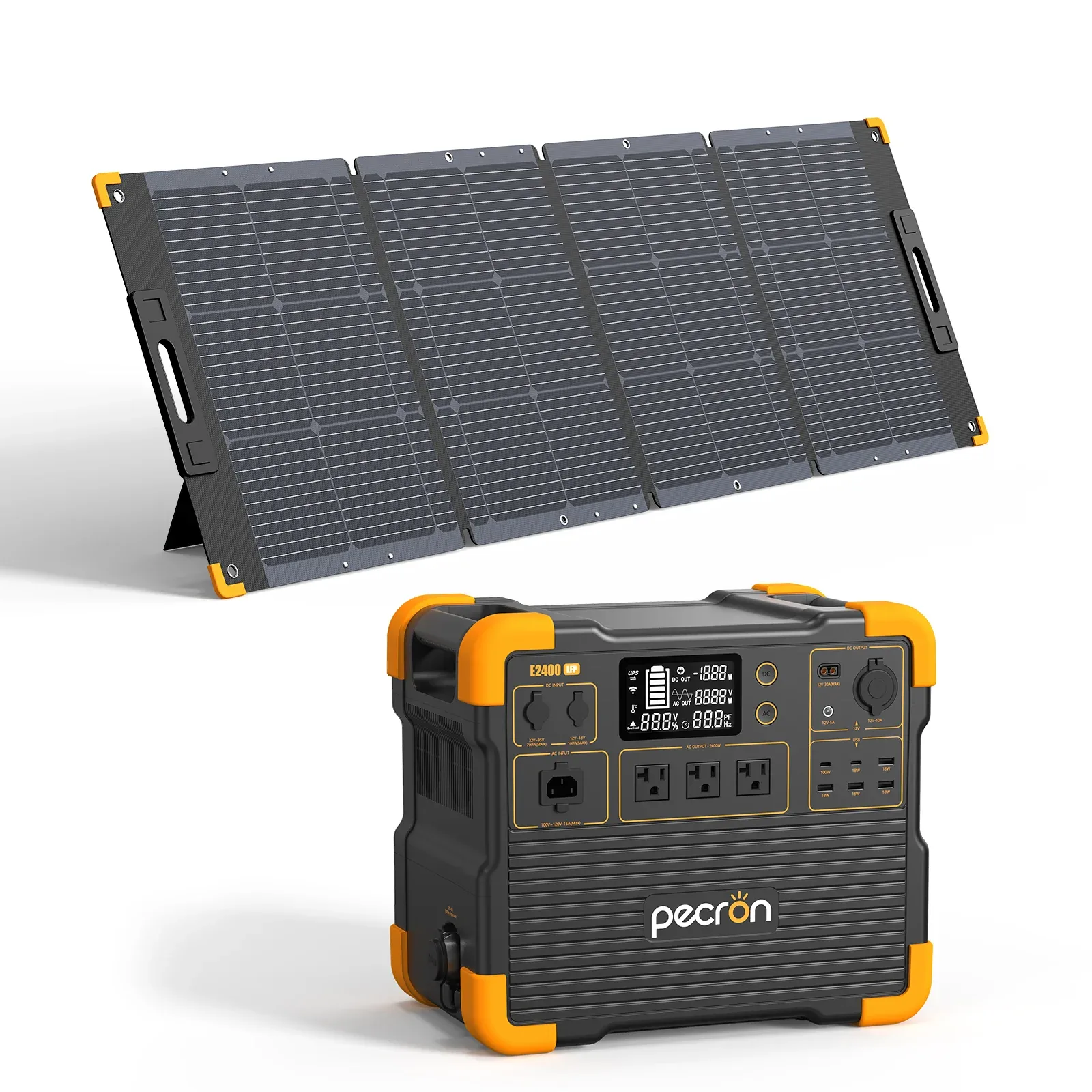
Introduction
The Pecron E2400LFP is exactly the kind of portable power station that looks compelling on a spec sheet and then demands a buyer understand its real limits. It packs a 2,048Wh LiFePO4 battery, a 2,400W inverter, fast AC charging, and a generous 800W solar ceiling. On paper, that is enough to cover a campsite, a worksite, a short outage, and a lot of charging needs without a second battery bank. The catch is that the E2400 is a reminder that marketing numbers and heavy-load behavior do not always match.
The official product record is the strongest launch-date signal I found. Pecron's storefront metadata shows the product record created on August 25, 2025, and that is the date I am using in this review rather than the discovery article's publication date. That matters because the E2400 is a 2025 product on the official storefront and not a 2026 launch story in disguise. Its age is real, but it is still a current enough station in 2026 to be worth buying only if its strengths outweigh the places where it falls short.
The E2400 is not a premium, polished appliance. It is more like a capable budget workhorse with a large battery, a front-heavy output layout, and a few details that make the overall experience more frustrating than the headline specs suggest. For people who can keep the station under control and buy it at a sensible price, it can be a worthwhile purchase. For anyone expecting a smooth, carefree 3kW inverter experience, the E2400 is easy to overestimate.
Design, Ports, and Setup
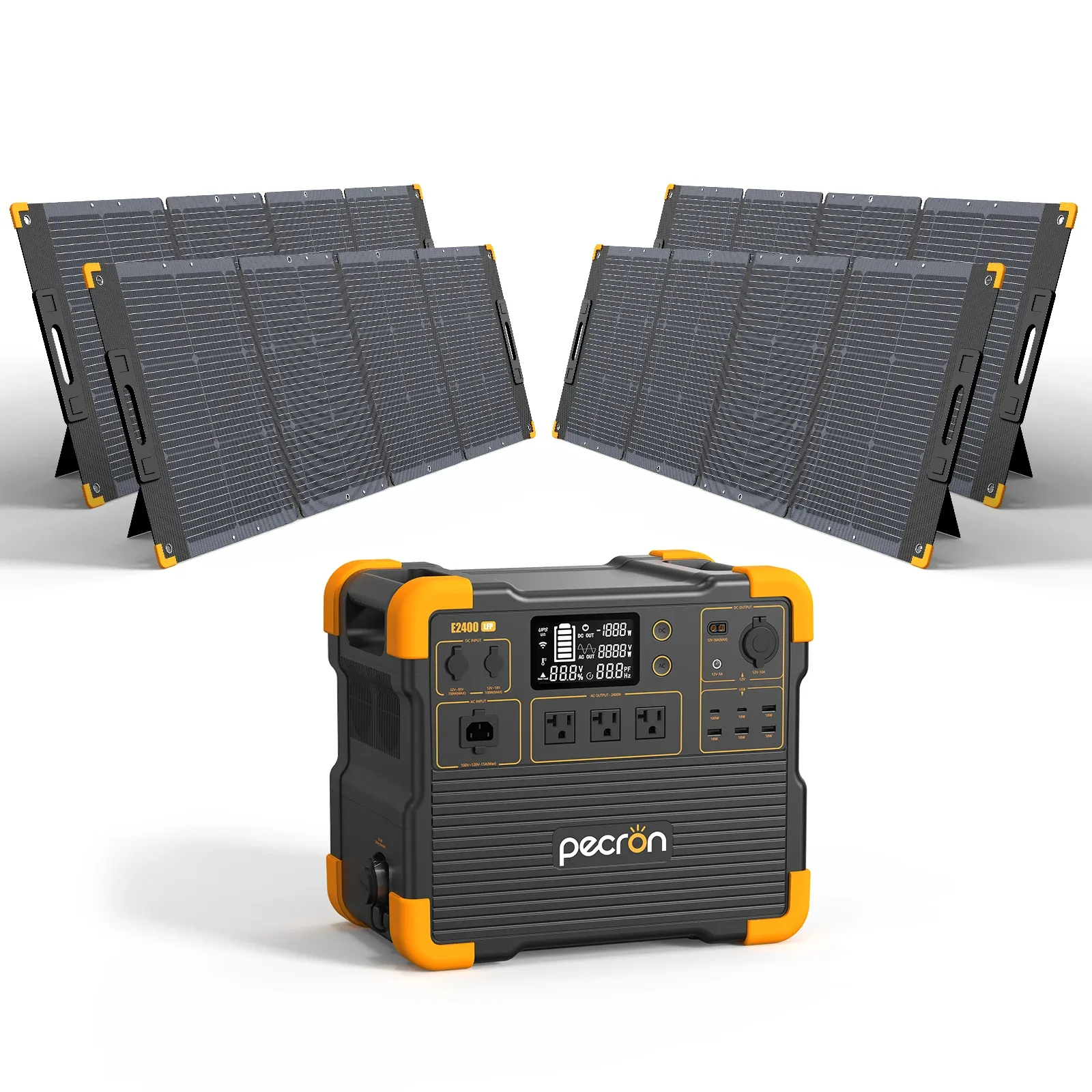
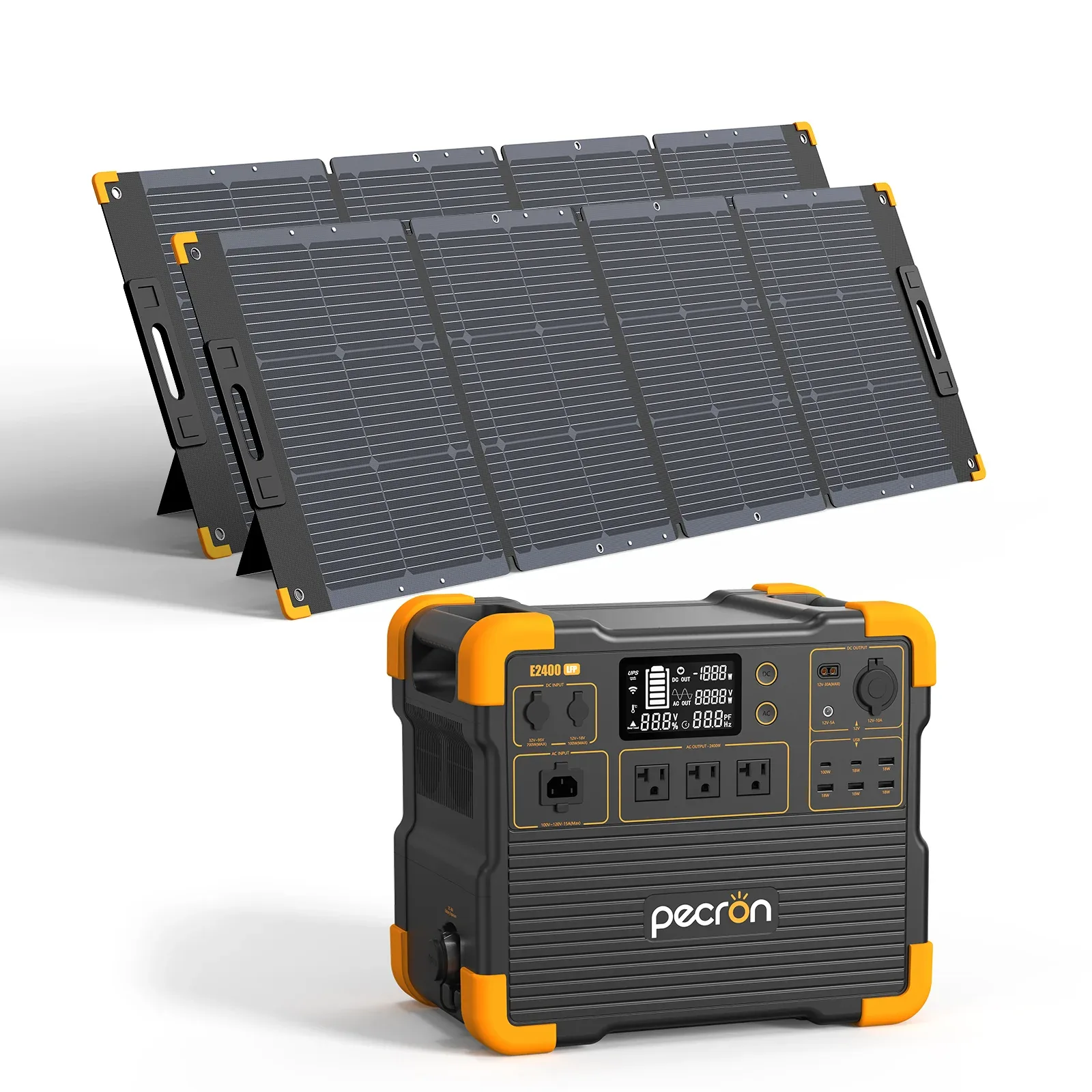
The E2400's physical design is familiar Pecron material: rugged, no-nonsense, and not particularly elegant. The Solar Lab review described it as a plain, utilitarian box with rubber corners and a black-and-orange palette, and that matches the overall impression. This is not a device trying to look premium in a living room. It is built to sit in a garage, camp setup, or off-grid workspace and perform rather than impress.
Pecron product page (Manufacturer product image)
At about 45 lb, the E2400 is large enough to feel serious without being absurd. It is portable in the car-camping or small-worksite sense, not in the backpacking sense. That is usually reasonable for a 2kWh battery: a person can move it, but it wants a stable place to live once it gets there. The front-facing layout is the E2400's best design move. The AC outlets, USB ports, DC socket, and XT60 output are all on the front, which is exactly the kind of feature that matters when the unit sits against a wall or tucked into a tight RV compartment.
The port selection is practical, even if it is not especially elegant. Pecron lists three 120V AC outputs, two USB-C ports with 100W PD capability, four USB-A ports, a 12V car socket, a barrel connector, and an XT60 30A output. That is a sensible mix for a family campsite or a small home-office setup. The 12V socket is one of the E2400's more useful touches because a surprising number of camping accessories still run from DC power. It is a detail many manufacturers quietly drop from their product lineups.
The weak point is the solar-input design. Pecron says the E2400 accepts up to 800W of solar input, but the hardware is split between a proprietary 700W input and a separate 100W MC3 port. The result is not a single clean solar story. It is a weird compromise that makes the station harder to integrate into a standard off-grid setup, especially when the XT60 port is already available and many rival stations use a more conventional approach. For a buyer planning a real solar array, this part of the design matters more than the marketing number suggests.
The E2400 also does not have a built-in light. That is a small, old-school omission that becomes more frustrating in the dark, especially if you are using it at night outdoors or during an outage. It is not a dealbreaker, but it does make the station feel slightly underbuilt for the way people actually use portable batteries when the grid is down.
Battery Capacity and Charging
The battery itself is the E2400's strongest argument. Pecron rates it at 2,048Wh with a 51.2V/40Ah LiFePO4 pack and a "3,500+ cycles to 80%" claim. That is exactly the chemistry and endurance story buyers want in a station that may be cycled repeatedly. LiFePO4 is a stronger choice than the older NMC chemistries used in cheaper, shorter-lived stations, and a 2kWh pack is large enough to be genuinely useful for weekend cabin trips, emergency electronics, or a few hours of serious power needs.
Pecron product page (Manufacturer product image)
The charging story is also good on paper. Pecron advertises 1,800W AC charging and a full charge in 1.5 hours. The Solar Lab reported a charge time of about 1 hour and 21 minutes from a drained battery, which is a strong result for a 2kWh unit. That is the kind of speed that makes the E2400 feel more like a work-ready inverter system than a slow, cautious battery bank.
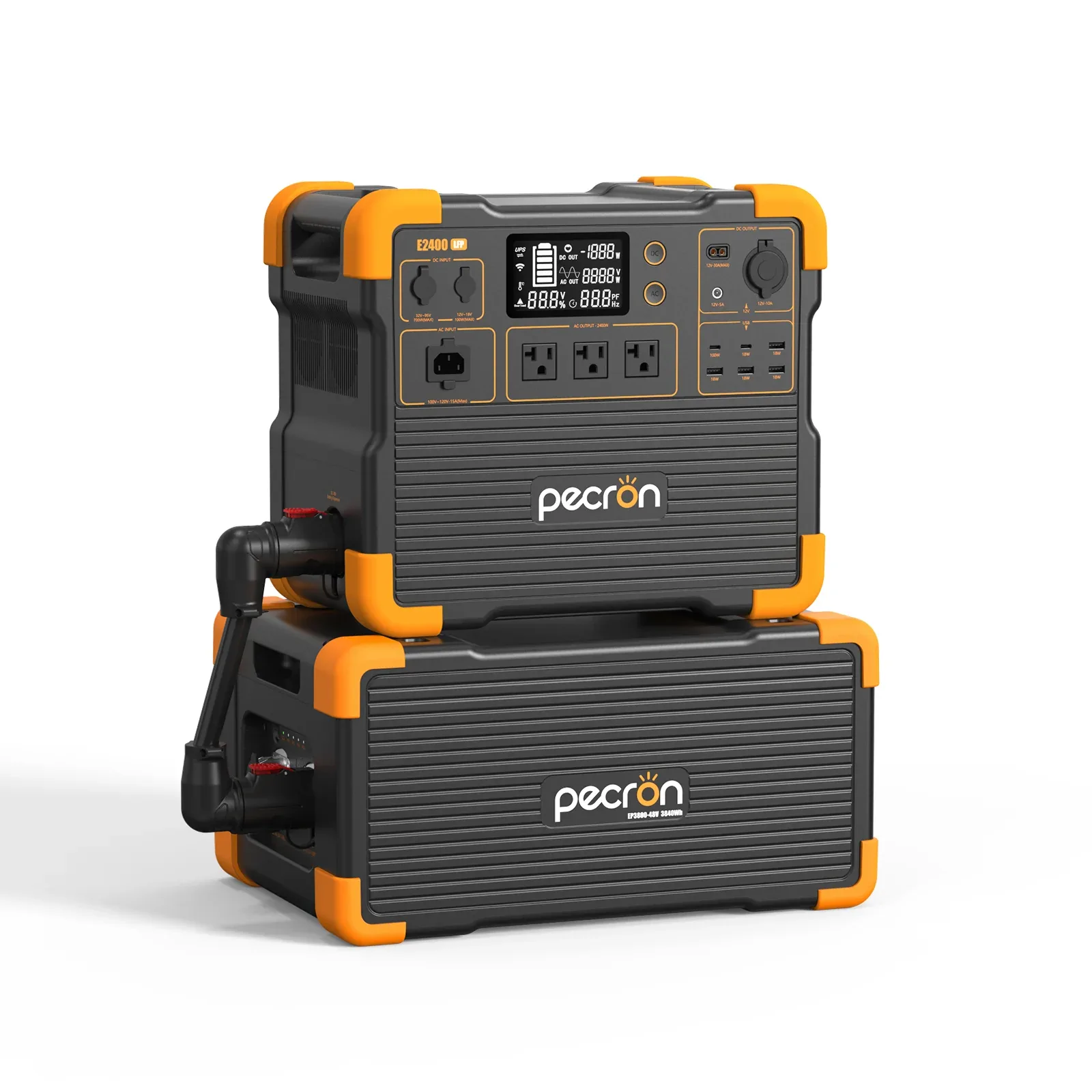
The solar ceiling is also useful, even if the implementation is awkward. The product page lists 800W max solar input, and the Solar Lab noted that the built-in design uses a proprietary 700W plug plus an extra MC3 port for 100W. That means a buyer can build a meaningful daytime charging setup, but only if they are willing to work around Pecron's chosen connectors. In practice, the real solar story is not the raw number; it is whether the buyer is comfortable with a product-specific solar ecosystem.
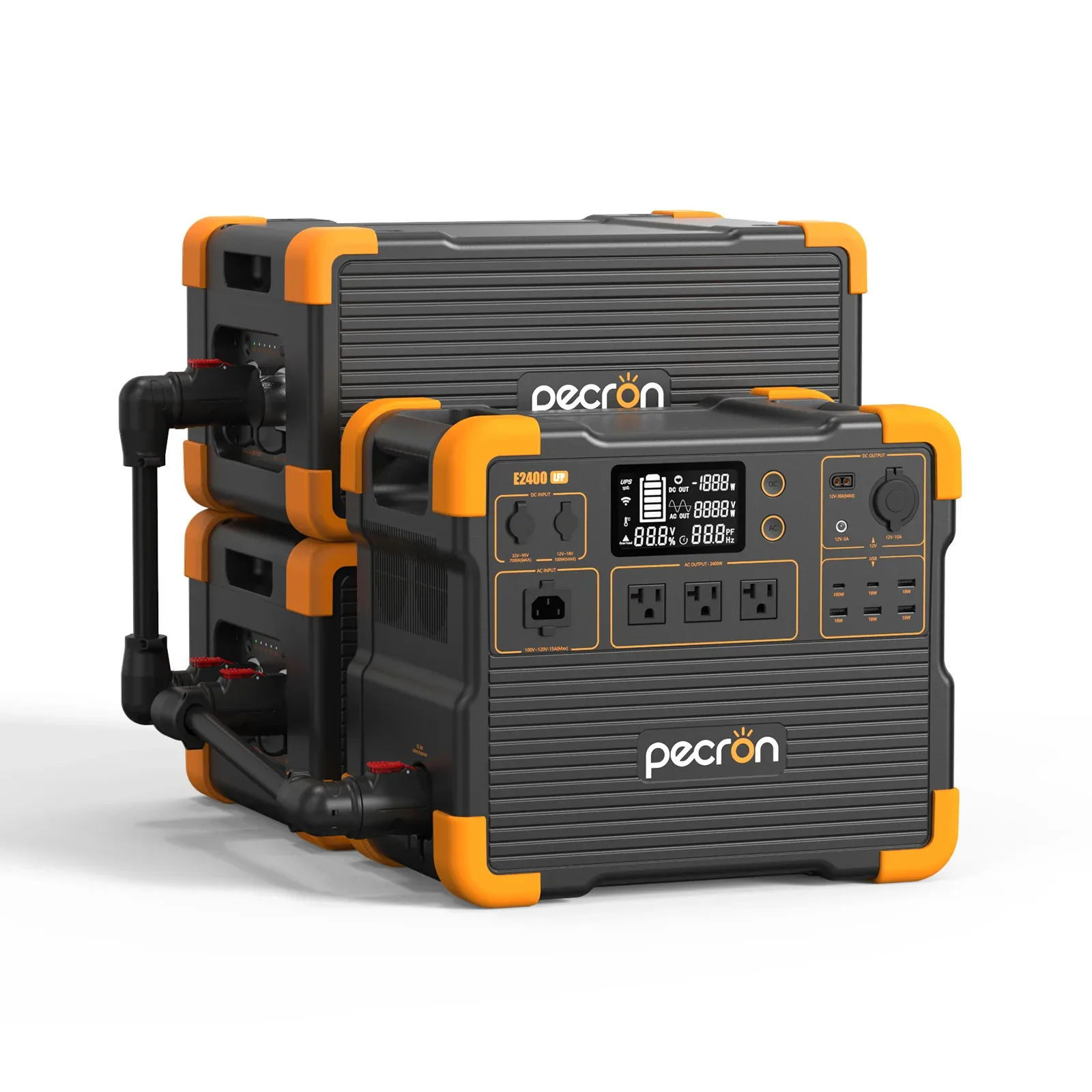
The E2400's expansion potential is a big part of its appeal. Pecron says it can scale with compatible batteries, up to roughly 8,192Wh with two EP3000-48V packs or 9,728Wh with two EP3800-48V packs. That is a real advantage for a buyer who starts with a portable station and later wants a larger system. It is also a useful way to frame the E2400's role: not as a single fixed battery, but as the start of a more flexible backup setup.
The caveat is that expansion claims can be optimistically written in product copy. A buyer should confirm the exact battery model, cabling, and compatibility with the current storefront before planning a larger system around those figures. The battery story remains good, but the expansion path is only as useful as the equipment that actually supports it.
Performance Under Load
This is the section where the E2400 stops looking like a clear winner. Pecron rates the inverter at 2,400W continuous with a 4,000W surge claim. The Solar Lab's testing exposed the problem: when it pushed the unit with a 2,275W load, the battery lasted only about 36 minutes before overheating and shutting off, and even a second test reached just 40.5 minutes with 75% efficiency. That is a respectable efficiency result in isolation, but it also points to the design's core weakness: the E2400 is not a forgiving station when it is asked to run near its limit for a sustained period.
Pecron product page (Manufacturer product image)
The issue is not simply that the E2400 is a little inefficient. It is that the system appears to struggle thermally under heavy sustained demand. The Solar Lab reported overheating when the battery was low and the fans kicked in hard as the inverter labored to maintain output. That matters because buyers often shop for a portable power station expecting something that can do a serious appliance load without performance dropping off mid-task. The E2400 does not reliably offer that level of confidence at the top of its rating.
The product page's claim of a 4,000W surge figure is still a red flag. Brief surge capacity is a real feature, but a buyer should not confuse marketing headroom with a tested ability to start a difficult refrigerator, compressor, pump, or tool. In the Solar Lab test, the power station tripped the problem earlier than it should have under a load close to the continuous ceiling. That is a reminder that the E2400 is a better fit for managed loads than for a full-throttle inverter job.
Idle consumption is another concern, although it is smaller than the thermal issue. The Solar Lab measured the E2400 losing about 16% of its battery over 24 hours with the AC inverter on, or roughly 13.6W of idle draw. That is not catastrophic, but it is enough to matter. For anyone leaving the station powered in a cabin, van, or overnight backup setup, a constant draw is a real cost the product page does not fully explain in plain English.
The broader takeaway is that the E2400 acts most sensibly as a power station for planned use, not as an always-on, silent backup box. If you want to run a few devices, recharge from a wall or solar array, and then turn the station off when the job is done, the E2400 is easier to recommend. If you are counting on it to sit idle with the inverter active and then sprint to a heavy load without any thermal drama, it becomes a much less convincing purchase.
How It Compares
The closest comparison is with the E1500LFP, which is a smaller but more straightforward station in the same family. The E1500 is lighter, more compact, and easier to carry, while the E2400 offers more battery capacity and a stronger headline output. The E2400 wins on raw capacity but loses on the confidence of the heavy-load story. If you need more energy without a dramatic spike in size, the E2400 is the better choice. If you want a more manageable, lower-risk station for everyday use, the E1500 gets harder to dismiss.
Pecron product page (Manufacturer product image)
The EcoFlow DELTA 2 Max is the more polished alternative for buyers who value a familiar ecosystem and a more mature app experience. EcoFlow's interface and accessories are easier to trust in daily ownership, and the brand has a broader support footprint. The E2400 offsets that with a lower official price and a larger battery, but it also exposes itself to the deeper criticism that its heavy-load performance is less reassuring than the marketing suggests.
The BLUETTI AC180 sits in the same general class of portable station, and it is a more intuitive buy for people who care about software polish and known brand support rather than just raw capacity. BLUETTI is often the more comfortable choice when the station has to live in a van or a home office long-term. The E2400 remains appealing when its current price is the important variable and when a buyer is happy to manage the system actively.
The Jackery Explorer 1000 Plus is not a direct match in capacity, but it does show the cost of a more refined system. Jackery's platform is easier to buy and easier to live with, while the E2400's main advantage is how much energy it delivers for the money. That matters most if a buyer cares more about total storage and solar charging than about premium ergonomics or a rail-thin support ecosystem.
The E2400's real identity is therefore not "best in class". It is a budget-first energy package for people who accept some rough edges in exchange for a lot of capacity and quick charging. That is a fair trade only when the buyer plans around the thermal and surge limitations rather than treating the product page like a guarantee.
Who Should Buy It?
Buy the E2400LFP if you want a substantial portable battery for weekend camping, mobile work, or a designated backup station that you turn on for specific jobs. The 2,048Wh capacity, 2,400W continuous inverter, and strong AC charging speed make it attractive when a buyer wants a lot of usable energy without hunting through the premium brands. The front-facing layout and DC options also make it practical in tight spaces, especially if you are trying to keep a campsite or garage setup simple.
It also makes sense for someone who has a real solar plan and wants a source of energy that can be replenished during the day. The E2400's solar ceiling is strong, even if the proprietary input design is a nuisance. That matters more when the buyer is already integrating a panel array or planning a mobile setup than when they want an all-in-one, plug-and-play station.
Skip it if you need a station that is always ready and stays cool under pressure. If your work depends on running a heavy appliance near the inverter ceiling, or on a compressor with a difficult startup, the E2400 is not the calm, dependable choice. It is also less convincing if you value polished app controls, a cleaner solar approach, or a stronger support experience over raw power and price.
The E2400 is easiest to justify as a managed system: charge it, use it, switch it off, and avoid the worst-case loads. That approach fits a lot of buyers better than pretending the station is a professional-grade inverter replacement.
Verdict
The Pecron E2400LFP is a compelling value if you buy it for the right reason. It delivers a large 2,048Wh LiFePO4 battery, a 2,400W inverter, fast AC charging, and up to 800W of solar input for a price that is competitive with the category. For a buyer who wants serious energy storage without paying a premium for an established app ecosystem, those are real strengths.
The problem is that the E2400's headline numbers do not translate cleanly into the real world. Independent testing showed a major overheating issue under sustained heavy load and efficiency that fell far enough short of the spec-sheet promise to make reliable high-power use less convincing. The product's solar-input design is also awkward and less flexible than the rest of the product feels like it should be.
That makes the buying decision simple. The E2400 is a good choice for planned charging and moderate loads, especially if you want a large station with strong AC charging and expandable capacity. It is a bad choice if you expect it to operate quietly, confidently, and without thermal warnings when you push toward the top end of its rating. It is not the best station in the space, but it is an honest value for a buyer who understands what it is and what it is not.
FAQ
When did the Pecron E2400LFP launch?
The clearest primary-source date I found is the official Pecron storefront metadata, which lists the product record as created on August 25, 2025. That is the date used here, rather than the discovery review's publication date.
How much power can it deliver?
Pecron rates the inverter at 2,400W continuous and 4,000W surge. The independent testing found much more cause for caution near the top end of the rating, so 2,400W is a better planning number than a guarantee that every heavy load will ride through without thermal issues.
Is the 4,000W surge rating credible?
It is a claim, not a promise. The E2400's real-world behavior under heavy load is the stronger signal, and the independent tests showed that sustained demands near the continuous ceiling can trigger overheating despite the headline rating.
How fast does it charge from AC?
Pecron advertises 1,800W AC charging and a full charge in 1.5 hours. The Solar Lab measured a full charge in about 1 hour and 21 minutes, which is strong for a 2,048Wh station and one of the E2400's most convincing features.
How much solar can it accept?
The official product listing says the E2400 accepts up to 800W of solar input, but the hardware is split between a proprietary 700W connector and a separate 100W MC3 port. That can work, but it is less flexible than a single standard input.
Is it a good fit for camping?
Yes, if you value a large battery and front-facing ports more than a completely polished user experience. The E2400 makes sense in a campsite or mobile work setup where the station spends a lot of time running a few loads rather than living at the edge of its inverter limit.
Does it work with expansion batteries?
Pecron says it can scale with compatible batteries, with a maximum quoted expansion of up to roughly 8,192Wh or 9,728Wh depending on the battery type. Confirm the exact battery model and compatibility before buying if you want to build around that figure.
Is the battery chemistry worth caring about?
Yes. LiFePO4 is the right chemistry for a station that may be cycled repeatedly. The E2400's 3,500-cycle claim matters more than a generic brand name because it points to a station designed for regular real-world use rather than just occasional emergency backup.
Is it good for home backup?
It can be useful for short outages and for powering a few essential devices, but it is less convincing as an always-ready home backup box. The idle draw and thermal behavior become more important when the unit sits in standby for days instead of being used in a planned session.
What is the main reason not to buy it?
The biggest reason is thermal risk under sustained heavy load. The E2400 is better at planned, moderate loads than at proving itself near the top of its inverter rating.
Does it have useful DC outputs?
Yes. The E2400 includes a 12V car socket and XT60 output, which are the kind of ports that matter in mobile and camper setups. That alone makes it more practical than a station that only offers AC and USB.
What should a buyer expect from the app and controls?
The product page highlights app control and Wi-Fi control, which are useful conveniences, but the E2400's overall ownership experience still feels more like a hardware-focused budget product than a premium smart appliance. The app is nice to have, not a reason to ignore the real performance limitations.