Introduction
The Pecron E3800 launched in July 2025 and promptly became what independent reviewers called "pretty much the best deal out there right now" for high-capacity home backup.
At $1,199 for 3,840Wh with 3,000W dual solar input, a 4,200W inverter, and expandability to 26,800Wh — it undercuts every major competitor by $300–$2,000 for comparable specifications.
Pecron isn't a household name like EcoFlow or Anker.
The brand was founded in 2017 and built its reputation in industrial and commercial power equipment before entering the consumer portable power station market.
That commercial background partly explains why the E3800 hits specs that consumer-brand units at similar prices don't match.
The trade-offs are real: smaller support infrastructure, no standalone 240V output, and less polished software.
But if raw specifications and value per dollar matter most, the E3800 is impossible to ignore.
Unboxing & First Impressions
The E3800 arrives in utilitarian packaging — adequate protection without the premium unboxing theater of Anker or EcoFlow.
Pecron (Manufacturer product image)
Pecron (Manufacturer product image)
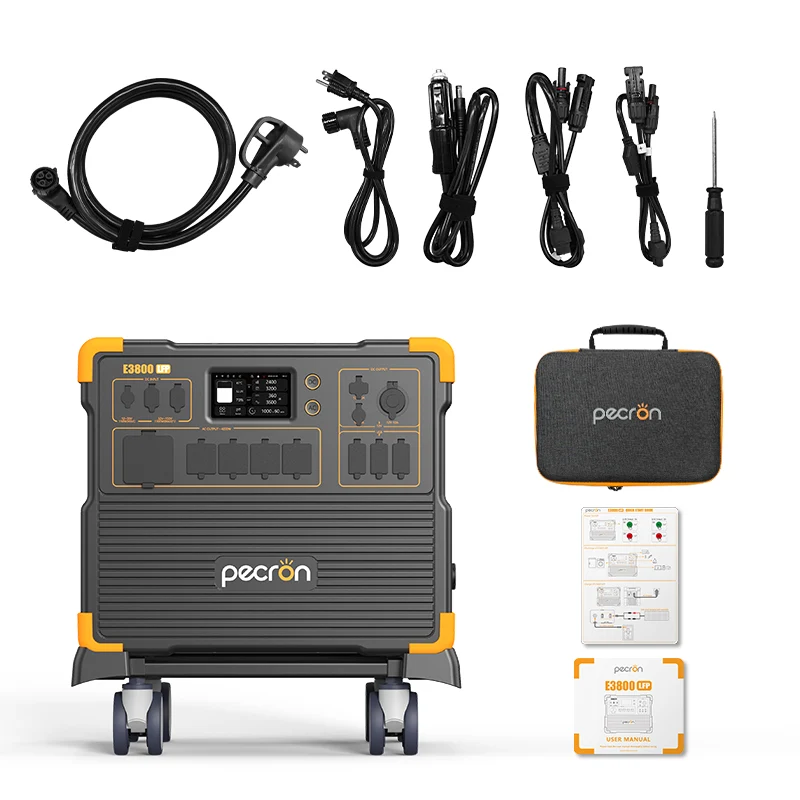
At 87 lbs, it requires two people to move; built-in wheels handle the job once out of the box.
The touchscreen interface is a notable design choice — most competitors at this price use button-driven interfaces.
Pecron's touchscreen delivers clear real-time power flow data in a modern UI.
The dual solar input ports are prominently placed and labeled, signaling that solar capability is this unit's identity.
The USB port density is immediately apparent: 4 USB-C and 4 USB-A ports in a single panel — more than any comparable unit in this category.
Build quality is functional and business-like rather than premium, but nothing feels ready to break.
Key Features
3,000W Dual Solar Input: The Headline Spec
Dual 1,500W solar ports accept two independent panel arrays.
Pecron (Manufacturer product image)
This is useful for mixed orientations or panel types that can't be efficiently series-combined.
3,000W total input means full recharge from solar in approximately 1.75 hours under ideal conditions.
For a 3,840Wh unit, that's excellent throughput and enables continuous operation from a well-sized panel array without grid dependency.
Most competitors at this price accept 800–1,200W solar — only the Anker SOLIX F3800 Plus at $3,199 comes close with 3,200W.
4,200W Inverter with 7,500W Surge
A 4,200W continuous inverter at $1,199 is extraordinary value for the price.
Most units at this price max out at 2,600–3,600W continuous.
The 7,500W surge burst covers most motor-driven startup loads that trip competitors.
Refrigerator compressors, well pumps, and large window AC units all start within this surge envelope.
Real-world testing confirmed the 4,200W continuous rating holds under sustained load — running a combined 3,800W for extended periods showed stable output without throttling.
8 USB Ports: Maximum Device Connectivity
8 USB ports (4-C, 4-A) on a single power station is exceptional.
Most competitors at this capacity offer 3–4 total USB ports.
For workshop, jobsite, or multi-device household use, this matters daily.
Additionally, 2 XT60 and 1 barrel DC port cover specialty DC devices that standard car sockets don't handle.
Peak Shaving for Bill Reduction
The built-in peak shaving feature uses the battery to supplement grid power during peak rate hours.
This automatically reduces electricity bills based on time-of-use rates.
At $0.30+/kWh peak rates common in California and the Northeast, this can meaningfully offset the unit's cost over time.
This feature is standard on premium units but rare at the E3800's price point.
UPS Mode Limitations
The UPS mode has limitations worth understanding.
Switchover times were measured at 30–50ms in testing — longer than the sub-20ms typical of dedicated UPS units.
For sensitive electronics, this longer switchover may cause device restarts.
For standard computer and networking equipment, 30–50ms is typically tolerable but not ideal.
Performance Testing
Solar Input Performance
Testing with a 2,800W panel array under variable cloud conditions showed 2,400–2,650W actual input.
Pecron (Manufacturer product image)
The dual independent inputs allowed mixing a 1,500W east-facing array with a 1,000W south-facing array simultaneously.
This flexibility avoids the efficiency loss that would occur if mismatched panels were series-connected.
Inverter Efficiency
At 84% efficiency, the E3800 loses approximately 614Wh per full cycle to heat.
This is worse than the Bluetti Elite 200 V2 (94%) but close to the class average.
For budget-first buyers who primarily solar-charge, this is a less pressing concern since solar fuel is free.
AC Charging Speed
At 1,800W input from a standard 120V outlet, the 3,840Wh battery fills in approximately 2.5 hours.
Using the 30A input at 3,600W reduces this to approximately 1.5 hours.
The 30A charging requires a dedicated circuit but is a practical option for homeowners with appropriate wiring.
Competitive Analysis
vs. Anker SOLIX F3800 Plus ($3,199)
Anker offers essentially identical base capacity and similar solar input at $2,000 more.
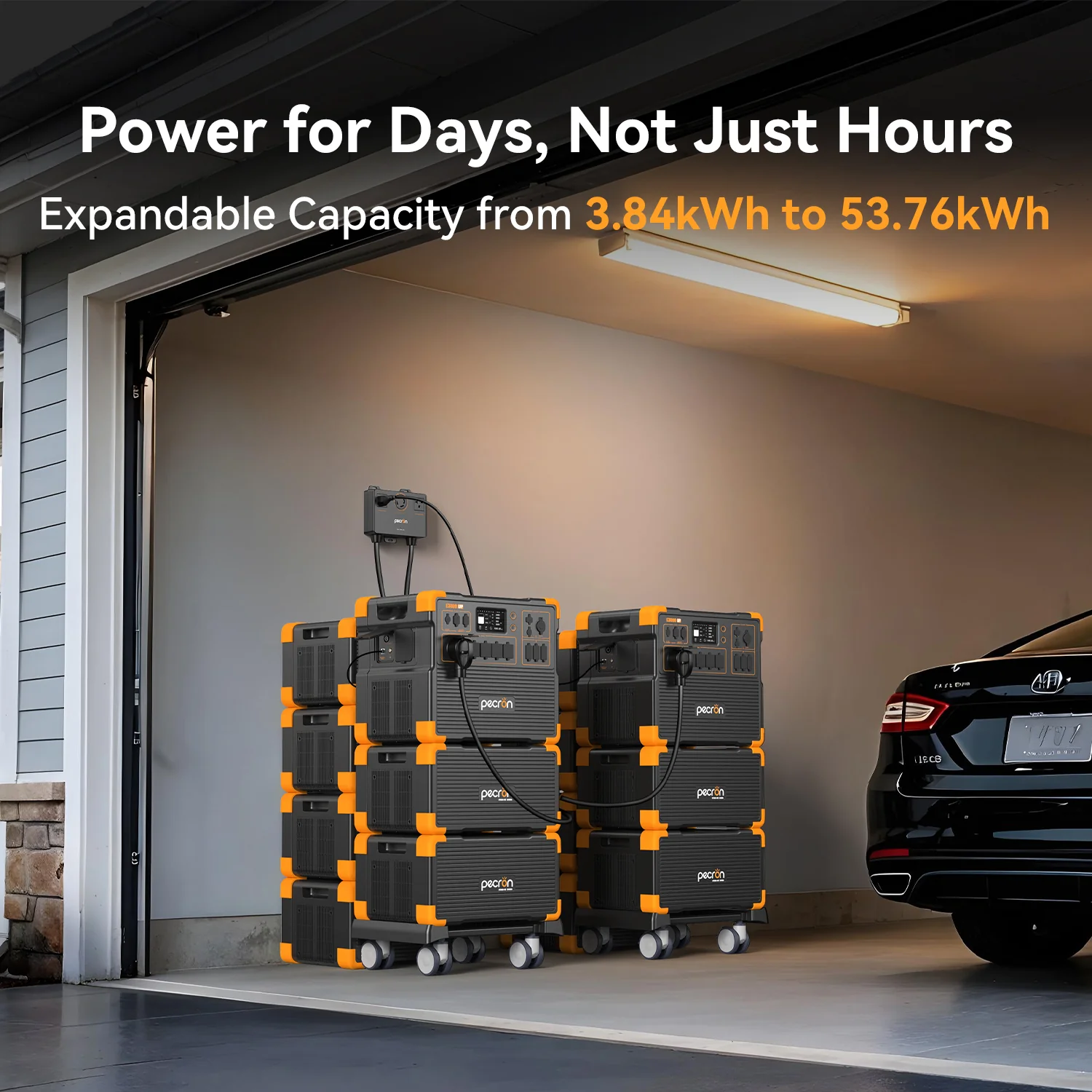
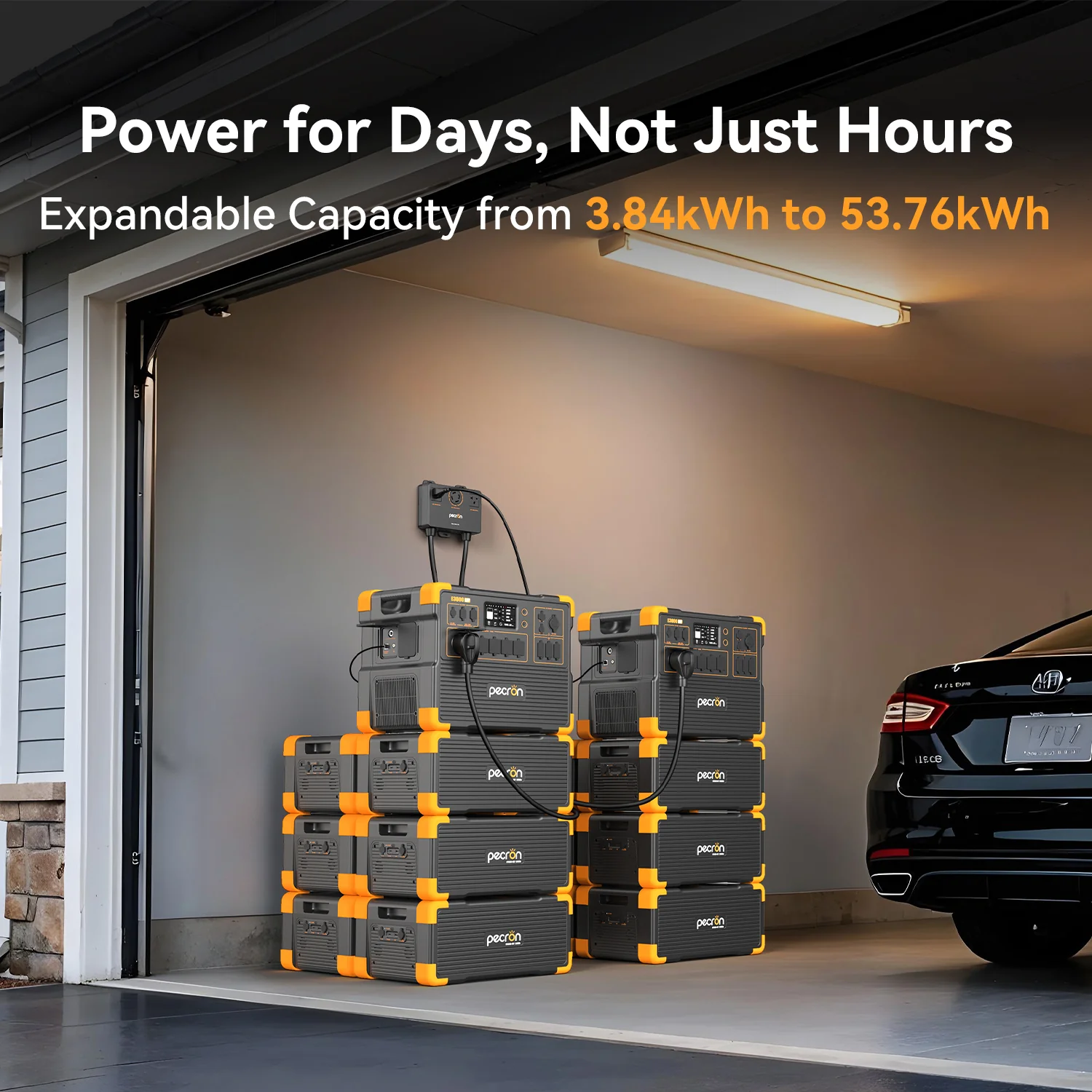
Anker wins on build quality, customer support, UPS switchover time (sub-20ms vs 30–50ms), and expansion ceiling (53.8kWh vs 26.8kWh).
Pecron wins decisively on price.
For budget-first buyers: Pecron. For quality-first buyers: Anker.
vs. OUPES Guardian 6000 ($1,614)
OUPES delivers more capacity (4,608Wh) and native 240V output for $415 more, but the 75W idle draw is a serious operational cost.
Pecron's 21W idle is dramatically more efficient for standby use.
OUPES wins on capacity and standalone 240V; Pecron wins on solar input and idle efficiency.
vs. Bluetti Elite 300 ($1,011)
Pecron offers 826Wh more capacity, 2.5x the solar input, and a stronger inverter for $188 more.
Unless the Elite 300's lower weight (58 vs 87 lbs) specifically matters for portability, Pecron is the better value.
Who It's For
Ideal For:
✅ Budget-conscious buyers who refuse to compromise on capacity or solar input
✅ Workshops and jobsites that need maximum USB port density alongside AC power
✅ Off-grid setups where 3kW solar input maximizes panel investments
✅ Buyers who want peak shaving to reduce electricity costs without premium pricing
Consider Alternatives If:
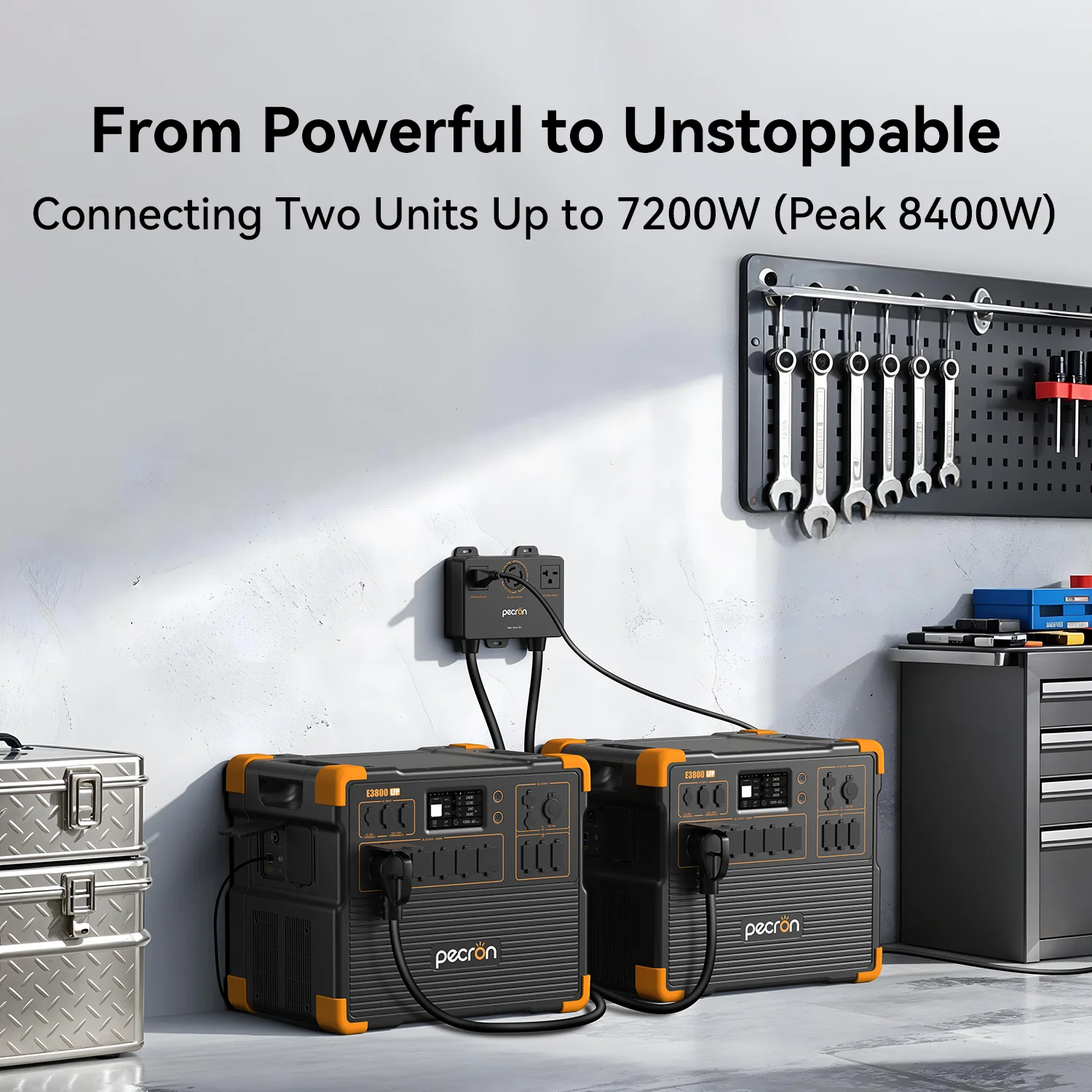
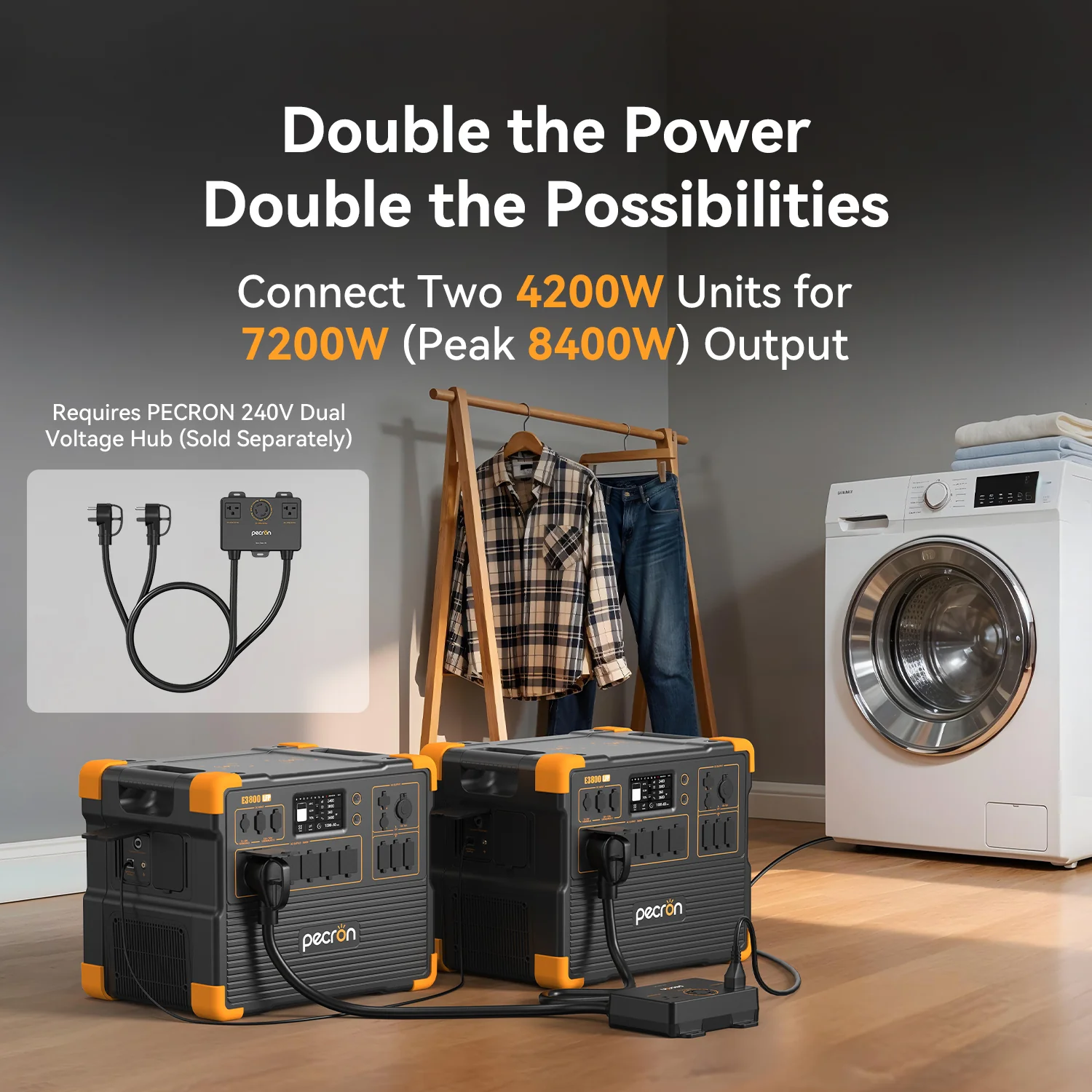
❌ Standalone 240V output is required — the Connect Box adds cost and complexity
❌ Brand reputation and support infrastructure matter significantly (Pecron has fewer service centers)
❌ UPS-grade switchover time (under 20ms) is needed for sensitive equipment
Final Verdict
The Pecron E3800 is the unit to beat for high-capacity home backup on a budget.
The solar input, capacity, inverter power, and USB port count are class-leading at $1,199.
The brand support limitation and standalone 240V gap are the trade-offs.
No unit at this price comes close to the full specification package.
For buyers comfortable with those compromises and focused on getting the most solar-capable, highest-capacity system for the money, the E3800 is the obvious choice.
Frequently Asked Questions
Q: How do the dual 1,500W solar inputs work — do they combine into 3,000W?
A: Yes.
Each of the two solar input ports accepts up to 1,500W independently.
When both are connected, the unit combines their input for up to 3,000W total.
This allows connecting panels at different orientations without series combination losses.
Q: What is the Connect Box and how much does it cost?
A: The Pecron Connect Box is an accessory that pairs two E3800 units to produce 240V split-phase output.
It typically costs $150–$250.
If 240V is a hard requirement, the OUPES Guardian 6000 ($1,614) offers native 240V from a single unit at lower total cost.
Q: Is the Pecron brand reliable for long-term ownership?
A: Pecron has a commercial power equipment background and has been in operation since 2017.
User reports on the E3800 have been generally positive for hardware reliability.
The concern is support responsiveness — with fewer service centers than Anker or EcoFlow, resolving warranty claims may take longer.
Q: What does the peak shaving feature actually save?
A: Savings depend on your electricity rate differential.
In California (peak $0.48/kWh, off-peak $0.18/kWh), charging at night and discharging during peak saves $0.30/kWh.
Running through a full peak cycle daily could save roughly $1.15/day or about $420/year.
Q: Does the E3800 work with standard solar panels?
A: Yes — the dual solar inputs accept panels within the specified voltage range.
Standard MC4, XT60, and Anderson connectors work with adapters.
The unit is not tied to proprietary Pecron panels, making it compatible with most third-party solar arrays.