Introduction: A Capable Older Station With One Important Warning
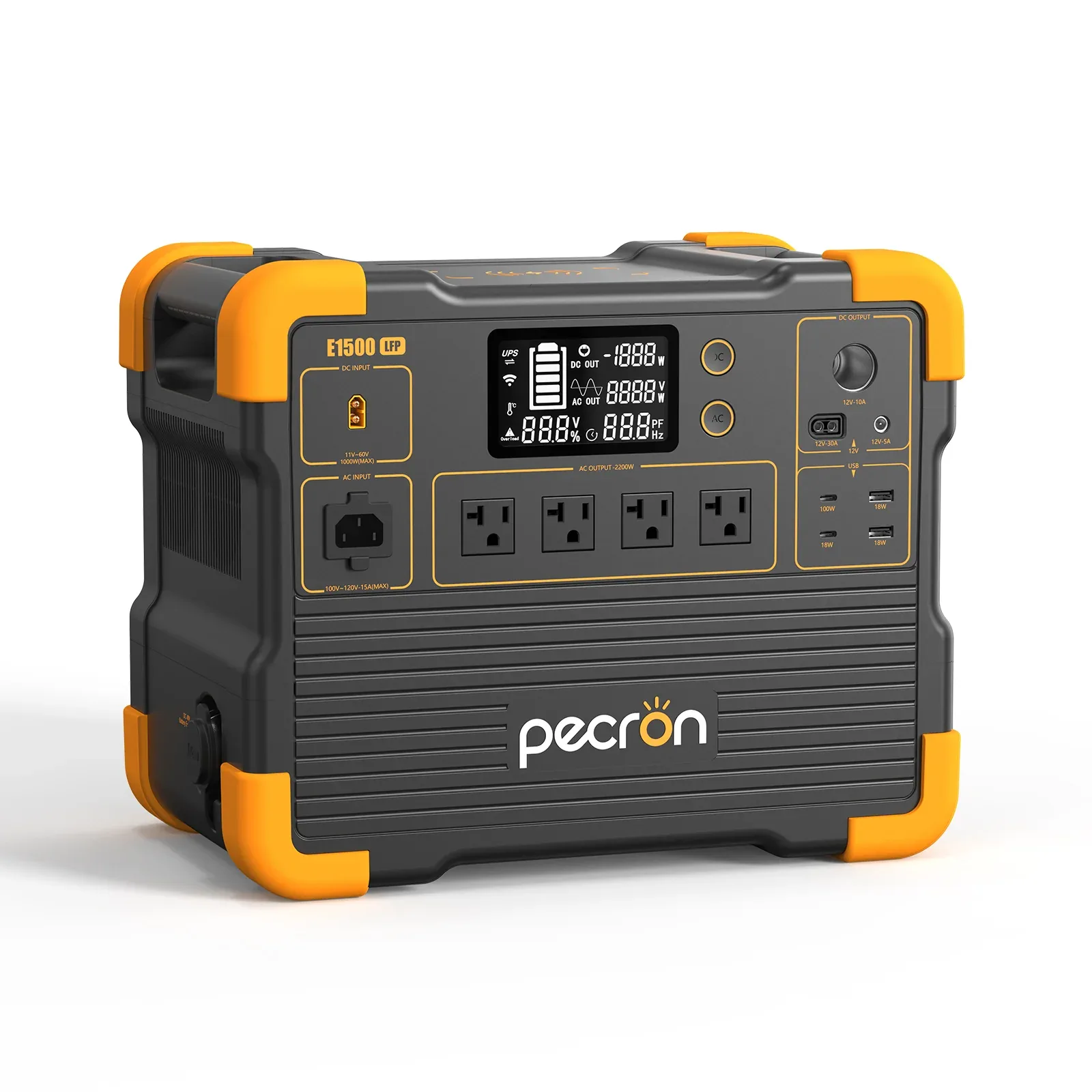
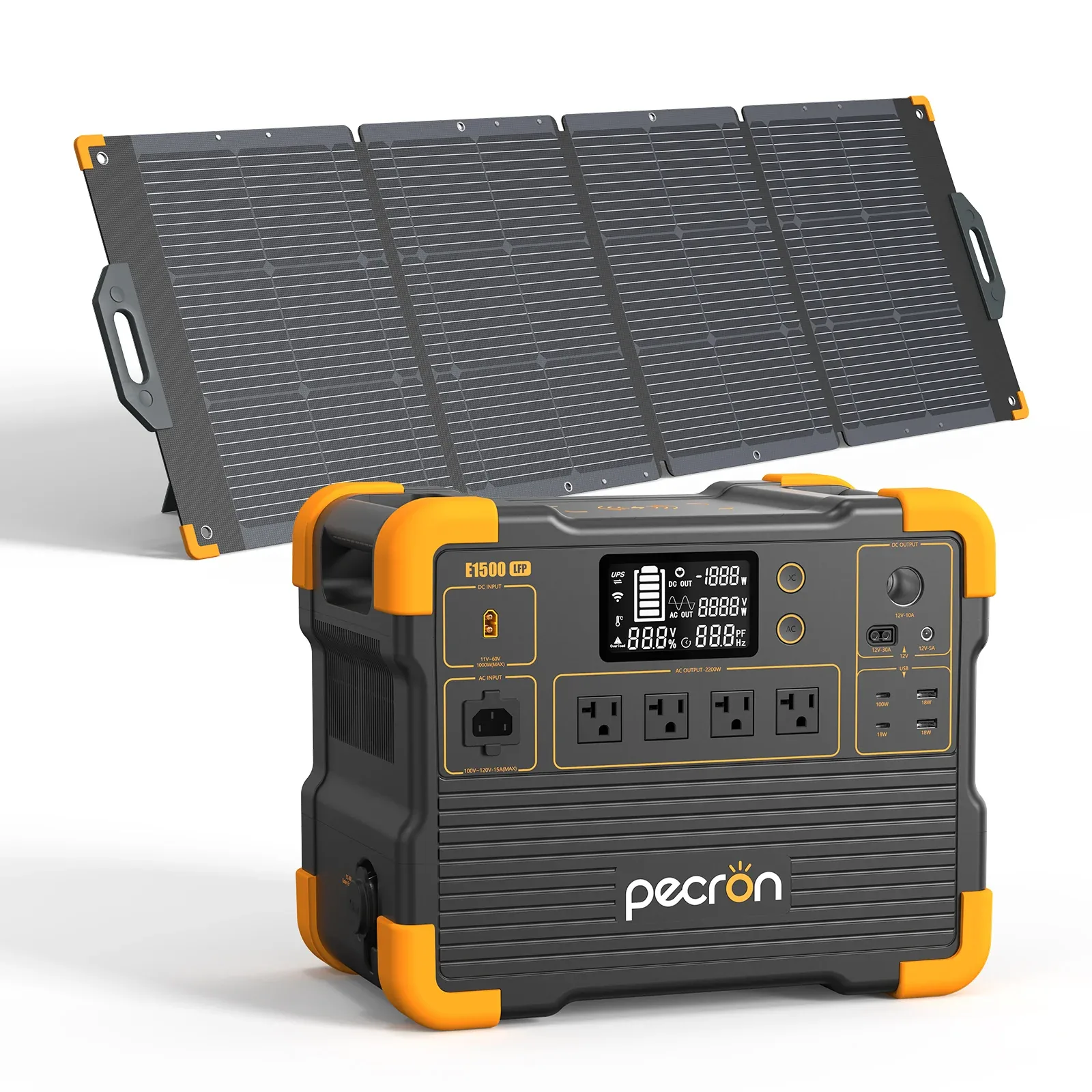
The Pecron E1500LFP is not a sleek lifestyle accessory. It is a roughly 40lb power box with a 1,536Wh battery, a 2,200W inverter, a high solar-input ceiling, and enough ports for camping, vehicle work, and short outage backup. That plainness is part of the appeal. The E1500 concentrates on energy storage and connection options instead of trying to win a design contest.
Pecron product page (Manufacturer product image)
The more important story is the gap between its headline surge number and its tested behavior. Pecron advertises a 4,400W surge rating, but The Solar Lab reported that its test unit shut down when pushed beyond the 2,200W continuous rating. The E1500 can still be a good value, especially at Pecron's current official price, but it should be bought as a 2,200W station rather than as a 4,400W motor-starting solution.
Pecron's official product record lists the E1500LFP as created and published on June 16, 2023. That is the clearest primary-source launch date I found for this product listing; the discovery review's publication date is not being used as launch evidence. In 2026, this is an older design with a current listing, so the question is whether its capacity, expansion path, and charging hardware still justify its compromises.
Design, Ports, and Setup
The E1500's physical design favors protection over polish. The Solar Lab described a boxy, utilitarian enclosure with orange protective feet and external padding. That is not fashionable, but it is sensible for a unit that may be placed on a campsite floor, in a work vehicle, or beside emergency equipment. The extra protection also makes the station feel more at home in rough transport than a thin, furniture-like chassis would.
Pecron product page (Manufacturer product image)
At 18kg, or about 40lb, it is portable in the car-camping sense rather than the backpacking sense. One person can move it between a vehicle and a campsite, but repeated long carries will quickly become tiresome. The weight is a reminder that 1,536Wh is a meaningful amount of stored energy, not a large power bank that belongs in a daypack.
The port selection is more thoughtful than the enclosure. Pecron provides three 120V AC outlets, two USB-C ports, four USB-A ports, a 12V car socket, a barrel connector, and an XT60 30A output. There is also a 15W wireless charging pad on top. The mix works for a mobile office, camera batteries, phones, lights, and ordinary small appliances without forcing every device through AC.
The integrated AC charging adapter is a practical advantage. You do not need to find room for a separate power brick, which helps when the station lives in a vehicle or emergency-storage bin. Pecron also includes an MC4 solar charging cable with the base unit. App and Wi-Fi control are listed by the manufacturer, although buyers should treat connectivity as a convenience rather than a reason to ignore the physical controls.
One usability quirk matters in daily ownership: The Solar Lab reported that the unit does not have a dedicated power button for simply checking its state. Turning on an output section to see battery information is an awkward interaction for a device intended to sit ready for an outage. The wireless pad is genuinely useful, but it does not compensate for a control layout that feels older than the current competition.
Battery Capacity and Charging
The 1,536Wh LiFePO4 battery is the E1500's durable foundation. Pecron rates it for more than 3,500 cycles to 80% capacity. That is a manufacturer claim, not a promise that every battery will achieve the number under every temperature and charging pattern, but LiFePO4 is the right chemistry for a station expected to be cycled regularly. It is a better fit for repeated camping, van work, and scheduled backup than a small emergency-only pack.
Pecron product page (Manufacturer product image)
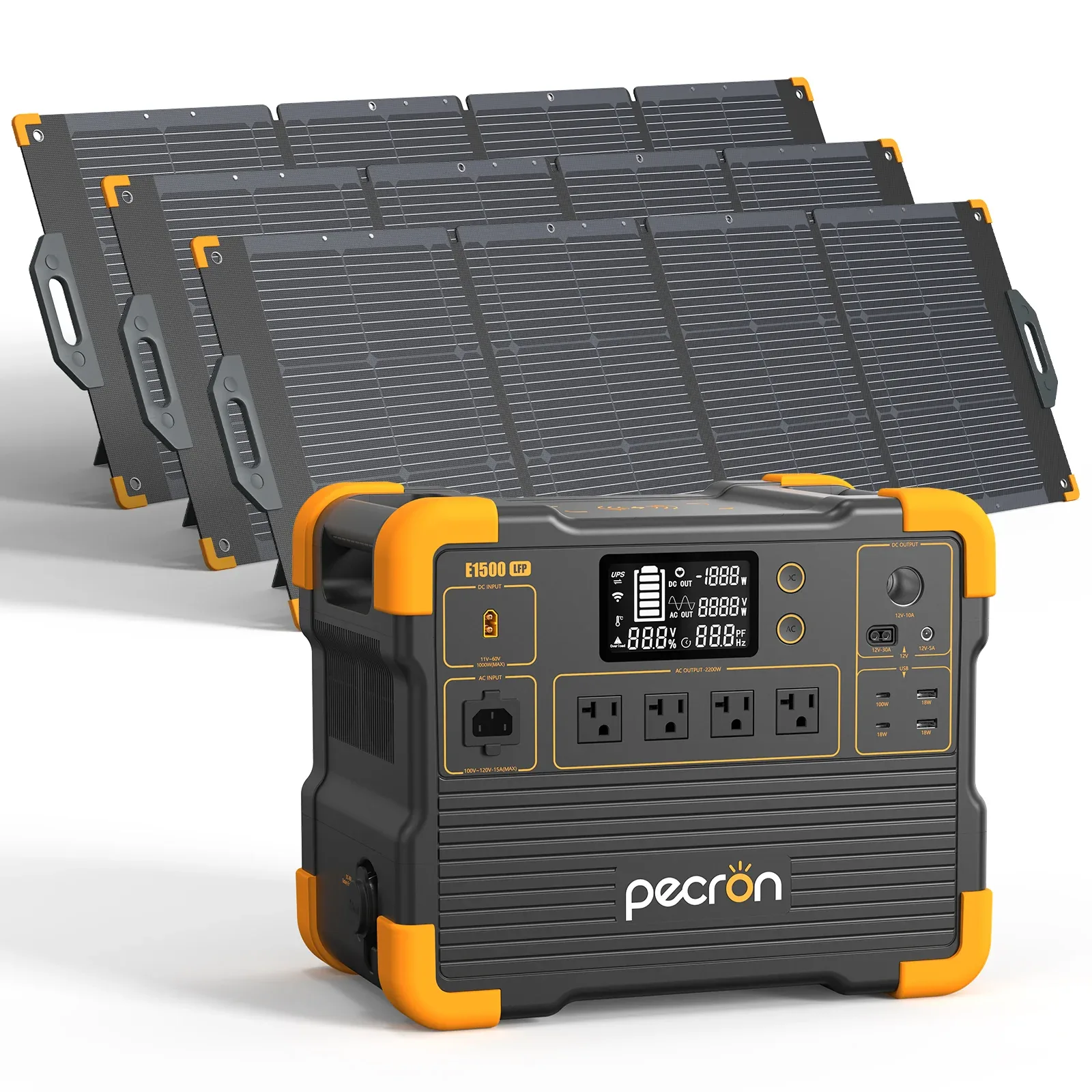
The 1,000W maximum solar input is unusually strong for this capacity. In ideal sunlight, that ceiling gives the E1500 a realistic path to recovering a substantial portion of its battery during the day. Actual output will depend on panel orientation, shade, temperature, and the array's electrical characteristics. The ceiling is valuable because it leaves room for a serious panel setup; it is not a guarantee of 1,000W on a cloudy afternoon.
AC charging is rated at 1,400W, and Pecron advertises a full charge in 1.8 hours. The Solar Lab measured about 1 hour and 46 minutes from a standard wall outlet, which is close to the manufacturer's estimate. That is a strong result for a 1,536Wh station and makes the E1500 more practical between trips than older, slower-charging units.
The Solar Lab also reached the stated 800W solar rate during its test, while the current Pecron listing now specifies a 1,000W maximum. That difference is important: it suggests the published product configuration or test configuration may have changed over time. The current official listing is the source for the 1,000W specification, while the independent result supports the broader conclusion that the E1500 accepts substantial solar input. Do not treat the older 800W test as proof that every current setup will reach 1,000W.
Pass-through charging worked in The Solar Lab's testing, allowing connected equipment to run while the battery charged. That is useful for a workbench or campsite, but pass-through is not a substitute for a properly specified UPS. Pecron lists UPS functionality, yet the product page does not provide a detailed transfer-time figure. Use it for ordinary electronics only after checking how the exact device responds.
Performance in Real-World Use
The E1500's 2,200W pure-sine inverter is sufficient for many ordinary portable-power jobs. It can cover laptops, lights, kitchen appliances, a refrigerator, and a collection of chargers if the combined running load stays below the rating. Pure-sine output is also the sensible choice for sensitive electronics, though compatibility depends on the equipment and not just the waveform label.
Pecron product page (Manufacturer product image)
The limitation is surge behavior. Pecron's 4,400W figure sounds like generous headroom for compressors, vacuums, and power tools. The Solar Lab found otherwise: when its load moved beyond 2,200W, the station shut down rather than delivering a useful surge. That does not mean every appliance will fail to start, but it means the surge number should not drive a purchase decision. If a refrigerator, pump, air conditioner, or tool has a difficult startup, measure its real demand or choose a station with independently demonstrated surge performance.
The same testing measured about 90% efficiency, a respectable result for a station in this class. The Solar Lab did observe an overheating warning during its efficiency test, even though the unit continued working. That warning is more significant than the percentage alone. It suggests that sustained heavy loads deserve ventilation and sensible power planning, rather than treating the E1500 as a small whole-home inverter.
The E1500 is a better match for intermittent loads than for a continuous maximum-load job. Run a refrigerator, networking equipment, lights, and device chargers with headroom, and the 1,536Wh battery offers a useful outage buffer. Run a demanding heater or workshop tool near the inverter ceiling for long periods, and heat, runtime, and the unconvincing surge behavior become central concerns.
Expandability and Ownership Costs
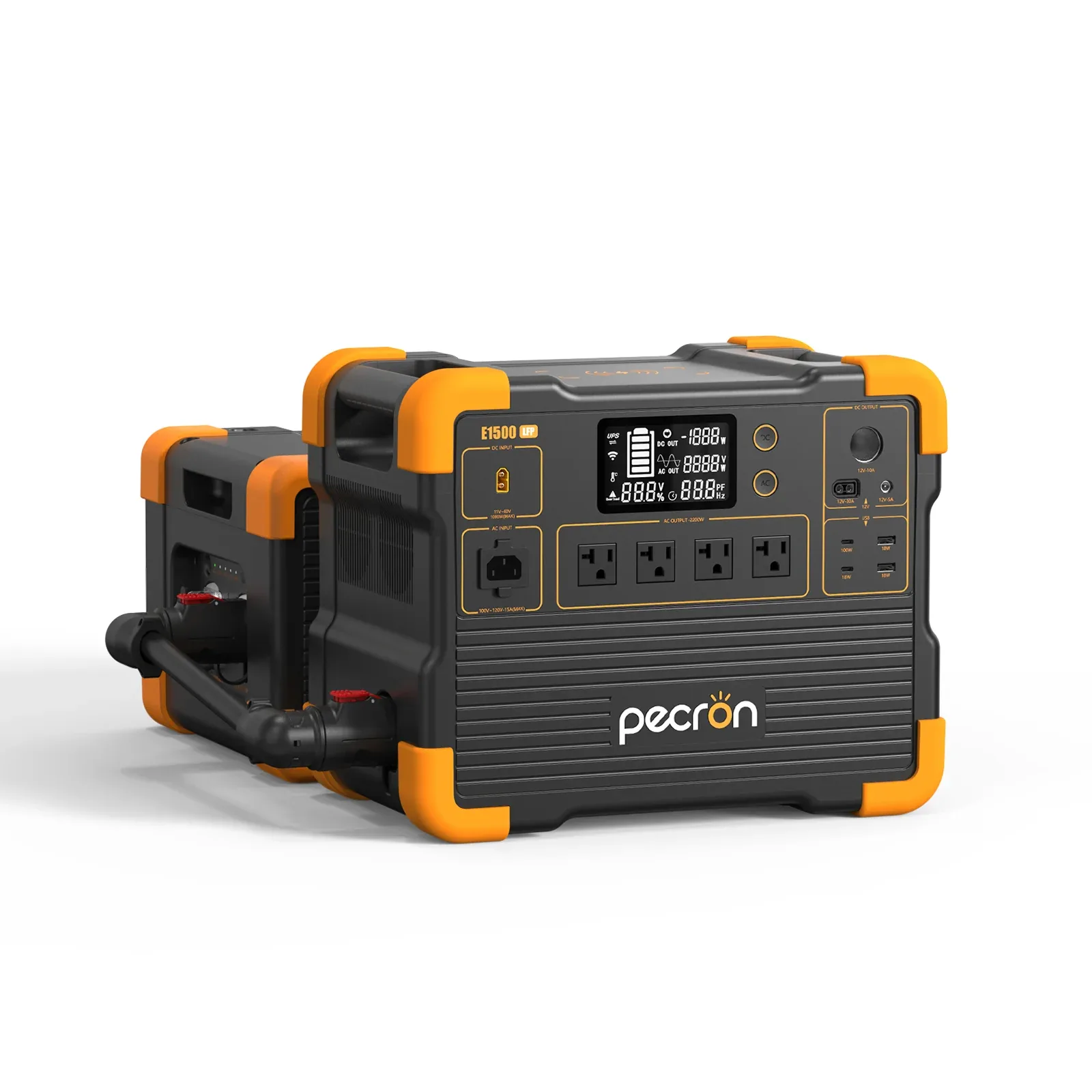
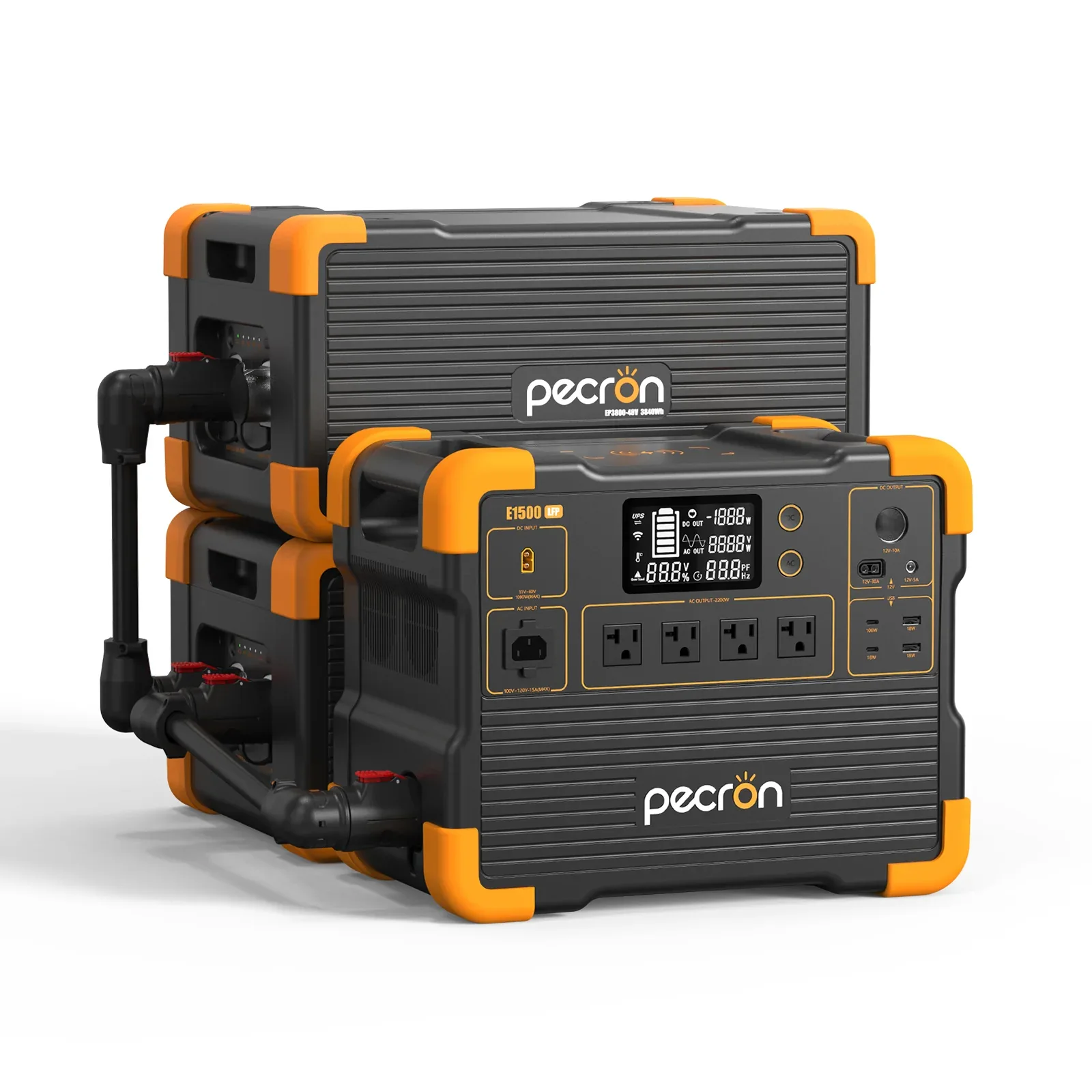
Pecron says the E1500LFP can expand to 9,216Wh with two EP3800-48V batteries. That is a meaningful path for a buyer who starts with portable backup and later wants more stationary storage. It also changes the character of the product: once expansion batteries are added, the system is less about carrying one box and more about building a modular home or cabin setup.
Expansion is useful only if the batteries remain available and the compatibility details stay clear. Confirm the exact EP3800-48V model, cables, firmware requirements, and delivered price before planning a system around the maximum. A headline capacity of 9,216Wh is not a reason to buy the base unit if your actual need is a single portable station.
Pecron's current page advertises a two-year base warranty plus three additional years after registration. That is potentially five years of coverage, but registration requirements matter. Complete the process within the period specified by Pecron and keep the purchase record. Buyers comparing a less established support network with EcoFlow, BLUETTI, or Jackery should treat warranty administration and replacement logistics as part of the price.
Pecron E1500 vs. the Alternatives
The EcoFlow DELTA 2 Max is the more polished choice for buyers who prioritize app maturity, a broad accessory ecosystem, and a more refined everyday interface. The Pecron counters with a lower current official price, a wireless charging pad, and an expansion route that can become much larger. Choose EcoFlow when software and service confidence matter more than rugged simplicity; choose Pecron when the documented hardware package is the priority.
The BLUETTI AC180 is a strong alternative for a buyer who wants a familiar mid-size station for camping and outage use. BLUETTI's platform is easier to recommend when support documentation and mainstream availability are decisive. The E1500 makes more sense when its 1,536Wh capacity, 1,000W solar ceiling, and lower official price outweigh the uncertainty around surge behavior and long-term support.
The Anker SOLIX F1500 is another direct comparison for buyers looking at this general capacity and output class. Anker offers a more contemporary ownership experience, while Pecron's advantages are the unusually broad DC connectivity, integrated charger, and large expansion claim. If you regularly start motor loads, neither a brand's surge headline nor a product-page maximum is enough; look for independent testing of the exact appliance scenario.
The Jackery Explorer 1000 Plus is the better fit for a buyer who wants a lighter, more familiar consumer platform and does not need the E1500's larger battery. The Pecron is the more serious energy-storage tool, but its roughly 40lb chassis and older controls make the Jackery-style approach more appealing for frequent relocation. That is the central tradeoff: capacity and ports versus carrying ease and polish.
Who Should Buy the Pecron E1500?
Buy it if you want a substantial battery for car camping, a mobile workstation, short outages, or a cabin setup where solar input matters. The combination of 1,536Wh, 2,200W output, 1,400W AC charging, a 1,000W official solar ceiling, and varied ports is strong at the current base price. The wireless charger and integrated adapter are small details that become useful every day.
It is particularly sensible for a buyer who will operate the station actively, keep heavy loads below 2,200W, and may eventually add expansion batteries. It is less sensible for someone who wants a minimalist, app-first appliance or who expects to connect a compressor and rely on the advertised 4,400W surge figure.
Skip it if your priority is frequent carrying, a highly documented UPS mode, or dependable motor-starting performance above the continuous rating. Also skip it if you are buying the expansion promise without confirming accessory availability. The E1500's strengths are real, but they reward a buyer who understands the system rather than one shopping by the largest number on the box.
Verdict
The Pecron E1500LFP is a good value-oriented power station with an unusually coherent charging and port package. Its 1,536Wh LiFePO4 battery, 1,000W official solar input, 1,400W AC charging, 15W wireless pad, and expansion path remain compelling in 2026, especially at the official $549 base price.
The recommendation comes with a firm boundary: plan around 2,200W, not 4,400W. Independent testing found that the station shut down above its continuous rating, and an overheating warning appeared during a heavy efficiency test. Those findings make the E1500 a strong fit for managed camping and outage loads, not a substitute for a larger inverter designed around difficult compressor or tool surges.
If you can accept the older controls, rugged 40lb body, and less certain UPS detail, the E1500 delivers a lot of usable storage for the money. If you need maximum polish or high-confidence surge performance, spend the difference on a newer, better-documented platform.
FAQ
When did the Pecron E1500LFP launch?
Pecron's official product record lists the E1500LFP as created and published on June 16, 2023. That is the primary-source date used here; the discovery review's publication date is not treated as the product launch date.
How much power can the E1500 deliver?
Pecron rates its pure-sine inverter at 2,200W continuous and 4,400W surge. Independent testing found the unit shut down when pushed beyond 2,200W, so 2,200W is the safer planning limit.
Is the 4,400W surge rating reliable?
Do not depend on it without testing your exact appliance. The Solar Lab reported shutdown above the 2,200W rating, which is not the behavior buyers want from a high-surge motor-starting station.
How fast does it charge from AC?
Pecron specifies 1,400W AC charging and advertises 1.8 hours for a full charge. The Solar Lab measured about 1 hour and 46 minutes in its test.
How much solar input does it accept?
The current Pecron listing specifies up to 1,000W through its XT60 solar input. The Solar Lab's earlier test reached 800W, so actual results depend on the product configuration, array, weather, and wiring.
Can it run a refrigerator?
It may run many refrigerators if their running and startup demands stay within the station's practical limits. Because the tested surge behavior was disappointing, verify the exact refrigerator or leave substantial headroom rather than relying on the 4,400W claim.
Can it power an air conditioner?
Do not assume it can. Compressor startup can exceed the station's useful surge capability, and sustained air-conditioner loads can also consume 1,536Wh quickly. A larger, independently tested inverter is safer for that job.
Is it suitable for CPAP use?
It is a plausible CPAP backup because it has a pure-sine inverter and a 1,536Wh battery. Runtime depends on pressure, humidifier, heated tubing, and the machine's power draw, so test the complete setup before treating it as medical backup.
Can I use it while it is charging?
Yes. The Solar Lab reported that pass-through charging worked while connected equipment was powered. That is useful for normal loads, but it does not establish a medical-grade or computer-grade UPS transfer time.
How much does it weigh?
The official product data lists 18kg, or about 40lb. It is manageable for vehicle-based use but too heavy for comfortable long-distance carrying.
Can the battery be expanded?
Pecron says the E1500 can reach 9,216Wh with two EP3800-48V expansion batteries. Confirm current stock, cabling, firmware, and total cost before building a system around that maximum.
Does it have a wireless charger?
Yes. Pecron lists a 15W wireless charging pad on top of the station. It is convenient for a phone, but the phone must remain positioned correctly and the feature does not replace the wired USB-C ports.
What warranty does it include?
Pecron advertises a two-year base warranty plus three extra years after registration. Register within the manufacturer's stated window and verify the current regional terms before purchase.
Is it a good always-on home backup?
It can serve as short-duration backup for ordinary electronics and appliances, but the product page does not provide detailed UPS transfer specifications. If uninterrupted operation is critical, test the exact equipment or choose a platform with clearer UPS documentation.