Introduction
The Pecron E300LFP is the kind of product that looks very appealing at first glance: a tiny 288Wh LiFePO4 station, a 600W inverter, quick AC charging, a built-in flashlight, and a wireless phone pad on top. On paper, it checks the right boxes for a cabin, a car camp, or a backup bag where you want something light and easy to carry. The problem is that the E300LFP falls into the trap that so many small power stations do: the product page is more convincing than the device in use.
The closest primary-source date I found is the official Pecron storefront's product metadata and initial product-image record, which points to January 10, 2024. I am not treating the discovery review's publication date as evidence of the product's launch date. That distinction matters because the E300LFP is a product that entered the market in early 2024, not something that mysteriously became a 2026 launch story after the fact.
The E300LFP's weak point is also the thing that matters most in a small portable power station: inverter reliability. The discovery review reported the inverter dipping and rebooting when a second light was added to an already running load, and that is the exact kind of behavior that turns a supposedly convenient station into a source of stress. The E300LFP can still make sense for a very specific buyer, but it is not a station that deserves a casual recommendation simply because it is light and compact.
Design, Ports, and Ease of Use
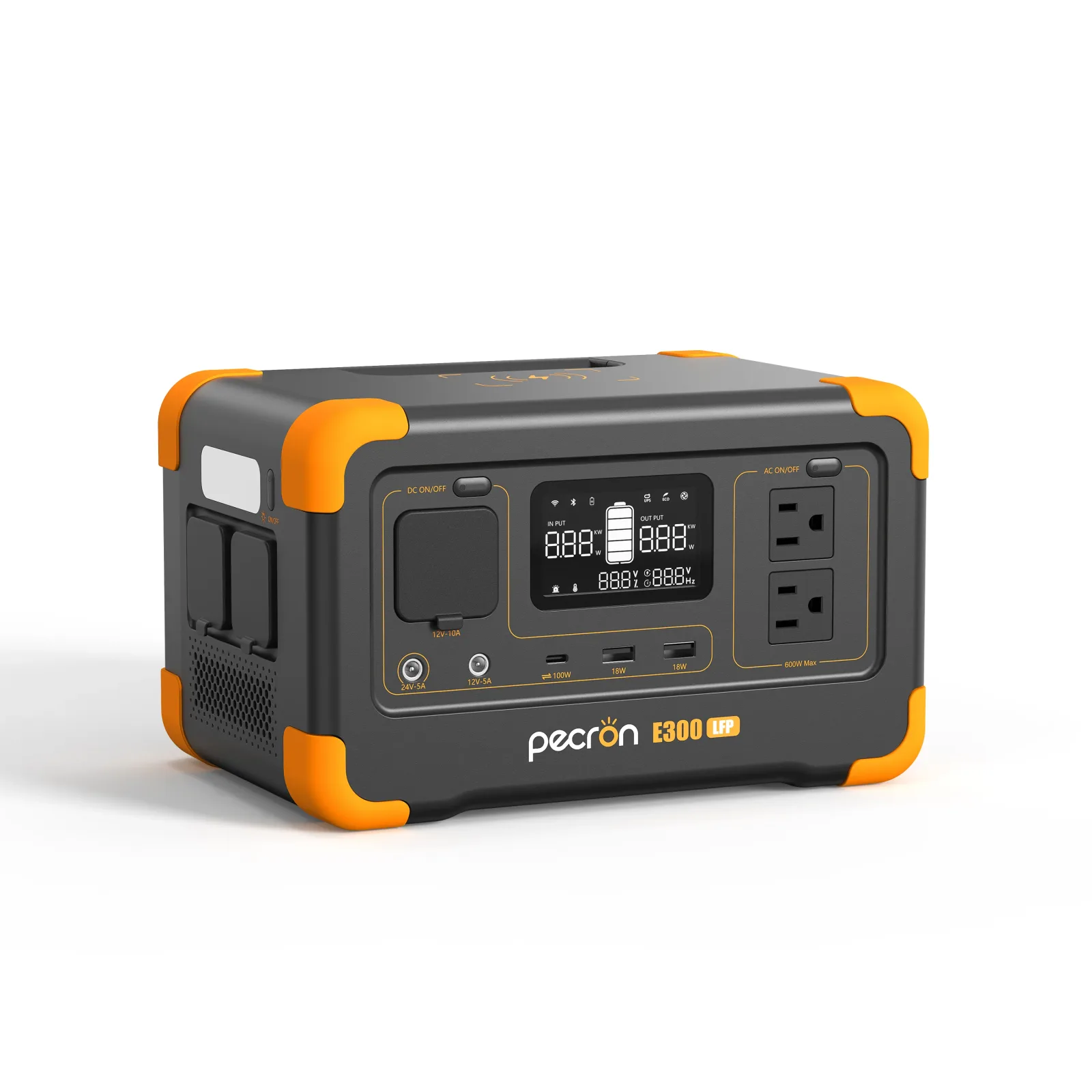
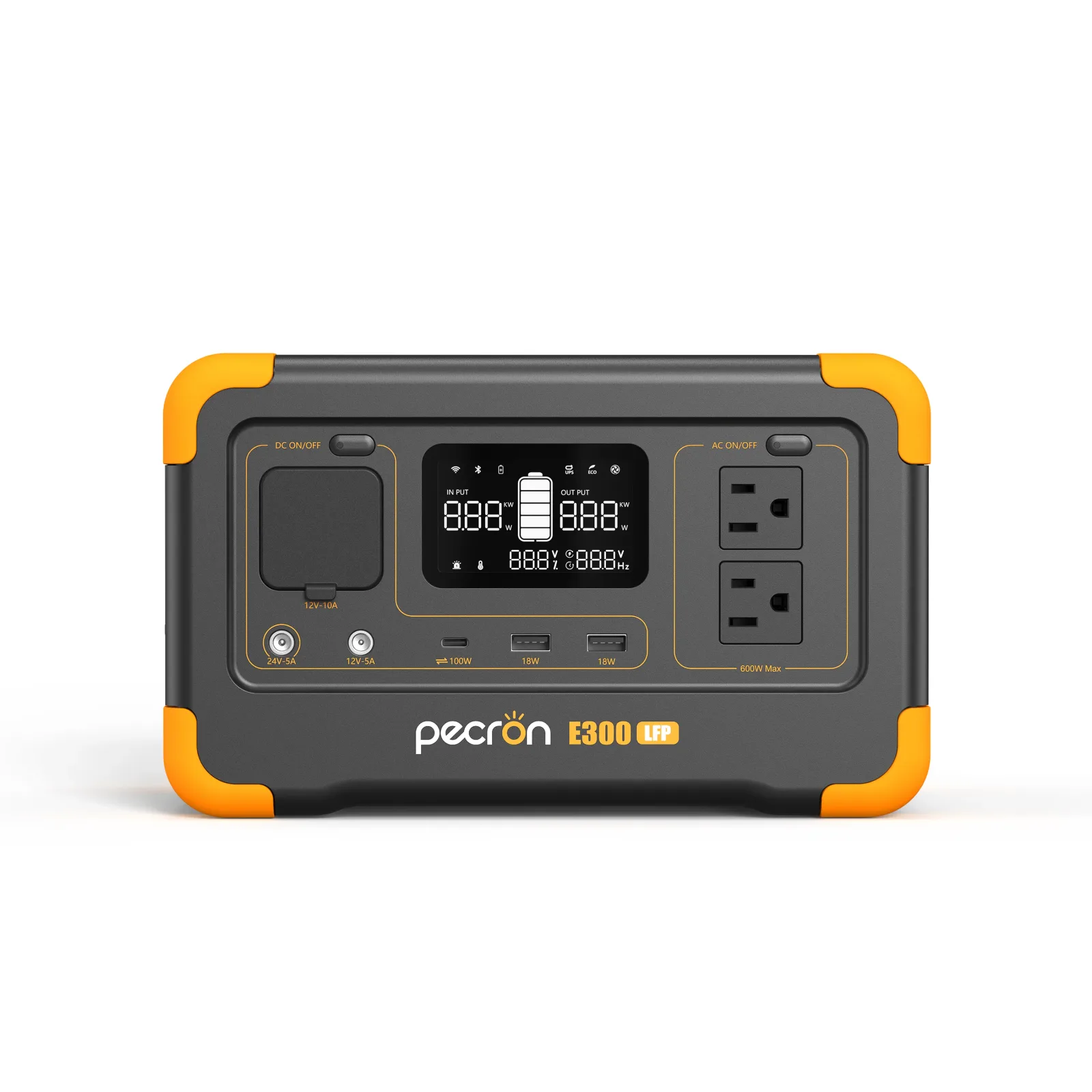
The E300LFP is a small, intentionally simple power station. It weighs 10.3 lb, which is light enough to be genuinely portable and not so heavy that you feel like you are moving a mini generator. The front and side layout is straightforward: outlets are easy to reach, and the unit does not appear to be trying to be a premium statement piece. That makes it easier to live with in a car, a camping setup, or a temporary outage kit.
Pecron product page (Manufacturer product image)
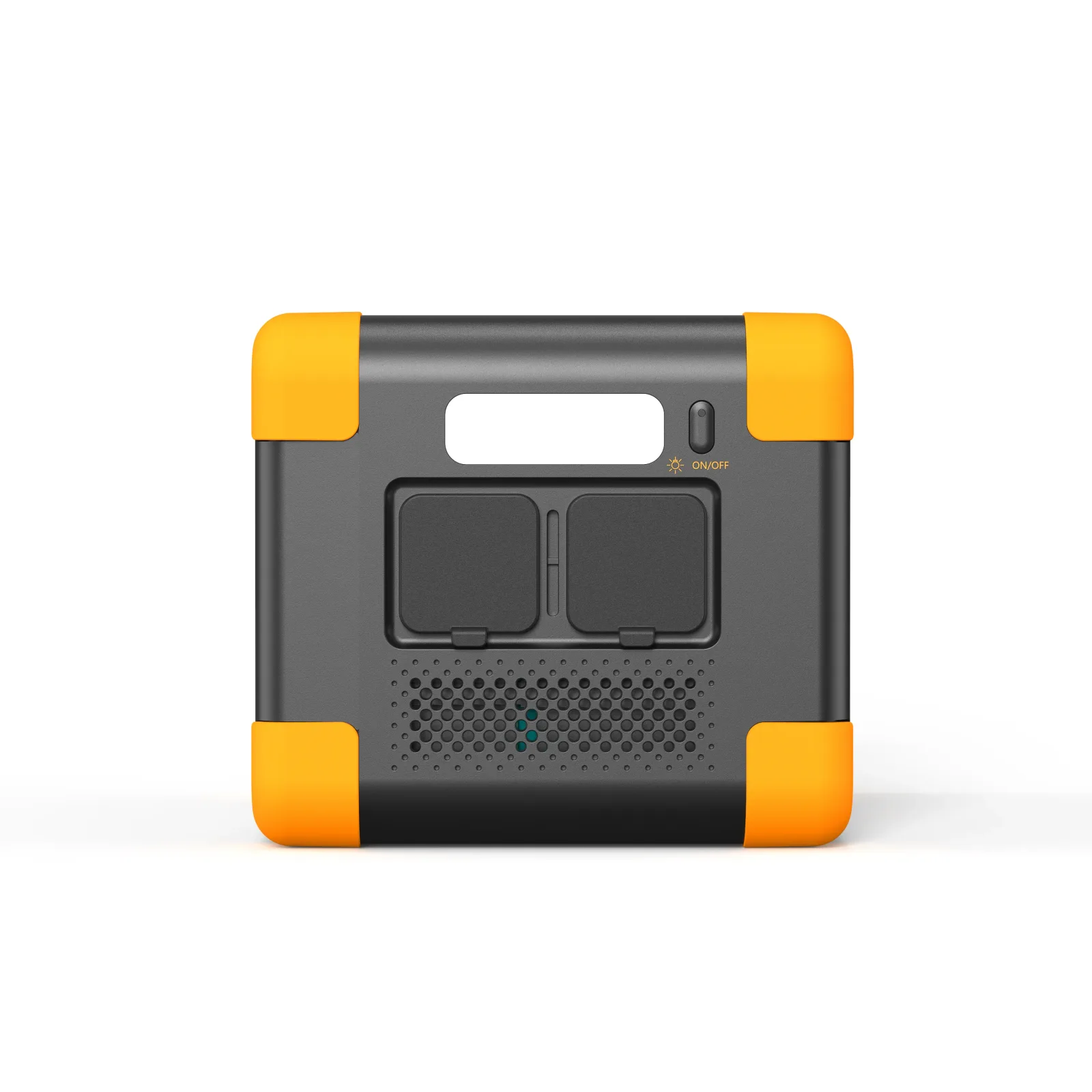
The best design touches are the ones that matter in real life rather than in a spec sheet. The built-in flashlight is a real advantage on small power stations. Instead of a dim little indicator light, the E300LFP offers a more useful side-mounted flashlight with SOS mode, which is exactly the kind of feature that earns its keep when you are dealing with outages, camp darkness, or a late-night vehicle setup. The wireless phone pad is also a smart use of top space. It is not luxurious, but it is a practical extra and a better idea than leaving the top surface bare.
The cable pouch is another small feature that matters. The review that led me to this model specifically praised the clip-on storage for cables, which is one of those accessories that makes a station less annoying to use day to day. It sounds minor until you have to keep track of a phone cable, a USB-C cable, a barrel connector, and a short solar lead while trying to set up in the dark.
The E300LFP's port count is useful, even if it is not broad. Official Pecron product copy lists two 120V AC outlets, two USB-A ports, one USB-C port, a 12V car socket, two barrel ports, and a 15W wireless charging pad. That is enough to cover a phone, a laptop, a light, a router, or a few low-draw chargers without turning the station into a cable-management problem. The issue is not the layout; it is whether those ports can actually deliver the power reliably when the system is under load.
The E300LFP's design is also a little inconsistent. The product makes a point of being compact, but the MC3 solar input is one of those small product decisions that creates unnecessary friction. In a category where XT60 is increasingly common and far easier to integrate into a solar setup, Pecron's MC3 choice feels more like a legacy habit than a user-first decision. That matters because in a small station, convenience is part of the product.
Battery, Charging, and Solar Input
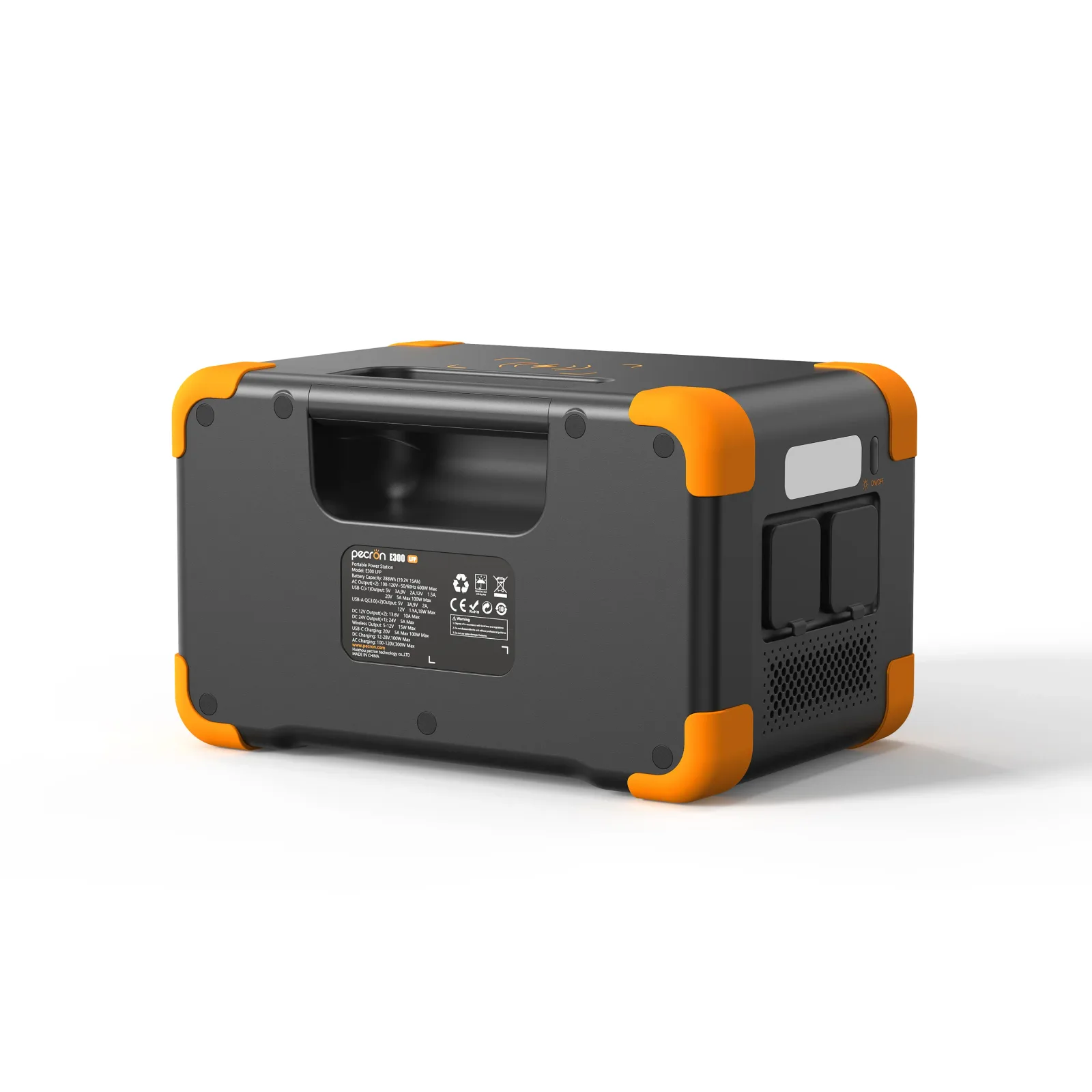
This is where the E300LFP starts to look more reasonable. Official product details list a 288Wh LiFePO4 pack rated at 19.2V/15Ah, a 600W pure-sine inverter, and a 3,500+ cycle claim to 80% capacity. For a compact station, the chemistry is the right choice. LiFePO4 is more attractive for regular use than a shorter-lived NMC pack, and the published cycle rating gives the E300LFP more credibility than many bargain stations can claim.
Pecron product page (Manufacturer product image)
Pecron's official product description also highlights AC charging at 300W, with quoted times of 80% in 60 minutes and 100% in 80 minutes. That is a strong number for a 288Wh unit, and it gives the E300LFP a practical edge over slower small stations. It is exactly the kind of speed that makes a portable unit feel useful for weekend trips or an emergency kit where you want the battery back to full quickly.
The solar story is also neat on paper. Pecron lists 100W max solar input, which is a normal ceiling for a small battery this size. That is enough to keep a small setup moving in good sun, particularly if you are topping up during the day while the unit is parked in a sunny window or on a camp table. The issue is not that 100W is weak; it is that the MC3 connector makes the setup less flexible than it could be. A buyer with a standard solar panel or a more general portable kit may be forced to hunt for a converter or a matching cable.
The big caveat is that a product's charging specs are not the same as real-world usability. In the discovery review, the E300LFP's inverter was the point of failure, not the battery itself. That matters because the battery is not the main problem. The main problem is that the station's output stage appears to be unstable under even moderate loads, which means a quick recharge and a large battery do not automatically translate into real usefulness.
Performance, Real-World Use, and the Weak Inverter
This is the section that makes the E300LFP hard to recommend. The product page promises a 600W inverter, but the discovery review found a very real problem: simply adding a second light to an already running load caused the inverter to dip and reboot. That is not a small inconvenience. Inverter instability under a modest load is exactly the sort of behavior that can shut down a router, laptop, or CPAP during a power outage. It is also precisely the sort of issue that makes a compact station feel dangerous in a real emergency.
Pecron product page (Manufacturer product image)
The review also flagged a second red flag: USB charging compatibility. The USB-A and USB-C ports struggled with newer iPhones, particularly a new iPhone 16, while older iPhones charged without issue. That is exactly the kind of user-facing bug that turns a budget power station into an unreliable daily tool. A UL-certified battery is not enough if your device cannot reliably charge from the output ports that are supposed to be the easiest part of the setup.
The idle-draw number is a smaller but still important issue. The discovery review measured about 12W of power consumption with the inverter left on and no meaningful load attached. On a 288Wh battery, that is a critical number. A unit can lose essentially an entire charge in about a day with no useful output, which makes the E300LFP a poor choice for waiting-by-the-door backup use. For a station this small, that behavior turns into a meaningful burden because there is simply not much battery margin to begin with.
This is where the E300LFP's true role becomes clear: it is not an always-on standby unit, and it is not a system you can trust to run a little of everything in a blackout. It is more like a small, light battery that works best when you actively manage it: charge it, run only the load you truly need, and turn it off again once the job is done. That is a valid use case, but it is a much narrower one than the marketing language suggests.
How It Compares to Rival Small Stations
The most obvious comparison is to the Anker SOLIX C300. The discovery review recommended it as a better-performing, more reliable budget alternative. That comparison is fair because the C300 is the kind of small station that is easier to trust when your goal is to power a laptop, a small light, and a few phone devices without worrying that minor load changes will trigger an inverter reset.
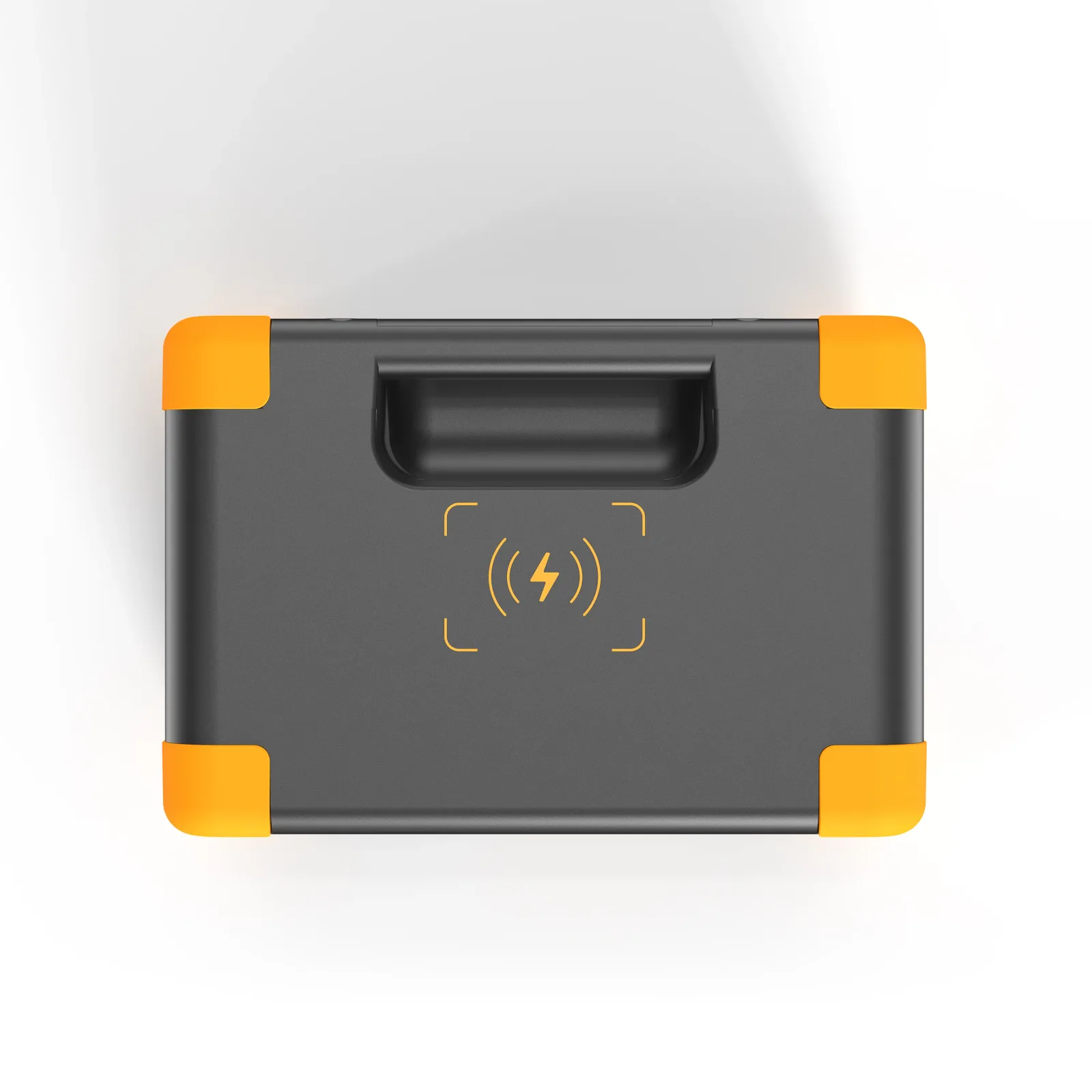
Pecron product page (Manufacturer product image)
The EcoFlow River 3 is also a useful competitor. The discovery review explicitly mentioned it as a more reliable option that costs a bit more but works better. That is the right frame for this category: the E300LFP's price is attractive, but the weak inverter behavior means reliability matters more than simple cost per watt-hour. If the product can fail under a second light, it may not be the bargain it first appears to be.
Pecron's own E1000LFP is the other obvious comparison, and it is an important one. The review that led me here also pointed to the E1000LFP as the model to buy if you want to stay with Pecron. That is a useful warning sign. The E1000LFP is not just a heavier version of the E300; it is a different product class with more battery, more output, and better overall performance. The E300LFP is small and simple, but in the same brand family it is easy to see why a buyer should look at the next step up rather than settle for a unit that has a fragile inverter output.
The broader takeaway is simple: if you want a small station for a single purpose, the E300LFP can be tempting. If you want a small station that can be trusted with frequent or mixed loads, the market has better-performing, better-tested alternatives.
Who Should Buy It?
Buy the Pecron E300LFP only if your needs are very specific and modest. It is the sort of station that makes sense for a weekend camping trip, an emergency kit for a few low-drain devices, or a compact setup where you want a flashlight, wireless charging, and a little extra battery backup without carrying something bigger. Its 10.3 lb weight and accessible layout are genuine strengths. The built-in light and top charging pad also make it more useful than a pure battery block.
It is also a fair buy if your main goal is to keep costs low and you understand that the E300LFP is a small, tactical station rather than a full home-backup device. If you want to run a router, a laptop, and a few lights at the same time, this is not the easy answer. But if you mainly need a compact source for phone charging, small electronics, and a bit of incidental emergency power, the battery's size and the existing feature set can be enough.
Skip the E300LFP if you want a station that is comfortable under real, repeated load changes. The weak inverter behavior, the USB compatibility complaints, and the idle drain are all evidence that the unit is less stable than the price and size suggest. It is also not the station to choose if you are trying to build a dependable outage setup around a single battery without actively managing every plug and load. In that category, it is too easy to be disappointed.
Verdict
The Pecron E300LFP is a case study in why a small, inexpensive station can still be the wrong buy. It has the right chemistry, a generous AC charging rate for its size, a useful flashlight, and a wireless pad that makes the user experience more pleasant than many comparable units. It is also light enough to feel practical, which matters a lot in a market full of bulky boxes.
The problem is that the E300LFP's reliability story is weak enough to outweigh those advantages. The product page looks good, but the inverter dips under even a modest second load, the USB ports are not universally trustworthy with newer phones, and the battery drains too quickly when the inverter is left on. Those are not minor annoyances; they are core-product issues.
That makes the verdict clear. The E300LFP is a decent light-duty station for a narrow use case, but it is not a strong recommendation for buyers who want dependable portable backup power. The more useful choices in the category are the better-performing alternatives that cost a bit more and actually feel ready for mixed, real-world use.
FAQ
Is the Pecron E300LFP a good emergency backup station?
Not for a typical blackout setup. It is small and useful, but independent testing found inverter instability under modest load swings, which is exactly the kind of problem that becomes expensive in an outage. It is better thought of as a compact battery for light, controlled use rather than a robust backup system.
How much power can it deliver?
Pecron rates the E300LFP at 600W continuous output on a pure-sine inverter. The weakness is that the discovery review reported the inverter dipping and rebooting when loads changed even slightly. In other words, the headline rating is not the same thing as a dependable, real-world operating ceiling.
Is the battery chemistry worth caring about?
Yes. LiFePO4 is one of the E300LFP's better attributes. The product page cites a 3,500+ cycle claim to 80% capacity, which is a meaningful selling point in a category where cheaper stations often rely on shorter-lived chemistries. That is a strength, even if the inverter issues remain the bigger problem.
How fast does it charge?
For a 288Wh device, the official AC charging rate is strong. Pecron says it can reach 80% in 60 minutes and 100% in 80 minutes with AC input. That is quick enough to make the unit feel genuinely usable for short trips or emergency topping up.
Is the solar charging input useful?
It is useful, but not especially flexible. The product supports 100W max solar input, which is normal for a small station. The weak point is the MC3 connection, which is not as convenient as the XT60 standard used by many competing units.
Does the built-in flashlight matter?
It matters a lot. The discovery review praised the side-mounted flashlight and SOS mode as one of the E300LFP's most practical features. For camping or an outage, a flashlight built into the station is more useful than it sounds, and it makes the E300LFP easier to recommend for very specific uses.
Is it good for phone charging?
It can be, but the discovery review reported compatibility issues with newer iPhones, including an iPhone 16. That is a meaningful concern because a small station should be able to charge the phones people actually carry. If phone charging is a primary use case, the E300LFP is not the easiest unit to trust.
Is it worth buying over the larger Pecron E1000LFP?
For most buyers, the answer is probably no. The E1000LFP is significantly larger and more capable, and the discovery review specifically suggested it as the better Pecron buy. The E300LFP makes sense only when you specifically want a compact station and can live with its constraints.
What is the major reason not to buy it?
The biggest reason is inverter instability under real load changes. A power station that drops out when a second light attaches is not a worthwhile piece of emergency gear for a lot of people, even if it is light, cheap, and full of convenience features.
Is the E300LFP worth the money?
At a $179 official-store price, it has a real budget appeal. But low cost does not erase the reliability problem. The E300LFP is only a good value if you understand its limits and are buying it for a narrow, light-duty use case rather than general portable backup power.