Introduction
The Pecron E1000LFP is a good example of why portable power stations should be judged by more than battery capacity. Its 1,024Wh LiFePO4 pack and 1,800W pure-sine inverter are familiar numbers, but the five AC outlets, 600W solar input, and 1,000W AC charging make the unit unusually useful for its size. The compromise is less glamorous: independent testing found an 84% efficiency result under a heavy load and a surprisingly high idle draw when the AC inverter is left on.
Pecron's official product record is dated November 12, 2024. I found no separate manufacturer press release establishing an earlier launch event, so that date is best treated as the documented product listing date rather than an invented announcement date. The E1000LFP remains relevant in 2026 because Pecron's official store lists the base unit at $399, while solar-panel bundles cost more. That current price, rather than the old promotional prices repeated elsewhere, is the number buyers should verify before ordering.
The E1000LFP is therefore a strong budget choice for camping, vehicle-based work, and short outages where you want many simultaneous plugs. It is less convincing as an always-on backup appliance or as a substitute for a dedicated UPS.
Design, Ports, and Setup
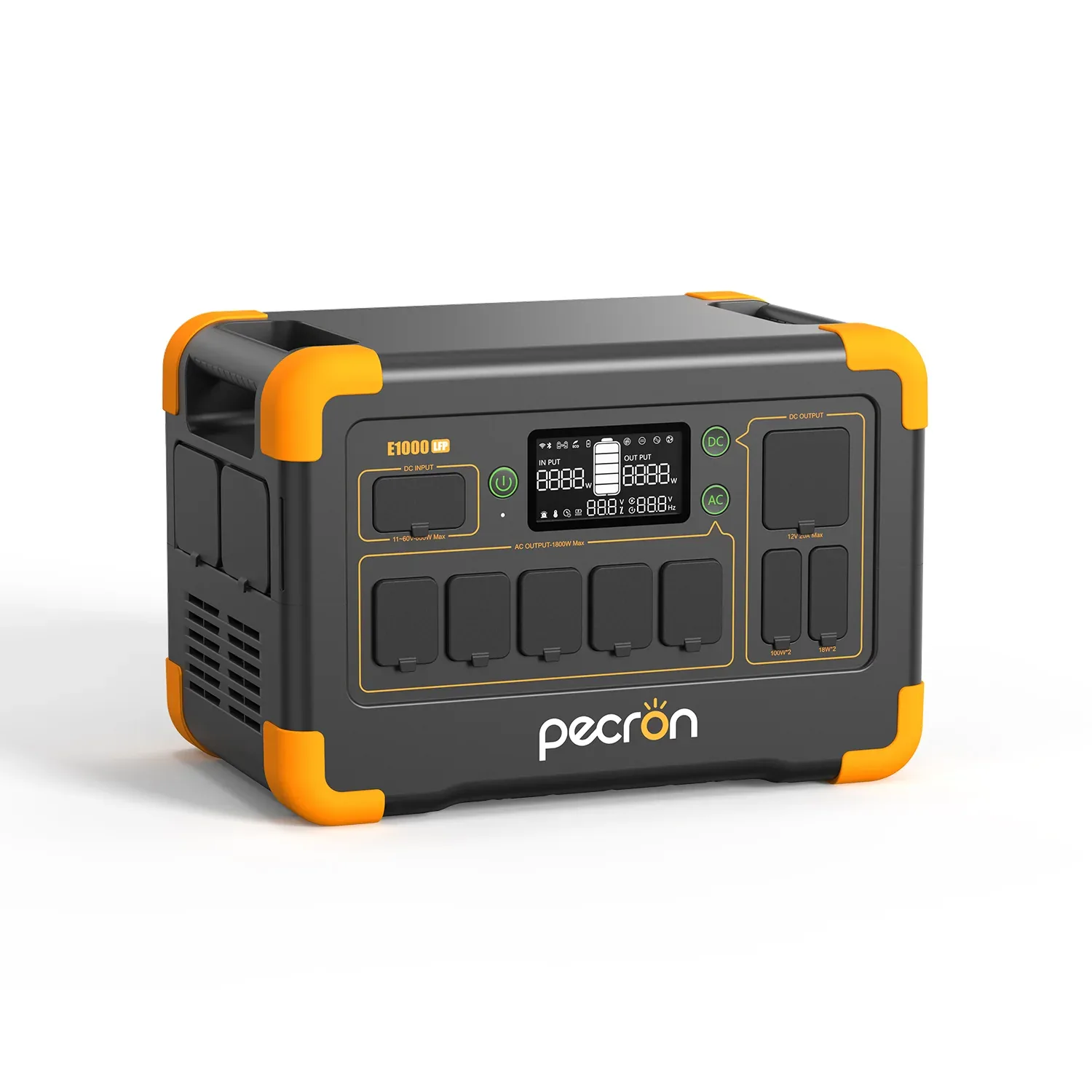
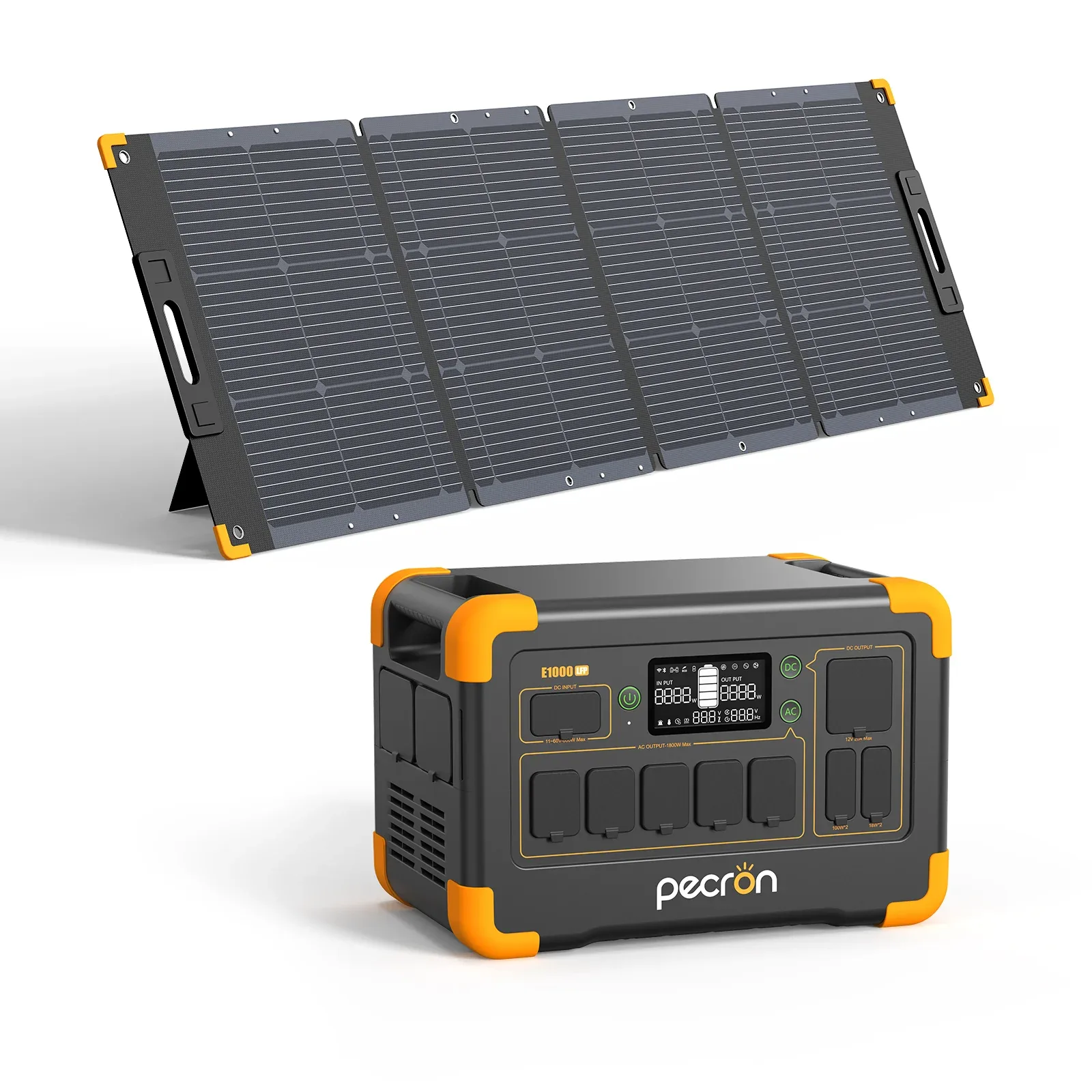
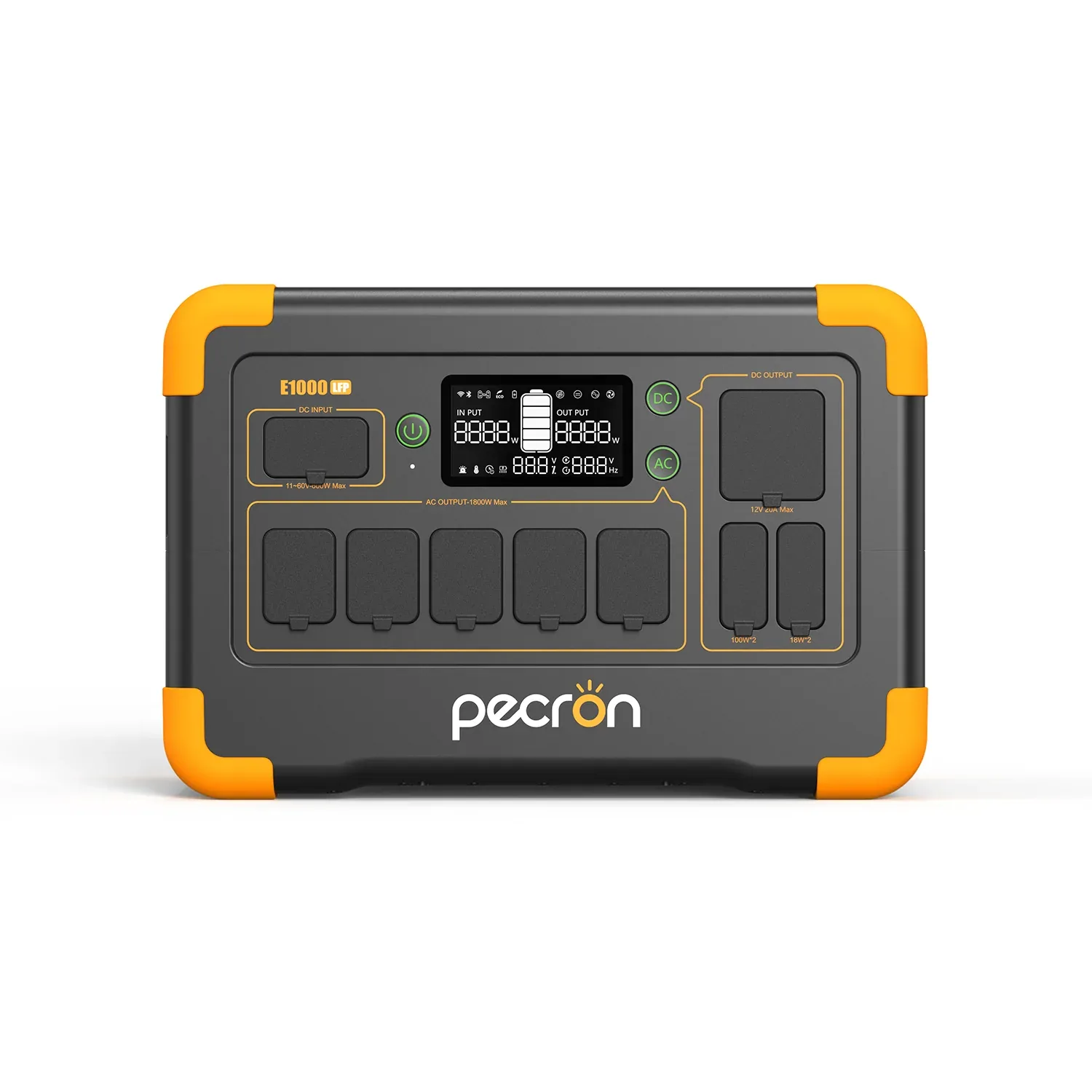
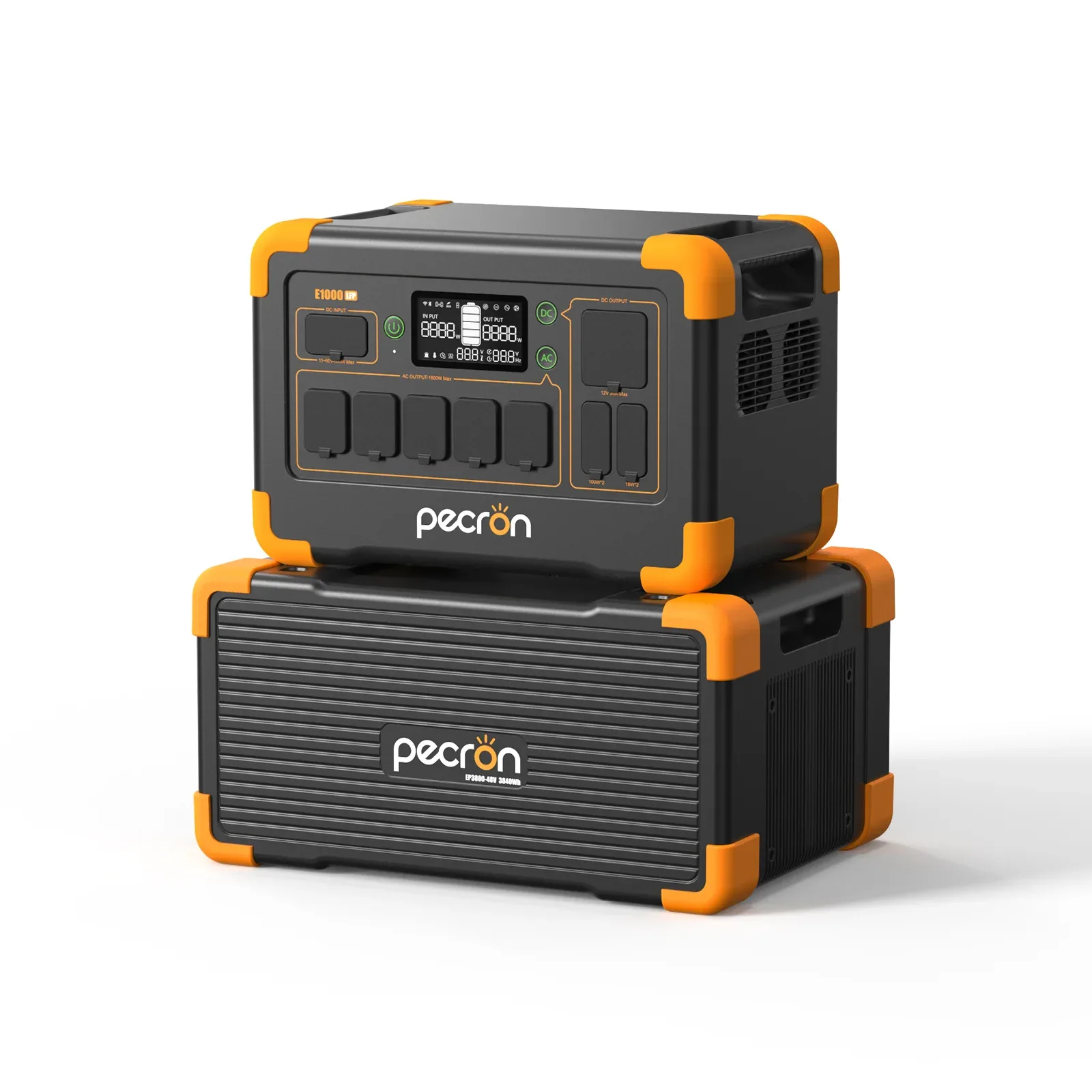
At 29 lbs, the E1000LFP is portable without being backpacking equipment. It is a sensible size for a car trunk, campsite, or home office shelf, and the rounded enclosure is a clear step away from the industrial-looking cases on some older Pecron stations. The front layout is practical rather than luxurious: a display, physical controls, AC outlets, DC connections, and USB ports are separated well enough that ordinary plugs should not collide.
Pecron product page (Manufacturer product image)
Pecron product page (Manufacturer product image)
Five 120V AC outlets are the design's most useful detail. Many stations in this capacity range provide two or four, which quickly forces a power strip into the setup. The E1000LFP can run a router, laptop charger, light, fan, and small appliance without immediately turning the station into a tangle of adapters. The 12V car socket and 5A barrel connector also make more sense for camping than a station that offers only AC and USB.
USB connectivity is adequate rather than class-leading: two USB-C ports, including a 100W PD capability, and two USB-A ports cover phones, tablets, cameras, and a laptop. Pecron also lists an XT60 20A output, app control, Wi-Fi control, and a display that can be checked without turning on an inverter. That last behavior matters because the station's idle draw is significant when an inverter is active.
The weak points are familiar budget-hardware details. The protective outlet flaps are reported to feel flimsy, and there is no built-in light for finding the controls during a blackout. Pecron's battery-temperature-management language also needs careful reading: the manufacturer describes battery heating, but independent reporting found that it operates only while the unit is connected to AC power. That is not an off-grid cold-weather heater.
Performance and Charging
Pecron rates the inverter at 1,800W with a 3,000W surge figure. In the Solar Lab's independent test, the station sustained a 1,556W load and delivered about 84% efficiency. That is a respectable result for a compact station, but it means the usable energy from the 1,024Wh pack will be materially below the nameplate once inverter losses and the station's own consumption are included.
Pecron product page (Manufacturer product image)
The surge rating is the more important caveat. The same test found that a 2,200W load lasted about five seconds before the unit shut down. That is a little headroom above 1,800W, not a realistic guarantee that a 3,000W motor-starting event will succeed. It should run ordinary refrigerators, small kitchen appliances, CPAP machines, and many tools, but buyers with high-startup loads should check the appliance's actual behavior rather than relying on the headline surge number.
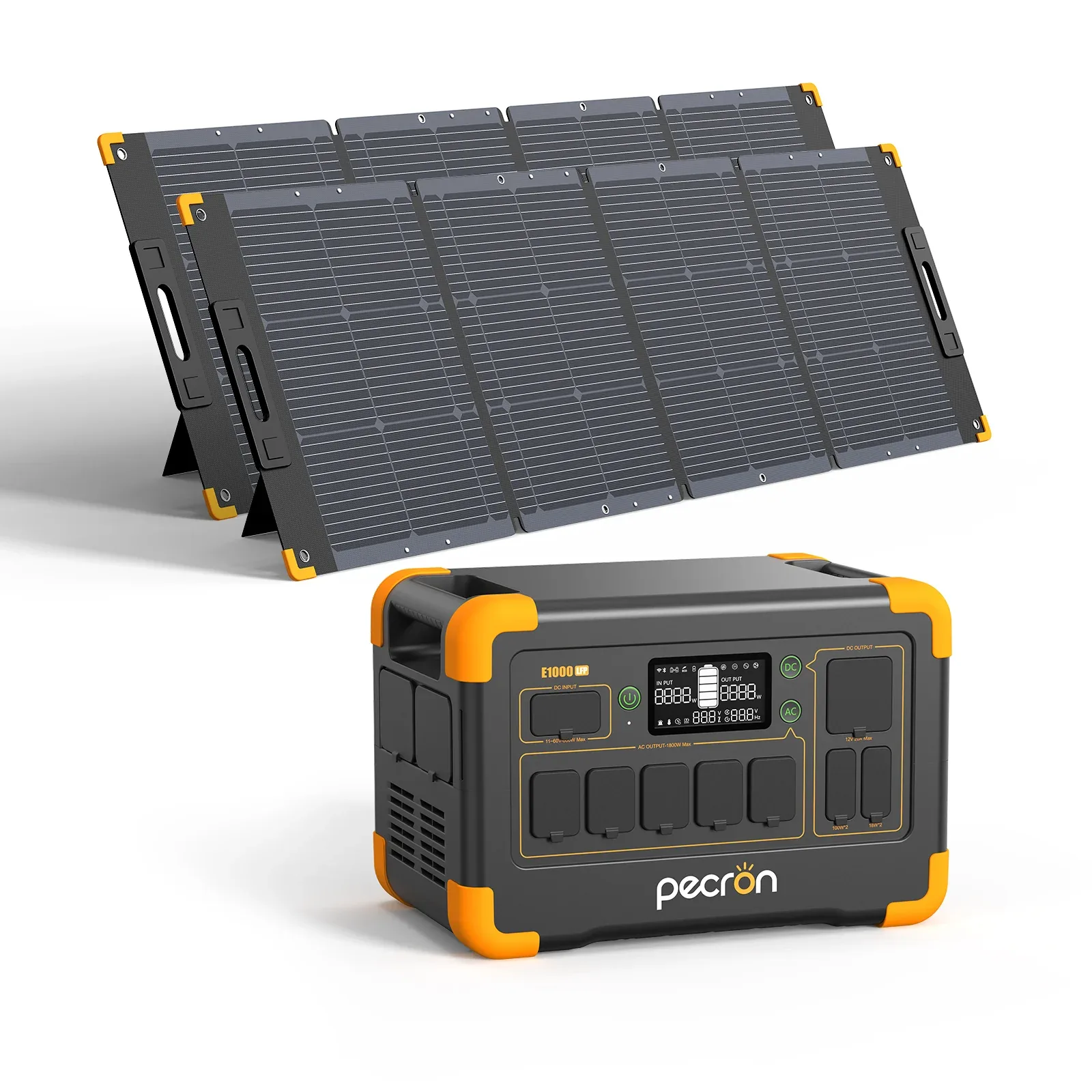
Charging is the E1000LFP's strongest technical story. Pecron specifies 1,000W AC input and advertises 80% in one hour. Solar input tops out at 600W, which is unusually generous for a 1,024Wh station and makes a properly sized panel array useful for daytime replenishment. The independent test completed a full AC charge in almost exactly one hour, faster than Pecron's stated 1.3-hour full-charge estimate. Pass-through charging also worked in that test, allowing the station to charge while powering connected equipment.
The tradeoff is idle consumption. With the AC inverter on and no load attached, the battery fell from 87% to 45% over 24 hours, an observed consumption of roughly 430Wh or 18W. With the DC side active, the test measured about 9.5W over 24 hours. Those figures are not defects if the inverter is switched on only when needed, but they are a poor fit for a backup setup that sits ready all week. Turn the station off when you are finished.
How It Compares
The EcoFlow DELTA 2 is the more polished alternative for buyers who value a mature app, broad availability, and an established ecosystem. The Pecron counters with five AC outlets and a lower current list price, but EcoFlow is the safer choice when software support and accessory availability matter more than outlet count.
Pecron product page (Manufacturer product image)
The BLUETTI AC180 is another sensible comparison. It is aimed at the same general class of camping and emergency-backup jobs, with a strong display and a widely documented support ecosystem. The Pecron is easier to justify when its $399 base price holds and when five AC sockets are genuinely useful; BLUETTI is the more comfortable recommendation for shoppers who prefer a better-known platform.
The Jackery Explorer 1000 Plus is the better fit for buyers already invested in Jackery's battery ecosystem or who prioritize a familiar retail and support experience. The E1000LFP answers with a more generous 1,800W inverter and 600W solar ceiling on paper, but Pecron's surge limitation and less certain support experience deserve more weight than a spec-sheet comparison gives them.
Those alternatives expose the E1000LFP's real position. It is not the most refined station and it is not the best unattended backup. It is a value-oriented power box with a particularly useful port layout, fast charging, and enough output for ordinary household and outdoor loads.
Who Should Buy It?
Buy the E1000LFP if you want one station for weekend camping, van or vehicle work, emergency electronics, and small appliances. The five AC outlets are valuable for a family campsite or temporary home-office setup, and the 600W solar input gives the battery a credible path to daytime recovery. The 100W USB-C port is also enough for many modern laptops without carrying a separate AC charger.
It is especially attractive at the official base price when you need capacity and output but do not need a premium app experience. The published 3,500-cycle rating to 80% capacity and LiFePO4 chemistry are reassuring for regular use, although cycle ratings are manufacturer claims rather than a promise that every unit will reach that number in every climate.
Skip it if you need a station to remain permanently ready with the AC inverter enabled. An 18W idle draw is too costly for that use. Also skip it if your equipment regularly exceeds 1,800W or depends on a large motor-start surge; the tested five-second shutdown at 2,200W is a more useful warning than Pecron's 3,000W headline. Buyers who camp in freezing weather without wall power should also discount the battery-heating feature.
Verdict
The Pecron E1000LFP earns a recommendation as a budget-first, actively managed power station. It gives you 1,024Wh, 1,800W output, fast AC charging, 600W solar input, and five practical AC outlets for a price that can undercut better-known competitors. Its limitations are not cosmetic: high standby consumption, a modest real-world surge ceiling, no light, and a heating system that is not useful off-grid.
That makes the buying decision simple. If you will switch it on for a trip, outage, or work session and switch it off afterward, the E1000LFP is unusually capable for the money. If you want silent, unattended, always-ready home backup, spend more on a platform with lower idle draw, stronger UPS documentation, and better-established support.
FAQ
Is the Pecron E1000LFP a 1,000Wh power station?
It is rated at 1,024Wh, using a 51.2V/20Ah LiFePO4 battery. Usable energy at the outlets will be lower because conversion losses and the station's own electronics consume part of the stored energy.
How much power can it deliver?
Pecron rates the pure-sine inverter at 1,800W continuous with a 3,000W surge claim. An independent test sustained 1,556W efficiently, but a 2,200W load shut the unit down after about five seconds, so treat 1,800W as the practical ceiling.
Can it run a refrigerator?
It can run many ordinary refrigerators, provided the refrigerator's running and startup demands stay within the station's limits. Because startup behavior varies, measure the appliance or allow a safety margin rather than assuming the 3,000W surge figure will always work.
How fast does it charge from a wall outlet?
Pecron advertises 1,000W AC charging and 80% in one hour. The independent test reported a full charge in almost exactly one hour, compared with Pecron's stated 1.3-hour full-charge estimate.
How much solar input does it accept?
The maximum solar input is 600W. That is a strong match for a 1,024Wh station, but actual charging depends on panel orientation, weather, temperature, and the panel configuration.
Does it have an uninterruptible-power-supply mode?
Pecron lists UPS functionality, but this is not the same as a dedicated, laboratory-qualified UPS. Use it for routers, displays, and ordinary office equipment only after confirming that the connected device tolerates the station's transfer behavior.
Does the battery heater work while camping?
Not in the way many buyers may expect. Independent reporting found that the temperature-management feature operates while the station is plugged into AC, so it should not be treated as an off-grid heating solution in freezing weather.
Can the battery be expanded?
Pecron says the E1000LFP can cascade with an EP3000-48V and expand to 4,864Wh with an EP3800-48V. Confirm the current accessory and compatibility details before buying because expansion adds cost and reduces the simplicity of a single portable unit.
How long can it sit switched on?
Not very long if the AC inverter is active with no load. The independent test measured about 18W of AC idle consumption, enough to use roughly 430Wh in 24 hours. Switch the inverter or the whole station off when it is not doing work.
Is the E1000LFP good for CPAP use?
It is a plausible CPAP option because the inverter is pure sine wave and the battery is large enough for overnight use in many configurations. Runtime depends heavily on pressure, humidifier and heated-tube settings, so test your exact setup before relying on it for medical backup.
What is the warranty?
Pecron's product page lists a 2+1-year warranty. Check the current terms, registration requirements, and regional support contact before purchase, particularly if you are comparing it with a brand that has a larger local service network.