Overview
There is a sweet spot in portable power that the marketing rarely celebrates: the
one-kilowatt-hour station. It is too small to headline a whole-home backup pitch and too
large to sell as a camping gadget, so it tends to get overlooked. Yet for the buyer whose
actual worry is a fridge, a few phones, a router and a couple of lamps riding out a storm,
a well-built 1kWh unit is often the correct amount of battery — and the correct amount of
money.
BLUETTI (Manufacturer product image)
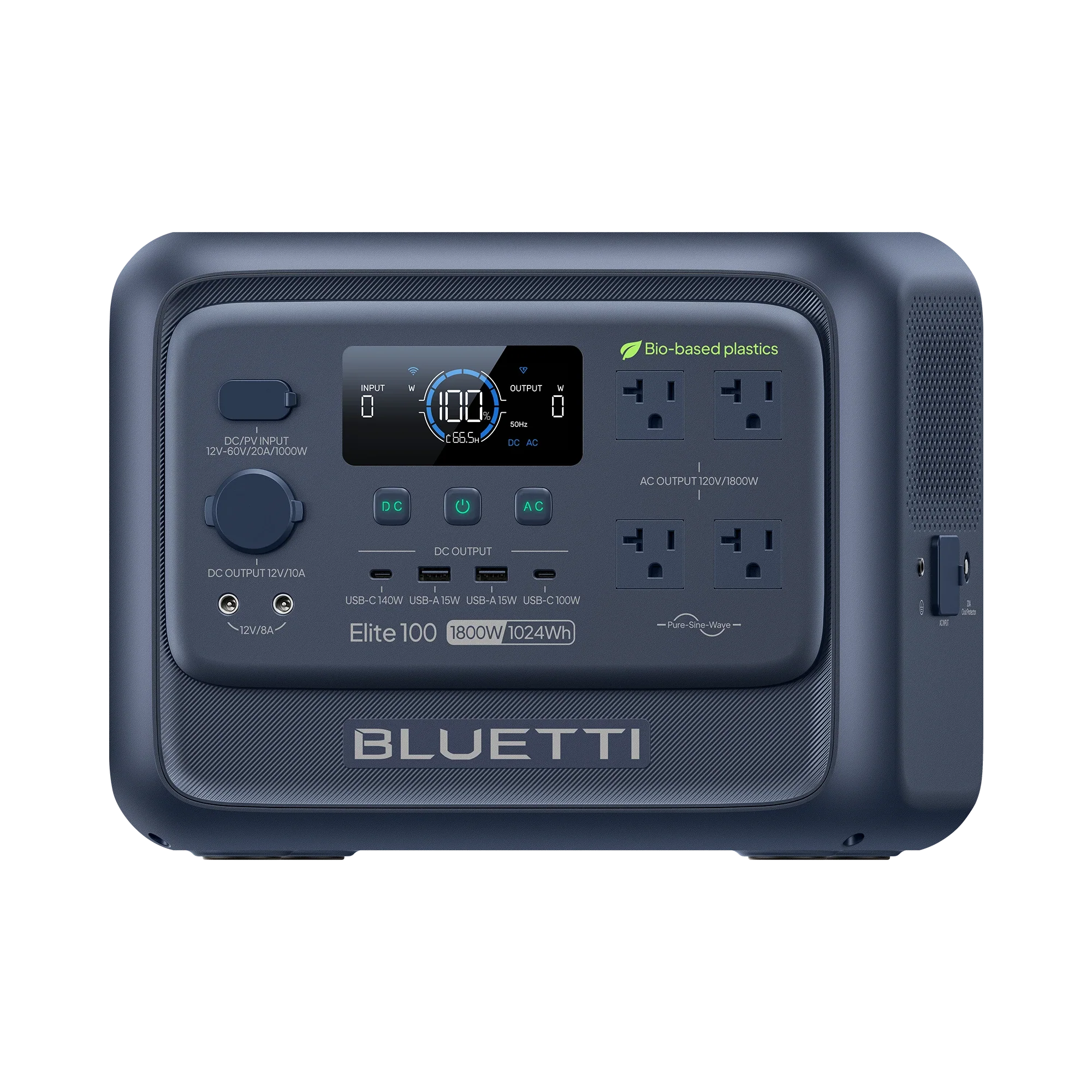
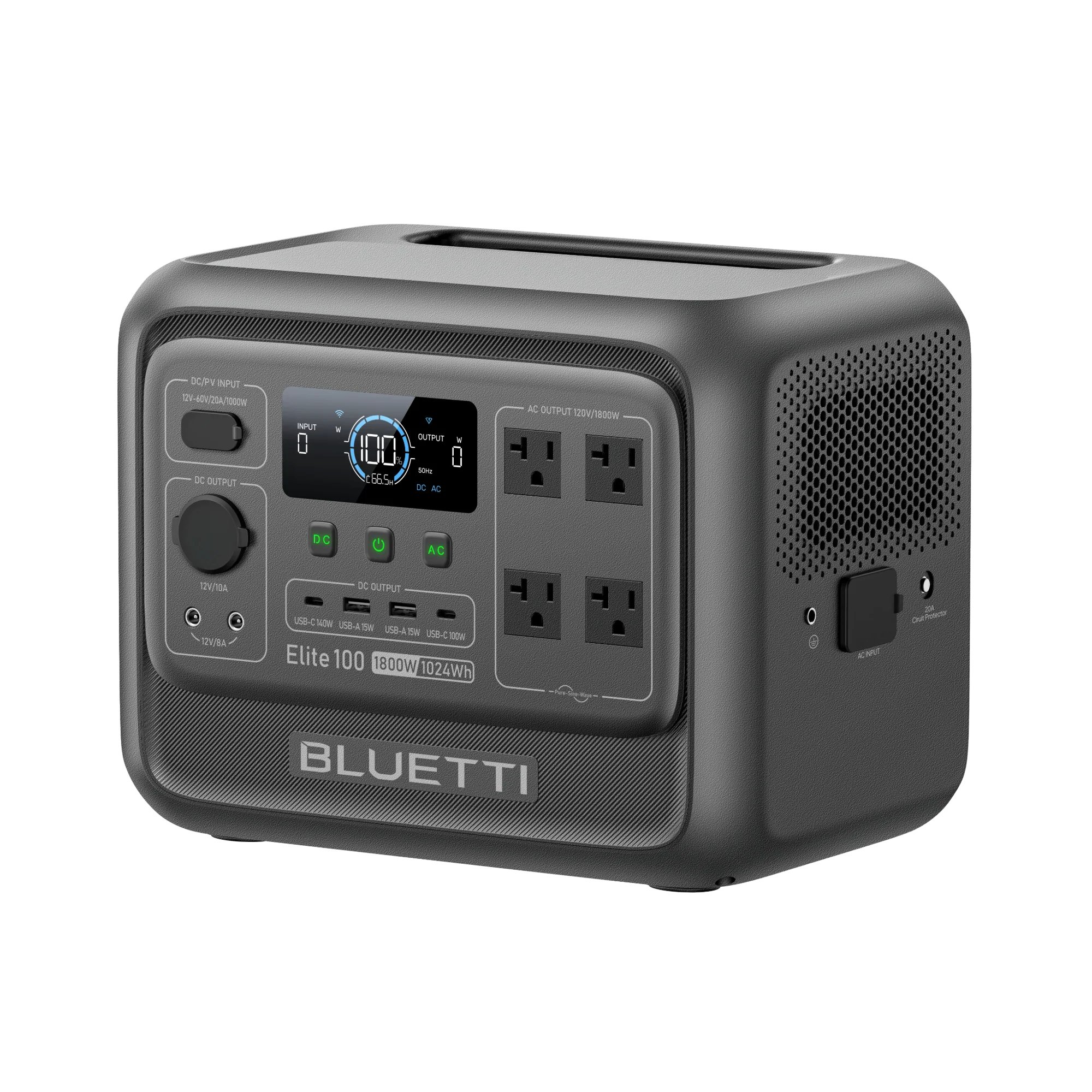
Bluetti's Elite 100 V2 lands right in that spot. It packs 1,024Wh of lithium iron
phosphate, an 1,800W continuous inverter with a 3,600W surge ceiling, and a $499 price.
Two numbers make it more interesting than a plain spec recital would suggest: Bluetti
claims a 0-80% AC recharge in 45 minutes, and the pack is rated for more than 4,000
charge cycles. Fast to refill and slow to wear out is a good combination in a backup unit
you might lean on for years.
What keeps it grounded is honest sizing. At 1,024Wh this is an entry-level backup station,
not a house battery. It will carry a fridge and a device load for a useful stretch, but a
multi-day whole-home outage is out of scope without expansion, and even then Bluetti is
vague about how far you can push it. The Elite 100 V2 earns its recommendation by doing
the mid-size job well and at a fair price — provided you buy it for that job.
Design, Build and Everyday Handling
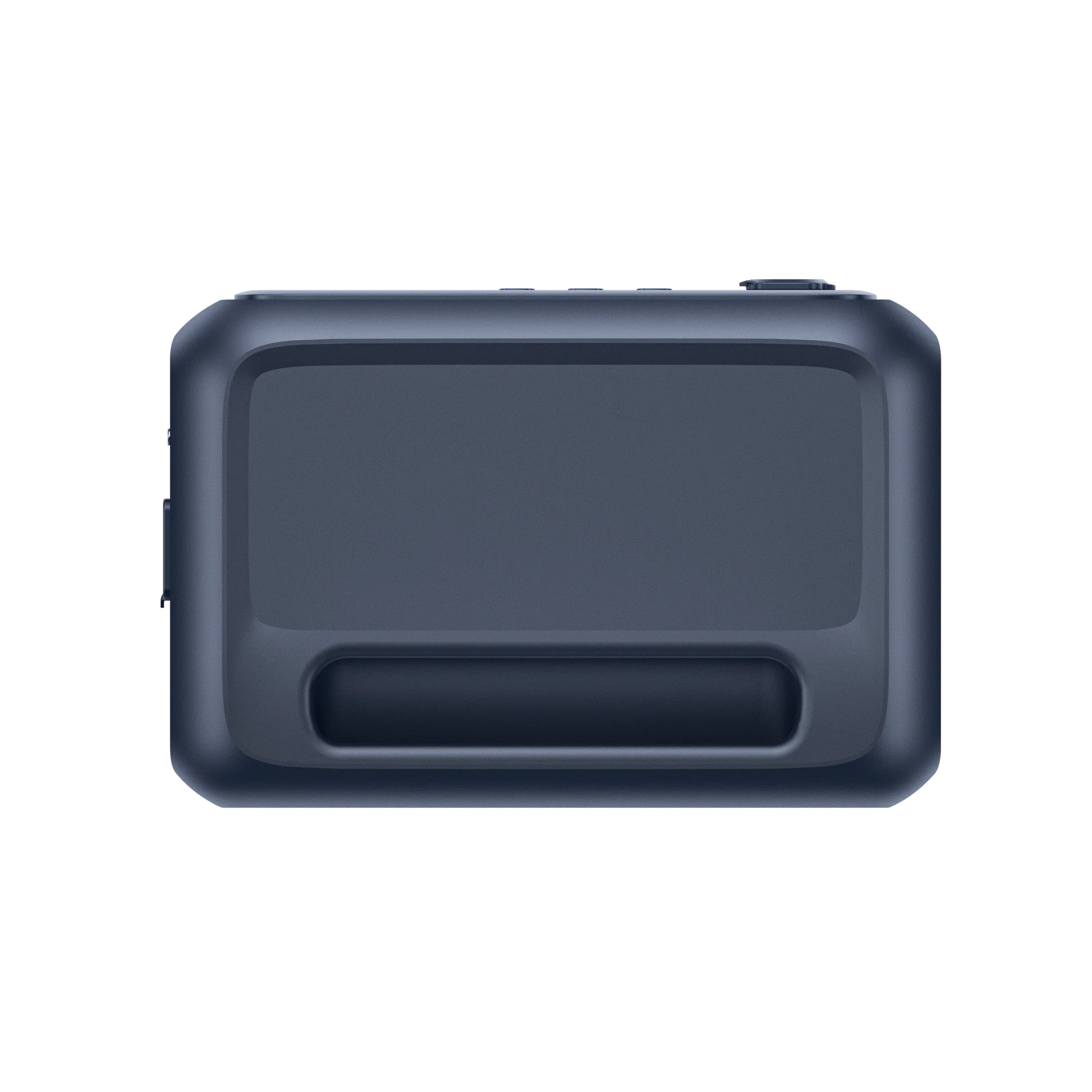
The most quietly important number on the Elite 100 V2 is 25.3 pounds, or 11.5 kilograms.
That is light enough for one person to lift out of a closet, carry to another room and set
down without a second thought — a real advantage in an emergency, when the person moving
the unit may not be the person who bought it. Plenty of 1kWh stations creep past 30 pounds;
staying under that line is the difference between a unit you reposition freely and one you
resent moving.
BLUETTI (Manufacturer product image)
Bluetti leans on acoustics as a selling point, claiming the unit stays around 30 decibels
when the load is under 600 watts. That is Bluetti's own figure rather than a measurement
from an independent lab, so I will treat it as a claim, not a verified result. The
direction is plausible — LiFePO4 stations with variable-speed fans are genuinely quiet at
low load — but if silent operation is the reason you are buying, wait for a third-party
sound reading rather than banking on the marketing number.
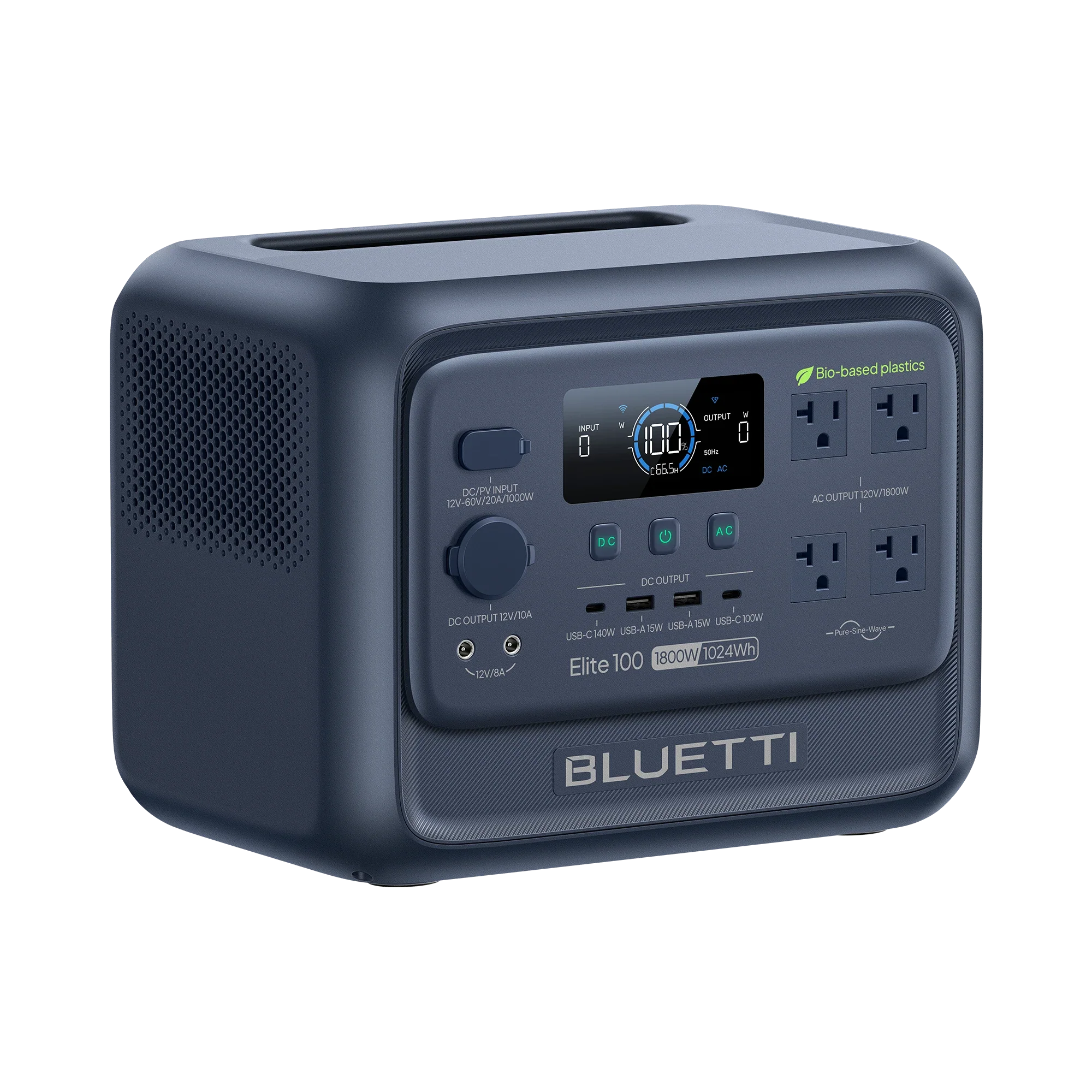
Connectivity is handled through Bluetti's app over either Wi-Fi or Bluetooth, giving you
output control, settings and status monitoring from a phone. Bluetti says the Elite 100 V2
can run up to 11 devices at once across its AC, DC, USB-A and USB-C ports. What Bluetti does
not clearly publish — and what I therefore will not invent — is the exact per-port wattage
breakdown or the precise physical layout. If a specific high-wattage USB-C laptop charge or
a particular socket arrangement is critical to you, confirm it against a current retail
listing before buying.
The cell chemistry is lithium iron phosphate, rated for more than 4,000 charge cycles. At
one full cycle a week that points toward well over a decade before the pack loses
meaningful capacity, and LiFePO4's thermal stability makes the unit safe to store and use
indoors. Bluetti backs the hardware with a five-year warranty, which is generous at $499
and a genuine point in its favour against shorter-term rivals.
Performance, Charging and Backup
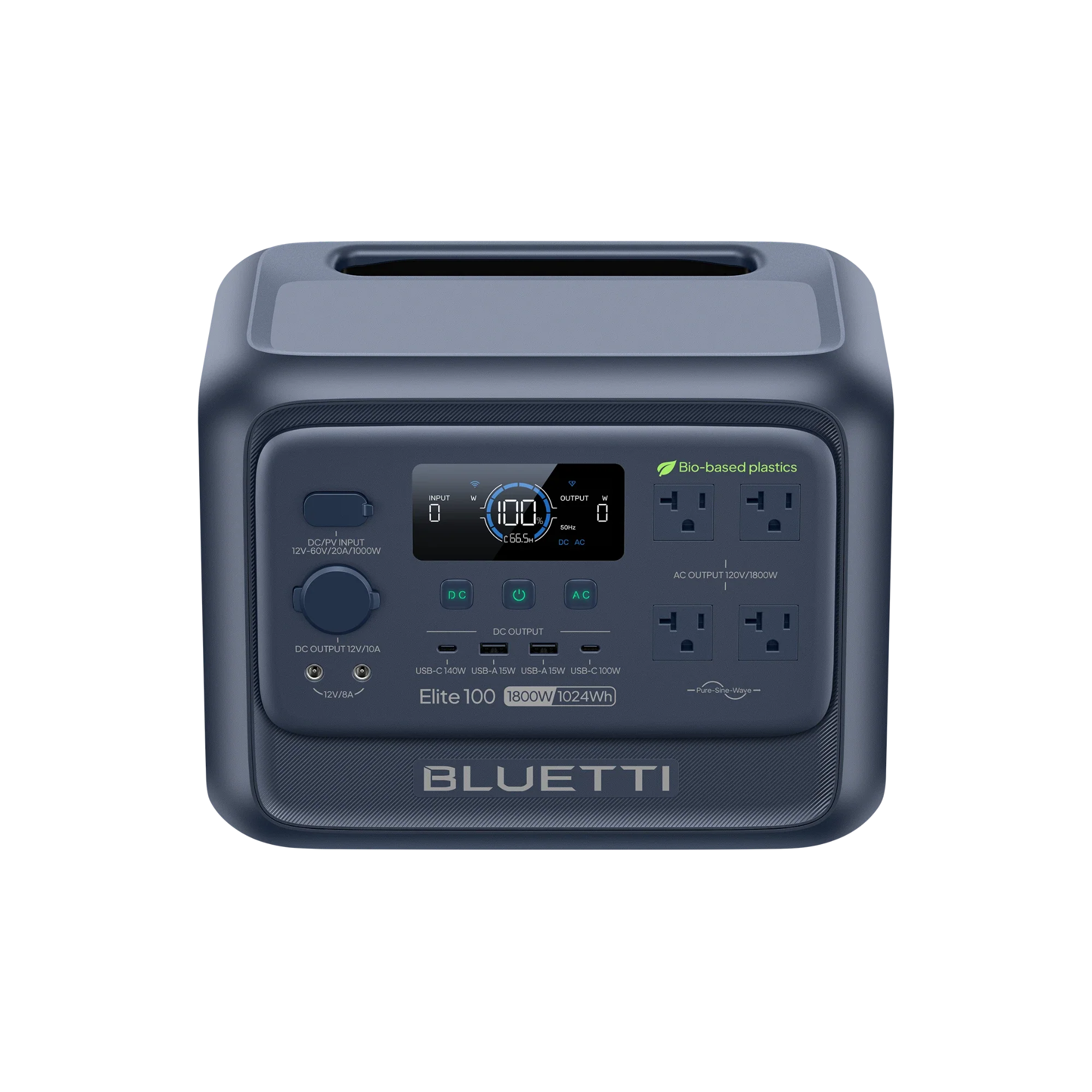
The 1,800W continuous inverter is the figure that defines what this unit can do. Eighteen
hundred watts clears the everyday household list without complaint: a full-size
refrigerator, a 1,000W microwave in short bursts, a coffee maker, a toaster, a laptop and a
handful of phones. The 3,600W surge headroom absorbs the start-up spike from a fridge
compressor or a power tool. What it will not do is run a 1,500W space heater alongside other
large loads, or handle an electric kettle and a microwave together — at 1,024Wh and 1,800W,
this is a one-big-thing-at-a-time unit, and that is the correct expectation for the class.
BLUETTI (Manufacturer product image)
Charging is where the Elite 100 V2 genuinely stands out. Bluetti claims a 0-80% AC recharge
in 45 minutes and roughly 70 minutes to a full 100%. If the real-world figure lands anywhere
near that, it reframes how you use the unit: instead of an overnight refill, you can top it
up during a lull between rolling blackouts or while you pack the car. As with any
manufacturer charge time, that number is measured under favourable conditions, so budget for
some drift — but even a slower real result would be quick for a 1kWh pack.
Solar is a real strength here rather than an afterthought. The Elite 100 V2 accepts up to
1,000W of PV input, with a 12-60V VOC window and MC4-compatible connectors. Against a
1,024Wh battery, 1,000W of solar means a roughly one-hour refill in ideal, panel-normal-to-
sun conditions — an unusually good ratio at this size, and a strong argument for the unit as
an off-grid or extended-outage base. That solar ceiling is one of the clearest advantages the
Elite 100 V2 holds over cheaper 1kWh stations, many of which cap out well below it.
For power continuity, the unit offers UPS mode with a 10-millisecond switchover. Ten
milliseconds is fast enough that a desktop computer, a router, a NAS or a CPAP machine keeps
running through a grid cut without rebooting. For anyone who works from home or depends on
medical equipment overnight, that is arguably worth as much as the capacity itself.
Expansion exists but comes with a caveat worth stating plainly. You can grow capacity by
connecting Bluetti B80 batteries through an Aviation-to-XT60 cable, with the B80 running in
Power Bank Mode. That is a workable path to more runtime, but Bluetti does not publish a
maximum expanded capacity for this configuration, so I will not put a ceiling on it. If
expansion is central to your plan, treat it as "some more" rather than a specified number
until Bluetti documents a figure.
Alternatives Worth Weighing
vs. EcoFlow DELTA 3 ($629, 1,024Wh). The DELTA 3 matches the Elite 100 V2 on capacity
and inverter — 1,024Wh, 1,800W continuous, 3,600W surge — and adds X-Boost to 2,200W, dual
100W USB-C ports and a 4,000-cycle rating of its own. It also costs $629 to Bluetti's $499.
Unless you specifically want EcoFlow's ecosystem or its 2,200W X-Boost ceiling, the Elite
100 V2 delivers the same core capability for $130 less, and answers back with a higher 1,000W
solar input.
BLUETTI (Manufacturer product image)
vs. EcoFlow DELTA 3 Classic ($419-$529, 1,024Wh). This is the closer price fight. The
DELTA 3 Classic can dip to $419 for the same 1,024Wh, undercutting the Bluetti at the bottom
of its range. The Elite 100 V2's case rests on its claimed 45-minute recharge, its 1,000W
solar ceiling and its five-year warranty. If you catch the Classic at its lowest price and
value the EcoFlow app, it is the cheaper route to 1kWh; if recharge speed and solar matter,
the Bluetti earns the small premium.
vs. Jackery Explorer 2000 v2 ($999, 2,042Wh). These serve different buyers. The Jackery
holds roughly double the energy at 2,042Wh with a 2,200W inverter, at double the price and a
heavier 39.5-pound carry. If your backup ambition is a whole floor rather than a fridge and
devices, the Jackery is the more appropriate class of unit. For the mid-size job, the Elite
100 V2 is half the money and lighter to move.
Who Should Buy It
The Elite 100 V2 is built for the mid-size backup buyer, and it fits that person well. If
your outage plan is a refrigerator, lights, a router and a few devices — and maybe a CPAP
overnight — 1,024Wh and 1,800W cover it comfortably, the 25.3-pound weight makes the unit
easy to move to wherever the food and the router are, and the 10ms UPS switchover keeps your
network gear from rebooting the moment the grid drops.
It also suits the solar-minded camper or off-grid weekender. The 1,000W solar input is the
standout here: paired with a decent portable array, you can refill the pack in about an hour
of good sun, which makes multi-day off-grid stays realistic in a way most sub-$500 stations
cannot match. The five-year warranty adds confidence for anyone planning to lean on it
regularly.
Look elsewhere if you need whole-home or multi-day backup. At 1,024Wh this is not a house
battery, and while B80 expansion helps, Bluetti's silence on the maximum expanded capacity
makes it hard to plan a large system around. Buyers with that ambition should be shopping the
2kWh-plus class — a Jackery Explorer 2000 v2 or an expandable EcoFlow DELTA — rather than
stacking batteries onto a 1kWh base. And if fan noise is a dealbreaker, wait for an
independent sound measurement before trusting the 30dB claim.
The Bottom Line
The Elite 100 V2 is a strong mid-size backup station that is honest about its scope. For
$499 you get 1,024Wh of LiFePO4, an 1,800W inverter that handles a fridge and everyday
appliances, a claimed 45-minute fast recharge, a class-leading 1,000W solar input, a 10ms
UPS switchover and a five-year warranty. That is a well-rounded package, and the price is
fair for what it delivers.
The reservations are specific rather than damning. The 30dB acoustic figure is Bluetti's own
claim and should not be treated as tested. B80 expansion works but has no published capacity
ceiling. Per-port wattages, exact dimensions and US launch specifics are not consistently
documented, and I have declined to guess at them. And 1,024Wh remains entry-level backup —
enough for a fridge and devices, not a whole house.
Measured against what it sets out to be — a fast-charging, solar-friendly, one-person-portable
1kWh backup unit at a keen price — the Elite 100 V2 succeeds cleanly. Buy it for a fridge, a
router and a night of devices, lean on its solar and recharge speed, and it will do exactly
that job for years. Just do not ask a 1kWh box to back an entire home.
Frequently Asked Questions
How long will the Elite 100 V2 run a refrigerator?
across its duty cycle, which puts fridge-only runtime somewhere in the region of five to ten
hours. Pairing it with solar during daylight extends that considerably.
Does it really recharge to 80% in 45 minutes?
charge times are measured under favourable conditions, so expect some real-world drift, but
even a slower result would be fast for a 1kWh station.
Will it keep my computer and router running during an outage?
CPAP machines continue running through a grid cut without rebooting.
How much solar can it take, and how fast will it refill?
Against the 1,024Wh battery that is roughly a one-hour refill in ideal sun — an unusually
good ratio for a unit at this size and price.
Can I expand the capacity?
to Power Bank Mode. Bluetti does not publish a maximum expanded capacity for this setup, so
treat it as added runtime rather than a specified total.
Is it quiet enough to run indoors?
is the manufacturer's own, not an independent measurement, so if low noise is essential, look
for a third-party sound test before relying on it.
How many devices can it power at once?
exact per-port wattages are not clearly published, so confirm the layout against a current
retail listing if a specific high-draw device matters to you.
How long will the battery last before it wears out?
implies well over a decade of use before meaningful capacity loss, and the five-year warranty
covers the early years of that span.
How does it compare to the EcoFlow DELTA 3?
$499 and adds X-Boost to 2,200W. The Bluetti counters with a lower price, a higher 1,000W
solar ceiling and a five-year warranty, making it the better value unless you specifically
want EcoFlow's ecosystem.
Is 1,024Wh enough for a power outage?
multi-day event it is not enough on its own, and because Bluetti does not state a maximum
expanded capacity, buyers with larger needs should consider a 2kWh-plus unit instead.