Overview
The three-kilowatt-hour tier is where a portable power station stops being a
camping accessory and starts behaving like a piece of household infrastructure.
EcoFlow's DELTA 3 Ultra sits squarely in that transition. It stores 3,072Wh,
pushes 3,600W out of its inverter, and — the number EcoFlow wants you to fixate
on — refills from empty to 80% in 89 minutes. At $1,399 it is priced to be the
obvious default for anyone shopping this capacity band, and on the headline
figures it earns that positioning.
EcoFlow (Manufacturer product image)
What separates the DELTA 3 Ultra from a merely large battery is intent. EcoFlow
built it to be wired into a house. It ships with two documented paths to your
electrical panel, a companion app that watches the weather and your utility
rates, and a cell-to-chassis structure the company borrowed from electric
vehicle engineering. This is not a unit designed to be carried to a campsite and
back; it is designed to live in a utility room and quietly keep the lights on.
That ambition is worth taking seriously, but so are the gaps in EcoFlow's own
documentation. The company is oddly reticent about basic physical facts — it
does not publish the unit's weight, its dimensions, its individual port
wattages, or a maximum solar input figure. For a product you are meant to
install and integrate, those omissions matter, and we will return to them.
Design and Build
EcoFlow's structural pitch centres on what it calls an EV-grade CTC, or
cell-to-chassis, design. Rather than housing loose cells inside a separate
enclosure, the pack is built so the cells contribute to the structure itself,
which the company says protects against two specific real-world stresses:
overnight condensation and the vibration of off-road transport. The cells are
described as automotive-grade full-tab LFP, and EcoFlow attaches a Class-B
certification and a claim of "10 years of reliable power" to the package. These
are manufacturer assertions rather than independently confirmed results, and
they should be read that way, but the framing tells you where EcoFlow believes
this product lives: bolted into a home, not tossed in a truck bed.
EcoFlow (Manufacturer product image)
The lithium iron phosphate chemistry is the right call for that role. LFP runs
cooler and tolerates a longer service life than the nickel-based chemistries
that dominated the previous power-station generation, and it is the reason
EcoFlow can credibly talk about a decade of use. A "24/7 protection BMS" governs
charging and discharging, though again the phrase is EcoFlow's and the specific
protection thresholds are not published.
Here is where the review has to be blunt about documentation. EcoFlow does not
state how much the DELTA 3 Ultra weighs, and it does not give dimensions. For a
3kWh LFP battery the mass is certainly substantial — comparable units in this
class run well past 60 pounds — and the absence of a published figure is a
genuine irritation for anyone planning where to put it or how to move it. The
same silence covers the exact port count and the per-port output wattages, so a
buyer cannot confirm, from EcoFlow's materials alone, how many devices they can
run simultaneously or how fast a laptop will charge over USB-C. That is a
strange thing to hide on a product otherwise pitched on transparency and
integration.
Performance and Charging
The performance story is where the DELTA 3 Ultra stops apologising. The inverter
delivers 3,600W continuously with a 7,200W surge ceiling, and an X-Boost mode
that EcoFlow says lets the unit drive heavy-duty appliances rated up to 4,600W —
the company specifically names clothing steamers, electric dryers, lawnmowers
and electric frying pans. Those are loads that trip most portable stations
instantly, so the ability to run them, even in a boosted mode, materially widens
what the unit can back up during an outage.
EcoFlow (Manufacturer product image)
The recharge speed is the genuinely standout figure. EcoFlow rates a 0-80%
refill at 89 minutes from either a wall outlet or a generator. On a 3,072Wh pack
that is a remarkable throughput, and it changes how you use the product: instead
of planning an overnight charge, you can top up meaningfully over a lunch break
or between generator runs. As with any manufacturer charge time, this is a
best-case figure measured under favourable conditions, and no independent outlet
has yet published a measured recharge for us to check it against — so treat the
89 minutes as EcoFlow's claim rather than a verified result.
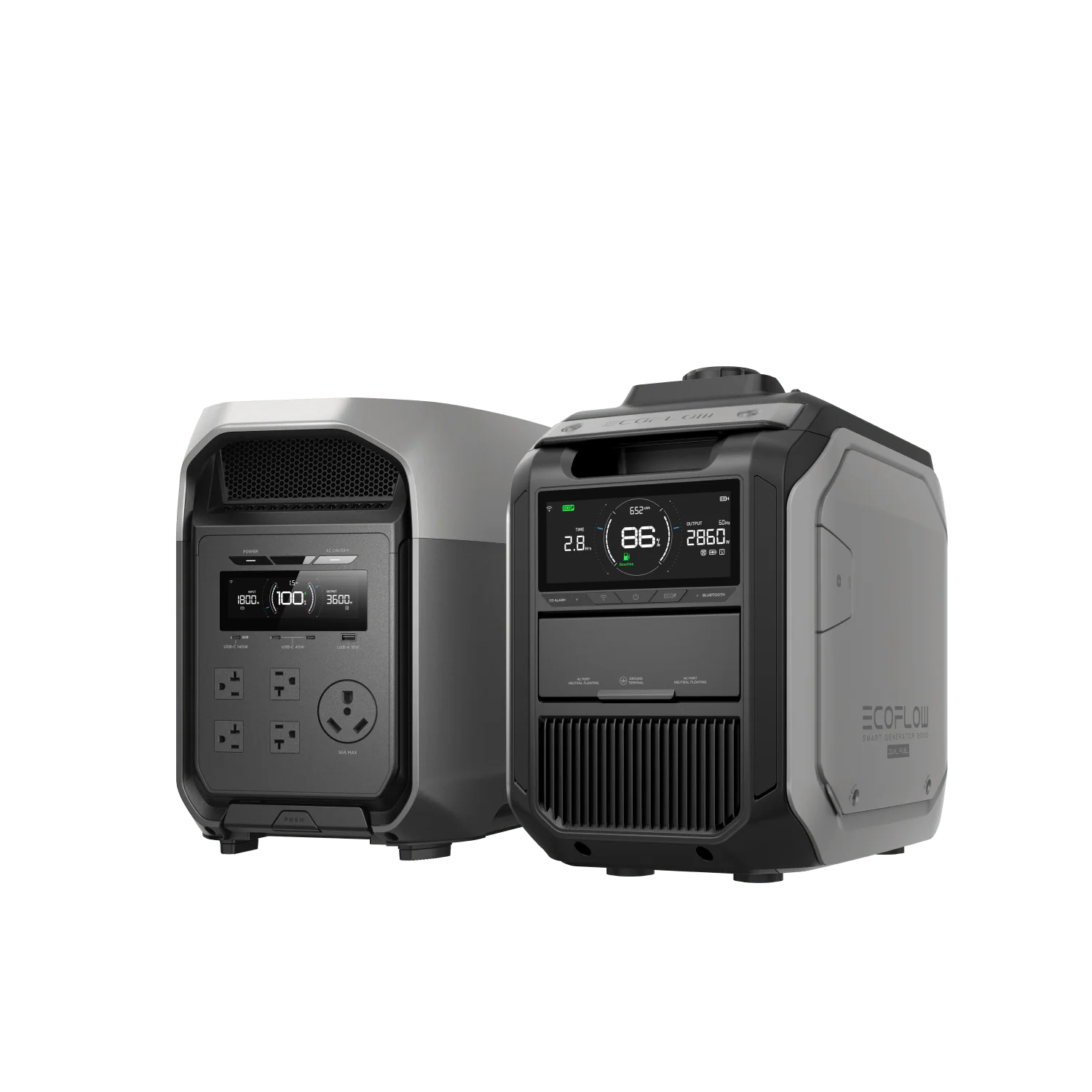
For always-on loads, the unit switches to battery in 10 milliseconds. EcoFlow
frames this around NAS systems and servers, and that is exactly the right use
case: a 10ms transfer is fast enough that a home server, a network-attached
storage array or a desktop rides through a grid cut without rebooting. A CPAP
machine or a router benefits from the same behaviour. This is the feature that
turns a big battery into a true uninterruptible supply.
Noise is the quieter win, so to speak. EcoFlow claims the unit stays at or below
25dB when delivering 600W. If that holds, it is genuinely living-room quiet — a
whisper rather than the audible fan drone many stations produce under load. It
is an EcoFlow figure and load-dependent, so expect more noise as you push toward
the 3,600W ceiling, but for the moderate loads a home actually runs most of the
time, the claim is plausible and welcome.
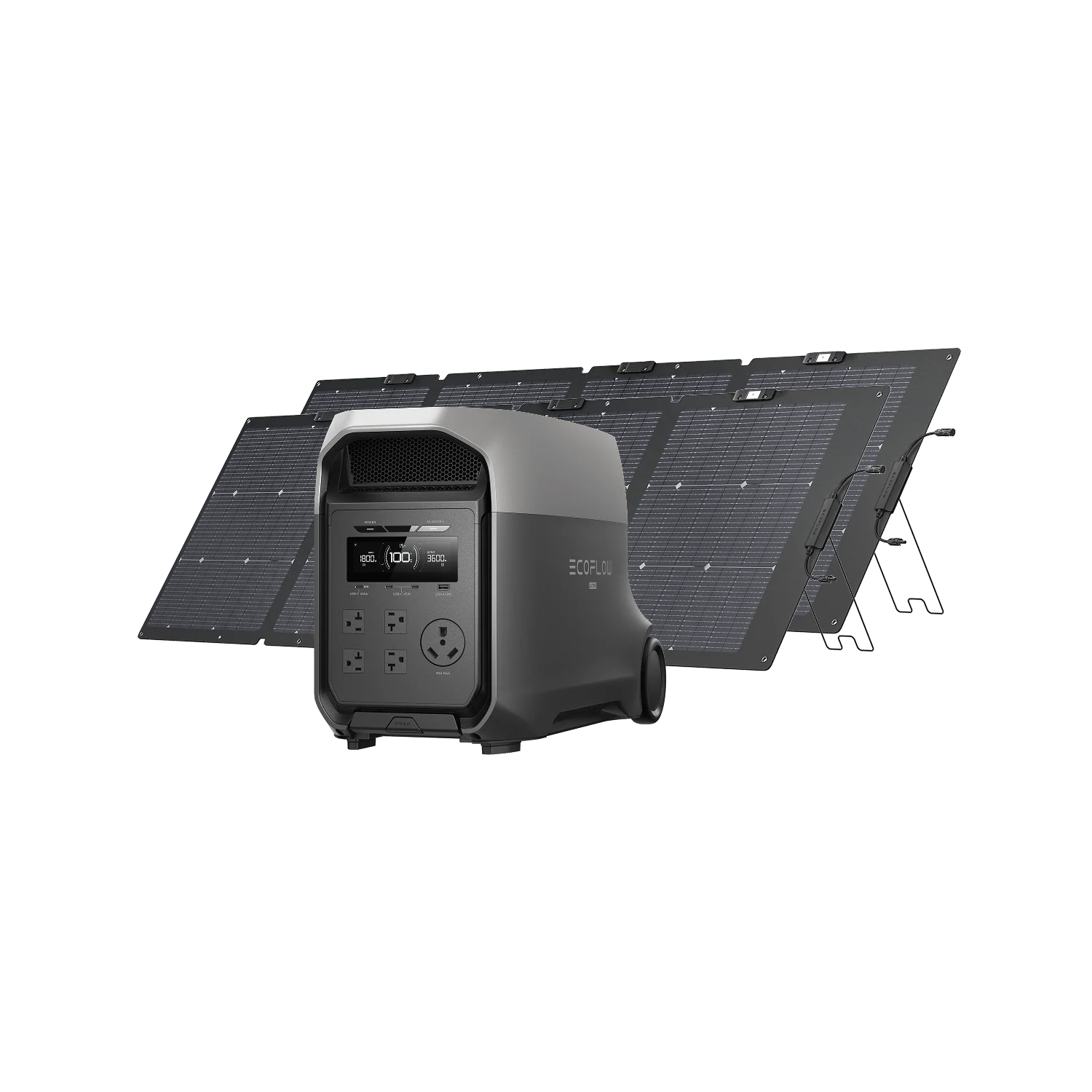
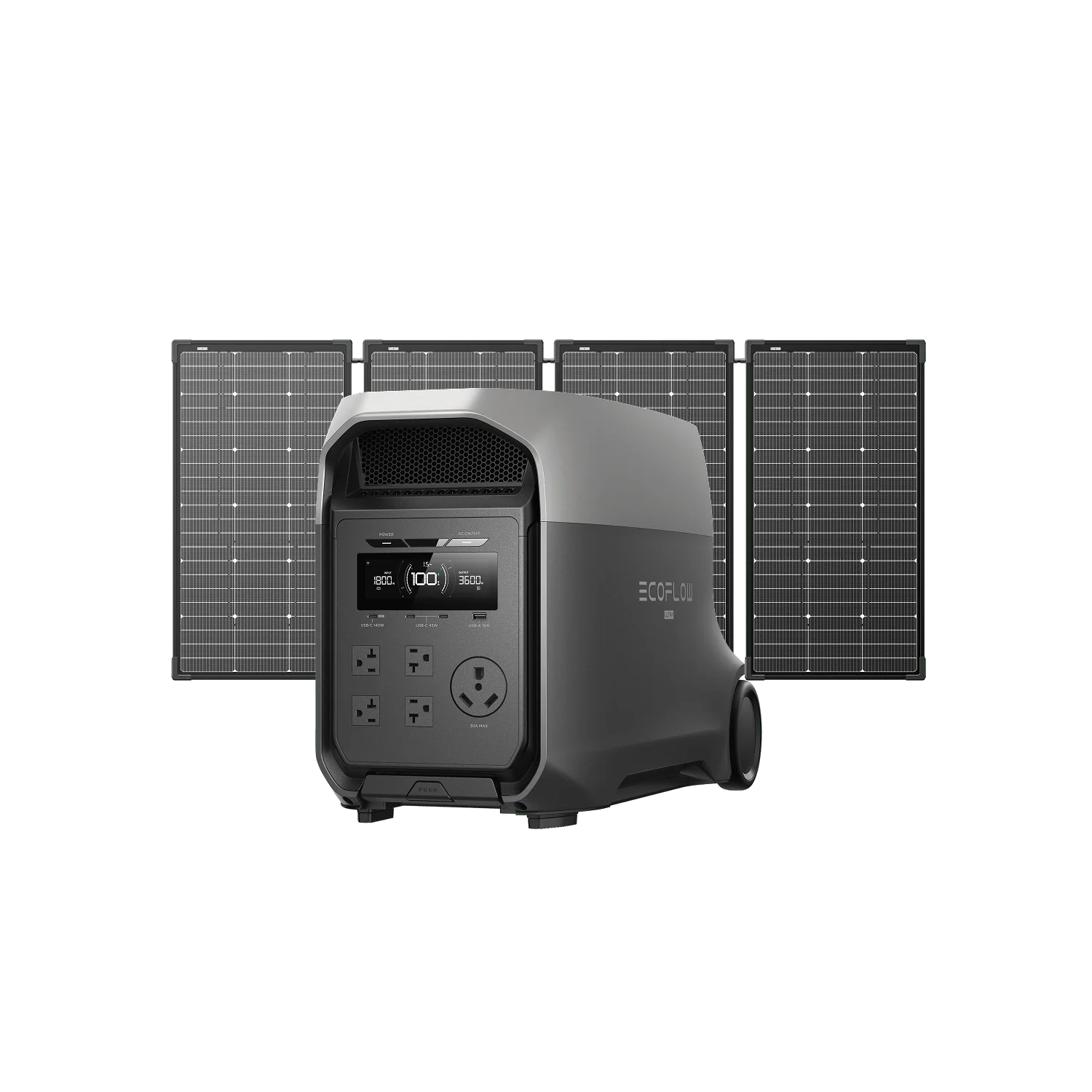
Solar is the frustrating omission on an otherwise strong sheet. EcoFlow sells a
solar-panel bundle and a dedicated Solar Generator variant, but it does not
publish a maximum solar input wattage for the DELTA 3 Ultra. That is a real
planning problem: without a stated ceiling you cannot size an array with
confidence, and you are left buying EcoFlow's own kit on trust rather than
matching third-party panels to a known limit. For a product whose whole pitch is
resilient, self-sufficient power, leaving the solar ceiling undocumented is a
meaningful gap.
Software and Home Integration
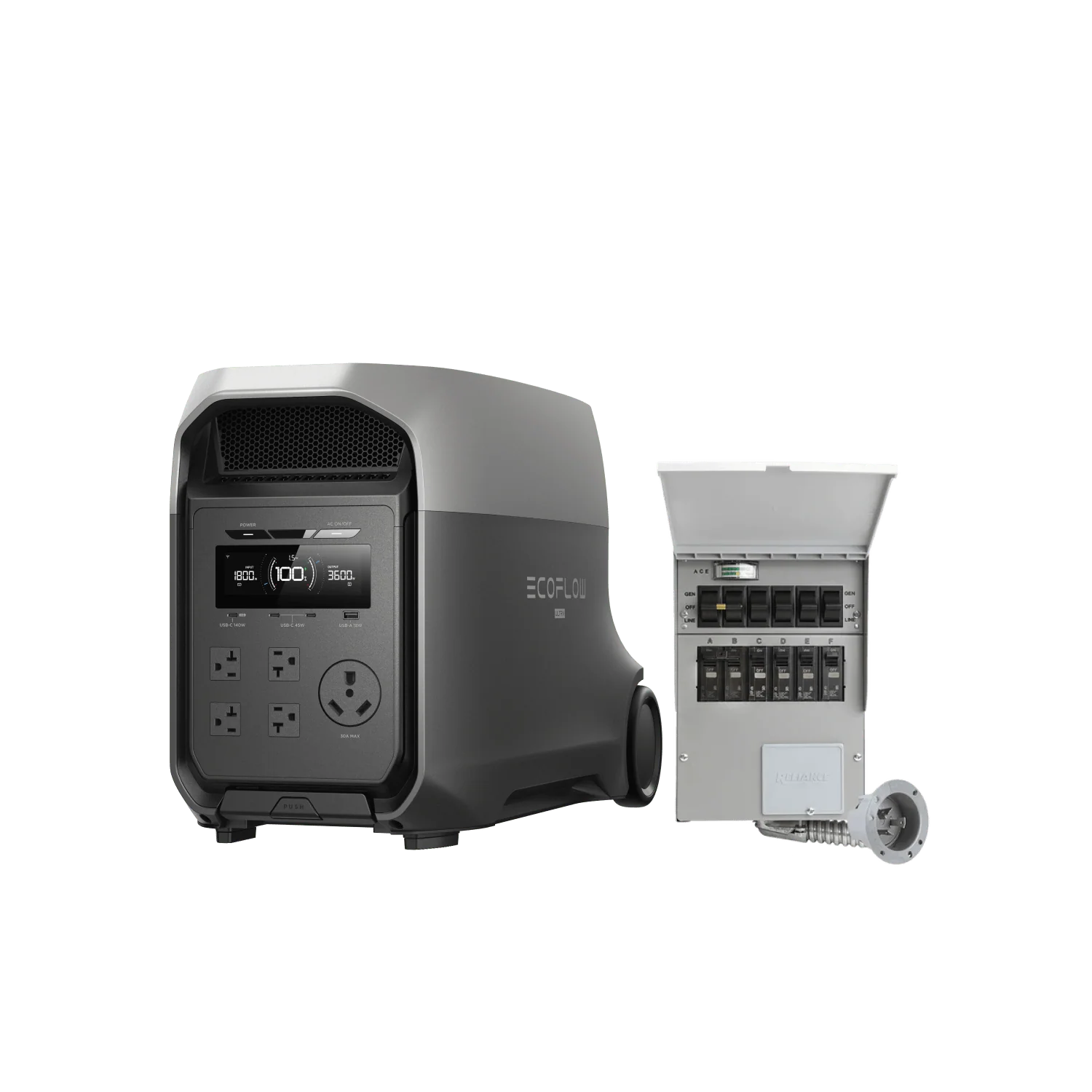
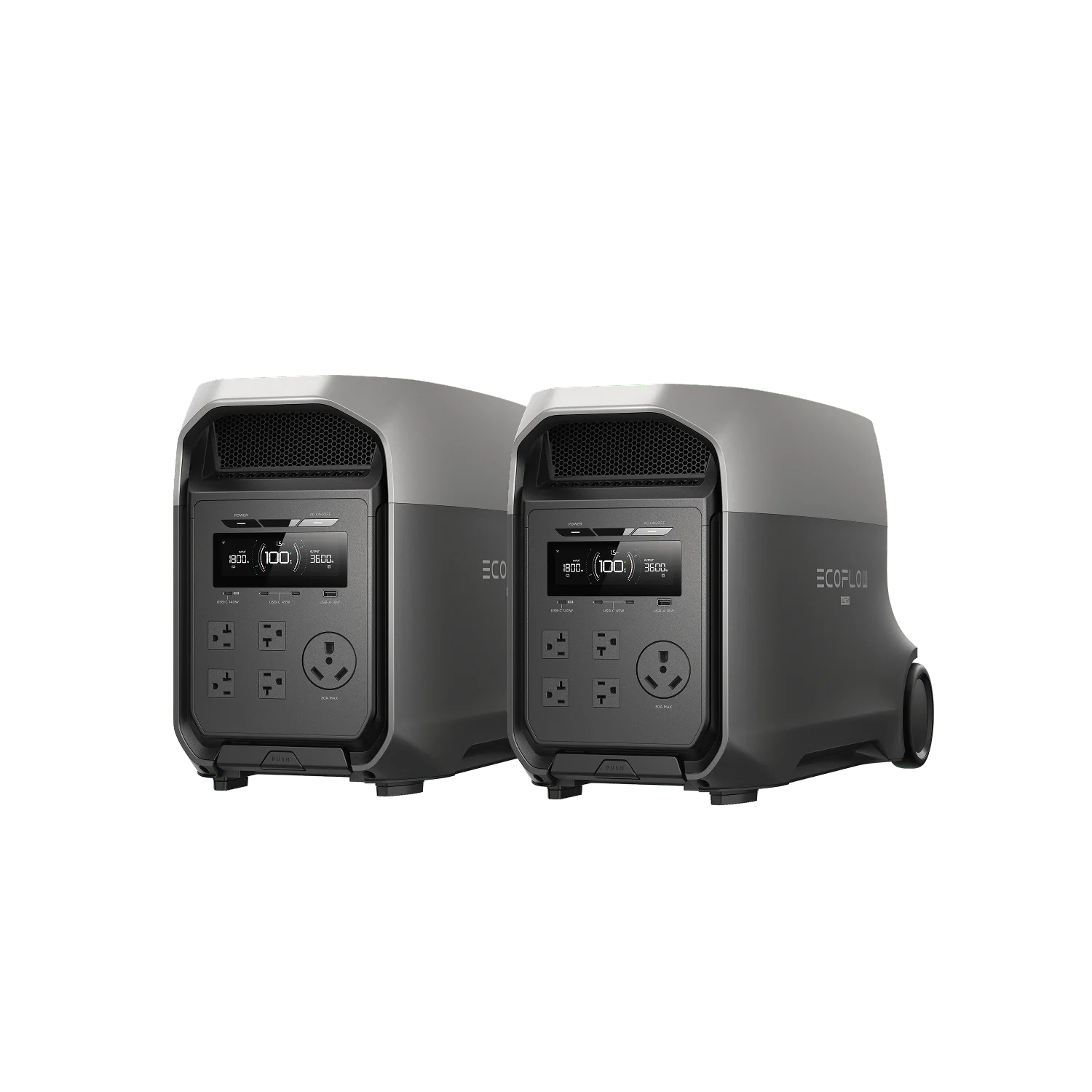
The DELTA 3 Ultra is one of the few units in its class with a coherent story for
connecting to a house rather than sitting beside it. EcoFlow documents two
methods: a Manual Transfer Switch and an Inlet Box. Both let the unit feed
selected circuits, and both require separate hardware and, realistically, an
electrician — so budget for that on top of the $1,399 sticker.
EcoFlow (Manufacturer product image)
The software layer is called OASIS 3.0, and it is more ambitious than the usual
battery-percentage app. It shows real-time battery status, but it also pulls in
electricity prices and calculates savings, and it runs two automation modes that
justify the "smart" label. Storm Guard Mode watches forecasts and automatically
tops the unit to full before extreme weather arrives, so the battery is ready
when an outage is most likely. Self-Powered Mode lets the unit prioritise its
own stored energy against grid draw. These are the kinds of features that move a
power station toward the territory of a proper home energy system, and they are
a real differentiator against simpler rivals.
Competitive Comparison
vs. EcoFlow DELTA 3 Ultra Plus ($1,499-$1,599). The most confusing rival is
EcoFlow's own. The Ultra Plus shares the 3,072Wh capacity but sits $100 to $200
higher, and the near-identical naming makes it easy to buy the wrong one. Unless
a specific Plus feature is decisive for you, the standard Ultra at $1,399 is the
value pick within EcoFlow's line, and buyers should confirm the exact SKU before
checkout.
vs. Jackery Explorer 2000 v2 ($999, 2,042Wh). The Jackery is a full
kilowatt-hour smaller and cannot be expanded, but it weighs a documented 39.5
pounds and is aimed at portability. It is the better choice if you actually need
to carry the unit; the DELTA 3 Ultra is the better choice if it will stay put and
back up a house. Note that OutdoorGearLab measured the Jackery's usable capacity
at 1,740Wh against its 2,042Wh rating, a reminder that nameplate figures always
sit above real delivered energy.
vs. Anker SOLIX C2000 Gen 2 ($799, 2,048Wh). The Anker is cheaper and
lighter at 42 pounds, offers a 30A RV plug and 800W of solar input, and expands
to 4,096Wh. But its 2,400W inverter and 6,000W surge fall short of the EcoFlow's
3,600W and 7,200W, and at 2,048Wh it stores a third less energy. For RV and
outdoor use the Anker is compelling; for whole-home backup the DELTA 3 Ultra is
the more capable machine.
vs. EcoFlow DELTA Pro Ultra ($4,199, 6,144Wh base). If the DELTA 3 Ultra is
not enough, EcoFlow's own flagship doubles the base capacity to 6,144Wh, scales
from 6kWh to 90kWh, and outputs 7.2kW to 21.6kW. It is the only portable power
station certified to both UL1973 and UL9540. At three times the price it is a
different class of purchase, but it marks the ceiling of where the DELTA 3 Ultra
sits on the ladder.
Who Should Buy It
Buy the DELTA 3 Ultra if your goal is home backup and you want the capability
without stepping up to a $4,000 flagship. The combination of 3,072Wh, a 3,600W
inverter that clears most household appliances, an 89-minute fast charge, and two
documented wiring paths makes it a serious backup unit for a house or a
well-equipped apartment. The 10ms switchover adds a layer of protection for
always-on gear that cheaper stations cannot match.
It also suits the buyer who values the software. If you want a battery that
pre-charges itself ahead of a storm and reasons about electricity prices, OASIS
3.0 is genuinely more capable than the app on most competitors, and Storm Guard
Mode is the kind of feature that pays for itself the first time it saves a
freezer.
Look elsewhere if portability is a priority. The undocumented but certainly
heavy chassis, and EcoFlow's refusal to publish a weight at all, make this a poor
choice for anyone who needs to move the unit regularly — the Jackery Explorer
2000 v2 is the honest answer there. And if solar self-sufficiency is central to
your plan, the missing maximum-input specification is a real obstacle; you will
be buying EcoFlow's own panels on faith rather than sizing an array to a known
number.
Final Verdict
The DELTA 3 Ultra is a strong 3kWh home battery let down, oddly, by EcoFlow's own
documentation rather than by anything about the hardware. On performance it is
excellent: 3,072Wh, a 3,600W inverter with a 4,600W X-Boost reach, a claimed
89-minute recharge, a 10ms switchover, and a software suite that actually earns
the word smart. At $1,399 — and $1,099 refurbished — it is priced to win the
capacity tier, and for whole-home backup it is more machine than most buyers in
this band will find elsewhere.
The reservations are about transparency and fit rather than capability. EcoFlow
does not publish the weight, the dimensions, the per-port wattages, or a maximum
solar input, and every one of those omissions makes the unit harder to plan
around than a rival that simply prints the numbers. The longevity and protection
claims are the company's own. And the near-identical Ultra Plus SKU is a trap
for the inattentive shopper. None of that undermines what the unit does when
running — it just means you are buying partly on EcoFlow's word. For a home
backup role, that is a bet worth making; for a portable one, buy something you
can actually pick up.
Frequently Asked Questions
How fast does the DELTA 3 Ultra actually recharge?
generator. That is a manufacturer figure measured under favourable conditions,
and no independent outlet has yet published a verified recharge time, so treat 89
minutes as a best case rather than a guaranteed result.
Can it power my whole house?
documents two integration paths — a Manual Transfer Switch and an Inlet Box —
both of which require additional hardware and, in most cases, a licensed
electrician. Budget for that installation cost on top of the purchase price.
What is the difference between the DELTA 3 Ultra and the Ultra Plus?
at roughly $1,499 to $1,599 versus $1,399 for the standard Ultra. The names are
close enough to cause mistaken purchases, so confirm the exact model before
paying.
Will it keep a home server or NAS running during an outage?
specifically positions for NAS systems and servers. That is fast enough that a
server, storage array, desktop or CPAP machine continues running without
rebooting when the grid drops.
How much does the DELTA 3 Ultra weigh?
battery is certainly heavy — comparable units run well past 60 pounds — but
without an official figure you should assume it is a stationary, two-person-lift
appliance rather than something you carry casually.
How many solar panels can I connect?
it does not publish a maximum solar input wattage. That omission makes it hard to
size a third-party array with confidence, so plan on using EcoFlow's own panels
until a verified input ceiling is available.
Is it quiet enough to run indoors?
be living-room quiet. Expect the fans to become more audible as you push toward
the 3,600W ceiling, but at the moderate loads a home runs most of the time the
noise should be modest.
What can X-Boost mode actually run?
3,600W continuous inverter rating. EcoFlow names clothing steamers, electric
dryers, lawnmowers and electric frying pans as examples — loads that would
otherwise exceed the unit's normal output.
How long will the battery last before it wears out?
power" backed by a 24/7 protection BMS. These are manufacturer figures rather
than independently verified results, but LFP chemistry does support a long
service life, and a decade of dependable use is a reasonable expectation for this
chemistry class.
Is the DELTA 3 Ultra a better buy than the Anker SOLIX C2000 Gen 2?
adds a 30A RV plug and 800W solar input, but it stores only 2,048Wh and tops out
at a 2,400W inverter. The DELTA 3 Ultra's 3,072Wh capacity and 3,600W output make
it the stronger whole-home choice; the Anker is the better portable and RV unit.