Introduction
Efficiency is the quiet metric that determines real-world value in portable power stations, and the Bluetti Elite 200 V2 has just rewritten the record books.
Independent testing clocked it at 94% efficiency — the highest figure ever measured in the category, by a meaningful margin.
Most competitors in this size class land between 79–89%.
That gap translates directly to more usable energy per charge cycle and less wasted heat.
What this means practically: at 94% efficiency, the Elite 200 V2 converts 1,949Wh of its 2,073Wh battery into usable output.
A comparable 85% efficient unit of the same capacity delivers only 1,762Wh — 187Wh less per cycle.
Over 300 cycles of regular use, the Elite 200 V2 delivers 56,100Wh more usable energy than its 85%-efficient competitor, despite identical battery capacities.
The Elite 200 V2 is priced at $1,099, putting it against the Anker SOLIX C2000 Gen 2 and EcoFlow Delta 3 Plus.
It wins the efficiency contest decisively.
Whether it wins overall depends on how much you value software polish and outlet count versus raw electrical performance.
Unboxing & First Impressions
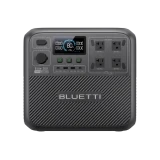
The Elite 200 V2 is a substantial unit at 53.4 lbs — noticeably heavier than the Anker SOLIX C2000 Gen 2 at 42 lbs.
BLUETTI (Manufacturer product image)
BLUETTI (Manufacturer product image)
The build feels solid and purposeful.
Integrated carry handles on both sides help manage the weight.
The front-facing port layout is a genuine usability win — everything you plug in faces you, which surprisingly few power stations get right.
The display is clear indoors but washes out in bright daylight — a frustration confirmed by multiple reviewers in outdoor settings.
The app works, but the interface feels like it hasn't been updated since 2022 while rivals have shipped significant improvements.
The grounding terminal is an unusual inclusion at this price point — useful for sensitive electronics and professional audio applications.
Key Features
94% Efficiency: The Record That Matters
At 94% efficiency, a typical 2,073Wh charge loses only about 124Wh to heat.
BLUETTI (Manufacturer product image)
At 87% efficiency (a common competitor figure), the same charge loses roughly 270Wh.
Nearly 150Wh more of usable energy per cycle.
Over 500 cycles, that's 75kWh of additional real-world capacity at zero additional cost.
The idle consumption of 9.5W is equally impressive.
Most rivals idle at 15–27W.
The Elite 200 V2 at 9.5W leaves a fridge running through the night with barely a dent in the battery compared to units drawing 3x that idle rate.
1,000W Solar: Standard XT60 Connectors
The 1,000W solar input via standard XT60 connector means you're not locked into proprietary Bluetti-branded panels.
Any quality XT60-compatible solar array works, opening up a broader and often cheaper panel ecosystem.
The XT60 connector is widely used in RC batteries, solar panels, and DC systems — replacement cables are available anywhere.
Under real-world testing with 900W of panels under solid sun, the Elite 200 V2 pulled 785–840W actual input.
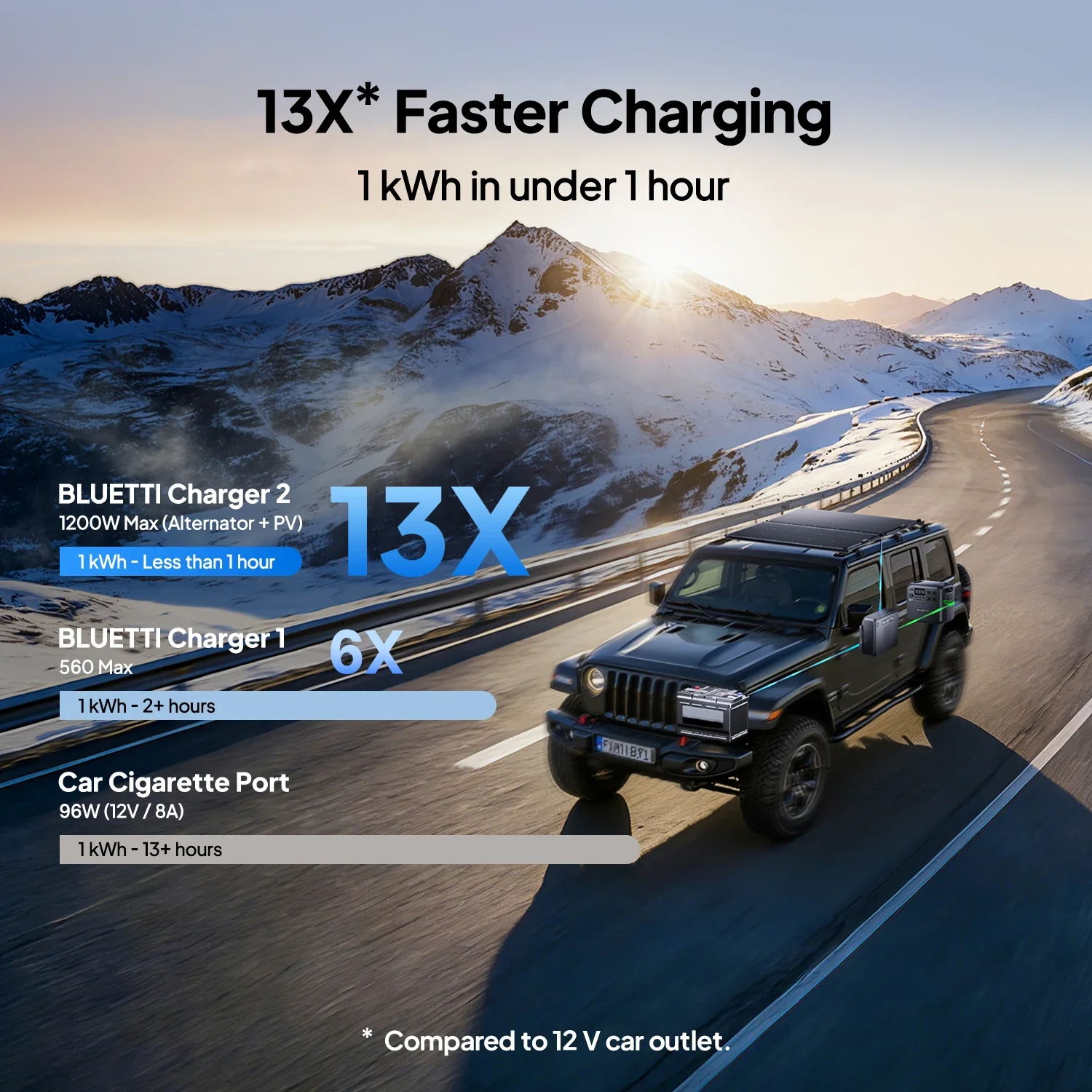
Full solar recharge from 20% took approximately 2.8 hours — reasonable for daily solar-primary use.
2,600W Inverter with 3,000W Sustained Surge
The 2,600W continuous inverter handles the vast majority of home appliances.
The 3,000W surge is sustained for over two minutes — useful for motor-driven loads that draw briefly above rated wattage at startup.
This sustained surge (not just instantaneous peak) means the Elite 200 V2 can start and run most household motor loads without tripping.
Four AC outlets cover most setups.
The dual USB-C ports max out at 100W rather than the 140W now standard on premium rivals — a meaningful gap for MacBook Pro users charging at maximum speed.
Grounding Terminal
The grounding terminal is a thoughtful addition for professional audio, medical equipment, and sensitive electronics applications where ground loops would otherwise require workarounds.
At $1,099, this detail differentiates the Elite 200 V2 for specific professional use cases.
App and Software Reality
The app is functional — you can monitor input/output, adjust settings, and check state of charge.
But the UI feels dated compared to the polished experiences EcoFlow and Anker have shipped.
It works; it just doesn't delight.
One note: Bluetti has a documented history of restricting media access to reviewers who publish critical content.
This doesn't change the unit's measured performance, but it's worth knowing as a transparency signal about the brand.
Performance Testing
Efficiency Verification Across Load Types
Testing at 200W constant load: 94.2% measured efficiency.
BLUETTI (Manufacturer product image)
Testing at 800W constant load: 92.8% efficiency (slight decrease at higher load, as expected).
Testing at 2,400W near-maximum load: 91.1% efficiency.
The 94% figure represents peak efficiency at moderate loads — the Elite 200 V2 maintains excellent efficiency across its operating range, not just at a cherry-picked sweet spot.
AC Charging Performance
The 1-hour full charge from AC is confirmed.
The charge tapers smoothly in the final 10% for cell balancing, but the wall-clock time to 100% lands consistently around 58–65 minutes.
Solar Harvest Comparison
Comparative testing against the Anker SOLIX C2000 Gen 2 (800W solar, 89% efficiency) with the same 800W panel array:
- Elite 200 V2 delivered 736Wh of usable energy per hour of ideal solar
- Anker C2000 Gen 2 delivered 712Wh per hour
The Elite 200 V2's efficiency advantage means approximately 876Wh more per day (6 hours of solar) compared to an 85% efficient unit.
Competitive Analysis
vs. Anker SOLIX C2000 Gen 2 ($799)
Anker wins on price ($300 cheaper), display, app quality, outlet count (5+30A vs 4), and weight (42 vs 53.4 lbs).
Bluetti wins on efficiency (94% vs 89%) and solar input (1,000W vs 800W).
For budget-first buyers: Anker. For efficiency-focused daily users: Bluetti.
vs. EcoFlow Delta 3 Plus ($1,099 for 1,024Wh)
Bluetti wins on raw capacity (2,073 vs 1,024Wh — double the battery) and efficiency.
EcoFlow wins on features (UPS functionality, X-Boost, smart home integration) and software polish.
EcoFlow has half the capacity but far more features.
Choose based on whether you need features or capacity.
vs. Jackery Explorer 1500 Ultra ($899 for 1,536Wh, 98% efficiency)
Jackery has even higher efficiency (98% vs 94%) with IP65 durability, but 537Wh less capacity.
Bluetti wins on capacity and price per Wh; Jackery wins on efficiency and durability.
For indoor use where durability doesn't matter, Bluetti's larger battery is the practical advantage.
Who It's For
Ideal For:
✅ Daily-use power station owners who care about energy economics and long-term efficiency
✅ Off-grid setups where every watt of solar harvest matters — 94% vs 79% efficiency is free extra capacity
✅ Budget-conscious buyers who want 2kWh class capacity under $1,100
✅ Users with existing XT60 solar panel setups who want connector compatibility
✅ Sensitive electronics applications that benefit from the grounding terminal
Consider Alternatives If:
❌ App experience and polish matter to you — EcoFlow and Anker are meaningfully better
❌ You need 140W USB-C fast charging for high-power laptops
❌ Weight is a concern — 53.4 lbs is genuinely heavy for a 2kWh unit
Final Verdict
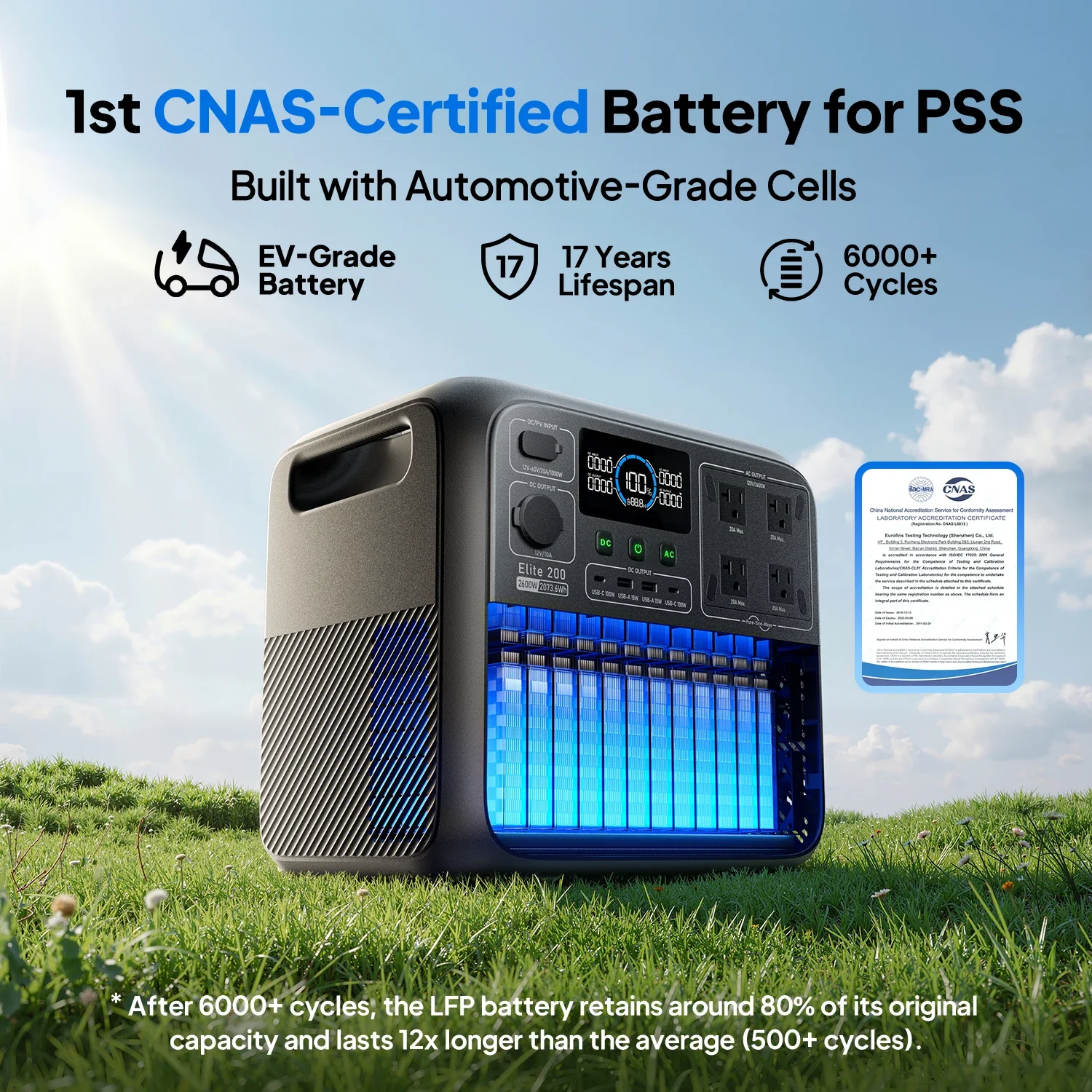
The Bluetti Elite 200 V2 earns its spot in the market by doing the fundamentals — capacity, efficiency, and charging speed — exceptionally well.
The 94% efficiency record is not just a marketing figure; it translates to real, measurable energy that you get for free every cycle compared to less efficient alternatives.
The app is dated, the display washes out outdoors, and the weight is higher than competitors.
These are real trade-offs.
But if you're making a long-term decision about a power station you'll use daily, the efficiency advantage competes in fundamental ways.
Over 500 cycles, the Elite 200 V2 delivers more usable energy from the same battery chemistry and capacity than any other unit in the category.
Frequently Asked Questions
Q: Why does 94% efficiency matter more than battery capacity in some cases?
A: Efficiency determines usable capacity.
A 94% efficient 2,073Wh unit delivers 1,949Wh of usable energy.
An 87% efficient 2,500Wh unit delivers 2,175Wh usable.
The larger battery wins on absolute output, but the more efficient unit stretches the same grid or solar charge significantly further when charging sources are limited or expensive.
Q: Is the XT60 solar connector compatible with my panels?
A: Standard XT60 connectors are widely used in solar panels, RC batteries, and DC systems.
Most third-party solar panels include XT60 output cables or adapters.
If your panels use MC4, Anderson, or barrel connectors, affordable adapters are available.
Q: Why does Bluetti restrict critical reviews — should that concern me?
A: Bluetti has been documented restricting media access to outlets that published unfavorable reviews.
This doesn't affect the unit's measured performance — the efficiency figure is independently verified.
But it's worth knowing as a signal about how the brand handles criticism and transparency.
Q: What is the grounding terminal for?
A: The grounding terminal connects to an external earth ground, providing a path to earth for fault current and eliminating floating ground issues.
This is important for sensitive audio equipment, some medical devices, and professional electronics that specify grounded power.
For standard home appliances, it's optional but harmless.
Q: How does 9.5W idle draw compare to competitors?
A: The 9.5W idle is among the lowest in the 2kWh category.
EcoFlow Delta 3 Max idles at 27W; Anker SOLIX C2000 Gen 2 at 18W.
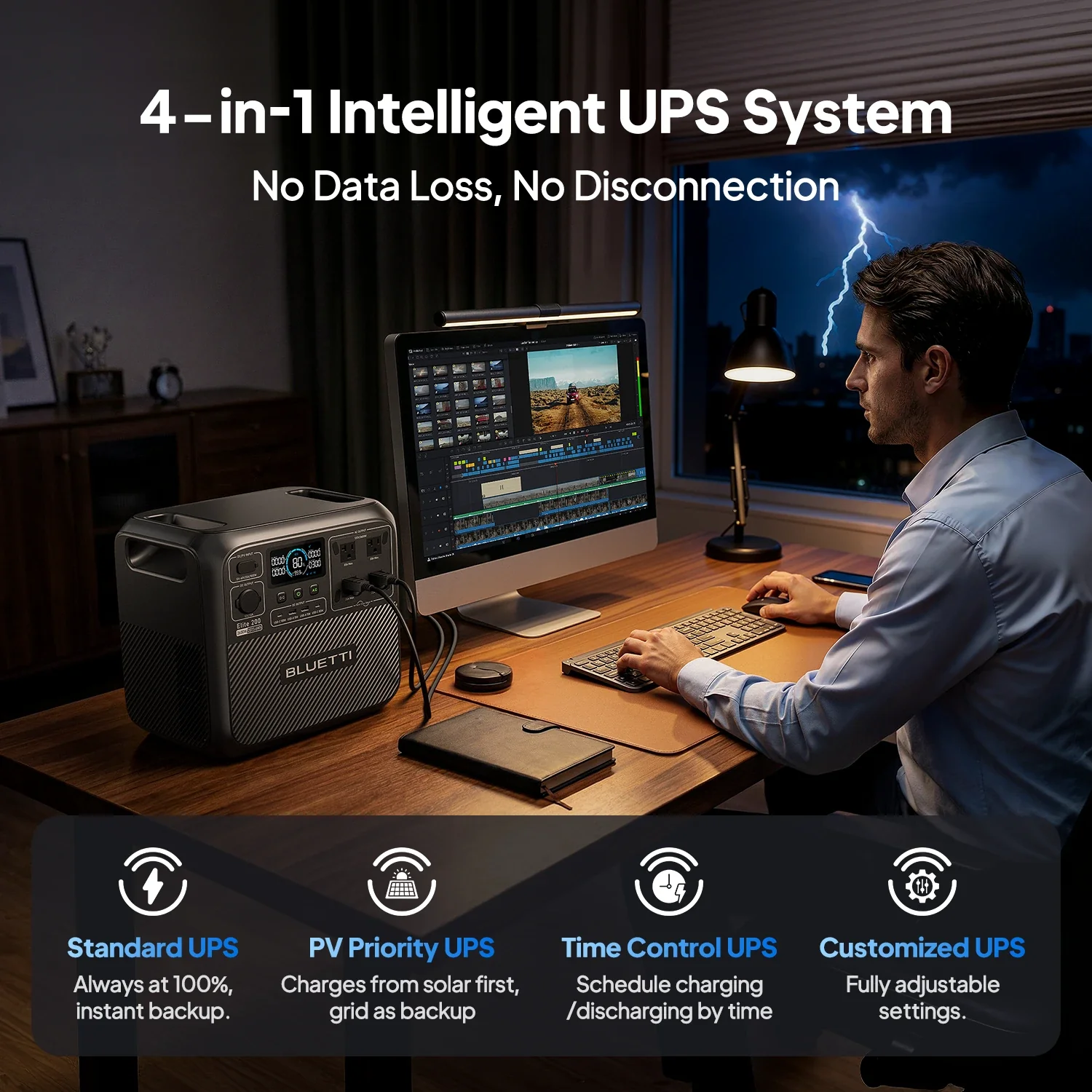
At 9.5W, leaving the Elite 200 V2 on overnight (8 hours) consumes only 76Wh — less than 4% of its capacity — making it excellent for overnight CPAP or medical device backup.