Introduction
The Bluetti EB70S is a $449 station built around a single honest idea: 716 watt-hours of long-life LiFePO4 chemistry in a box light enough to carry with one hand. It is not a backup for your house, and anyone who buys it expecting to ride out a two-day outage will be disappointed. Buy it for a truck bed, a campsite, a van, or a CPAP machine on a road trip, and it makes far more sense.
The chemistry is the reason to care. Lithium iron phosphate cells are rated for thousands of charge cycles before they fade to 80% of their original capacity — roughly three to six times what the nickel-based lithium packs in older, cheaper units manage. At 716Wh the EB70S is small, but it is the kind of small that keeps working a decade from now. The tradeoff is the 800W inverter, a ceiling that decides more about this unit's usefulness than the capacity number does.
Design and Build
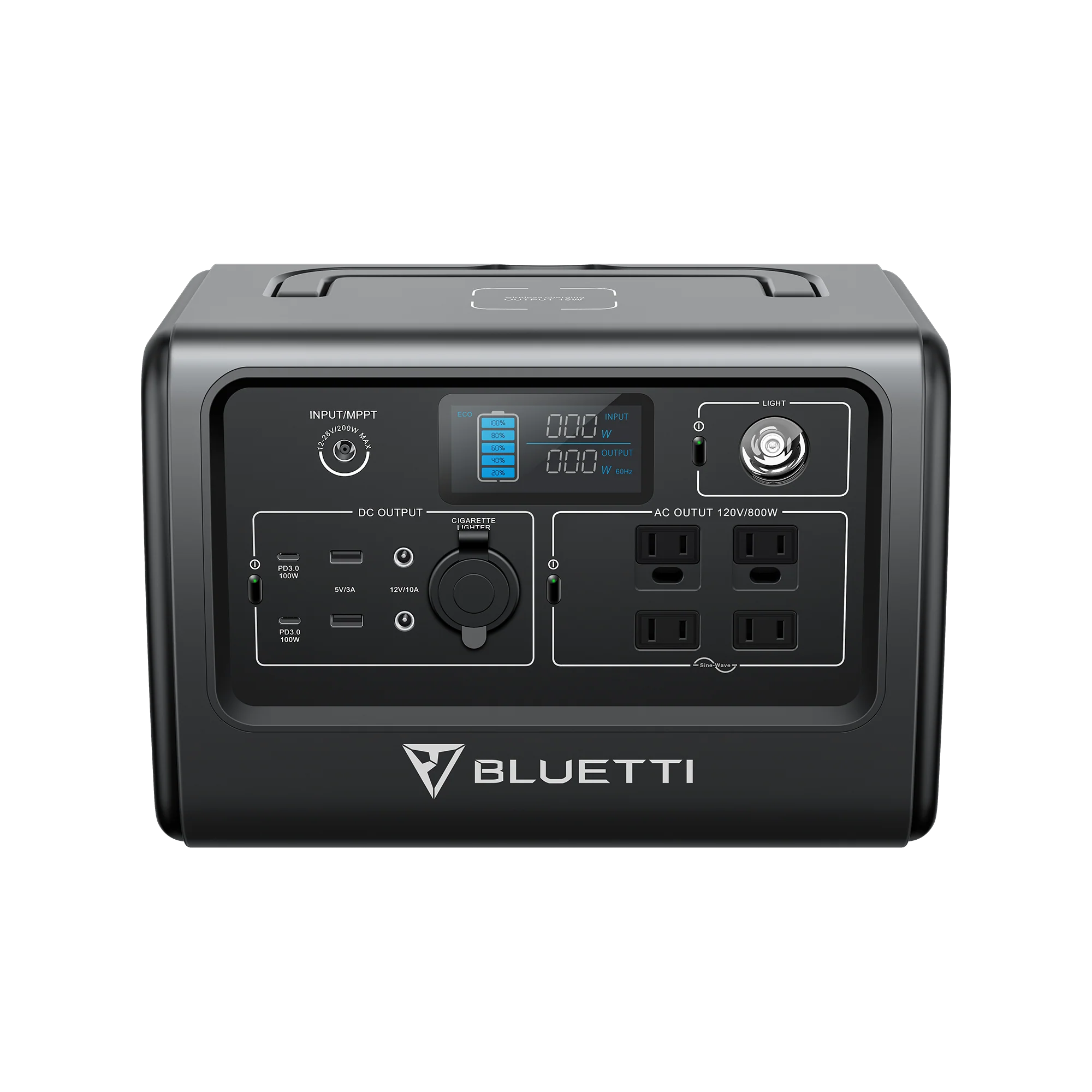
At 21.4 pounds the EB70S sits in the sweet spot for a portable: heavy enough to feel solid, light enough that one arm moves it from garage to trunk without complaint. The single top handle is molded in and comfortable, and the footprint is compact enough to wedge behind a seat or into a gear tote. This is a unit you actually pick up and relocate, which is more than can be said for the 100-pound backup stations further up Bluetti's range.
BLUETTI (Manufacturer product image)
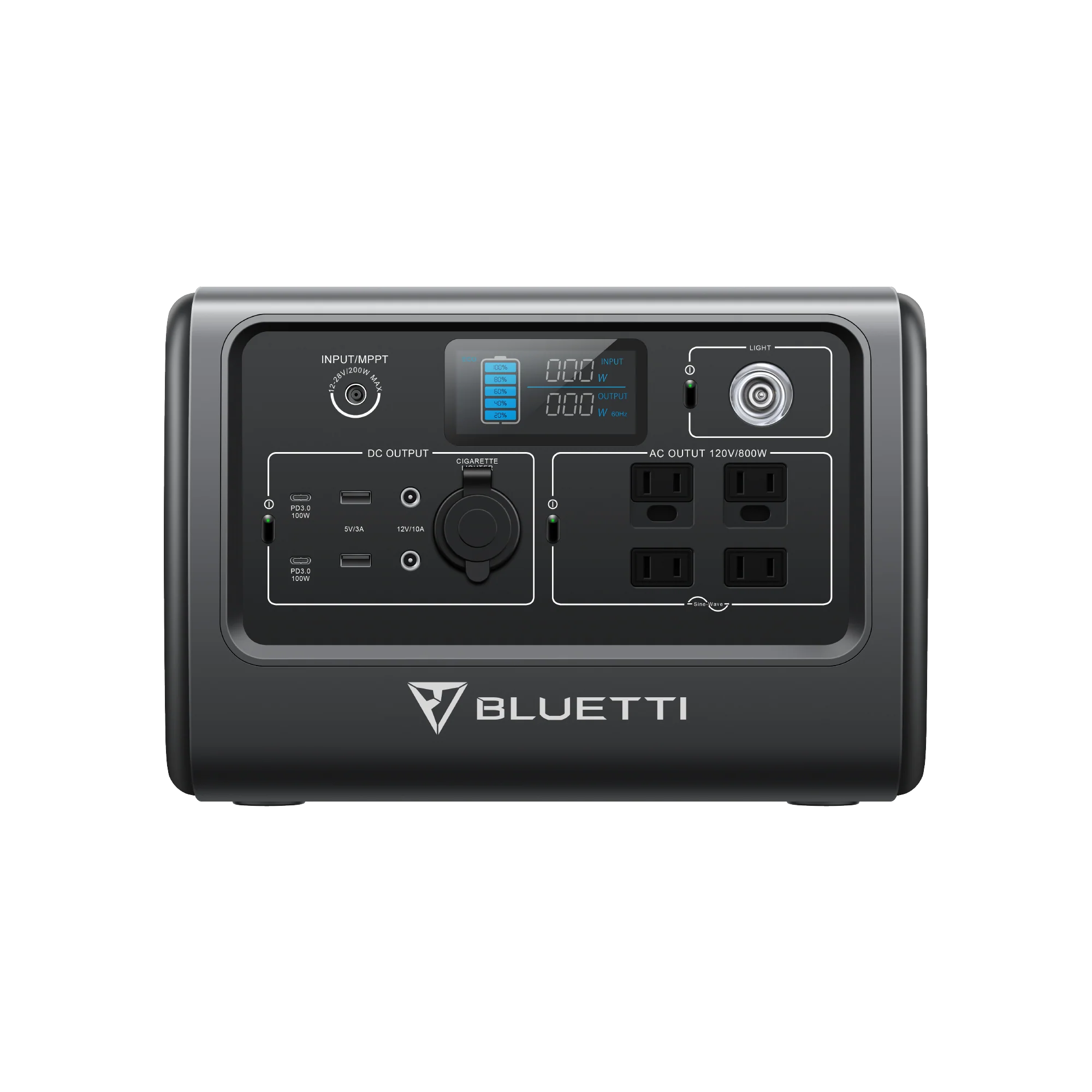
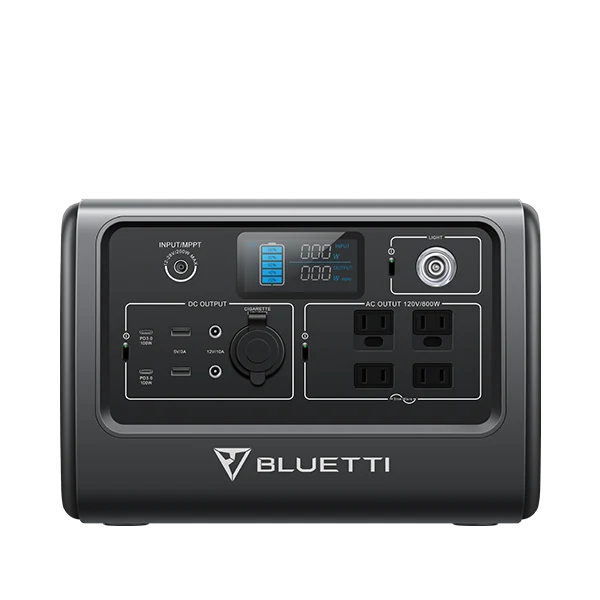
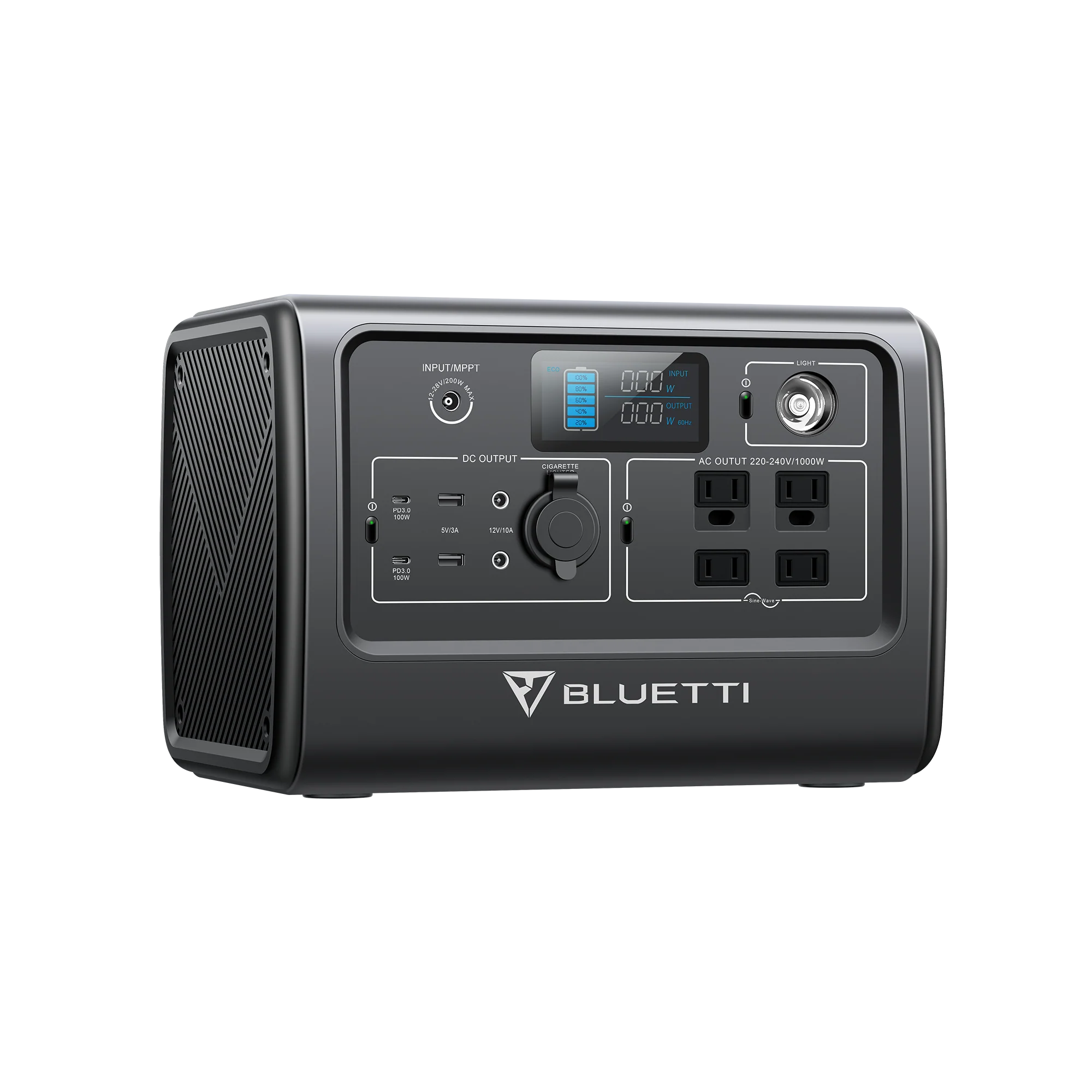
The front panel keeps things legible. A screen reports battery percentage, live input and output wattage, and an estimated runtime figure that updates as loads change. Ports are grouped sensibly — AC outlets, 12V DC, USB-A, USB-C, and a wireless charging pad on the top surface that is handy for topping a phone at camp. There is a built-in LED light for emergencies. Port covers suggest some thought about dust and splashes, though this is not a sealed, weatherproof unit; treat it like electronics, not a cooler.
One genuine annoyance: the cooling fan. It spins up whenever the unit is charging or driving a meaningful load, and in a silent tent at night it is audible. If you plan to run a CPAP beside your head, expect a low whir when the inverter is working.
Real-World Runtime and What It Actually Powers
Capacity ratings are optimistic by nature, so start by discounting them. Pushing energy through the inverter to an AC outlet costs roughly 10–15% in conversion losses, so of the 716Wh on the label you should plan on about 610–640Wh reaching your devices. DC loads pulled straight from the USB and 12V ports lose less and get closer to the full number.
BLUETTI (Manufacturer product image)
Now the appliance everyone asks about: the refrigerator. The template-spec way to answer this is wrong, so here is the real version. A mid-size fridge might draw 150W while its compressor runs, but the compressor does not run constantly — it cycles, typically at about 25–35% duty. Averaged over an hour that fridge pulls closer to 40–60W at the wall. Take the middle of that range, about 50W, and divide it into the usable 630Wh: you get roughly 11 to 14 hours of fridge operation. That is enough to protect food overnight or through a short daytime outage, not enough for a multi-day event.
CPAP users are the other core audience, and here the EB70S is a strong fit — with caveats. A CPAP running pressure only, no heat, often draws around 30–40W, which stretches the EB70S to two nights or more. Switch on a heated humidifier and the draw roughly doubles, cutting you to a single night. Before you rely on it, look up your specific machine's rated wattage in its manual, assume the humidifier roughly doubles that figure, and confirm compatibility with the CPAP maker. Run the machine off the EB70S's DC output where possible and skip the humidifier heater to squeeze out the most nights.
Smaller loads are where the unit shines. Phones take about 15Wh for a full charge, so you are looking at dozens of top-ups. Laptops, a fan, LED string lights, a router, a drone battery charger — all of these sip from the pack and let it last a weekend. The pure sine wave output means sensitive electronics run cleanly rather than buzzing or resetting.
The 800W Ceiling
The single most important number after capacity is the 800W continuous output. Anything with a heating element or a big motor will trip it. A microwave, an electric kettle, a hair dryer, a coffee maker, a space heater, a toaster — none of these are viable, because they demand well over 800W the moment you switch them on. This is not a flaw so much as a category boundary: the EB70S is a small-appliance and electronics unit, full stop. If your list includes any kitchen heating device, you have already outgrown it and should look at a 1,500W-plus station.
BLUETTI (Manufacturer product image)
Charging, Solar and Van-Life Notes
Three input paths keep the EB70S flexible. Wall charging is the default and gets you from empty to full in an evening, though it will not win any speed contests. The car socket is useful for topping up on long drives, but at 12V the trickle is slow — treat it as a maintenance charge rather than a full refill. Solar is where the unit becomes genuinely off-grid capable: pair it with a folding panel and, given a clear day and the right wattage, you can offset most of a campsite's daily draw and keep the pack from running down.
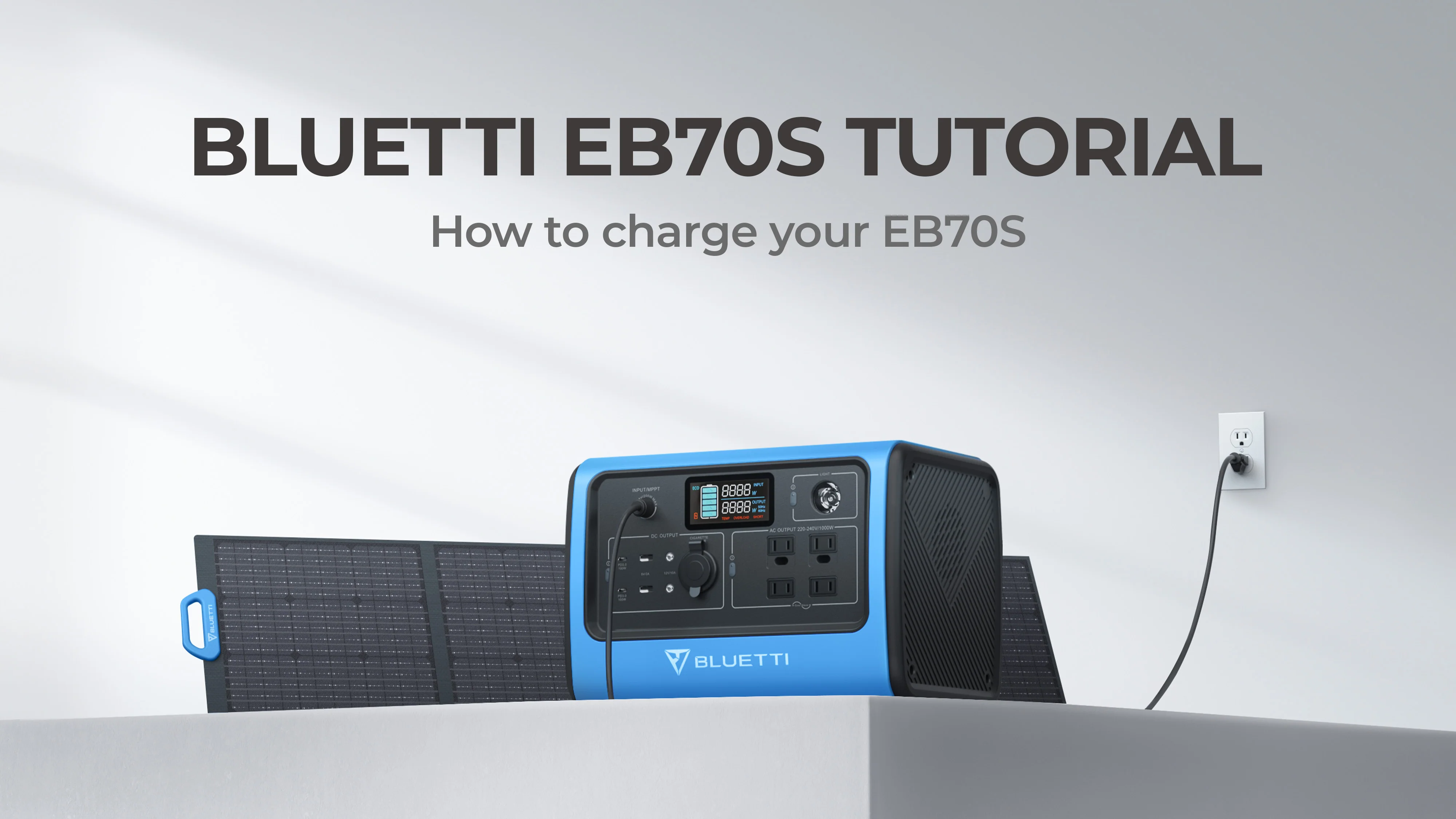
BLUETTI (Manufacturer product image)
For van dwellers the DC side deserves attention. Pulling power straight from the 12V and USB-C ports skips the inverter entirely, which both saves energy and keeps the fan quieter. A 12V fridge, a laptop over USB-C, and phones on the wireless pad make a low-loss setup that the 716Wh pack can sustain for a couple of days. The moment you introduce AC appliances, efficiency drops and the fan works harder, so build your van's power plan around DC where you can and reserve the AC outlets for the things that truly need them.
Alternatives Worth Weighing
At this size and price the EB70S competes with EcoFlow's River 2 Pro and Jackery's Explorer 1000 line, plus Anker's SOLIX C800. EcoFlow's River-series units are known for aggressive AC recharge speed, and if you value getting from empty to full quickly between adventures, that is a real edge over the more relaxed Bluetti. Jackery's 1000-class units often push a higher inverter rating, but some rely on older nickel-based lithium chemistry that will not match the EB70S's cycle longevity — a tradeoff of raw output today against lifespan over years. Anker's LiFePO4 C800 is the closest philosophical match: similar chemistry, similar mission, so the decision often comes down to price on the day and which port layout suits your kit. None of these small units solves the multi-day-outage problem; that is a different, heavier, more expensive class of product.
Who Should Buy It, Who Should Skip
Buy the EB70S if you camp, travel in a van, or want a quiet, long-lived box to keep phones, laptops, a CPAP, and a fridge alive for a night or a weekend. The LiFePO4 chemistry makes it a sound long-term purchase for someone who will cycle it regularly for years.
Skip it if your goal is home backup during outages, if your packing list includes anything that heats or has a large motor, or if fast turnaround between uses matters more to you than longevity. Those buyers want either EcoFlow's faster-charging Rivers or a larger station with a 1,500W-plus inverter.
Verdict
The EB70S does exactly what a 716Wh, 800W LiFePO4 station should, and it does not pretend to do more. It is portable, long-lived, and honest about its ceiling. The fan noise and middling recharge speed keep it from being flawless, and the 800W limit will send appliance-heavy shoppers elsewhere. But as a durable companion for camping, van life, and short power interruptions at $449, it earns its place.
FAQ
Can the EB70S run my refrigerator during a power outage?
For a short outage, yes. Accounting for inverter losses and a compressor that cycles rather than runs constantly, expect roughly 11–14 hours for a typical mid-size fridge. That covers an overnight or daytime interruption, not a multi-day event.
Is it safe and practical for a CPAP machine?
It works well for CPAP, but check your machine first. Find its rated wattage in the manual, assume a heated humidifier roughly doubles the draw, and confirm with the manufacturer. Pressure-only, expect two-plus nights; with the humidifier heater on, plan for one night. Running the CPAP off the DC output and leaving the humidifier heater off stretches runtime the most.
Why can't it power a microwave, kettle or hair dryer?
Those appliances draw well over the EB70S's 800W continuous limit the instant you switch them on. The inverter simply cannot supply that much power. Anything with a heating element or a large motor is out of scope for this unit.
How long will the battery last before it wears out?
The LiFePO4 cells are rated for thousands of full charge cycles before dropping to about 80% capacity. In practical terms, someone cycling it most weekends can expect many years of service — the chemistry is the last thing likely to fail on this unit.
How does it recharge, and how fast?
You can charge it from a wall outlet, a solar panel, or a car's 12V socket. AC recharge is steady but not class-leading; rivals like EcoFlow's River 2 Pro refill noticeably quicker. Solar time depends entirely on your panel wattage and sun conditions.
Can I use it while it is charging?
Yes. The EB70S supports pass-through, so you can keep devices running while it takes in power. Expect the fan to run during this, since charging generates heat.
Is it loud?
The unit is silent when idle. Under load or while charging the cooling fan spins up and is audible in a quiet room or tent. It is not disruptive in a normal environment, but light sleepers next to it will notice.
What does the warranty cover, and is it enough?
Coverage terms shift over time and by region, so confirm the current warranty at purchase. Historically Bluetti's coverage on this unit has been shorter than what some rivals now advertise on comparable LiFePO4 stations, which is worth weighing if long-term peace of mind is a priority.
Can I expand its capacity later?
No. The EB70S is a self-contained, fixed-capacity unit with no add-on battery packs. If you expect your power needs to grow, buy a modular, expandable station from the start rather than planning to scale this one up.
Will it charge a laptop and phones at the same time?
Easily. Small electronics are its comfort zone. A laptop, several phones, a tablet, and a light can all run together and still leave the pack lasting through a weekend, since their combined draw stays far under the 800W ceiling.
Does it work as a UPS for a home office?
It can act as a battery backup for low-draw gear like a modem, router, and a laptop, switching over quickly enough to keep them alive through a blip. Just remember the total load must stay under 800W and the 716Wh capacity limits how long the desk stays powered — think an hour or two for a full workstation, longer for just networking gear.
Can it run power tools on a job site?
Cordless tool chargers, lights, and small electronics are fine. Corded tools with universal motors — a circular saw, an angle grinder — usually surge past 800W at startup and will trip the inverter, so this is not the unit for running heavy corded tools.