Introduction
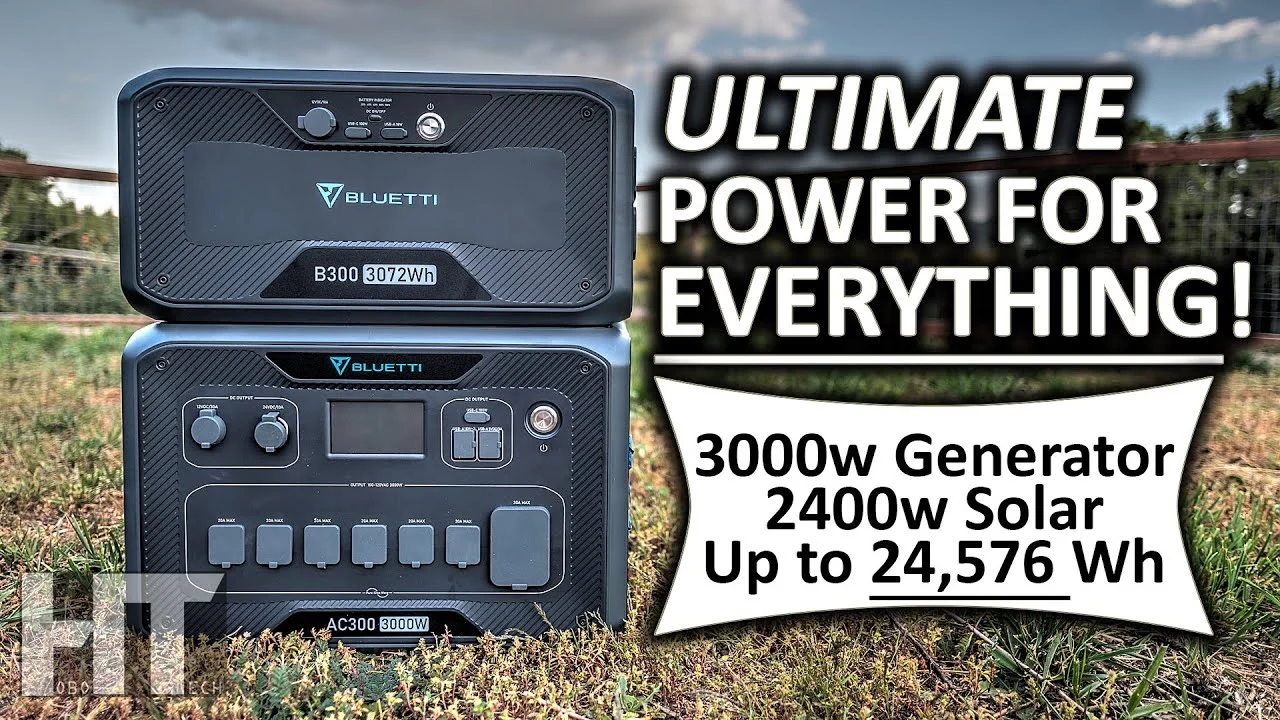
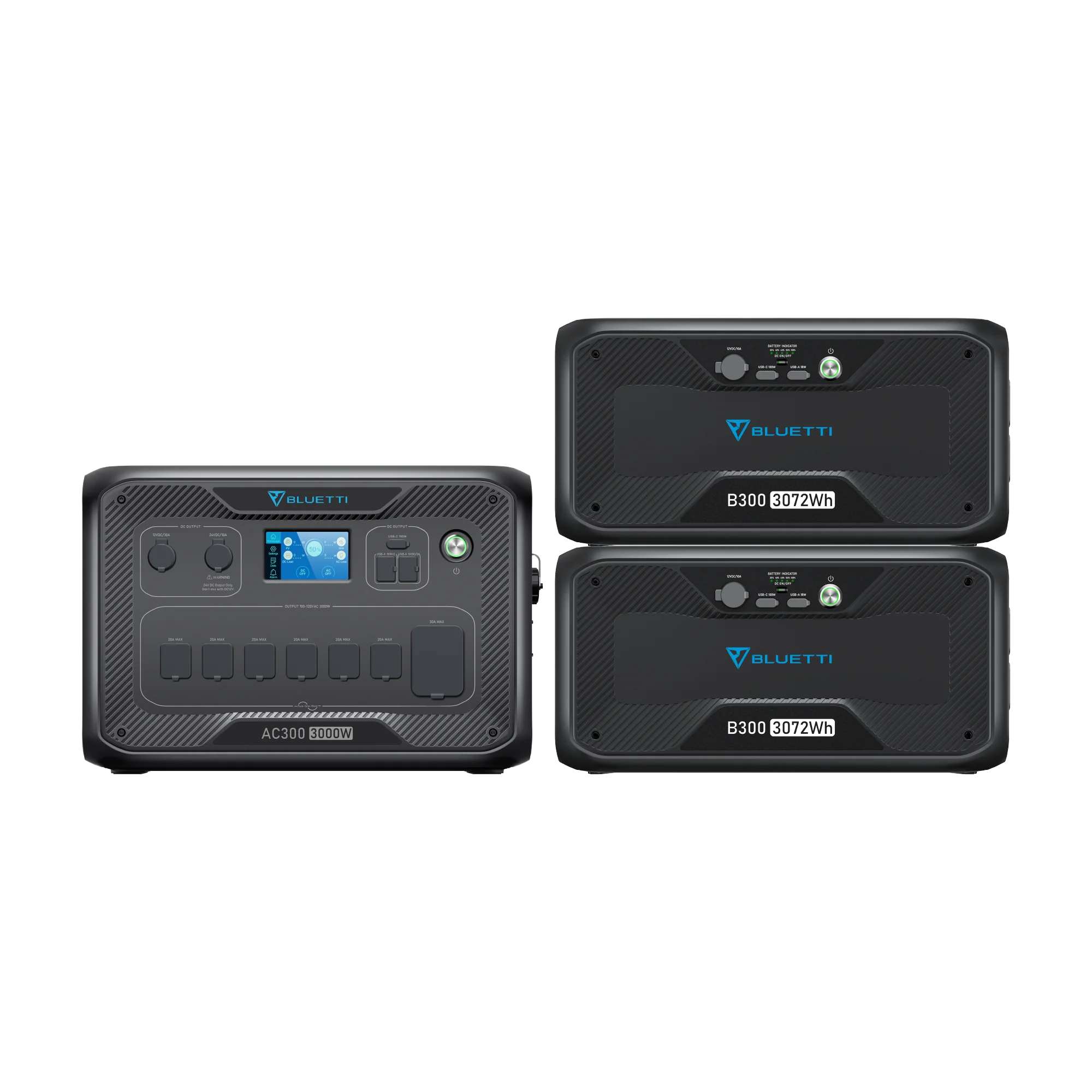
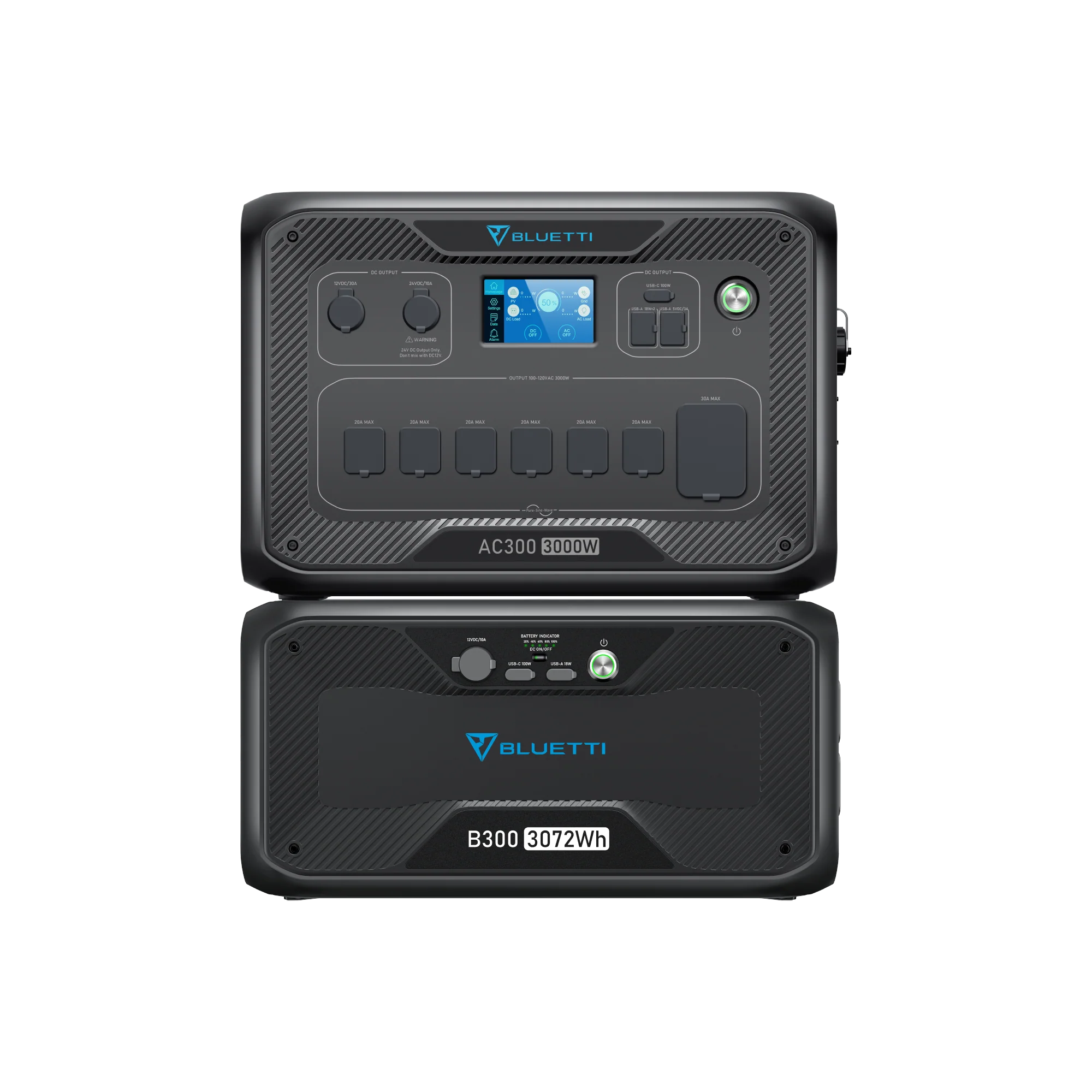
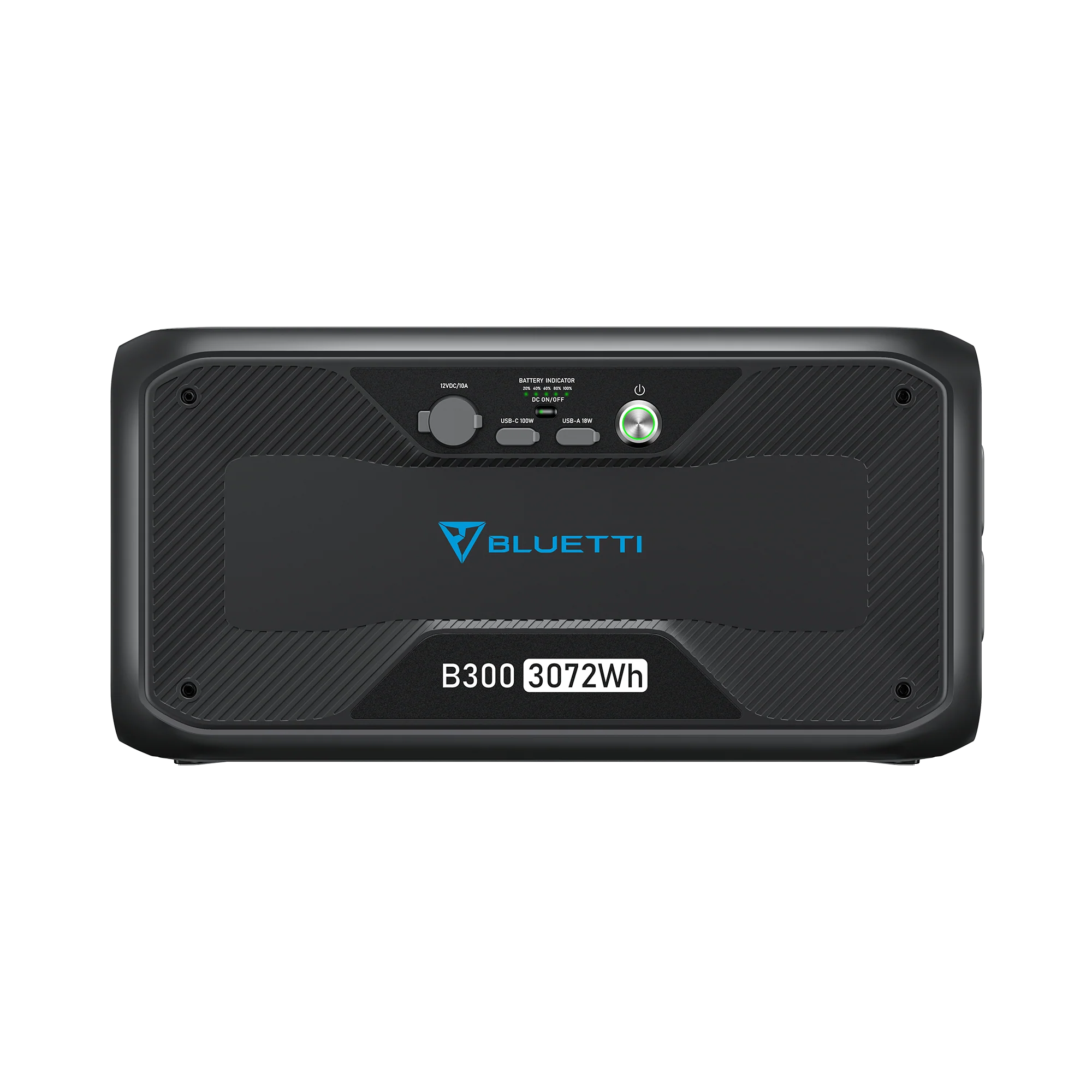
The Bluetti AC300 + B300 is not one product; it is a system, and understanding that is the whole story. The AC300 is the brain — a 3,000W inverter, the screen, the ports, the charging electronics — with no battery of its own. The B300 is a 3,072Wh LiFePO4 battery that plugs into it. Bought together for $2,999, they form a serious home-backup and heavy-load station. Bought without understanding the architecture, they confuse people who expected an all-in-one box.
That split design is the point. It lets you start with one battery and add more later, and it means the expensive inverter electronics get reused as your storage grows instead of being duplicated. The 3,000W inverter is genuinely useful power, enough to run most household circuits' worth of gear, and — more interesting technically — it has the surge headroom to start the motors that trip smaller stations. If you have ever watched a lesser unit stumble the moment a refrigerator compressor kicks in, this is the class of product that solves it.
How the Modular System Fits Together
An all-in-one power station is simpler to buy and simpler to carry. The AC300 asks more of you up front and pays it back in flexibility. Because the head unit holds no cells, it does nothing on its own — you must pair it with at least one B300, which is what the $2,999 bundle delivers. From there the system scales: additional B300 packs stack onto the AC300 to multiply capacity, and Bluetti's higher-tier accessories can bond two AC300 heads together for 240V split-phase output if your ambitions run to whole-home coverage.
BLUETTI (Manufacturer product image)
The catch is cost and bulk. Each B300 is a separate, heavy purchase, and expansion is not cheap — the price per added kilowatt-hour is one of the least attractive things about the system. You also end up with two distinct modules to store and connect, plus cabling, rather than a single object you grab and go. For buyers who know their needs will grow, that is a reasonable trade. For someone who wants a fixed amount of backup and never intends to expand, a comparably sized all-in-one may be simpler and cheaper.
Design and Build
Splitting the system across modules keeps any single piece movable. At around 45 pounds for a module, this is a two-hands, brace-your-back kind of lift rather than a one-arm carry, but because you move the head and the battery separately, you never have to hoist the full stacked weight at once. That is a quiet advantage of the modular layout that all-in-one giants cannot match. A hand truck or cart still earns its keep when you are relocating the whole system.
BLUETTI (Manufacturer product image)
The AC300's control surface is dense but readable: a bright display shows input and output wattage, state of charge, and time estimates, and the app adds Bluetooth and Wi-Fi monitoring so you can watch the system from a phone. The port array is where the 30A output and RV-friendly connections live, making this a natural fit for a trailer or a partial home tie-in through a transfer switch. Build quality feels appropriate to the price — this is equipment meant to sit in a garage or utility room and work for years.
Real-World Runtime and Surge Performance
Start with usable energy. After inverter conversion losses of roughly 10–15%, the 3,072Wh on the label yields about 2,750–2,800Wh at the AC outlets. Now apply it to real loads.
BLUETTI (Manufacturer product image)
A refrigerator is the classic backup question, and the honest math looks nothing like a fixed "150W times four hours." A fridge that draws 150W while running only runs its compressor perhaps a third of the time, so it averages closer to 45–55W over a full hour. Divide that into roughly 2,760 usable watt-hours and a single B300 keeps a fridge cold for about 50 to 60 hours — more than two days on one battery. Widen the load to a realistic outage kit — fridge, Wi-Fi and networking, a few lights, phones charging, a fan — averaging maybe 150–200W, and you are looking at roughly 14 to 18 hours per B300. Add a second battery and those numbers double.
The 3,000W inverter's more interesting trick is surge. Motor-driven appliances — refrigerators, well pumps, sump pumps, power tools — draw a brief inrush current when they start, often three to six times their running wattage for a fraction of a second. A fridge that settles at 150W might spike toward 1,000W or more at startup. Cheaper 800W-to-1,500W stations often fault out at that instant; the AC300's inverter has enough surge headroom above its 3,000W continuous rating to absorb those spikes and keep the motor spinning up. That is the difference between a station that can nominally power your fridge and one that actually does, cycle after cycle.
Backup, UPS and Home Integration
Bluetti markets UPS functionality, and it works for the common case: when grid power drops, the AC300 switches to battery quickly enough that computers, networking gear, and most consumer electronics never notice. Treat it as a standby UPS rather than a true online double-conversion unit — the changeover is fast but not zero, so if you run something exceptionally sensitive to any interruption, test it on your specific hardware before relying on it in an emergency.
BLUETTI (Manufacturer product image)
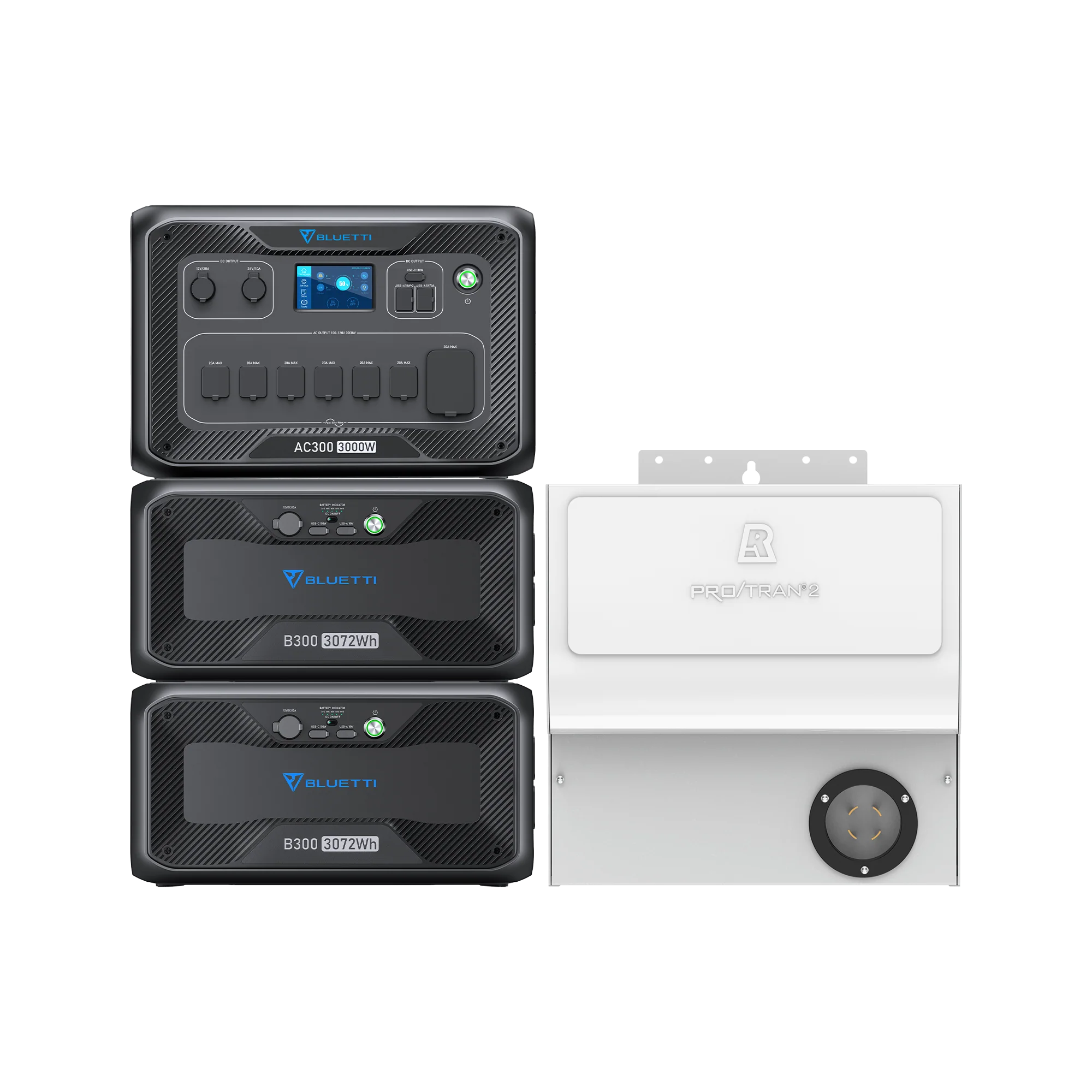
For home use, the RV-grade 30A output and the option to feed a transfer switch let you power selected circuits during an outage. This is where the modular capacity earns its money: sized with two or more B300 packs, the system can carry a fridge, furnace blower, networking, and lighting through a long outage. Just remember that any permanent tie-in to your home's wiring should go through a proper transfer switch and, in most jurisdictions, a licensed electrician — you never backfeed a panel directly.
How It Compares
The obvious rival is EcoFlow's Delta Pro, another LiFePO4 platform in the same capacity neighborhood with its own expansion path and a comparable inverter class; the choice between them often turns on ecosystem, recharge speed, and price on the day. Within Bluetti's own lineup, the all-in-one AC200-series stations trade the AC300's expandability for a simpler single-box design, which suits buyers who will never scale up. And if your endgame is true whole-home, split-phase backup, Anker's SOLIX F3800 delivers a far larger inverter and native 240V in one unit — more capable out of the box, though it abandons the pay-as-you-grow flexibility that makes the AC300 approachable at $2,999.
Who Should Buy It, Who Should Skip
Buy the AC300 + B300 if you want a backup system you can start modestly and grow over time, if you need to reliably start motor-driven appliances, and if you value LiFePO4 longevity for years of regular cycling. It rewards planners — people who will add a second battery next year and maybe wire in a transfer switch.
Skip it if you want the simplest possible plug-and-play box, if you are certain you will never expand, or if you need native 240V split-phase now. The battery-less head unit and stacking-cost economics are wasted on a buyer who just wants one fixed chunk of backup, and split-phase requires stepping up to a bigger, single-unit system.
Verdict
The AC300 + B300 is a smart architecture with a clear-eyed set of tradeoffs. The 3,000W inverter and its surge headroom handle the compressors and pumps that defeat smaller stations, the LiFePO4 chemistry means the battery will still be working many years out, and the modular design lets your investment track your needs. Against that, the head unit's dependence on a battery pack, the steep cost of expansion, and the two-module bulk are real. For the buyer who understands the system and intends to grow it, the $2,999 starting point is well spent.
FAQ
Do I need to buy anything else to use the AC300?
Yes — the AC300 is only the inverter and control head and stores no energy itself. It requires at least one B300 battery to function, which is exactly what the $2,999 bundle includes. On its own the head unit cannot power anything.
Can it start and run my refrigerator, including the compressor kick?
Yes. The 3,000W inverter has surge headroom above its continuous rating to absorb the brief inrush when a fridge compressor starts, and one B300 will keep that fridge cold for roughly two-plus days. This is one of the main reasons to choose this class over an 800W–1,500W unit.
Will it run a well pump or sump pump?
Often, but verify first. Check the pump's running wattage and its locked-rotor (startup) amps. Many 1/2 HP pumps fall within what the 3,000W inverter and its surge capacity can start, but larger or hard-starting pumps may not. If in doubt, confirm the numbers before you rely on it.
How much can I expand it, and is it worth it?
You add capacity by stacking additional B300 batteries onto the AC300, and higher-tier accessories can even bond two heads for 240V split-phase. It works well, but expansion packs are expensive per kilowatt-hour, so budget for that before committing to the platform.
How long will the batteries last before they degrade?
The B300 uses LiFePO4 cells rated for thousands of full cycles before falling to around 80% capacity. For most households cycling it through occasional outages and regular use, that translates to many years — the chemistry is not the weak link here.
Can I connect it to my home's electrical panel?
Only through a proper transfer switch, and in most areas that installation should be done by a licensed electrician. The system's 30A output is designed to feed a transfer switch that isolates selected circuits. Never backfeed a panel directly — it is dangerous to you and to utility line workers.
How fast does the UPS switch over during an outage?
Fast enough that computers, modems, routers, and typical electronics ride through without rebooting. It behaves as a standby UPS, so the transfer is quick but not truly instantaneous; test any unusually sensitive equipment on your own setup before depending on it.
How do I recharge it, and how quickly?
It accepts AC wall power, solar, and car charging. AC recharge is quick for a unit this size, and solar input is generous if you add panels — actual solar time depends on panel wattage and sunlight. Car charging is best treated as a slow top-up.
Is one person enough to move it?
Yes, but move it in pieces. Each module is around 45 pounds, so you carry the head and the battery separately rather than lifting the stacked system as one unit. A cart makes relocating the full setup easier.
Is it better to buy this or a single all-in-one station of similar size?
It depends on your plans. If you will expand later or need to start motors reliably, the modular AC300 is the better long-term buy. If you want one fixed capacity, the simplest possible setup, and the lowest price for that size, a comparable all-in-one may serve you better.
Can it power my RV and its air conditioning?
The 30A output makes it a natural fit for RV shore-power connections, and it will comfortably run lights, a fridge, electronics, and a microwave in short bursts. A rooftop RV air conditioner is the hard case: its startup surge is demanding, and while the 3,000W inverter has real surge headroom, run times on a single B300 will be short. For sustained AC use, plan on multiple batteries.
Does the app add anything useful, or is it a gimmick?
It is genuinely useful for a system this size. Over Bluetooth and Wi-Fi you can watch state of charge, live input and output wattage, and adjust charging behavior without standing over the unit — handy when the system lives in a garage or utility room and you want to check it from inside the house.