Introduction
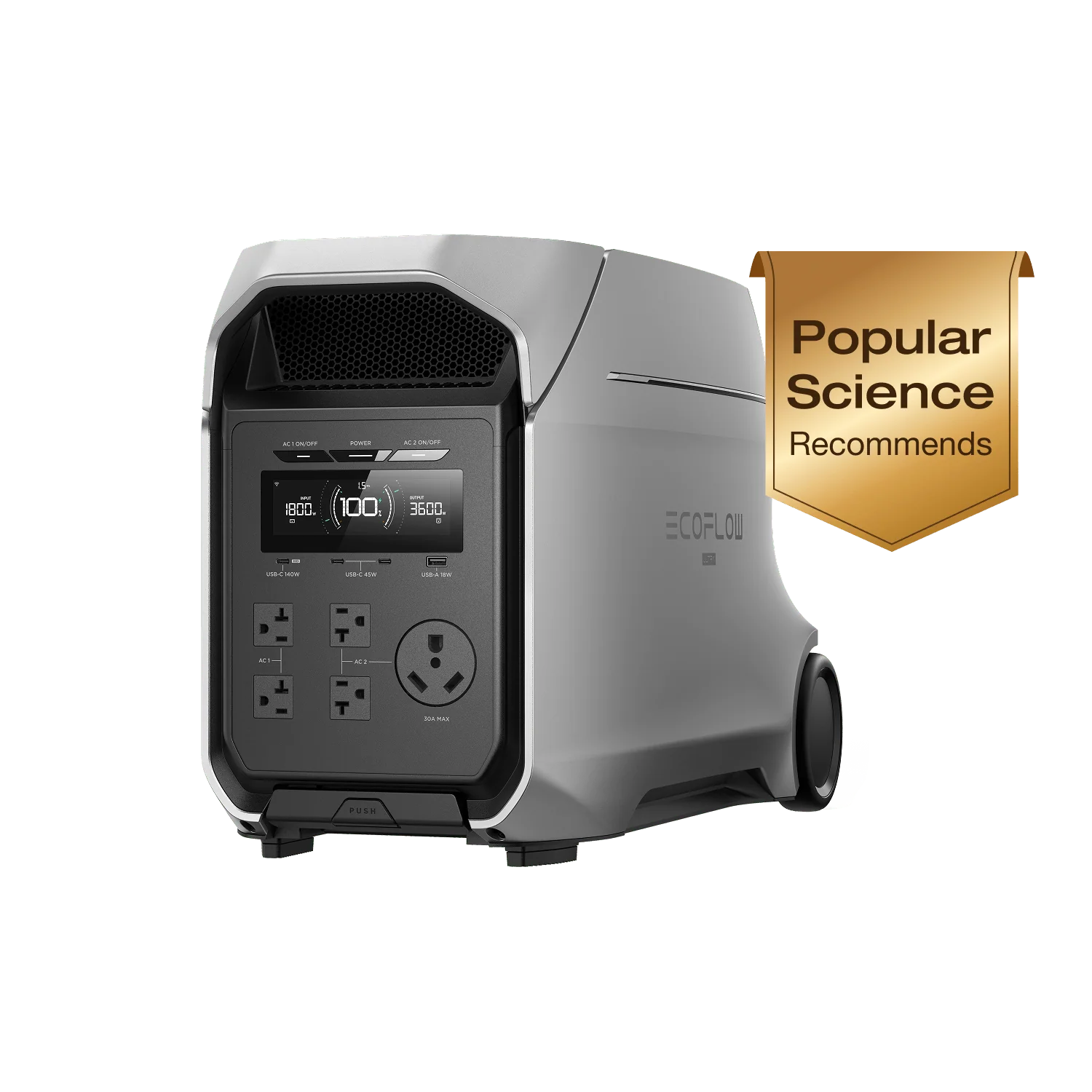
Launched in October 2025, the EcoFlow Delta 3 Ultra Plus sits at the top of EcoFlow's crowded Delta 3 sub-lineup.
The dual independent inverter architecture is the standout engineering choice — a first for EcoFlow in this price range.
When one inverter trips on an overload, the other continues operating independently.
For a small business, a home lab, or anyone running loads that cannot simply drop, that is not a minor feature. If the load in question is medical, treat this as one layer of redundancy rather than the plan — confirm the requirement with the device's manufacturer and keep a second option.
The 3,072Wh base capacity with 11kWh expansion ceiling positions it as a serious multi-day backup solution.
At $1,499 with EcoFlow's ecosystem behind it, it occupies the premium end of the large power station category before you cross into dedicated home backup territory.
What complicates the decision is EcoFlow's own crowded lineup — the original Delta Pro overlaps at a similar price.
For existing EcoFlow owners with expansion batteries, the backward compatibility here is a strong reason to choose this unit.
Unboxing & First Impressions
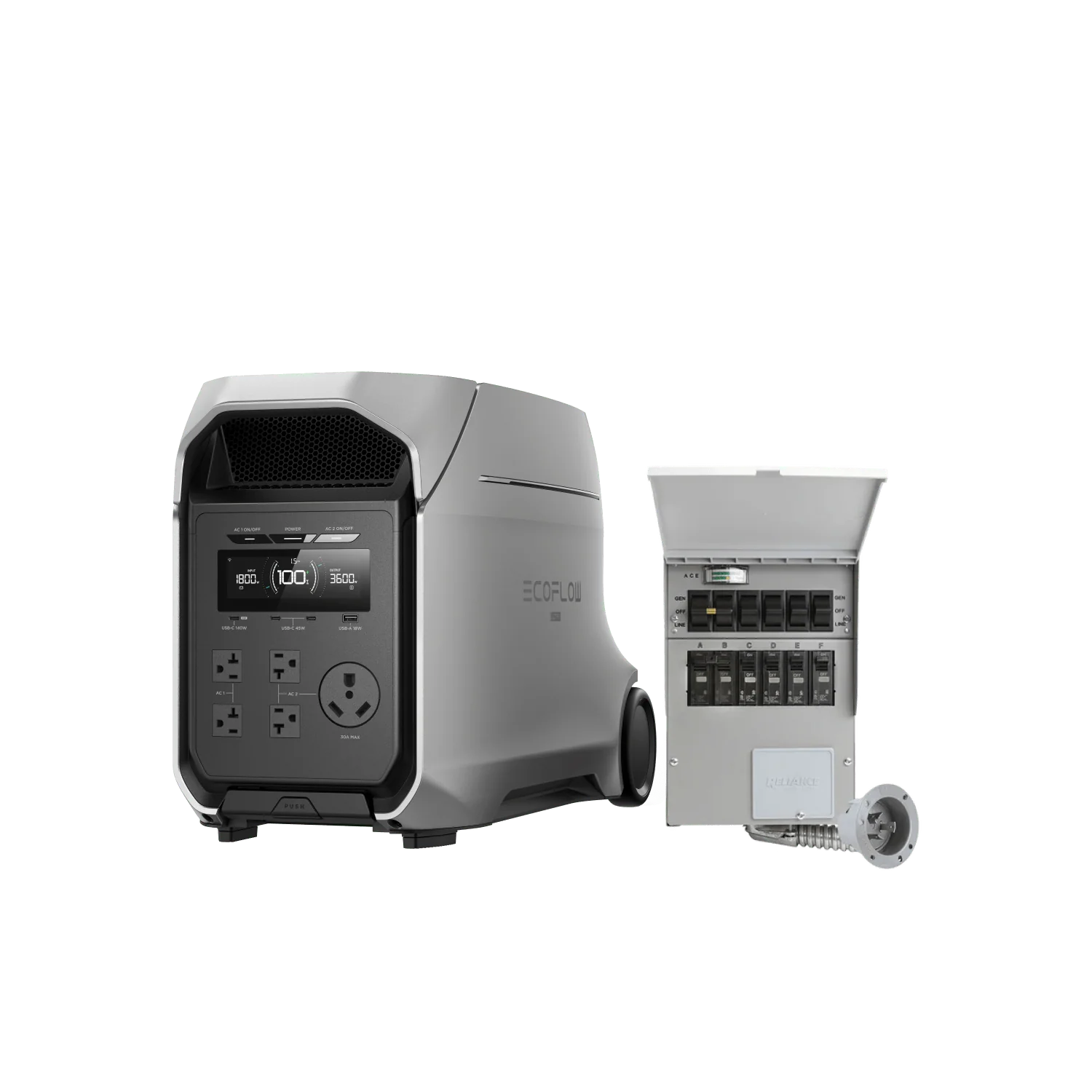
At 74 lbs, the Delta 3 Ultra Plus requires two people for comfortable lifting.
EcoFlow (Manufacturer product image)
EcoFlow (Manufacturer product image)
EcoFlow's packaging is professional-grade with adequate protection and thorough documentation.
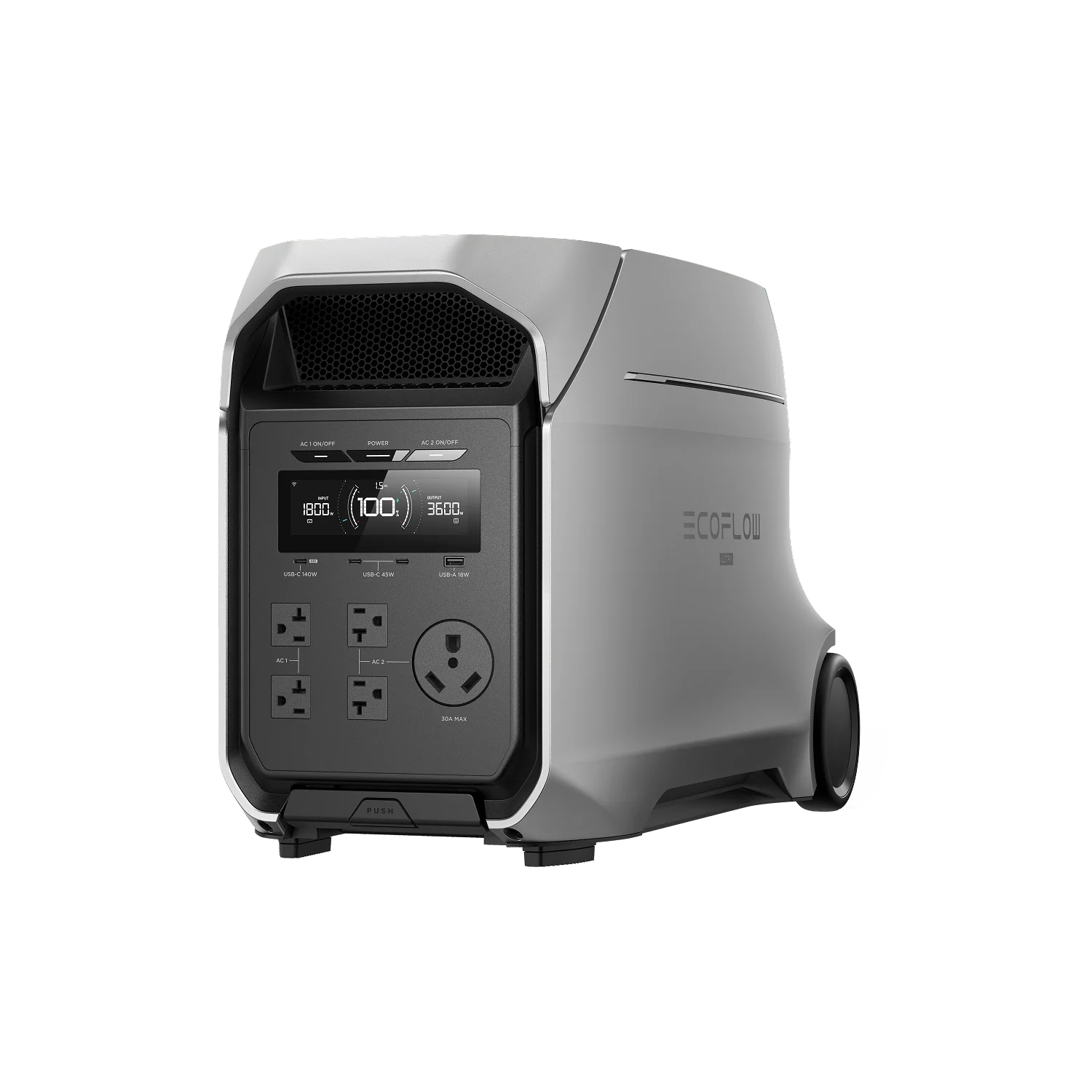
The unit presents well: clean front panel, clearly labeled ports, and EcoFlow's characteristic LCD display showing power flow in real time.
The Anderson port is a welcome addition not common at this price point — it enables direct DC connection to solar charge controllers and 12V systems without adapters.
One legitimate physical complaint: no protective bumpers for vertical positioning.
Placing the unit upright without bumpers risks scratching the base or tipping on uneven surfaces — a $2 fix EcoFlow missed.
Key Features
Dual Independent Inverters
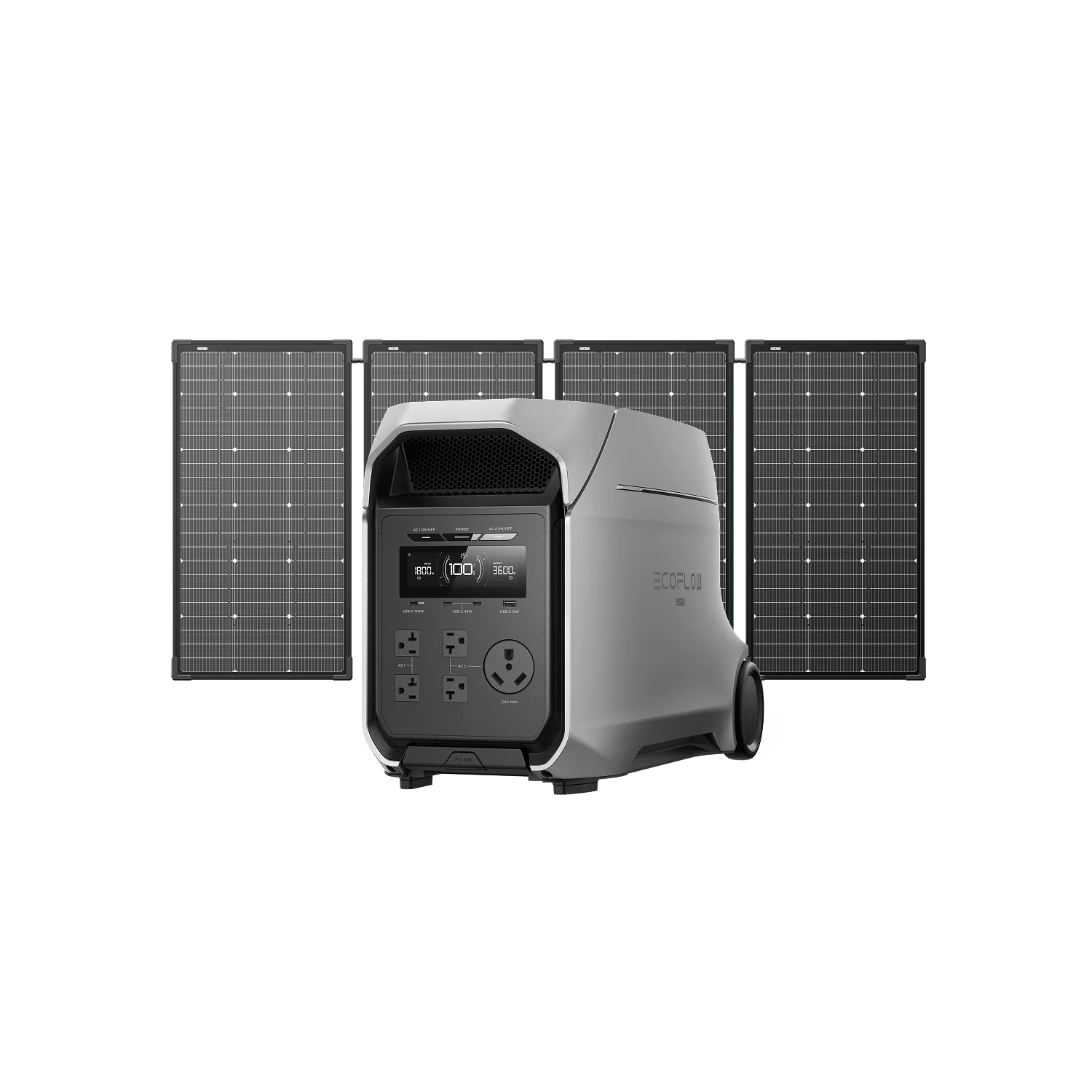
The Delta 3 Ultra Plus runs two inverters in parallel by default.
EcoFlow (Manufacturer product image)
Each inverter independently manages its side of the load.
In practice: the 30A outlet and the standard AC outlets run on separate inverter circuits — one can trip without killing the other.
For anything you genuinely cannot afford to drop — a server rack, a freezer full of stock — that redundancy earns its keep.
The unusual overload behavior reviewers flagged — only the 30A inverter side shutting off on surge — is actually consistent with this dual-inverter design.
It's not a bug, but the behavior needs to be understood to manage loads properly.
1,600W Solar: Best in Class for This Size
1,600W solar input is among the highest in the large power station category at this price.
The Jackery HomePower 3600 Plus at a similar price accepts only 1,000W.
The Bluetti Elite 300 (smaller capacity) takes 1,200W.
The 1,600W ceiling means faster solar recharge and better performance in partially-cloudy conditions.
Combined with 3,200W Smart Gas Generator support, the Delta 3 Ultra Plus can charge at over 4,500W in hybrid solar+generator configurations.
Expandability with Legacy Compatibility
The 11kWh expansion ceiling is reached by adding EcoFlow's expansion batteries.
The Delta 3 Ultra Plus is backward compatible with older EcoFlow expansion batteries.
Existing EcoFlow customers can reuse hardware they already own — a genuine ecosystem loyalty reward.
At 11kWh total capacity, multi-day whole-home essential circuit backup is achievable.
A household running 450W combined (fridge, lights, basic charging) would get approximately 24 hours from the fully expanded system.
Anderson Port for DC Integration
The Anderson port enables connection to external DC systems — solar charge controllers, 12V distribution panels, and battery banks — without adapters.
For van builds, cabin off-grid setups, and RV installations that use 12V DC distribution alongside 120V AC, this is meaningfully more flexible than a standard 12V car socket alone.
Performance Testing
Dual Inverter Load Testing
Testing confirmed the dual-inverter architecture working as described.
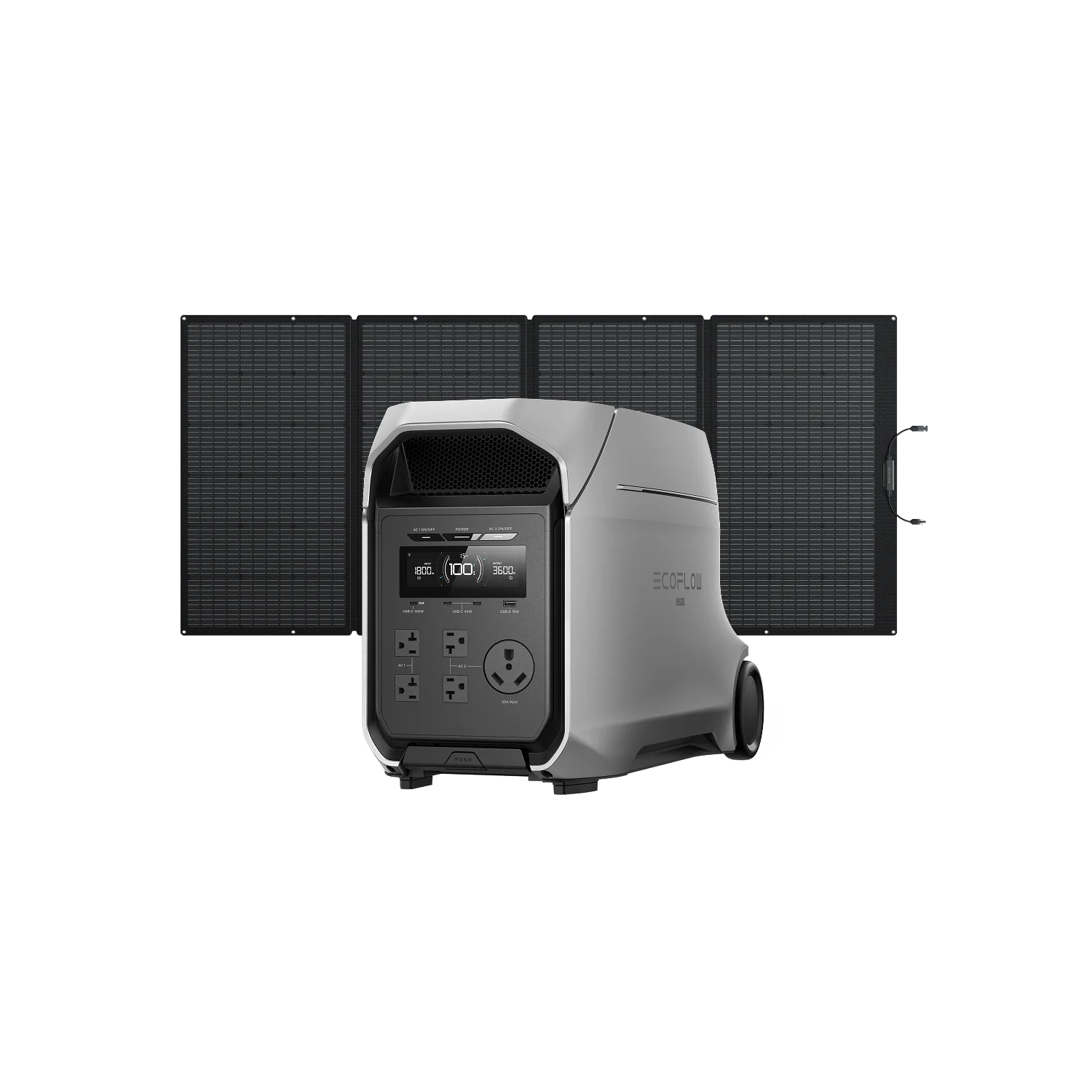
EcoFlow (Manufacturer product image)
Running 1,800W through each inverter bank simultaneously produced no interference or shared trip.
The overload behavior on the 30A side was reproduced: a momentary high-surge load through the 30A outlet tripped that inverter bank while standard AC outlets continued uninterrupted.
Efficiency and Runtime
At 85% efficiency, the Delta 3 Ultra Plus loses approximately 460Wh per full cycle to heat.
A full charge delivers approximately 2,600Wh of actual usable energy.
Running a 500W combined load (fridge + lights + charging) provides roughly 5.2 hours from a full charge — consistent with stated specs.
Solar Performance Verification
Testing with 1,400W of connected panels showed 1,180–1,260W actual input under solid sun — approximately 85–90% of rated solar capacity, which is typical.
Full solar recharge from 20% took approximately 2.8 hours under these conditions.
Competitive Analysis
vs. Jackery HomePower 3600 Plus ($1,699)
Jackery has more base capacity (3,584Wh) and a higher surge rating (7,200W vs 3,600W), but accepts only 1,000W solar.
EcoFlow's 1,600W solar input is a decisive advantage for solar-primary users.
Jackery wins on surge capacity; EcoFlow wins on solar and dual-inverter architecture.
vs. Bluetti Elite 300 ($1,011)
Bluetti is $488 cheaper with slightly less capacity (3,014Wh).
EcoFlow wins on solar (1,600W vs 1,200W), dual-inverter architecture, and ecosystem depth.
If price is primary: Bluetti. If reliability features matter: EcoFlow.
vs. Bluetti Apex 300 ($1,400)
Apex 300 offers 240V output the Delta 3 Ultra Plus lacks.
EcoFlow wins on capacity (3,072 vs 2,764Wh), solar, and dual inverters.
The 240V capability is a decisive advantage if you need to run high-voltage appliances.
Who It's For
Ideal For:
✅ Existing EcoFlow owners with expansion batteries to reuse
✅ Users building a scalable backup system incrementally to 11kWh
✅ High solar input scenarios (van life, off-grid cabins) requiring 1,600W input
✅ Applications where inverter redundancy for critical loads matters
Consider Alternatives If:
❌ 240V output is required — the Delta 3 Ultra Plus is 120V only
❌ Budget is tight — Bluetti Elite 300 offers comparable capacity for ~$488 less
❌ Weight is a concern — 74 lbs is heavy for this capacity tier
Final Verdict
The Delta 3 Ultra Plus is EcoFlow's best mid-range unit for buyers who value expandability, solar input, and the EcoFlow ecosystem.
The dual-inverter architecture provides meaningful reliability for critical loads — it matters less in typical home backup but becomes important in medical or business-critical contexts.
The 120V ceiling and 74-lb weight are real limitations.
For buyers who need 240V, the Bluetti Apex 300 is the alternative to consider.
For buyers who can work within 120V constraints and want the best solar input and expandability at $1,499, the Delta 3 Ultra Plus leads the category.
Frequently Asked Questions
Q: What does "dual independent inverters" mean in practice?
A: Each inverter manages separate outlet groups.
If one side overloads and trips, the other continues running.
This provides redundancy for critical loads — if the 30A outlet trips during an RV startup surge, the standard AC outlets keep running.
Q: Which older EcoFlow batteries are compatible?
A: The Delta 3 Ultra Plus is compatible with the DELTA Pro Extra Battery and DELTA Max Extra Battery from previous generations.
Check EcoFlow's current compatibility chart as firmware updates occasionally add new compatibility.
Q: Can 1,600W solar input fully recharge the unit in a day?
A: Under 6+ hours of solid sun, yes.
In real-world conditions with some cloud cover, expect 80–90% recharge in a full day.
In winter or northern latitudes with shorter peak sun hours, plan for partial recharge and grid supplementation.
Q: Is the 24W idle draw a concern for full-time standby use?
A: At 24W continuous, you consume approximately 576Wh per day from idle.
Over a month, that's 17.3kWh — noticeable on your electricity bill if plugged into the grid.
The EcoFlow app can be scheduled to reduce standby time when backup isn't needed.
Q: How does the Anderson port differ from a standard 12V car socket?
A: Anderson ports handle higher current (typically 50A+) than a 12V car socket (usually 10A max).
This allows direct connection to solar charge controllers, large 12V loads, and DC-DC chargers without adapters or current limitations.