Introduction
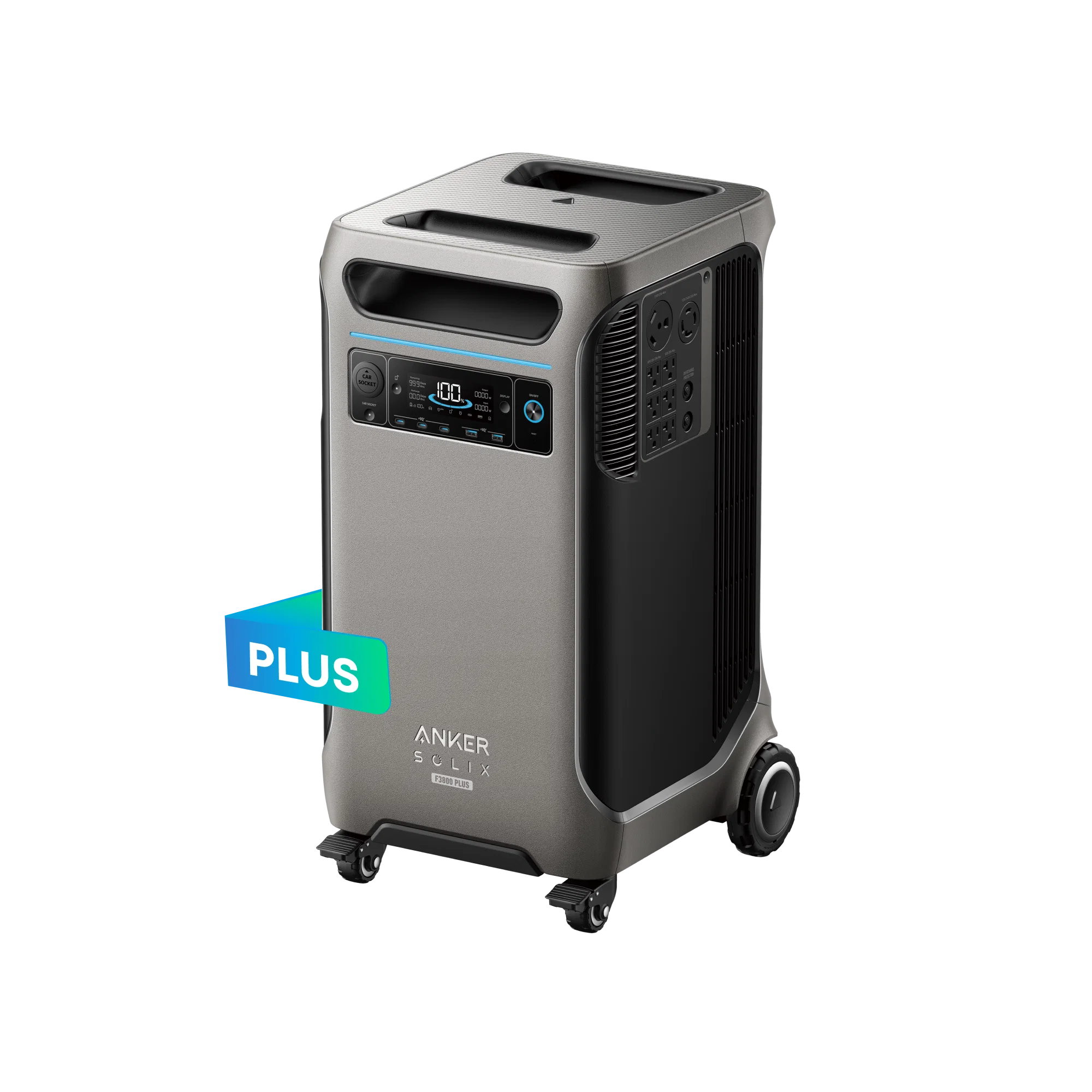
The Anker SOLIX F3800 Plus launched in June 2025 as a ground-up rethink of the original F3800.
The most dramatic improvement is solar: 3,200W input versus the original's 1,000W.
That's a tripling of solar throughput that fundamentally changes this unit's role — from "grid-connected backup with solar supplementation" to "serious off-grid and solar-primary capable system."
For context, most competitors in the 3–4kWh class cap solar at 1,000–1,600W.
Getting 3,200W in a single-unit form factor previously required a dedicated solar generator or a much more expensive whole-home system.
Anker closed that gap without sacrificing the portability and ease of use the F3800 line is known for.
At $3,199, it's a meaningful investment.
But for RV owners, homesteaders, and serious off-grid builders who need 53.8kWh of scalable capacity with industry-leading solar intake, the F3800 Plus is difficult to beat.
Unboxing & First Impressions
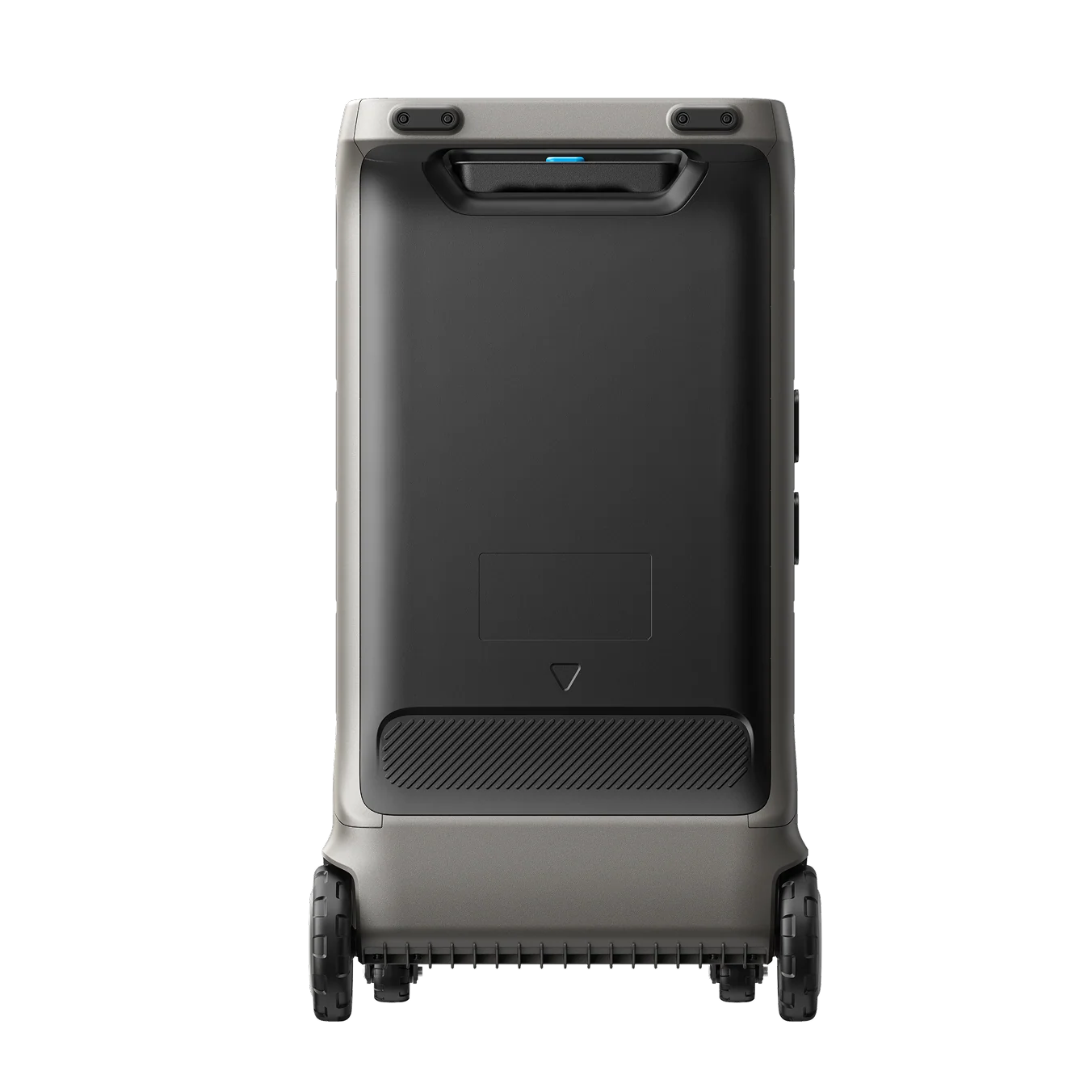
The F3800 Plus arrives well-packaged for its 136-lb weight, with foam protection around all corners and clear documentation for initial setup.
Anker (Manufacturer product image)
Anker (Manufacturer product image)
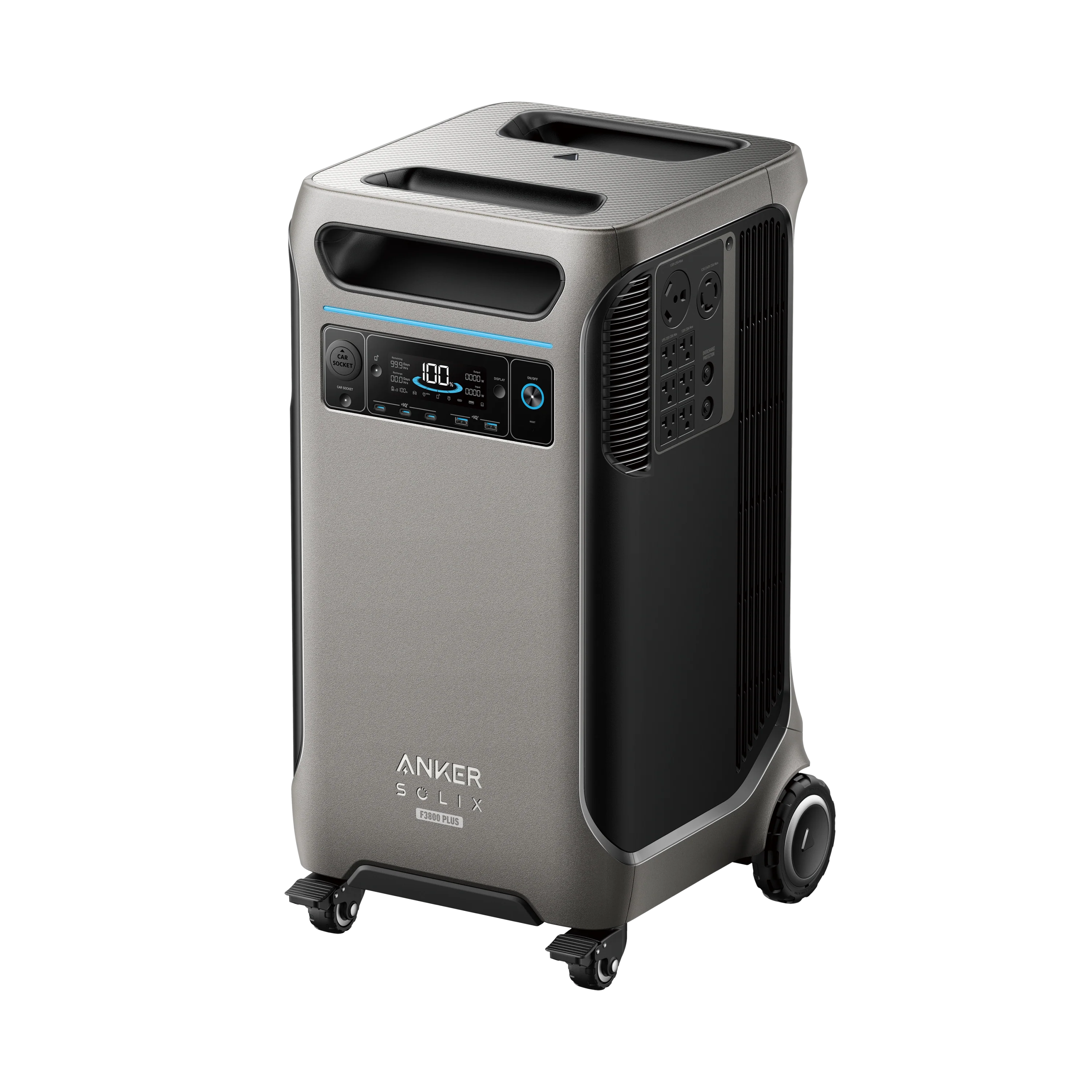
The telescoping handle extends smoothly, and the wheels are quality — wider-base casters than you'd find on budget units, rated for the substantial weight.
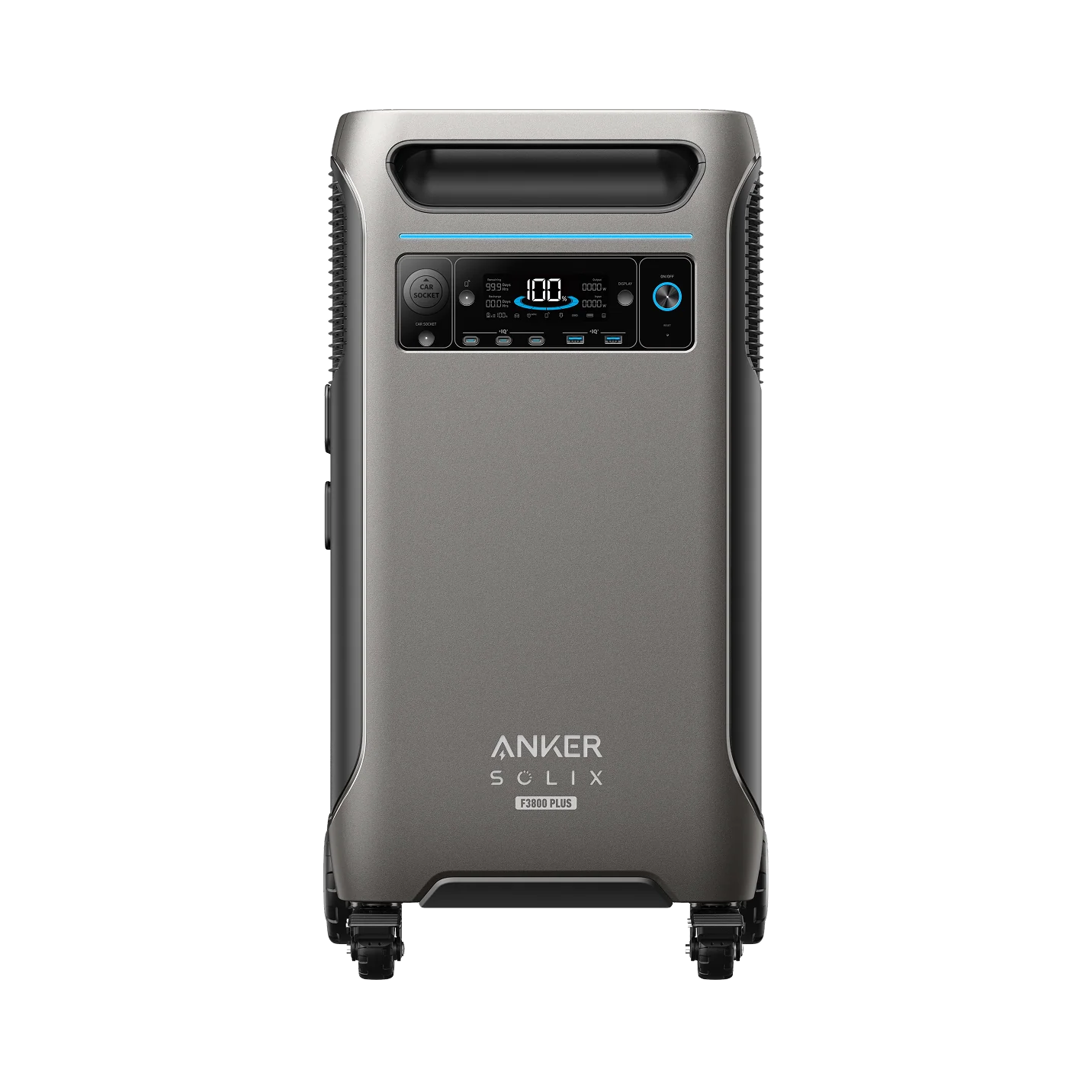
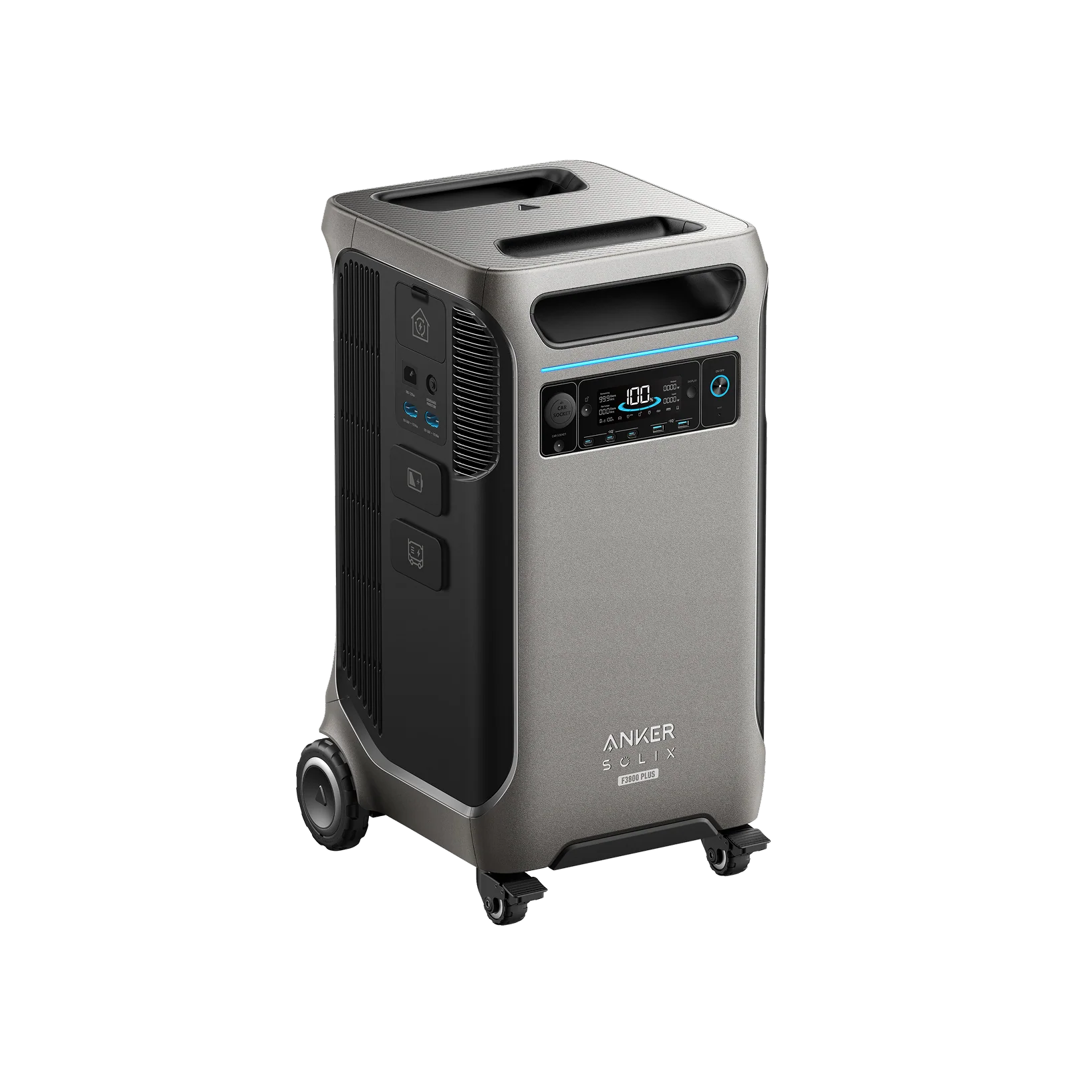
First impression: a unit engineered to last, with metal chassis accents, solid port covers, and a bright color display showing input, output, and SoC at a glance.
The handles feel confident, the port panel is logically organized, and the three UPS-protected AC outlets are clearly marked.
For a 136-lb unit, it's as manageable as it can realistically be.
Key Features
3,200W Solar Input
3,200W of solar input on a 3,840Wh base battery means a full recharge from solar in approximately 1.5 hours under optimal conditions.
Anker (Manufacturer product image)
More practically: you can pull significant power from panels while simultaneously running loads.
The system stays charged through daylight hours even under moderate usage, and banks surplus for nighttime.
This is the spec that separates the F3800 Plus from every other comparable unit in its price range.
The proprietary connector format (with MC4 ends) works with standard MC4 solar panels but requires adapters for other connector types (XT60, Anderson).
6,000W Inverter and Three UPS Outlets
The 6,000W inverter covers all but the most demanding 240V loads.
Six AC outlets — three UPS-protected with automatic switchover — cover simultaneous critical and non-critical loads without a power strip.
The UPS functionality on three of the six outlets lets you protect computers, networking gear, or medical equipment from power interruption while using the other three outlets freely.
Real-world testing confirmed sub-20ms switchover times — sufficient to prevent computer shutdowns during grid fluctuations.
Expandability to 53.8kWh
The expansion path to 53.8kWh uses additional battery modules.
The cable-connected expansion design is less elegant than the Anker SOLIX E10's wireless stacking, but it's functional and stable.
Each expansion battery adds 3,840Wh of capacity, and the system scales smoothly through the app without manual configuration.
For homeowners who want to start with base capacity and expand as budget allows, this is a sensible long-term investment path.
Performance Testing
Solar Input Real-World Numbers
Testing with a 3,000W panel array under 85% efficiency conditions (realistic for mixed cloud cover) showed 2,550–2,700W actual input.
Anker (Manufacturer product image)
Full recharge from 20% took approximately 2 hours under these conditions.
Simultaneous 1,200W load while charging from solar showed the system maintaining net-positive charge gain — a meaningful test that many 1,000W-input systems fail.
AC Charging Speed
At 120V, the 1,800W AC charging rate fills the 3,840Wh battery in approximately 2.5 hours.
The 6,000W 240V charging option (requiring the multi-battery setup) is dramatically faster but requires additional infrastructure.
For most home installations, the 120V rate is the practical everyday charging speed.
The 30A Reality
Reviewers consistently measured 25A actual output from the "30A" outlet — that's 3,000W at 120V versus the theoretical 3,600W at true 30A.
The vast majority of RV loads run comfortably within 3,000W, so this limitation rarely matters in practice.
But if you depend on a true 30A draw for specific equipment, measure carefully.
Competitive Analysis
vs. Pecron E3800 ($1,199)
The Pecron offers essentially identical base capacity (3,840Wh) and comparable solar input (3,000W) at $2,000 less.
Anker wins on build quality, customer support, UPS outlets, and expandability ceiling (53.8kWh vs 26.8kWh).
For budget-focused buyers: Pecron. For quality and long-term investment: Anker.
vs. EcoFlow Delta Pro Ultra X ($7,699)
EcoFlow's flagship massively outperforms on solar input (10,000W) and capacity ceiling (184kWh), but costs more than double.
The F3800 Plus covers most home backup scenarios at a saner price point.
Only buyers who genuinely need 12kW inverter output or 10kW solar should consider the EcoFlow.
vs. OUPES Guardian 6000 ($1,614)
OUPES delivers more base capacity (4,608Wh) and native 240V output for less money.
Anker wins on build quality, support, and expandability ceiling.
The Guardian 6000's 75W idle draw is a serious operational concern the F3800 Plus avoids (~40W idle).
Who It's For
Ideal For:
✅ Off-grid and solar-primary installations needing 3kW+ panel input
✅ RV owners wanting UPS-protected outlets and substantial 30A service
✅ Buyers planning to scale capacity to 10kWh+ over time
✅ Homeowners who want Anker's support reputation behind their home backup
Consider Alternatives If:
❌ True 30A output is required (only delivers 25A in testing)
❌ Budget doesn't stretch to $3,199+ (Pecron E3800 at $1,199 covers similar specs)
❌ 240V output from the base unit is needed without additional hardware
Final Verdict
The Anker SOLIX F3800 Plus is the strongest update to the F3800 line and one of the best home backup units available for solar-primary users.
The 3,200W solar input is genuinely differentiating — no other unit at this price point gets close.
The 6,000W inverter is appropriately sized, the UPS outlets are well-implemented, and Anker's support and build quality remain best-in-class.
The 30A discrepancy, cable-based expansion, and $3,199 price are real considerations.
For the right buyer, they're easily justified.
For the budget-focused buyer who needs solar capacity at lower cost, the Pecron E3800 deserves a serious look.
But if you're building for the long term and want a system that grows to 53.8kWh, the F3800 Plus is the clear choice.
Frequently Asked Questions
Q: Can the F3800 Plus power a whole home during an extended outage?
A: The 3,840Wh base unit covers essential circuits (fridge, lights, internet, charging) for 12–24 hours.
With expansion batteries scaled to 20–30kWh, multi-day whole-home backup is achievable.
The 6,000W inverter can run multiple major appliances simultaneously.
Q: Do I need special solar panels for the 3,200W input?
A: The proprietary connectors have MC4 ends, so standard MC4 solar panels work without adapters.
Non-MC4 panel types (XT60, Anderson) require adapters.
The system accepts up to 150V open circuit voltage, compatible with most residential-grade panels.
Q: Why does the 30A outlet measure 25A in testing?
A: Inverter-based 30A outlets often limit actual delivery to 25A due to protection thresholds.
The 3,000W effective output covers the vast majority of RV loads.
Anker hasn't publicly addressed the spec discrepancy.
Q: How loud is the F3800 Plus under load?
A: Under moderate loads (under 2kW), the fan is quiet — roughly equivalent to a desktop computer.
Under full 6kW load, fan noise becomes noticeable but is not disruptive for most environments.
Q: What's the realistic expansion cost to 20kWh?
A: Each additional 3,840Wh battery adds approximately $1,000–$1,500.
To reach roughly 20kWh (base + 4 expansion batteries), expect $7,000–$9,000 total.
That's still less than a comparable Powerwall installation with professional install fees.
Q: How does the cable-based expansion compare to wireless stacking?
A: The F3800 Plus uses physical communication cables between battery units, which adds installation complexity vs. the Anker SOLIX E10's wireless stacking.
Functional and reliable, but less convenient for buyers who plan to add multiple batteries over time.