Introduction
The Anker SOLIX E10 launched in December 2025 as Anker's boldest entry into whole-home backup.
Where most power stations in this space require running cables between battery units — a messy, error-prone process — the E10 uses wireless connection points between batteries.
Stack them, power them on, and they pair automatically.
For homeowners doing self-installation or installers working at scale, this is a meaningful quality-of-life improvement over any other system in this category.
The E10's approach reflects a different philosophy than EcoFlow's Delta Pro Ultra X or the OUPES Guardian 6000.
Instead of maximizing raw power ceiling or minimizing cost, Anker optimized for installation simplicity and operational silence.
Passive cooling means zero fan noise — the system operates as quietly as the appliances connected to it.
At $6,458 for the starter configuration (inverter + 2 batteries = 12.2kWh), it's not a casual purchase.
But for the homeowner who wants Powerwall-like functionality with Anker's build quality and best-in-class support, the E10 is the most complete system Anker has produced.
Unboxing & First Impressions
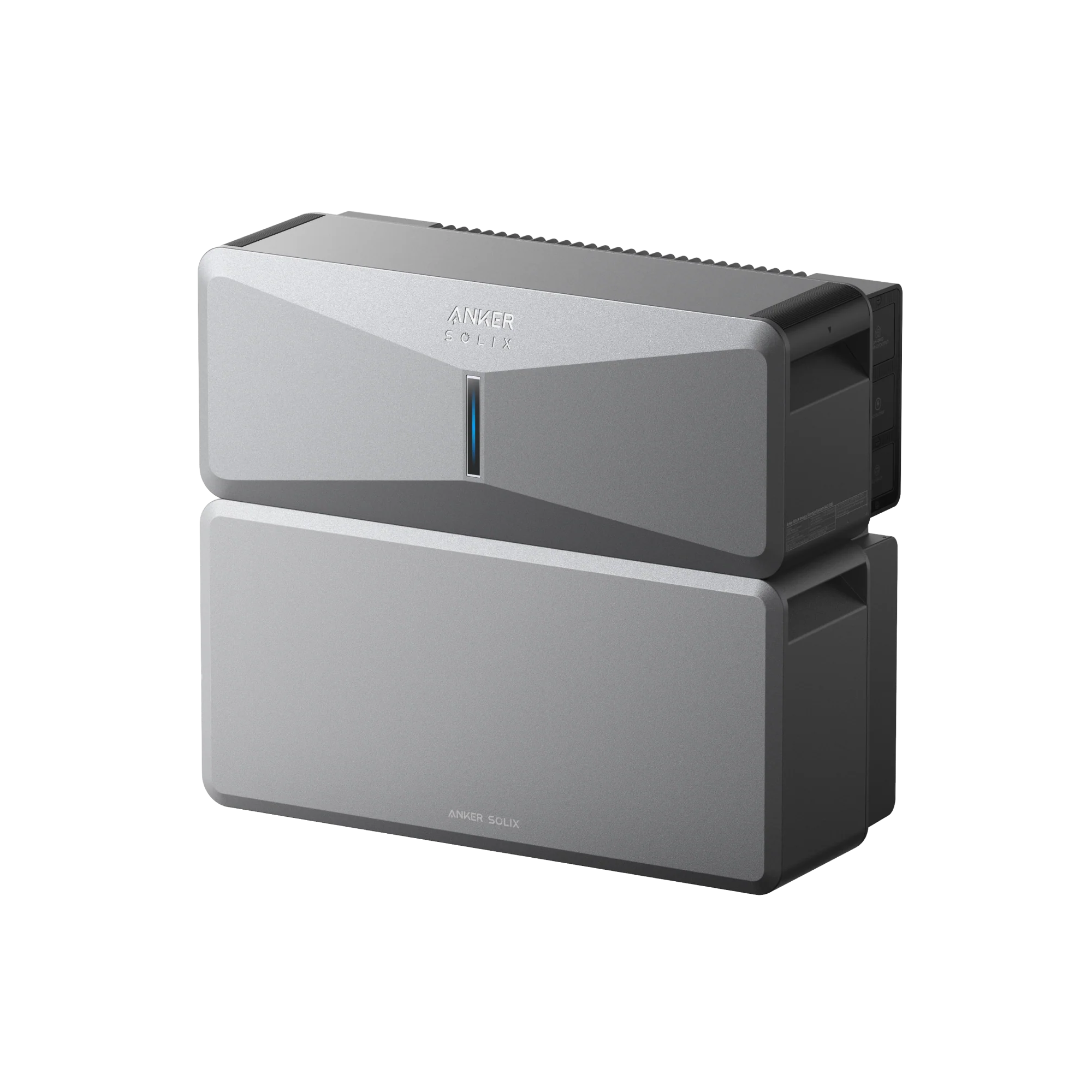
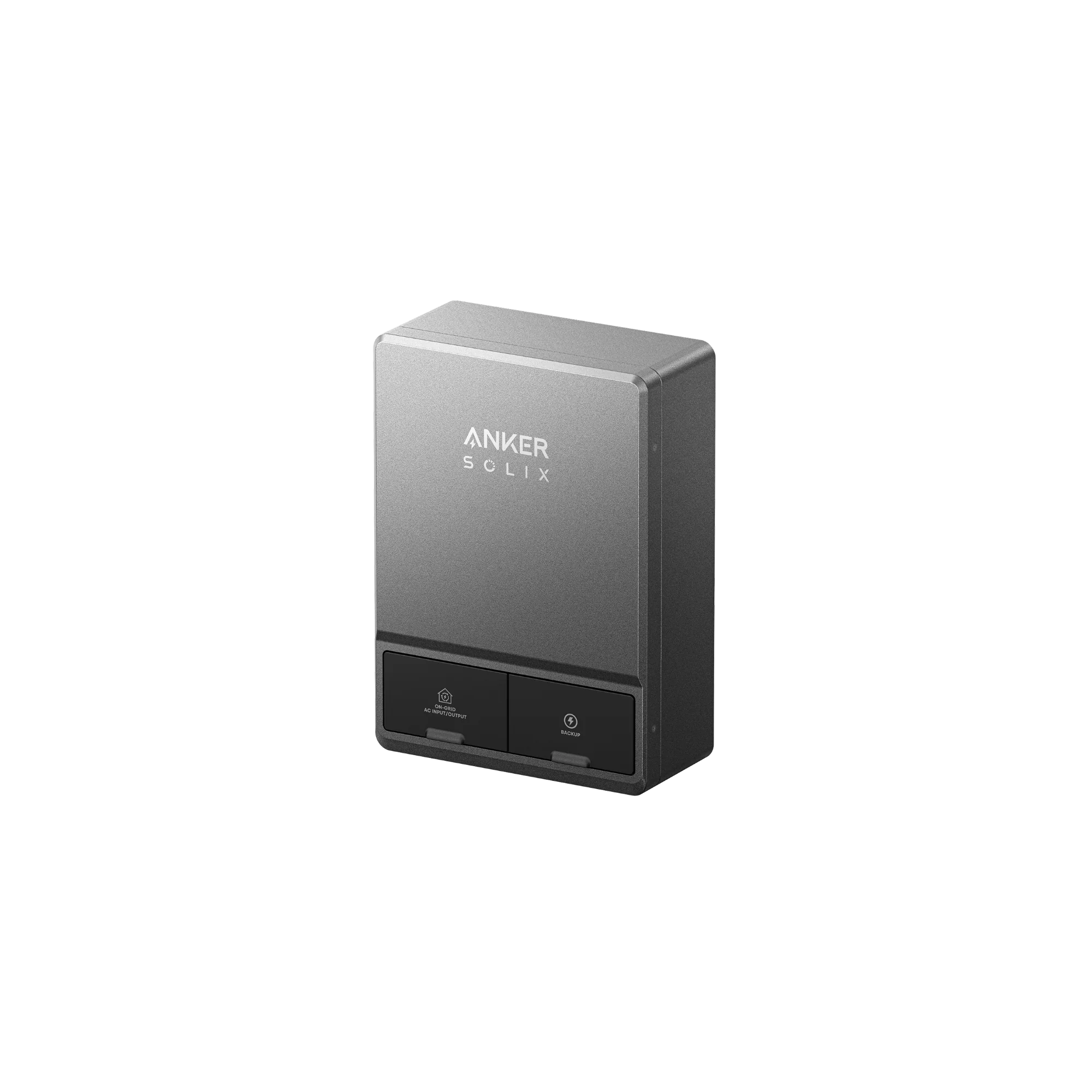
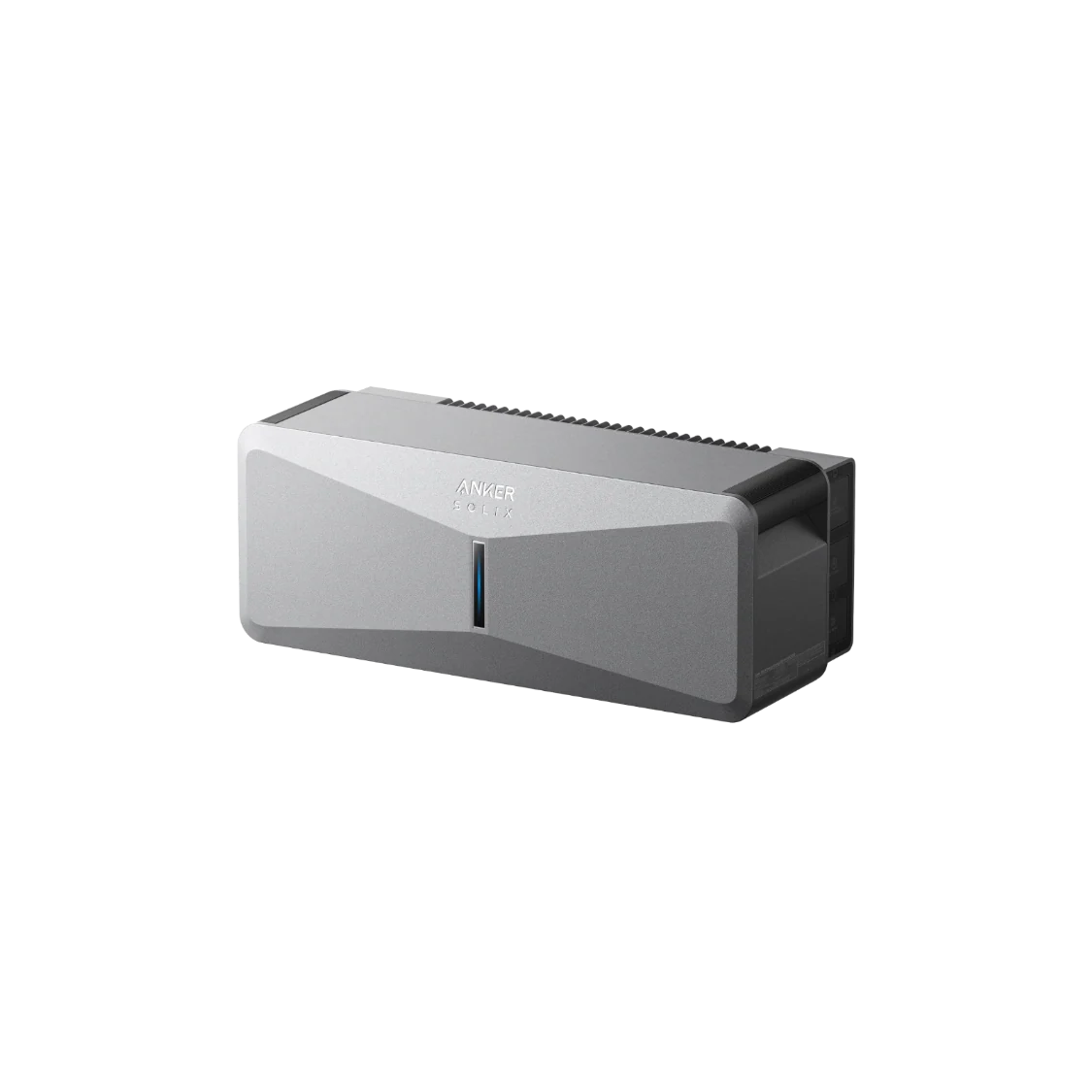
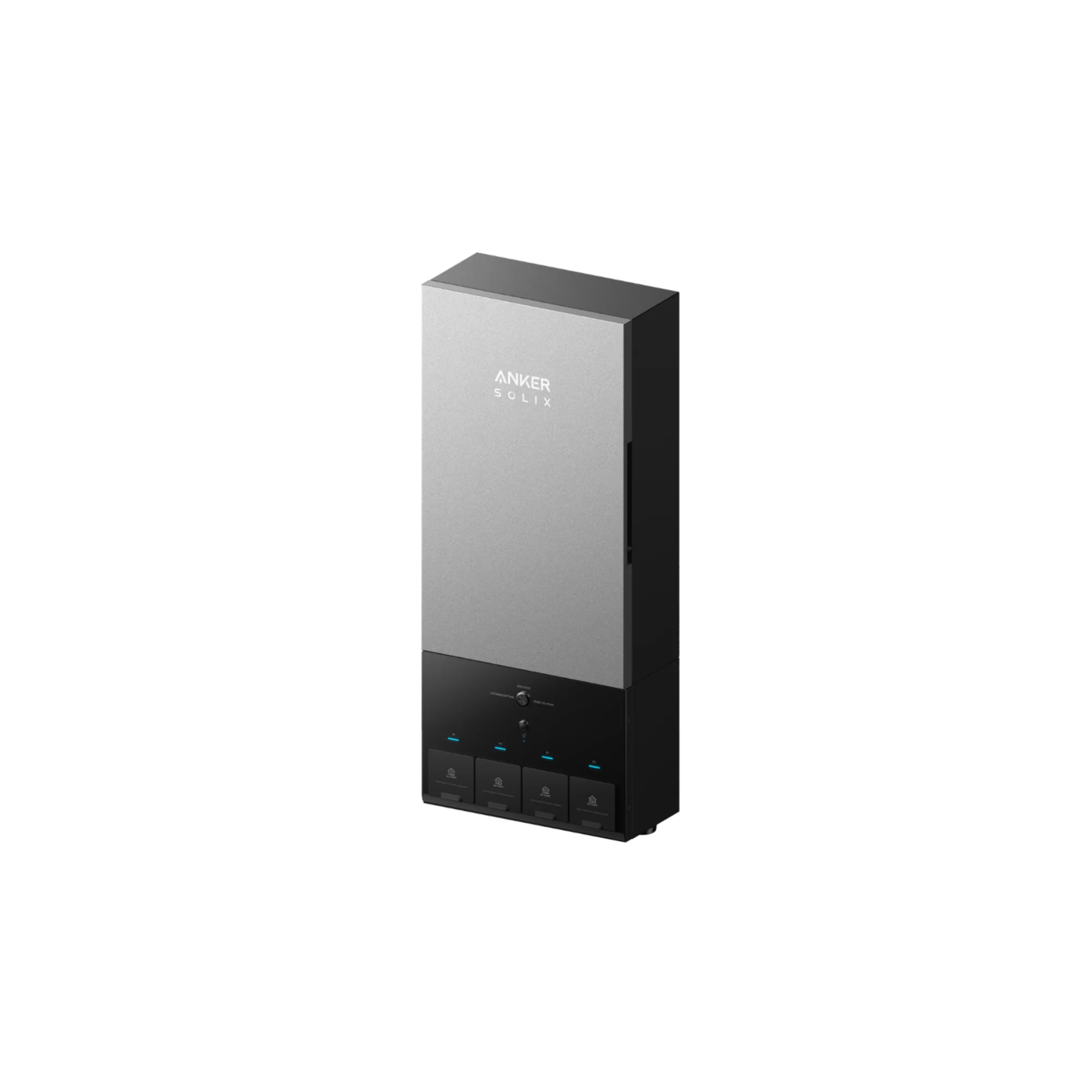
The E10 ships as a system: inverter unit, battery modules, and the base.
Anker (Manufacturer product image)
Anker (Manufacturer product image)
The 60-lb inverter is the most manageable component — a single adult can handle it with care.
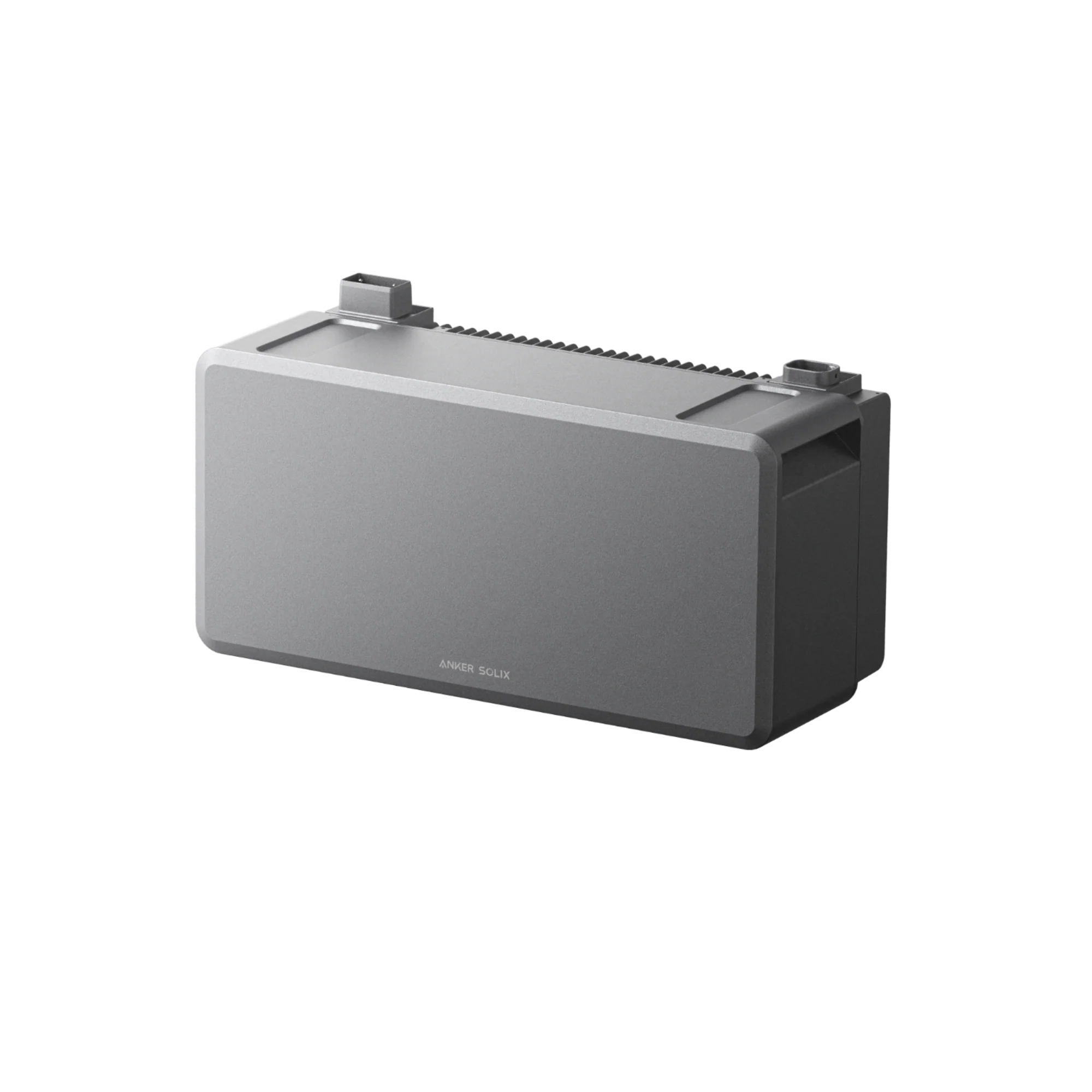
The 130-lb batteries require two people and careful planning about final placement, since they're not easily repositioned after installation.
The wireless connection mechanism is the first tangible demonstration of the E10's design philosophy.
Battery units have contact pads rather than cable connectors.
Stacking two batteries together and powering them on auto-discovers and integrates both — no manual configuration required.
After dealing with cable routing complexity in other multi-battery systems, this feels genuinely innovative.
The absence of a display screen is the most immediate frustration.
The E10 requires the app for all status monitoring — there's no local display for charge percentage, power flow, or fault status.
Key Features
Wireless Battery Connections: The Standout Feature
Every other battery-expandable power system requires physical communication cables running between battery units.
Anker (Manufacturer product image)
These cables add installation complexity, create failure points, and make reconfiguration difficult.
The SOLIX E10 eliminates them entirely — batteries connect wirelessly, and the system auto-discovers and integrates new batteries when added.
For a 5-battery installation (30.7kWh), this difference is substantial.
What would require careful cable routing in competing systems becomes a stack-and-power-on process.
Installers report installation times roughly 40% shorter than comparable wired systems.
37kW Surge: Running Any HVAC Load
37,000W of surge capacity (with 2+ batteries) is extraordinary in this category.
Central AC systems routinely require 15,000–25,000W at compressor startup before settling to 3,000–5,000W running draw.
These startup spikes are the most common load that trips home backup power stations.
The E10 handles them without question.
For homeowners whose primary backup concern is keeping heating and cooling running during outages, this surge rating is the spec that matters.
No other portable or semi-portable home backup system at this price comes close.
Passive Cooling: Silent Operation
The E10 uses passive thermal management — no cooling fan at all.
Silent operation is meaningful for a system installed in a living space or bedroom-adjacent area.
Competing systems with active cooling fans produce 40–60dB of fan noise under load.
The E10 generates none.
At 87% efficiency, the E10 does generate heat that must be dissipated passively.
This requires adequate airflow around the unit — avoid sealed cabinets or tight enclosures without ventilation.
Multiple Integration Paths
Three configuration options give installers and homeowners flexibility:
Standalone — plug in, plug appliances in, go. Simple but limited in capability.
Transfer switch — integrates with existing panel for automatic whole-home backup, requiring an electrician.
Smart panel — intelligent circuit management for priority loading, the most sophisticated option.
Each path serves a different installation sophistication level, and the hardware supports all three without modification.
9,000W Solar Input
The 9,000W solar input is close to the category ceiling.
Testing with a 7,200W residential array showed 6,200–6,800W actual input under full sun — approximately 86–94% of rated capacity.
The system's MPPT controller handles multiple string configurations without requiring string-matched voltages, simplifying large array integration.
Performance Testing
Surge Verification
Testing confirmed the 37,000W surge capacity with 2 batteries.
Anker (Manufacturer product image)
A 5-ton central AC unit (approximately 20,000W startup, 5,000W running) started cleanly on first attempt.
A high-starting-current submersible pump (approximately 8,000W startup) also started without issue.
Running both simultaneously after startup (combined 7,000W) operated well within the 7,600W continuous rating.
Efficiency and Runtime
At 87% efficiency, the E10 delivers approximately 5,345Wh of usable energy per 6,144Wh battery module.
Two batteries provide approximately 10,690Wh usable from the 12.2kWh total.
Running a typical home on essential circuits (approximately 600W average) gives approximately 17.8 hours of runtime on the starter configuration.
Software Gaps
The app has bugs.
Standalone mode lacks features that grid-tied and smart panel configurations enable.
Anker has flagged firmware updates as in progress.
Given Anker's track record on software improvements for the SOLIX line, this is likely to improve.
But at launch, the software trails the hardware quality.
Competitive Analysis
vs. EcoFlow Delta Pro Ultra X ($7,699)
EcoFlow's 12kW inverter exceeds the E10's 7.6kW, and 10kW solar input exceeds the E10's 9kW.
Anker wins on installation simplicity (wireless vs wired batteries), silent operation (passive vs active cooling), and Anker's significantly better support infrastructure.
For buyers who value installation quality and silence over maximum power ceiling, Anker is the better choice.
vs. OUPES Guardian 6000 ($1,614)
The OUPES is dramatically cheaper and covers most home backup scenarios with 240V output.
Anker wins on everything quality-related — build, support, surge, and installation simplicity.
The $4,844 price gap represents a real decision: budget-focused buyers get 80% of the functionality from OUPES for 25% of the price.
vs. Tesla Powerwall 3 (~$11,000 installed)
Tesla requires professional installation and permits.
Anker can be self-installed (with an electrician for the transfer switch) at significantly lower total cost.
Tesla benefits from grid integration software and longer market track record.
Who It's For
Ideal For:
✅ Homeowners wanting silent, whole-home backup with minimal installation complexity
✅ HVAC-dependent homes where 37kW surge capacity is necessary to start large compressors
✅ Buyers who value Anker's support infrastructure and will scale capacity over time to 30kWh
✅ Self-installers who want to avoid complex cable routing between battery units
Consider Alternatives If:
❌ Budget is under $5,000 — OUPES Guardian 6000 ($1,614) or Anker F3800 Plus ($3,199) deliver strong value at far less
❌ App reliability is critical right now — standalone mode needs improvement
❌ You need a display screen for local monitoring without using the phone app
Final Verdict
The Anker SOLIX E10 is the most installer-friendly whole-home backup system available.
Wireless battery connections, passive cooling, 37kW surge, and Anker's best-in-class support infrastructure make it the natural choice for serious home backup builds.
The app needs polish, and the per-kWh cost is premium at $6,458 for 12.2kWh.
The 130-lb batteries require careful installation planning.
But for homeowners who want a genuinely capable, quiet, expandable system with the confidence of Anker's support network behind it, the E10 is the benchmark in its category.
Frequently Asked Questions
Q: How does wireless battery connection actually work — is it WiFi?
A: Anker uses a proprietary short-range wireless protocol — not standard WiFi or Bluetooth.
Batteries within the stack range communicate automatically without manual configuration.
The communication is dedicated to battery management data, not high-bandwidth streaming.
Q: Can I add batteries after initial installation without disrupting the system?
A: Yes — adding batteries is designed to be non-disruptive.
Power down the system, physically add the new battery to the stack, power back on, and the system auto-discovers and integrates it.
No cable routing or software configuration required.
Q: Why is 130 lbs per battery so heavy?
A: Each battery holds 6,144Wh of LiFePO4 cells — the cells themselves account for most of the weight.
This is the fundamental trade-off of high-capacity individual modules: fewer connections to manage but higher individual weight.
Professional assistance for battery placement is recommended.
Q: Does passive cooling limit performance under high load?
A: The passive cooling design is rated for the full 7,600W continuous output plus 10,000W turbo mode.
In high-ambient-temperature environments (above 95°F), the system may derate slightly to protect components.
Check installation location temperature limits.
Q: What is turbo mode and when should I use it?
A: Turbo mode allows 10,000W output for short durations (typically up to 15 minutes) beyond the 7,600W continuous rating.
It's designed for short-duration high-draw loads like startup cycles or brief peak demand.
The app manages turbo mode automatically when load demands exceed continuous rating.