Overview: the sensible hybrid with a few honest compromises
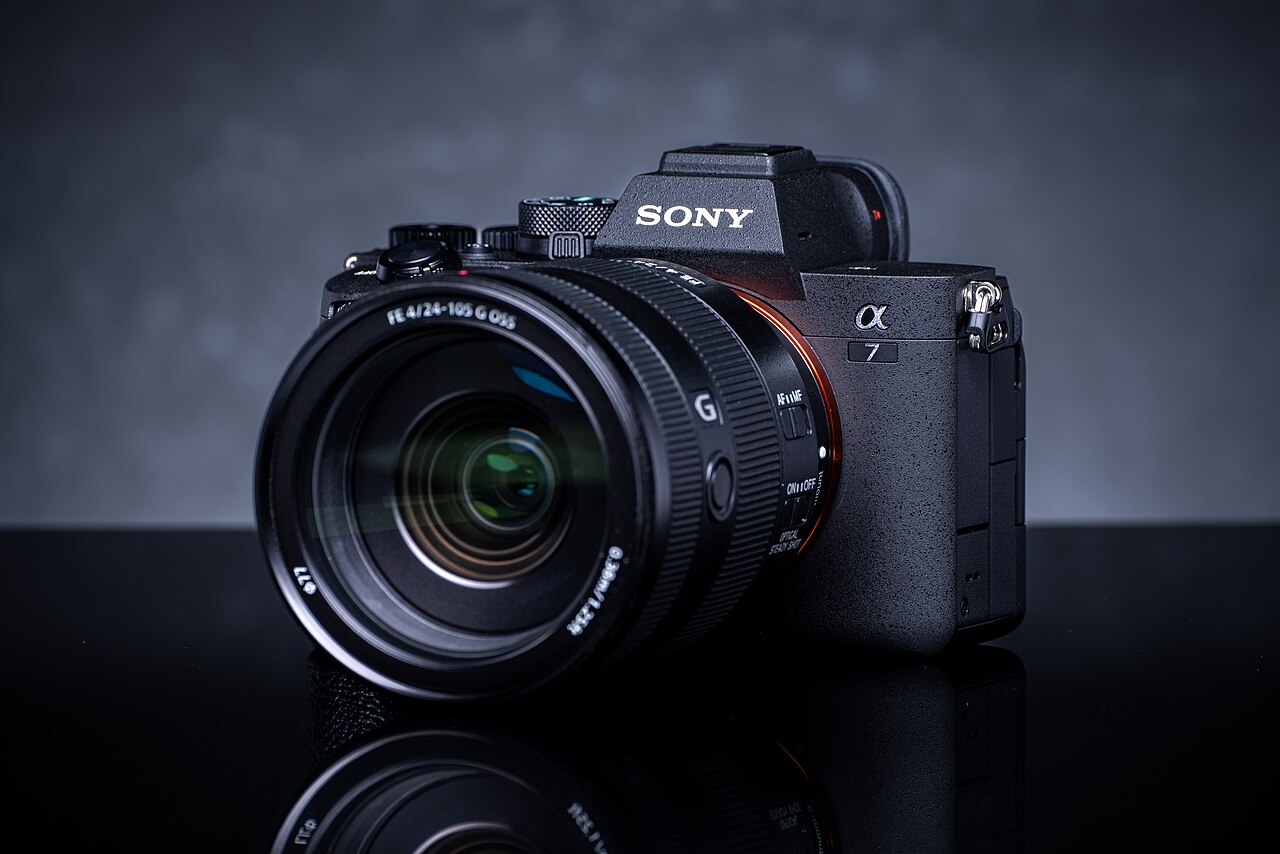
The Sony A7 IV is the camera people buy when they want one full-frame body to cover paid portraits, family travel, small business video, weddings, interviews, and everyday stills without jumping into flagship pricing. Its appeal is balance: a 33MP full-frame CMOS sensor, Real-time Eye AF, 4K 60p video, 10 bit recording, 5-axis IBIS rated at 5.5 stops, and a 2,498 USD price. It is not Sony's fastest body, not its highest-resolution body, and not its most video-focused body. That restraint is exactly why it works.
The A7 IV should be judged as a working middleweight, not as a fantasy flagship. It gives more resolution than many entry hybrid cameras, more video credibility than older stills-first bodies, and access to Sony's huge lens ecosystem. It also carries the familiar Sony tax: dense menus, settings that reward study, rolling-shutter concerns in video, and limits around 4K recording time that make it less comfortable for long-form work than a dedicated cinema-style camera.
The best buyer is a hybrid creator who needs a camera that can switch jobs quickly. The worst buyer is someone who secretly wants a Sony A1 II, Sony A7R V, FX-style video body, or a simpler camera but hopes the A7 IV will be all of them at once. It will not. The A7 IV is strongest when you accept its role: a practical full-frame hybrid that spends its money on useful breadth rather than bragging rights.
Brief buying profile
Buy it if you want full-frame stills with 33MP room to crop, reliable Eye AF for people and events, 4K 60p for polished video, 10 bit files for grading flexibility, and a body price of 2,498 USD that leaves room for lenses. Skip it if rolling shutter will bother you, if you routinely record long 4K sessions, if you hate complex menus, or if you need extreme speed, 8K capture, or the most specialized video controls Sony offers.
Design, build, and handling: useful, not romantic
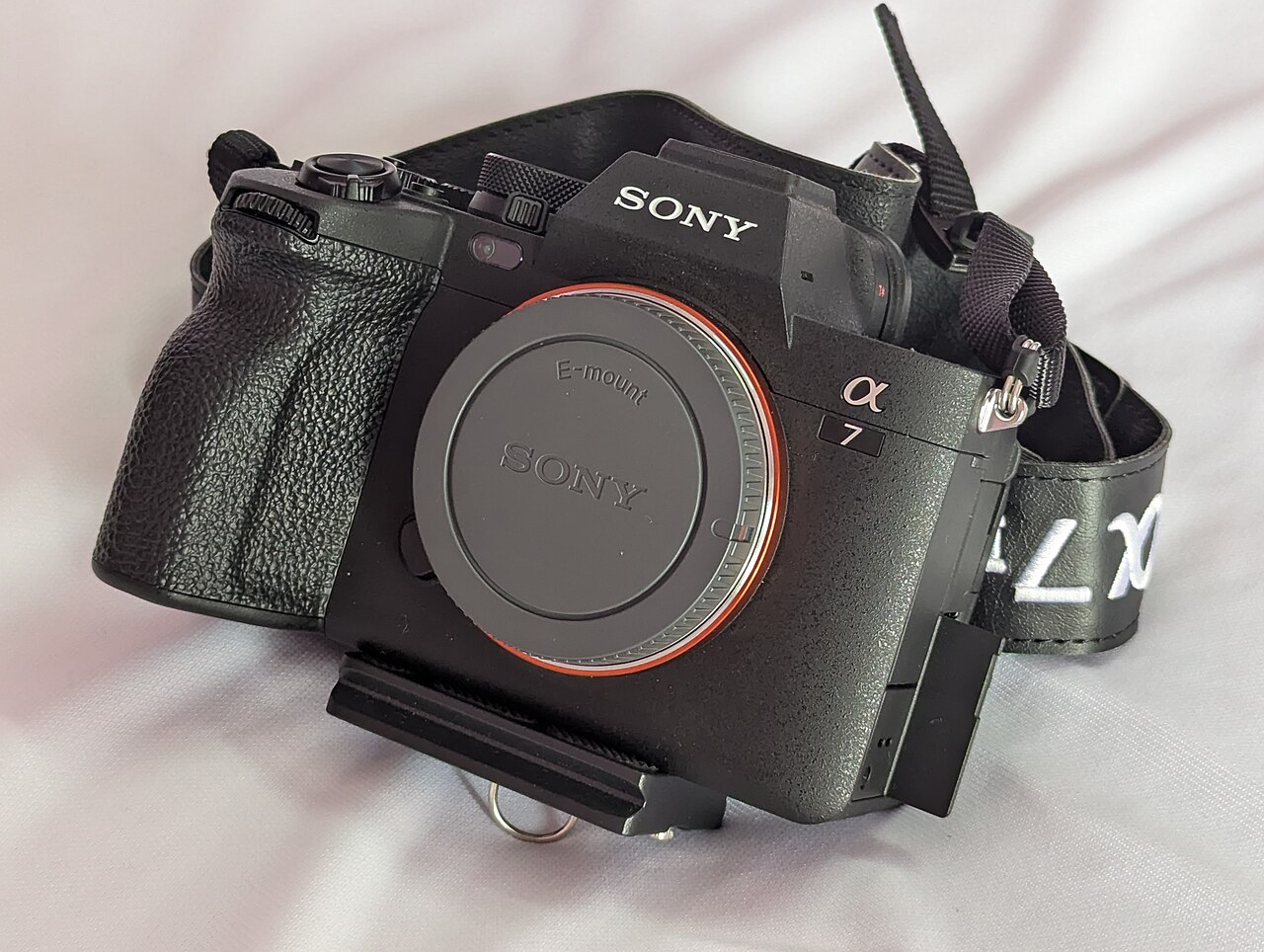
The A7 IV is not a camera that wins people over by feeling exotic. Its design is practical in the Sony way: compact enough for travel and event work, customizable enough for professionals, and dense enough to frustrate people who want everything on the first screen. The build-quality score makes sense for a camera that is meant to work regularly, but its handling character is more utilitarian than luxurious.
ROCKY / Wikimedia Commons (CC BY-SA 4.0)
That practicality matters. A 33MP full-frame body at 2,498 USD can be the center of a serious kit without consuming the whole budget. Many buyers are better served by an A7 IV plus the right lens than by stretching to a more glamorous body and compromising the glass. The body is the least emotional part of the decision; Sony's lens ecosystem is the emotional hook. If you want native options, third-party options, compact primes, zooms, and upgrade paths, Sony makes a strong argument.
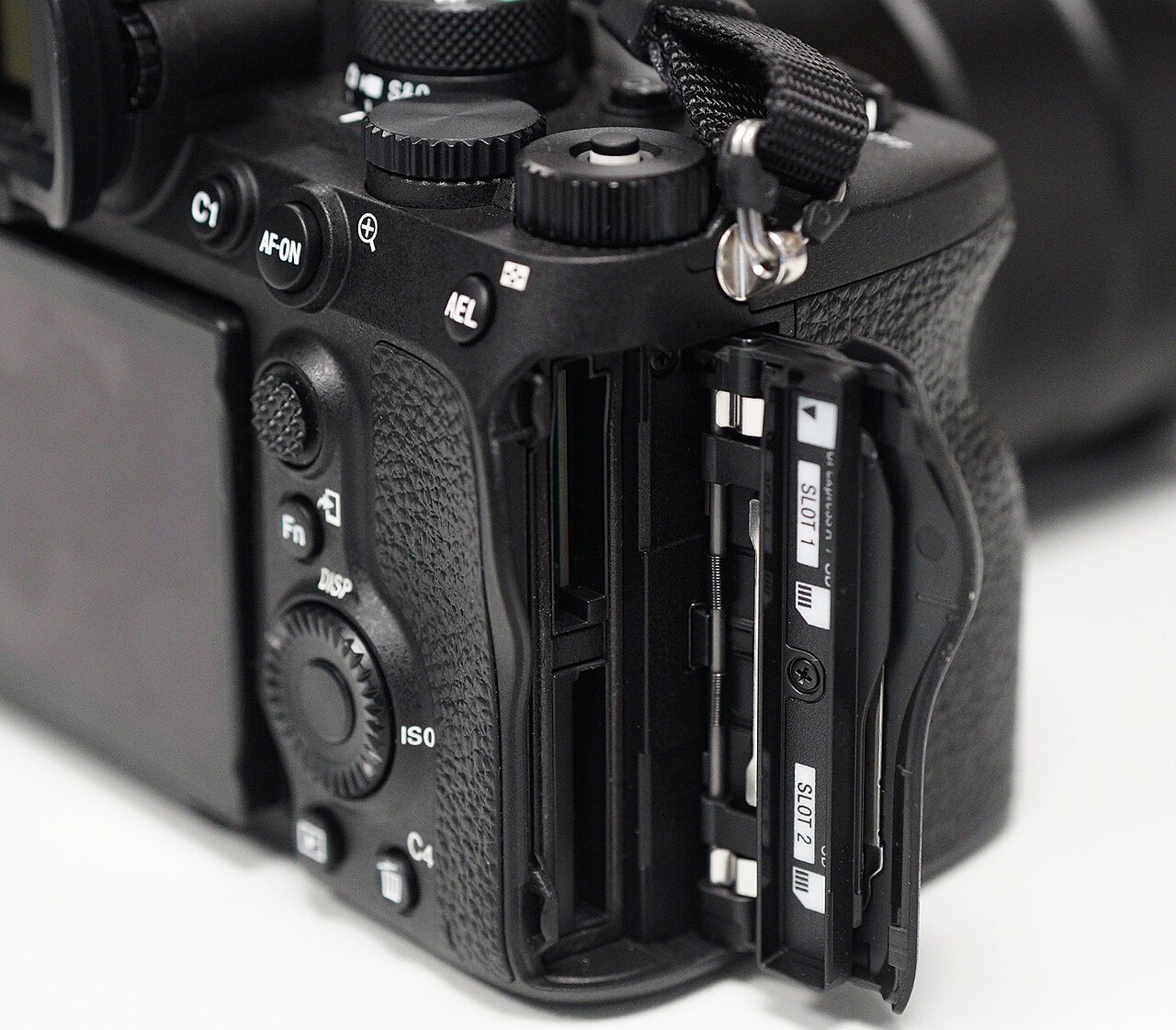
The menu system is the most obvious handling complaint. Sony has improved over older bodies, but the A7 IV still expects you to understand pages of video settings, autofocus behavior, custom buttons, file formats, and connection options. That complexity is manageable for a professional who builds presets. It is irritating for someone moving from a phone, a simple DSLR, or a camera with a more guided interface.
The 5-axis IBIS rated at 5.5 stops helps the camera feel less fragile in everyday shooting. It gives handheld stills more margin and can calm static video. It does not turn walking footage into gimbal footage, and it does not solve subject motion in dim rooms. For events and travel, the stabilization is a safety net. For filmmaking, it is one tool among many.
Battery life is one of the reasons the A7 IV remains easy to recommend as an everyday hybrid. The exact endurance will vary with video use, display habits, weather, and how much you review images, but the body does not feel like a camera that constantly forces battery anxiety for ordinary stills work. Heavy 4K recording is a different story; serious video users should plan spares rather than trust a single battery through a long day.
Performance and everyday testing: the strength is balance
The 33MP full-frame CMOS sensor is the A7 IV's best compromise. It gives more cropping room than lower-resolution hybrid bodies while avoiding the storage and technique demands of ultra-high-resolution cameras. For portraits, weddings, travel, products, and small commercial jobs, 33MP is enough to crop a loose frame, print confidently, and deliver detailed files without turning every shoot into a data-management project.
Macflies / Wikimedia Commons (CC BY-SA 4.0)
Real-time Eye AF is the feature many owners will appreciate more than any resolution number. The A7 IV is a people camera in the best sense: portraits, receptions, kids, creators speaking to camera, and quick editorial sessions all benefit from autofocus that prioritizes faces and eyes. It does not remove the need to choose the right area mode or watch backgrounds, but it makes the camera feel trustworthy when a subject moves naturally.
The video specification is strong but not unlimited. 4K 60p and 10 bit recording give the A7 IV genuine hybrid credibility. A solo creator can shoot interviews, B-roll, product clips, and social campaigns without feeling trapped in a stills-only body. The 10 bit files are especially useful for people who grade footage rather than accepting every color decision in-camera. The problem is that the A7 IV is not a dedicated video body, and buyers should not pretend otherwise.
Rolling shutter is the video con that deserves the most attention. If your work includes fast pans, quick handheld movement, or subjects crossing the frame at speed, the A7 IV can show its limits. That does not make it a bad video camera. It means you should match the tool to the work. Interviews, talking-head content, careful travel footage, product clips, and slower documentary scenes are far safer territory than aggressive action coverage.
Limited 4K recording time is another reason to be realistic. The A7 IV is comfortable for many short-form jobs, but it is not the body I would choose first for uninterrupted conferences, long ceremonies from a fixed angle, or documentary situations where the camera must roll and roll. If that is your work, Panasonic Lumix S5 II, Sony FX-style bodies, or other video-first options may fit better.
For stills, the camera's value proposition is straightforward. You get full-frame look, 33MP resolution, reliable autofocus, strong lens access, and a body that can earn money without feeling like a flagship investment. The A7 IV is not exciting because it wins every category. It is exciting because it avoids being bad at the categories a hybrid shooter actually uses every week.
Sony A7 IV vs alternatives: Canon EOS R6 Mark II, Nikon Z6 III, Panasonic Lumix S5 II, and Fujifilm X-H2S
Canon EOS R6 Mark II is the competitor for photographers who prefer Canon handling, color, and a friendlier operational feel. The Canon route may be better for shooters already invested in RF lenses or those who dislike Sony's interface. The A7 IV fights back with 33MP resolution, Sony lens depth, Real-time Eye AF, 4K 60p, and 10 bit recording in a body that feels like a long-term system anchor.
Nikon Z6 III is the obvious Nikon alternative for hybrid creators. Nikon's appeal is handling, color preference, and a body that many photographers find more comfortable in the hand. Sony's appeal is ecosystem breadth and a mature autofocus reputation. If you want the broadest lens shopping experience, the A7 IV is hard to ignore. If you love Nikon controls and already own Z glass, the Z6 III deserves a serious look.
Panasonic Lumix S5 II is the alternative for buyers who think video first. Panasonic often attracts creators who like its video tools, menus, and L-mount approach. The A7 IV is the safer all-around stills/video pick for many freelancers, especially if autofocus for people and Sony lens choice matter more than a video-centric interface. The Panasonic may be more comfortable for deliberate filmmakers; the Sony is more flexible for mixed work.
Fujifilm X-H2S is not full-frame, which is precisely why it belongs in the conversation. Some creators would rather have a fast, capable hybrid system with Fujifilm's lens sizes and color approach than chase full-frame depth of field. The A7 IV is better if full-frame look, 33MP files, and E-mount flexibility are central to the plan. Fujifilm is better if speed, compact lenses, and a different shooting experience matter more.
Sony's own A7R V and A1 II create the hardest temptation. The A7R V is for buyers who prioritize resolution and detailed stills over the A7 IV's middleweight balance. The A1 II is for professionals who want a premium do-everything Sony body and are ready to pay far beyond 2,498 USD. The A7 IV remains the sensible choice when you would rather build a complete kit than buy the most impressive body.
Who it's for, and who should skip it
The A7 IV is ideal for hybrid freelancers who shoot portraits in the morning and video clips in the afternoon. It is also a strong family-and-business camera for people who want one body that can grow with them. The 33MP sensor gives enough stills headroom, 4K 60p keeps video modern, 10 bit recording supports grading, and Real-time Eye AF makes people work less stressful.
It is a particularly good buy for someone entering Sony full-frame. A 2,498 USD body is not cheap, but it can be a more balanced starting point than a specialized high-resolution or flagship model. Spend the difference on a lens you will use every week, a second battery, cards, lighting, audio, or travel. The A7 IV rewards a complete kit more than body-only spec chasing.
Skip it if your main pain point is long-form video. Limited 4K recording time and rolling shutter are not minor details if you shoot ceremonies, stage events, lectures, or fast handheld action. Skip it if you already know you need 8K, extreme speed, or a more cinema-oriented body. Skip it if you want a camera that feels simple without customization. Sony gives you power, but it expects participation.
Also skip it if you are buying only because it seems like the default internet answer. The A7 IV is popular because it is sensible, not because it is universally best. Canon, Nikon, Panasonic, and Fujifilm all offer alternatives with different personalities. The right choice is the one whose compromises you can live with after the excitement of a new body wears off.
Conclusion
The Sony A7 IV remains persuasive because it is honest about its lane. It offers a 33MP full-frame sensor, Real-time Eye AF, 4K 60p video, 10 bit recording, 5-axis IBIS rated at 5.5 stops, good everyday battery confidence, and a 2,498 USD price that leaves room to build a system. Its flaws are just as real: menu complexity, rolling shutter, and limited 4K recording time.
I would recommend it to hybrid creators, portrait and event photographers, small studios, and serious families who want one full-frame Sony body to do many jobs well. I would not recommend it to buyers who need long unattended video recording, ultra-high-resolution stills, flagship speed, or the simplest possible interface. The A7 IV is not the dream camera for everyone. It is the practical camera many people should actually buy.