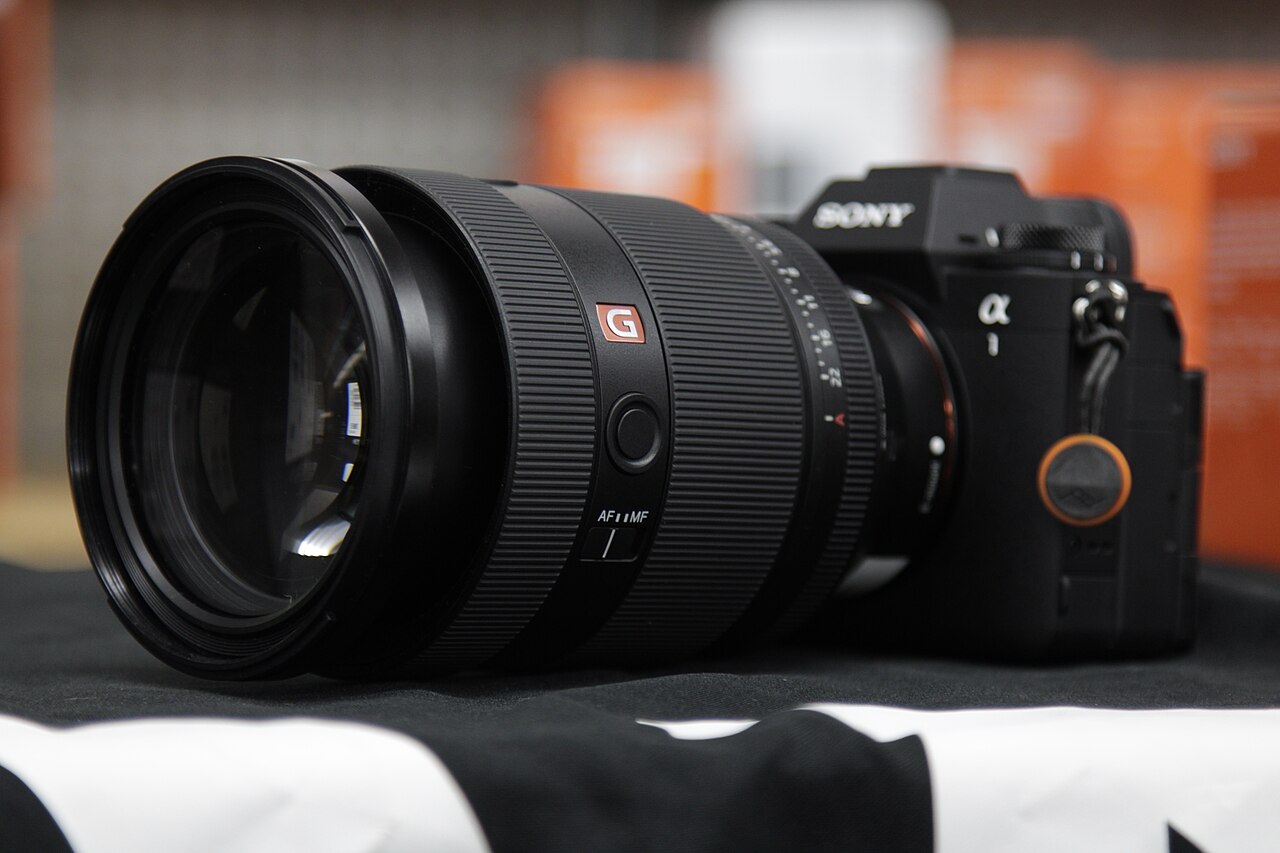
Introduction
The Sony A1 II does almost everything, and that sentence is both its greatest strength and the root of its biggest problem. Here is a single body that shoots 50MP stills at up to 30 frames per second, records 8K30 and 4K120, and tracks subjects with Sony's dedicated AI recognition processor — a camera that refuses to make you choose between resolution and speed. Then it asks $6,499, and the conversation changes entirely.
Because the A1 II is not fighting other cameras so much as it's fighting its own predecessor and its own price tag. The original A1 already delivered the resolution-plus-speed miracle. The A1 II refines the formula — better autofocus intelligence, improved stabilization, the newer body ergonomics — but it doesn't reinvent it. Whether that refinement is worth flagship money depends entirely on who you are, and I'll be blunt about that throughout.
What you're actually paying for
Strip away the marketing and the A1 II's pitch is simple: no compromises in a single professional body. The stacked 50MP sensor is the key. A stacked design reads out extraordinarily fast, which is what lets Sony offer 30fps bursts with the electronic shutter while keeping rolling-shutter distortion — the skew you get on fast pans or quick-moving subjects — down to a level most photographers will never notice in practice. That combination is rare and expensive to engineer, and it's the core of why this camera costs what it does.
The AI autofocus is the second pillar. Sony's dedicated recognition unit identifies and holds human eyes, animals, birds, and vehicles with a tenacity that sits at the top of the industry. For a wedding photographer working a dim reception, a wildlife shooter tracking a raptor against a busy background, or a sports shooter following unpredictable motion, this is the feature that justifies the outlay far more than the resolution does.
Design and controls
The A1 II adopts Sony's current-generation professional body, which is a real improvement over the older A1 chassis. The grip is deeper and more comfortable for long days and big lenses, the controls are more thoughtfully placed, and the fully articulating-plus-tilting rear screen finally satisfies both stills shooters and videographers. The electronic viewfinder is enormous and razor-sharp — one of the best in any camera — and it makes tracking fast action a pleasure rather than a guessing game.
The body is weather-sealed magnesium alloy built for professional abuse, at a manageable weight for full-frame given everything packed inside. My complaints are the familiar Sony ones: the menu system, though improved, is still a sprawling touchscreen labyrinth that rewards memorization, and the sheer density of customization means you'll spend real time configuring the camera before it feels like yours. That's the price of a tool this deep.
Autofocus and speed in real use
This is where the A1 II earns its keep. Subject detection is fast to acquire and stubborn to lose, holding focus through occlusion, sudden direction changes, and low contrast. Bird and animal recognition are genuinely reliable rather than a marketing bullet, which matters enormously to wildlife shooters who've been burned by systems that lose the eye the moment a wing crosses the frame. Pair the tracking with 30fps bursts and a deep buffer fed by fast cards, and you get a camera that simply doesn't miss the peak moment.
The stacked sensor's near-absence of rolling shutter means you can shoot silently at high speed in situations — theater, weddings, wildlife, courtrooms — where a mechanical shutter would be intrusive or where distortion would ruin fast-motion frames. This is the practical payoff of the expensive sensor, and it's the single biggest reason to choose the A1 II over cheaper high-resolution Sonys.
Video capability
The A1 II records 8K30 and 4K120, giving you both maximum detail and high-frame-rate slow motion in one body. For a hybrid professional — someone shooting a wedding film and stills, or a wildlife documentary and gallery prints — that flexibility is real. Sony's log profiles and color tools are mature, and the fast sensor readout keeps video rolling-shutter in check the same way it does for stills. It is not a dedicated cinema camera, and heavy 8K work will test your cards, storage, and thermal patience, but as one facet of a do-everything flagship the video is more than a token gesture. One practical note: sustained 8K writes lean hard on your fastest cards, and pairing high-frame-rate 4K120 with the AI autofocus is where the A1 II most clearly separates itself from cheaper hybrids, holding a moving subject sharp through slow-motion capture that would defeat a slower body.
The battery and cards reality
Sony's NP-FZ100 battery is a good one, but a camera firing 30fps bursts and recording 8K will drain it faster than casual use suggests. Plan on multiple batteries for a full professional day, and consider the vertical grip if you shoot events or sports. On storage, the A1 II uses dual slots that accept CFexpress Type A and SD. Type A cards are the ones that unlock the deepest, fastest buffer for high-speed shooting — and they are notably more expensive per gigabyte than the CFexpress Type B cards used by some rivals. Budget accordingly; the card cost on a camera like this is not trivial.
How it compares
The most uncomfortable comparison is with the original Sony A1, which does most of what the A1 II does for less money, especially on the used market. If the improved autofocus intelligence, the better grip, and the newer screen don't change how you work, the older A1 is the value-conscious choice and I won't pretend otherwise.
Against the Nikon Z9, you're weighing Sony's autofocus edge and lighter body against Nikon's integrated vertical grip, huge buffer, and arguably tougher pro build — the Z9 is the natural pick for photographers already in Nikon's system or who want an all-in-one bricklike flagship. Against the Sony A9 III, the trade is resolution versus the global-shutter sensor: the A9 III shoots with zero rolling shutter and flash sync at any speed but at lower resolution, making it the better pure-sports and flash tool, while the A1 II wins for anyone who also needs 50MP files. And against Canon's flagship R-series, the decision usually comes down to which lens ecosystem you're invested in and whether you prefer Canon's color and handling to Sony's speed and AF. None of these is a bad camera; the A1 II's argument is that it does the widest range of jobs at the highest level in one box.
Who should buy it
Buy the A1 II if you are a working professional whose income depends on not missing shots across genuinely different disciplines — a shooter who covers weddings and wildlife, sports and studio, stills and 8K video, and who cannot afford to carry a different body for each. For that person, one no-compromise flagship is cheaper and simpler than a bag of specialists, and $6,499 is a business expense that pays for itself.
Who should skip it
Skip it if you shoot one thing. A dedicated sports shooter may be better served by the A9 III's global shutter; a pure landscape or studio photographer gets most of the image quality from a far cheaper A7R-series body. Skip it if you already own the original A1 and your work isn't limited by its autofocus — the upgrade is refinement, not transformation. And skip it, obviously, if the price strains your budget: this is a professional tool priced like one, and a hobbyist will use a fraction of what they pay for.
Verdict
The A1 II is one of the most capable cameras ever made, and it's hard to find a photographic job it can't do well. The stacked 50MP sensor, top-tier AI autofocus, and 8K video genuinely eliminate the resolution-versus-speed compromise that defines most cameras. The catch is that it's an evolution of an already-brilliant original, sold at a price that demands you actually use its breadth. For the multi-discipline professional, it's worth every dollar. For everyone else, a cheaper Sony delivers most of the magic — and that, more than any flaw in the camera itself, is the A1 II's real weakness.