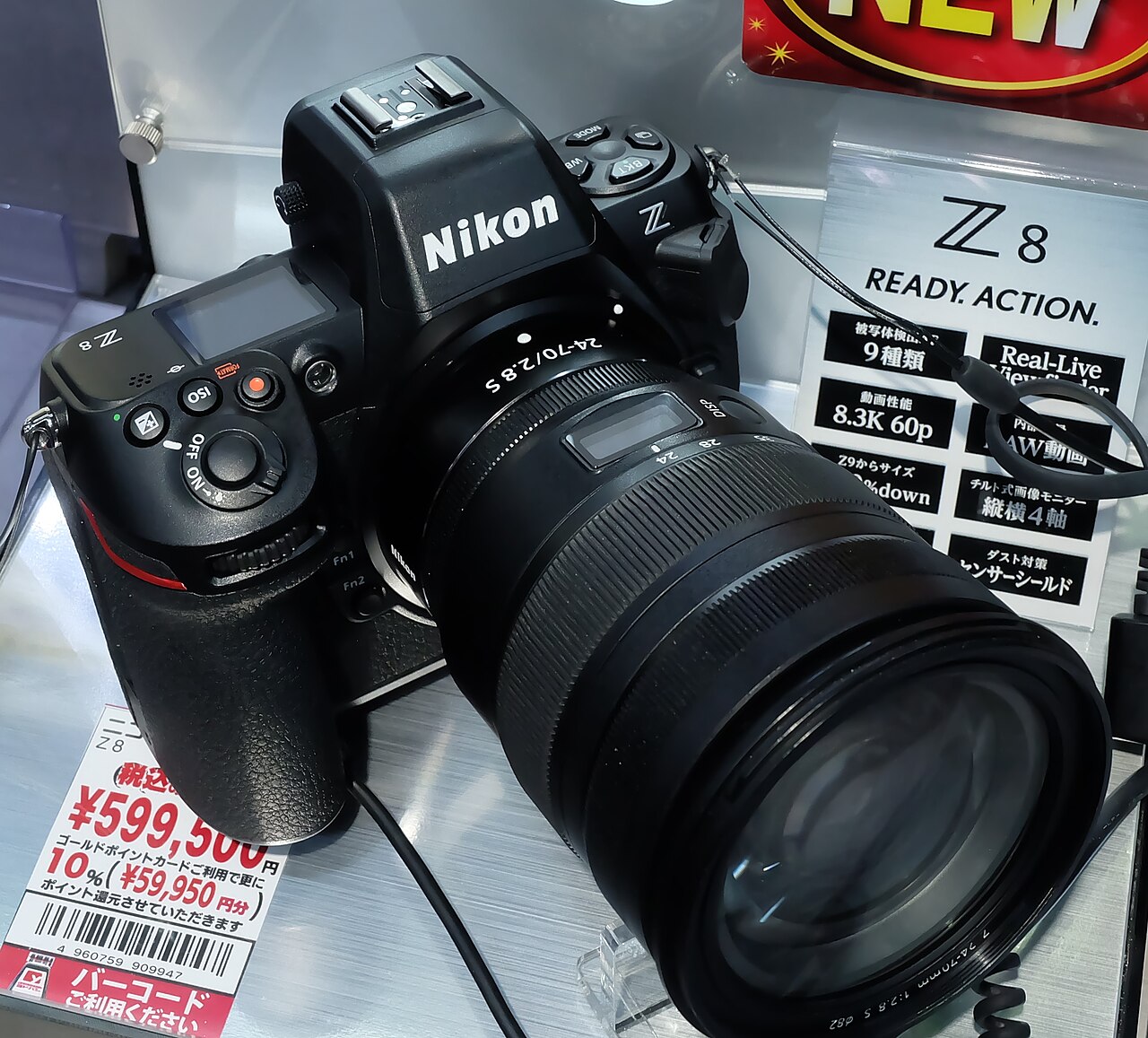
Overview: the small Nikon that should make you question the flagship
The Nikon Z8 is the body for photographers who want the Z9's central promise without accepting the Z9's size, price, and job-site swagger. Its case for existing is not subtle: a 45.7MP full-frame CMOS sensor, 493-point hybrid AF, 8K 60p video, 4K 120p video, and 5-axis IBIS rated at 6 stops in a body aimed at people who move between stills and motion without wanting a permanently gripped flagship hanging from their shoulder. At 3,996 USD, it is still an expensive camera, but it is not priced like Nikon's top professional body.
昼落ち / Wikimedia Commons (CC BY-SA 4.0)
That last sentence is the key. The Z8 is not a bargain camera, a beginner camera, or the obvious pick for someone who only posts small files online. It is a compact professional tool for landscape shooters, travel assignment photographers, commercial hybrids, and serious filmmakers who want Nikon's high-resolution stills and serious video modes in one body. It is also the wrong choice for the photographer who buys a flagship because the body itself is insurance: if you expect integrated vertical controls, the psychological comfort of Nikon's largest pro chassis, and a camera that feels built around all-day sideline abuse, the Z9 is the better match.
The Z8's biggest virtue is also its sharpest trade-off. It compresses a demanding feature set into a more portable form, which makes it more attractive for flights, hikes, weddings, corporate shoots, and mixed still/video days. But that same portability makes it less reassuring for the buyer whose work depends on the biggest grip, the most substantial body balance with long lenses, and a control surface designed around constant vertical shooting. The smart Z8 buyer is not asking whether it is secretly a Z9. The smart buyer is asking whether the Z9's body is worth carrying.
Brief buying profile
The Z8 is for the Nikon shooter who wants 45.7MP files for cropping, printing, and commercial detail; who values 8K and 4K modes enough to pay for them; and who would rather spend the difference from a flagship on lenses, cards, travel, lighting, or a second body. It is not for casual family photography, not for buyers who expect a simple menu, and not for anyone who already feels constrained by Nikon Z lens availability. The buyer most likely to regret it is the one who really needed a flagship assignment body and tried to save money by choosing the smaller camera.
Design, build, and handling: smaller is the argument
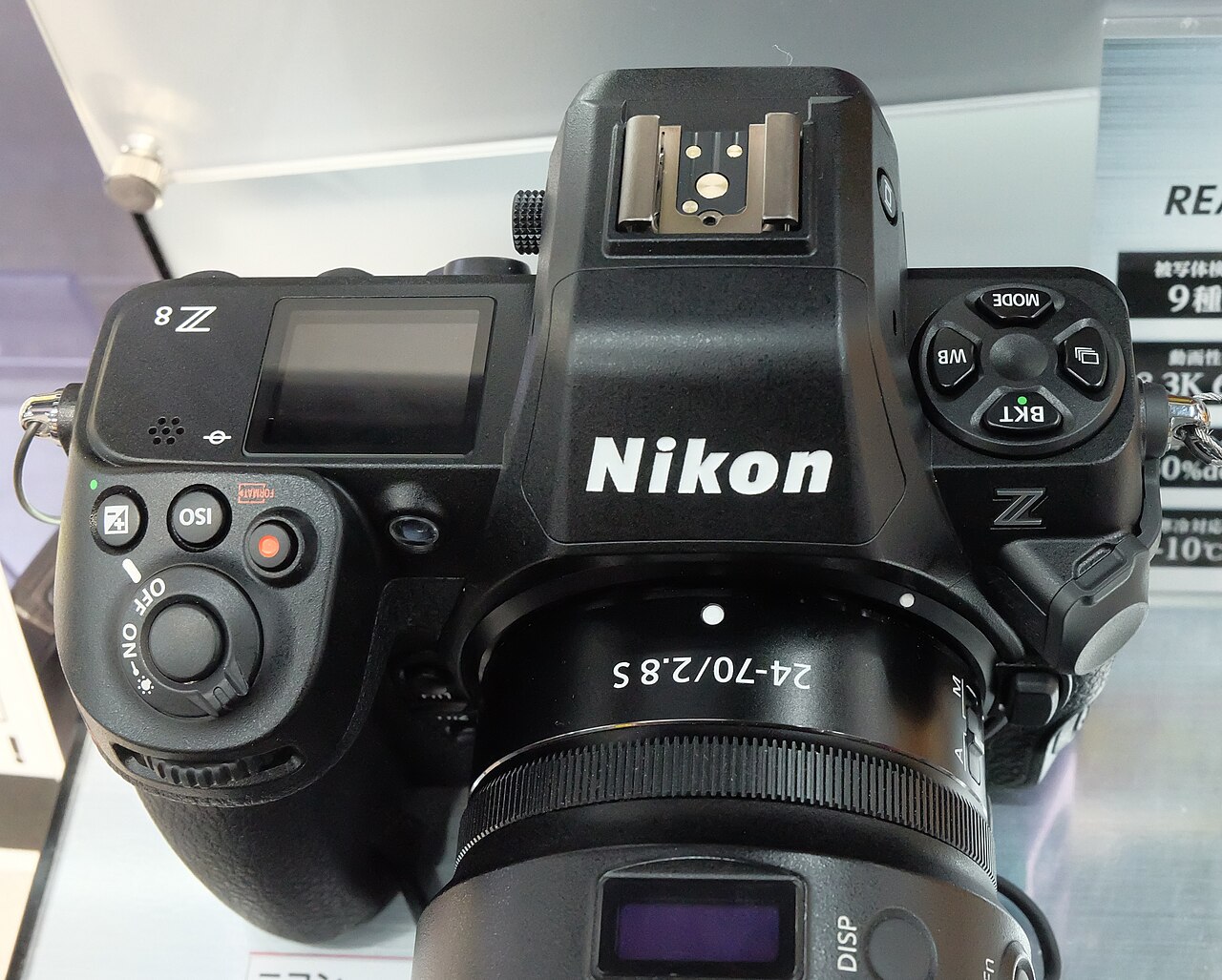
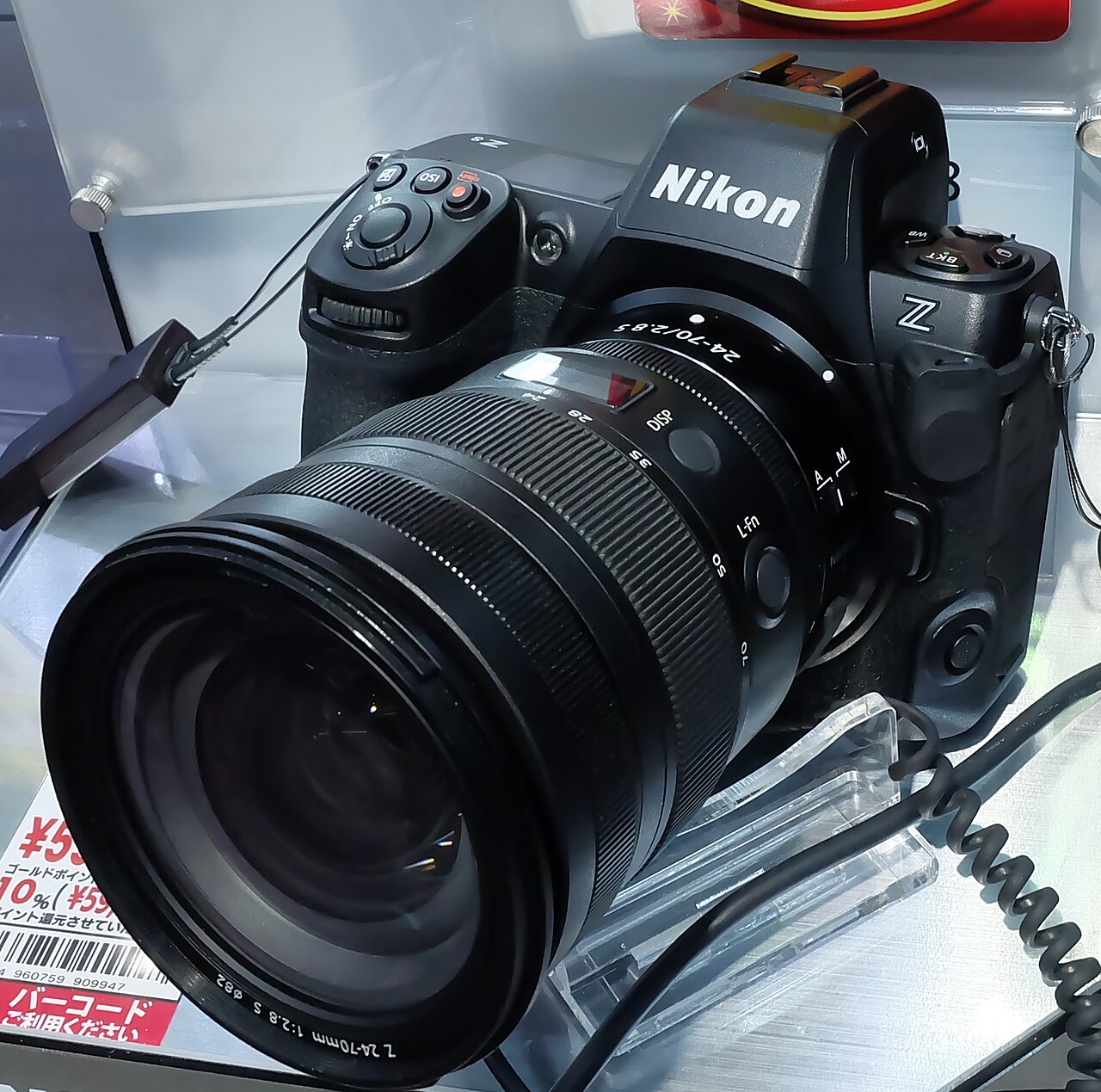
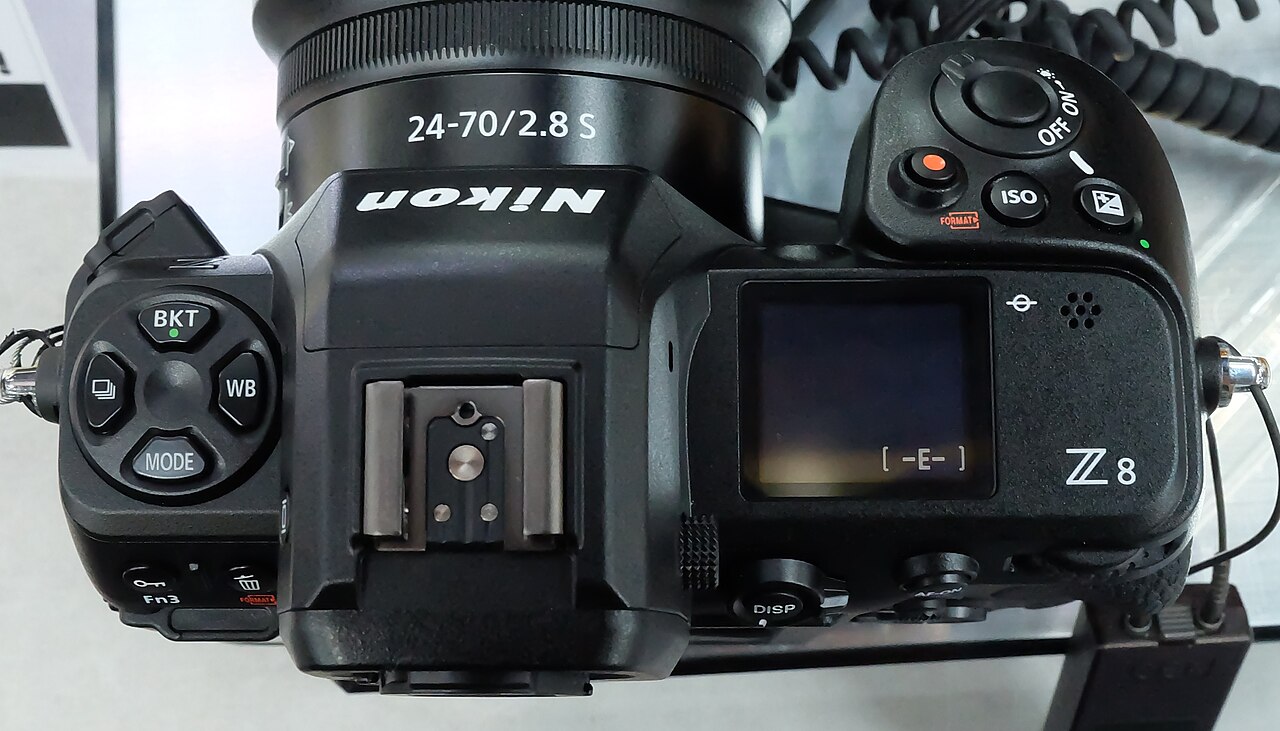
The Z8 has to convince you before a file ever lands on a computer. Its pro is not merely that the body is smaller than a flagship shape; it is that the smaller body changes where the camera can go. A camera with a 45.7MP sensor and 8K 60p recording becomes more useful when it is not a burden on a two-camera wedding harness or a mountain pack. The body invites work that would make a permanently gripped pro camera feel like a declaration of intent at the wrong moment.
昼落ち / Wikimedia Commons (CC BY-SA 4.0)
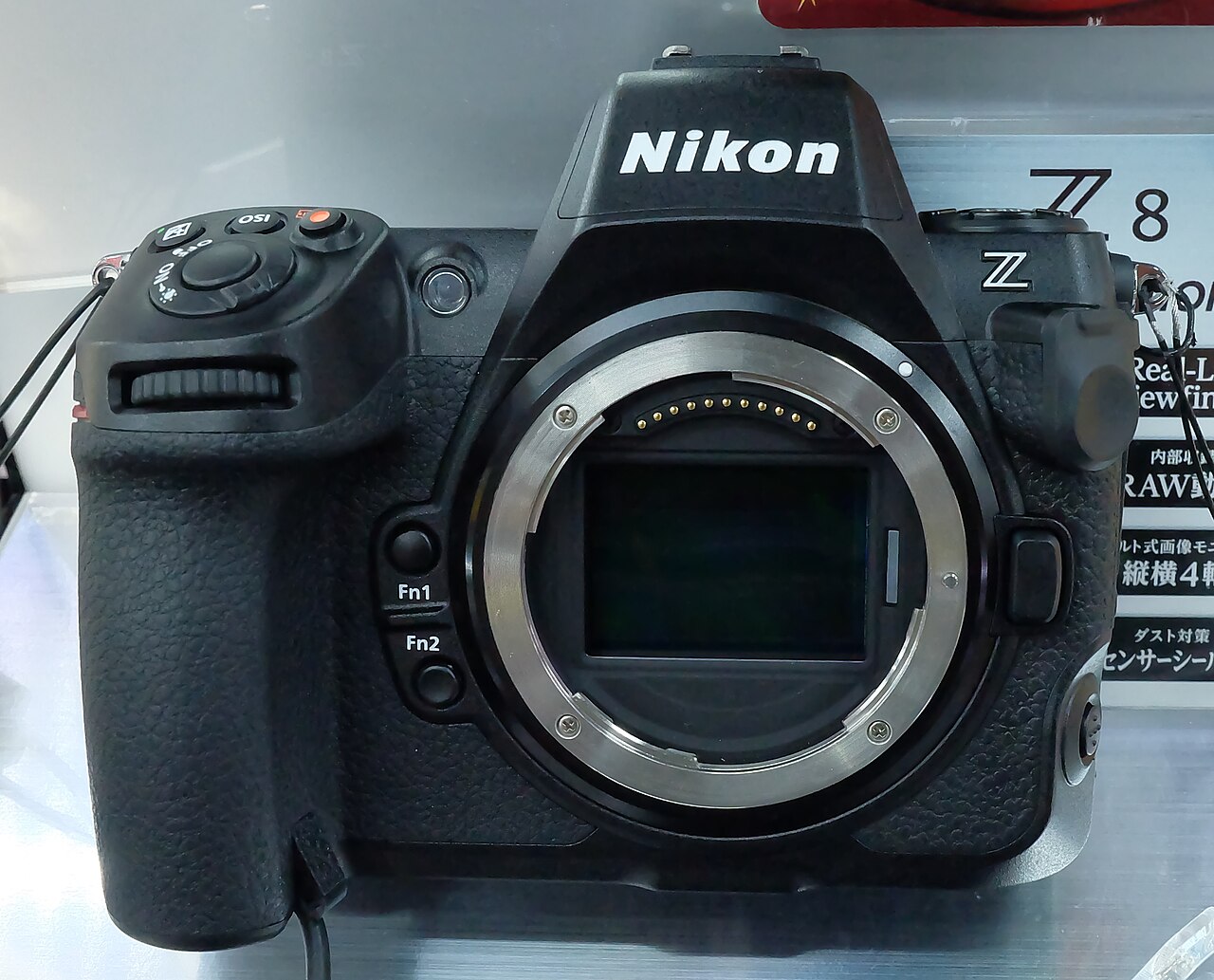
Build quality still matters because the Z8 is not priced like a casual camera. The professional-build claim is believable when you look at how this camera is positioned: it is meant for people who will use 493 AF points, switch between stills and 4K clips, assign buttons, and carry it through long paid days. The handling should be judged against that reality. A body can be compact and still demanding; the Z8 asks you to configure it, learn it, and trust it under pressure.
The downside is that compact does not mean effortless. Dense controls and deep customization are useful only after the setup work is done. Nikon's menus can become a maze if you try to treat the camera like a point-and-shoot with a premium sensor. The 5-axis stabilization system rated at 6 stops is a meaningful safety net for handheld stills and restrained video, but it does not turn the Z8 into a magic gimbal or replace good long-lens technique. This is a professional camera in a smaller shell, not a simplified one.
The lens question deserves honesty. Nikon Z glass can be excellent, but the system does not feel as broad at every budget and specialty tier as Sony E-mount. For a buyer who already owns Nikon lenses, that limitation may be minor. For someone starting from zero, it changes the total cost calculation. The 3,996 USD body price is only the entry fee; the real ownership cost depends on the lenses and media needed to make 45.7MP files and 8K footage useful.
Performance and real-world testing: where the Z8 earns its price
The Z8's 45.7MP full-frame CMOS sensor is the heart of the camera's value. That resolution is high enough for serious cropping, large prints, product detail, landscapes with fine texture, and editorial work where a client may ask for multiple layouts from one frame. A 45.7MP file also exposes weak technique. If your lenses, shutter speeds, and focus choices are casual, the camera will not hide it. The reward is detail; the penalty is discipline.
昼落ち / Wikimedia Commons (CC BY-SA 4.0)
Autofocus is the other reason this camera makes sense above cheaper Nikon bodies. A 493-point hybrid AF system gives the Z8 the kind of coverage and subject acquisition expected in a modern high-end mirrorless body. The practical advantage is not that every frame becomes perfect. It is that the camera gives action, portraits, events, and documentary work a wider margin when a subject moves unexpectedly. For a photographer who alternates between a speaker at a podium, a bride walking down an aisle, and a product detail shot, that flexibility is worth more than a single headline number.
The video story is unusually strong for a body that still feels primarily photographic. 8K 60p gives the Z8 room for reframing, oversampling workflows, and high-detail deliverables; 4K 120p gives it slow-motion reach for commercial cutaways, sports details, and travel footage. Those modes also make the camera more expensive to own. 8K files punish weak storage plans, and 4K 120p is meaningful only if your editing hardware and delivery needs justify the workflow. If you mostly deliver 1080p social clips, the Z8 is far more camera than you need.
Dynamic range is one of the reasons landscape and commercial shooters are drawn to this model. The Z8 is the kind of body you choose when sunrise highlights, dark interiors, reflective products, and difficult skies are part of the job. I would not buy it merely because a menu says 8K or because 45.7MP looks impressive on a product page. I would buy it because those numbers combine with a Nikon color pipeline and a body that can be carried into demanding locations without feeling like the flagship is dictating the day.
Stabilization rated at 6 stops is valuable but should be understood correctly. It helps with static subjects, careful handheld compositions, lower-light interiors, and lenses that benefit from sensor movement. It does not freeze a running athlete, remove rolling footsteps from handheld video, or rescue sloppy panning. The Z8 rewards photographers who know the difference between stabilization as an aid and stabilization as a crutch.
The strongest criticism is complexity. A camera with 8K 60p, 4K 120p, 493-point AF, 5-axis IBIS, and a 45.7MP sensor is not a relaxed weekend purchase. The menu learning curve is not a cosmetic complaint; it affects missed shots if you do not prepare. Anyone buying the Z8 should budget time for custom buttons, still/video presets, file-format decisions, and a storage plan. The hardware is capable, but the owner has homework.
Nikon Z8 vs Z9, Canon EOS R5 Mark II, Sony A1 II, and Panasonic Lumix S1R II
Against the Nikon Z9, the Z8's identity is clear: it is the more portable route to similar core imaging ambitions. The Z9 is for the professional who wants the body to feel like a flagship first and a hybrid second. The Z8 is for the professional who wants the imaging and video muscle while rejecting the largest Nikon body as a daily carry. If you shoot long sports assignments, news, or wildlife with big lenses and vertical framing all day, the Z8 can feel like the compromise. If you travel, hike, work hybrid weddings, or need a serious second body, the Z9 can feel like unnecessary mass and money.
昼落ち / Wikimedia Commons (CC BY-SA 4.0)
The Canon EOS R5 Mark II is the obvious cross-brand hybrid rival. Canon's advantage is often about handling preference, color preference, and the feel of its autofocus interface rather than one isolated number. A Canon shooter with RF lenses has little reason to switch just because the Z8 offers 45.7MP and 8K 60p. A Nikon shooter, however, gets a camera that leans hard into high-resolution stills and ambitious video without leaving the Z system.
Sony's A1 II sits above the Z8 as a premium all-rounder for buyers who want a high-end Sony ecosystem body and are willing to pay for it. Sony also has the broadest mirrorless lens conversation for many shoppers, especially those mixing native and third-party glass. The Z8 fights back by being a focused Nikon answer: 45.7MP stills, 493-point hybrid AF, 8K recording, and a price that leaves more room than a top Sony body for the rest of the kit.
Panasonic Lumix S1R II appeals to a different personality. It is a strong alternative for shooters who prioritize deliberate image-making, video tools, and L-mount options over Nikon ergonomics. The Z8 feels more natural for Nikon stills shooters who want speed and resolution in one body. Panasonic may attract filmmakers who prefer its interface and color workflow. Neither choice is universally better; the right one depends on which system you want to build around.
Fujifilm GFX100 II is the alternative for buyers who are chasing medium-format image character rather than hybrid speed. It is not the same kind of camera, which is exactly why it matters in the comparison. If your paid work is controlled studio, fashion, or large fine-art output, the Z8's 4K 120p and 493-point AF may be less important than a larger-format look. If your week includes portraits, events, travel, video, and landscapes, the Z8 is the more flexible working camera.
Who should buy the Z8, and who should not
Buy the Z8 if you want a Nikon body that can be a high-resolution stills camera on Monday, a serious video tool on Tuesday, and a travel assignment camera on Friday. The 45.7MP sensor gives commercial and landscape work real headroom. The 8K 60p and 4K 120p modes keep the camera relevant for hybrid production. The 5-axis IBIS rated at 6 stops helps when you are moving quickly and cannot always set sticks or lights.
Buy it if you were tempted by the Z9 but know the flagship body would stay home too often. That is the most persuasive Z8 case. A camera with slightly less psychological armor but far better portability can produce more finished work simply because you carry it more. The Z8 is especially compelling as a main body for travel professionals and a second body for Nikon shooters who already have a Z9 or other pro Nikon kit.
Do not buy it if the price already makes you uncomfortable before lenses and storage. A 3,996 USD body tied to 45.7MP files and 8K video demands a serious ecosystem around it. Do not buy it if you want the simplest camera for family trips. Do not buy it if your actual output is short social video and modest web images. A Nikon Z6 III, Sony A7 IV, Canon EOS R6 Mark II, or Panasonic Lumix S5 II may be more rational for those jobs.
Most importantly, do not buy it as a substitute for the Z9 if the Z9's body is the reason you wanted the Z9. The Z8 is the wrong choice for a buyer who wants the biggest grip, the most confident balance with heavy telephoto lenses, and the feeling of a flagship body built for constant professional punishment. The smaller camera inherits much of the ambition, but it does not replace the emotional and practical certainty of the flagship shell.
Bottom line
The Nikon Z8 is a serious camera with a simple point of view: keep the high-resolution, high-speed hybrid core and make the body easier to live with. Its strengths are clear and substantial: 45.7MP files, 493-point hybrid AF, 8K 60p, 4K 120p, 5-axis stabilization rated at 6 stops, and a 3,996 USD price that undercuts the flagship while staying firmly professional. Its weaknesses are just as clear: it is expensive, it demands careful setup, the lens ecosystem may not satisfy every newcomer, and it is not the camera to buy if you truly need the Z9 body.
For the right Nikon user, the Z8 is the more intelligent purchase than the flagship. For the wrong Nikon user, it is an expensive reminder that specifications are not the same as handling. I would recommend it to hybrid professionals and demanding enthusiasts who value portability as much as power. I would steer full-time sports, agency, and long-lens wildlife shooters toward the Z9 if the body itself is part of the job.