Overview: what the X-H2S is trying to prove
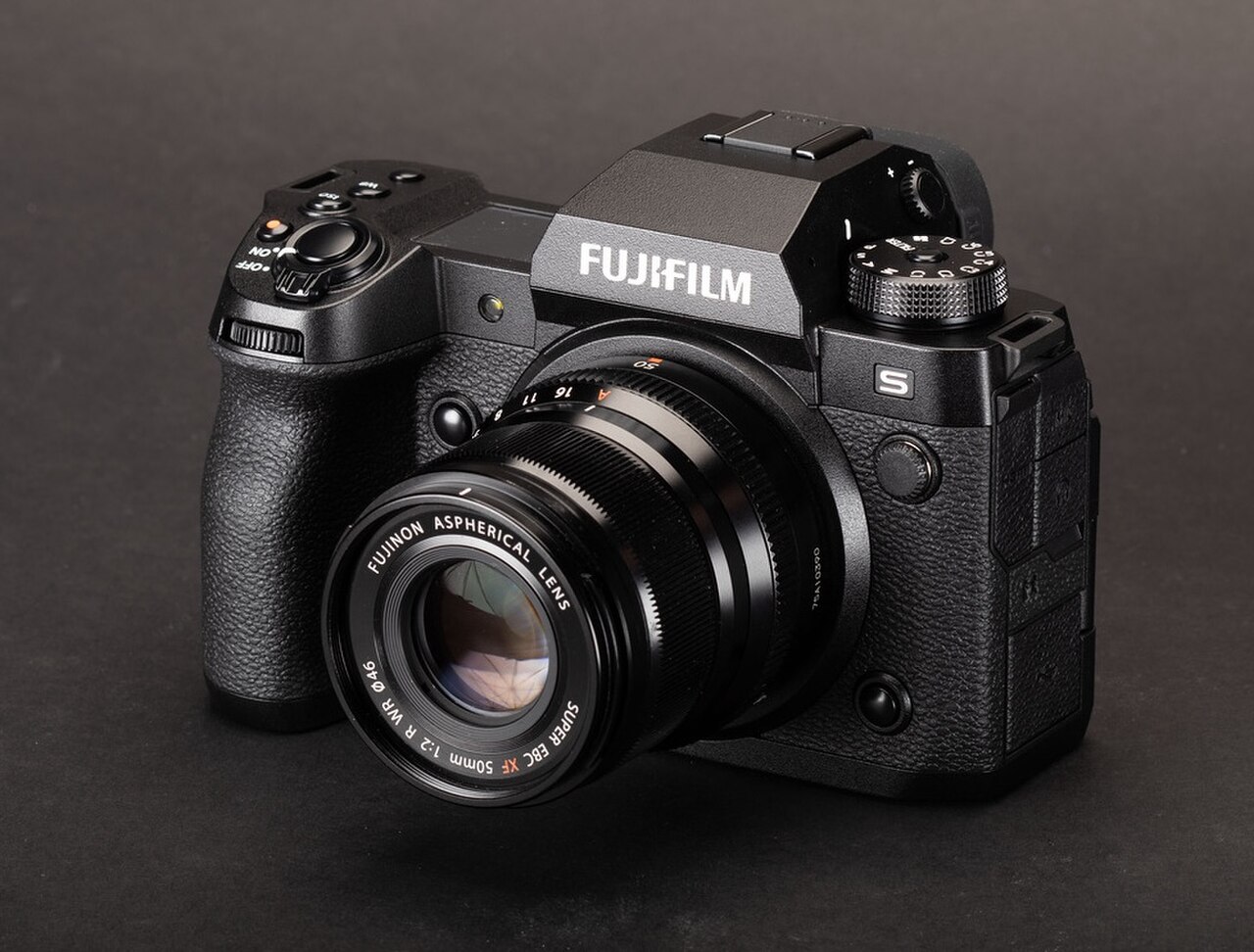
Fujifilm built the X-H2S to argue that a crop sensor can chase professional action, and for the most part the argument holds. The heart of it is a 26.1-megapixel stacked X-Trans sensor — the first stacked chip Fujifilm shipped in an APS-C body — and stacking is what buys the speed: up to 40 frames per second with the electronic shutter, blackout-free, with autofocus and exposure tracking between frames. That is a spec that a few years ago belonged to cameras costing three times as much. At $2,499 the X-H2S asks you to accept a smaller sensor in exchange for speed, video muscle, and a lighter kit.
昼落ち / Wikimedia Commons (CC BY-SA 4.0)
The trade is real and it cuts both ways. This is not the camera for someone who shoots weddings in dim churches and wants the cleanest possible high-ISO files, and it is not the camera for a photographer chasing shallow depth of field on a budget. It is a sports, wildlife, and hybrid-video tool. Understand what a crop sensor gives up before you fall for the frame rate.
Handling, build, and the DSLR-style design
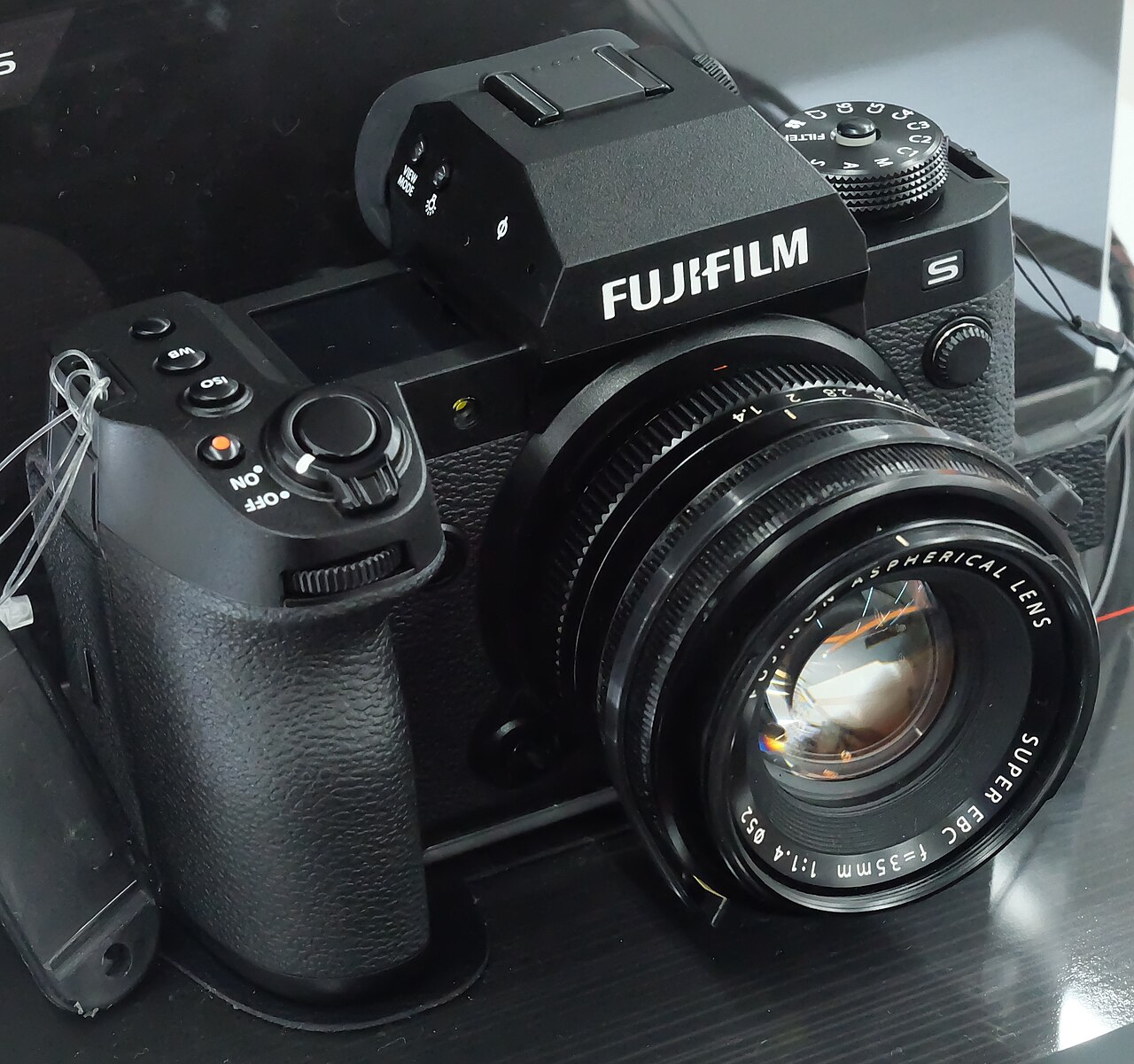
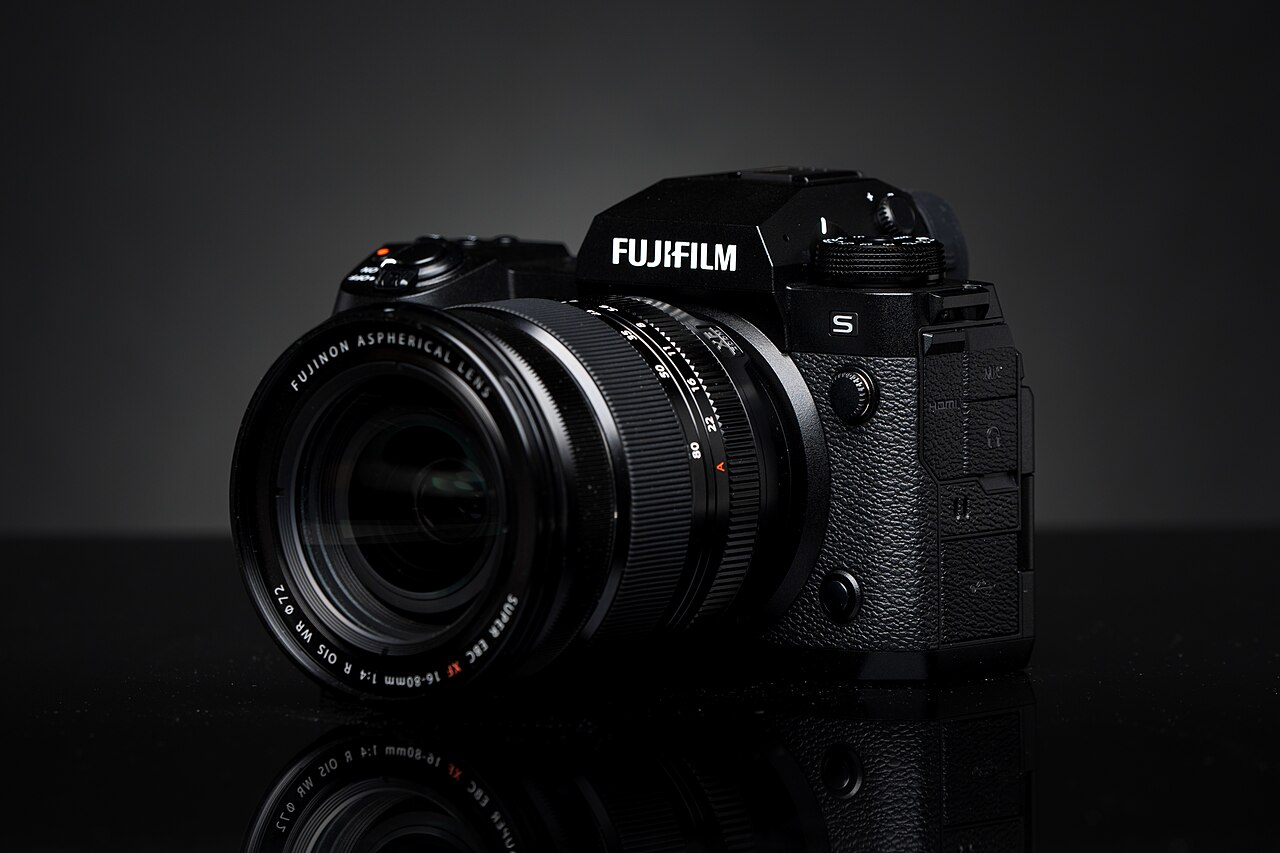
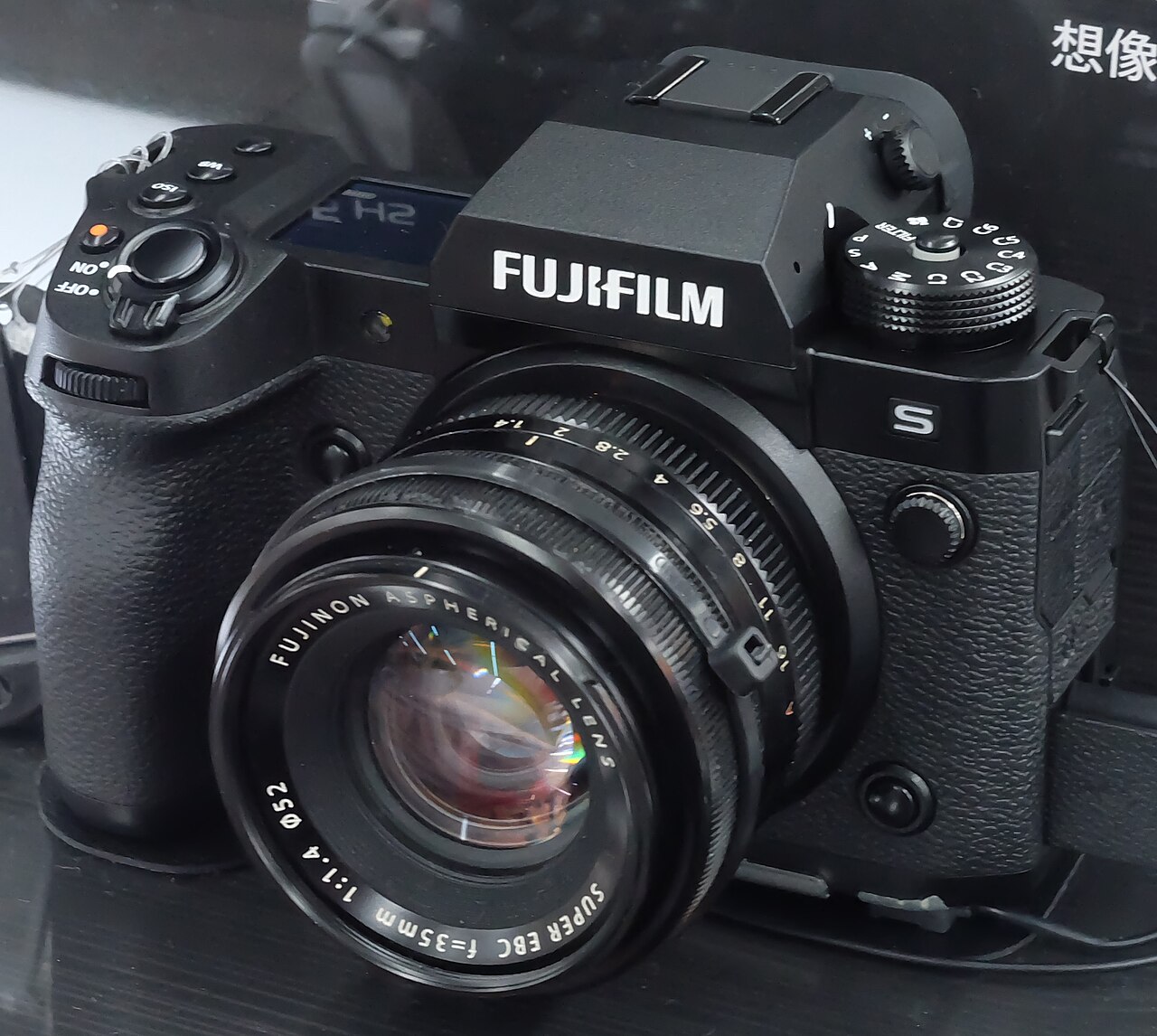
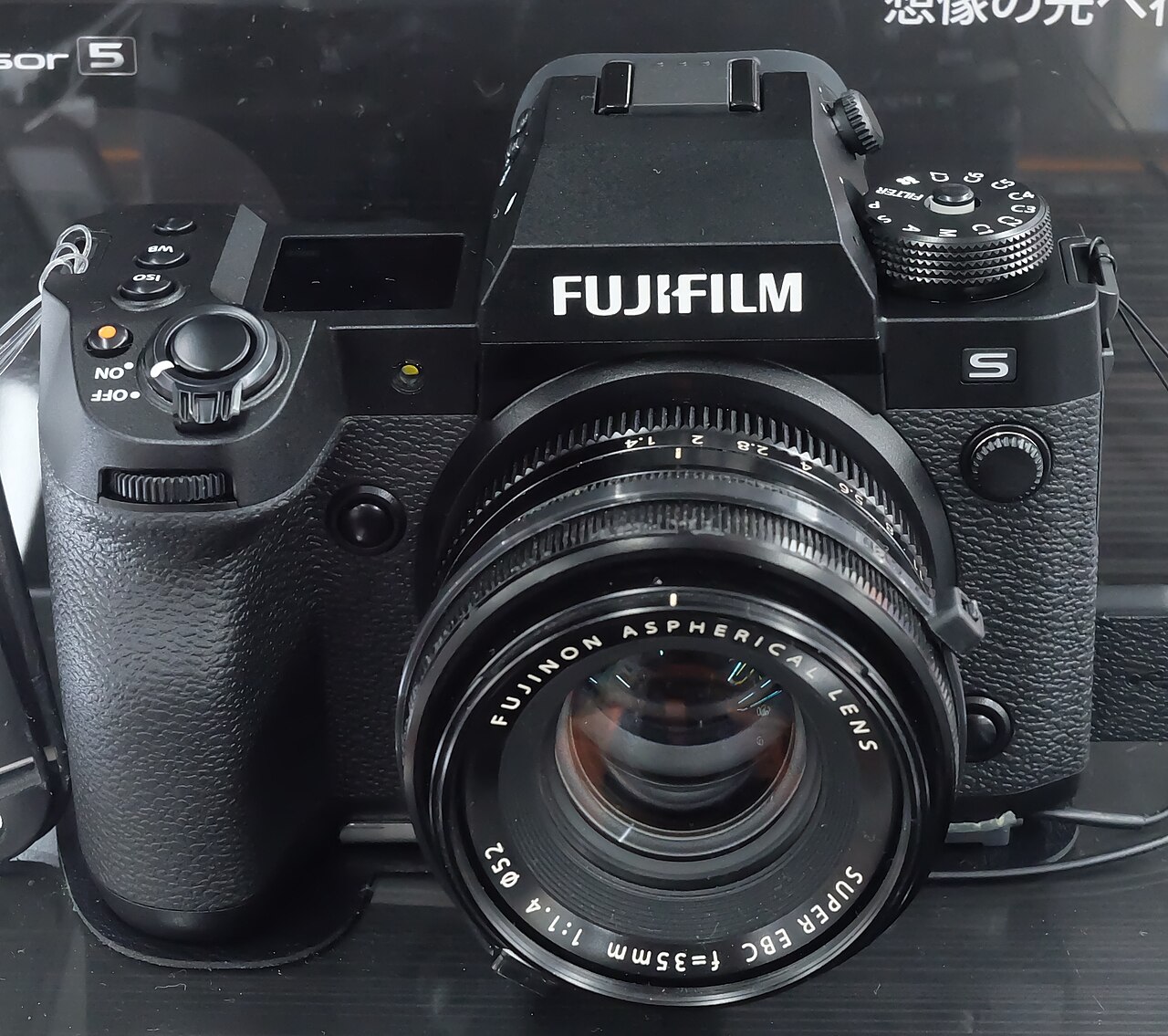
The X-H2S breaks from Fujifilm's retro dial tradition, and that is intentional. Instead of dedicated shutter-speed and ISO dials, it uses a PASM mode dial and a top-plate status LCD, which is the layout sports and video shooters coming from Canon and Nikon expect. Purists who bought into Fuji for its tactile analog controls may bristle. Everyone shooting fast will appreciate the deeper grip and the clarity of a top screen showing settings at a glance. The body weighs around 660 grams with battery and card and carries proper weather sealing.
Henry Söderlund / Wikimedia Commons (CC BY 2.0)
Fujifilm also finally fixed a longstanding gripe: the NP-W235 battery is rated for roughly 580 frames per charge under CIPA, a real step up from the anemic packs in older X bodies, and it charges over USB-C. Storage is handled by two slots that are not equals — one CFexpress Type B and one SD UHS-II. The fast internal ProRes recording and the deepest high-speed photo buffers lean on the CFexpress card, so plan to buy one. The rear screen is a fully articulating vari-angle panel, and the 5.76-million-dot viewfinder runs bright and smooth at up to 120fps, which matters when you are panning with a bird.
Speed and autofocus in the field
The 40-frame-per-second burst is not marketing theater; the stacked sensor's fast readout also suppresses rolling-shutter skew, so electronic-shutter shooting of moving subjects holds its geometry far better than an unstacked APS-C camera would. Buffer depth with a good CFexpress card runs into the hundreds of frames, deep enough that a long sequence at a track meet won't stall you. Mechanical shutter tops out around 15 frames per second for those who want it.
昼落ち / Wikimedia Commons (CC BY-SA 4.0)
Autofocus took a real leap here. Fujifilm's subject-detection system, trained with deep-learning, recognizes animals, birds, cars, bikes, and aircraft in addition to faces and eyes, and it tracks them with a confidence earlier X bodies never had. It is very good. It is not quite Sony or Canon at the absolute cutting edge — in cluttered scenes it can hunt or hand off a subject a beat slower than the class leaders — but for the overwhelming majority of wildlife and sports work it delivers keepers at a high rate.
Where the crop sensor draws the line
Here is the blunt part. A 26.1-megapixel APS-C sensor gathers less light than a full-frame chip, and no amount of processing repeals physics. Push past ISO 6400 and noise builds noticeably faster than it would on a full-frame body; by ISO 12800 you are managing grain, not ignoring it. For dim receptions, indoor sports under bad lighting, or astro work, a full-frame camera at the same price will simply give you cleaner files. The X-H2S is best fed light — bright daylight sports, well-lit action, wildlife in the open. Put a number on it: the 26.1-megapixel sensor measures about 23.5 x 15.6mm, roughly 40% the area of a 36 x 24mm full-frame chip, and that surface-area gap is exactly the light you leave on the table after dark. The 1.5x crop factor also reframes your lenses — a 50mm behaves like a 75mm equivalent — which helps reach for wildlife but works against you when you want a genuinely wide, fast field of view.
昼落ち / Wikimedia Commons (CC BY-SA 4.0)
There is a second wrinkle worth naming: X-Trans demosaicing. Fujifilm's unconventional color-filter array can trip up Adobe Lightroom and Camera Raw, producing smeary, watercolor-like artifacts on fine foliage and feather detail at high magnification. Capture One and Fujifilm's own processing handle X-Trans files more gracefully, and recent Adobe versions have improved, but if you are a Lightroom loyalist who pixel-peeps landscapes, this quirk is real and you should test it with your own workflow.
Video: the other half of the camera
For video the X-H2S is genuinely strong. It records 6.2K up to 30p using the full sensor width, 4K up to 120p for slow motion, and internal Apple ProRes in the higher-end codecs, with F-Log2 for grading latitude. Rolling shutter in video is well controlled thanks to the stacked readout, and an optional FAN-001 clip-on cooler lets it run extended takes without a thermal cutoff. For a run-and-gun documentary shooter or a hybrid creator who wants one small body for both jobs, this is one of the most complete APS-C video packages you can buy.
How it compares: X-H2, Sony A6700, Canon R7, and OM-1
The most important comparison is in-house. Fujifilm's own X-H2 shares this body but swaps the stacked sensor for a 40-megapixel high-resolution one — slower, but far more detail. If you shoot landscapes and portraits and rarely need blazing bursts, the X-H2 is the smarter buy at a similar price; the X-H2S is specifically for people who value speed over resolution.
Against Sony, the A6700 is smaller and cheaper with excellent autofocus, but it lacks the stacked-sensor burst speed, the top LCD, and the pro build. Canon's EOS R7 also offers fast shooting and a great 32-megapixel sensor at a lower price, but Canon's APS-C RF lens lineup is thin and locked down. The OM System OM-1 is the true rival for wildlife shooters, with a smaller Micro Four Thirds sensor but a deep, affordable telephoto lineup and clever computational modes. Which crop system wins comes down to lenses as much as bodies.
Do you have the glass — and should you switch?
The honest caution for Fujifilm buyers is the lens roadmap. X-mount has grown, and there are superb primes and the fast f/2.8 zooms, but Fujifilm's release pace for pro-grade fast glass has been slower than Sony's or Canon's, and the very long, fast telephotos that serious sports and bird shooters crave are limited. Before you commit, price out the specific lenses your work needs. A fast body attached to lenses you don't own is just an expensive promise.
Who should buy it, and who should skip it
Buy the X-H2S if you shoot daylight sports or wildlife and want flagship-class speed in a light kit, if you are a hybrid video creator who wants 6.2K ProRes and 4K/120 without a cinema camera, or if you already own X-mount glass and want the fastest body in the system. It is a specialist that rewards the right specialist.
Skip it if low-light image quality is your priority — a full-frame body at this price will out-clean it after dark. Skip it if you mainly shoot landscapes and portraits, where the 40-megapixel X-H2 or a full-frame sensor gives you more. And skip it if the telephoto lens you need doesn't exist yet in X-mount, because the frame rate can't photograph what the glass can't reach.
Verdict
The X-H2S is the strongest case yet that APS-C can do serious action. It is fast, it is a capable video machine, and it is small enough to carry all day. But it is honest about its limits only if you are: the crop sensor gives up low-light cleanliness and shallow-depth-of-field ease, X-Trans files can fight your editor, and the fast-tele lens lineup is thinner than the competition's. Match it to bright, fast subjects and it is a bargain flagship. Ask it to shoot a dark gymnasium and you will wish you had bought full-frame.
FAQ
Is the X-H2S good enough for low-light indoor sports?
It is workable but not its strength. The APS-C sensor shows noticeably more noise above ISO 6400 than a full-frame body, so a poorly lit gym will push you into grain management. For bright outdoor sports it excels; for dim indoor venues, a full-frame camera at this price gives cleaner results.
Should I buy the X-H2S or the 40-megapixel X-H2?
Choose the X-H2S for speed — the 40fps bursts, faster readout, and action autofocus. Choose the X-H2 for resolution and landscapes, since its 40-megapixel sensor captures far more detail. They share a body; the sensor decides which one is right for you.
Do X-Trans files really cause problems in Lightroom?
They can. X-Trans demosaicing sometimes produces smeary, watercolor-like artifacts on fine foliage and feathers at high magnification in Adobe software. Capture One and Fujifilm's own processing handle these files better, and recent Adobe updates help. If you live in Lightroom, test the workflow before committing.
If I already shoot an X-T4, do I need new lenses?
No. The X-H2S uses the same X-mount, so all your existing X-mount lenses transfer directly and keep autofocus. You are buying a body, not a new system, which is a big part of the upgrade's appeal.
How is the battery life for a day of shooting?
The NP-W235 is rated around 580 frames per charge under CIPA testing, a solid improvement over older Fujifilm bodies, and it recharges over USB-C. Heavy burst shooting and video will drain it faster, so carry a spare for a full event day.
Do I need a CFexpress card, or is SD enough?
For the deepest photo buffers and internal ProRes video you should use the CFexpress Type B slot. The second SD UHS-II slot works for stills backup and lighter video, but relying on it alone will limit the camera's fastest capabilities.
Can it handle professional video work?
Yes, within APS-C limits. It records 6.2K/30p, 4K/120p, internal ProRes, and F-Log2, with an optional cooling fan for long takes. It is one of the most complete crop-sensor video tools available, well suited to documentary and hybrid creators.
Is the lens selection a real problem?
It depends on your subject. X-mount has excellent primes and f/2.8 zooms, but Fujifilm has been slower to release long, fast telephotos than Sony or Canon. Wildlife and sports shooters who need extreme reach should confirm the exact lens exists before buying the body.