Overview: the short version
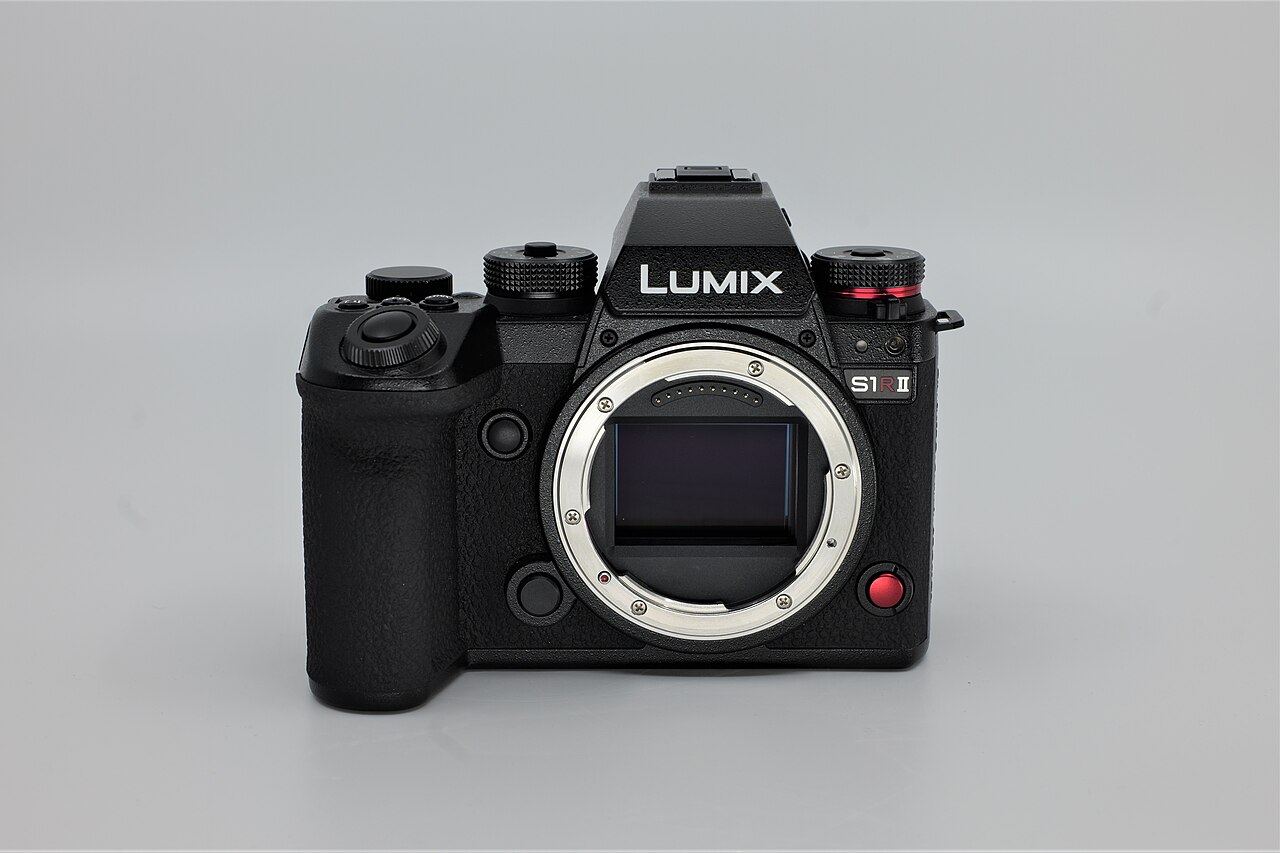
Panasonic built the S1R II for photographers who care more about resolving a fabric weave or a mountain ridge than about firing 20 frames a second. Its 47.3MP full-frame sensor is the star, the new phase-detect autofocus is the plot twist, and the video toolkit is a bonus that keeps this from being a one-trick studio camera. At $3,699 it slots into one of the most crowded price brackets in photography, and it wins buyers who value detail, dynamic range, and Panasonic's grading-friendly workflow over the last few percent of tracking speed. This is a deliberate, considered tool — not a do-everything hero body — and knowing that going in will save you disappointment later.
Mateusz Stopczynski / Wikimedia Commons (CC BY-SA 4.0)
Who this camera is actually for
Think landscape shooters chasing print detail, studio and product photographers who light carefully and shoot deliberately, architecture and interiors work, and hybrid creators who want a high-megapixel stills body that can also deliver clean 6K and 4K when a client asks. The 47.3MP sensor gives you room to crop into a scene or make large prints where fine texture holds up. If you shoot fast sports, birds in erratic flight, or spend your career at ISO 12800 in a dark gym, this is the wrong Panasonic — the S1 II with its lower-resolution, motion-optimized sensor is the better match, and I'd steer you there without hesitation.
Mateusz Stopczynski / Wikimedia Commons (CC BY-SA 4.0)
Handling and build
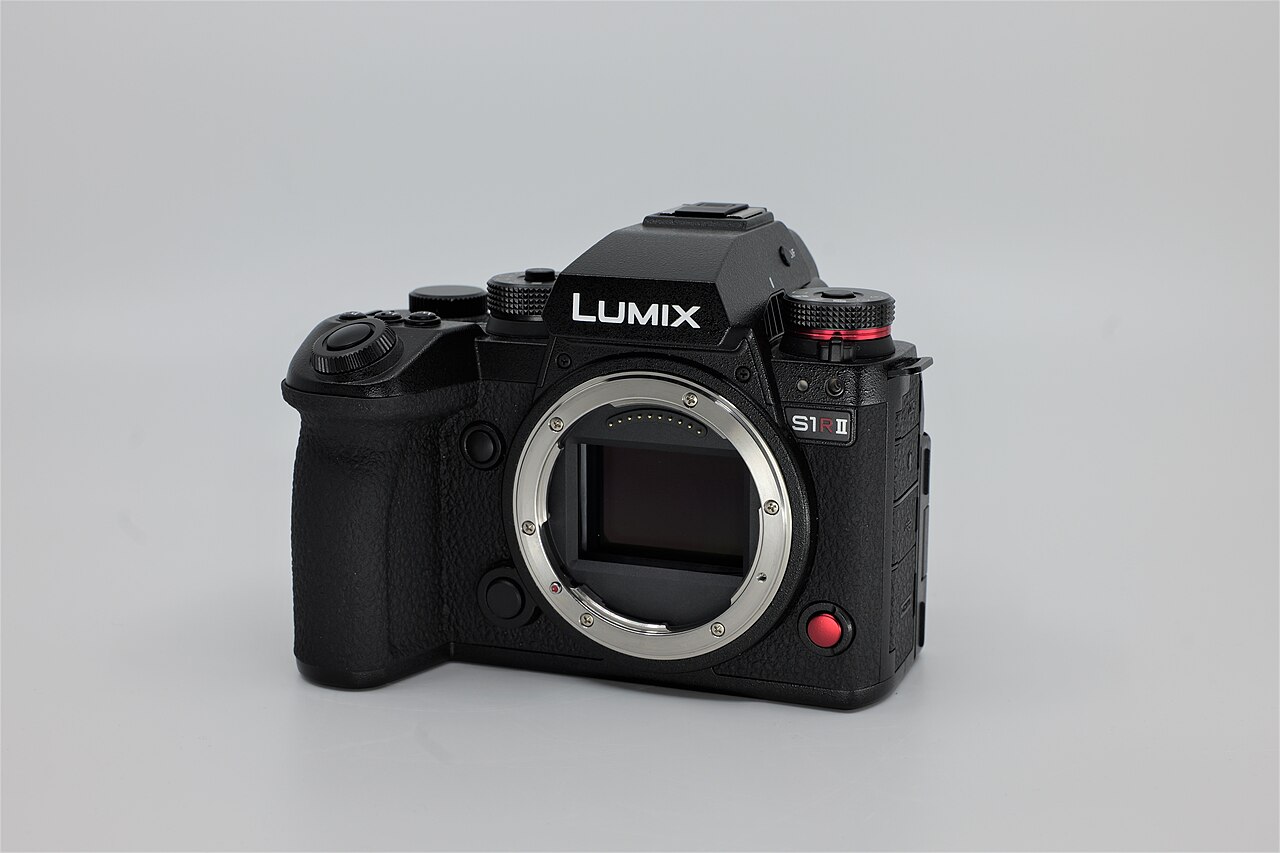
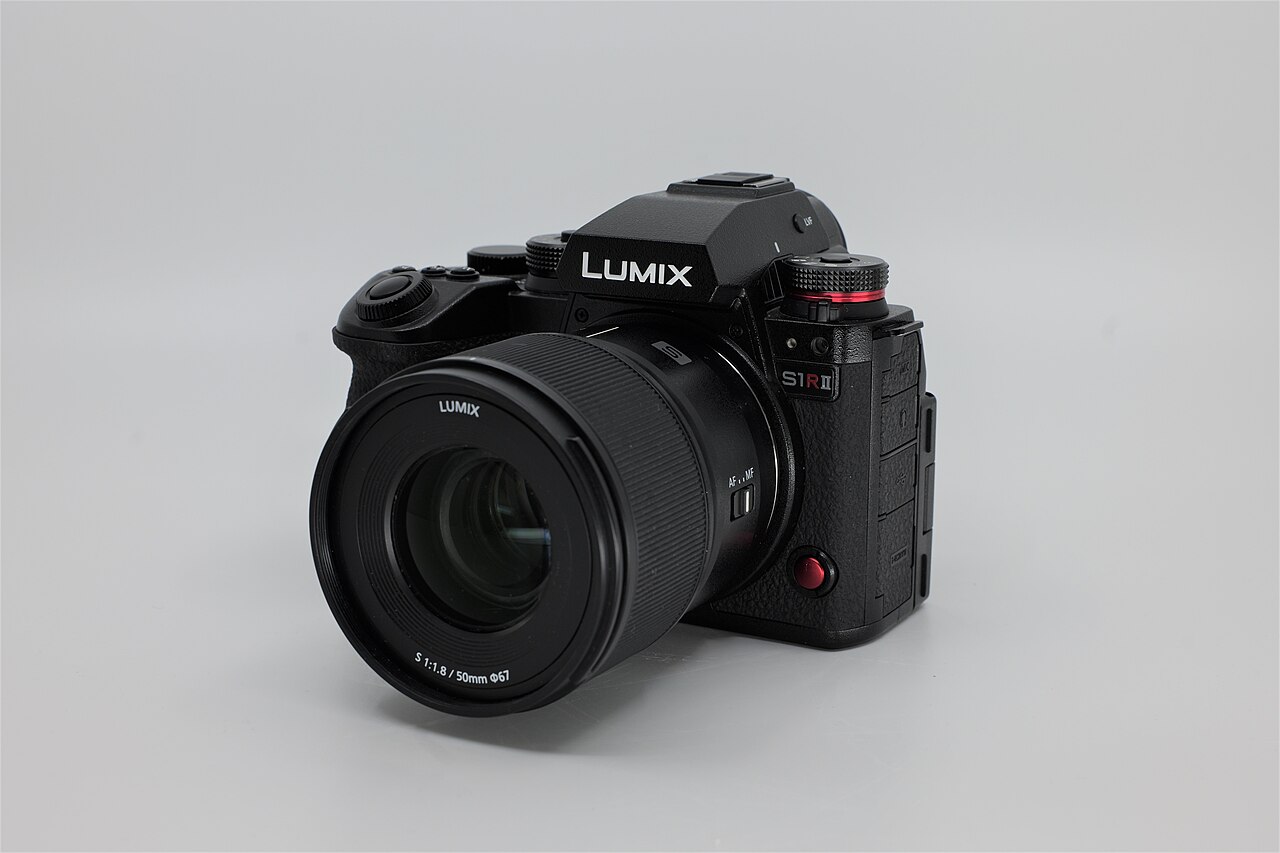
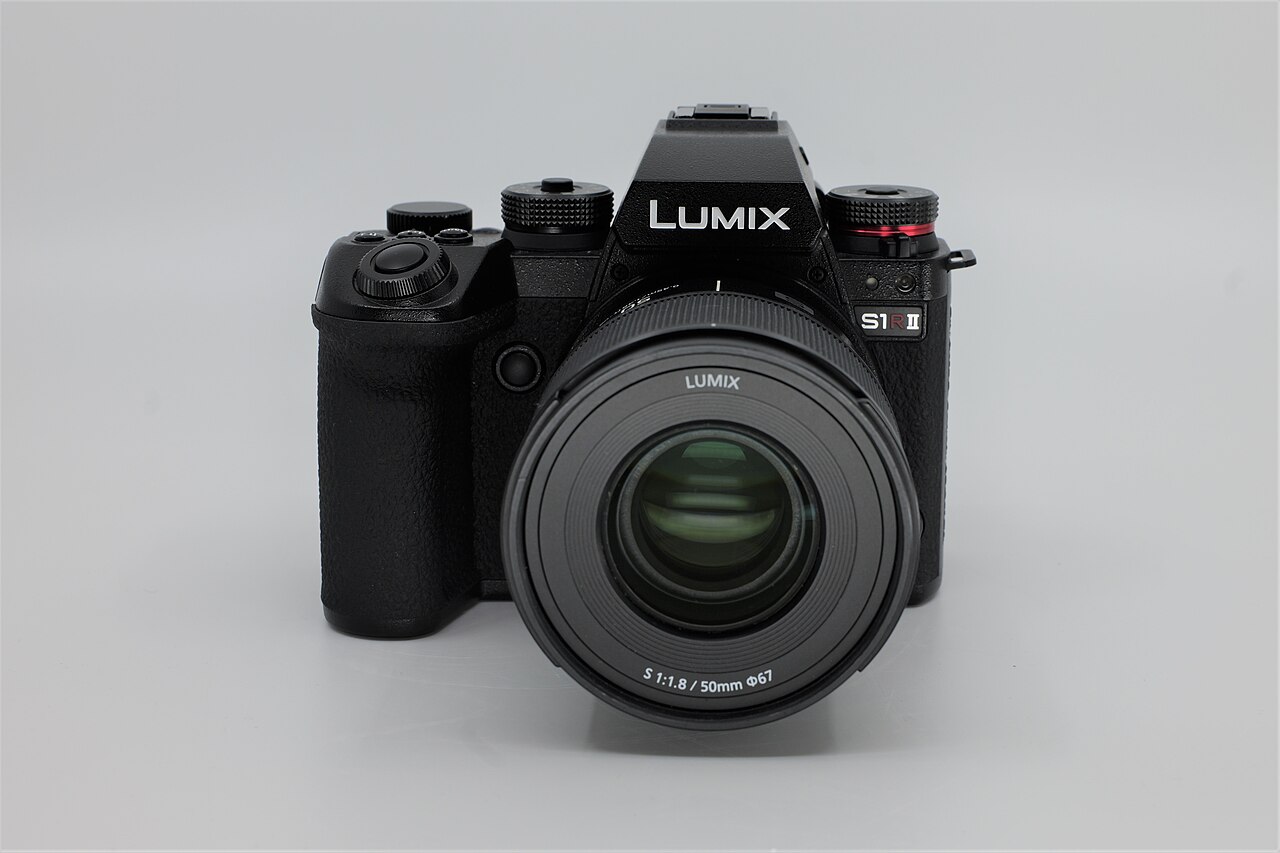
The S1R II is a serious piece of hardware: a weather-sealed magnesium-alloy body around 795g with a deep grip, a top status display, and the dense but logical control cluster Panasonic has refined over several generations. Photographers migrating from the original S1R will feel at home immediately. The rear screen both articulates and tilts, which is more useful than it sounds — you can shoot a low, level horizon for a landscape and still flip the panel around for a talking-head video setup. The electronic viewfinder is large and high-resolution, a real asset when you're manually checking critical focus on a tripod.
Mateusz Stopczynski / Wikimedia Commons (CC BY-SA 4.0)
Two honest gripes. The menu architecture is deep to the point of intimidation, especially the video pages, and Panasonic's habit of surfacing every possible parameter means a new owner should invest time building custom menu banks. And while the body is superbly made, it's not small — this is a camera you commit to carrying, not one you slip into a jacket pocket.
Resolution and image quality
At 47.3MP, the S1R II resolves the kind of fine detail that rewards good lenses and careful technique. In the studio and on a tripod, it produces files with plenty of latitude to recover shadows and pull back highlights, which is exactly what landscape and product shooters want. Panasonic's high-resolution multi-shot mode composites several frames into a much higher-resolution image — useful for static subjects like architecture, reproduction, and product work — and the implementation is designed to be usable handheld as well as locked down, though a tripod still delivers the cleanest result.
The tradeoff of all those pixels is file size and discipline. Big raws fill cards and hard drives quickly, they punish sloppy handholding by revealing every trace of shake, and they demand good glass to do them justice. This is not a camera that flatters lazy technique; it rewards the photographer who slows down.
Autofocus, and the honest caveat
Panasonic's shift to a phase-detection hybrid system is the real news, and on the S1R II it means eye and subject detection that locks and holds far more securely than the DFD-only Lumix bodies of the past. For portraits, landscapes with a moving element, events, and controlled video, it's reliable. Where I temper expectations is continuous tracking of fast, erratic subjects across the frame, and autofocus in dim light — here the S1R II is competent but still a step behind the best from Sony and Canon. For the deliberate photography this body is built around, that gap rarely surfaces. If your living depends on nailing a sprinting athlete at the frame edge, buy a different tool.
Video that punches above a "stills camera"
Plenty of high-megapixel bodies treat video as an afterthought. The S1R II doesn't. It records up to 6K30 and 4K60, ships with V-Log and Panasonic's wide-dynamic-range color science, and gives colorists the codec options and grading latitude they expect from the Lumix line. It won't replace a dedicated cinema body, and pushing a 47MP sensor for video brings its own readout tradeoffs, but as a secondary capability on a stills-first camera it's genuinely strong. A hybrid shooter who mostly photographs but occasionally delivers polished video gets a real tool here, not a checkbox.
Cards, storage, and the cost after the body
The S1R II pairs a CFexpress Type B slot with an SD UHS-II slot. The Type B card is effectively mandatory for high-bitrate video and sustained bursts of those large raw files; SD alone will bottleneck you. Factor a fast CFexpress card and reader into your budget, and factor storage generally — 47MP raws and multi-shot high-resolution composites eat disk space fast, and a serious archive plan is part of the true cost of owning this camera. The dual-format arrangement does let you write a redundant backup, which matters for paid work where a corrupted card is a catastrophe.
Where it sits against rivals
The natural rival is the Sony A7R V at 61MP, which out-resolves the Panasonic, tracks subjects with more confidence, and taps the deepest lens ecosystem in mirrorless. Sony's advantage is autofocus and glass; Panasonic answers with better-integrated video, arguably more pleasing default color, and multi-shot flexibility. If ultimate resolution and AF are your priorities, the Sony is the safer pick; if you value video and color, the Lumix closes the gap.
The Nikon Z8 is another serious alternative — a stacked 45.7MP sensor that's far faster for action, with excellent tracking and a strong native lens range, though it costs more and is built for speed as much as detail. Canon's EOS R5 Mark II offers a similarly high-resolution, do-everything approach with Canon's dependable AF, but keeps you inside the RF ecosystem. And the Fujifilm GFX100 II, while pricier and a different format entirely, is where you go if you want to leapfrog full-frame resolution into medium format. The S1R II's case against all of them rests on video integration, color, and value at $3,699 — not on beating them at raw autofocus speed.
The L-mount question
The L-Mount Alliance means Panasonic, Leica, and Sigma glass all fit natively, and Sigma's excellent primes and zooms keep costs reasonable. For a resolution-focused shooter, that matters: you want sharp, well-corrected lenses to feed 47MP, and the alliance delivers them in the standard ranges. What you give up relative to Sony E or Canon RF is the sheer breadth of choice, especially in specialty and long telephoto glass, plus a thinner used market. For studio, landscape, and portrait work, the available lenses are more than enough. For niche needs, check that your specific lens exists before you commit.
Who should buy, who should skip
Buy the S1R II if you're a landscape, studio, product, or architecture photographer who wants maximum detail from full frame, values Panasonic's color and video integration, and shoots deliberately enough that class-leading autofocus speed isn't your deciding factor. It's also a smart hybrid body for someone whose work is 80% high-resolution stills and 20% polished video.
Skip it if you shoot fast action or wildlife as your bread and butter — resolution and buffer aren't the point of a sports camera, and the AF isn't the fastest here. Skip it if you want a light, pocketable travel body; this is a committed carry. And skip it if you need the widest possible lens catalog, because L-mount, healthy as it is, doesn't match Sony's breadth.
Verdict
The S1R II is a focused, high-resolution tool that knows exactly what it's for. It delivers detailed 47.3MP files, a genuinely useful multi-shot mode, real video capability, and Panasonic's now-trustworthy phase-detect autofocus, all in a body built to work hard in the field. It won't win a tracking shootout against Sony or Nikon's fastest, and its lens ecosystem asks for a little compromise. But for the deliberate photographer who prints big and grades footage, $3,699 buys a camera that's easy to justify and hard to outgrow.