Overview: the pitch and the catches
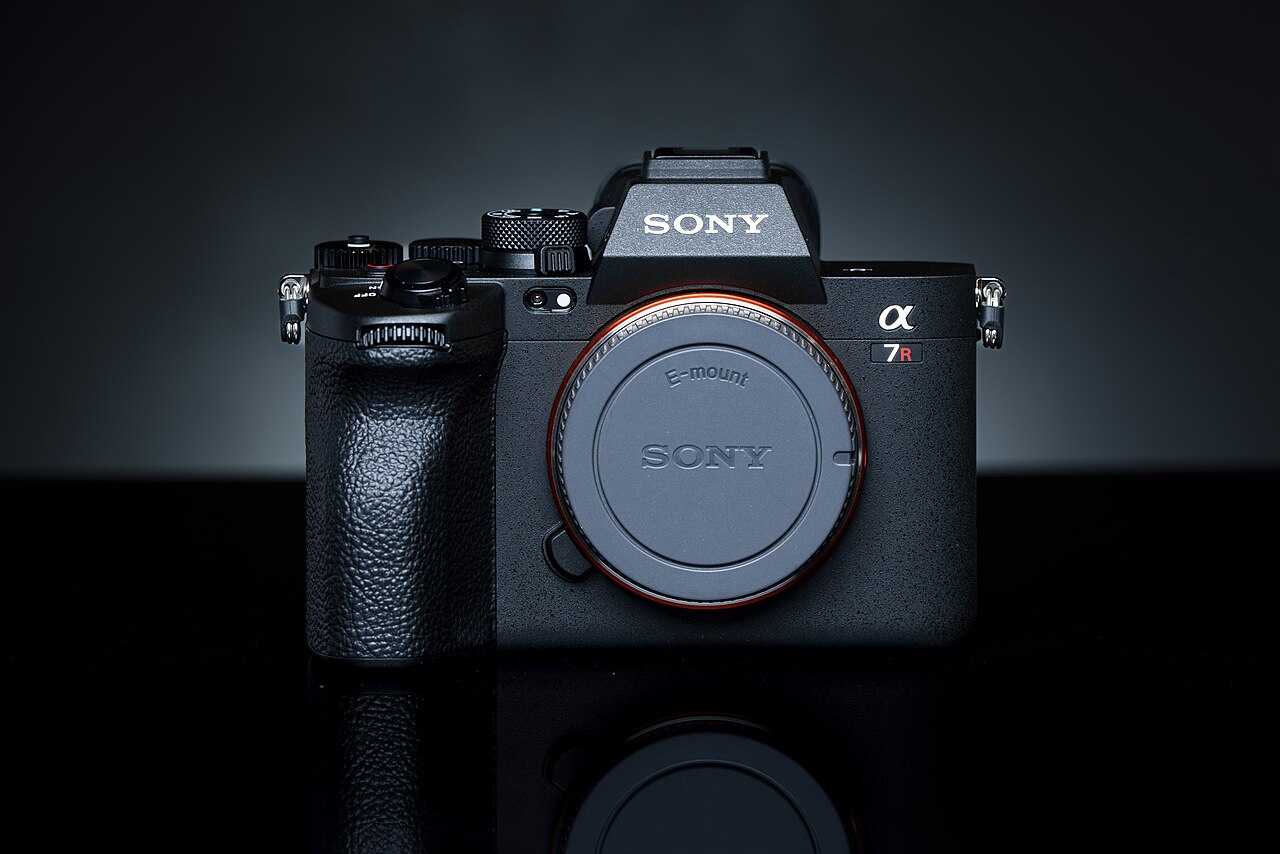
The Sony A7R V exists to resolve detail that other full-frame cameras can't touch. Its 61-megapixel sensor is the highest resolution in the class, and paired with Sony's dedicated AI autofocus processor, it can lock onto an eye and hold it while capturing texture down to individual eyelashes. For landscape, studio, portrait, architecture, and commercial photographers, that combination is close to ideal. At $3,898 it's expensive but not flagship-expensive, which is part of why it's such a popular high-resolution body.
PantheraLeo1359531 / Wikimedia Commons (CC BY 4.0)
But two asterisks follow the A7R V everywhere, and any honest buyer needs to see them first. The sensor is not stacked, which means rolling shutter is a real concern in electronic-shutter and video modes. And those 61MP files are big, slow to write, and fill a buffer that isn't built for sustained speed. This is a camera that rewards deliberate shooting and punishes anyone who treats it like a sports body.
Image quality and resolution
Sixty-one megapixels is not a spec-sheet flex here; it's the whole point. The A7R V resolves fine detail with a clarity that gives you enormous latitude to crop — you can frame a landscape wide and pull a tight composition out of it in post, or shoot a portrait and crop to a headshot without visible quality loss. For large prints, the resolution holds up at sizes where lesser sensors start to soften.
PantheraLeo1359531 / Wikimedia Commons (CC BY 4.0)
Sony also offers a pixel-shift multi-shot mode that composites several frames into an even higher-resolution image, which is a serious tool for reproduction, product, and architecture work where absolute detail matters. It requires a locked-down tripod and a static subject, and the frames are merged in Sony's software rather than in-camera, so it's a studio technique, not a run-and-gun one. Used within its limits, it's remarkable.
Autofocus: the genuine highlight
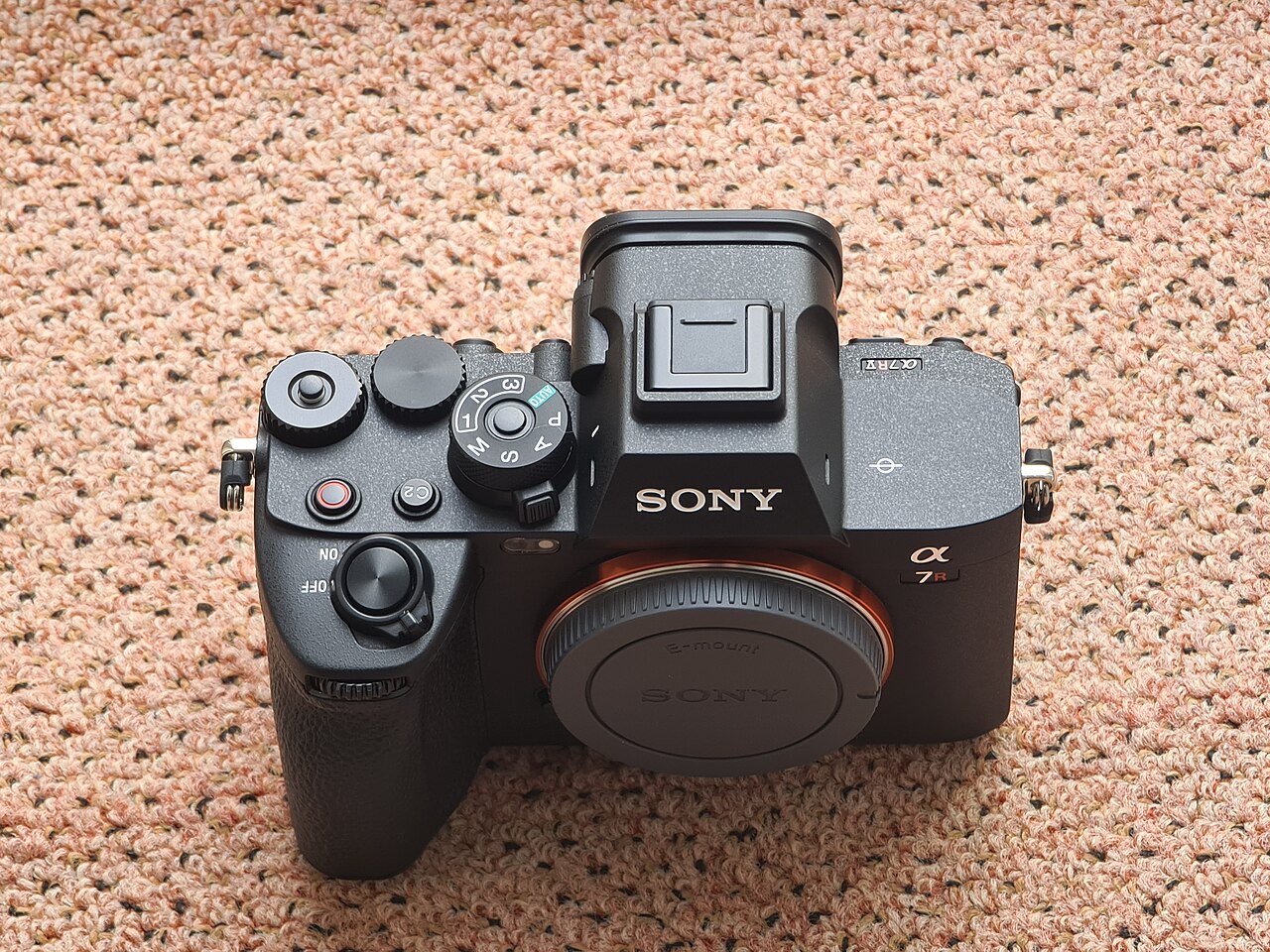
The A7R V introduced Sony's AI-driven recognition processor, and it's the feature that transforms this camera from a slow studio specialist into something more versatile. Eye detection for humans, animals, and birds is fast and tenacious, holding through movement and partial occlusion in a way that makes portrait and wildlife work far less stressful. The system even recognizes human poses and body position, which helps it stay locked when a subject turns away from the camera.
PantheraLeo1359531 / Wikimedia Commons (CC BY 4.0)
This is important context for the resolution: a 61MP file is only useful if focus is precise, because the sensor mercilessly reveals any miss. The AI autofocus is what lets you actually exploit all those pixels handheld. Combined with the strong in-body stabilization, the A7R V is far more handholdable than its resolution would suggest.
Where it stumbles: rolling shutter and buffer
Now the hard part. Because the sensor isn't stacked, its readout is comparatively slow, and that shows up as rolling shutter — the skewing of fast-moving subjects or quick pans, especially with the silent electronic shutter and in video. For static subjects and careful shooting it's a non-issue. For a passing car, a swinging golf club, or a fast whip-pan, it can distort the frame. Anyone expecting to shoot action silently should understand this limitation going in.
The buffer is the second constraint. Sixty-one-megapixel raws are large, and while the A7R V can shoot bursts, it isn't designed to hold high frame rates for long stretches the way a stacked-sensor sports camera can — fill the buffer and you wait while it clears. For the deliberate photography this camera targets, that rarely bites. As a sports or wildlife-action primary, it will frustrate you, and you should buy a different Sony.
Build and handling
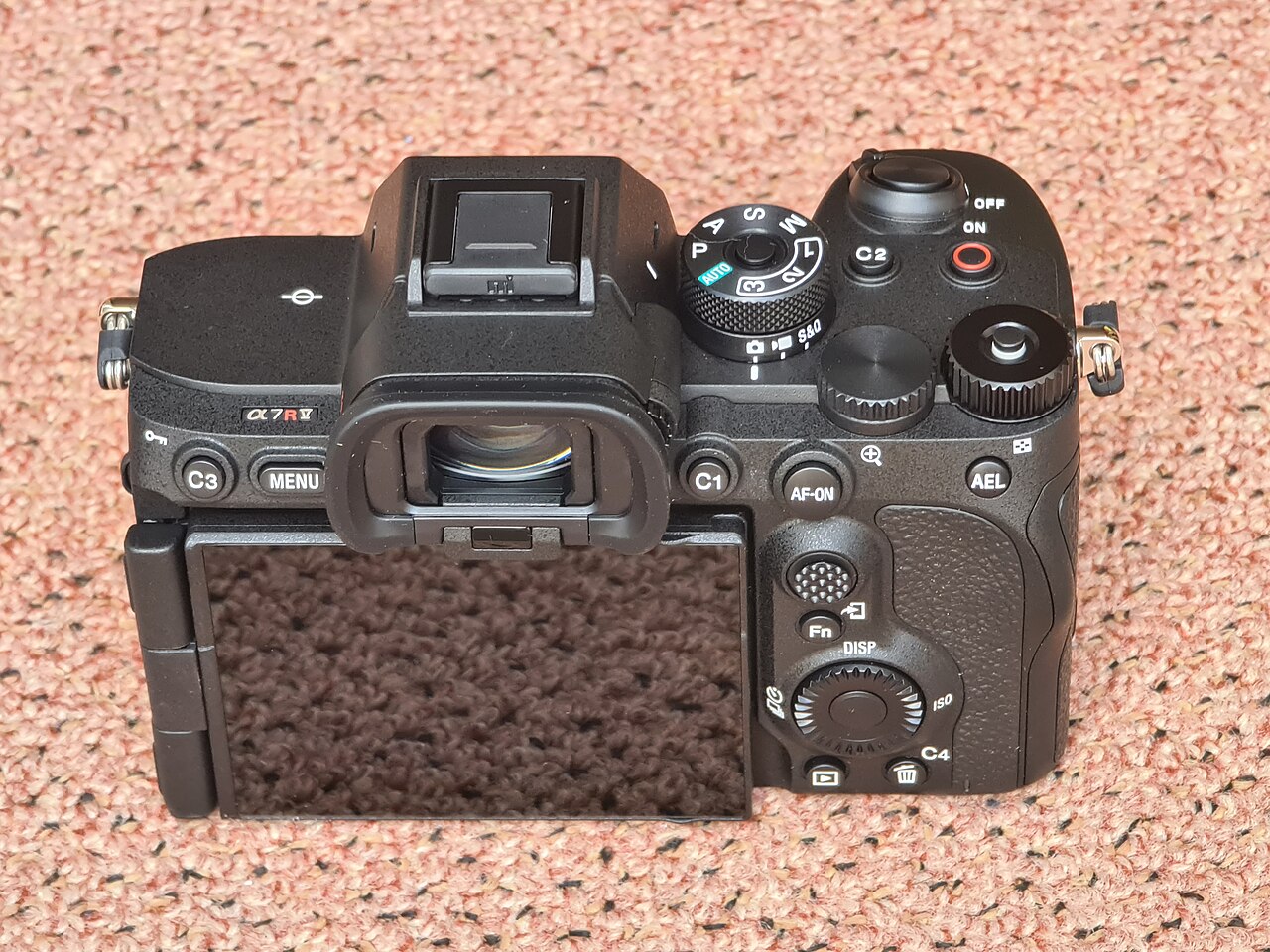
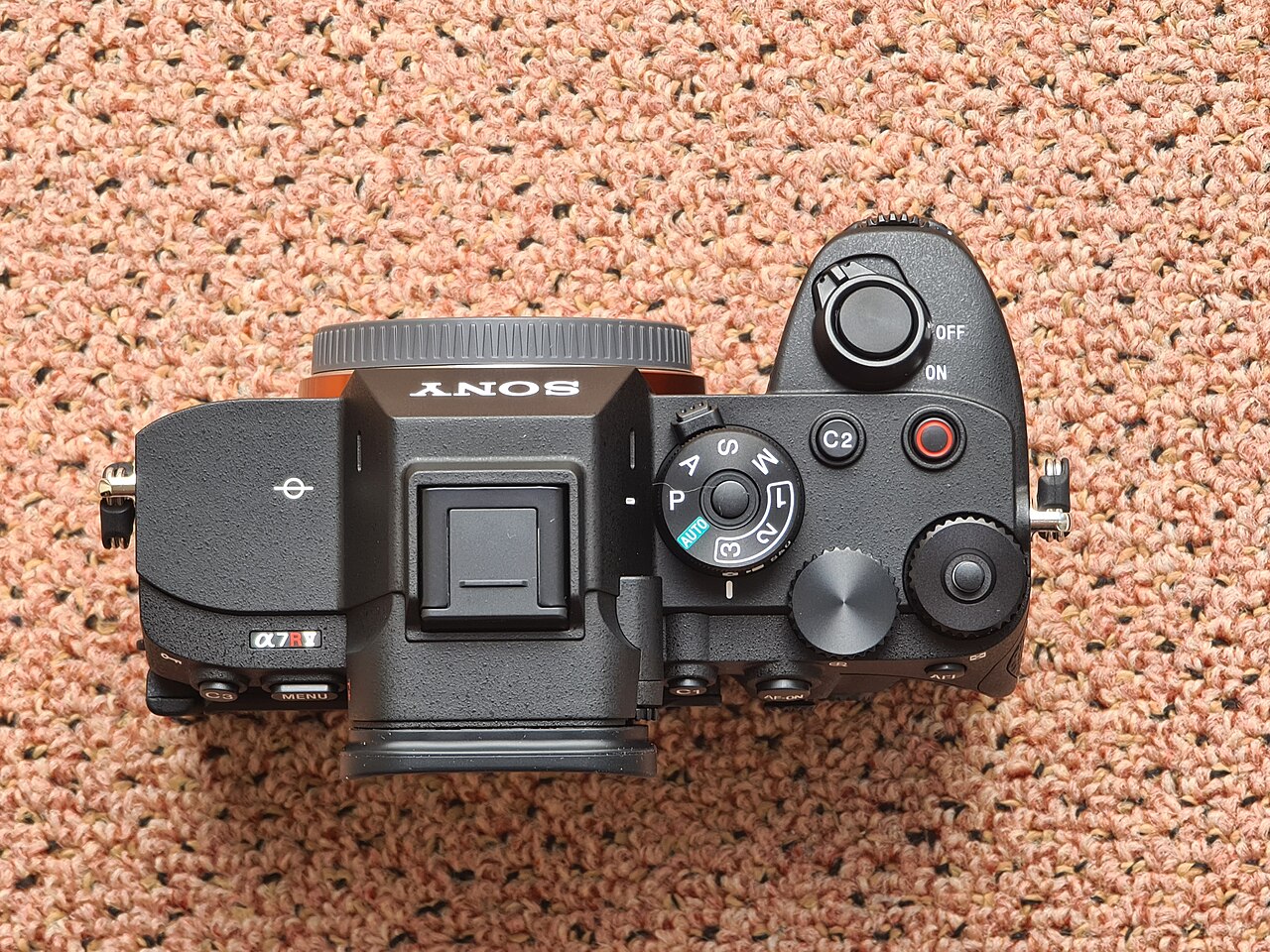
The body is classic Sony pro-consumer: weather-sealed, comfortably gripped, and lighter than a true flagship. The standout is the rear screen, a four-axis design that both tilts and fully articulates — genuinely the best-implemented articulating screen Sony has shipped, equally happy for a waist-level landscape or a flipped-out video framing. The electronic viewfinder is large and extremely high-resolution, which pays dividends when you're checking critical focus on a detailed scene.
PantheraLeo1359531 / Wikimedia Commons (CC BY 4.0)
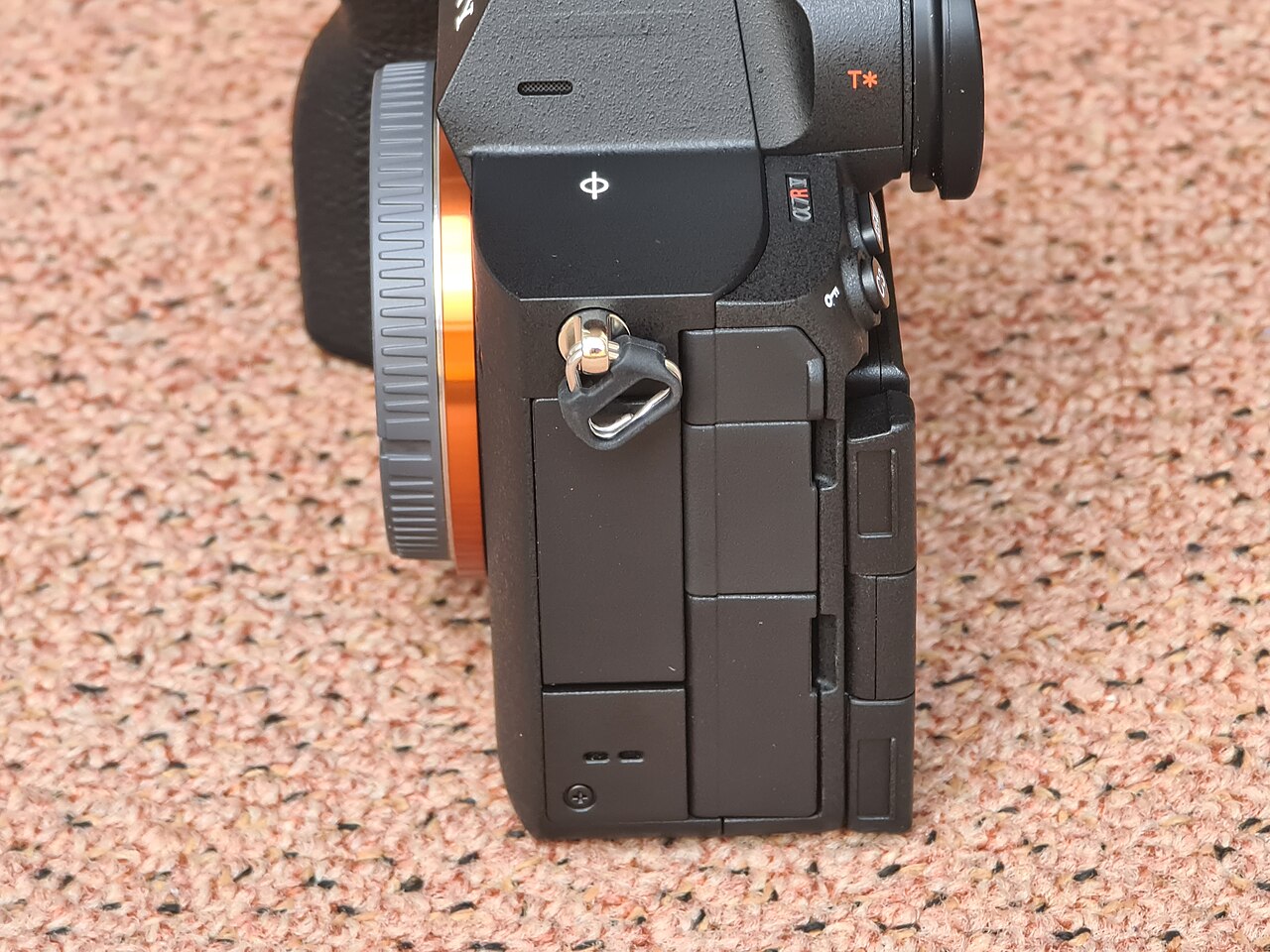
The usual Sony menu caveat applies: it's deep, touch-driven, and takes time to tame, though it's more coherent than older generations. Nothing about the ergonomics is a dealbreaker; this is a refined, mature body that gets out of the way once configured. The grip accommodates large G Master telephotos without strain, the customizable buttons let you map the AI subject modes to a thumb press, and the dual card doors and weather sealing are built to survive the kind of field use landscape work demands. It feels like a camera designed by people who shoot for a living.
The cost after the body
Two ongoing costs deserve emphasis. First, storage: 61MP raws are large, pixel-shift composites are larger still, and a serious archive and backup workflow is part of the true price of ownership. If your drives are already full, plan for that expense before you buy. Second, cards: the A7R V uses dual slots supporting CFexpress Type A and SD, and while SD works fine for much of what this camera does, CFexpress Type A gives you the fastest write performance for clearing those big files — at a premium price per gigabyte. Battery life from the NP-FZ100 is decent but not endless given the sensor and EVF demands, so carry spares for a full day.
How it compares
Against the Sony A1 II, the trade is resolution-and-value versus speed. The A1 II's stacked sensor all but eliminates rolling shutter and shoots far faster, but costs dramatically more and offers fewer megapixels. If you shoot static subjects and want maximum detail for the money, the A7R V is the smarter buy; if you need speed and clean fast-motion capture, pay up for the A1 II.
Against the Nikon Z8, Nikon counters with a stacked 45.7MP sensor that's slightly lower resolution but far faster and free of meaningful rolling shutter, making it the better all-rounder for anyone who also shoots action — though the A7R V still out-resolves it for pure detail. Against Canon's EOS R5 Mark II, you're weighing Canon's speed and dependable autofocus and the RF lens ecosystem against Sony's higher resolution and broader native lens selection. And against the Panasonic S1R II and Fujifilm GFX100 II, the A7R V splits the difference: more resolution and video flexibility than the Panasonic, far more speed and a deeper lens catalog than the medium-format Fujifilm, without matching the GFX's outright image quality. The A7R V's enduring appeal is that it delivers class-leading full-frame resolution and the best lens ecosystem in mirrorless at a price well below the true flagships.
Who should buy, who should skip
Buy the A7R V if you're a landscape, studio, portrait, architecture, or commercial photographer who wants the most full-frame resolution you can get, values the AI autofocus that makes that resolution usable handheld, and shoots deliberately enough that rolling shutter and buffer depth won't limit you. Sony's vast E-mount lens lineup means you can feed those 61 megapixels with genuinely sharp glass, which matters enormously at this pixel density.
Skip it if you shoot fast action, sports, or birds-in-flight as your main work — the rolling shutter and buffer are the wrong tools, and the A1 II, A9 III, or Nikon Z8 will serve you far better. Skip it if large files and heavy storage demands don't fit your workflow or budget. And skip it if you want the simplest possible camera; this is a detail instrument that expects some technique from its owner.
Verdict
The A7R V is the best high-resolution full-frame camera for photographers who shoot with intent. The 61MP sensor and AI autofocus are a genuinely strong pairing, the stabilization and articulating screen are best-in-class, and the price undercuts the true flagships while delivering image quality they can't match on resolution alone. Just go in clear-eyed about the two catches: rolling shutter makes it a poor action camera, and the big files demand real storage discipline. Respect those limits and the A7R V is one of the most rewarding cameras you can own. Ignore them and you'll have bought the wrong tool.