Introduction
For most of the last decade, the honest advice about a Lumix S body was the same: buy it for video, tolerate the autofocus. The S1 II is Panasonic's attempt to erase the second half of that sentence. It pairs a 24.2MP full-frame sensor with a genuine phase-detection hybrid AF system, wraps both in a body that shoots 8K30 and 4K60, and asks $2,799 for the privilege. That price puts it squarely against cameras that have never had an autofocus asterisk hanging over them, which is exactly the fight Panasonic wanted to pick.
So the question is not whether the S1 II is a capable video camera. It plainly is. The question is whether a hybrid shooter who also cares about tracking a kid on a bicycle or a bride walking down an aisle can finally treat a Lumix as a first choice rather than a specialist tool. My read: mostly yes, with two caveats that matter — the L-mount lens situation and a resolution number that will feel low to anyone cropping hard.
What Panasonic changed, and why it matters
The headline is the move away from contrast-only Depth-from-Defocus toward on-sensor phase detection. Older Lumix bodies used DFD, which reads defocus cues between frames; it was accurate for stills but produced the "wobble" and hunting that plagued Panasonic video for years. The S1 II keeps DFD as part of the equation but adds phase-detect points across the frame, and the practical result is that focus pulls settle instead of pumping. If you have ever watched a Lumix rack focus and then second-guess itself, that specific annoyance is largely gone here.
昼落ち / Wikimedia Commons (CC0)
The 24.2MP resolution is a deliberate choice, not a limitation Panasonic couldn't overcome. Lower pixel counts mean bigger photosites, cleaner high-ISO files, and — crucially — enough readout headroom to do 8K and high-frame-rate 4K without cooking the sensor. This is a body optimized for motion first. If you spend most of your time shooting stills that get printed large or cropped aggressively, that decision works against you, and I'll come back to it.
Design and handling
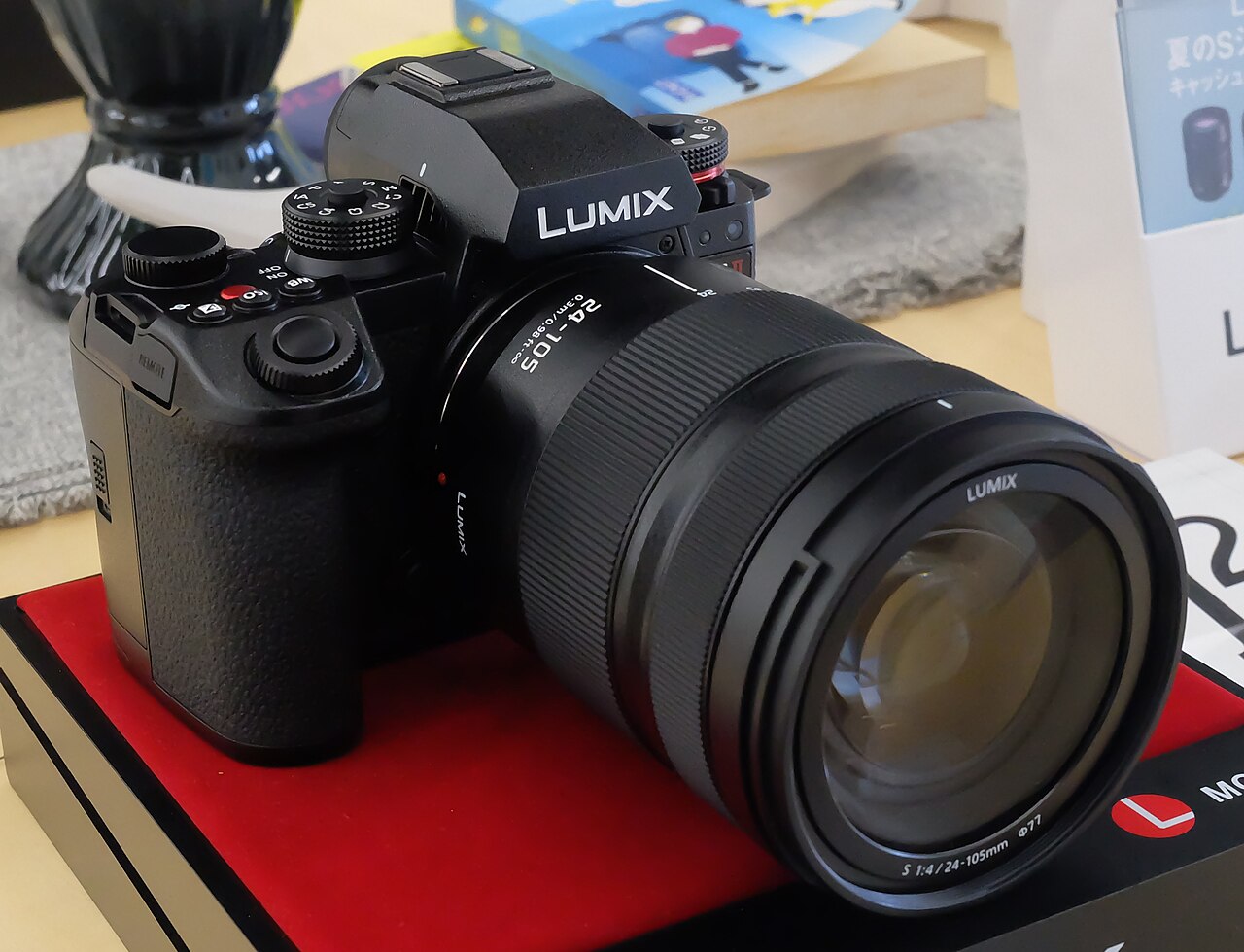
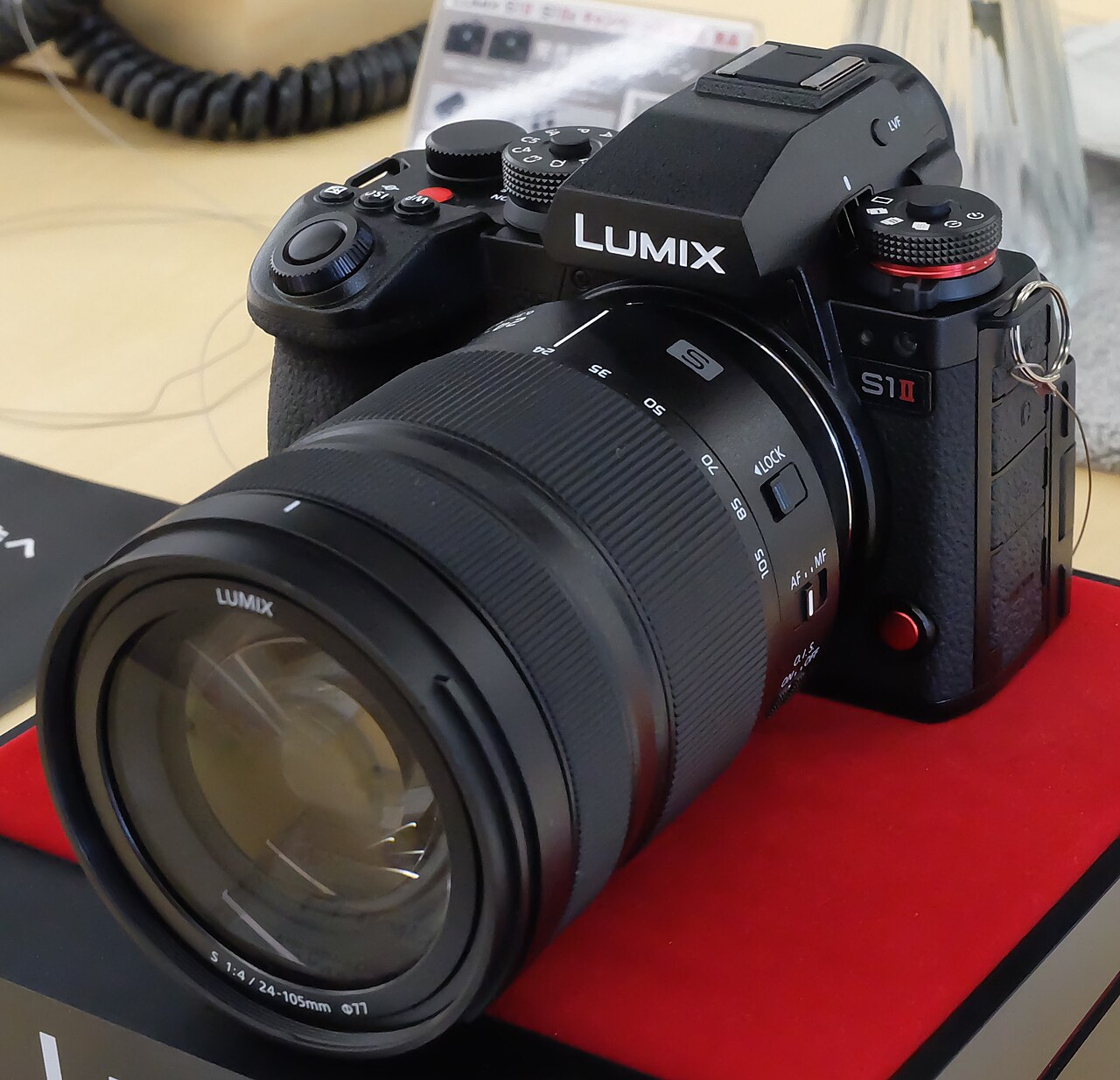
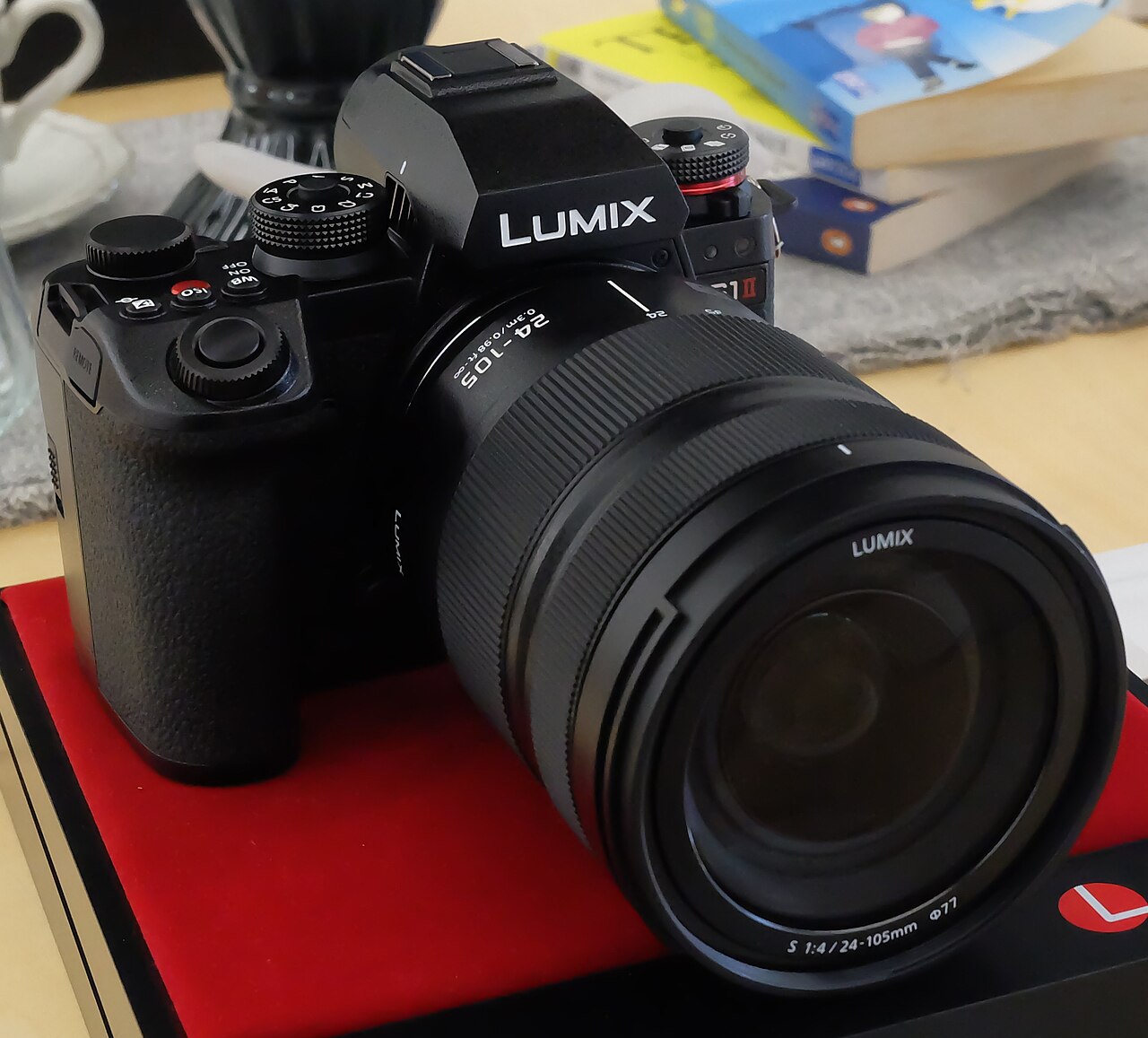
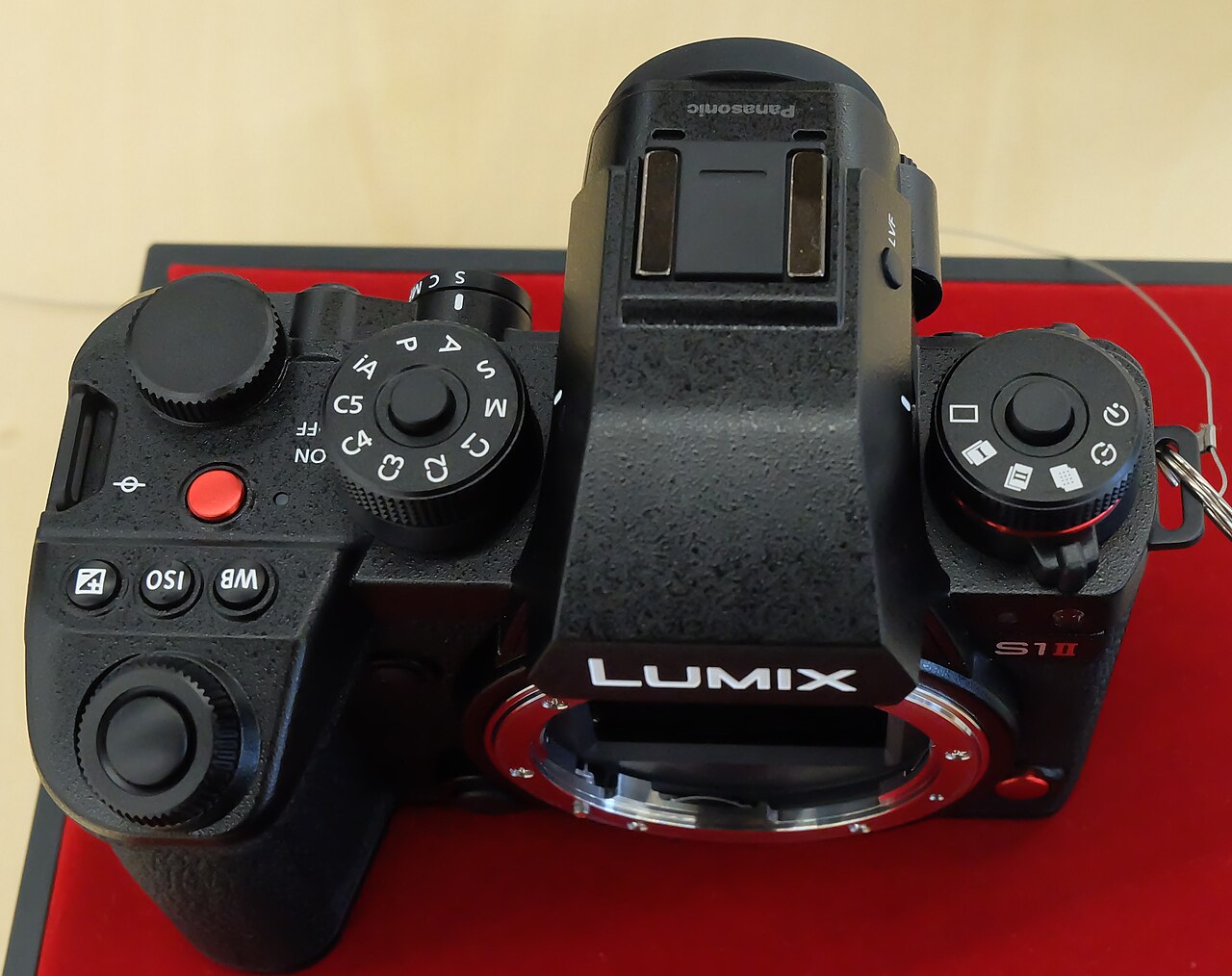
Panasonic did not reinvent the chassis, and that's fine. The S1 II is a substantial magnesium-alloy body of roughly 800g that feels built to be rained on, with weather sealing Panasonic positions for professional field use. The grip is deep enough for large lenses, the top-plate status display is still there, and the control layout will be instantly legible to anyone coming from an S5 II or the original S1.
昼落ち / Wikimedia Commons (CC0)
The joystick, the tactile dials, and the fully articulating rear screen that also tilts are the ergonomic highlights — a rare combination that lets you flip the screen out for a vlog and still tilt it for a low waist-level stills angle. The electronic viewfinder is high-resolution and large, the kind of finder you can manually focus a vintage lens through without squinting. Two things bear mentioning: the menu system remains dense, with video and photo settings living in sprawling tabbed trees, and Panasonic's willingness to expose every parameter is a blessing for a colorist and a headache for a beginner. Budget an afternoon to build custom menus before your first real shoot.
Autofocus in the real world
This is the section that decides whether the S1 II earns its keep. In good light, subject detection locks onto human eyes quickly and holds through profile turns and partial occlusion — the failure mode that used to define Lumix tracking. Animal and vehicle recognition are on board too, and while I wouldn't hand this body to a professional bird photographer over a stacked-sensor Sony, it will keep a running dog or a moving car in focus far more reliably than any DFD-only Lumix ever did.
昼落ち / Wikimedia Commons (CC0)
Where it still trails the best is in continuous-tracking burst work at the edges of the frame and in very low light, where phase-detect confidence drops and the system leans back on contrast cues. It's better, not best-in-class. For weddings, documentary, interviews, event coverage, and run-and-gun video, it clears the bar comfortably. For high-speed sports as your primary use, a Sony A9-series or the flagship end of Nikon and Canon still track with more tenacity.
Video: the reason most buyers are here
The S1 II shoots 8K at 30p and 4K at 60p, with Panasonic's usual generosity around codecs, log profiles, and open-gate capture that uses the full sensor height for reframing in post. V-Log comes standard with a wide dynamic range, and the camera is a genuine tool for people who grade footage rather than shoot it straight. There's no artificial recording-time paywall on the features that matter, and Panasonic's heat management means long takes are realistic rather than theoretical.
昼落ち / Wikimedia Commons (CC0)
If your work is a mix of client video and stills — corporate, wedding films, branded content, YouTube — this is one of the most complete single bodies you can buy at the price, and it's the strongest argument in the S1 II's favor. The tradeoff is that all this capability sits behind that dense interface, and the 24MP sensor that helps video is the same sensor that limits stills.
Cards, buffer, and workflow
The S1 II uses a dual-slot arrangement: one CFexpress Type B slot for the high-bitrate 8K and burst work, and one SD UHS-II slot for overflow, backup, or lower-bitrate proxies. This matters for two reasons. First, CFexpress Type B cards and readers are an added cost you should budget for — the fast internal codecs will overrun SD alone. Second, the split-format design means you can run a redundant SD backup of stills at a wedding while the CFexpress handles video, which is exactly how a hybrid shooter wants to work. Battery endurance is rated for typical mirrorless mileage, so plan on spares for a full event day and consider the optional grip if you shoot verticals.
How it compares
Against Panasonic's own Lumix S5 II, the S1 II is the bigger, tougher, higher-bitrate sibling. The S5 II already brought phase detection to the line at a lower price and smaller size; if you don't need 8K, the more rugged body, or the top display, the S5 II saves you real money and gives up surprisingly little for stills-and-casual-video shooters. Be honest with yourself about whether you'll use what the S1 II adds.
Against the Nikon Z6 III, the choice comes down to ecosystem and priorities. The Z6 III has a partially-stacked sensor of its own, excellent autofocus, and access to Nikon's fast-maturing Z lens lineup with strong first-party primes. Nikon's tracking is arguably a touch more confident; Panasonic answers with deeper video tooling and open-gate flexibility.
Against the Canon EOS R6 Mark II, Canon offers the most dependable subject tracking of this group and a huge RF lens catalog, but locks that mount down to first-party glass and skips 8K. And against the Sony A7 IV, Sony brings the deepest lens ecosystem by a wide margin and reliable AF, but its video feature set and log implementation feel conservative next to Panasonic's. The pattern is consistent: pick the S1 II when video ambition and grading control top your list, and pick a rival when lens selection or last-percent autofocus is the deciding factor.
The lens problem, stated plainly
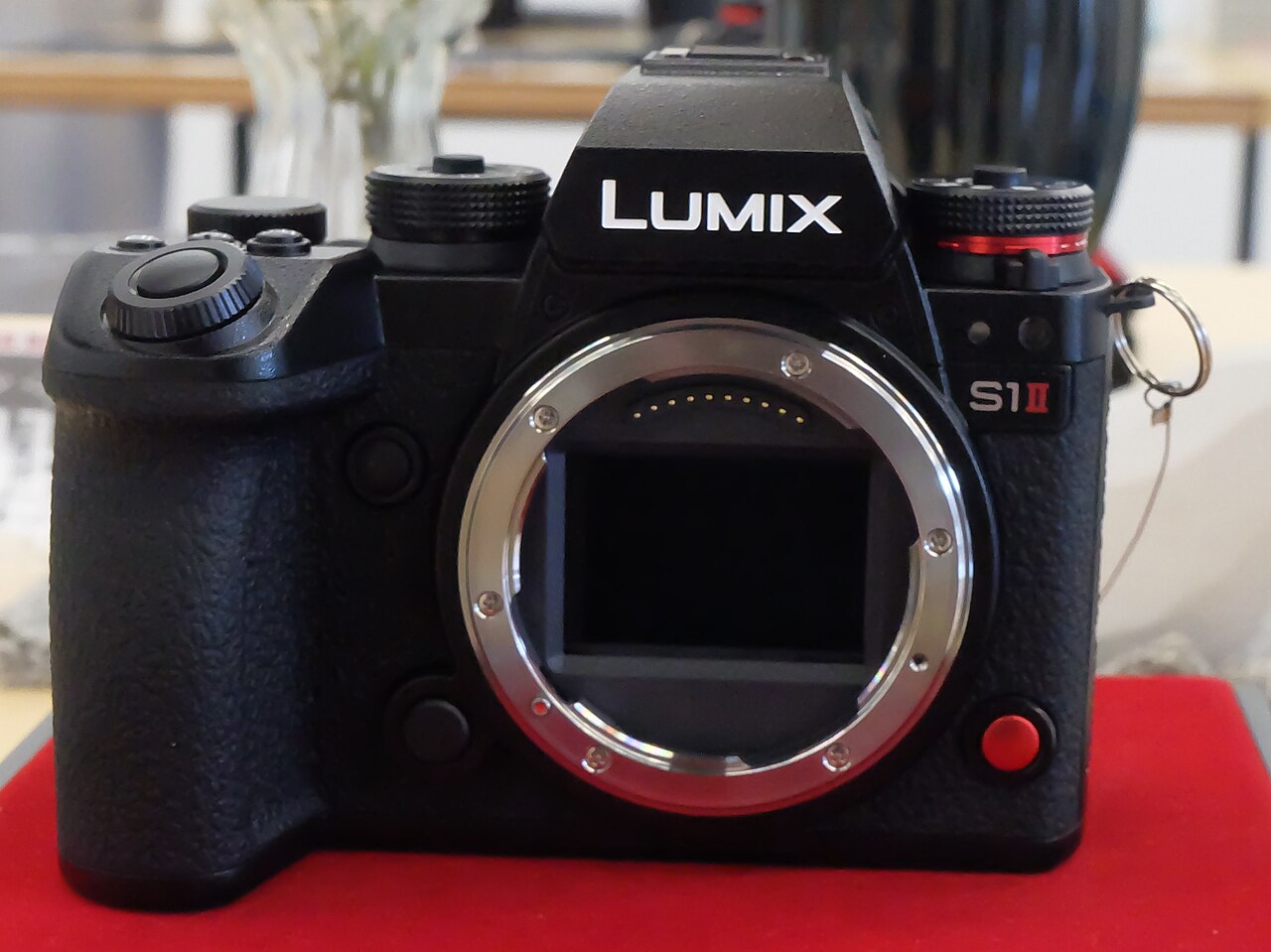
The L-mount is a real alliance — Panasonic, Leica, and Sigma all build for it — and Sigma in particular offers excellent, affordable primes and zooms. But the total catalog is smaller than Sony E or Canon RF, native long telephotos and exotic options are thinner on the ground, and the used market is shallower. If your photography depends on a specific 600mm super-telephoto or a wide stable of cheap third-party glass, the S1 II asks you to compromise. For standard zooms, fast primes, and cine-style lenses, you'll be well served.
Who should buy it, and who should skip it
Buy the S1 II if you are a hybrid creator who earns from both video and photos, wants 8K and serious log workflow in a weather-sealed body, and has waited for Lumix autofocus to grow up. It's also a strong pick for a solo wedding or event shooter who wants one body to do films and stills without carrying two systems.
Skip it if you are primarily a high-resolution stills photographer — 24MP will frustrate you, and the S1R II or a 45–61MP rival is the smarter buy. Skip it if you shoot fast action as your main discipline; the tracking is good but not the class leader. And skip it if a deep, cheap lens ecosystem is non-negotiable, because L-mount, while healthy, is not Sony E.
Verdict
The S1 II is the first Lumix flagship I'd recommend to a hybrid shooter without a caveat about autofocus, and that's a meaningful milestone for the line. It's a superb video tool with stills capability that's good rather than exceptional, held back only by a modest resolution ceiling and a lens mount that's solid but not sprawling. At $2,799 it's fairly priced for what it does. Know that you're buying a video-first camera that finally focuses like it means it — and if that's the tool you need, it's an easy one to love.