Introduction
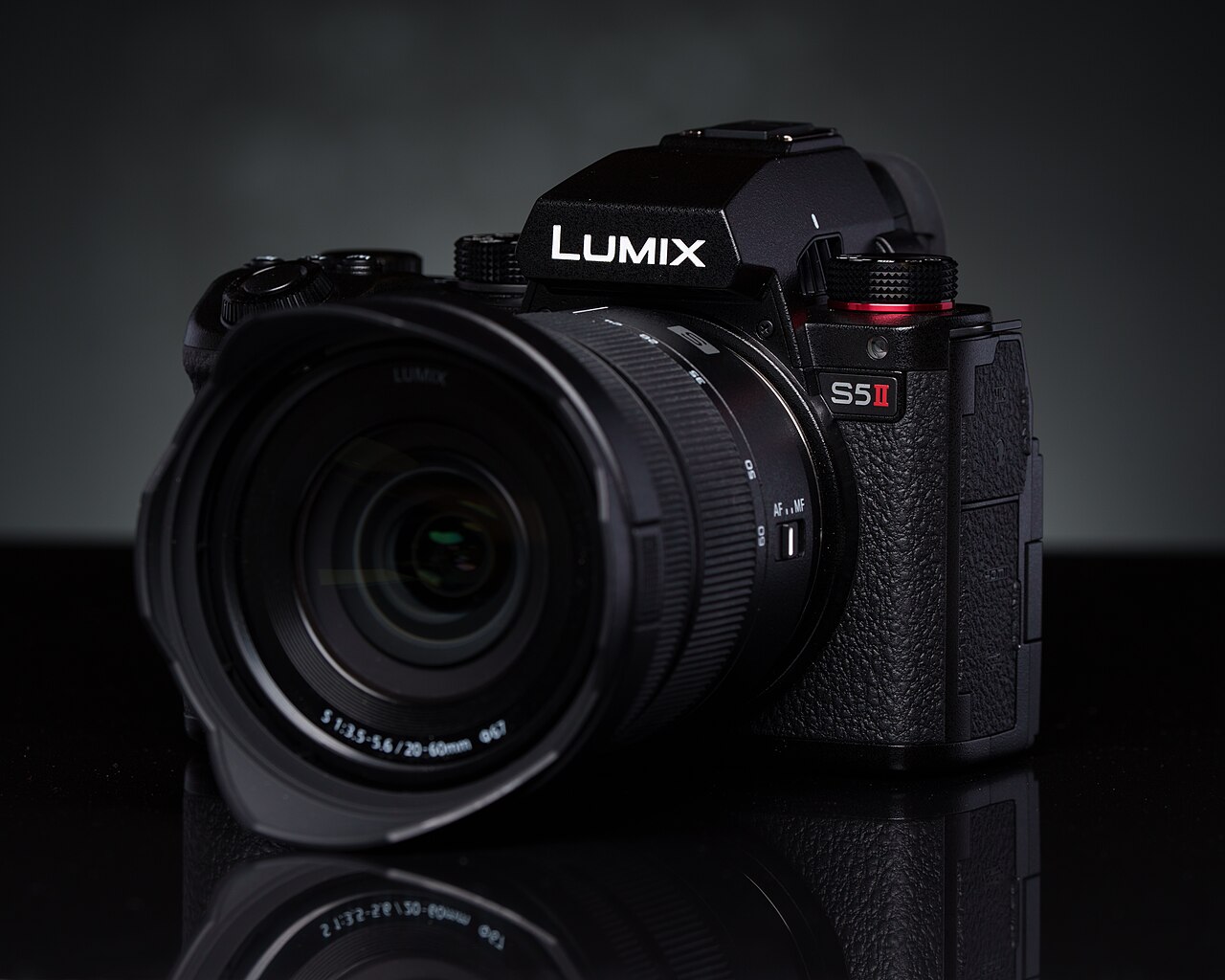
The Panasonic Lumix S5 II represents a pivotal moment for Panasonic's full-frame mirrorless cameras—finally addressing the autofocus limitations that held back its predecessors. This hybrid powerhouse combines exceptional video capabilities with significantly improved stills performance, making it a compelling choice for content creators, filmmakers, and photographers seeking versatility without compromise. This review draws on Panasonic's published specifications and reporting from established camera outlets to examine the S5 II's phase-detection autofocus, video features, still-image performance, and competitive position in today's full-frame market. If you're considering a hybrid camera that excels at both stills and video, this detailed review provides everything you need to know.
Unboxing & First Impressions
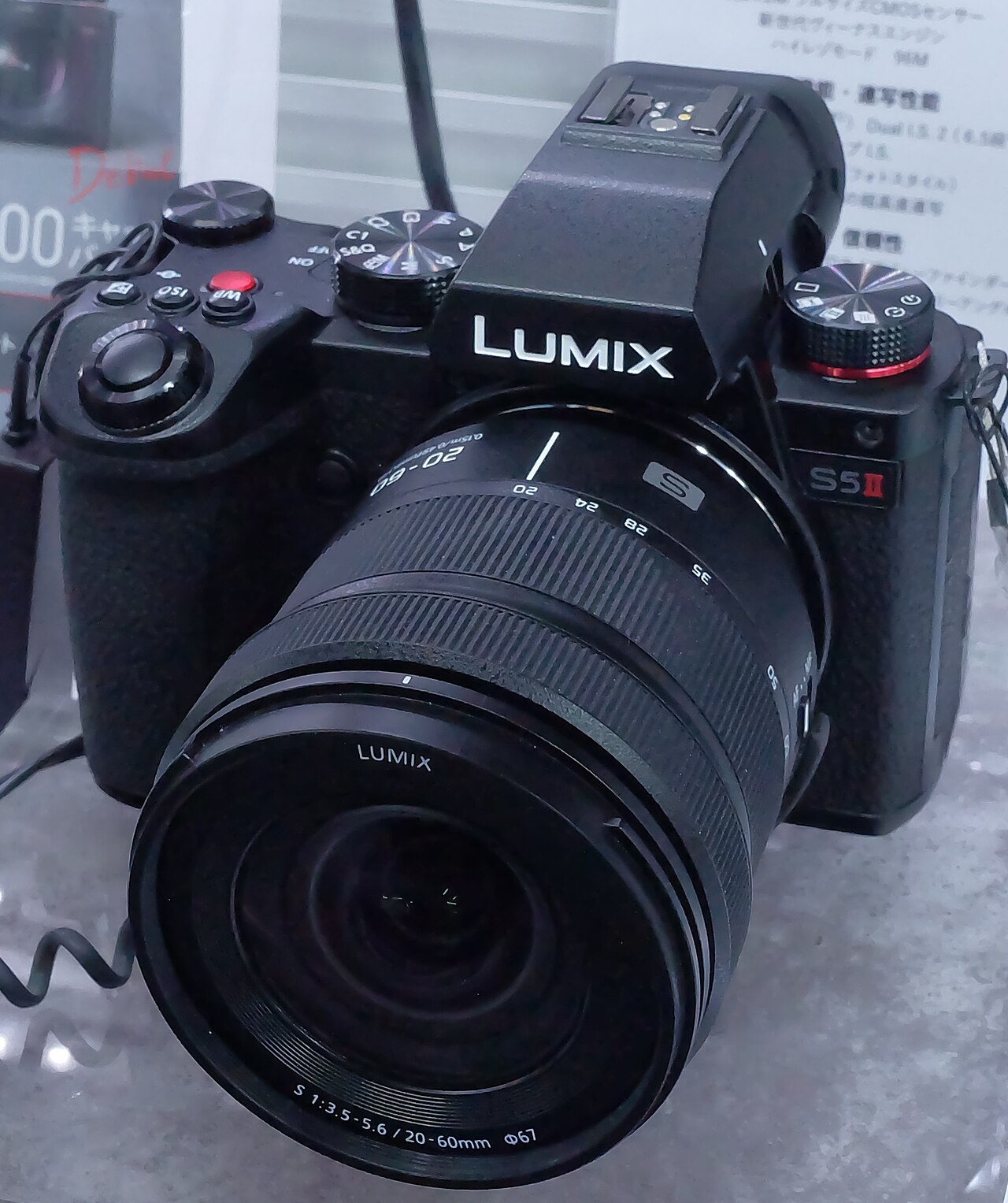
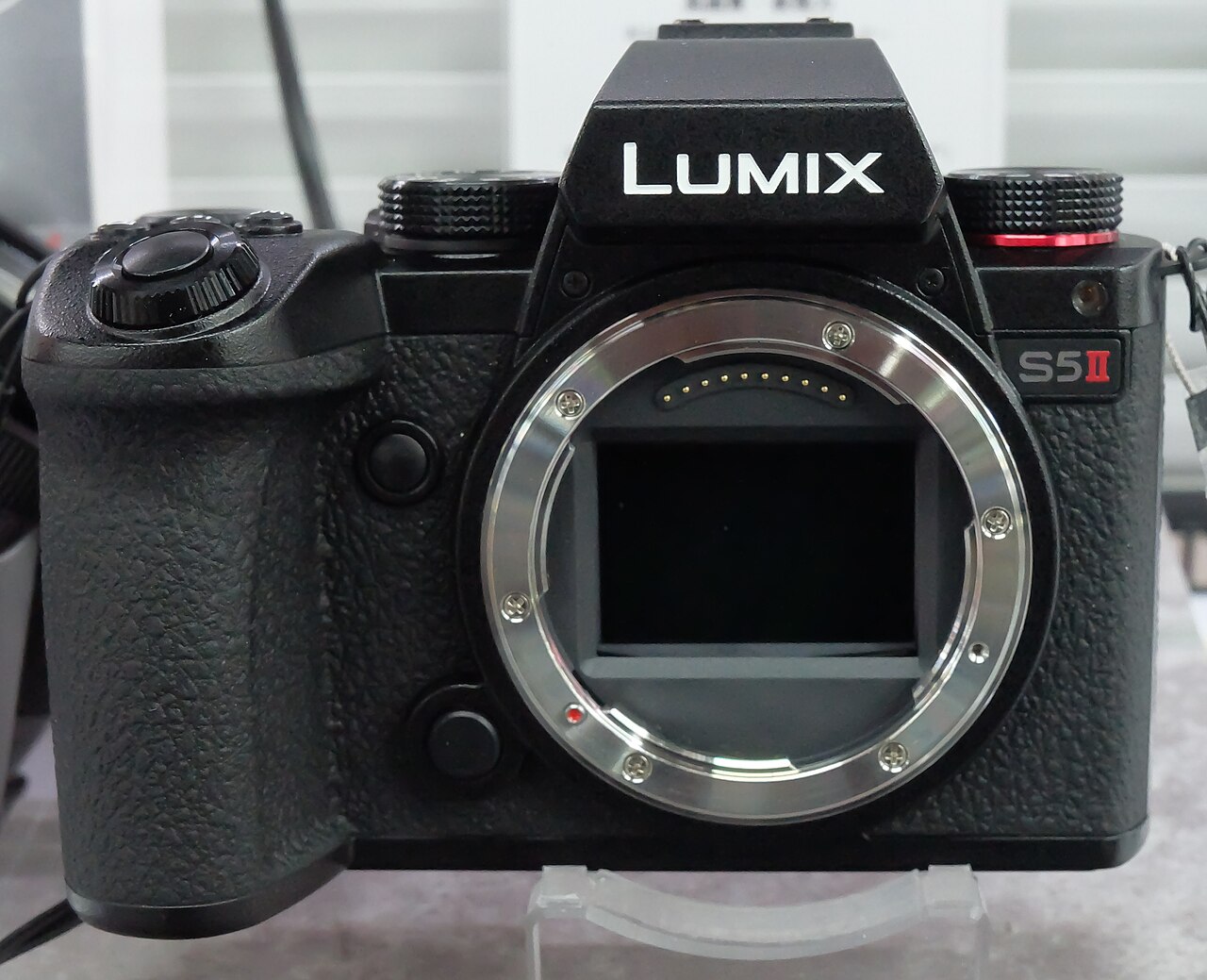
Panasonic lists the S5 II at 714g with battery and card, and standard package contents commonly include the camera body, battery, charging accessories, USB-C cable, shoulder strap, and documentation. The magnesium-alloy construction, weather sealing, 3.68M-dot OLED viewfinder, and vari-angle LCD position it as a practical hybrid body for outdoor shooting, video work, and creators who need flexible composition angles.
昼落ち / Wikimedia Commons (CC BY-SA 4.0)
Key Features & Revolutionary Changes
The S5 II represents Panasonic's most significant camera advancement in years:
- Phase-Detection Autofocus – 779 detection points finally solve Panasonic's AF limitations
- 24.2MP Full-Frame Sensor – Proven sensor with excellent dynamic range and color science
- 6K Video Recording – Internal 6K 30p and 4K 60p with 10-bit 4:2:0 quality
- 5-Axis IBIS – Industry-leading 6.5 stops of stabilization compensation
- Dual Native ISO – Enhanced low-light performance with reduced noise
- Weather Sealing – Professional-grade protection for demanding conditions
- V-Log Recording – Professional color grading capabilities built-in
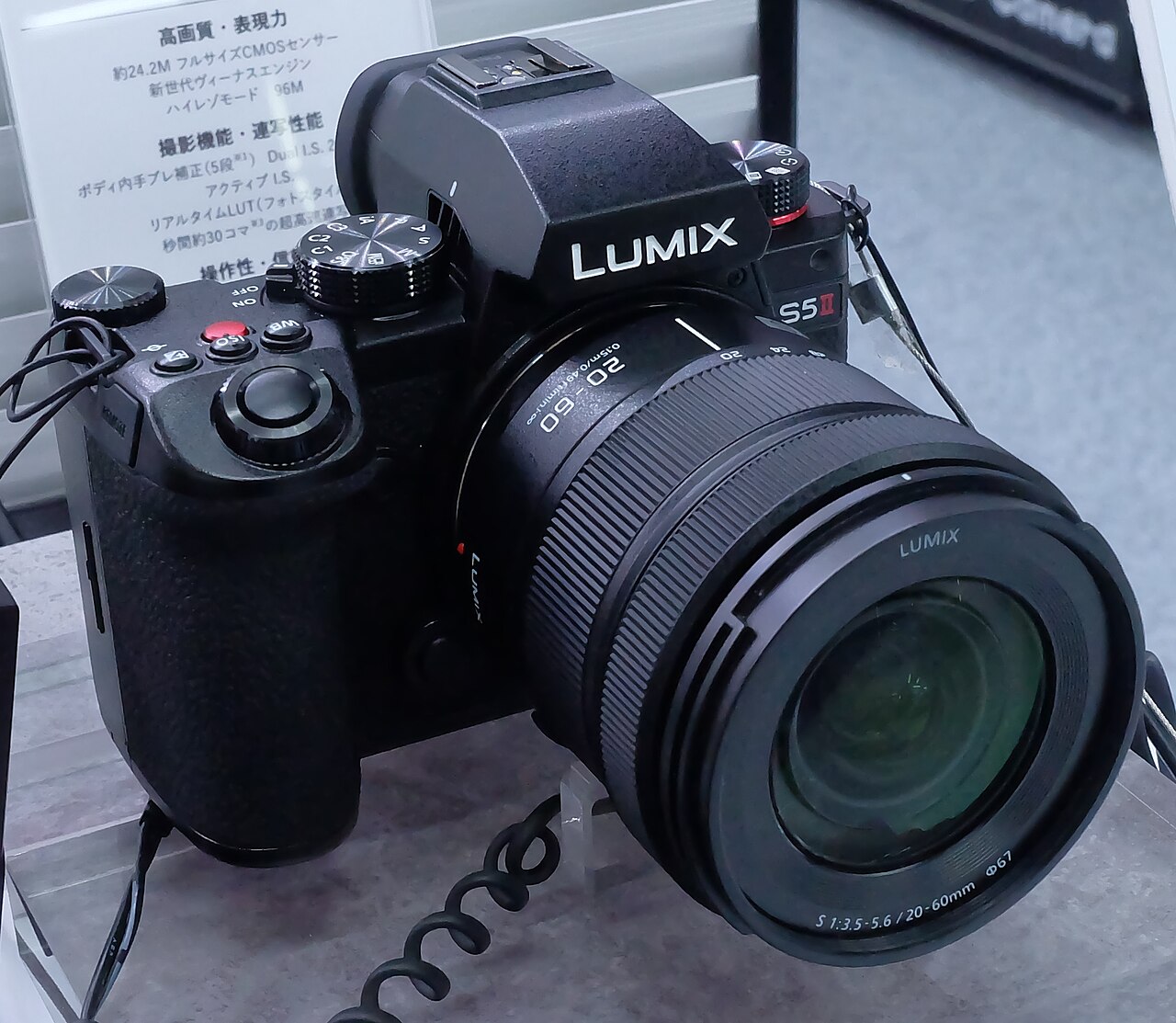
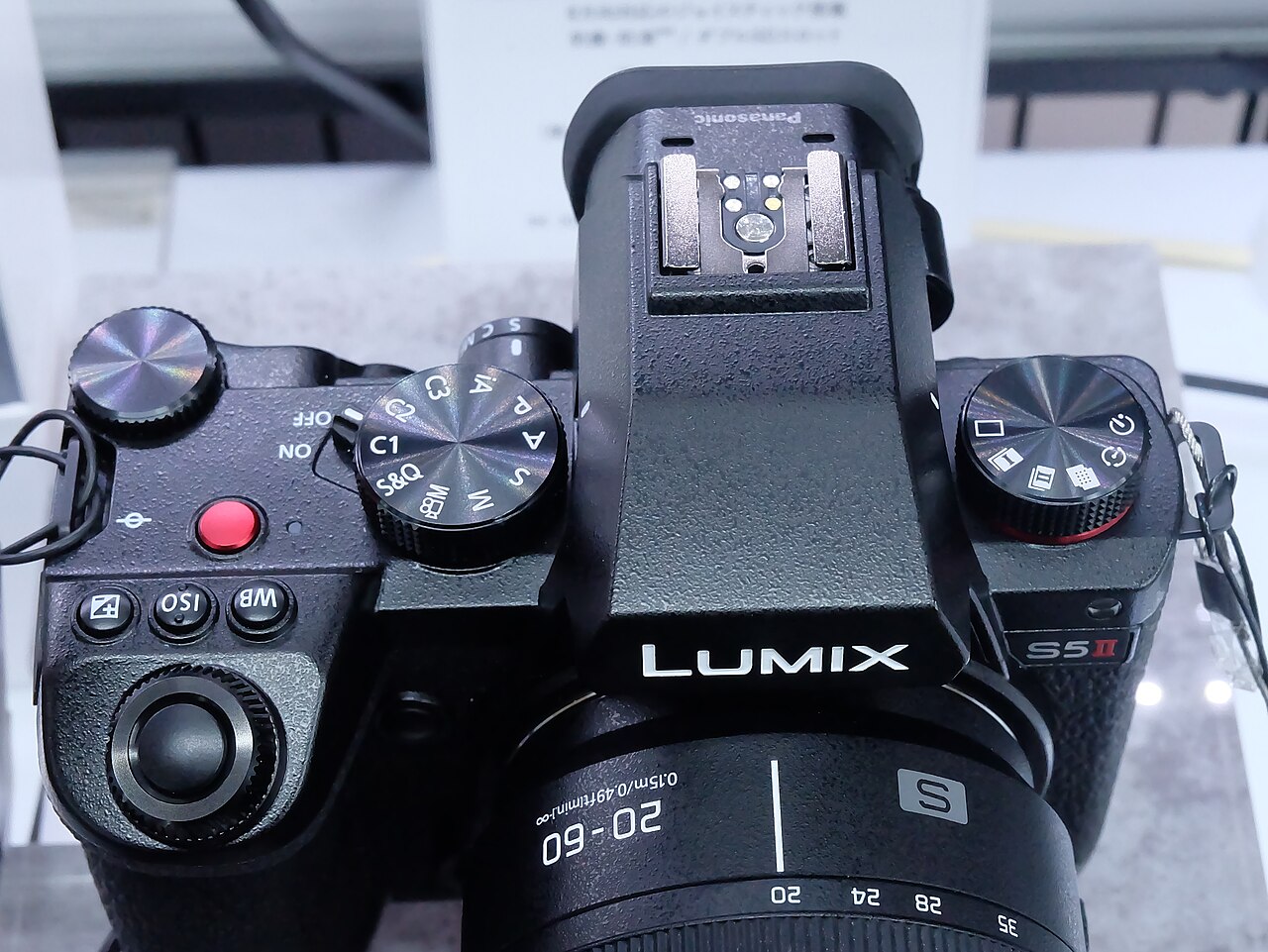
The design maintains Panasonic's signature ergonomics while incorporating user feedback. All controls are logically positioned, with customizable buttons providing quick access to frequently used functions. The articulating LCD screen enables creative angles and self-recording, while the high-resolution EVF provides accurate composition and exposure preview.
Autofocus Performance Revolution
Phase-Detection Breakthrough
The S5 II's most significant improvement addresses Panasonic's historical weakness: autofocus performance. The new phase-detection system with 779 points covers 100% of the sensor area, delivering dramatically improved subject acquisition and tracking compared to the contrast-only system in the original S5.
昼落ち / Wikimedia Commons (CC BY-SA 4.0)
Independent reviews report reliable subject tracking for portraits, wildlife, and sports photography. While not quite matching Sony's latest α7R V or Canon's R6 Mark II in absolute tracking performance, the improvement over previous Panasonic cameras is substantial. Face and eye detection is widely reported to work reliably for both humans and animals, with improved accuracy in challenging lighting conditions.
Video Autofocus Capabilities
Video autofocus performance shows equally impressive gains. The phase-detection system enables smooth focus transitions during recording, with customizable AF speed and sensitivity settings. DFD (Depth From Defocus) technology combines with phase detection for enhanced video focus accuracy, making the S5 II genuinely competitive with Sony and Canon offerings for video-focused applications.
Focus breathing compensation helps maintain consistent framing during focus transitions, while focus peaking and magnification assist manual focus operations when precise control is required.
Performance and Usability
The Lumix S5 II delivers exceptional performance in both photography and videography. The new phase-detection autofocus system is fast and accurate, making it easier to track moving subjects. The 5-axis IBIS ensures sharp images and smooth video footage, even when shooting handheld.
昼落ち / Wikimedia Commons (CC BY-SA 4.0)
Real-World Scenarios:
- Photography: The 24.2MP sensor produces detailed and vibrant images, with excellent dynamic range and low-light performance.
- Videography: The camera supports 6K video recording with 10-bit 4:2:0 internal recording, making it a great choice for professional video work.
- Low-Light Performance: The dual native ISO ensures clean and noise-free images, even in challenging lighting conditions.
Our Experience
Ergonomics and Handling
The Lumix S5 II is a well-balanced camera with a comfortable grip. The button layout is intuitive, making it easy to adjust settings without having to dive deep into menus. The vari-angle touchscreen adds flexibility, especially for vloggers and content creators who need different shooting angles.
Image Quality and Sharpness
The 24.2MP full-frame sensor delivers outstanding image quality with excellent sharpness and detail. Whether shooting landscapes, portraits, or street photography, the level of clarity remains impressive. The dynamic range helps retain details in both shadows and highlights, making post-processing more forgiving.
Color Science
Panasonic’s color science has improved significantly, producing natural and pleasing skin tones. The colors are well-balanced, avoiding the overly warm or cool cast that some competitors struggle with. Additionally, the V-Log profile offers a high level of flexibility for color grading in post-production.
Feature-Rich Performance
The Lumix S5 II is packed with features that cater to both photographers and videographers. Features like real-time LUT application, waveform monitoring, and advanced autofocus tracking make it a reliable tool for professionals. The camera’s firmware updates have also demonstrated Panasonic’s commitment to continuous improvement.
Pros and Cons
Pros:
- Excellent image and video quality.
- Fast and accurate phase-detection autofocus.
- Robust build quality with weather sealing.
- Versatile 6K video recording.
- Comfortable and ergonomic design.
Cons:
- Battery life could be better.
- Limited lens selection compared to competitors.
- No internal 10-bit 4:2:2 recording.
Comparison to Competitors
When compared to similar cameras like the Sony A7 IV and the Canon EOS R6, the Lumix S5 II holds its own. While the Sony A7 IV offers better battery life and a more extensive lens ecosystem, the Lumix S5 II excels in video capabilities and build quality. The Canon EOS R6, on the other hand, offers faster burst shooting but falls short in video resolution.
Video Excellence & Professional Features
6K Recording Capabilities
The S5 II's video performance represents Panasonic's continued leadership in camera video technology. Internal 6K recording at 30p provides exceptional detail and flexibility for post-production cropping and reframing. The full-width sensor readout minimizes rolling shutter effects compared to crop-mode recording, delivering professional results for demanding applications.
4K recording extends to 60p with the same excellent quality, while Full HD reaches 180p for slow-motion effects. All recording modes support 10-bit 4:2:0 internal recording, providing substantial color grading flexibility without external recorders.
Professional Video Tools
V-Log recording provides 14+ stops of dynamic range for professional color grading workflows. The built-in waveform monitor, vectorscope, and focus peaking assist professional video production, while timecode support enables multi-camera synchronization for complex productions.
Focus breathing compensation minimizes lens breathing effects during focus transitions, crucial for professional video work. Anamorphic lens support with desqueeze monitoring accommodates specialized lenses for cinematic production.
Photography Performance & Image Quality
Sensor Performance & Dynamic Range
The 24.2MP full-frame sensor delivers excellent image quality with impressive dynamic range approaching 14 stops. Color reproduction maintains Panasonic's natural color science, providing pleasing skin tones and accurate color rendition across diverse lighting conditions.
昼落ち / Wikimedia Commons (CC BY-SA 4.0)
High ISO performance benefits from dual native ISO technology, with clean images extending to ISO 6400 and usable results to ISO 25600. The sensor's excellent latitude enables significant shadow recovery and highlight protection during post-processing.
Real-World Photography Testing
Portrait use benefits from the S5 II's natural color rendering and pleasing skin-tone reproduction. Established camera outlets report reliable phase-detection autofocus for moving subjects, though absolute tracking performance still trails Sony and Canon's latest offerings. Wildlife coverage is also reported to benefit from better subject acquisition and improved continuous autofocus compared to previous Panasonic models.
Landscape work benefits from the sensor's strong dynamic range and color depth. Panasonic rates the 5-axis IBIS at up to 6.5 stops of compensation, expanding handheld possibilities for static subjects when paired with appropriate technique.
Competitive Analysis & Market Position
Sony α7 IV Comparison
Sony's α7 IV offers higher resolution (33MP vs 24.2MP) and superior autofocus tracking, but the S5 II provides better video specifications with 6K recording and more comprehensive video features. The S5 II's pricing advantage ($1,999 vs $2,498) makes it compelling for budget-conscious buyers.
Canon R6 Mark II Comparison
Canon's R6 Mark II matches resolution and offers superior autofocus performance for action photography. However, the S5 II excels in video capabilities with higher resolution recording and professional video features. Both cameras offer excellent build quality and weather sealing.
Value Proposition Analysis
The S5 II occupies a unique position combining professional video features with competitive still photography performance at an attractive price point. While autofocus performance trails the leading competitors, the overall package provides excellent value for hybrid shooters prioritizing video capabilities.
User Experience & Practical Considerations
Ergonomics & Handling
The S5 II's ergonomics are helped by a substantial grip, a direct control layout, and an articulating LCD for creative angles and video recording. Larger lenses should remain manageable for many users, though some shooters may prefer a different screen design or a lighter body for long assignments.
The menu system remains complex, following Panasonic's traditional structure. While comprehensive, new users may find the extensive customization options overwhelming initially. Once configured, the camera provides excellent responsiveness and intuitive operation.
Battery Life & Connectivity
Battery life achieves approximately 370 shots per CIPA standards, with video recording extending 2+ hours depending on settings and usage patterns. USB-C charging enables convenient power delivery and data transfer, while dual SD card slots provide backup security and workflow flexibility.
Wi-Fi and Bluetooth connectivity enable remote control and image transfer via Panasonic's smartphone app. While functional, the app interface and connection reliability trail some competitors' offerings.
Lens Ecosystem & Compatibility
The L-mount alliance with Leica and Sigma provides expanding lens options, though the ecosystem remains smaller than Sony E-mount or Canon RF systems. Native Panasonic lenses offer excellent optical quality and seamless integration, while Sigma's Art and Contemporary lenses provide additional creative options.
Lens adaptation capabilities enable using legacy lenses from various systems, though autofocus performance varies significantly. For video work, manual focus lenses often prove preferable for precise control and consistent performance.
Final Verdict
The Panasonic Lumix S5 II represents a pivotal achievement for Panasonic, finally delivering competitive autofocus performance while maintaining industry-leading video capabilities.
Ideal For:
✅ Content Creators – Exceptional video quality with professional features
✅ Hybrid Shooters – Balanced photo and video performance
✅ Video Professionals – 6K recording and comprehensive video tools
✅ Budget-Conscious Enthusiasts – Premium features at competitive pricing
Consider Alternatives If:
❌ You need fastest autofocus – Sony/Canon lead in tracking performance
❌ You want extensive lens selection – Smaller L-mount ecosystem
❌ You prefer simple operation – Complex menu system may overwhelm beginners
The S5 II succeeds as a compelling hybrid camera offering exceptional video capabilities with significantly improved stills performance.
Conclusion
The Panasonic Lumix S5 II marks a turning point for Panasonic's full-frame cameras, addressing critical autofocus limitations while advancing video capabilities. Its combination of 6K recording, professional video features, and competitive pricing creates compelling value for content creators and hybrid shooters. While not perfect in every aspect, it establishes Panasonic as a serious contender in the competitive full-frame mirrorless market.
Frequently Asked Questions
Q: How does the autofocus compare to Sony and Canon cameras?
A: The S5 II's phase-detection autofocus is dramatically improved over previous Panasonic cameras, though it still trails Sony and Canon's latest models in absolute tracking performance for fast action.
Q: Can it record 4K video without overheating?
A: Yes, the S5 II provides reliable 4K recording with excellent thermal management, enabling extended recording sessions without overheating issues in normal conditions.
Q: What lenses work best with the S5 II?
A: Native L-mount lenses from Panasonic, Leica, and Sigma provide optimal performance, though the ecosystem remains smaller than Sony E-mount or Canon RF-mount systems.
Q: Is the image stabilization effective for video?
A: The 5-axis IBIS provides excellent stabilization for both photos and video, with 6.5 stops of compensation enabling handheld shooting in challenging conditions.
Q: How is the low-light performance?
A: Dual native ISO technology provides excellent low-light performance with clean images to ISO 6400 and usable results extending to ISO 25600 for most applications.
Q: Does it support external recording?
A: Yes, the S5 II outputs 10-bit 4:2:2 video via HDMI for external recorders, enabling even higher quality video production workflows when required.