Overview: why this camera exists
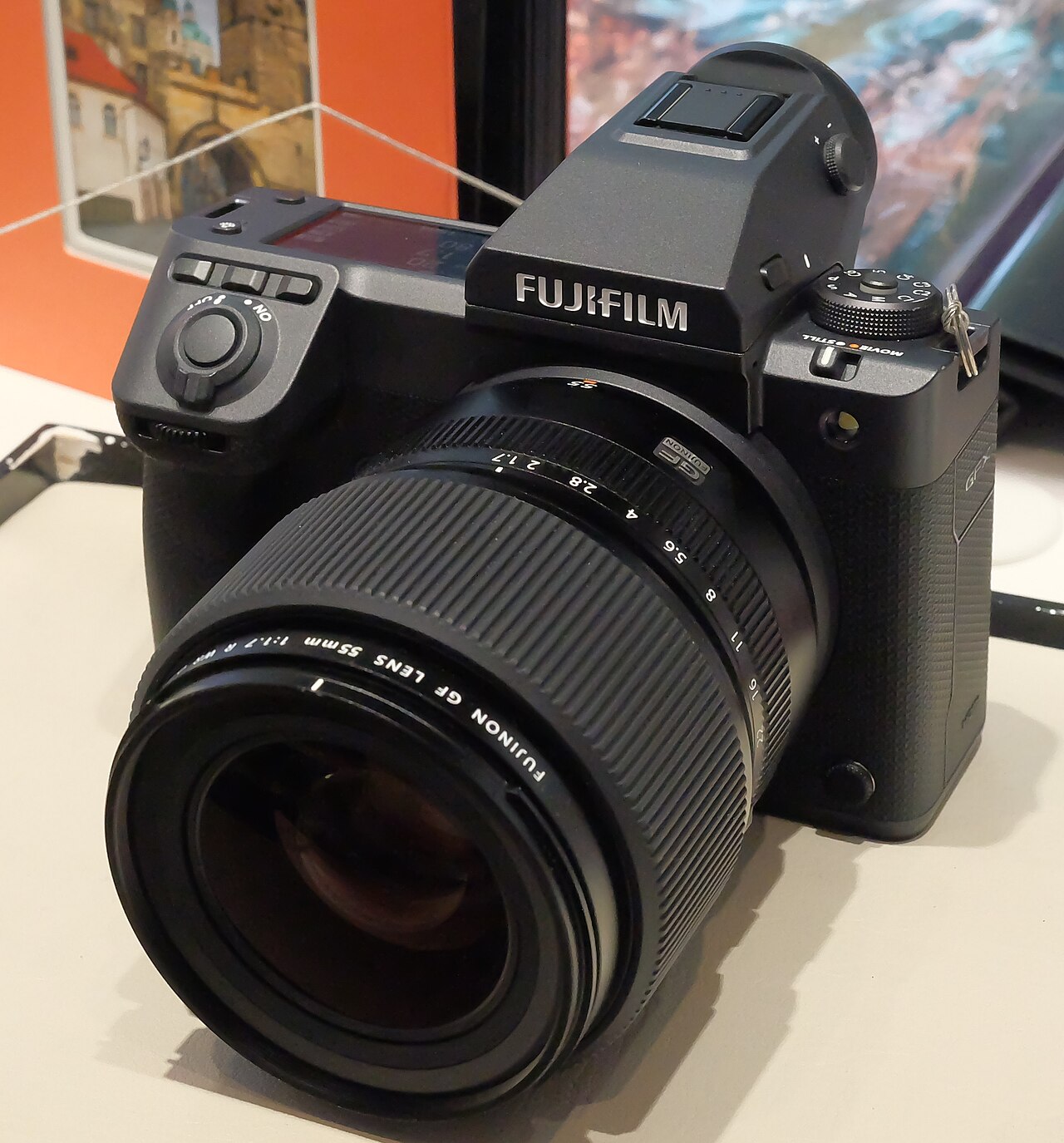
Medium format used to mean slow, deliberate, tripod-bound work — a different pace from full frame, chosen for image quality alone. The Fujifilm GFX100 II is Fujifilm's attempt to keep that image quality while narrowing the gap in speed and usability, and it mostly succeeds. Its 102-megapixel sensor is physically larger than a full-frame chip, gathering light and rendering tonal transitions in a way full frame can't quite match, and it now sits behind faster autofocus, better burst shooting, and 8K video. At $7,499 for the body, it's aimed at photographers who need the best possible file and are willing to build a system around getting it.
昼落ち / Wikimedia Commons (CC BY 4.0)
I want to be clear up front about who that is and isn't, because this is an expensive, specific tool. If you're a commercial, fashion, landscape, or fine-art photographer who prints large or sells detail, the GFX100 II is a joy. If you're a generalist looking for one camera to do everything, the format's realities — lens speed, file size, and cost — will fight you at every turn.
The sensor and the files
The 102MP medium-format sensor is the entire reason to consider this camera. The larger sensor area means each detail is captured with more information, giving files that hold up under extreme enlargement and heavy retouching. Skin tones, subtle color gradations, and the rolloff from highlight to shadow have a quality that photographers describe as depth or dimensionality — hard to quantify, obvious in a large print. Fujifilm's color science, honed over years of film-simulation profiles, gives you pleasing output straight out of camera on top of raw files with enormous editing latitude.
昼落ち / Wikimedia Commons (CC BY 4.0)
Then there's the practical weight of all that data. A single 102MP raw is roughly 200MB, and a pixel-shift multi-shot composite — which combines several exposures for even higher resolution on static subjects — balloons far beyond that. This changes everything downstream: you need fast cards, capacious drives, a serious backup regime, and a computer that won't choke retouching those files. The cost of the GFX100 II doesn't end at the body; a proper storage and processing pipeline is part of the purchase.
Design and handling a big camera
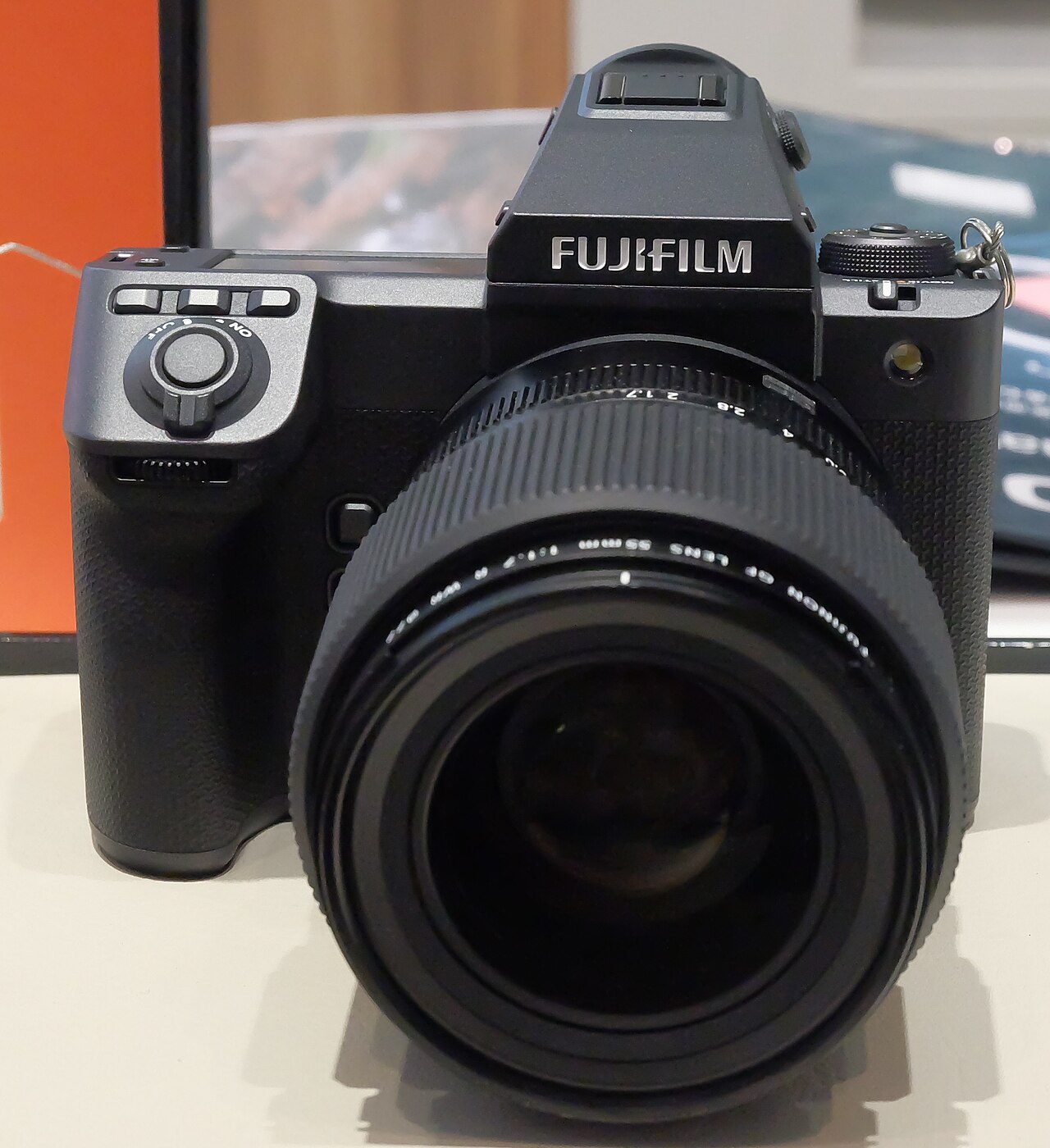
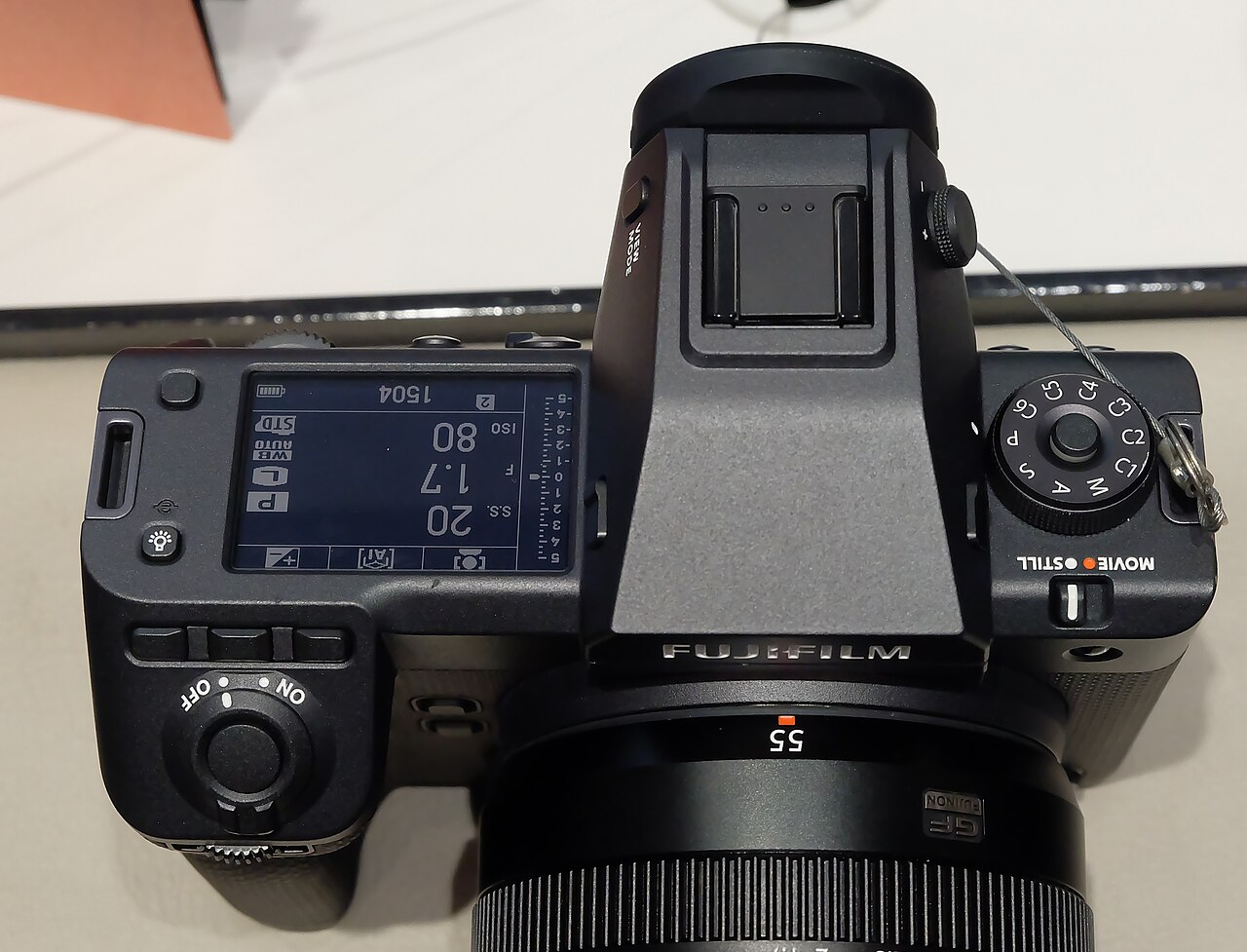
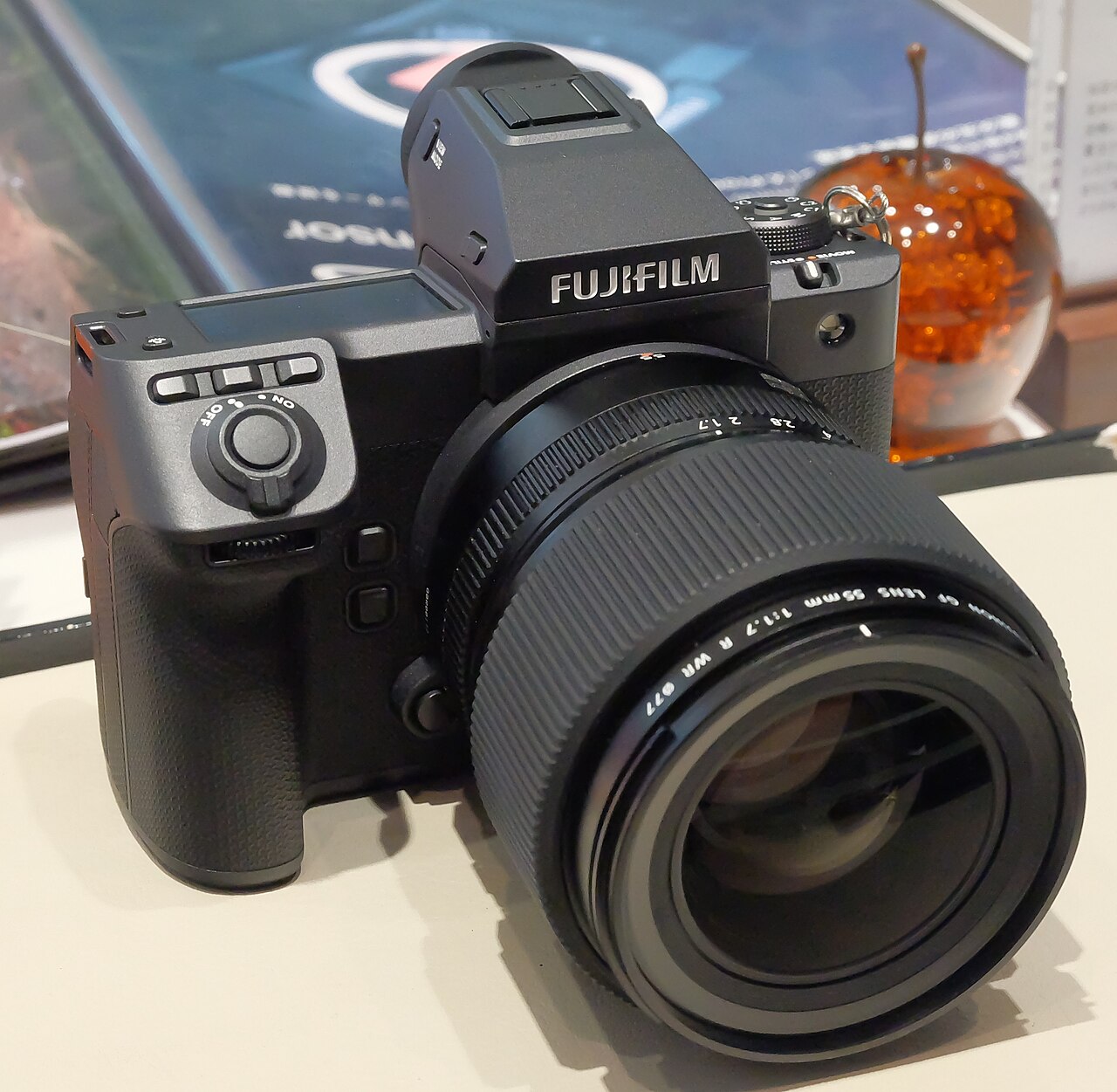
The GFX100 II is a substantial body of roughly a kilogram before you attach a lens, and its medium-format lenses are correspondingly large. This is not a discreet street camera or a travel-light kit; it's a considered instrument you commit to carrying. That said, Fujifilm has made it more livable than medium format used to be. The grip is comfortable for the size, the top and rear controls follow Fujifilm's tactile philosophy, and the tilting high-resolution rear screen and enormous, detachable electronic viewfinder make composing and checking critical focus genuinely pleasant.
昼落ち / Wikimedia Commons (CC BY 4.0)
The in-body stabilization is the unsung hero here. Strong IBIS on a 102MP sensor means you can shoot handheld in situations that would once have demanded a tripod, which is a meaningful expansion of where medium format can go. It doesn't turn the GFX100 II into a run-and-gun camera, but it removes a real barrier.
Autofocus and speed, in context
Judge the GFX100 II's autofocus against full-frame flagships and it will disappoint; judge it against previous medium-format cameras and it's a genuine leap. The 425-point phase-detection system with subject detection is quicker and more confident than any prior GFX, tracking eyes and faces well enough for controlled portrait and fashion work. Burst shooting is faster than medium format has any right to be. But this is not a sports or wildlife camera. Continuous tracking of fast, erratic subjects is where full-frame systems from Sony, Canon, and Nikon still dominate, and the relatively slow maximum apertures of medium-format lenses compound the challenge in low light. Match the camera to deliberate subjects and it performs; ask it to chase action and it will let you down.
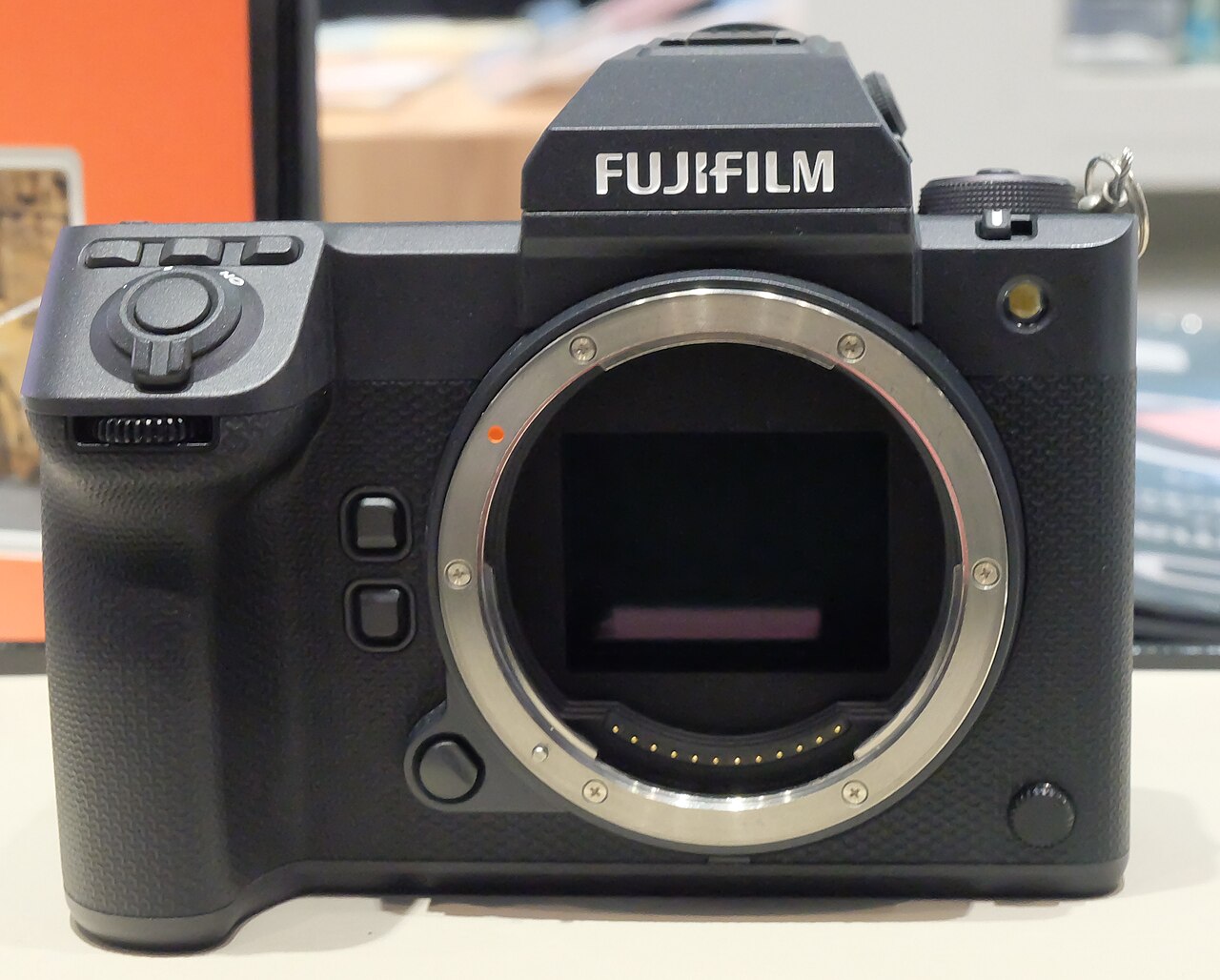
昼落ち / Wikimedia Commons (CC BY 4.0)
The lens question, which is the real question
Here is where prospective buyers must be honest with themselves. The Fujifilm G-mount lens lineup is good and growing, with excellent primes and zooms optimized for the huge sensor, but it is small compared with full-frame ecosystems, and — critically — most G-mount lenses are relatively slow in maximum aperture. There's no wall of fast f/1.2 primes or cheap third-party glass here. The optics that exist are superb and sharp enough to resolve 102 megapixels, which is the point, but you're choosing from a curated shelf, not a warehouse, and you'll pay premium prices for it. If your work depends on very fast apertures for extreme shallow depth of field or low light, medium format's lens realities may frustrate you.
Video worth taking seriously
Unusually for a high-resolution medium-format body, the GFX100 II records 8K30 and 4K60, and the output benefits from the large sensor's detail and Fujifilm's color. For a commercial photographer who occasionally needs high-end video, or a hybrid shooter wanting a distinctive medium-format look for motion, it's a real capability rather than a checkbox. It won't displace a dedicated cinema camera, and the enormous data rates demand fast cards and patient storage, but the fact that a 102MP studio camera shoots credible 8K at all is remarkable.
Cards, storage, and total cost of ownership
The GFX100 II uses a CFexpress Type B slot alongside an SD UHS-II slot. The Type B card is effectively required for high-bitrate video and for keeping up with sustained bursts of those enormous raws; SD alone will bottleneck the camera. Beyond cards, plan realistically for storage — with roughly 200MB files, a busy shoot fills terabytes quickly, and pixel-shift composites accelerate that further. Battery life is respectable for the class, but the sensor, EVF, and video ambitions mean you should carry spares for a full session. Treat the body price as the entry fee to a system, not the total.
How it compares
The natural rival is the Hasselblad X2D 100C, which uses a sensor of the same 100MP class in a smaller, more minimalist body with Hasselblad's celebrated color and a beautifully simple interface. The X2D is the more elegant object and arguably the more refined photographic experience, but the GFX100 II counters with far faster autofocus, better burst speed, 8K video, and a larger lens ecosystem — it's the more versatile working tool, while the Hasselblad is the more contemplative one.
At the high end, Phase One systems out-resolve and out-price everything here, serving a rarefied studio and technical-camera market where budgets run into five figures for the body alone; the GFX100 II delivers a large share of that image quality for a fraction of the cost, which is exactly its market position. And from below, high-resolution full-frame bodies like the Sony A7R V at 61MP increasingly crowd the GFX's territory, offering much of the resolution with faster autofocus, faster lenses, deeper lens catalogs, and far lower prices. That full-frame pressure is the GFX100 II's most serious competition: you buy medium format specifically for the sensor size and rendering that full frame can't replicate, and you must value those enough to accept the tradeoffs.
Who should buy it
Buy the GFX100 II if you're a commercial, fashion, product, landscape, or fine-art photographer whose work is sold, printed large, or scrutinized at the pixel level, and who wants the tonal quality and resolution only a larger sensor delivers. It's also the right pick for the studio shooter who has been eyeing medium format but wanted autofocus and speed that don't feel like a step back a decade — this is the GFX that finally handles like a modern camera.
Who should skip it
Skip it if you want one do-everything camera; the format's file sizes, lens speeds, and cost make it a poor generalist. Skip it if you shoot sports, wildlife, or fast action, where full-frame autofocus and fast telephotos are simply better tools. Skip it if you need fast apertures and a broad, affordable lens selection, because G-mount doesn't offer that. And skip it if you can't support 200MB files with proper storage and a capable computer — the workflow burden is real and unglamorous.
Verdict
The GFX100 II is the most usable medium-format camera Fujifilm has made, pairing an extraordinary 102MP sensor with autofocus, burst speed, and video that finally feel modern. For the photographer who genuinely needs the biggest, most detailed files and the tonal rendering only a larger sensor provides, it's the best value in medium format and a pleasure to shoot. But it demands a specific commitment — to its curated, mostly slow lenses, to its heavy files, and to its $7,499 price — and it rewards only the buyer whose work justifies all three. Know exactly why you want medium format before you buy, and the GFX100 II will deliver. Buy it on aspiration alone and a high-resolution full-frame body would have made you happier for less.