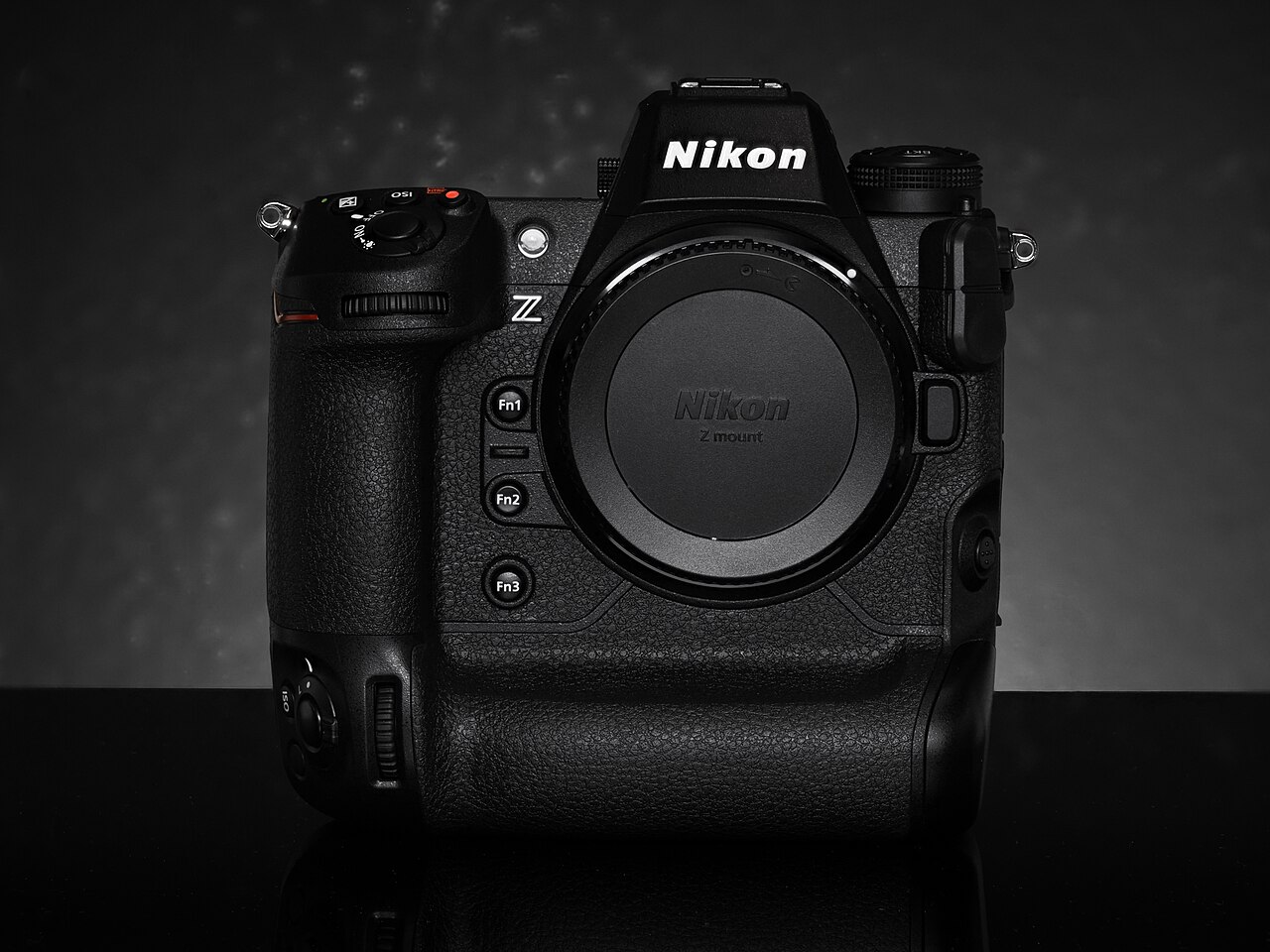
Overview: a flagship for people who cannot treat the camera gently
The Nikon Z9 is not trying to be the most reasonable way into Nikon's best hybrid technology. It is Nikon's no-apology professional body: 45.7MP full-frame CMOS resolution, 493-point hybrid AF, 8K 60p video, 4K 120p video, 5-axis IBIS rated at 6 stops, and a 5,496 USD price that tells you immediately who it is for. This is the camera for the photographer who wants the body, controls, durability, and working rhythm of a flagship as much as the files themselves.
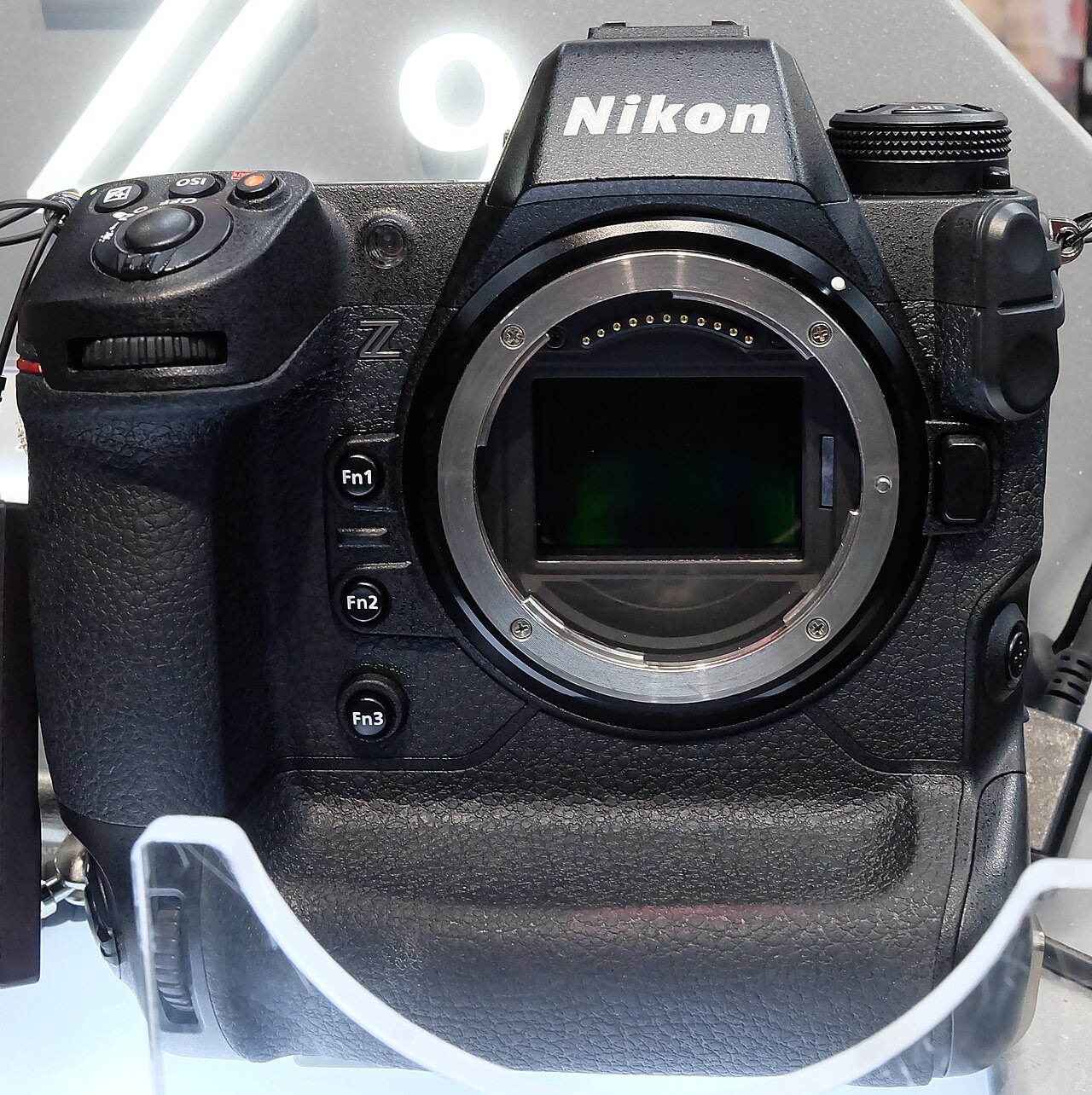
昼落ち / Wikimedia Commons (CC BY-SA 4.0)
That matters because the Z9 and Z8 should not be reduced to a price comparison. The Z8 is the smaller, less expensive way to reach much of Nikon's hybrid firepower. The Z9 is the one you buy when the camera is going to live on a sideline, in a press pit, beside a wildlife blind, or inside a commercial workflow where confidence is worth carrying a larger body. If the Z8 is the smarter travel companion, the Z9 is the assignment appliance.
The Z9 is also easy to overbuy. A large, expensive, deeply featured professional camera is a poor match for a hobbyist who wants convenience, a creator who mainly films casual clips, or a photographer who has not already accepted the cost of fast cards, serious lenses, and a deliberate setup process. The camera's strength is that it refuses to be casual. Its weakness is exactly the same thing.
Brief buying profile
The Z9 is for sports, wildlife, press, event, commercial, and hybrid professionals who want a flagship Nikon mirrorless body around a 45.7MP sensor and serious 8K/4K video modes. It is not for buyers trying to keep a kit light, not for travelers who count every ounce, not for people who are still unsure about Nikon Z lenses, and not for anyone who wants an easy menu. For the typical Z8 buyer, the Z9 is the wrong body because its size and price solve problems that may not exist in a smaller hybrid workflow.
Design and build: the body is part of the feature set
A flagship camera has to earn its bulk. The Z9's rugged professional build is not decoration; it is the reason to choose it over the smaller body with similar headline imaging. The large chassis gives Nikon room to create a camera that feels planted with serious lenses, comfortable in vertical orientation, and mentally reassuring when the job does not allow hesitation. The value is not just durability. It is the confidence that the camera is meant to be worked hard.
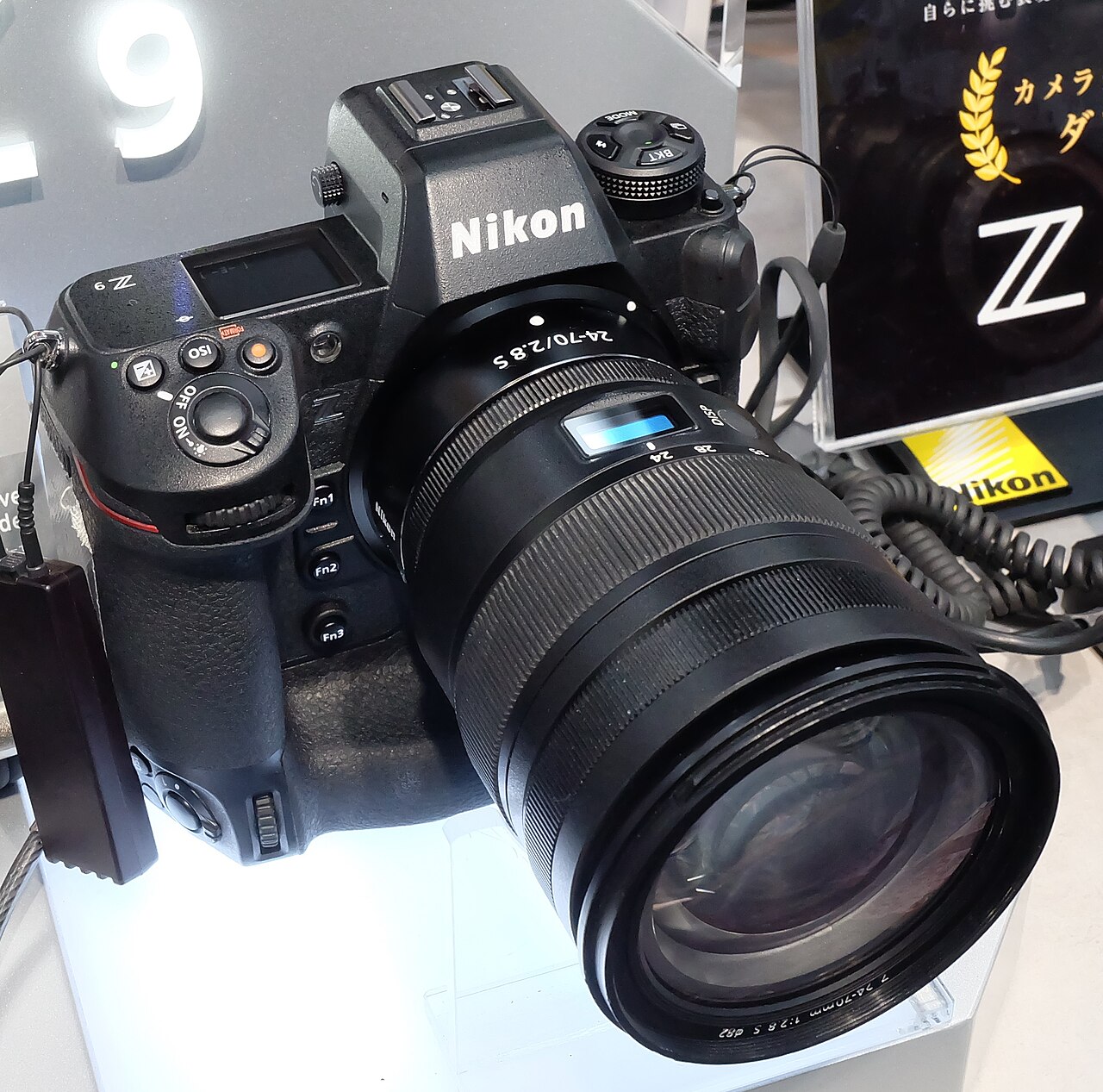
昼落ち / Wikimedia Commons (CC BY-SA 4.0)
That confidence has a price beyond 5,496 USD. The Z9 is large and heavy enough that ownership changes how you pack. A travel photographer who moves through airports with two lenses and a laptop will feel the penalty. A wedding shooter carrying two bodies for 10 hours may prefer a smaller shape. A studio photographer who works from a tripod may not need the bulk. The Z9 is not a universal upgrade; it is a body designed around pressure, repetition, and long days.
The control layout and feature density suit a professional who wants direct access and custom behavior. They are less friendly to a buyer who hopes the camera will stay invisible. The Z9 gives you 493-point hybrid AF, 8K 60p recording, 4K 120p recording, 45.7MP files, and 5-axis stabilization rated at 6 stops; each of those capabilities brings decisions. Autofocus modes, file sizes, video formats, storage choices, button assignments, and still/video switching all need to be understood before paid work.
Ruggedness also has an emotional component. When a camera costs 5,496 USD, buyers expect it to feel like a professional object, not a delicate luxury item. The Z9 does. But photographers who do not need that feeling should admit it early. The Z8 exists precisely because many people want Nikon's high-end hybrid engine without carrying the flagship body. If smaller size is a daily advantage for you, the Z9's build quality will not make the weight disappear.
Performance in the field: stills, video, and assignment pressure
The Z9's performance story starts with the 45.7MP full-frame CMOS sensor. It gives enough resolution for cropping wildlife frames, delivering editorial stills, printing large, shooting commercial detail, and retaining flexibility when a subject does not fill the frame. The files are not merely big for bragging rights. In professional use, 45.7MP can rescue composition, support multiple crops from one moment, and satisfy clients who ask for both horizontal and vertical versions after the shoot.
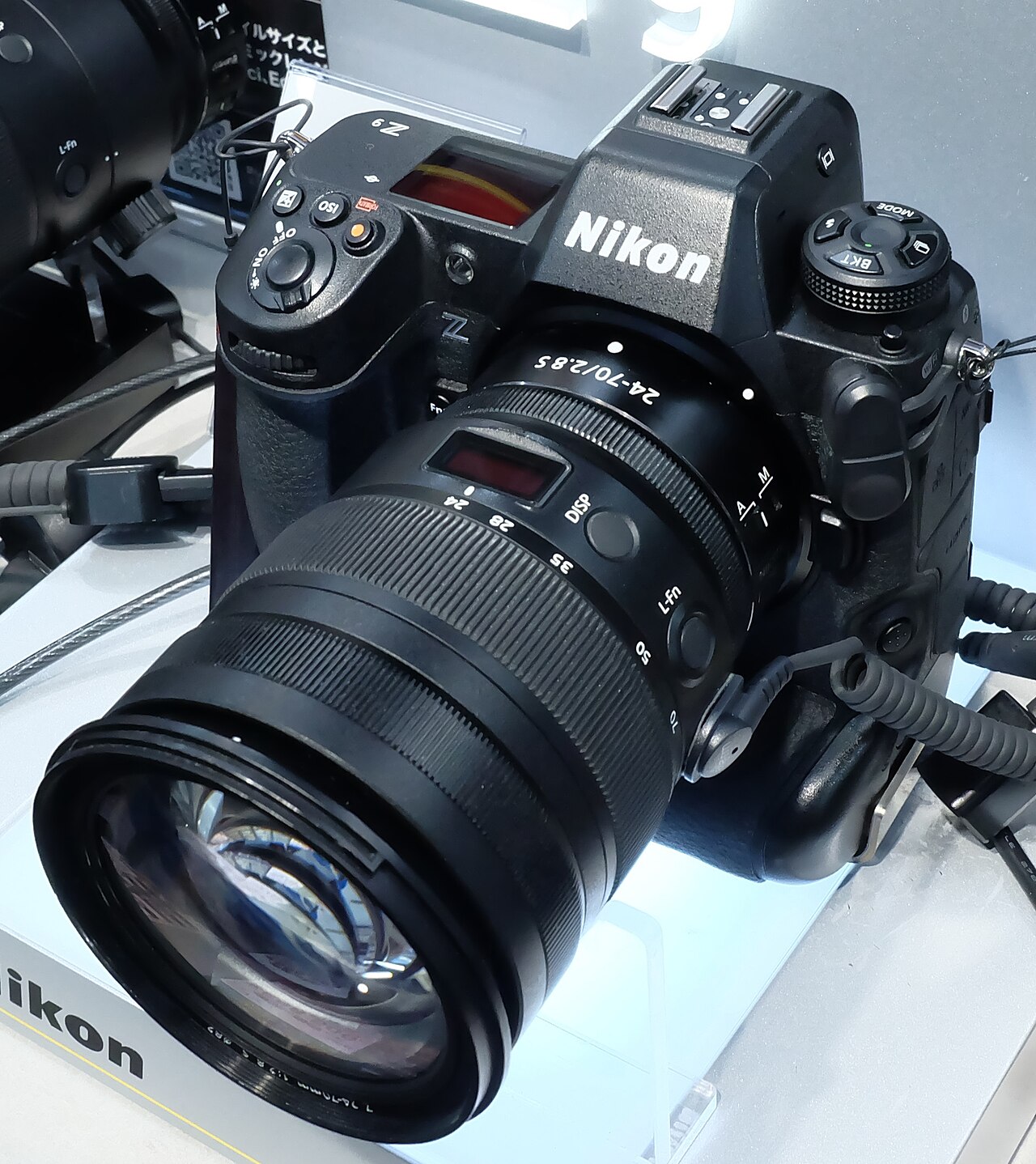
昼落ち / Wikimedia Commons (CC BY-SA 4.0)
The 493-point hybrid AF system is what makes that resolution useful in motion. A high-resolution camera that misses focus is just a large disappointment. The Z9's autofocus promise is about keeping fast, unpredictable work inside the camera's comfort zone: field sports, animals, ceremonies, stage events, and moving subjects in mixed light. It will not replace anticipation, lens choice, or good positioning, but it gives working photographers a sophisticated tracking platform instead of a slow studio-only high-resolution body.
Video is not an afterthought. 8K 60p and 4K 120p make the Z9 a serious hybrid body for crews that need detailed capture, slow motion, and one Nikon system for stills and motion. The important question is not whether 8K looks impressive. It is whether your clients, archive, cropping workflow, or post-production pipeline benefit from it. For many professionals, 4K delivery from an 8K source can be valuable. For casual creators, the same mode may only expose weak storage and editing hardware.
The 5-axis IBIS rated at 6 stops helps the camera stay practical outside controlled setups. It assists with handheld documentary stills, available-light interiors, and static subjects when a tripod would slow the job. The Z9 remains a large body, though, and stabilization does not change the physics of long lenses or moving subjects. It is a useful professional aid, not permission to abandon support gear.
Where the Z9 distinguishes itself from smaller high-end bodies is not a single specification. It is the way the whole package supports repetition. A flagship body is built for thousands of decisions: follow the runner, switch orientation, shoot a burst, grab a 4K clip, transmit a frame, go back to stills, repeat. The Z9 is compelling when that rhythm describes your work. If your rhythm is slower, lighter, and more deliberate, the body may be solving someone else's problem.
The complexity is real. A camera this capable can waste your time if you refuse to master it. The feature set is deep enough that an owner should build banks for different jobs, practice autofocus behavior, decide when 8K is worth the cost, and test the storage chain before a client is watching. Professionals will see this as normal preparation. Casual buyers may experience it as friction.
Alternatives compared: Z8, Canon EOS R5 Mark II, Sony A1 II, and Canon EOS R3
The Nikon Z8 is the comparison that matters most because it challenges the Z9 from inside the same family. If you want a smaller camera with a 45.7MP sensor, 493-point hybrid AF, 8K 60p, 4K 120p, and a lower price, the Z8 is brutally persuasive. The Z9 answers with body-first advantages: flagship handling, rugged presence, and a shape that makes sense for big lenses and vertical shooting. Choose the Z8 for mobility. Choose the Z9 for assignment confidence.
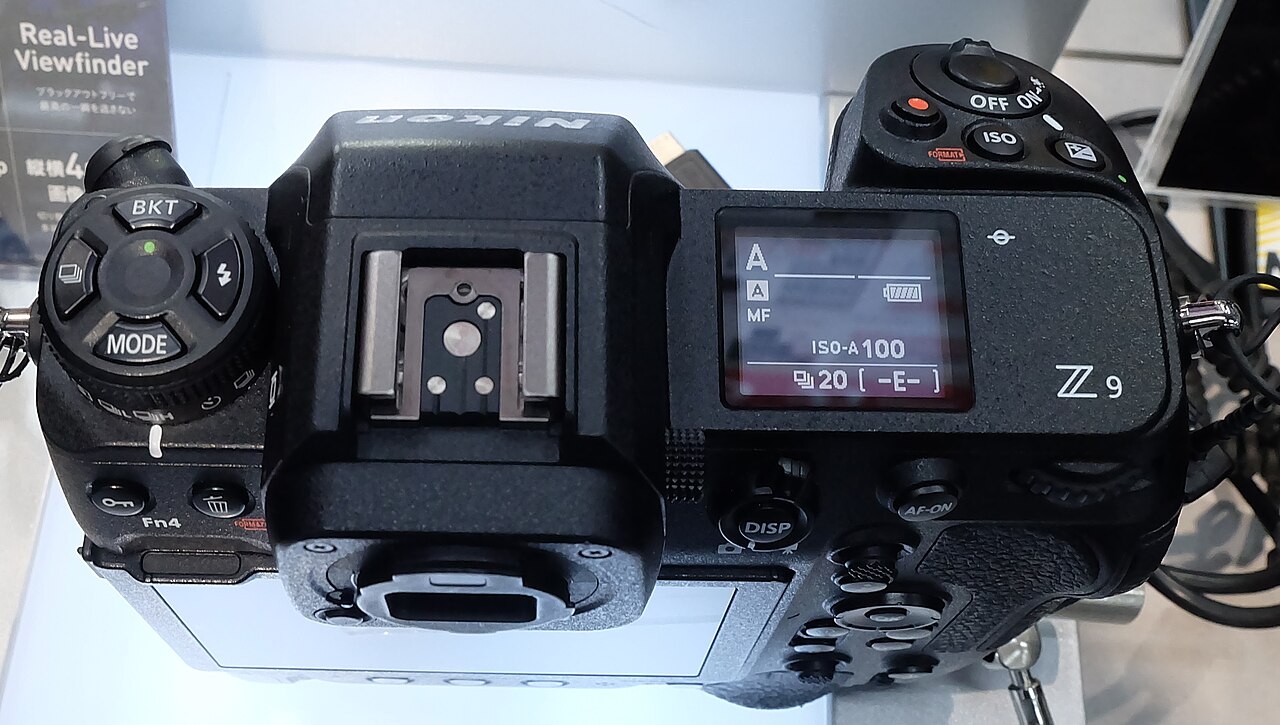
昼落ち / Wikimedia Commons (CC BY-SA 4.0)
Canon EOS R5 Mark II competes as the high-resolution hybrid for photographers already invested in Canon. Canon's appeal is a different ergonomic language, a different autofocus interface, and an RF lens path that may fit certain shooters better. The Z9 is the more unapologetically pro-bodied Nikon answer. A Canon owner should not switch lightly. A Nikon owner who wants a flagship should not pretend the Canon is interchangeable just because both sit in the high-end hybrid conversation.
Sony A1 II is the natural Sony rival for buyers comparing top-tier mirrorless ecosystems. Sony's strength is the breadth of the E-mount world and a premium hybrid body for professionals who already prefer Sony's autofocus behavior and lens options. Nikon's Z9 counters with its own professional handling, 45.7MP resolution, 8K 60p, 4K 120p, and a body that feels designed around punishing assignments. The better choice depends less on internet ranking and more on the lenses, controls, and service expectations surrounding your work.
Canon EOS R3 is a useful foil because it represents another kind of professional body: speed, ergonomics, and reliability for working shooters who may not prioritize the same high-resolution brief. The Z9 is more attractive if you want Nikon's 45.7MP files alongside flagship durability. The R3 makes sense for Canon professionals whose work values body feel and system continuity over switching for a different sensor philosophy.
Panasonic Lumix S1R II and Fujifilm GFX100 II are less direct but still relevant alternatives for certain buyers. Panasonic may suit hybrid shooters who prefer L-mount and a video-oriented interface. Fujifilm's medium-format path is for controlled image-making rather than the Z9's action-ready brief. The Z9 sits between these worlds: higher resolution than many action bodies, faster and more operationally aggressive than slow studio-first cameras.
Who should buy the Nikon Z9
Buy the Z9 if you earn money in situations where the camera must feel overbuilt. Sports photographers, wildlife shooters, agency freelancers, stage and event photographers, and commercial hybrids are the natural audience. The 45.7MP sensor gives room to crop. The 493-point hybrid AF system gives a modern tracking foundation. The 8K 60p and 4K 120p modes make the body credible when a client expects video from the same operator.
Buy it if you already know why a flagship body matters. That is the dividing line. If you have to be convinced that the larger shape is useful, you may be a Z8 buyer. If you immediately think about long lenses, vertical frames, weather, battery planning, grip comfort, and backup workflows, the Z9 will make more sense. The 5,496 USD price is easier to defend when the body prevents hesitation on paid work.
Do not buy it because it is the most imposing Nikon mirrorless camera. Status is a bad purchasing strategy. Do not buy it if the camera will mostly sit on a shelf between vacations. Do not buy it if you are still building basic technique. A lighter and less expensive body will serve many photographers better, especially if the savings buy a lens or travel opportunity.
Do not buy it if you are the ideal Z8 user. That sounds obvious, but it is the mistake many spec-focused buyers make. If your work is hybrid travel, documentary, landscape, corporate video, weddings with a light harness, or a one-bag kit, the Z9 can become a burden. The Z8 gives much of the Nikon high-end experience in a body that is easier to bring along. For that buyer, the Z9 is not more professional; it is less practical.
Final verdict
The Nikon Z9 succeeds because it knows exactly what kind of camera it is. It is a 5,496 USD flagship with 45.7MP stills, 493-point hybrid AF, 8K 60p video, 4K 120p video, and 5-axis IBIS rated at 6 stops, built for professionals who value body confidence as much as image quality. It is expensive, large, and complex. Those are not side notes. They define the product.
If you need a pro Nikon body for demanding assignments, the Z9 is the right answer. If you want the most portable version of Nikon's high-end hybrid idea, buy the Z8 instead. The Z9 should be purchased by people who will exploit the flagship body every week, not by people who merely admire it. That clarity is what makes it compelling and what keeps it from being the default recommendation.