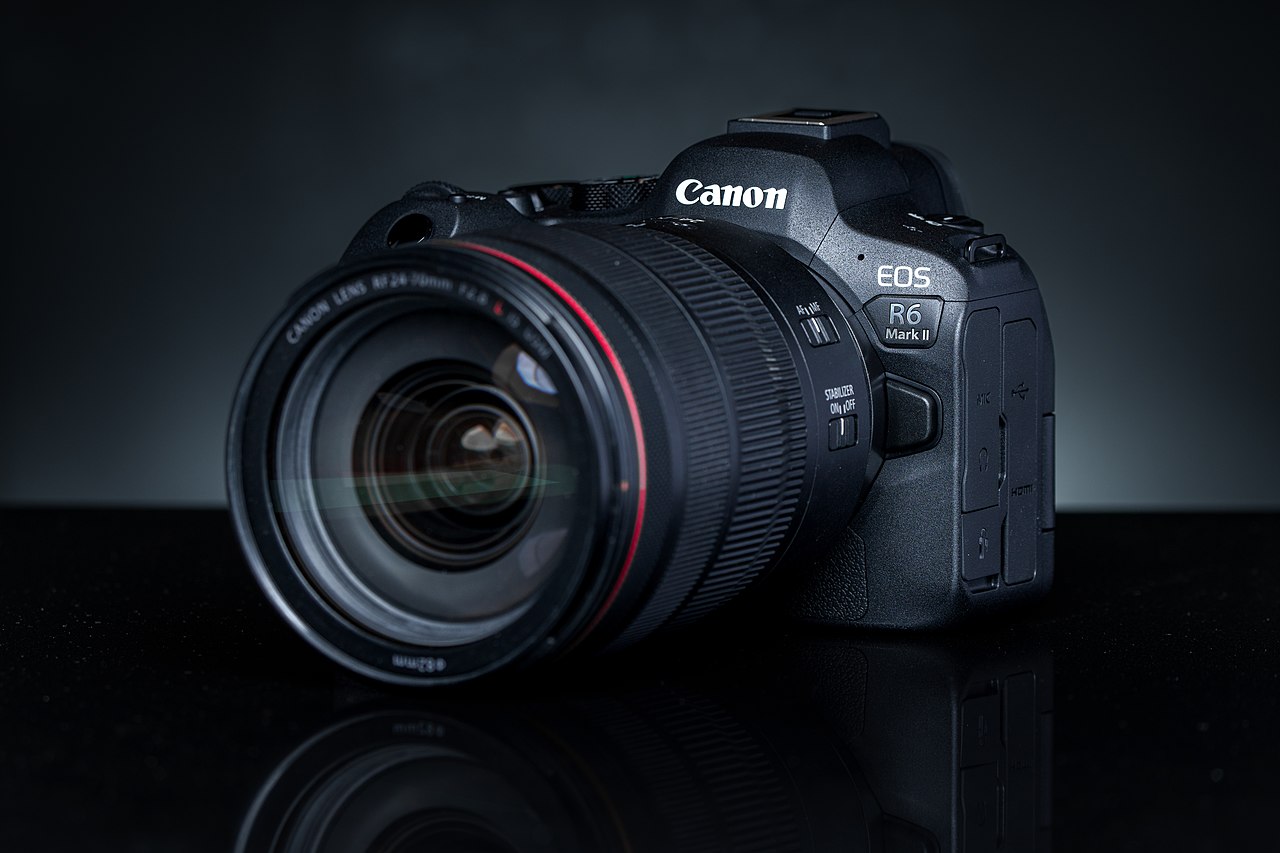
Overview: Canon's hybrid full-frame body for serious creators
The Canon EOS R6 Mark II is the Canon full-frame body I would recommend to creators who care more about getting paid work finished than winning a megapixel argument. Its 24.2MP Full-Frame CMOS sensor, Dual Pixel CMOS AF II, 4K 60p video, 6K RAW capability, 5-axis in-body stabilization rated at 8 stops, and 2,499 USD body price give it a clear identity: fast, flexible, and serious, but not a resolution trophy. If you mostly shoot huge landscape prints, need the cheapest possible full-frame body, or hate configuring complex menus, this is not the camera I would push you toward.
What Canon is offering here is balance. The 24.2MP sensor is not designed to win a resolution contest against every rival body. Instead, it gives working photographers enough detail for events, portraits, documentary work, travel, family sessions, web campaigns, and many print needs while keeping the camera positioned as a fast, flexible full-frame tool. The 4K 60p and 6K RAW headline also matters because the R6 Mark II is not a stills camera with video as an afterthought. It is a body for creators who need credible video features without stepping into a cinema-only system.
The real buying question is not simply whether the EOS R6 Mark II is good. It is whether its mix of excellent autofocus, strong low-light potential, professional video features, reliable build quality, limited resolution versus some competitors, premium pricing, and menu complexity matches the work you actually do. For hybrid shooters, that mix is unusually coherent. For specialists who need one extreme capability above all else, it can look too balanced for its own good.
Design, build, and menu workflow
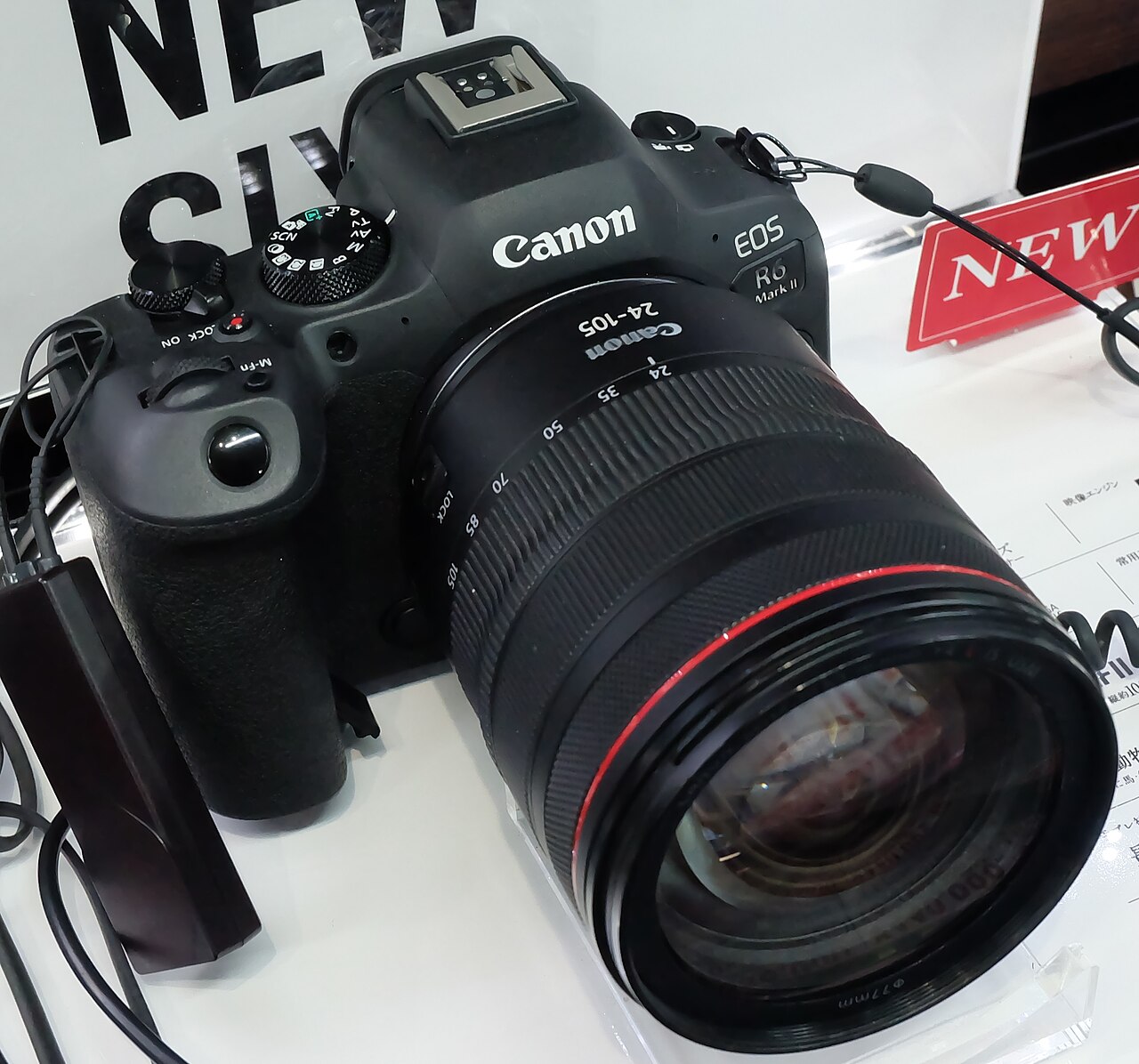
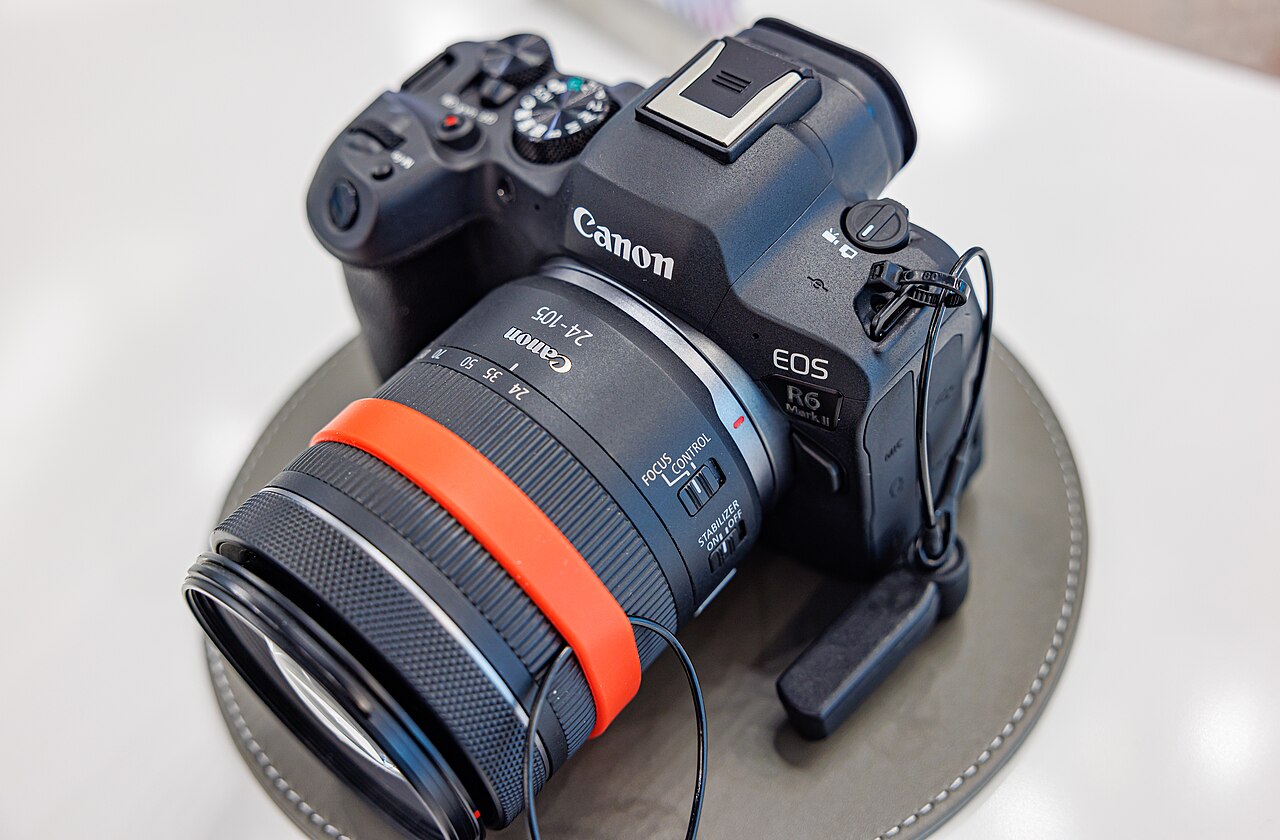
Canon bodies tend to feel familiar quickly to photographers who have used EOS DSLRs or earlier EOS R cameras, and that matters for paid work. A camera can have strong specifications and still get in the way if exposure controls, focus settings, custom buttons, and video options are buried where you cannot reach them. The R6 Mark II is aimed at users who want professional capability in a body that can be configured for repeated jobs.
昼落ち / Wikimedia Commons (CC BY-SA 4.0)
Reliable build quality is important context for the intended buyer. Wedding photographers, event shooters, travel creators, and documentary users do not work only in clean studios. They work outdoors, in crowded venues, under changing light, and around people who do not pause while you navigate a setting. A dependable body is not glamorous, but it is part of why a 2,499 USD camera can make sense for a working kit.
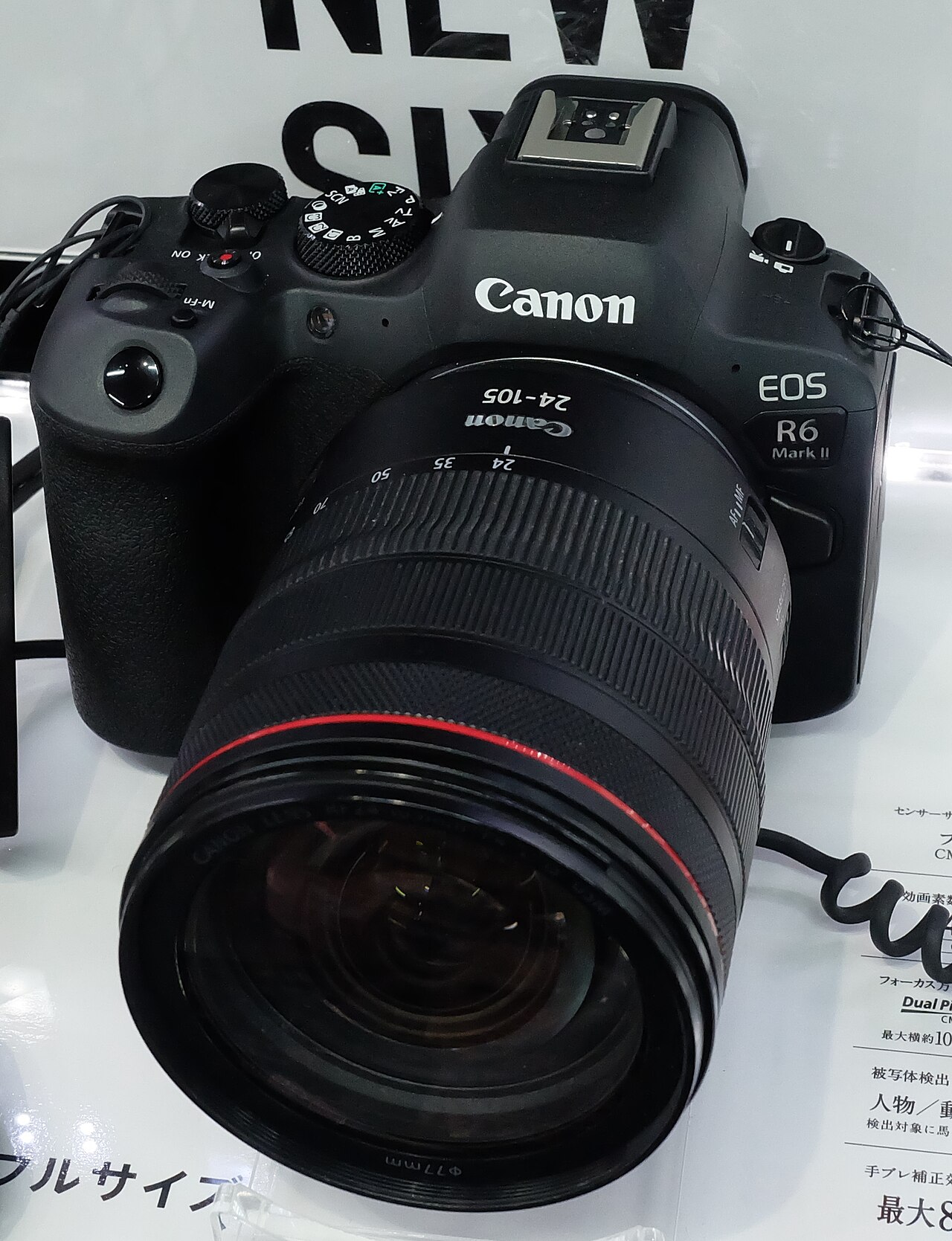
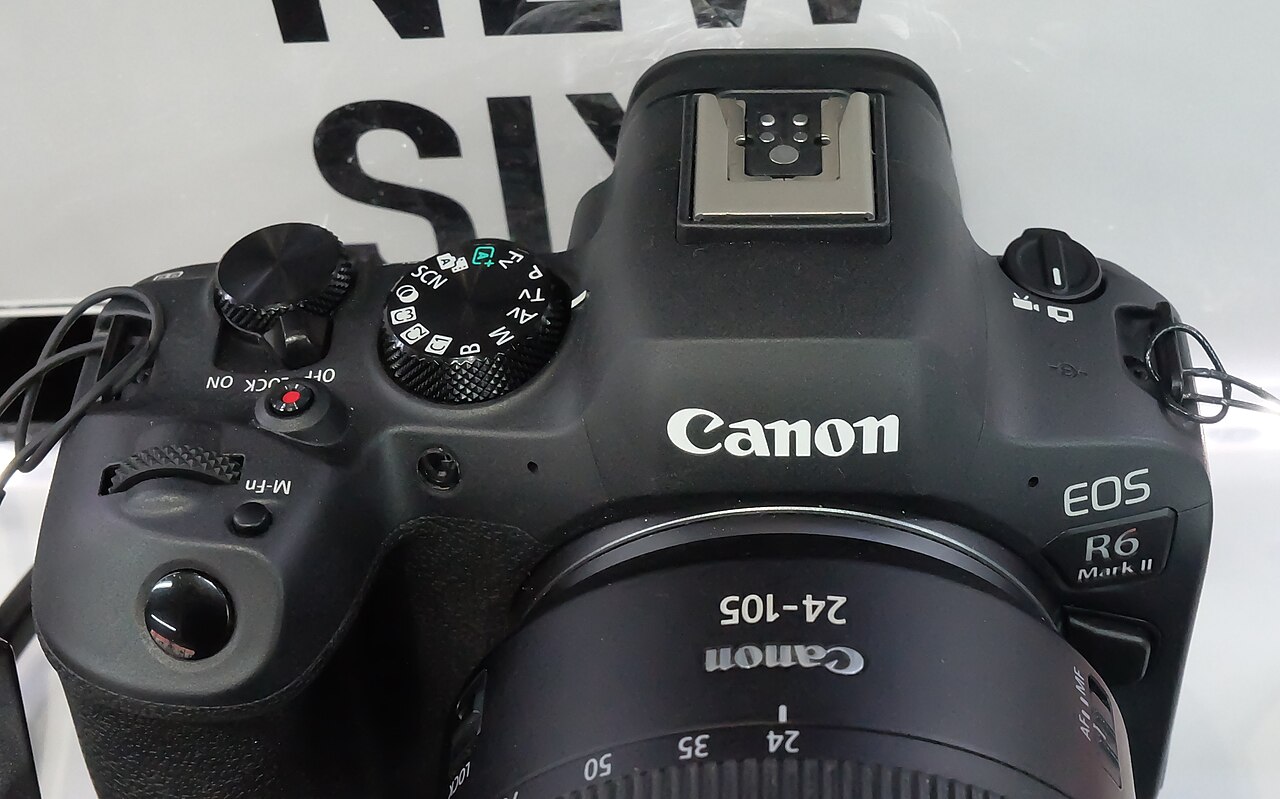
The control philosophy is also a strength. Canon's grip shape, button placement, and viewfinder-centered shooting experience are designed for long sessions. That does not eliminate the learning curve. Menu complexity is a real downside, and buyers should take it seriously. Dual Pixel CMOS AF II, 4K 60p recording, 6K RAW workflow, stabilization choices, card behavior, custom modes, and stills/video switching all create menus that reward setup time.
The practical advice is to customize the camera early. Assign autofocus modes, video settings, and frequently changed exposure tools before using it on a job. If you leave everything buried in factory menus, the R6 Mark II can feel more complicated than it needs to. If you configure it around your shooting style, the complexity becomes flexibility instead of friction.
Image quality and low-light performance
The 24.2MP Full-Frame CMOS sensor is the most important stills specification in the file. It is enough resolution for serious work, but not so much that every shoot becomes a storage and processing burden. A 24.2MP file gives room for moderate cropping, portrait retouching, editorial delivery, online publishing, and many print sizes. It is not the right choice if your business depends on heavy cropping or very large landscape prints, but it is more than enough for a wide range of professional and enthusiast assignments.
昼落ち / Wikimedia Commons (CC BY-SA 4.0)
The low-light claim is credible because of the full-frame sensor design and the 5-axis stabilization system. Full-frame sensors generally give photographers more flexibility in dim venues than smaller formats when lens choice is comparable, and the 5-axis IBIS rating of 8 stops helps with handheld stills when subject motion is not the limiting factor. That last clause matters. Stabilization can steady the camera, but it cannot freeze a moving dancer, athlete, or child. For moving subjects, shutter speed and lens aperture still decide the result.
Color and exposure behavior are also part of Canon's appeal, even though they are harder to reduce to a number. Many photographers choose Canon because they like the look of skin tones and the consistency of files across a job. The R6 Mark II's 24.2MP output sits in that tradition: the files are intended to be workable, responsive, and predictable rather than maximal at any cost.
The resolution downside is real. Some competing bodies offer more megapixels, and that can matter for commercial studio work, landscape cropping, wildlife reach, or clients who demand very large deliverables. If your first requirement is maximum detail per frame, the EOS R6 Mark II is not the obvious Canon body to choose. If your first requirement is a modern full-frame hybrid that can shoot stills and video with equal seriousness, 24.2MP is a sensible compromise.
Autofocus performance and stabilization
Dual Pixel CMOS AF II is one of the key reasons to consider this camera. Canon's autofocus system is built around confident subject acquisition and tracking, which is exactly what hybrid photographers need when switching between portraits, events, handheld video, and unpredictable subjects. The honest claim is practical rather than numerical: autofocus is a primary strength of the system, and the camera is designed around it.
昼落ち / Wikimedia Commons (CC BY-SA 4.0)
For portraits and events, strong autofocus reduces the number of missed frames when people lean, turn, laugh, walk toward the camera, or move through mixed lighting. For content creation, it makes solo video work less stressful because the camera can help keep a presenter, product, or moving subject in focus. For family and travel photographers, it means fewer moments lost to focus hesitation.
The 5-axis IBIS rating of 8 stops supports both stills and video. In stills, stabilization helps with slower shutter speeds when the subject is relatively still. In video, it smooths handheld footage and makes lightweight shooting more practical. It is not a replacement for a gimbal, tripod, or proper support when the shot requires that level of control, but it broadens what you can do with the body alone.
Stabilization also interacts with the 24.2MP sensor in a useful way. Since the camera is not chasing ultra-high pixel density, it remains approachable for handheld shooting, event work, and fast edits. The R6 Mark II's strength is not one spectacular number; it is the way Dual Pixel CMOS AF II, 5-axis IBIS, 8 stops of rated stabilization, and 24.2MP files work together.
Video performance for real-world content creation
The video capability is concise but important: 4K 60p and 6K RAW. Put plainly, the R6 Mark II belongs on a shortlist for creators who want serious video options in a stills-style body. 4K at 60 fps gives editors room for smooth motion and moderate slow-down in common timelines. 6K RAW gives advanced users a higher-end acquisition option when the workflow, storage, and editing hardware can support it.
Dinkun Chen / Wikimedia Commons (CC BY-SA 4.0)
That range is what makes the camera attractive to hybrid shooters. A wedding creator might capture stills for most of the day, then switch to 4K 60p for a short highlight sequence. A YouTube producer might use 4K at 60 fps for product movement or talking-head segments. A small commercial team might reserve 6K RAW for shots where grading latitude and post-production control matter more than file size.
The caution is workflow. 6K RAW should not be treated as a free upgrade for every user. RAW video asks more from memory cards, storage, computer hardware, backup planning, and editing software. If your delivery is mostly social clips, web ads, or client interviews, 4K 60p may be the more practical everyday mode. If you already understand RAW video handling, the 6K option increases the camera's ceiling.
The R6 Mark II also benefits from stabilization and autofocus in video work. Dual Pixel CMOS AF II helps with solo shooting, while the 5-axis IBIS system can reduce handheld jitter. The prudent conclusion is narrow but useful: 4K 60p and 6K RAW are professional enough to make the camera a credible hybrid tool rather than a stills-first body with a video checkbox.
Canon EOS R6 Mark II vs Sony A7 IV, Nikon Z6 II, Panasonic Lumix S5II, and Fujifilm X-H2S
The Sony A7 IV is the obvious cross-shop for many buyers. It is another full-frame hybrid body aimed at creators who need both stills and video. Sony's appeal is the broad E-mount ecosystem, strong third-party lens support, and a reputation for deep hybrid feature sets. The Canon answer is Dual Pixel CMOS AF II, Canon handling, RF lens integration, and the specific 4K 60p plus 6K RAW combination. Choose Sony if you are already invested in E-mount or prefer Sony's system direction. Choose Canon if the EOS interface and RF roadmap fit your work better.
The Nikon Z6 II and newer Nikon Z6-family bodies are alternatives for photographers who like Nikon ergonomics, Nikon color, and Z-mount lenses. Nikon is especially attractive when a buyer already owns compatible glass or prefers the way Nikon bodies handle stills. The R6 Mark II competes by emphasizing Canon's autofocus behavior, 24.2MP full-frame balance, and video specifications that make sense for mixed media creators.
The Panasonic Lumix S5II is a strong rival for video-minded users. Panasonic's strength is the way it treats video tools as central rather than secondary, and L-mount buyers may prefer that ecosystem. The Canon is more appealing if you want a familiar stills camera that also gives you 4K at 60 fps and 6K RAW in the same body. Panasonic may be the better fit for users who think like filmmakers first; Canon may be the better fit for photographers who increasingly deliver video.
The Fujifilm X-H2S is different because it comes from another sensor-format philosophy and an ecosystem known for tactile controls and film simulation workflows. It can be a compelling alternative for creators who want speed, distinctive color tools, or a smaller-system feel. The EOS R6 Mark II makes more sense for buyers who specifically want full-frame Canon files, Canon autofocus behavior, and RF lenses.
The comparison comes back to priorities. If resolution is the top concern, look beyond the R6 Mark II. If price is the top concern, there are cheaper bodies. If the goal is a polished full-frame hybrid with 24.2MP stills, Dual Pixel CMOS AF II, 4K 60p, 6K RAW, and 8-stop-rated stabilization, the Canon remains highly competitive.
Who should buy the EOS R6 Mark II?
Buy the Canon EOS R6 Mark II if you are a hybrid shooter who needs one body to handle paid stills, serious video, and unpredictable subjects. It is especially well matched to weddings, events, portraits, documentary projects, travel work, family storytelling, small business media, and creator channels where stills and video both matter. The 24.2MP sensor keeps files manageable, while 4K 60p and 6K RAW give the video side room to grow.
It is also a natural upgrade for Canon users who already own RF lenses or want to move deeper into the EOS R system. Familiar handling and lens compatibility can matter more than a spec-sheet win from another brand. If you shoot under pressure, knowing where everything is can be worth more than a feature you rarely use.
Do not buy it if maximum resolution is non-negotiable. Do not buy it if 2,499 USD is already stretching the budget before lenses, cards, batteries, storage, and editing hardware. Do not buy it if you want the simplest possible menu system. And do not buy it if your video workflow requires a specialized cinema body rather than a hybrid camera.
Verdict: a balanced RF body, not a resolution trophy
The Canon EOS R6 Mark II earns its place by being practical in many demanding situations. Its 24.2MP Full-Frame CMOS sensor, Dual Pixel CMOS AF II autofocus, 4K 60p video, 6K RAW option, and 5-axis IBIS rated at 8 stops create a strong hybrid package. The 2,499 USD price is premium, and the menus require setup time, but the capabilities support the cost for buyers who will use both stills and video features.
The main limitation is not hidden: 24.2MP trails higher-resolution alternatives for some work. That does not make the camera weak; it makes it specific. For creators who want a full-frame Canon body that can move from portraits to events to 4K at 60 fps footage without feeling like a compromise, the EOS R6 Mark II is one of the most sensible choices in the RF lineup.