Introduction
The Goal Zero Yeti 500X is a likable, well-built camping battery saddled with a price that time has passed by. For $699 you get 505 watt-hours, a 300-watt inverter, a bright display, and one of the better companion apps in the category. Those are real strengths. But in a market where a 768Wh lithium iron phosphate station with a 1,200-watt inverter now sells for a little over half that money, the Yeti 500X asks you to pay a heavy premium for the Goal Zero badge and ecosystem.
Let us be clear about what this unit is for, because the old marketing oversold it. This is a camping, tailgating, and van-life power source for lights, phones, laptops, fans, a small cooler, and — with an important caveat — a CPAP machine. It is not a home backup unit. Its 300-watt inverter will not start most refrigerator compressors, and 505Wh would not carry a fridge through a long outage even if it could. Judge it as a portable station for modest loads and it does fine work. Judge it against its own price and its newer rivals, and it struggles. That tension runs through this entire review: nearly everything the Yeti does well, a cheaper station now does at least as well, and often better.
Design and Build
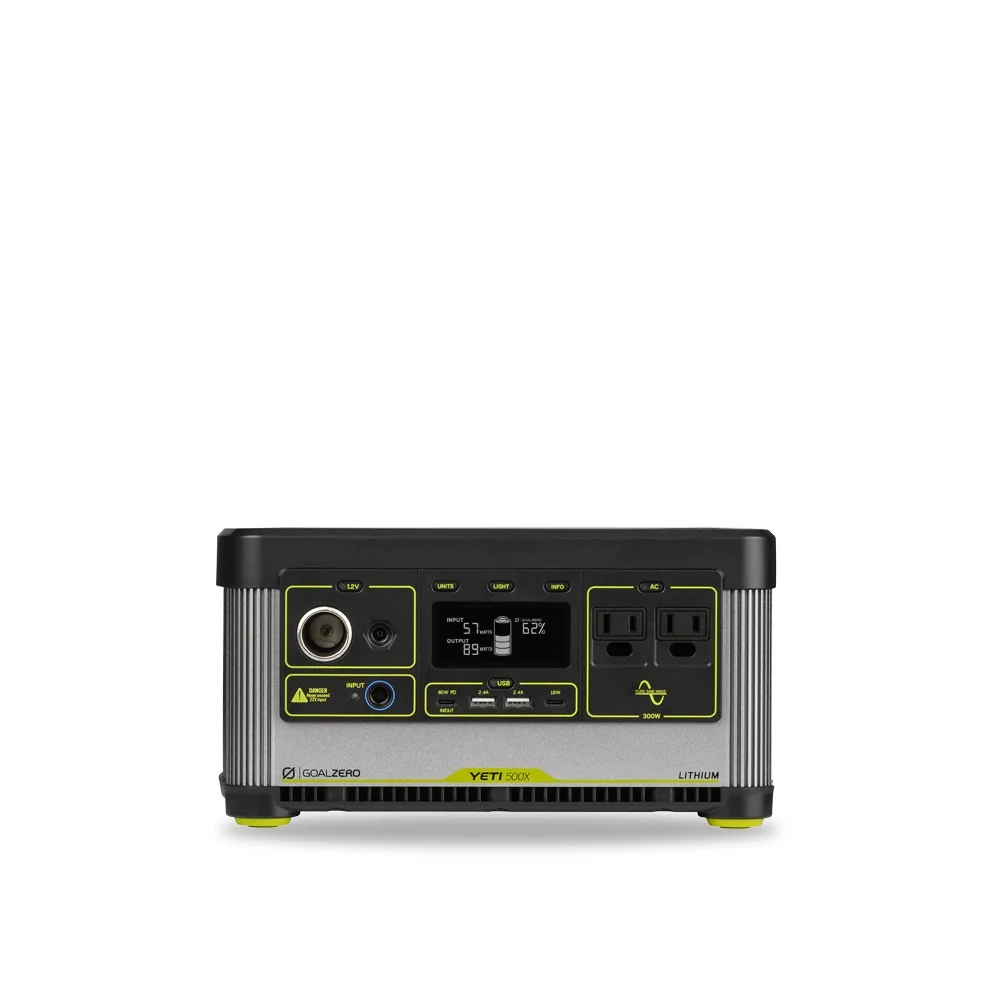
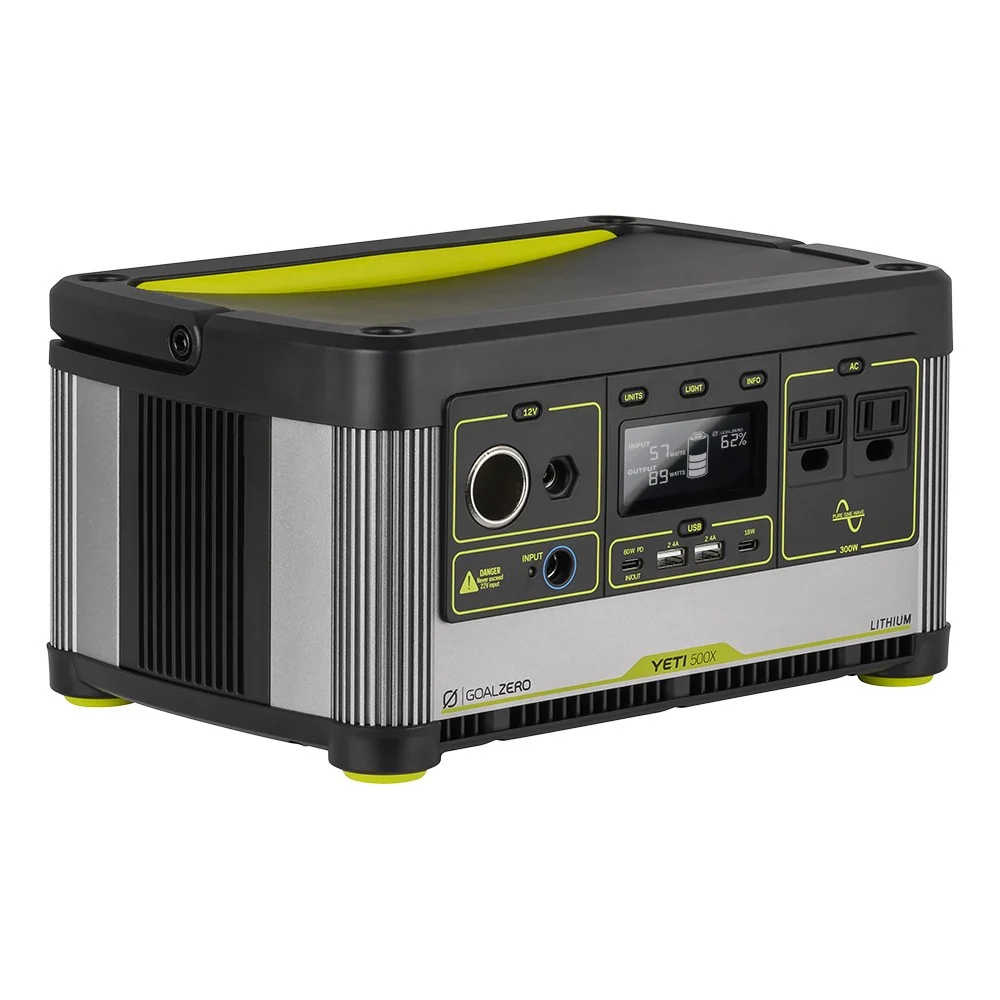
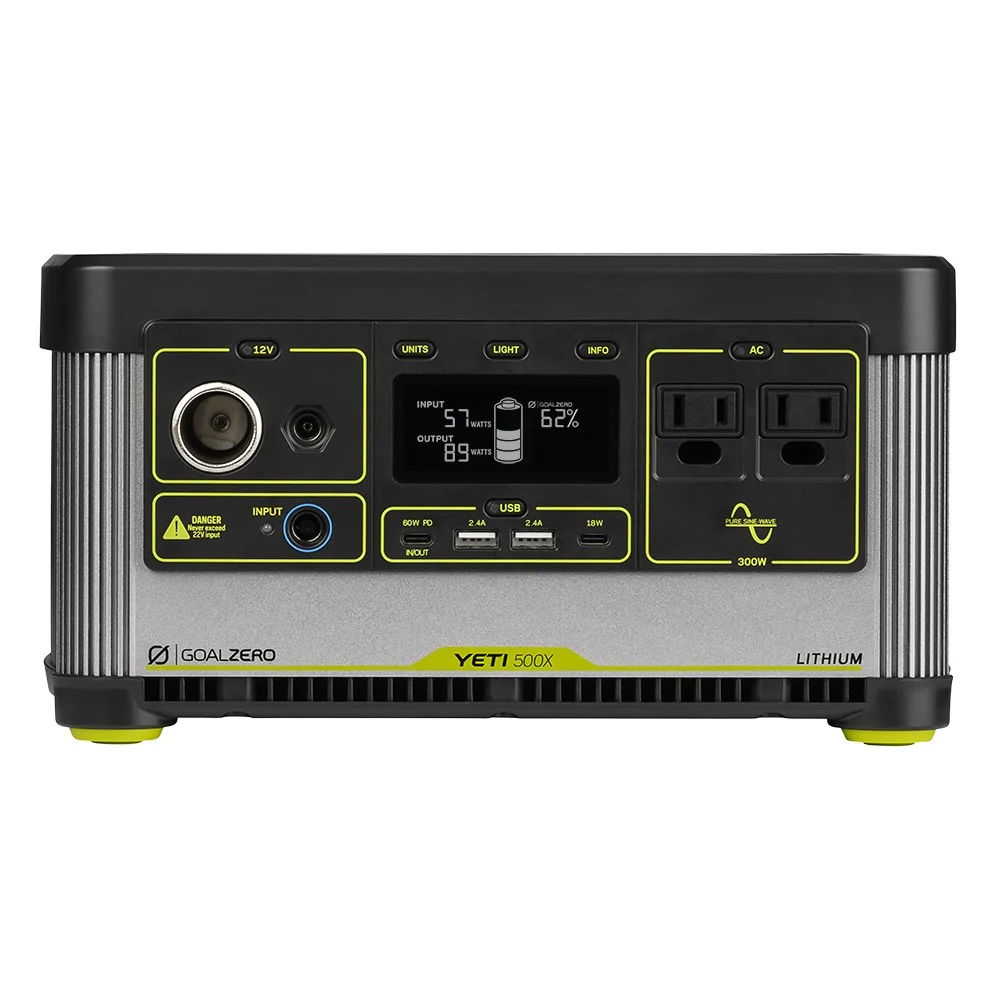
Goal Zero has always built rugged, tidy hardware, and the 500X is a good example. At 12.9 pounds it is genuinely portable, with a fixed handle and a squat, stable footprint that rides well in a trunk or a van. The front panel is clean: a crisp display shows input and output in watts, remaining charge as a percentage, and estimated time to empty or full. That readout alone makes the unit easier to live with than stations that leave you guessing about how much time you have left. The estimate updates as your load changes, so you can watch the cost of switching on a second device in real time.
Goal Zero (Manufacturer product image)
The port array covers two AC outlets, multiple USB ports including USB-C Power Delivery, and 12-volt outputs for car-style accessories. The 6mm and Anderson-style inputs make it a natural fit for Goal Zero's own solar panels, which is a real convenience if you are already in that ecosystem. Two AC outlets is enough for a laptop and a fan at once, though you will rarely have the wattage headroom to load both heavily. Fit and finish are a step above budget stations, and the whole thing feels built to be knocked around a campsite for years. The rubberized corners shrug off knocks, and the ports sit under a layout that is easy to read even by headlamp. This is hardware you can hand to a less careful family member without wincing.
The catch hiding in the spec sheet is chemistry. The 500X uses lithium-ion NMC cells rather than the lithium iron phosphate now standard in newer stations. NMC is lighter, which helps the 12.9-pound weight, but it typically tolerates far fewer charge cycles before capacity fades — often a few hundred to the low thousands, against the several-thousand-cycle life of LiFePO4. For a station you will cycle repeatedly over years, that is a meaningful long-term disadvantage.
Real-World Runtime and What It Powers
Start with 505Wh, run it through the inverter at roughly 85 percent efficiency, and you have about 429Wh of usable AC energy. That figure anchors every runtime below, and it is worth doing the arithmetic yourself rather than trusting a round marketing number.
Goal Zero (Manufacturer product image)
A 60-watt laptop draws about 7 hours from a full charge. A string of LED camp lights pulling 10 watts runs for a day and a half or more. A typical phone, holding 12 to 19 watt-hours, can be recharged well over 20 times. A 45-watt 12-volt cooler cycling on and off can run through a night and into the next day, depending on ambient heat and how often you open the lid.
The 300-watt inverter is the hard ceiling, and it is a low one. It comfortably powers laptops, phones, lights, fans, routers, and CPAP machines that draw within its limit. It cannot run a microwave, a coffee maker, a hair dryer, a toaster, or most full-size refrigerators, because their startup surge or steady draw exceeds 300 watts. Anyone expecting to plug in kitchen appliances will be disappointed the moment they try. The pattern to remember is simple: motors and heating elements are off the table, while electronics and lighting are the sweet spot. Stay inside 300 watts and the 500X is happy for hours; step outside it and the inverter simply refuses.
On CPAP specifically: many machines draw only 30 to 60 watts with the heated humidifier switched off, in which case the 500X can run one for a night or two on a charge. Turn the humidifier on and the draw can roughly double, cutting that runtime hard. This is a plausible CPAP companion, but you must check your own machine's documented wattage before relying on it, and plan to run it without heated humidification to stretch the battery.
Charging It Back Up
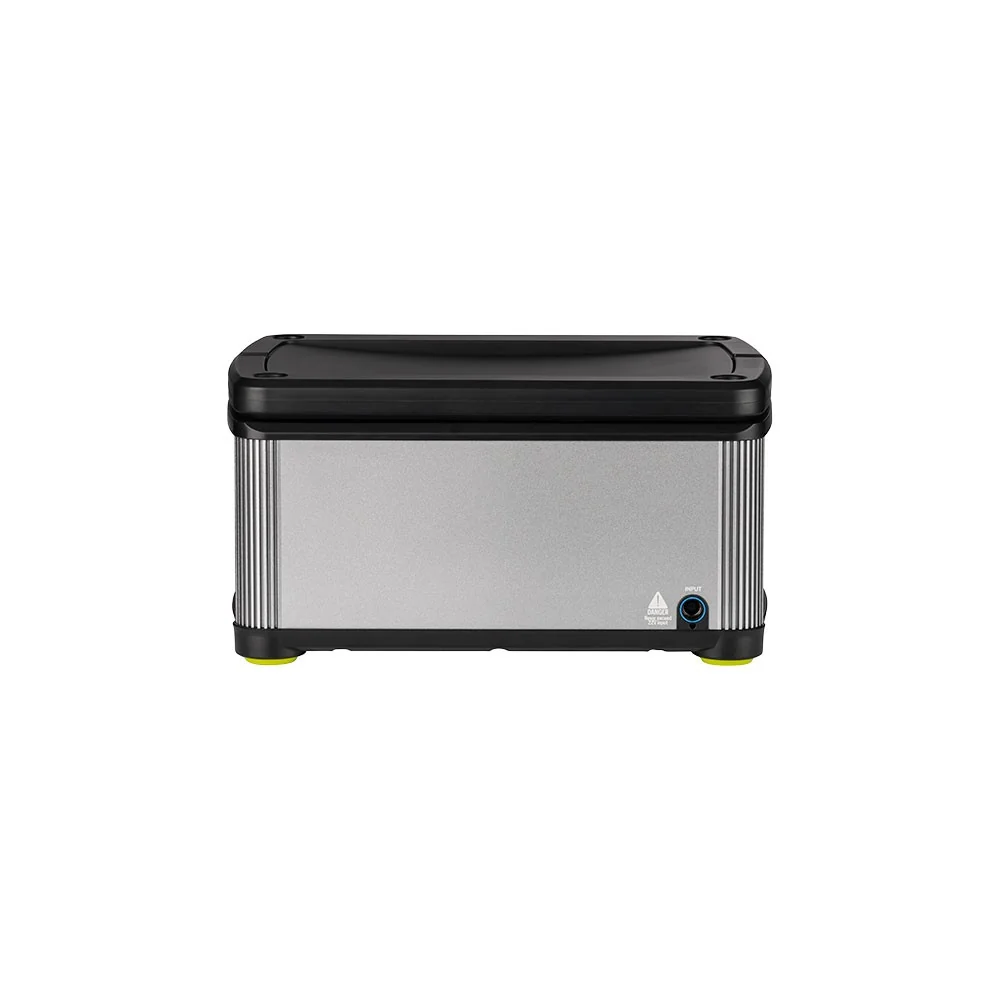
The 500X recharges from a wall outlet, from a car's 12-volt socket, or from solar. Wall charging is unhurried by modern standards — this is not one of the fast-charging stations that refill a battery in under an hour — so plan to top it up overnight or across a long afternoon. If quick turnarounds matter to you, this is another area where newer designs have pulled ahead. Solar is where Goal Zero's ecosystem shines: pair it with a compatible panel and you can keep it fed off-grid, though real-world solar input depends on panel size, angle, and sun. The app adds genuine value here, letting you monitor charge, input, and output from your phone and toggle ports remotely without walking over to the unit. In a tent at night, that convenience is more useful than it sounds on paper.
Goal Zero (Manufacturer product image)
How It Stacks Up
This is where the 500X gets uncomfortable. The Anker SOLIX C800 offers 768Wh, a 1,200-watt inverter, and longer-lived LiFePO4 cells for well under the Yeti's price — more capacity, four times the output, better chemistry, and faster charging, all for less money. On raw value it is not close. Jackery's Explorer 1000 and EcoFlow's River and Delta lines similarly deliver more watt-hours and stronger inverters per dollar. Even within a camping-only frame, the 500X's 300-watt ceiling looks stingy next to rivals that push 600, 1,000, or more watts. A single high-draw device you forgot about — a travel kettle, a small heater — is enough to make you wish you had bought more headroom, and the competing stations give you that headroom for less.

Goal Zero (Manufacturer product image)
What the Yeti still offers is Goal Zero's build reputation, a polished app, and a tight solar ecosystem that owners of existing Goal Zero panels will value. Those are real, but they are worth a modest premium, not the large one the 500X currently commands. Buy it for the ecosystem with eyes open, not because it is competitive on the numbers. If you have no prior Goal Zero gear, almost none of that premium is buying you anything you cannot get cheaper elsewhere.
Who Should Buy It — and Who Should Skip
The 500X makes sense for someone already invested in Goal Zero's solar panels and accessories, who camps or tailgates with modest loads, values the app and the build, and can accept paying more for that package. If you power lights, phones, a laptop, a fan, and maybe a humidifier-free CPAP, it will serve you well for years.
Skip it if value is your priority, because newer LiFePO4 stations badly outclass it per dollar. Skip it if you need to run anything above 300 watts, or any kitchen appliance. And skip it entirely if you are shopping for home backup — 505Wh and a 300-watt inverter are not that, and were never meant to be.
The Bottom Line
The Goal Zero Yeti 500X is good hardware at a bad price. Its 505Wh capacity, clean app, sturdy 12.9-pound build, and solar integration make it a pleasant camping companion for small loads and a plausible CPAP backup if you check your machine's draw. But its 300-watt inverter is limiting, its lithium-ion NMC chemistry ages faster than the LiFePO4 competitors now offer, and $699 buys dramatically more capability elsewhere. Recommend it only to committed Goal Zero owners; steer everyone else toward a newer station.
Frequently Asked Questions
Can the Yeti 500X run my refrigerator during a power outage?
Almost certainly not. Its 300-watt inverter cannot start most refrigerator compressors, which surge well beyond that, and 505Wh would not sustain a fridge for long even if it started. This is a camping station for small loads, not a home backup unit.
Will it power my CPAP overnight?
Often yes, but verify first. Many CPAP machines draw 30 to 60 watts with the heated humidifier off, which the 500X can run for a night or two. Turning on heated humidification can roughly double the draw and sharply cut runtime. Check your machine's documented wattage and plan to skip the humidifier to be safe.
How long will it charge my phone or run my laptop?
A typical phone can be recharged more than 20 times. A 60-watt laptop runs for roughly 7 hours from a full charge, and efficient laptops that average less will last longer.
Can I take it on a plane?
No. At 505Wh it is far over the 100Wh airline limit for lithium batteries in carry-on bags, so it cannot fly with you. That limit only applies to much smaller packs.
Why is it so much more expensive than newer stations?
You are largely paying for Goal Zero's brand, build, app, and solar ecosystem. On raw specifications, newer LiFePO4 stations offer more capacity and stronger inverters for less, so the premium is about the ecosystem, not the numbers.
What is lithium-ion NMC, and does the chemistry matter?
NMC is the older lithium chemistry the 500X uses. It is lighter than LiFePO4 but typically lasts fewer charge cycles before capacity noticeably drops. If you cycle the station often over many years, a LiFePO4 unit will hold up longer.
What can I actually plug into it?
Laptops, phones, tablets, LED lights, fans, routers, small 12-volt coolers, and low-wattage CPAP machines — anything drawing 300 watts or less. Not microwaves, hair dryers, coffee makers, toasters, or full-size refrigerators.
Is it worth buying used or on sale?
At a steep discount it becomes far more reasonable, especially if you already own Goal Zero solar panels. At full $699 list, a newer LiFePO4 station is the smarter purchase for almost everyone.
How should I store and maintain it for longevity?
Keep it partially charged during long storage rather than full or empty, avoid extreme heat, and top it off every few months. Treated that way, the NMC cells will give years of camping service before capacity loss becomes noticeable. The app's charge readout makes it easy to keep the pack in that healthy middle range between trips.