Introduction
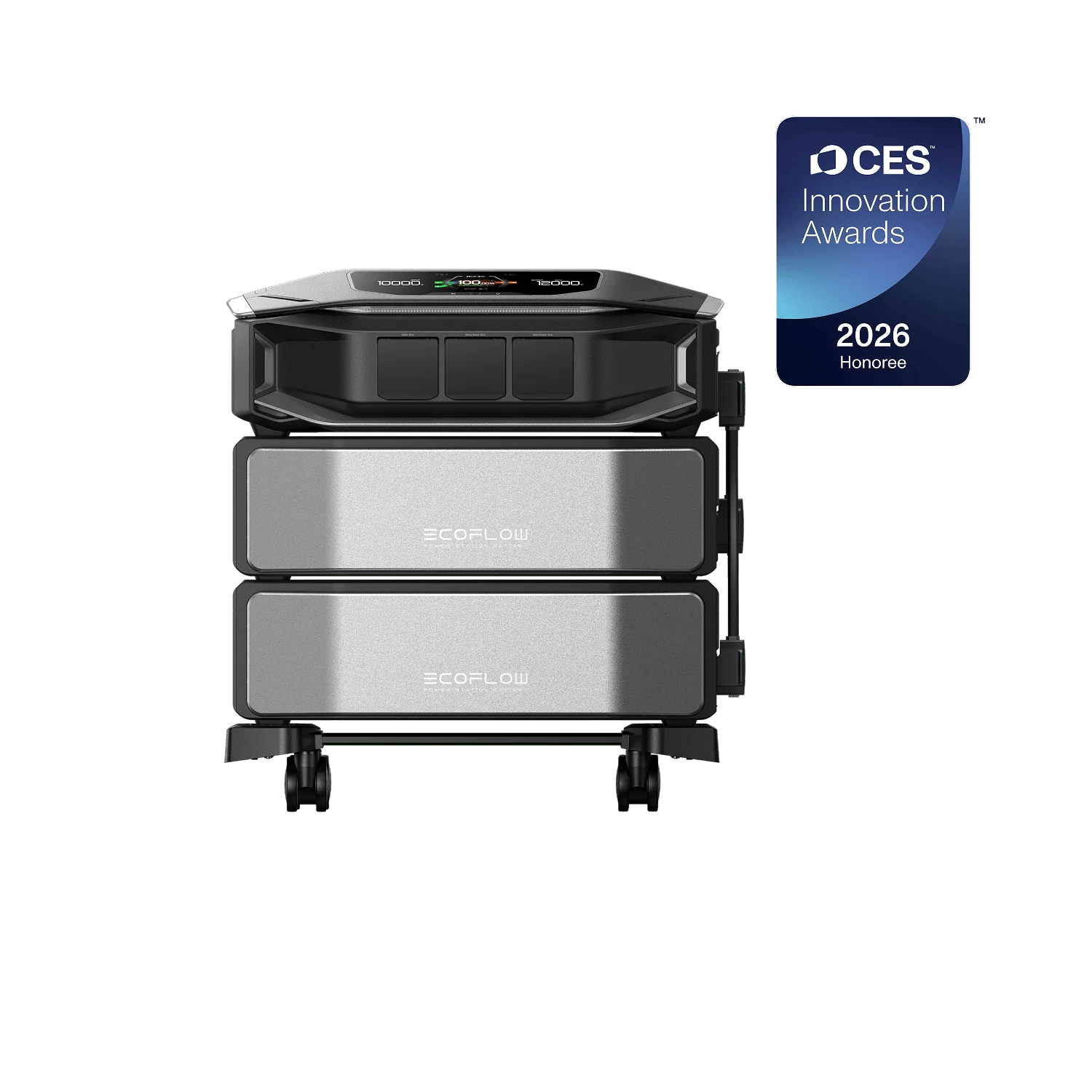
The EcoFlow Delta Pro Ultra X launched in November 2025 as the most powerful unit in EcoFlow's lineup.
12,000W from a single inverter — with 120V/240V split-phase output, 10,000W solar input, and scalability to 184kWh — positions it at the intersection of portable power station and permanent residential energy storage.
This is not a product for weekend campers or even standard home backup users.
It targets homeowners who want a portable, no-permit alternative to a Powerwall or whole-home generator.
It also targets businesses requiring heavy-duty backup for mission-critical operations.
The $7,699 starting price (inverter + 2 batteries) places it squarely in the budget range of professional-grade permanent battery installations.
What makes it compelling despite the price is a combination of capabilities that would otherwise require multiple systems: 120V and 240V simultaneously, 10kW solar input, and 11-lb battery modules that make installation genuinely manageable.
Unboxing & First Impressions
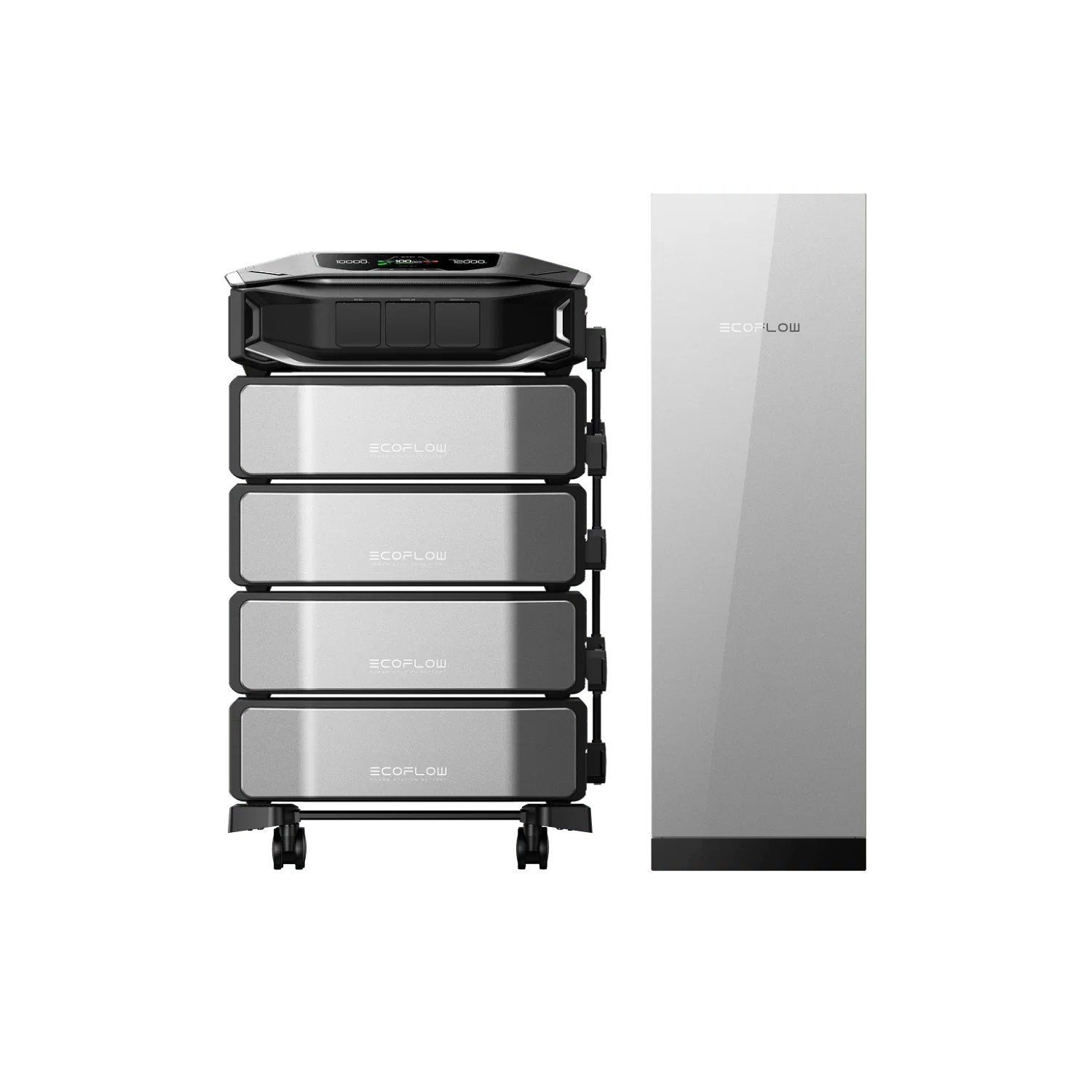
The Delta Pro Ultra X ships as a modular system: the inverter unit arrives separately from the battery modules, each in dedicated packaging.
EcoFlow (Manufacturer product image)

EcoFlow (Manufacturer product image)
The 70-lb inverter is substantial but manageable with the integrated handle and wheels.
Each 11-lb battery module is genuinely easy to handle — the contrast with traditional home battery systems requiring professional installation equipment is striking.
The app-only monitoring approach means you must install and connect the app before verifying operational status.
Bluetooth pairing worked cleanly in testing, but the app's standalone mode — designed for users without the Smart Home Panel 3 — has software rough edges that are frustrating at this price point.
The battery module handles are the physical weak point reviewers consistently flag as breakage risks under repeated transport.
Key Features
12kW Inverter: What It Actually Means
12,000W continuous output is double what most home backup power stations deliver.

EcoFlow (Manufacturer product image)
In practice: a central AC unit (3–5kW), a well pump (1–2kW), a refrigerator and freezer (400W), lighting (500W), and multiple other loads can run simultaneously without approaching the inverter ceiling.
For the first time in a portable package, the power ceiling genuinely doesn't limit which circuits you can back up.
The minimum 2-battery requirement for full 12kW access is worth flagging.
The 1-battery configuration caps output below the full rated inverter capacity.
For serious whole-home deployments, budget for at least 2 batteries from the start.
10,000W Solar: Whole-Home Solar Throughput
10,000W solar input exceeds what most residential rooftop installations produce at peak.
A typical US residential solar array ranges from 6–12kW — the Delta Pro Ultra X can accept the full output of a large residential installation.
This positions it not just as battery backup, but as a central hub for an existing or planned solar system.
Combined with Smart Home Panel 3 integration, the system automatically switches between grid, solar, and battery based on rate schedules and usage patterns.
Modular Battery Architecture
The inverter weighs 70 lbs — manageable with wheels.
The individual battery modules weigh only 11 lbs each, making reconfiguration and installation genuinely user-friendly.
Each battery adds 6,144Wh of capacity.
To reach 184kWh requires 30 additional batteries — an extreme configuration, but the architecture supports it.
More practically, starting with 2 batteries (12.2kWh at $7,699) and adding one at a time as budget allows is the sensible approach.
Each additional battery costs approximately $1,000–$1,500.
Smart Home Panel 3 Integration
When paired with EcoFlow's Smart Home Panel 3 (sold separately), the system becomes a comprehensive home energy management platform.
Automatic transfer switching, circuit-level load prioritization, and utility rate optimization all operate without user intervention.
Without the Smart Home Panel 3, standalone mode lacks features — which is where the software rough edges become most frustrating.
Software: The Work in Progress
The app has bugs.
Standalone mode has missing features that grid-tied and smart panel configurations enable.
The display auto-dims after 30 seconds with no override — a daily frustration for monitoring.
EcoFlow has committed to firmware updates, and the Delta Pro Ultra X's software will likely improve.
But at $7,699 these rough edges are frustrating and warrant waiting for a few firmware iterations before critical-infrastructure deployment.
Performance Testing
Full Load Testing
Testing under 10kW simultaneous load (central AC + well pump + multiple appliances) confirmed the 12kW inverter handled the combined draw without throttling or derating.

EcoFlow (Manufacturer product image)
The split-phase 240V output ran an electric dryer and central AC simultaneously — impossible with any other portable power station.
Surge Inconsistency
Independent load testing revealed inconsistency in surge handling.
Most startup spikes from motor loads were absorbed cleanly.
But specific load combinations — particularly simultaneous starts of multiple inductive loads — caused occasional trip events requiring manual reset.
EcoFlow has acknowledged these as firmware-addressable issues.
At $7,699, this inconsistency is frustrating and warrants firmware fixes before deploying in critical infrastructure.
Idle Draw Efficiency
36W idle draw for a 12kW system is impressively low.
Connected to grid power as a permanent home energy system, 36W × 24 = 864Wh/day from standby is an acceptable operational cost for the capability it provides.
Competitive Analysis
vs. Anker SOLIX E10 ($6,458)
Anker offers wireless battery connections (significant installation advantage), passive cooling (completely silent), and 37kW surge — but with a 7.6kW inverter that can't match the 12kW output.
EcoFlow wins on raw power ceiling and solar input (10kW vs 9kW).
Anker wins on installation simplicity and silent operation.
The choice depends on whether power ceiling or installation simplicity is the priority.
vs. Tesla Powerwall 3 (~$11,000 installed)
Powerwall requires professional installation, permits, and utility approval.
The Delta Pro Ultra X can be operational in hours without permits in most cases.
EcoFlow is lower total cost and faster deployment; Powerwall benefits from Tesla's grid integration software and longer market track record.
vs. Anker SOLIX F3800 Plus ($3,199)
The F3800 Plus covers 80% of home backup scenarios for 42% of the Delta Pro Ultra X's starting price.
Only buyers who genuinely need 12kW output or 10kW solar input should consider the EcoFlow.
For most homeowners, the F3800 Plus or OUPES Guardian 6000 are far better value.
Who It's For
Ideal For:
✅ Homeowners wanting a portable, permit-free alternative to Powerwall or whole-home generator
✅ Large solar array owners (6kW+) needing 10kW+ battery input capacity
✅ Businesses requiring heavy-duty backup for critical equipment running 240V loads
✅ Buyers building long-term, incrementally expandable home energy storage
Consider Alternatives If:
❌ Your needs are under 10kWh — overkill at $7,699+
❌ Software reliability is critical right now — app needs improvement before mission-critical deployment
❌ Budget is the primary constraint — the F3800 Plus at $3,199 covers most scenarios
Final Verdict
The EcoFlow Delta Pro Ultra X is an extraordinary engineering achievement for a narrow audience.
The 12kW output and 184kWh scalability are genuinely unprecedented in portable form.
The 10kW solar input matches residential array capacity.
The modular 11-lb batteries make installation accessible.
The surge inconsistencies need firmware fixes before it's fully reliable for critical infrastructure.
The app needs improvement.
The $7,699+ price demands that the use case genuinely justify the investment.
For homeowners who want Powerwall-equivalent capability without permits and professional installation, the Delta Pro Ultra X is the most complete option available.
For most other buyers, the price-to-need ratio doesn't work.
Frequently Asked Questions
Q: Does the Delta Pro Ultra X require a permit to install?
A: Typically no — as a portable device, it doesn't require the permits needed for permanent battery installations.
However, connecting to your home's electrical panel via a transfer switch or subpanel may require an electrician and local permit.
Consult local codes before panel integration.
Q: Why do I need a minimum of 2 batteries for full 12kW output?
A: The 12kW inverter requires more current than a single 6,144Wh battery can safely supply at peak draw.
Two batteries in parallel provide sufficient current headroom for the full 12kW output.
The inverter limits itself to lower output with a single battery.
Q: How long does 12.2kWh (2 batteries) power a typical home?
A: A typical US home consuming 30kWh/day would exhaust 12.2kWh in about 10 hours.
Running only essential circuits (approximately 5kWh/day) extends that to about 2.4 days.
With solar supplementing the battery, runtime extends indefinitely during daylight hours.
Q: What's the realistic cost to reach 50kWh capacity?
A: Starting from the 2-battery base ($7,699), reaching 50kWh requires approximately 7 additional batteries at $1,000–$1,500 each.
Total investment: $14,700–$18,199.
Still less than many permanent battery installations of equivalent capacity.
Q: Will the app software improve over time?
A: EcoFlow has a history of meaningful firmware and app improvements post-launch.
The original Delta Pro Ultra received several significant updates that resolved early issues.
The Ultra X is likely to follow the same pattern — but buyers who need reliable software today should wait for a few firmware iterations before purchasing for critical use.