First Look
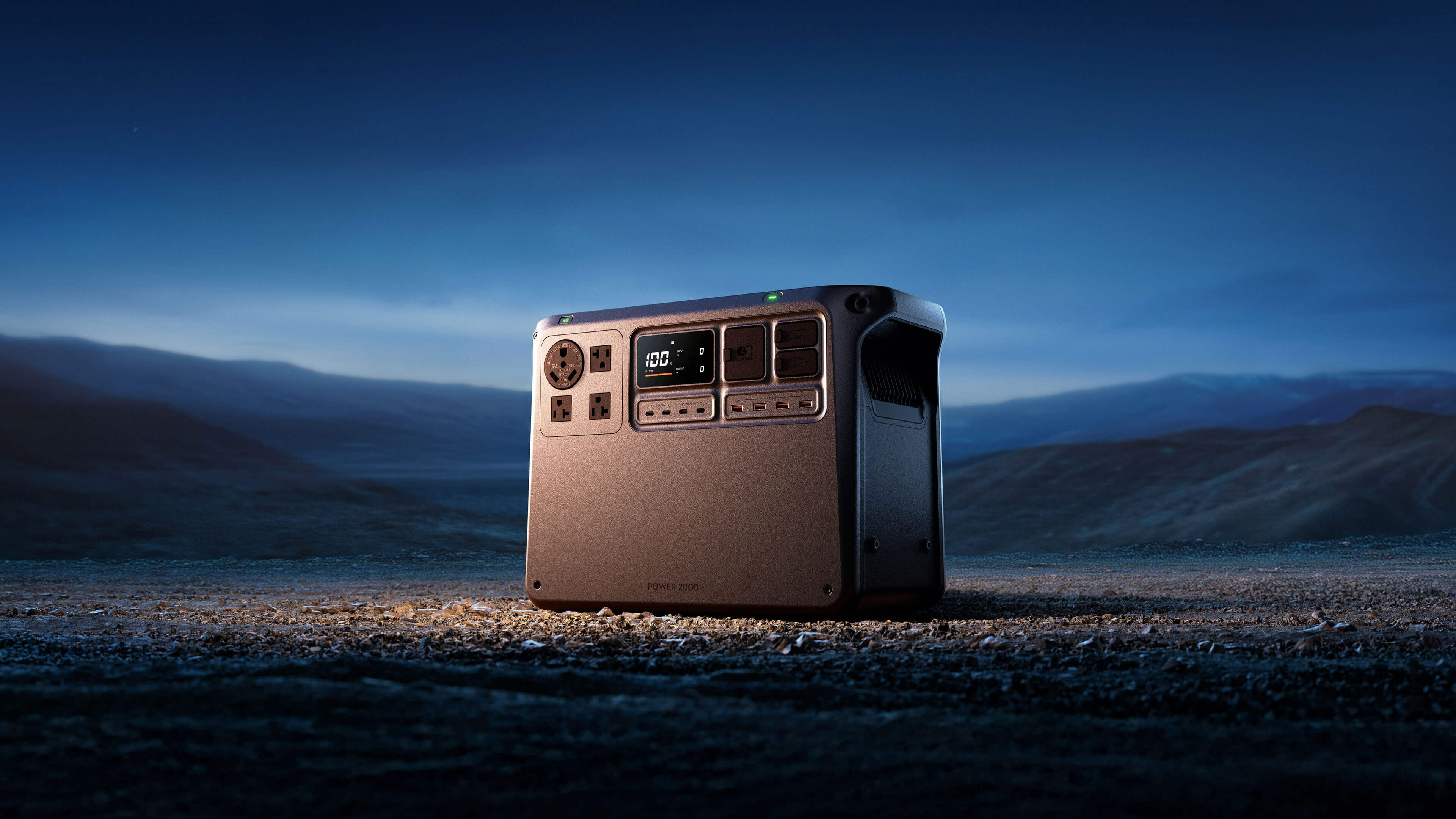
DJI knows drones. Whether it knows power stations is the question the Power 2000
has to answer, and the honest verdict is that it half does. This is a 2,048Wh
lithium iron phosphate battery that behaves, in most respects, like a competent
mid-size unit — 3,000W of AC output, a fast wall recharge, generous USB-C — but
it carries one feature no rival can match and a couple of documentation gaps no
serious rival would leave open.
DJI (Manufacturer product image)
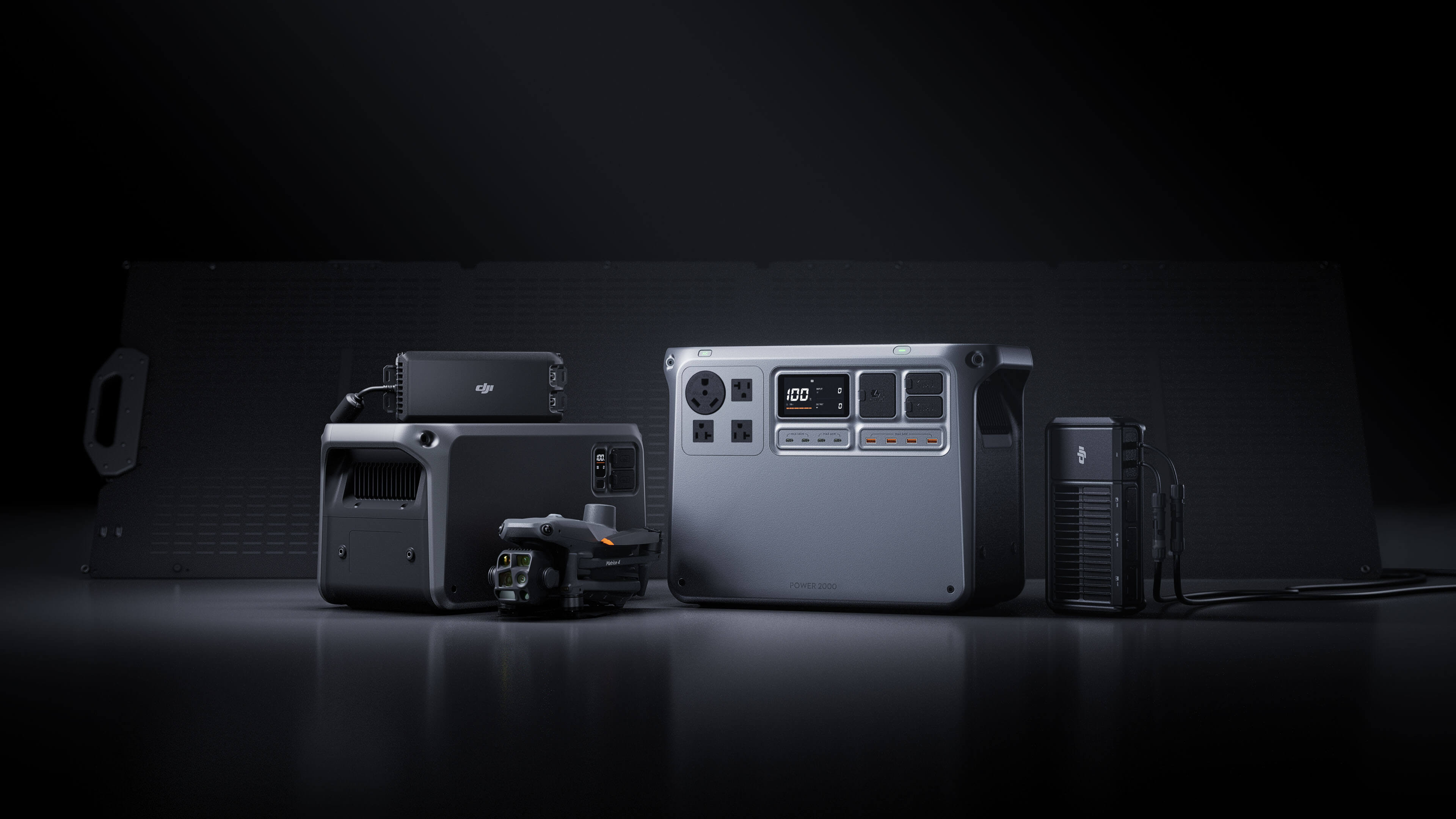
The feature is the pair of SDC ports on the front panel. These are DJI's
proprietary fast-charging connectors, and they exist to pour power straight into
DJI drone batteries far faster than an ordinary AC charger would manage. For a
pilot heading into the field with a Mavic or an Air, the Power 2000 stops being
a generic battery and becomes part of the drone kit. For everyone else, those
two ports are dead weight — literally, given the unit tips the scale at 48.5
pounds.
At $1,299, the Power 2000 asks a price premium that only makes sense if the DJI
ecosystem is why you are buying. Strip away the SDC ports and you are left with a
capable but heavy 2kWh station competing against cheaper, lighter and
better-documented rivals. So the whole review turns on a single question: do you
fly DJI?
Design and Hardware
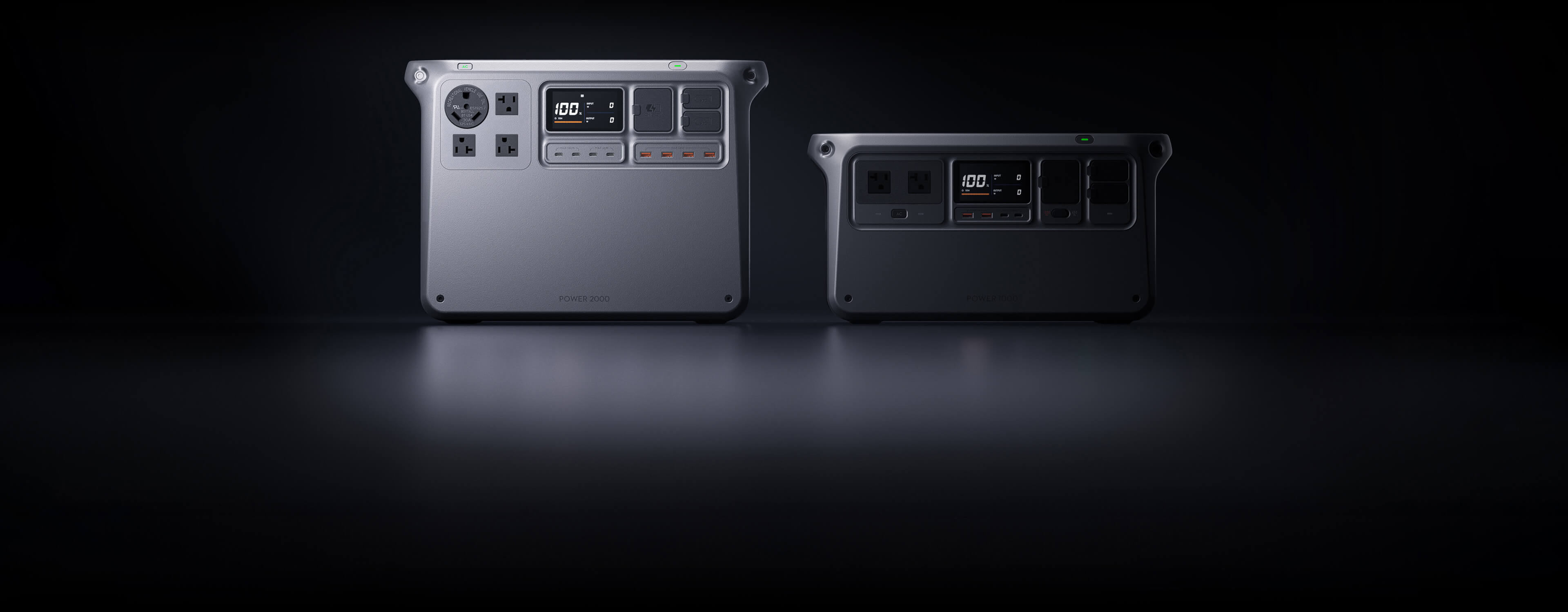
Physically the Power 2000 is a substantial box. DJI lists it at roughly 22
kilograms — about 48.5 pounds — with dimensions of 448 by 225 by 324
millimetres, or 17.64 by 8.86 by 12.76 inches. That mass is on the heavy side
for the 2,048Wh it stores; several rivals deliver the same capacity for six to
nine pounds less. The weight buys durability and, presumably, the structure
needed for the expansion system, but it is not a unit you reposition casually.
DJI (Manufacturer product image)
The port layout is where DJI's thinking shows through, and it is unusually
opinionated. There are four AC outputs and a single AC input, four USB-C ports,
four USB-A ports, and the two SDC ports. The USB-C provision is genuinely strong:
the C1 and C2 ports deliver 140W each, enough to fast-charge a large laptop, while
C3 and C4 supply 65W apiece for phones, tablets and smaller notebooks. That is a
laptop-friendly allocation that many rivals do not match.
The USB-A story is more grudging, and buyers should read the fine print. A single
USB-A port supplies 24W, but the moment you plug into two or more of them, each
one defaults to 10W. That is a meaningful drop — fine for phones on an overnight
trickle, less fine if you expected four ports of fast USB-A charging at once. It
is the sort of detail that looks generous on the port count and less generous in
practice.
The SDC ports are the headline. There are two of them, each rated for 9 to 28
volts at up to 12 amps. DJI does not print a watt maximum for them in the spec
table, and it does not publish per-drone charging wattages, so we will not invent
either. What is documented is the purpose: these are DJI's fast-charge
connectors for its own drone batteries. On the smaller DJI Power 500, the
equivalent SDC Lite port supports fast charging for Mavic 3, Air 3 and 3S,
Inspire 3 and Matrice 30-series batteries using separately sold accessories, which
gives a fair sense of the ecosystem the Power 2000's ports plug into. If you own
those drones, this is the feature you are paying for.
Performance and Charging
The inverter is rated at 3,000W continuous, which is enough to run the bulk of
household appliances: a microwave, a coffee maker, a full-size refrigerator, a
1,500W space heater. Here, though, is the first real criticism. DJI does not
publish a surge rating. Almost every competitor states a peak figure — typically
one and a half to two times continuous — because motor-driven appliances draw a
brief spike far above their running wattage at start-up. DJI's silence on this
point is a documentation failure, not a design one; the unit surely has a surge
ceiling, but a buyer trying to confirm it can start a well pump or a power saw is
left without the number they need. For a company this large, that omission is
hard to excuse.
DJI (Manufacturer product image)
Charging is a bright spot. DJI specifies a 0-80% AC recharge in about 55 minutes
on US 120V power, which is a genuinely fast top-up for a 2,048Wh pack. The company
does not publish a full 0-100% time — the last stretch of a lithium charge always
slows — so plan around the 80% figure rather than assuming a linear extrapolation.
For sensitive equipment, DJI's FAQ documents a UPS switchover of 0.01 seconds,
or 10 milliseconds. That is squarely in useful territory: a desktop, a router, a
NAS or a CPAP machine will ride through a grid interruption without rebooting. It
is the same class of protection the better rivals offer, and DJI states it
plainly.
Longevity looks strong on paper. DJI rates the pack to retain more than 80% of
its capacity after 4,000 charge cycles under its stated test conditions. At one
full cycle a week that implies well over a decade before meaningful degradation,
and the LFP chemistry supports the claim. DJI also backs the unit with a 5-year
warranty by default, which is longer than several competitors provide without an
upsell.
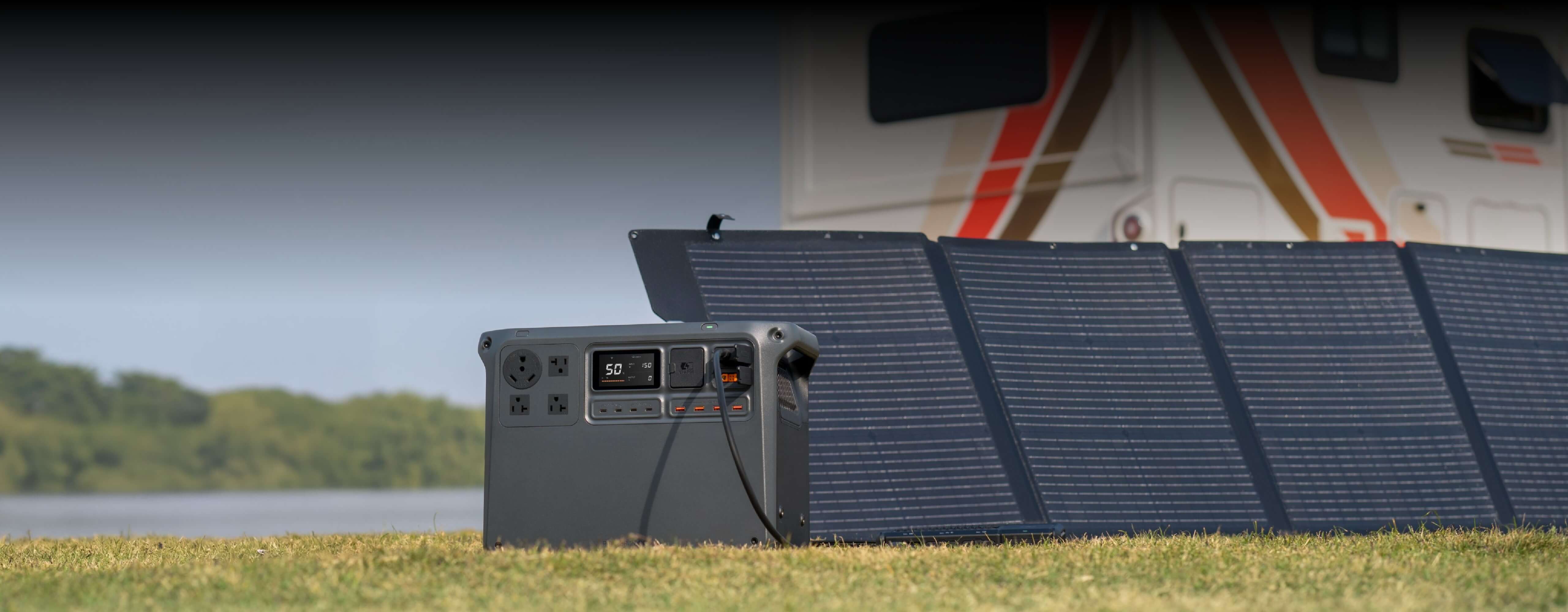
Solar, like the surge figure, is undocumented. The spec table gives an SDC input
voltage and current range but no explicit maximum solar wattage, so we will not
state one. That is the second planning gap: a buyer who wants to build a solar
recharge setup cannot size an array to a published ceiling, and has to work from
the raw voltage and current limits instead. It is another sign of a spec sheet
written by a company still adjusting to power-station buyers, who expect a clean
solar-input number.
Expandability
Where the Power 2000 pushes back against its price is capacity growth. The base
2,048Wh can be scaled dramatically: DJI supports up to 10 expansion batteries and
a total of up to 22,528Wh. That is a serious ceiling — enough to move from
short-outage coverage to genuine multi-day, whole-home territory — and it puts the
Power 2000 in the expandable-system conversation rather than the fixed-appliance
one. A buyer can start with the single unit and grow the system as needs and
budget allow, which is the right architecture for anyone unsure how much backup
they will eventually want.

DJI (Manufacturer product image)
Connectivity rounds out the platform: the unit carries Wi-Fi on 802.11 b/g/n and
Bluetooth 5.0, and DJI's app offers remote control and monitoring. It is a
competent, if unremarkable, software layer next to the weather-aware automation
some rivals now ship.
Competitive Comparison
vs. Jackery Explorer 2000 v2 ($999, 2,042Wh). The Jackery stores almost
exactly the same energy for $300 less and weighs a documented 39.5 pounds against
the DJI's 48.5. But it is not expandable at all, its inverter is a smaller 2,200W
with a 4,000W surge, and it has no answer to the SDC ports. If you want a light,
cheap, self-contained 2kWh unit and you do not fly drones, the Jackery is the
more sensible buy. The DJI justifies its premium only through expandability and
the drone ecosystem.
vs. Anker SOLIX C2000 Gen 2 ($799, 2,048Wh). The Anker matches the DJI's
capacity for $500 less, weighs 42 pounds, publishes an 800W solar input and a
6,000W surge, adds a 30A RV plug, and expands to 4,096Wh. On documentation and
value it comprehensively out-specs the Power 2000. The DJI's advantages are its
far larger 22,528Wh expansion ceiling and, again, the SDC ports. Outside the DJI
ecosystem, the Anker is the stronger and cheaper machine.
vs. EcoFlow DELTA 3 ($629, 1,024Wh). The EcoFlow is half the capacity but a
third of the price, with a 1,800W inverter, a 3,600W surge and a 4,000-cycle
pack. It is the budget alternative for a buyer whose needs are a fridge and some
devices rather than a drone kit or a multi-day system. It undercuts the DJI so
sharply that the Power 2000 only makes sense if you specifically need its
capacity, expansion or SDC charging.
vs. EcoFlow DELTA 3 Ultra ($1,399, 3,072Wh). For $100 more than the DJI, the
EcoFlow offers a full kilowatt-hour more capacity, a 3,600W inverter, a published
89-minute recharge and documented home-integration hardware. It is the better
whole-home value on the numbers DJI actually publishes. The Power 2000's counter
is, once more, the drone charging — a feature the EcoFlow cannot replicate at any
price.
Who Should Buy It
Buy the Power 2000 if you own DJI drones and shoot in the field. The SDC ports
turn it into a fast-charging hub for your batteries, and paired with 2,048Wh of
storage, four AC outlets and dual 140W USB-C, it becomes the power centre of a
mobile production kit. For that buyer the $1,299 price is not a premium at all —
it is the cost of a battery that speaks your drones' charging language.
It also suits the buyer who wants an expandable platform. The 22,528Wh ceiling
across up to 10 batteries is one of the largest in the class, so a Power 2000 can
start as an outage backstop and grow into a multi-day home system without
replacement. The 5-year warranty and the 4,000-cycle LFP pack support that
long-horizon thinking.
Look elsewhere if you do not fly DJI and just want a 2kWh station. At 48.5 pounds
it is heavier than the Jackery Explorer 2000 v2, more expensive than the Anker
SOLIX C2000 Gen 2, and its undocumented surge and solar figures make it harder to
plan around than either. Strip out the SDC ports and the value case collapses
against cheaper, lighter, better-specified rivals.
Final Verdict
The DJI Power 2000 is two products wearing one shell. As a drone accessory it is
excellent and unmatched: the SDC ports fast-charge DJI batteries directly, the
2,048Wh capacity and 3,000W output run a full mobile kit, and the 22,528Wh
expansion ceiling means the system grows with you. For a DJI pilot, this is close
to a default recommendation, and the $1,299 price reads as fair.
As a general-purpose power station it is merely fine, and held back by DJI's own
spec sheet. The missing surge rating and the absent maximum solar input are real
omissions on a product at this price, and the 48.5-pound weight and $1,299 sticker
both sit above better-documented rivals like the Anker SOLIX C2000 Gen 2 and the
Jackery Explorer 2000 v2. The 55-minute 0-80% recharge, the 10ms switchover and
the 5-year warranty are all genuinely good, but they are things competitors also
offer.
So the recommendation is conditional in a way few power stations are. If you own
DJI drones, buy it and enjoy a feature nobody else sells. If you do not, the Power
2000 is a capable unit asking you to pay for ports you will never plug into — and
the field is full of cheaper, lighter answers.
Frequently Asked Questions
What are the SDC ports actually for?
charge DJI drone batteries far faster than an ordinary AC charger. There are two
of them, each rated 9 to 28 volts at up to 12 amps. DJI does not publish a watt
maximum or per-drone charging speeds, so treat them as a drone-ecosystem feature
rather than a general power output.
Is the Power 2000 worth it if I do not own a DJI drone?
2,048Wh station. Cheaper and lighter rivals such as the Anker SOLIX C2000 Gen 2
and the Jackery Explorer 2000 v2 deliver comparable capacity for less money and
weight, so the DJI mainly makes sense inside its own ecosystem.
Why does DJI not list a surge rating?
their continuous rating because motor-driven appliances spike well above their
running wattage at start-up. DJI states 3,000W continuous but no surge number, so
a buyer cannot confirm from the spec sheet whether the unit will start a well
pump or a large power tool.
How fast does it recharge?
fast for a 2,048Wh pack. The company does not publish a full 0-100% time, and the
final stretch of any lithium charge slows, so plan around the 80% figure rather
than assuming it continues at the same rate.
How much can I expand it?
22,528Wh. That is one of the largest expansion ceilings in its class, which lets
the unit grow from short-outage backup into a genuine multi-day or whole-home
system over time.
Will it protect my computer during a power cut?
That is fast enough for a desktop, a router, a NAS or a CPAP machine to keep
running through a grid interruption without rebooting.
How much does it weigh, and can one person carry it?
by 225 by 324 millimetres. That is heavy for a 2,048Wh unit, and while one person
can lift it, it is not something you will want to reposition often.
How many devices can I fast-charge over USB at once?
65W apiece. USB-A is more limited: a single port gives 24W, but with two or more
USB-A ports in use each one drops to 10W, so heavy simultaneous USB-A charging is
slower than the four-port count suggests.
How long will the battery last before it degrades?
cycles under its stated test conditions. At one full cycle a week that is well
over a decade of use, and the unit carries a 5-year warranty by default.
Can I recharge it with solar panels?
table lists an SDC input voltage and current range but no explicit solar ceiling,
so sizing a solar array requires working from those raw limits rather than a clean
watt figure — a planning gap compared with rivals that print a solar maximum.