Introduction
The two-kilowatt-hour power station has become the default recommendation for home
backup, and it is a crowded, largely undifferentiated shelf. Most units in the class
land within a few hundred watt-hours of each other, run a 2,000W-ish inverter, and
weigh somewhere between 50 and 65 pounds. Jackery's Explorer 2000 v2 breaks from that
pattern in exactly one dimension, and it happens to be the dimension people notice
first: it weighs 39.5 pounds.
That figure is worth sitting with. A 2,042Wh LiFePO4 battery, a 2,200W inverter and a
1,800W-class charger in a package light enough that most adults can carry it up a
flight of stairs one-handed is a genuine engineering result, not a spec-sheet trick.
Jackery's own Explorer 2000 Plus, which stores a comparable amount of energy, comes in
at over 60 pounds.
The trade Jackery made to get there is equally clear, and buyers need to understand it
before they spend $999. The v2 is a sealed, fixed-capacity appliance. There is no
expansion port, no second battery, no path to a larger system later. What you buy is
what you own for the life of the product. For a large number of households that is
completely fine. For anyone thinking about a whole-home backup system, it is
disqualifying.
Design and Build
Jackery's industrial design has drifted steadily toward the domestic over the last few
generations, and the v2 is the clearest expression of that yet. The orange-and-grey
toolbox look that defined the brand's early camping products has been softened into
something that reads more like a piece of appliance hardware than expedition gear. The
company describes the unit as "indoor friendly," and that is a fair characterisation of
the intent: this is a product designed to sit in a hallway closet or beside a desk
rather than in the bed of a truck.
Jackery (Manufacturer product image)
Jackery (Manufacturer product image)
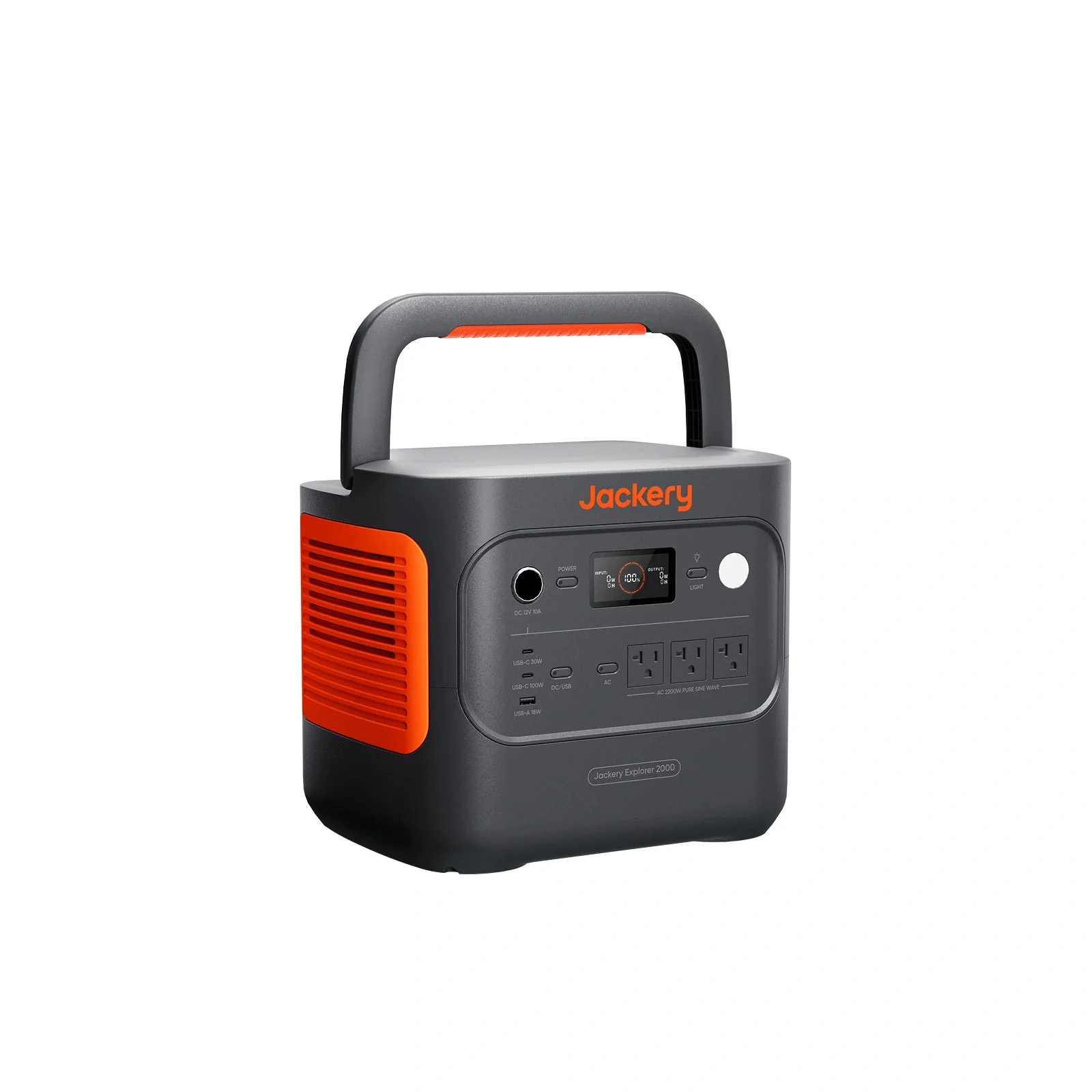
The folding handle is the single most consequential design decision on the chassis.
Combined with the 39.5-pound mass, it makes the v2 one of the few units in the class
that a single person can genuinely reposition without planning ahead. OutdoorGearLab,
which weighed the unit independently, recorded 38.9 pounds — marginally under Jackery's
own published figure, which is an unusual and welcome direction for a discrepancy to
run.
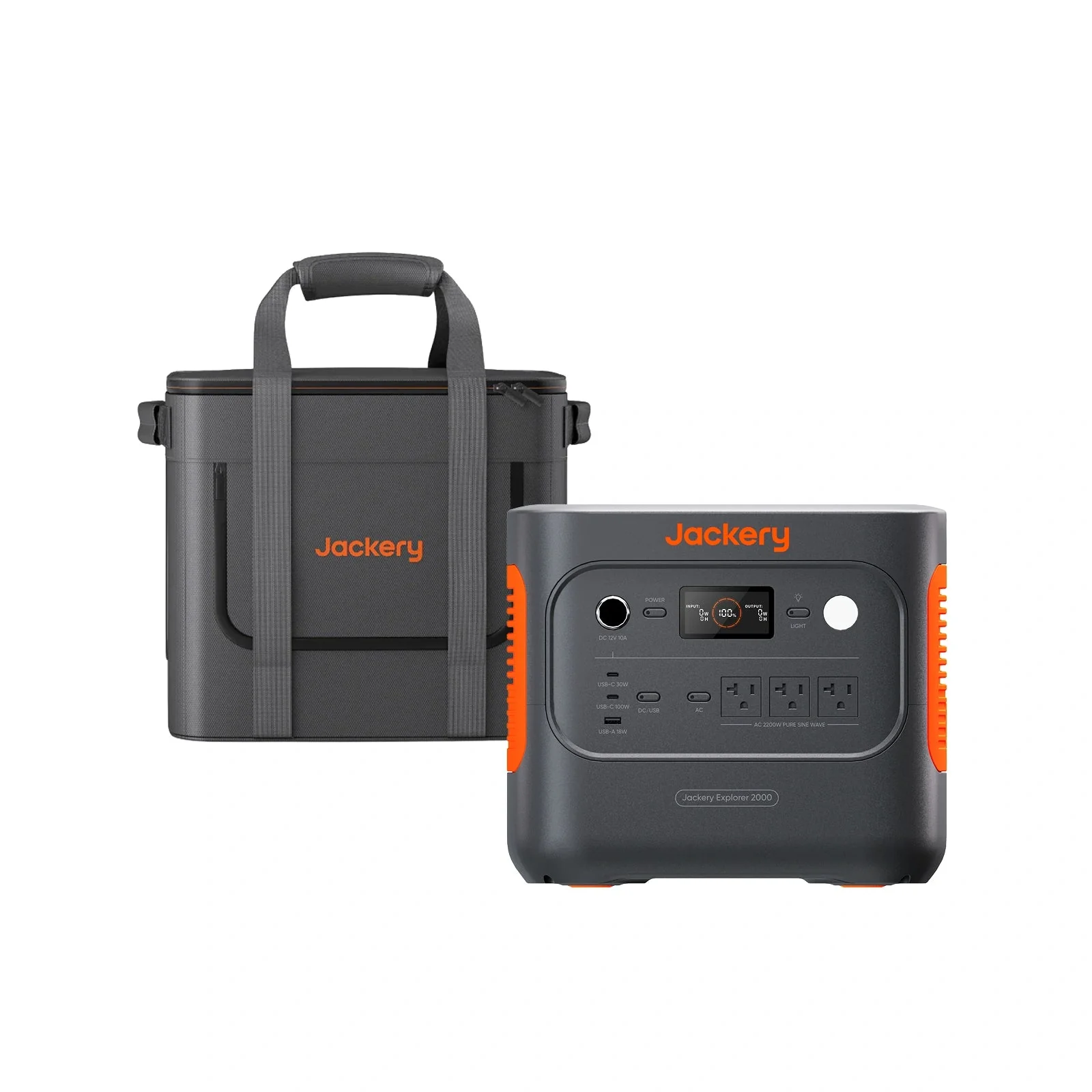
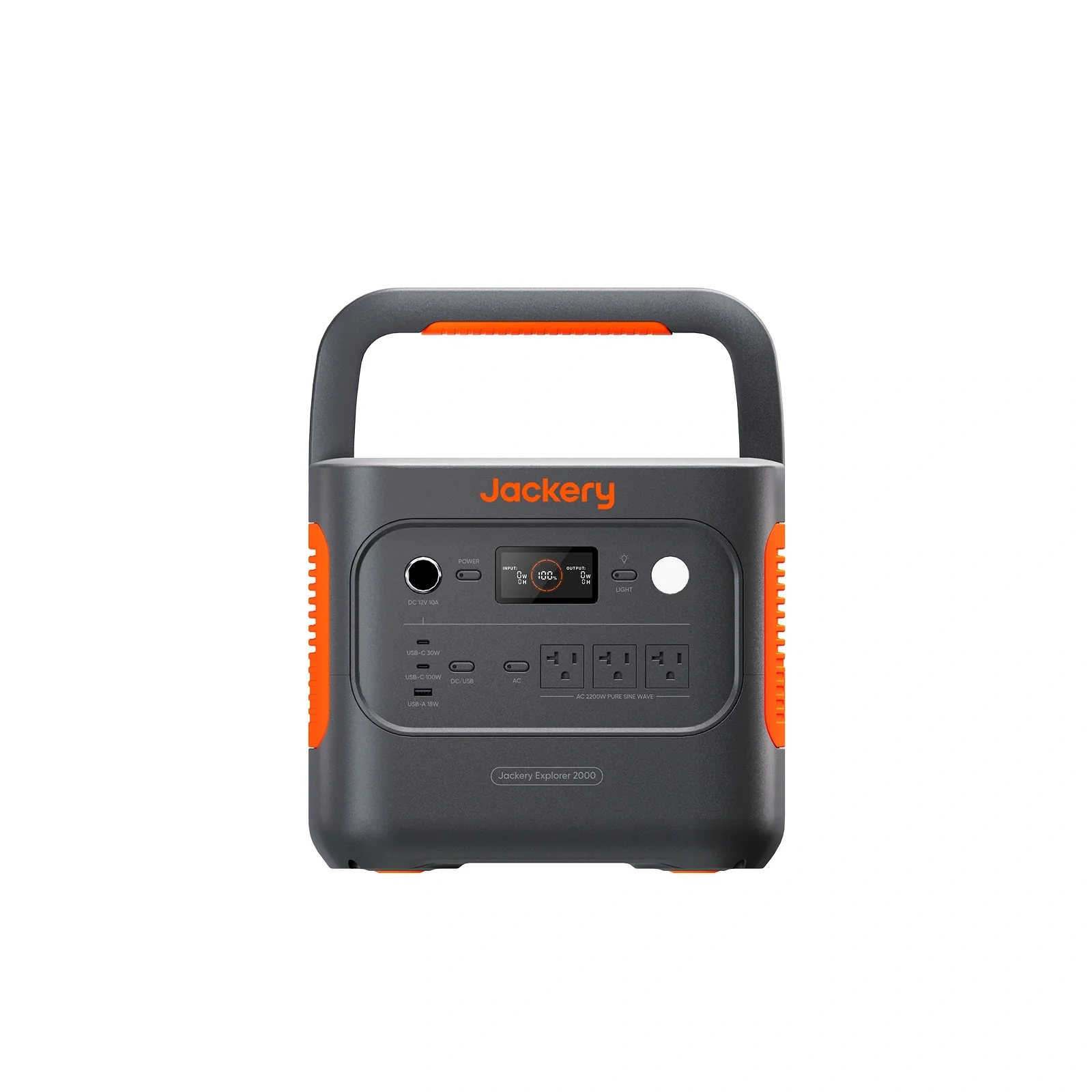
Port provision is where the compact footprint starts to cost you. There are three AC
outlets, two USB-C ports, one USB-A port and a single 12V car socket. That is a lean
allocation for a 2kWh unit; competitors at this capacity routinely offer five or six AC
outlets and four or more USB ports. OutdoorGearLab specifically flagged the USB
provision as a limitation, noting that buyers charging several phones and tablets
alongside a laptop may need to bring a powered hub. If your outage plan involves
keeping a family's worth of devices topped up simultaneously, count your plugs before
committing.
The pack itself is lithium iron phosphate, rated by Jackery for 4,000 charge cycles.
At one full cycle a week — which is heavier use than most backup buyers will ever
impose on it — that rating implies well over a decade of service before meaningful
degradation. LiFePO4 also brings the thermal stability that makes indoor storage a
reasonable proposition, which matters for a product explicitly positioned for the
hallway closet.
Charging and Runtime Performance
Jackery advertises a 0-100% AC recharge in approximately 1.7 hours. This is the claim
most worth scrutinising, because it is also the one independent testing has pushed back
on. OutdoorGearLab measured a full wall recharge at 2.5 hours, working out to roughly
817Wh per hour of charging throughput. That is a meaningful gap — about 47% longer than
the marketing figure — and it is the kind of difference that matters if you are trying
to top up between rolling blackouts rather than overnight.
Jackery (Manufacturer product image)
Neither number is unreasonable in isolation. Manufacturer charge times are typically
measured under favourable conditions with a warm-but-not-hot pack and a clean supply
voltage, and real-world results drift. But buyers should plan around the measured
figure rather than the advertised one.
The same review measured usable AC output at 1,740Wh against the 2,042Wh nameplate
rating, an efficiency of about 84%. This is normal and not a criticism: every power
station loses energy converting DC cell voltage to 120V AC, and 84% sits close to the
middle of the pack for the category. It is, however, the number you should actually
budget with. A 700Wh chest freezer does not draw against 2,042Wh; it draws against
roughly 1,740Wh.
The 2,200W continuous inverter is the other headline figure, with a 4,000W surge
ceiling for motor-driven loads. In practice, 2,200W clears essentially every common
household appliance short of an electric dryer or central air: a 1,500W space heater,
a 1,000W microwave, a coffee maker, a full-size refrigerator. OutdoorGearLab ran
high-draw cooking loads through it without difficulty.
Switchover is specified at under 20 milliseconds, which puts the v2 firmly in useful
UPS territory. A desktop computer, a router, a NAS or a CPAP machine will ride through
a grid cut without rebooting. That is not a universal feature at this price, and for
anyone working from home it is arguably worth more than an extra few hundred
watt-hours.
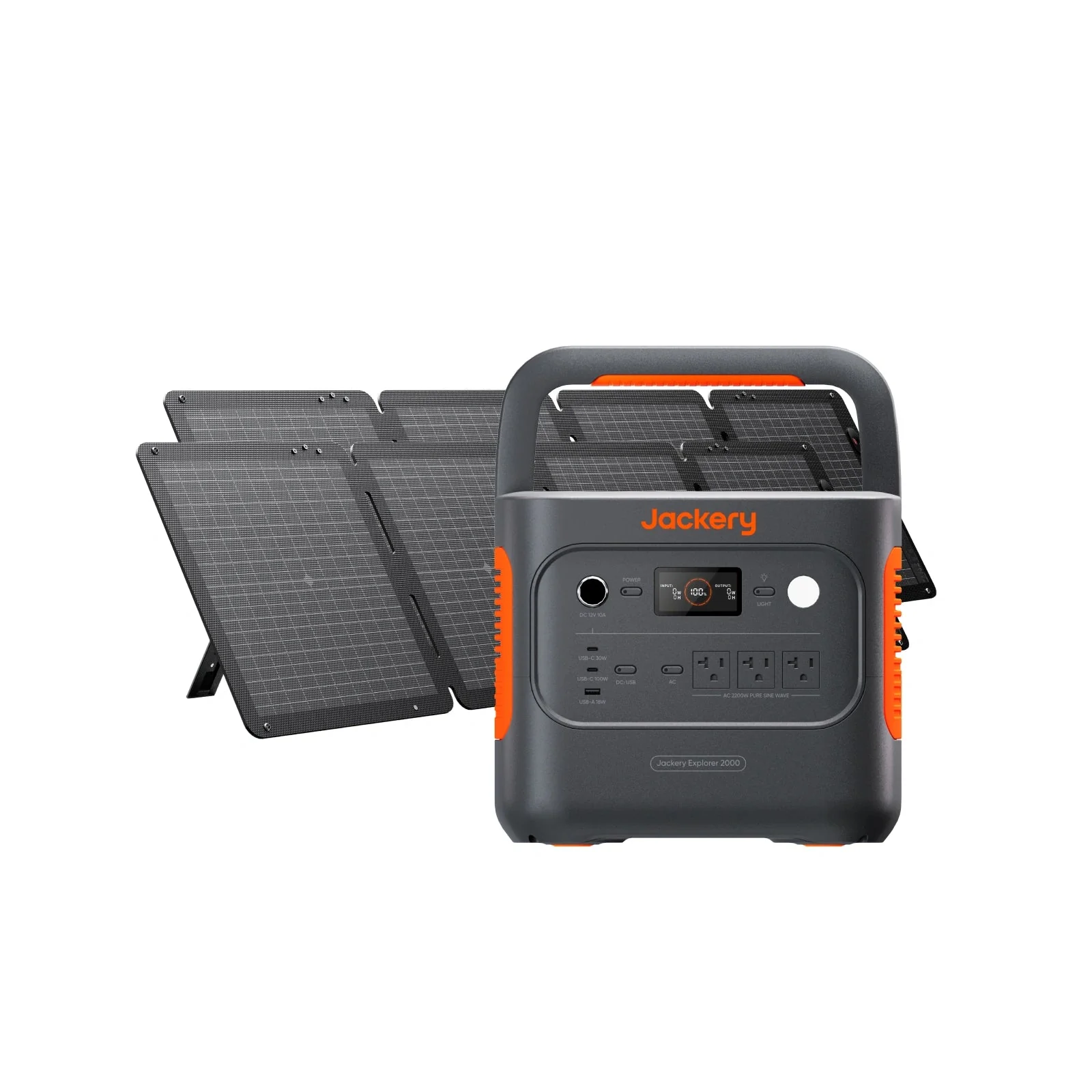
Solar is the weakest column on the sheet. The v2 accepts a maximum of 400W of PV input.
Against a 2,042Wh battery, that is roughly a six-hour refill in ideal, panel-normal-to-
sun conditions, and realistically most of a usable day once you account for angle and
cloud. Rivals in this capacity class commonly accept 800W to 1,400W. If solar
recharging is central to how you plan to use the unit — extended off-grid stays, or
outages measured in days rather than hours — this specification alone should redirect
you.
One quieter specification deserves a mention because it addresses a real failure mode:
Jackery rates the v2 to hold approximately 95% of its charge after twelve months in
storage. Backup power that has silently drained itself to nothing by the time you need
it is a well-known frustration, and a pack you can charge and genuinely forget about
for a year is worth something.
Competitive Comparison
vs. Jackery Explorer 2000 Plus. The most instructive comparison is in-house. The
2000 Plus holds a comparable amount of energy but weighs over 60 pounds, accepts up to
1,400W of solar, and — decisively — supports battery expansion. The v2 is the lighter,
cheaper, simpler product; the Plus is the one that grows into a home backup system.
Buyers should treat these as genuinely different products rather than sequential
generations, because the naming implies an upgrade path that does not exist.
vs. EcoFlow DELTA 3 Max ($749, 2,048Wh). EcoFlow undercuts the v2 on price while
matching it on capacity, and adds expandability through the DELTA 3 series smart extra
battery. The counterweight is mass and ecosystem preference. If expansion matters at
all, the EcoFlow is the more future-proof purchase at a lower entry price.
vs. Anker SOLIX C2000 Gen 2 ($799, 2,048Wh). The Anker is the more generously
specified unit almost across the board: 2,400W inverter with a 6,000W surge, five AC
outlets plus a 30A RV plug, 800W solar input, expansion to 4,096Wh, and 140W USB-C PD.
It weighs 42 pounds — only marginally more than the Jackery. On paper the C2000 Gen 2
is the stronger buy, and the v2's case against it rests on Jackery's support
reputation, the longer warranty when purchased direct, and a two-and-a-half pound
weight advantage.
vs. Bluetti Elite 100 V2 ($499, 1,024Wh). Half the capacity for half the money, but
with a 1,800W inverter, 1,000W of solar input and a 25.3-pound carry weight. For
households whose backup needs are a fridge and a few devices rather than a whole floor,
the Bluetti covers the requirement at a materially lower price and accepts solar far
faster.
Who It's For
Buy the Explorer 2000 v2 if portability is a real constraint rather than a preference.
If the unit will move between a closet, a garage and a car, or if the person most
likely to be carrying it during an emergency is not going to enjoy shifting 60 pounds,
the weight advantage is the whole argument and it is a good one.
It also suits the apartment or small-home buyer with a bounded backup requirement:
refrigerator, lights, router, phones, perhaps a CPAP overnight. Roughly 1,740Wh of
usable energy covers a fridge and a small device load for the better part of a day, and
the sub-20ms switchover means the network gear never notices.
Look elsewhere if you want a system rather than an appliance. The absence of any
expansion path is the v2's defining limitation, and no amount of weight saving
compensates for it if your ambition is whole-home backup. Similarly, if solar is your
primary recharging strategy, the 400W ceiling is too low to build around — the Anker
C2000 Gen 2 doubles it and the Explorer 2000 Plus more than triples it.
Final Verdict
The Explorer 2000 v2 is a focused product that does one thing better than anything else
in its class and makes real sacrifices to get there. At 39.5 pounds it is the most
carryable 2kWh station on the market, and paired with a $999 price, a 4,000-cycle
LiFePO4 pack and a five-year warranty when bought direct, it is straightforwardly good
value for the buyer it targets.
The reservations are specific rather than general. Independent measurement puts the
real recharge time at 2.5 hours rather than the advertised 1.7. Usable capacity is
about 1,740Wh, not 2,042Wh. The 400W solar ceiling is low for the class. Port count is
thin. And the fixed capacity means this is a purchase decision you cannot revise later.
Judged against what it is trying to be — a light, simple, indoor-friendly backup
appliance from a brand with strong support — it succeeds. Judged as the foundation of a
home energy system, it was never a contender. Know which of those you are buying.
Frequently Asked Questions
How long will the Explorer 2000 v2 actually run my refrigerator?
rather than the 2,042Wh nameplate. A typical modern full-size refrigerator consumes
between 100Wh and 200Wh per hour averaged across its duty cycle, which puts the v2 at
somewhere between nine and seventeen hours of fridge-only runtime.
Can I expand the capacity with a second battery?
look at the Explorer 2000 Plus, the EcoFlow DELTA 3 series or the Anker SOLIX C2000
Gen 2, all of which accept add-on batteries.
Does it really charge in 1.7 hours?
measured 2.5 hours in its own testing. Budget for the longer figure.
Will it keep my computer running during a power cut?
desktop computers, routers, NAS units and CPAP machines continue running without
interruption.
How many solar panels can I connect?
across a good day, but it is well below the 800W-1,400W accepted by several competitors
at this capacity, and it is the main reason to consider alternatives if solar is
central to your plan.
How long will the battery last before it degrades?
approximately 75 years of cycling — in practice, calendar ageing rather than cycle
count will determine its lifespan, and a decade of dependable service is a reasonable
expectation.
Can I run a 1,500W space heater or a microwave?
comfortably, and the 4,000W surge ceiling handles the start-up spike from
motor-driven appliances such as a refrigerator compressor or a power tool.
What happens if I store it for a year without charging?
storage. It is still sensible to top it up periodically, but this is a unit you can
reasonably leave in a closet between emergencies.
Is the warranty really five years?
the unit is purchased directly from jackery.com, bringing the total to five. Buying
through a third-party retailer typically means the three-year term applies.
How does it compare to the Anker SOLIX C2000 Gen 2?
five AC outlets, a 30A RV plug, 800W solar and expansion to 4,096Wh — for $200 less. It
weighs 42 pounds against the Jackery's 39.5. Unless the weight difference or Jackery's
support record is decisive for you, the C2000 Gen 2 is the stronger technical buy.