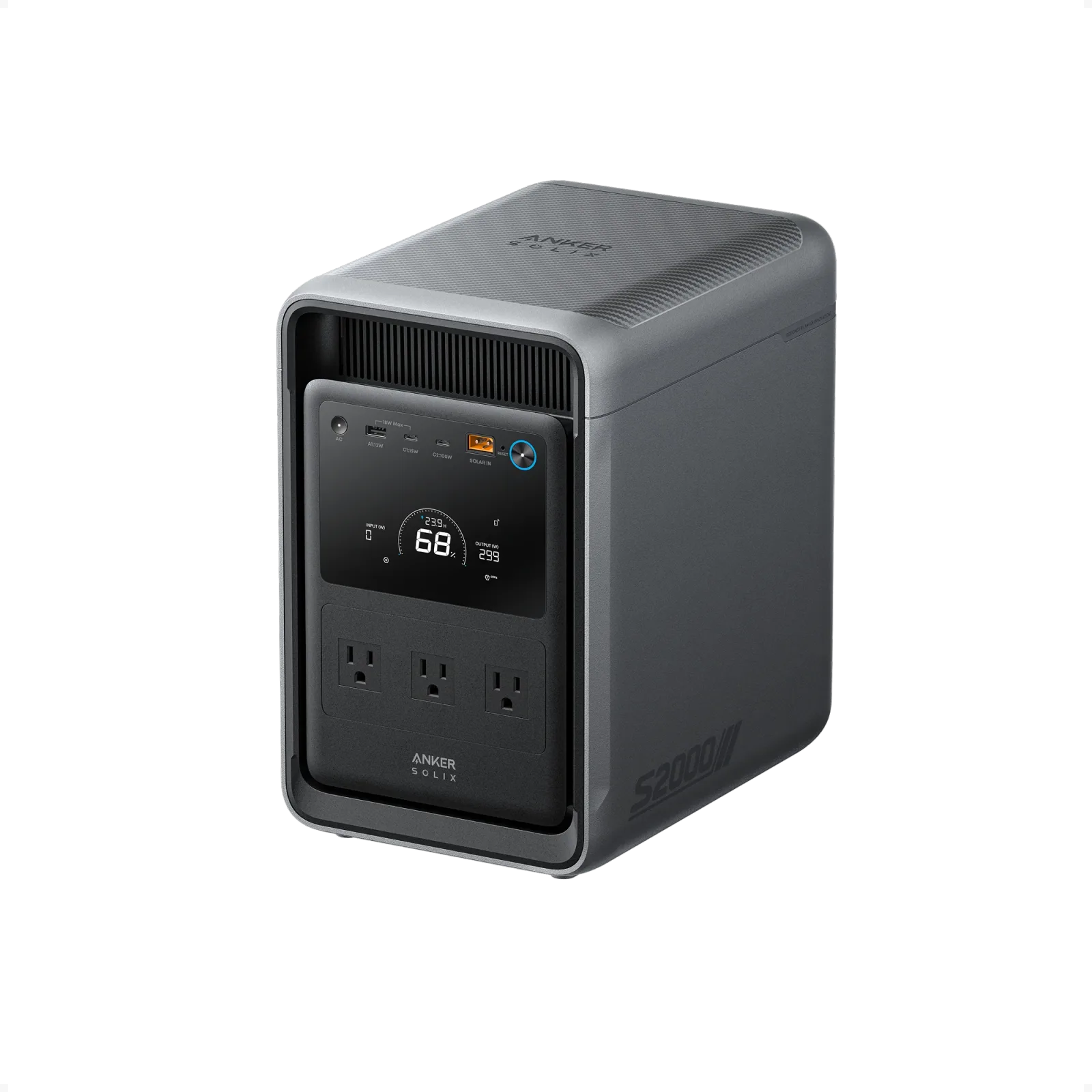
Introduction: the S2000 is built around runtime, not maximum power
The Anker SOLIX S2000 is a 2,010Wh portable power station for buyers who care more about keeping a refrigerator, router, CPAP machine, or small home-office setup alive than about running every appliance in the house. Its defining numbers are a 6W active idle draw, a 1,500W continuous inverter, and a 35.7-pound vertical body. Anker says those choices let the S2000 deliver up to 35 hours of refrigerator backup in a specific 700-liter test setup.
Anker product page (Manufacturer product image)
That is a sensible product thesis. A large battery can waste a surprising amount of its stored energy just keeping the inverter awake, so a low idle figure matters when the load cycles on and off. The catch is equally clear: 400W solar input is restrained for a 2kWh station, the capacity is not expandable, and 1,500W continuous output is not enough for the highest-demand household equipment.
Anker announced the S-Series and S2000 on May 19, 2026. That date comes from the launch release, not the discovery article's publication date. The official S2000 page now supplies the model's specifications and testing footnotes, but it still describes headline runtime and efficiency figures as Anker internal results. This is a focused backup station, not a universal generator replacement.
Design, controls, and the practical shape of the tower
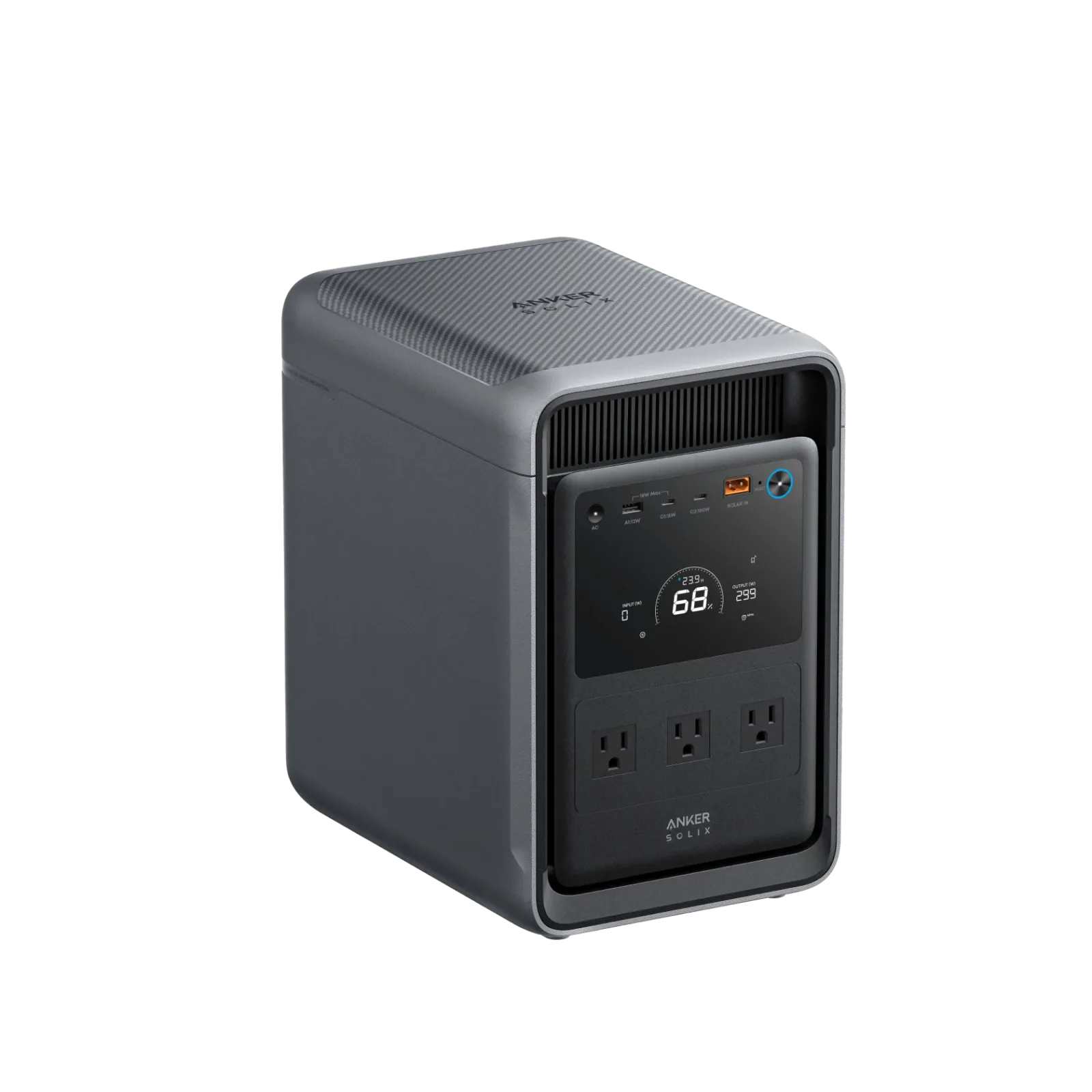
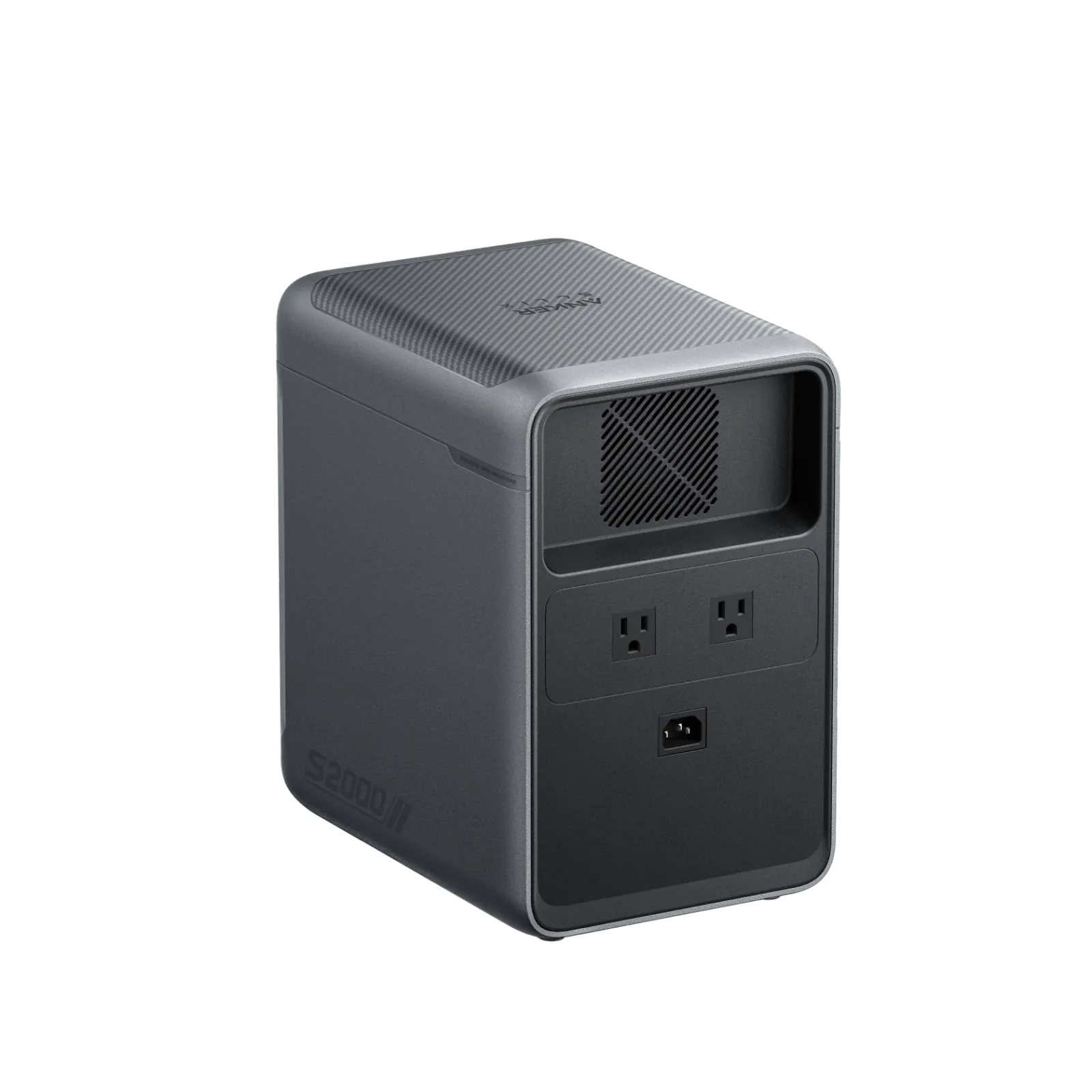
The S2000 measures 8.2 by 11.1 by 12.7 inches and weighs 35.7 pounds according to Anker's official comparison notes. Its upright shape takes less floor width than a broad horizontal station, which helps when it has to live beside a refrigerator, under a desk, or against a wall. The weight is manageable for moving from a closet to a car, but it is not a one-handed, carry-anywhere battery.
Anker product page (Manufacturer product image)
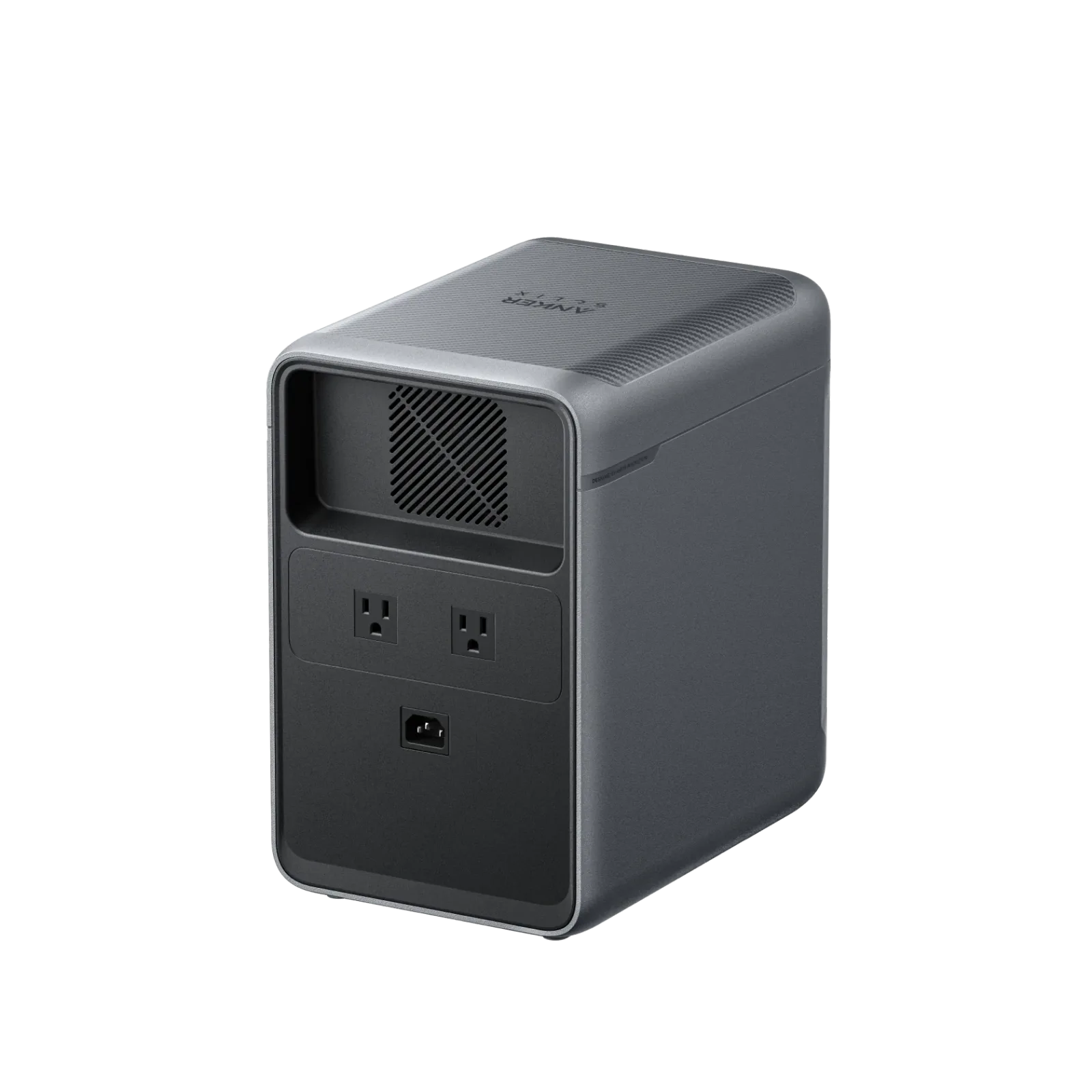
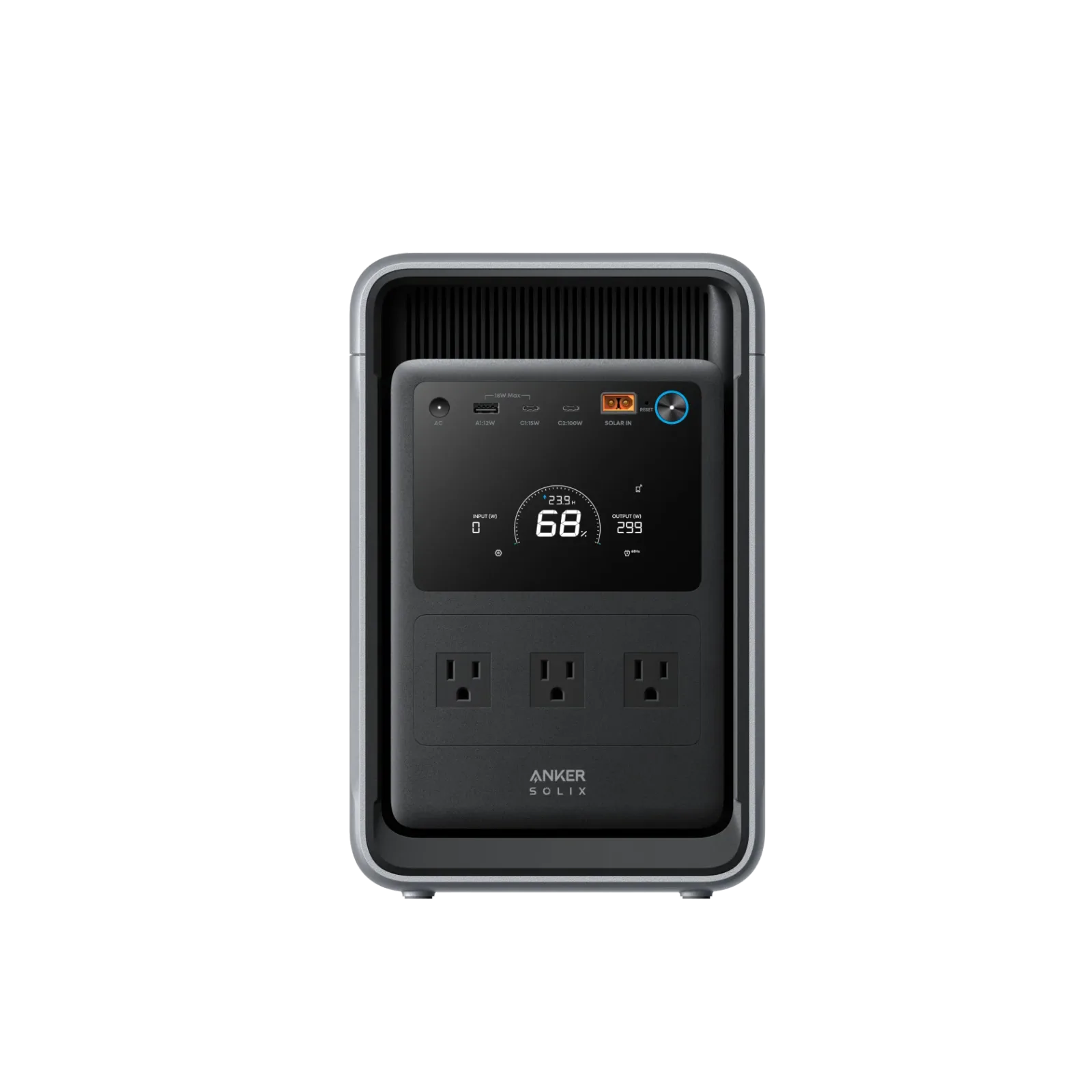
The two-sided outlet layout is more important than the styling. Anker puts some AC outlets at the rear so cables can stay behind the unit, while the front remains available for phones and laptops. That arrangement makes sense for a station that may spend most of its life in one place as a fridge or office backup. It is less convenient when the S2000 is repeatedly repositioned outdoors and every connection needs to be visible from the front.
The app is part of the charging experience. Anker lists a default AC input of 1,150W and a 1,600W UltraFast mode that must be enabled in the app. This is not a major burden for the owner who manages the station from a phone, but it is a detail worth handling before a storm. A family member who simply plugs the unit into the wall should not have to discover that the fastest charging mode is disabled.
Anker lists a five-year product warranty. That is useful coverage for a battery expected to sit ready between outages, although a warranty is not the same as a guarantee of a particular runtime after years of use. Keep the purchase record and check the regional terms before making the S2000 the only backup for critical equipment.
Performance: low idle draw is the feature that earns the capacity
Anker rates the S2000 for 1,500W continuous AC output and 1,800W maximum bypass power. That is enough for many refrigerators, networking devices, lights, chargers, and smaller kitchen appliances when they are managed one at a time. It is not a license to run a microwave, kettle, space heater, and compressor simultaneously. The battery's 2,010Wh capacity determines duration; the inverter rating determines which loads can start and run.
Anker product page (Manufacturer product image)
The headline efficiency story is the 6W active idle claim, with 2W in standby. Anker says the S2000 achieved 88% efficiency at a 100W output load in its internal testing, compared with a 78% industry average from the stations it tested. Those figures are useful context, not an independent laboratory result. Actual runtime depends on the connected device, conversion losses, temperature, and whether the inverter is left on between loads.
Anker's refrigerator claim is up to 35 hours from a 700-liter fridge tested at 77°F, with the refrigerator at 37°F and freezer at 0°F. That is a clearly defined test condition, but it is not a universal runtime promise. Door openings, ambient temperature, compressor behavior, and other loads will change the result. The right conclusion is narrower: the S2000's low idle design should help it hold up well on a cycling appliance compared with a similarly sized station that wastes more power at rest.
The UPS mode is rated at 10ms or less. That should be useful for routers, monitors, desktop accessories, and other electronics that tolerate a brief transfer. It does not turn the S2000 into a medical-grade or data-center UPS, and it does not make every motor, compressor, or sensitive instrument compatible. Test the exact equipment before relying on it during an outage.
Charging and solar: quick enough from the wall, limited in the sun
At the default 1,150W AC input, Anker lists a full recharge of about 2.3 hours under its laboratory conditions. The optional 1,600W UltraFast mode is the more interesting setting when a storm is approaching or grid power returns for only a short window. It is a practical advantage, but only if the owner remembers to enable it in the app and the circuit can support the input.
Anker product page (Manufacturer product image)
The 400W solar ceiling is the S2000's clearest weakness. A single suitably sized panel can contribute useful daytime energy, but a 2,010Wh battery leaves a lot of capacity that cannot be replenished quickly from a larger array. Anker says the station can recharge from solar during a typical day, but that is a condition-dependent manufacturer claim, not a promise for winter sun, shade, clouds, or a poorly angled panel.
This makes the S2000 a better grid-backed outage buffer than an off-grid energy hub. If your plan is to keep a refrigerator and communications gear alive during a short interruption, the low idle draw is more valuable than a huge solar-input ceiling. If your plan is several days away from the grid, the 400W limit becomes an ongoing constraint.
S2000 versus the alternatives
The Anker SOLIX F2000 is the better fit when output and solar recovery matter more than size. Anker lists the F2000 at 2,400W continuous output and 1,000W solar input, with a much heavier 67.2-pound body in the company's comparison. It also supports a more ambitious transfer-switch-oriented setup. Choose the S2000 for a compact, fridge-first station; choose the F2000 when high-wattage loads or faster solar recovery are central to the plan.
The Anker SOLIX C2000 Gen 2 is the more expandable portable alternative in Anker's own lineup. It has 2,048Wh of capacity and is designed to accept an expansion battery, while the S2000's published status page lists no expansion bay. The C2000 Gen 2 is the safer purchase for a buyer who expects the first station to become part of a larger system. The S2000 is more coherent when the goal is one self-contained box with low standby waste.
The EcoFlow DELTA 3 is a reasonable comparison for buyers who value a broader connected ecosystem and a more conventional portable-station format. EcoFlow's DELTA family offers a range of related batteries and accessories, while the S2000 is deliberately narrower: low-idle home backup, a vertical body, and moderate output. Buyers who expect to add batteries or build around several connected products should compare ecosystems rather than focusing only on the S2000's runtime headline.
The Bluetti Elite 200 V2 is another 2kWh-class option worth considering when solar input and expansion plans outweigh the S2000's compact design. The decision is straightforward: Anker's S2000 emphasizes efficient low-load backup, while a more modular competitor can make more sense for a staged system. Confirm the current regional specifications before buying because port layouts, prices, and accessory bundles change.
Who should buy it — and who should skip it
Buy the Anker SOLIX S2000 if your priority is refrigerator-first outage coverage in a relatively compact package. It is a good match for an apartment, home office, cabin, or utility closet where the unit will stay charged and power cycling loads. The low idle claim, rear outlets, and manageable weight all support that use.
Skip it if you need to run a well pump, furnace blower, central air conditioner, electric water heater, or several high-wattage kitchen appliances. The 1,500W continuous ceiling is too restrictive for that job. Also skip it if you know you will add battery capacity later; the S2000's fixed 2,010Wh ceiling makes a modular station the more economical starting point.
The S2000 is also a poor choice as a solar-only system for multi-day outages. Its 400W solar input can extend runtime, but it cannot match the recovery headroom of the F2000's 1,000W input or other stations built around larger arrays. Buy it for efficient essential-load backup, not for a miniature whole-home microgrid.
Verdict
The Anker SOLIX S2000 gets the important small-outage decision right: it spends less energy waiting. A 2,010Wh battery, 6W active idle claim, 10ms-or-less UPS mode, and 35.7-pound tower make it a credible refrigerator and home-office backup station. The design is more purposeful than a spec-sheet race, and the rear outlets should be convenient when the station lives behind a desk or beside an appliance.
The recommendation has two boundaries. The fixed capacity means there is no upgrade path, and the 400W solar input makes the S2000 less attractive for sustained off-grid use. If those limits fit your plan, the S2000 is a focused and persuasive 2kWh backup box. If they do not, spend more on a modular, higher-output station rather than expecting this compact tower to grow into one.
Frequently asked questions
When did the Anker SOLIX S2000 launch?
Anker announced the S-Series and S2000 on May 19, 2026. That is the date given in the launch release; it is separate from the publication date of third-party reviews.
How much power can the S2000 deliver?
Anker rates it for 1,500W of continuous AC output and 1,800W maximum bypass power. That covers many essential household electronics and moderate appliances, but not every high-draw load.
Can the S2000 run a refrigerator?
Yes, a refrigerator is one of its intended use cases. Anker claims up to 35 hours in a 700-liter test refrigerator under specified 77°F, 37°F, and 0°F conditions. Your refrigerator's runtime will vary.
Does the S2000 have an expansion battery?
No expansion bay is listed in Anker's published S2000 specifications. Treat 2,010Wh as the station's permanent capacity rather than assuming a later add-on will be available.
How fast does it charge from AC power?
Anker lists 1,150W default AC input and about 2.3 hours for a full laboratory recharge. A 1,600W UltraFast mode is available through the Anker app.
How much solar power can it accept?
The solar input is rated at 400W maximum. That is enough to supplement the battery in daylight, but it is modest for a 2kWh station and limits how quickly a large panel array can recover energy.
Is the S2000 suitable for CPAP equipment?
Its AC output and 10ms-or-less UPS mode make it a plausible CPAP backup, but portable power stations are not medical devices. Check the CPAP manufacturer's power requirements and test the exact setup before relying on it.
What is the S2000's battery chemistry?
Anker identifies the battery as 314Ah LFP, or lithium iron phosphate. The company lists up to 10,000 cycles to 60% capacity as a stated durability figure, not an independent degradation measurement.
How heavy is it?
The listed weight is 35.7 pounds. That is practical for moving it between a closet, car, and appliance, but it is still substantial for long-distance carrying.
Does it work as an uninterruptible power supply?
Yes, Anker lists UPS behavior of 10ms or less. That is useful for many home-office electronics, but it is not a universal compatibility guarantee for every computer, motor, compressor, or sensitive instrument.
Is the S2000 a whole-home backup system?
No. Its 1,500W continuous output, fixed capacity, and plug-in design make it an essential-load station. Whole-home circuits, central HVAC, well pumps, and 240V equipment require a different system and installation plan.
What does it cost?
Anker's launch release announced a $599 early-access price for qualifying subscribers and a $679.99 introductory price for launch, with an MSRP of $1,199.99. Promotions and availability can change, so verify the live Anker price before buying.