Introduction
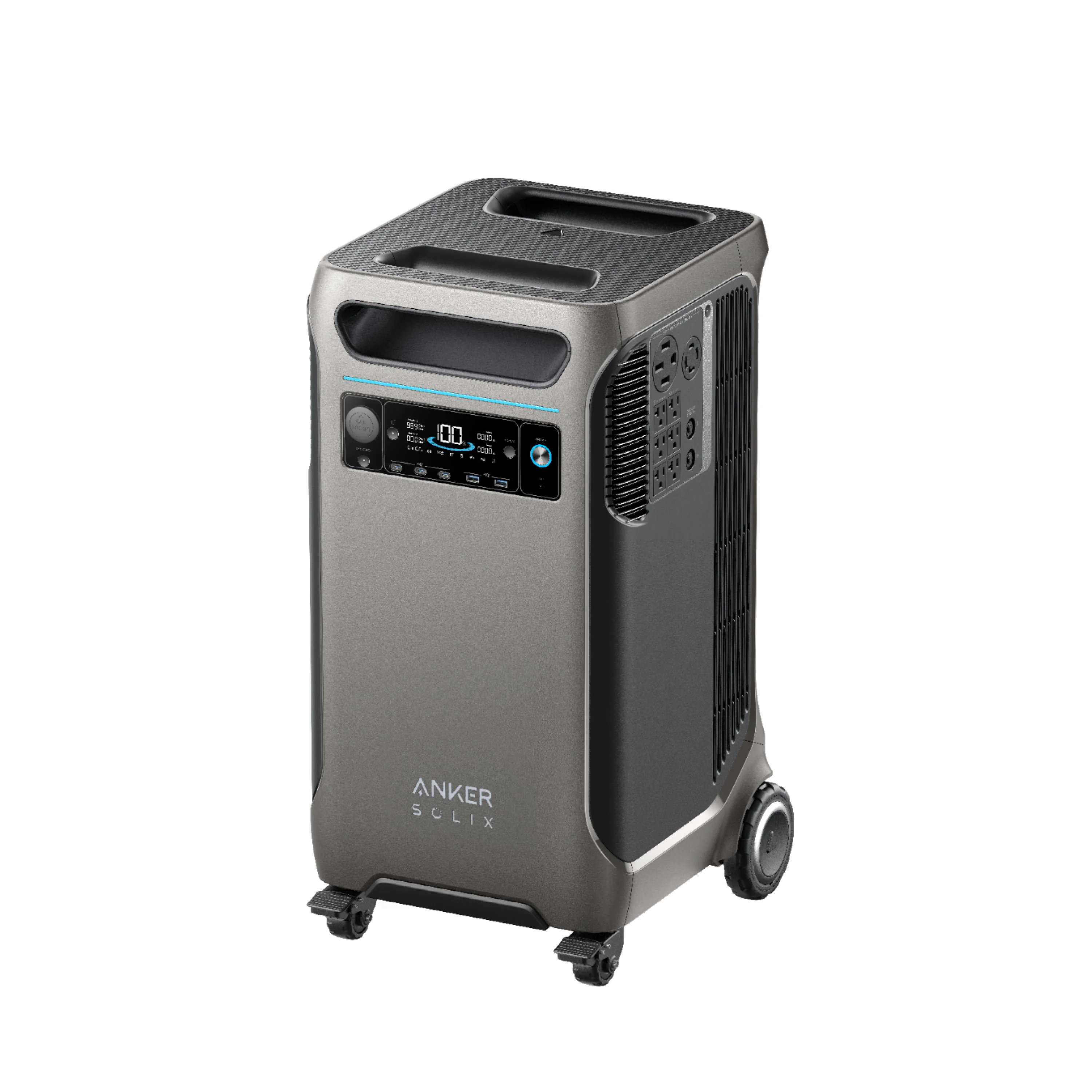
Most portable power stations are glorified battery boxes with a modest inverter bolted on. The Anker SOLIX F3800 is the opposite: a 6,000W inverter with native 120V/240V split-phase output, wrapped around a 3,840Wh LiFePO4 pack. That inversion of priorities is the entire reason it exists. This is a unit designed to start the hard loads and feed real household circuits — a well pump, a 240V appliance, a partial home panel — rather than just keep a laptop alive at camp.
The number that matters most here is not capacity; it is output. At 6,000W continuous with the highest surge rating in this comparison, the F3800 does things smaller stations physically cannot. And because it produces true split-phase 240V from a single box, it slots into home backup scenarios that normally demand a standby generator. The price of admission is size, weight, and the reality that doing this properly means a transfer switch and, for most people, an electrician. At $1,979.99 it is a lot of money — but it is aimed at a job the cheaper units simply cannot do.
Design and Build
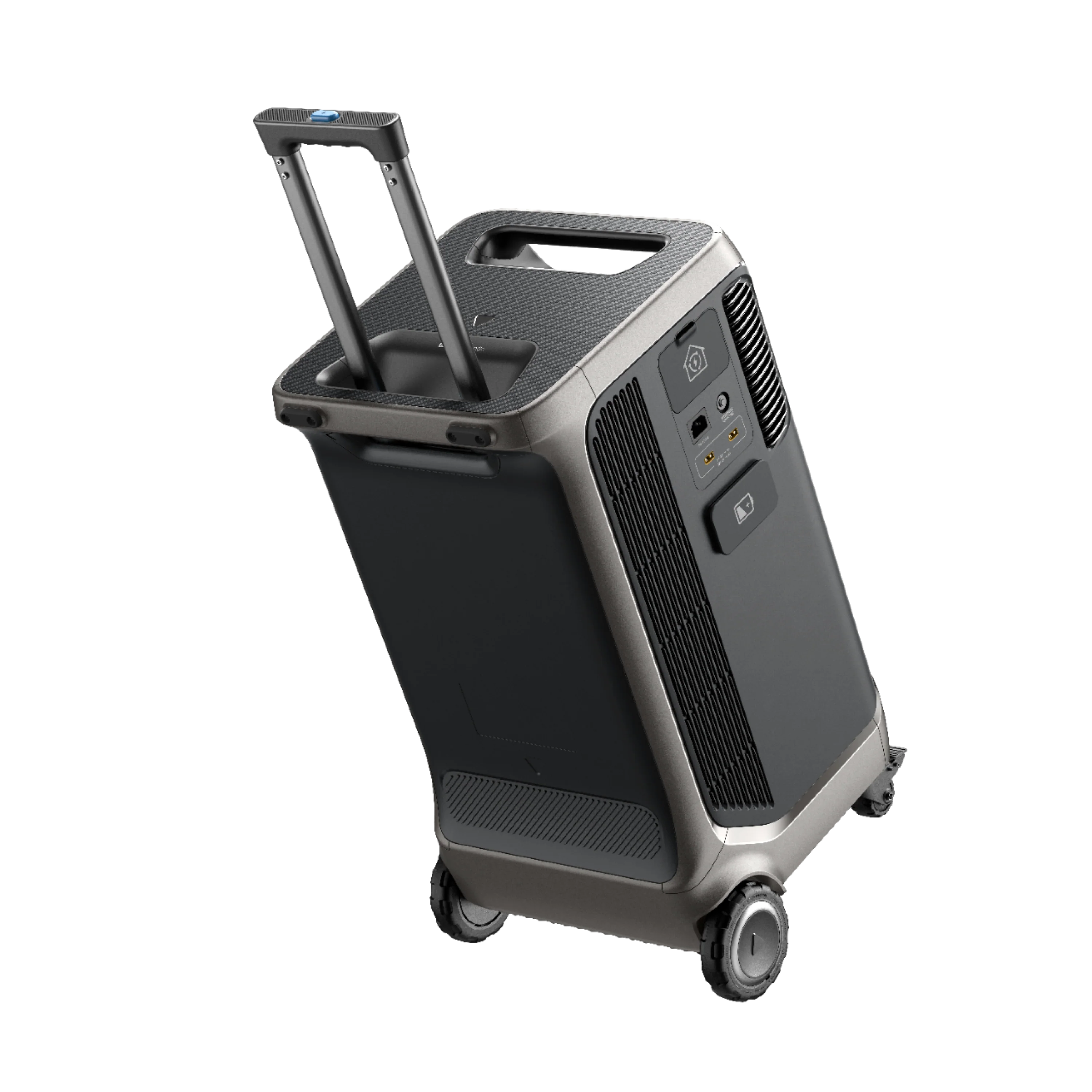
There is no getting around the 132 pounds. Anker fits the F3800 with wheels and a telescoping handle, and on a flat garage floor one person can roll it around without much drama. Lifting it — into a truck bed, up a step, onto a shelf — is firmly a two-person task, and you should plan your storage and deployment around that fact. This is a unit that lives in one place and gets rolled to where it is needed, not carried.
Anker (Manufacturer product image)
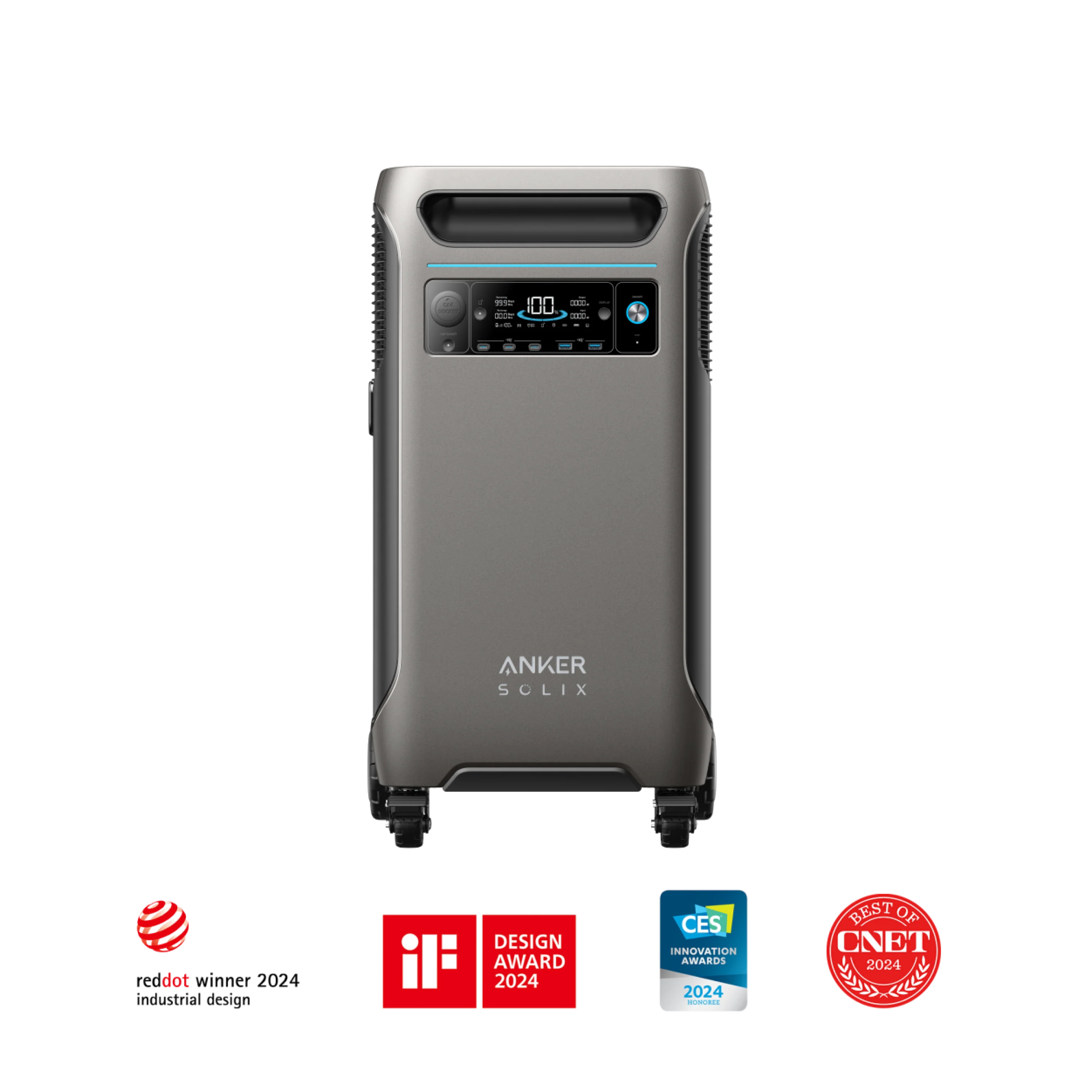
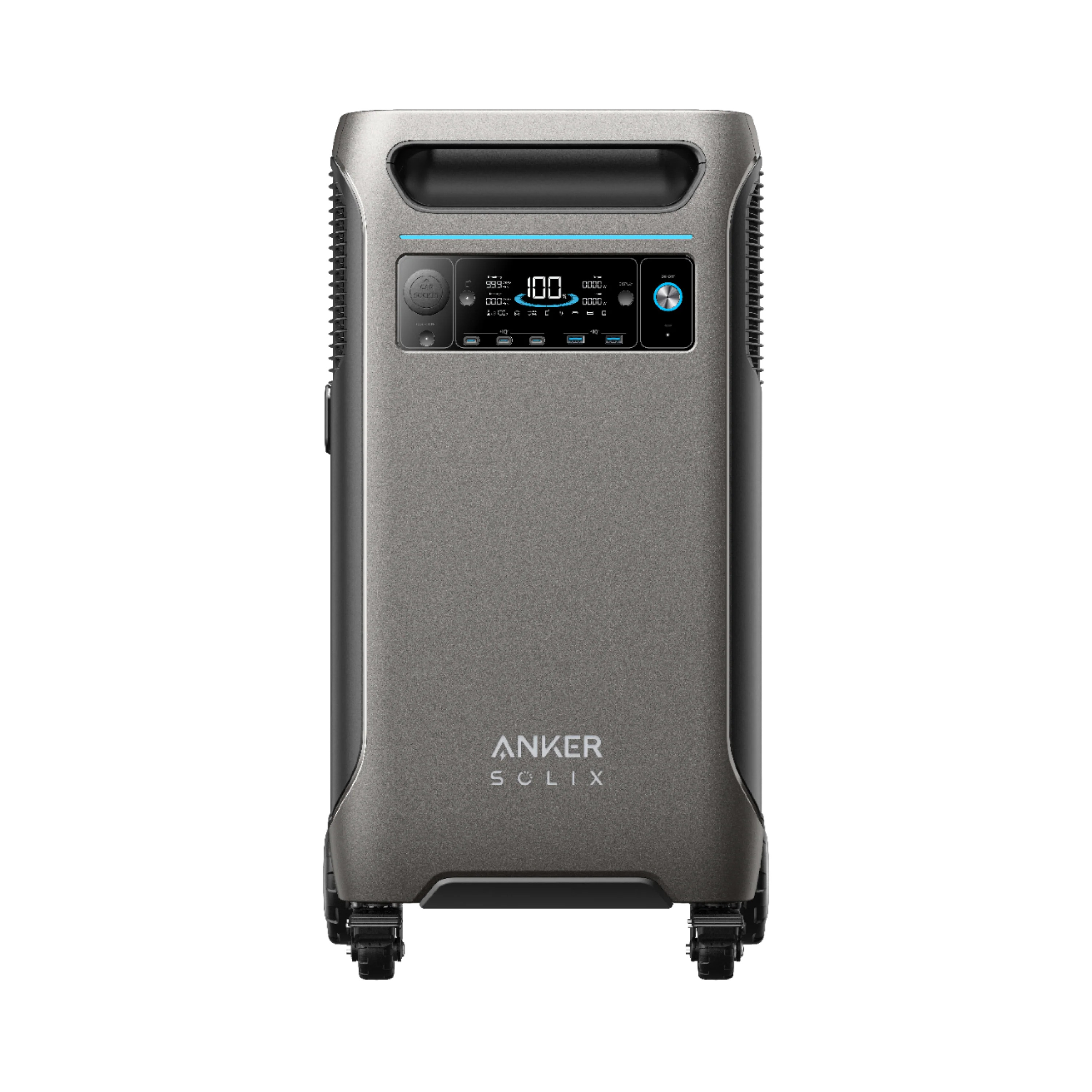
The build reflects the mission. The chassis is heavy-duty, the display is large and legible, and the port bank includes the 30A RV outlet and the high-current 240V-capable output that define the unit's purpose. Bluetooth and Wi-Fi through the app let you monitor and configure it remotely, which matters when the unit is wired into a backup setup and living in a utility area. Everything about the physical design says permanent installation or semi-permanent backup rather than weekend portability.
Output, Surge and What It Can Actually Start
The 6,000W continuous rating is the headline, but surge is the more interesting engineering story. When a motor starts — a well pump, a sump pump, an air-conditioning compressor — it pulls a brief inrush of current several times its running draw, sometimes for only a fraction of a second. A pump that runs at 1,000W can demand three to six times that at the instant it starts. Stations with small inverters fault out right there. The F3800 carries the highest surge headroom in this group above its 6,000W continuous figure, which is what lets it start pumps and compressors that would defeat a 2,000W or 3,000W unit.
Anker (Manufacturer product image)
That capability is the real reason to buy this over a bigger-battery, smaller-inverter rival. Raw stored energy is easy to add; the ability to start a heavy motor is not. If your outage plan includes a well pump, a septic pump, or central air, the F3800 is built for exactly that, where most portable stations are not even in the conversation.
Real-World Runtime
Output this large invites a warning: a 6,000W inverter feeding heavy loads empties a 3,840Wh pack in a hurry. Run 3,000W of appliances and the base battery lasts a bit over an hour. This is a unit whose capacity should almost always be expanded if you want meaningful endurance under real household loads.
Anker (Manufacturer product image)
For lighter, realistic backup loads the numbers are far kinder. After conversion losses of roughly 10–15%, plan on about 3,400–3,450Wh reaching your outlets. A refrigerator does not run its compressor continuously — figure a third of the time — so a fridge that draws 150W while running averages closer to 50W over an hour. Divide that into about 3,450 usable watt-hours and one F3800 keeps a fridge cold for roughly 65 to 70 hours, nearly three days. A broader essentials load — fridge, furnace blower, networking, lights, phones — averaging 250–350W lands you somewhere around 10 to 14 hours per charge. Add expansion batteries and those windows stretch accordingly.
Split-Phase and Home-Panel Integration
This is the feature that separates the F3800 from nearly every portable station under it. A single unit produces true 120V/240V split-phase power, so it can feed 240V loads and, through the right hardware, back up whole sections of a home's electrical panel. Pair two F3800 units and you roughly double both the capacity and the available power for demanding whole-home setups. Anker's home-integration accessories can automate the transfer, and the unit is also compatible with a standard manual transfer switch for a simpler, cheaper installation.
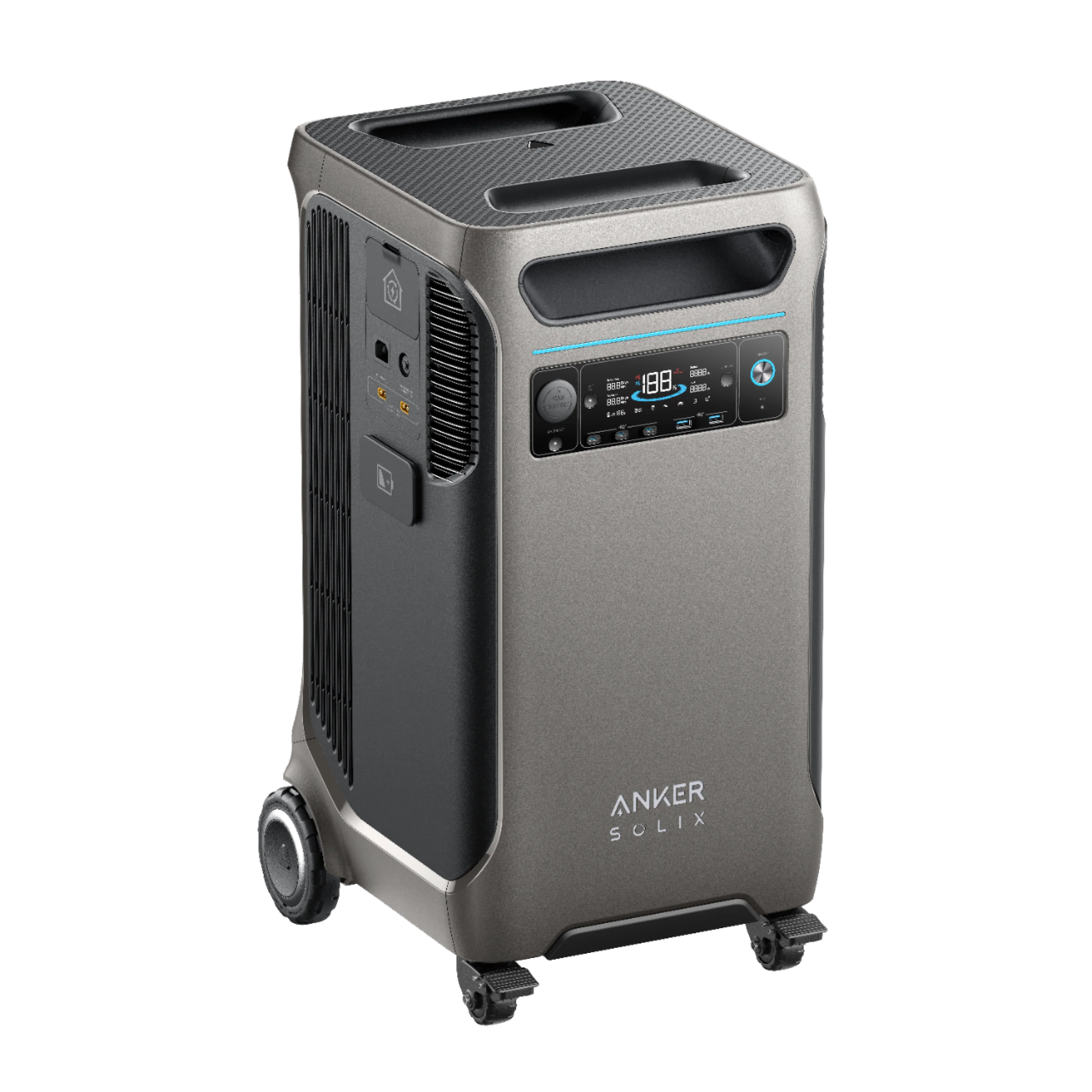
Anker (Manufacturer product image)
Here is the honest part: doing this correctly is an electrical project, not a plug-and-play afternoon. To power house circuits you need a transfer switch — either an automatic home-panel product or a manual transfer switch or interlock kit — and in most jurisdictions that installation must be performed by a licensed electrician. You never connect a power source to your panel by backfeeding an outlet; doing so can energize the utility lines and kill a lineworker. Budget for the transfer switch and the electrician as part of the true cost of whole-home capability, not an optional extra.
Recharge and Solar
A unit this size needs to refill fast to be useful for repeated outages, and the F3800 handles AC recharge quickly — you can bring it back from a deep discharge in a matter of hours rather than overnight. It also accepts substantial solar input, enough that a properly sized array can meaningfully offset daily draw or keep the pack topped during an extended grid-down stretch. For a permanent installation, a solar-plus-transfer-switch setup turns the F3800 into a near-continuous backup for essential circuits, limited mainly by how much panel you can mount and how much sun the day provides. Car charging is included but slow; treat it as an emergency trickle, not a primary path.
How It Compares
Against Bluetti's AC300 + B300 system, the F3800 trades modular pay-as-you-grow flexibility for a far larger single-unit inverter and native split-phase — more capable out of the box for heavy loads, less approachable as a starter purchase. EcoFlow's Delta Pro Ultra plays in the same whole-home, split-phase league and competes on ecosystem and expandability. And against the Goal Zero Yeti 6000X, the contrast is stark: the F3800 offers triple the inverter output, split-phase capability the Yeti lacks entirely, and LiFePO4 cells that outlast the Yeti's nickel-based chemistry many times over — for a thousand dollars less. On raw stored energy the Yeti's base pack is larger, but the F3800 can be expanded past it while doing far more with every watt-hour.
Who Should Buy It, Who Should Skip
Buy the F3800 if you need to start heavy motor loads, if you want native 240V split-phase for partial or whole-home backup, and if you are prepared to pay for a proper transfer-switch installation. It is one of the few portable systems that genuinely competes with a standby generator for the hard jobs.
Skip it if your loads are light electronics and small appliances — you would be paying for output you will never use, and a smaller LiFePO4 station serves better for less. Skip it too if you cannot accommodate a 132-pound unit or are unwilling to involve an electrician for home tie-in. Those buyers should look one or two tiers down.
Verdict
The Anker SOLIX F3800 is the portable station to buy when the job is genuinely demanding: starting pumps and compressors, backing up 240V circuits, and integrating with a home panel. Its 6,000W inverter and category-leading surge make it capable where others fail, and LiFePO4 chemistry means it will still be doing the job many years from now. The weight, the modest base capacity relative to its output, and the real cost of proper home integration are the tradeoffs. For the buyer with heavy loads and a plan for installation, $1,979.99 buys capability that cheaper units cannot approach.
FAQ
Can the F3800 run my well pump?
Very likely, but confirm the numbers. Check the pump's running wattage and its locked-rotor (startup) amps. The F3800's 6,000W inverter and its high surge rating are built to handle the startup inrush of the 1/2 HP to 1 HP pumps common in homes. Match your pump's specs against the unit's ratings before relying on it.
Do I need an electrician to connect it to my panel?
For any tie-in to your home's wiring, yes — in most places that work legally and safely requires a licensed electrician plus a transfer switch. You can use the unit as a standalone power source with extension cords without one, but powering house circuits means a proper transfer switch or the home-panel accessory, never a direct backfeed.
What does split-phase actually let me do that other stations can't?
It lets a single unit supply 120V and 240V simultaneously, so it can run 240V appliances and back up both legs of your electrical panel. Most portable stations only produce 120V, which cannot power 240V loads or feed a standard split-phase panel — this is the F3800's defining advantage.
How long will it run my house during an outage?
It depends heavily on load. For a light essentials setup — fridge, networking, lights, furnace blower — expect roughly 10–14 hours on the base pack. Push heavy 240V or high-wattage loads and the 3,840Wh empties much faster. Add expansion batteries for multi-day endurance.
How long will the battery last before it wears out?
The LiFePO4 cells are rated for thousands of full cycles before dropping to around 80% capacity, which for most homes means many years of service. This chemistry is a big part of the value case against units built on shorter-lived nickel-based cells.
Can I expand its capacity?
Yes. The F3800 accepts add-on expansion batteries to grow total storage, and you can pair two F3800 units for both more capacity and more available power in split-phase configurations. Factor the cost of those add-ons into your planning, since they are a significant expense.
Can one person move it?
You can roll it on its wheels across flat ground alone, but at 132 pounds any lifting — into a vehicle, up stairs — realistically needs two people. Plan its home and deployment around the fact that it is not a one-person carry.
How fast does it recharge?
AC recharge is quick for a unit this size, and it accepts high solar input if you add panels; actual solar time depends on panel wattage and sun. Car charging exists but is slow and best used as a maintenance top-up.
Is the warranty long enough to trust for years of backup?
Anker positions the F3800 with warranty coverage among the longer terms in this category, which pairs well with the long-cycle LiFePO4 cells. Confirm the exact current terms and registration requirements at purchase, since coverage can change over time and by region.
Should I buy the F3800 or a bigger battery with a smaller inverter?
If you need to start motors or run 240V, buy the F3800 — output and surge are what you cannot easily add later. If your loads are light and you mostly want long runtime for small devices, a larger-capacity, lower-output station may give you more hours per dollar.