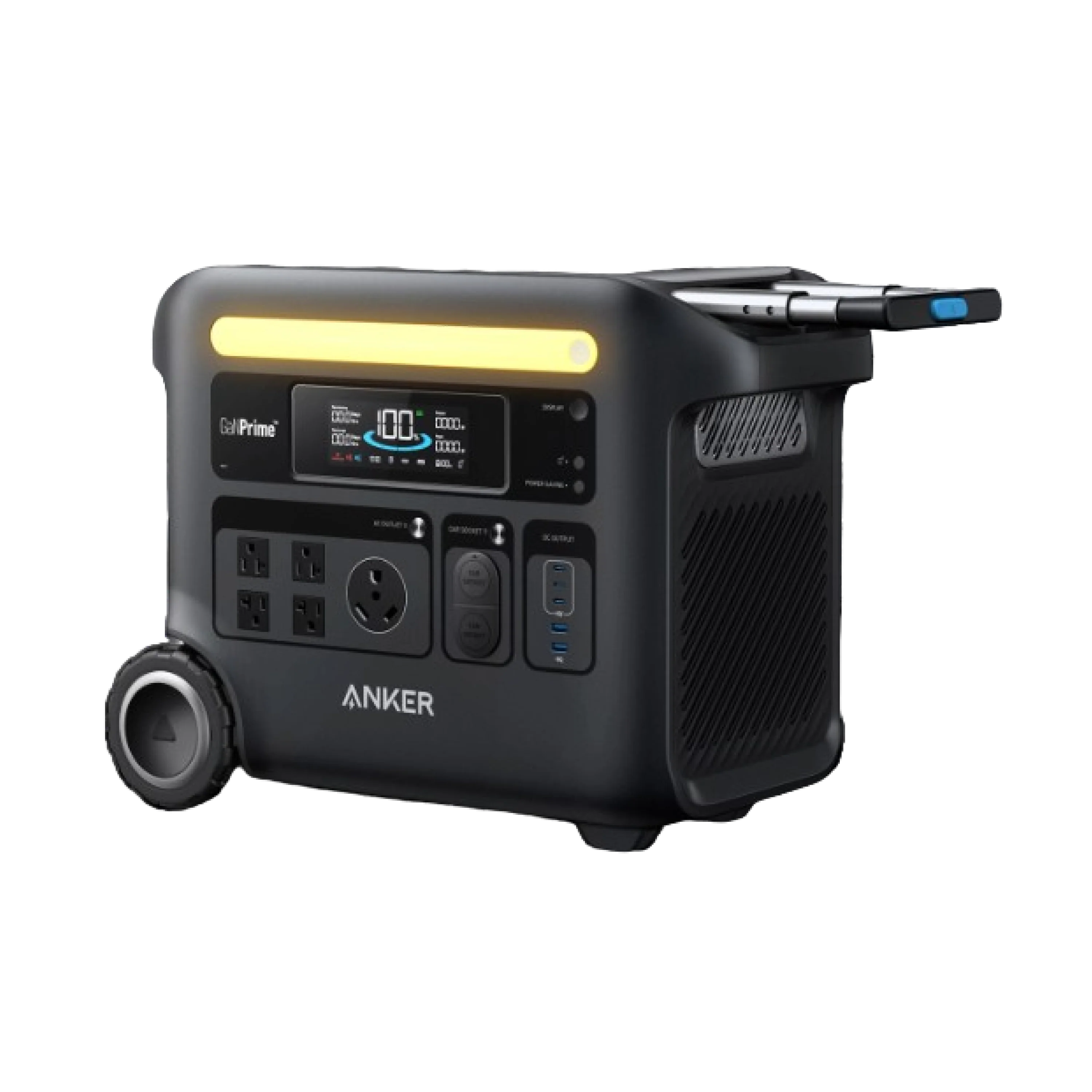
Introduction
The 2,000Wh power station has become a commodity, so Anker's answer with the SOLIX
F2600 is to give you a little more of everything and let the number do the talking.
Anker rates the pack at 2,560Wh — roughly 500Wh above the class average — and wraps it
in a vertical tower footprint with a 30A RV outlet on the front and an expansion port on
the side. On paper that positions the F2600 a half-step above the crowded 2kWh shelf and
a half-step below the whole-home F3000.
The figure that complicates the story is the one Anker prints quietly: the 2,400W
inverter is paired with only a 2,800W surge ceiling. That is a headroom ratio of about
1.17 to 1, well below the roughly 2x margin that most competitors advertise, and it is
the single specification a prospective buyer should understand before spending $1,099.
For resistive loads it is irrelevant. For anything with a motor or a compressor, it
narrows the list of appliances the F2600 will start without complaint.
This review aggregates Anker's published specifications and the surrounding competitive
landscape rather than any first-hand bench work; the figures below are Anker's claims
unless attributed otherwise. The goal is to establish who the extra capacity actually
serves and where the surge ceiling and the 69.7-pound mass push the unit out of
contention.
Design and Build
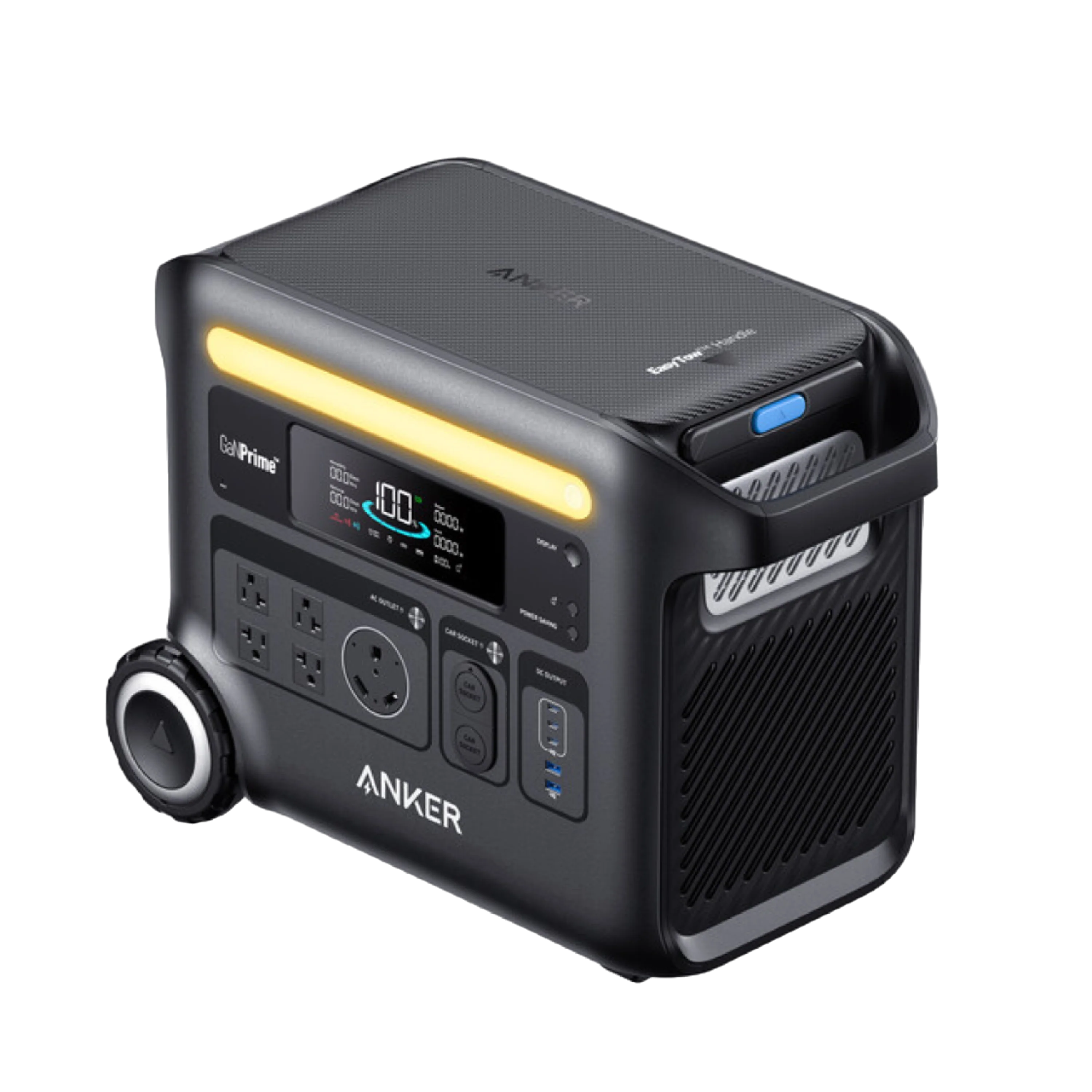
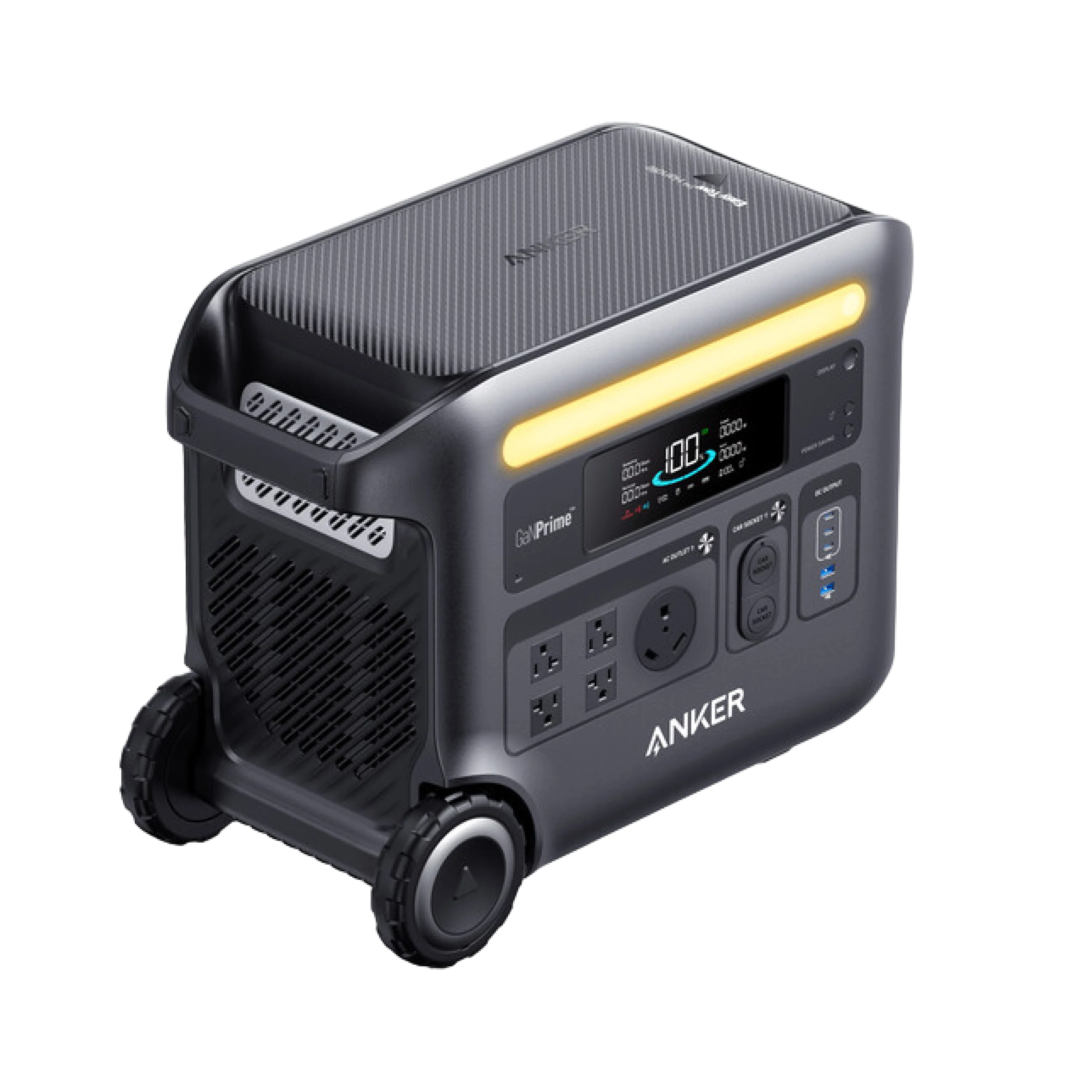
The F2600 abandons the wide suitcase shape that defines most of its rivals in favour of a
tall, narrow tower. Anker lists the dimensions as 20.7 by 15.5 by 9.8 inches, which gives
it a small floor footprint but a top-heavy stance. That is a deliberate choice for a
product meant to stand in a utility closet or beside a fridge rather than travel, and it
reads more like an appliance than expedition gear.
Anker (Manufacturer product image)
Anker (Manufacturer product image)
Weight is where the tower ambition meets physics. At 69.7 pounds, the F2600 is not a unit
one person repositions casually. It is heavier than the Jackery Explorer 2000 v2 by
roughly 30 pounds and heavier than Anker's own C2000 Gen 2 by about 28 pounds, despite
holding a similar amount of energy. The extra mass buys the larger 2,560Wh pack and the
expansion hardware, but it also fixes the F2600's role: this is something you place once
and leave, not something you carry to a campsite.
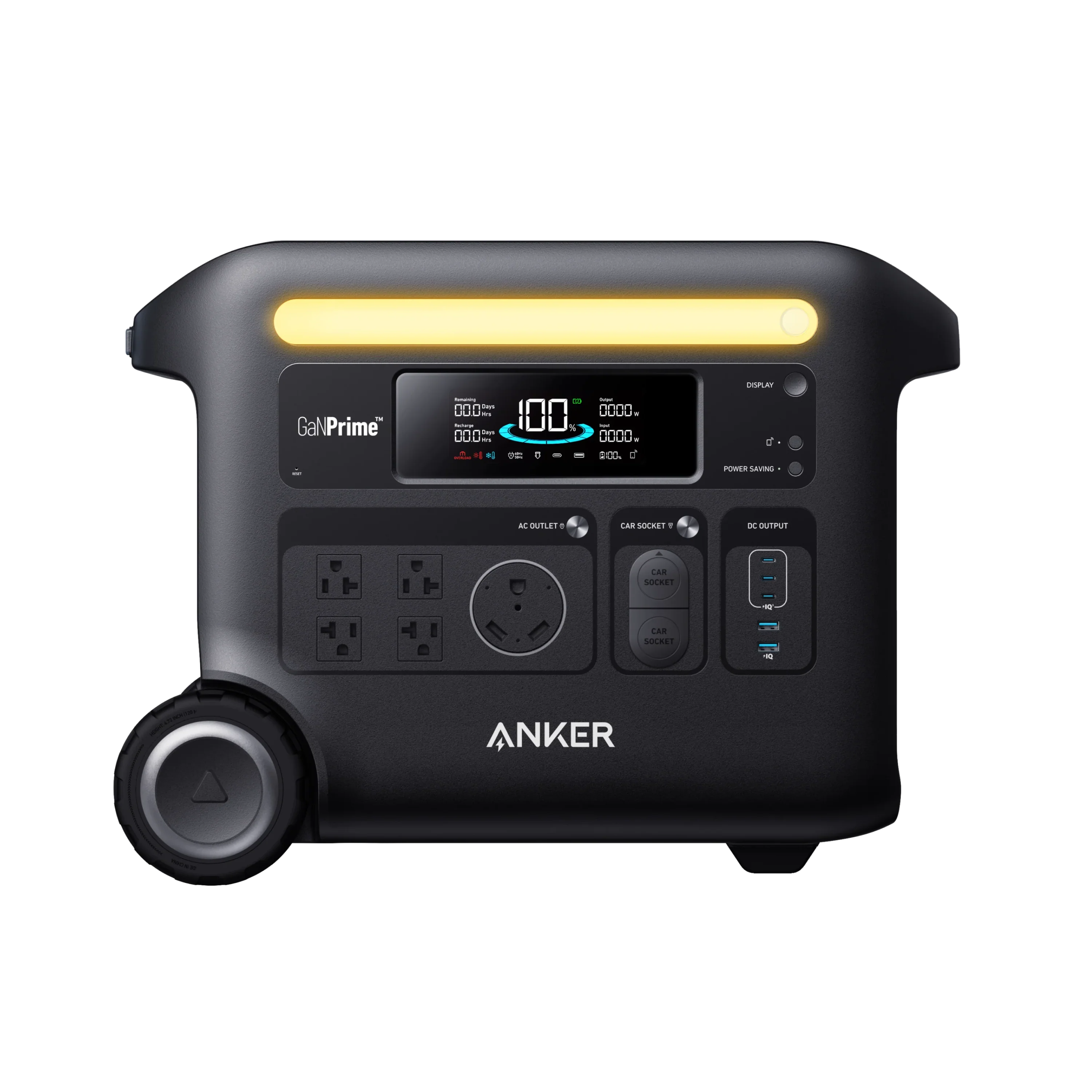
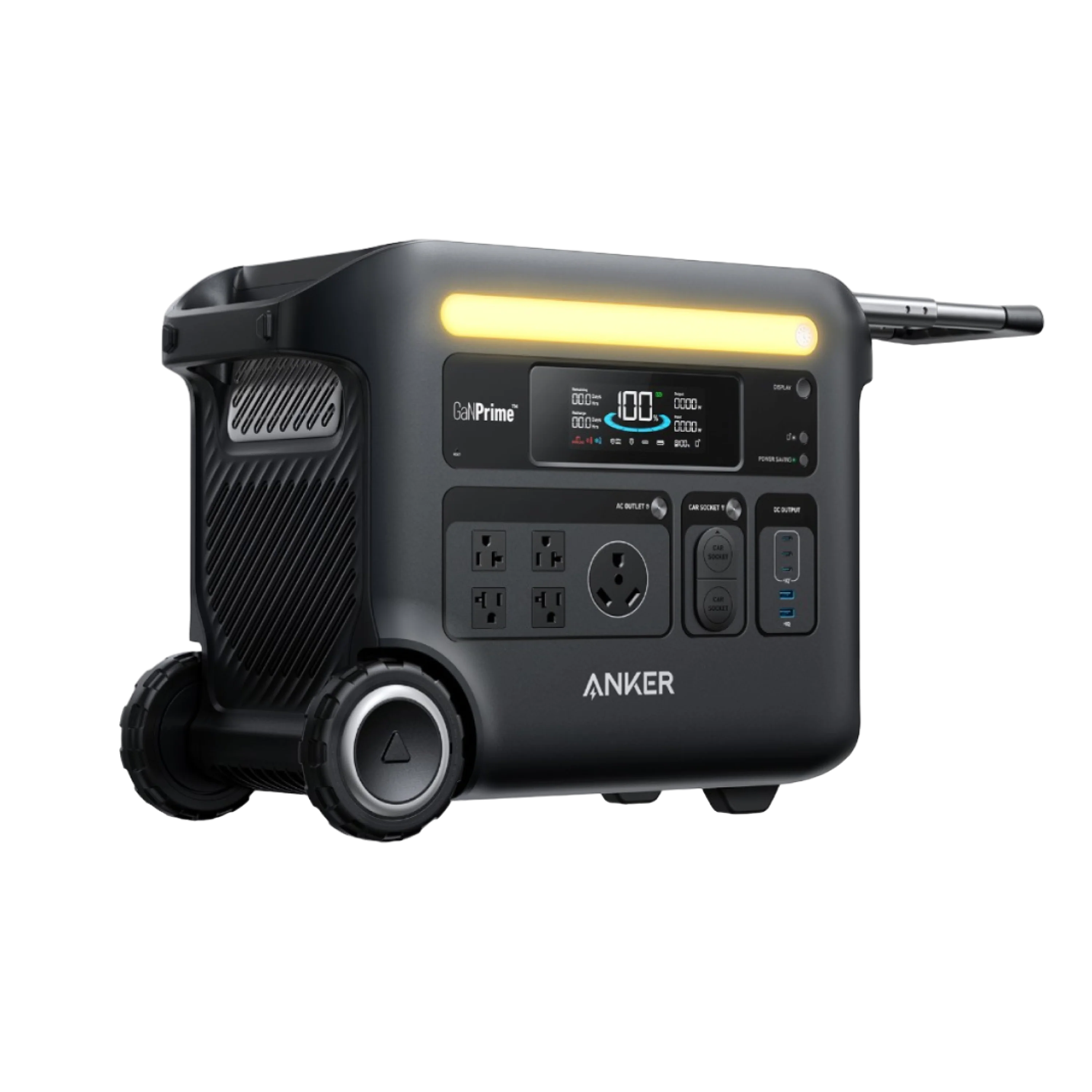
The port array is the strongest part of the industrial design. The front panel carries
four 120V AC outlets alongside a 30A TT-30R receptacle, three 100W USB-C ports rated for
PD3.0, two 12W USB-A ports and two 120W car sockets. The TT-30R is the standout: it lets
an RV or trailer shore-power cord plug straight into the unit without an adapter dogbone,
which is a genuine convenience that the sealed 2kWh units cannot match. Three 100W USB-C
ports is also a generous count for the class — many rivals ration a single high-wattage
port.
The pack itself is lithium iron phosphate, rated by Anker for more than 3,000 charge
cycles to 80% capacity. LiFePO4 chemistry brings the thermal stability that makes indoor
placement sensible, and 3,000-plus cycles implies well over a decade of weekly use before
meaningful degradation. Anker backs the unit with a 5-year warranty, which is competitive
for the segment and longer than the standard three years several rivals offer without a
direct-purchase bonus.
Charging and Runtime Performance
The 2,560Wh nameplate is the F2600's clearest advantage. Every power station loses energy
converting DC cell voltage to 120V AC — typically 10 to 15 percent — so plan on roughly
2,150 to 2,300Wh of usable output at the outlet. Even discounted, that is more than the
Jackery Explorer 2000 v2, which independent lab OutdoorGearLab measured at about 1,740Wh
usable, and it is the reason to consider the F2600 over the cheaper 2kWh field: you are
buying a real capacity margin, not a rounding difference.
Anker (Manufacturer product image)
Anker (Manufacturer product image)
The 2,400W continuous inverter clears the common household load list — a 1,500W space
heater, a 1,000W microwave, a coffee maker, a full-size refrigerator — one appliance at a
time. The catch is the 2,800W surge rating. Motor-driven loads draw a brief start-up
spike several times their running wattage, and a 400W margin above continuous is slim. A
refrigerator compressor or a modest power tool will usually start; a well pump, a large
air compressor or two motors kicking in together may trip the unit where a competitor
with a 4,000W-plus surge would not. Buyers with motor loads should size against the surge
figure, not the continuous one.
Solar is a strength. Anker rates the MPPT controller for 1,000W maximum input across an
11-60V, 20A window. Against a 2,560Wh pack that is roughly a three-hour refill in ideal,
panel-normal-to-sun conditions and comfortably a single good day in the real world — a
far healthier ratio than the Jackery Explorer 2000 v2's 400W ceiling. If solar is central
to your plan, the F2600 is built to accept it.
AC charging is quoted as up to 1,440W via Anker's HyperFlash mode, enabled in the app.
Anker does not publish an independently verified 0-100% time, so treat the 1,440W as the
honest, verifiable figure: that input rate implies a full refill in under two hours under
favourable conditions, but until an outlet such as OutdoorGearLab or a comparable lab
measures it, the input wattage is the number to trust rather than a derived minute count.
Switchover for UPS duty is specified at 20 milliseconds. That is fast enough to keep a
desktop computer, a router, a NAS or a CPAP machine running through a grid cut without a
reboot, and Anker lists the F2600 as compatible with a standard transfer switch — the
path to wiring it into a subpanel for circuit-level backup rather than running extension
cords.
Competitive Comparison
vs. Anker SOLIX C2000 Gen 2 ($799, 2,048Wh). The most awkward comparison is in-house.
The C2000 Gen 2 costs $300 less, weighs 28 pounds less, and — critically — pairs a 2,400W
inverter with a 4,000W surge, giving it far more motor-start headroom than the F2600's
2,800W. It also expands to 4,096Wh. The F2600's counterarguments are its larger 2,560Wh
base pack, its 1,000W solar input against the C2000's 800W, and its tower footprint. For
most 2kWh-class buyers, the cheaper, lighter, higher-surge C2000 Gen 2 is the more
sensible Anker.
vs. EcoFlow DELTA 3 Max ($749, 2,048Wh). EcoFlow undercuts the F2600 by $350 while
offering expandability of its own. The F2600 answers with 512Wh more base capacity and
the integrated 30A RV outlet, but the price gap is hard to ignore unless the RV plug or
the larger pack is decisive for you.
vs. Jackery Explorer 2000 v2 ($999, 2,042Wh). The Jackery is the portability play at
39.5 pounds against the F2600's 69.7, and it costs $100 less. But it is sealed — no
expansion at all — and accepts only 400W of solar. The F2600 is the choice if you want a
system that can double its capacity and refill from panels; the Jackery is the choice if
you will ever need to carry it.
vs. Anker SOLIX F3000 ($1,499). Anker's own next tier holds 3,072Wh, runs a 3,600W
inverter with a 7,200W surge, and expands to 12,288Wh. For $400 more it resolves the
F2600's two real weaknesses — surge headroom and expansion ceiling — at the cost of
another 22 pounds. Anyone whose backup ambitions might grow should price the F3000 before
settling.
Who It's For
Buy the F2600 if you want a stationary home-backup appliance with room to grow and an RV
outlet built in. The 2,560Wh base, the single-battery path to 5,120Wh, the 1,000W solar
input and the 30A TT-30R make it a coherent package for a homeowner or a semi-permanent
RV setup who will wire it in once and expand later. The 5-year warranty and 3,000-cycle
pack support that long-horizon ownership.
It also suits the buyer who genuinely needs more than the 2kWh class delivers but not the
weight and cost of a 3kWh tower. The roughly 2,200Wh of usable energy covers a fridge, a
router, lights and device charging for the better part of a day, with the sub-20ms
switchover keeping network gear online.
Look elsewhere if you carry your power station, if your loads include hard-starting
motors, or if budget is the priority. At 69.7 pounds the F2600 is not portable; against a
2,800W surge, a well pump or large compressor is a risk; and at $1,099 both the C2000 Gen
2 and the DELTA 3 Max deliver comparable capacity for meaningfully less.
Final Verdict
The SOLIX F2600 is a competent, slightly awkward middle child. It does one thing clearly
better than the 2kWh field — it holds more energy and expands to hold twice as much — and
it adds a 30A RV outlet and strong 1,000W solar input that sealed rivals cannot match. As
a fixed home-backup unit for someone who values capacity margin and future expansion, it
earns its place.
The reservations are specific. The 2,800W surge ceiling is the standout compromise, thin
enough that motor-heavy buyers should look at the higher-surge C2000 Gen 2 or F3000
instead. The 69.7-pound mass removes portability from the conversation entirely. And at
$1,099 the F2600 is priced above two capable rivals, including one from Anker's own
lineup, which makes the value case rest on the extra 500Wh and the expansion port rather
than on any headline bargain.
Judged as what it is — a stationary, expandable, RV-ready 2.5kWh backup tower — the F2600
is a reasonable buy for the right closet. Judged against the surge headroom and the price
of its own siblings, it is a unit you should choose deliberately, not by default.
Frequently Asked Questions
How much usable energy does the F2600 actually deliver?
incurs turning DC into 120V AC, plan on roughly 2,150 to 2,300Wh at the outlet. That is
still a genuine margin above the 2kWh class — for reference, OutdoorGearLab measured the
Jackery Explorer 2000 v2 at about 1,740Wh usable.
What does the 2,800W surge rating mean in practice?
1.17 to 1. Resistive loads such as heaters and kettles are unaffected. Motor-driven
appliances draw a brief start-up spike, so a well pump, a large air compressor, or two
motors starting at once may trip the F2600 where a unit with a 4,000W-plus surge would
not. Size against the surge figure if your loads have motors.
Can I expand the capacity?
That is a single-battery ceiling — modest next to platforms that stack several packs — but
it is a real advantage over the sealed Jackery Explorer 2000 v2.
Does it have an RV outlet?
trailer shore-power cord plugs in directly without an adapter. That, plus four 120V
outlets, three 100W USB-C ports and two 120W car sockets, is a generous port count.
How fast does it charge?
solar input of up to 1,000W. Anker does not publish an independently verified full-charge
time, so treat the input wattages as the reliable figures rather than any derived minute
count. The 1,000W solar ceiling refills the pack in a single good day.
Will it run my refrigerator during an outage?
so the F2600's roughly 2,200Wh of usable energy supports somewhere between eleven and
twenty-two hours of fridge-only runtime, longer if you add the expansion battery.
Can I use it as a UPS for a computer?
NAS units and CPAP machines keep running through a grid cut without rebooting. Anker also
lists it as compatible with a standard transfer switch for wiring into a subpanel.
How long will the battery last?
cycle per week that is well over a decade of service before meaningful degradation, and
Anker backs the unit with a 5-year warranty.
How does it compare to the cheaper Anker C2000 Gen 2?
with a stronger 4,000W surge. The F2600's advantages are 512Wh more base capacity, 1,000W
solar input against 800W, and the tower footprint. For most buyers the C2000 Gen 2 is the
better value; the F2600 wins only if the extra capacity, the solar ceiling or the form
factor matters to you.
Is it too heavy to move?
appliance, not a portable one. If you need to carry your power station, the 39.5-pound
Jackery Explorer 2000 v2 is a far easier lift, albeit with less capacity and no expansion.