Introduction
A power station's inverter rating is supposed to be the one number you can trust without a caveat. It is the ceiling the manufacturer is legally comfortable printing on the box, tested under continuous load, not a best-case estimate. The AllPowers S2000 Pro is rated at 2,400W. Independent testing found that number is only true above 70% battery charge. Below that threshold, AllPowers itself confirmed to The Solar Lab that the real ceiling drops to 2,050W — a 350W gap the company disclosed nowhere except a small sticker on the underside of the unit.
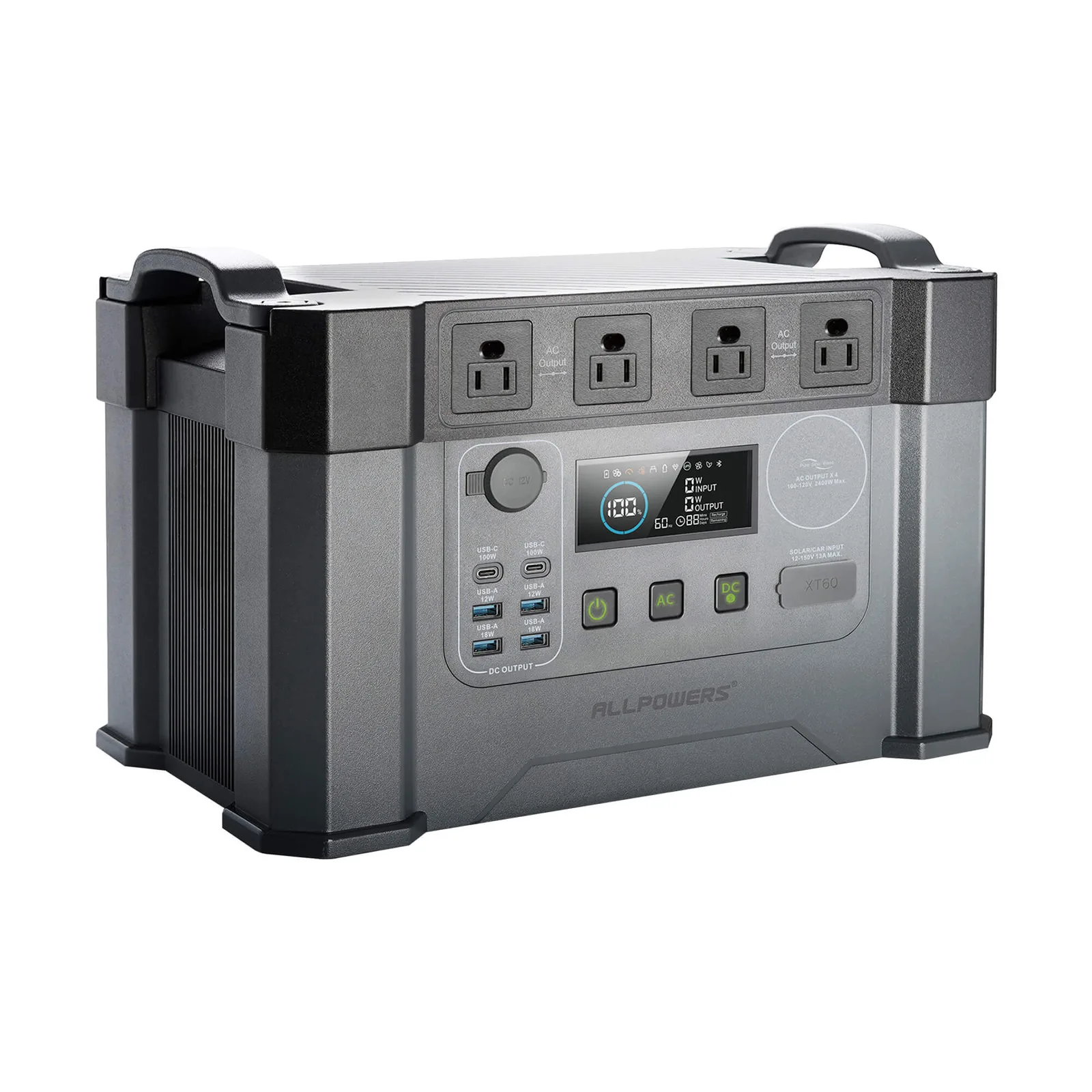
That single fact reframes everything else about this review. The S2000 Pro is a 1,451Wh station bundled with a 200W folding solar panel, sold as a mid-size camping and backup option. Some of it works fine: Bluetooth pairing was solid, basic voltage output checked out, and the unit even surged under load without the meltdown that reportedly plagued two AllPowers units tested before it. But the inverter finding, plus a customer-support test that went unanswered for a full week, arrive on top of a documented pattern. According to The Solar Lab, this is the third AllPowers unit it has tested and found short of its advertised specs, and the outlet has now suspended covering the brand for 12 months. That is not a one-off complaint about a single SKU. It is a brand-level trust problem, and it belongs in the review, not a footnote.
I want to be direct about what this review can and cannot confirm. AllPowers does not maintain a spec page I could independently verify for the S2000 Pro at the time of writing, so figures like weight, dimensions, exact port counts, and warranty terms are left out below rather than guessed. What follows leans on the retail listing that does confirm capacity and inverter rating, and on The Solar Lab's published testing from September 2026, with each claim attributed to its source.
Setup, App Pairing, and What's Actually in the Box
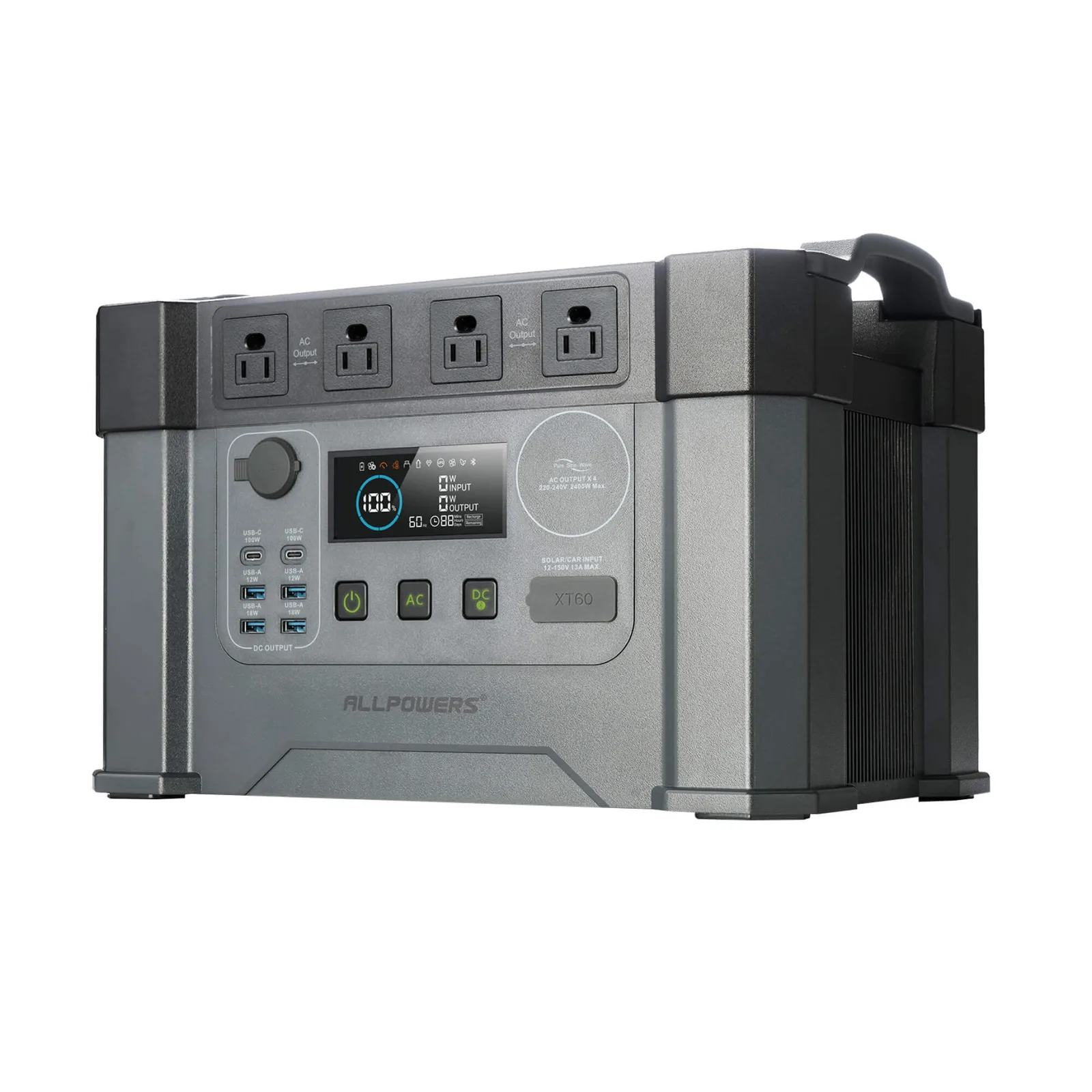
The retail kit pairs the S2000 Pro with a 200W foldable solar panel, a combination aimed squarely at campers and off-grid buyers who want to charge from the sun on day one rather than buy a panel separately later. On paper that is a fair value proposition: a 200W panel is a meaningful charging source for a 1,451Wh battery, capable of a useful top-up across a few hours of good sun.
ALLPOWERS product page (Manufacturer product image)
Setup is where AllPowers earns its one clean win in this review. The Solar Lab reported that the S2000 Pro's Bluetooth button worked and that the unit paired successfully with AllPowers' companion app on the first attempt. That may sound like a low bar, but it wasn't a given: the same reviewer said neither of the two AllPowers units it tested before this one managed reliable Bluetooth pairing. Getting app connectivity right is table stakes for a modern power station, and the S2000 Pro clears it.
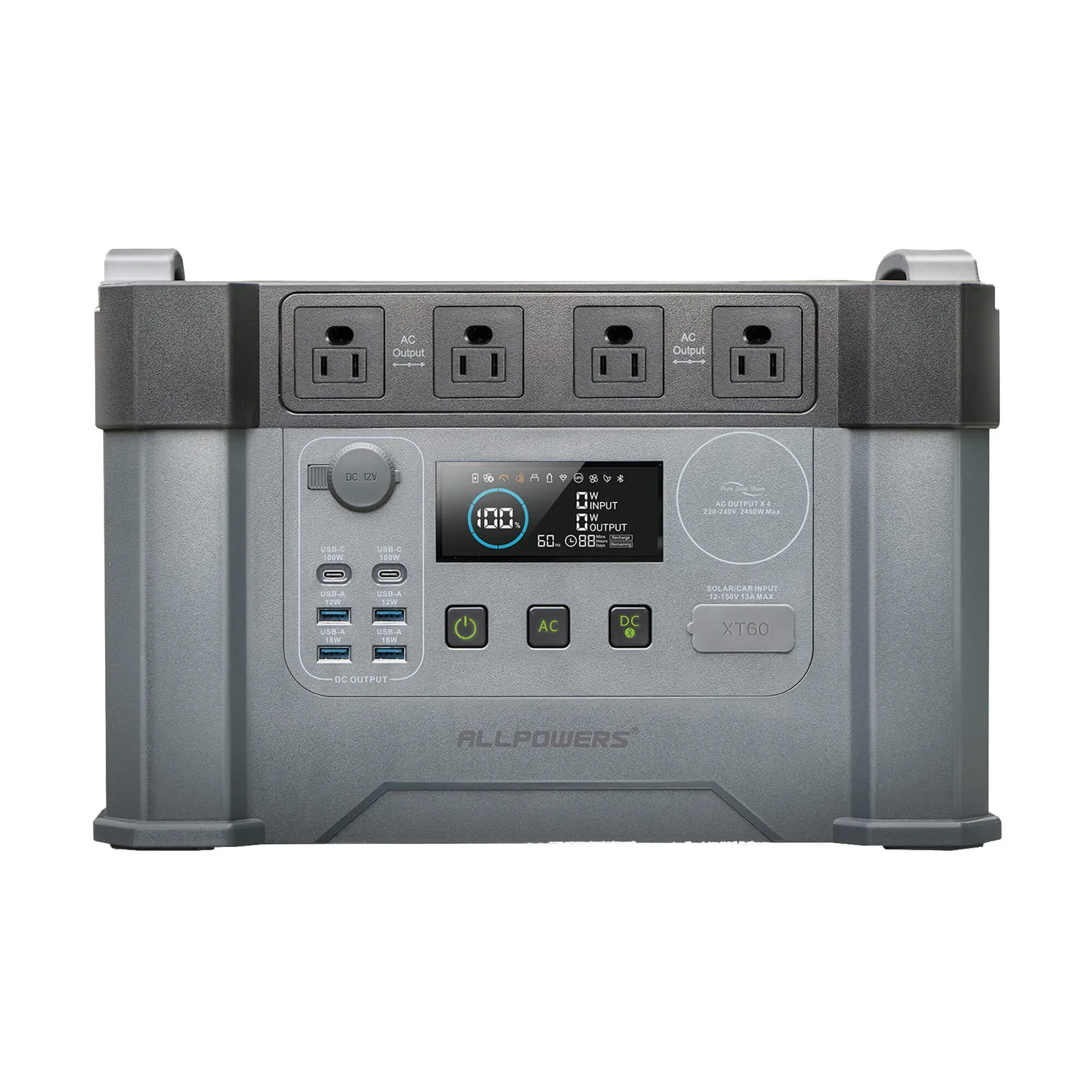
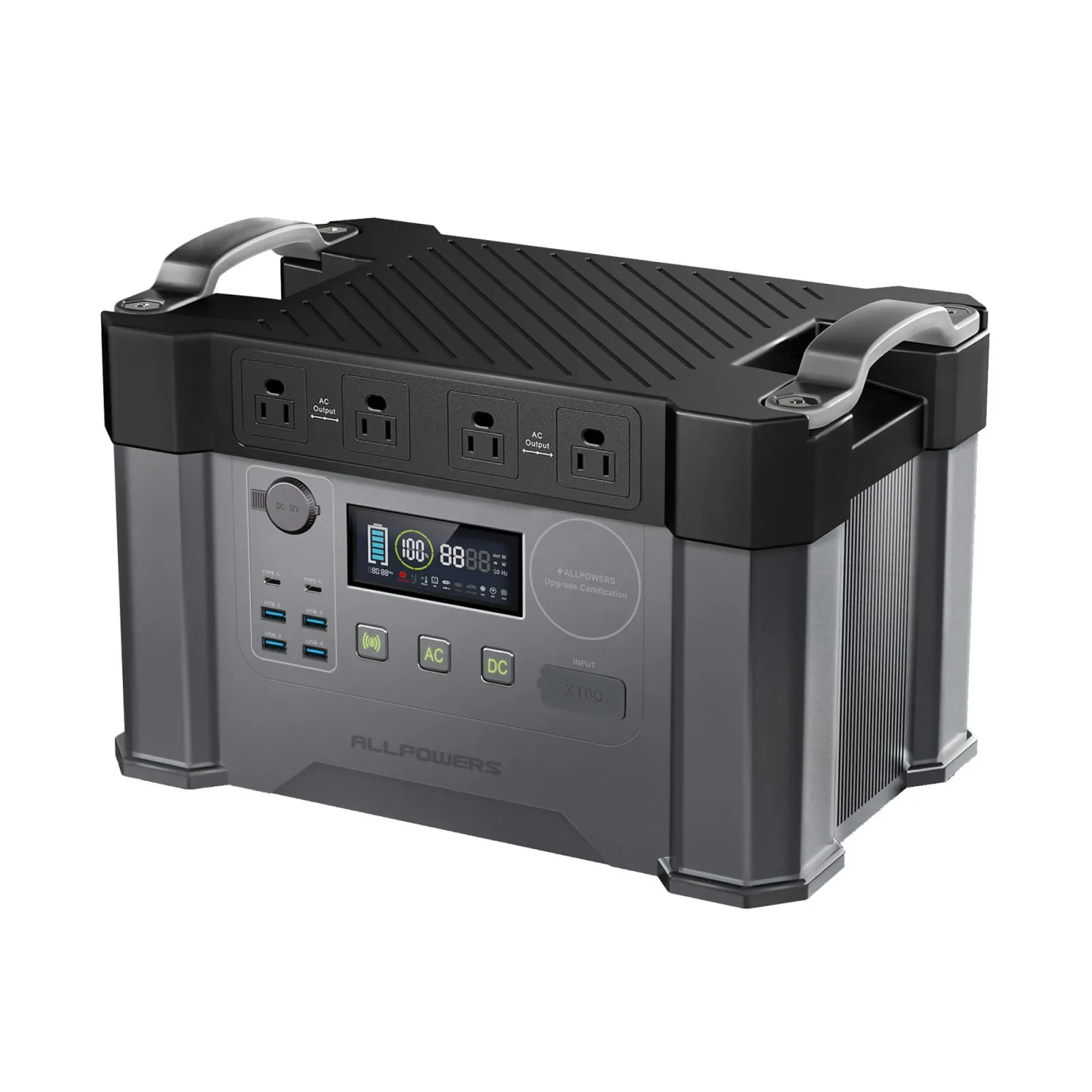
Past that, I can't tell you much with confidence about the physical experience of owning this unit. AllPowers does not publish a weight, a set of dimensions, or a full port list in a source I can verify, and I'm not going to invent numbers to fill out a spec table. If exact port counts or the unit's weight matter to your use case — fitting it in a specific cargo space, for instance, or carrying it any real distance — confirm those figures against current retail photos and listings before you buy, because I can't vouch for them here.
Performance Testing: The Efficiency Test That Exposed the Real Inverter Rating
This is the section that matters most, and it comes almost entirely from The Solar Lab's published testing, which I'm attributing directly because I have no independent lab data of my own on this unit.
ALLPOWERS product page (Manufacturer product image)
Early results looked promising. The S2000 Pro passed initial voltage-output checks, delivering correct power to connected appliances. It also handled a surge test cleanly — a meaningful result given that the outlet's account of two prior AllPowers units described them overheating and shutting down the moment they approached a surge condition. Whatever changed in this unit's design, the surge behavior is a genuine improvement.
Then came the efficiency test, which is designed to load a unit near its stated inverter maximum and see how the battery, inverter, and cooling behave under sustained pressure — the conditions that separate a rated capability from a marketing number. Since the S2000 Pro carries an advertised 2,400W inverter rating, The Solar Lab ran a 2,250W load: a full 150W under the unit's own ceiling, intentionally conservative.
The unit shut off at 55% battery and threw an overload error. That result made no sense against a 2,400W rating with a 150W margin still in hand, so The Solar Lab contacted AllPowers directly. The explanation: the 2,400W figure only applies when the battery is above 70% charge. Below that threshold, the inverter is capped at 2,050W — a fact the company said is printed on a small sticker on the bottom of the unit, and nowhere else. Not on the website. Not in the manual, which The Solar Lab separately described as confusing.
That is the core problem with this unit. An inverter rating that only holds for part of the battery's charge range is not a 2,400W inverter. It's a 2,050W inverter with a temporary, best-case bonus — and printing 2,400W on the box without that condition attached is exactly the kind of claim regulators and reviewers alike treat as misleading. If you plan to run anything near this unit's rated ceiling, you need to keep the battery above 70% to get the power you paid for, and nothing in AllPowers' marketing tells you that going in.
Customer Support and the Three-Strikes Problem
Hardware issues are one thing; how a company responds to them is another, and AllPowers didn't do itself any favors here either. As part of its evaluation, The Solar Lab sent a support inquiry from an account made to look like an ordinary customer, separate from the account it normally uses to communicate with the company. After a full week, there was no reply. When the outlet raised the silence directly with AllPowers through its own established contact, the company had no explanation. AllPowers also still has no listed phone number; email is the only channel a customer has if something goes wrong, and in this test, email didn't work either.
ALLPOWERS product page (Manufacturer product image)
Context matters here. The Solar Lab's account states this is the third AllPowers unit it has tested, following two earlier units that it says failed to meet their basic advertised specifications. After publishing those findings, the outlet reports that AllPowers asked for the videos to be removed; the outlet declined and instead offered AllPowers a chance to demonstrate a unit that performed as advertised, which is how the S2000 Pro ended up under review. The result was a partial improvement — better Bluetooth, real surge capability — undercut by the same category of problem: a headline spec that doesn't hold under real conditions. The Solar Lab's stated response is a 12-month moratorium on covering AllPowers products, calling it strike three.
I'd also flag one specific claim from that testing that I can't independently confirm: The Solar Lab described the unit it received as an older-generation build that it said didn't even use a lithium battery pack. I could not verify battery chemistry against an AllPowers spec sheet, and the claim is unusual enough — most current power stations at this capacity, AllPowers included, market lithium iron phosphate cells — that I'm reporting it as the outlet's stated observation rather than a confirmed fact. Buyers who care about cycle life and long-term degradation should ask a retailer directly which cell chemistry ships in the unit they'd actually receive, since that appears to be an open question rather than a settled one.
How It Stacks Up Against DJI, EcoFlow, and Jackery
Sizing the S2000 Pro against established, similarly-capacity stations makes the trust gap easier to see in dollar terms.
vs. DJI Power 1000 ($999, frequently discounted to $699–$799). The DJI holds 1,024Wh — less than the AllPowers' 1,451Wh — but runs a larger 2,200W inverter with no asterisk attached to that number in DJI's own published specs. DJI backs the rating with a documented 3,500+ cycle life and a company that responds to support requests. If the choice is between AllPowers' larger but conditionally-rated capacity and DJI's smaller but fully-rated one, the honest number is worth more than the bigger one.
vs. Jackery Explorer 1000 v2 ($1,099, often discounted to $899–$999). Jackery's 1,070Wh unit runs a 1,500W inverter — nominally weaker than the S2000 Pro's advertised 2,400W — but it's a number Jackery stands behind without a battery-charge condition, backed by a long safety-certification track record (UL 2743, FCC, CE, PSE) that AllPowers hasn't matched in this review's evidence. For buyers who will never charge above 70% before use, an honestly-rated 1,500W beats a conditional 2,400W that quietly becomes 2,050W.
vs. EcoFlow DELTA 3 Classic ($459). This is the sharpest comparison. EcoFlow's smallest DELTA 3 variant undercuts the S2000 Pro's likely street price while matching its inverter class at 1,800W continuous, backed by a 5-year warranty and a company with a long public track record of honoring its published specs. Even giving the S2000 Pro's 1,451Wh capacity edge full credit, a $459 unit from a brand that doesn't need an efficiency test to reveal its real inverter rating is the safer buy for most people.
The Solar Lab's own recommendation, stated plainly in its review, points the same direction: it names EcoFlow and Anker as the safer-bet major brands, and Pecron and OUPES as reliable budget alternatives for buyers trying to save money without repeating the S2000 Pro's problems. That's an unusually blunt steer away from the product under review, and it's worth taking at face value from a reviewer with no evident reason to protect AllPowers.
Who Should Buy It (and Who Should Look Elsewhere)
Consider it only if: you already own one, understand the 70%-battery condition on the inverter rating, and plan your loads around it — running below 2,050W whenever the battery is under 70% — and you don't expect to need customer support.
Skip it if: you want a power station whose printed inverter rating is the number you actually get, regardless of charge level. Skip it if you might need warranty or troubleshooting help after the sale; a company that didn't answer a support email in a week during an active product evaluation is not one to bet a real emergency on. And skip it if 240V output, a documented cycle-life rating, or a stated warranty term matter to your decision — none of those are things I can confirm for this unit.
The buyers best served here are the ones who treat the 2,400W figure as a marketing number rather than a spec, price the unit accordingly against DELTA 3 Classic or Power 1000-class alternatives, and are comfortable being their own technical support if something goes wrong.
Final Verdict
The AllPowers S2000 Pro is a case study in why an inverter rating needs an asterisk when it has one. The hardware isn't uniformly bad — Bluetooth pairing worked, voltage output was correct, and the surge test passed cleanly, all real progress against the brand's own recent history. But the moment a real efficiency test pushed the unit toward its advertised ceiling, the actual number turned out to be 350W lower than what's printed, disclosed only on a sticker most owners will never read. Layer a week of dead silence from customer support in a live support test, and a documented pattern of this being the third misrepresented AllPowers unit reviewed by the same outlet, and the case for buying this over an honestly-rated competitor gets thin fast.
If you can get it at a steep discount, understand the 70% condition, and don't expect to need support, the S2000 Pro can function as a backup device. For nearly everyone else, EcoFlow's DELTA 3 Classic at $459, Jackery's Explorer 1000 v2, or DJI's Power 1000 deliver an inverter rating you can actually trust, at a price that doesn't require gambling on a brand three strikes into a suspension from at least one major reviewer.
Frequently Asked Questions
Is the AllPowers S2000 Pro's 2,400W inverter rating accurate?
A: Only above 70% battery charge. Below that, AllPowers told The Solar Lab the real continuous ceiling is 2,050W — a 350W gap not disclosed in marketing materials or the manual, only on a small sticker on the unit.
What happened during independent efficiency testing?
A: The Solar Lab ran a 2,250W load, 150W under the advertised 2,400W ceiling. The unit shut off at 55% battery and threw an overload error, which led to AllPowers disclosing the 70%-threshold condition.
Did the S2000 Pro pass any parts of testing?
A: Yes. Bluetooth pairing with the companion app worked on the first attempt, basic voltage output was correct, and the unit handled a genuine surge load without overheating or shutting down — an improvement over two AllPowers units tested before it.
How responsive is AllPowers customer support?
A: In a direct test, an email sent from an account made to look like a regular customer went unanswered for a full week. AllPowers has no listed phone line; email is the only contact channel, and it did not work in that test.
Is this the first time AllPowers has had spec-accuracy problems?
A: According to The Solar Lab, no — it's the third unit the outlet has tested from the brand, following two units it says failed to meet their advertised specifications. The outlet has suspended reviewing AllPowers products for 12 months as a result.
What battery chemistry does the S2000 Pro use?
A: Unconfirmed. AllPowers does not publish this in a source I could verify, and The Solar Lab described the tested unit as an older build that it said lacked a modern lithium pack — a claim worth confirming directly with a retailer before you buy, since it's unusual for a station at this capacity.
How does it compare to the EcoFlow DELTA 3 Classic?
A: The DELTA 3 Classic costs less ($459), matches the S2000 Pro's inverter class at a fully-rated 1,800W, and carries a 5-year warranty from a company with a longer track record of honoring published specs. For most buyers it's the safer choice despite slightly less capacity.
Does the bundled 200W solar panel add real value?
A: On paper, yes — 200W is a reasonable charging source for a 1,451Wh battery. That value is undercut by the same trust problem affecting the rest of the unit: without a reliable spec sheet, it's hard to confirm the panel and charge controller perform to their stated rating either.
Who actually recommends this unit?
A: Not The Solar Lab. Its review explicitly steers readers toward EcoFlow and Anker as safer major brands, and Pecron or OUPES as reliable budget picks, rather than the AllPowers unit it was sent to test.
What should I check before buying an AllPowers S2000 Pro anyway?
A: Confirm current inverter behavior and the 70%-charge condition with the seller directly, ask specifically about battery chemistry and warranty terms, and price it against the DELTA 3 Classic, Jackery Explorer 1000 v2, or DJI Power 1000 before deciding the capacity difference is worth the trust gap.