Introduction: A 2021 Power Station With Current-Generation Ambitions
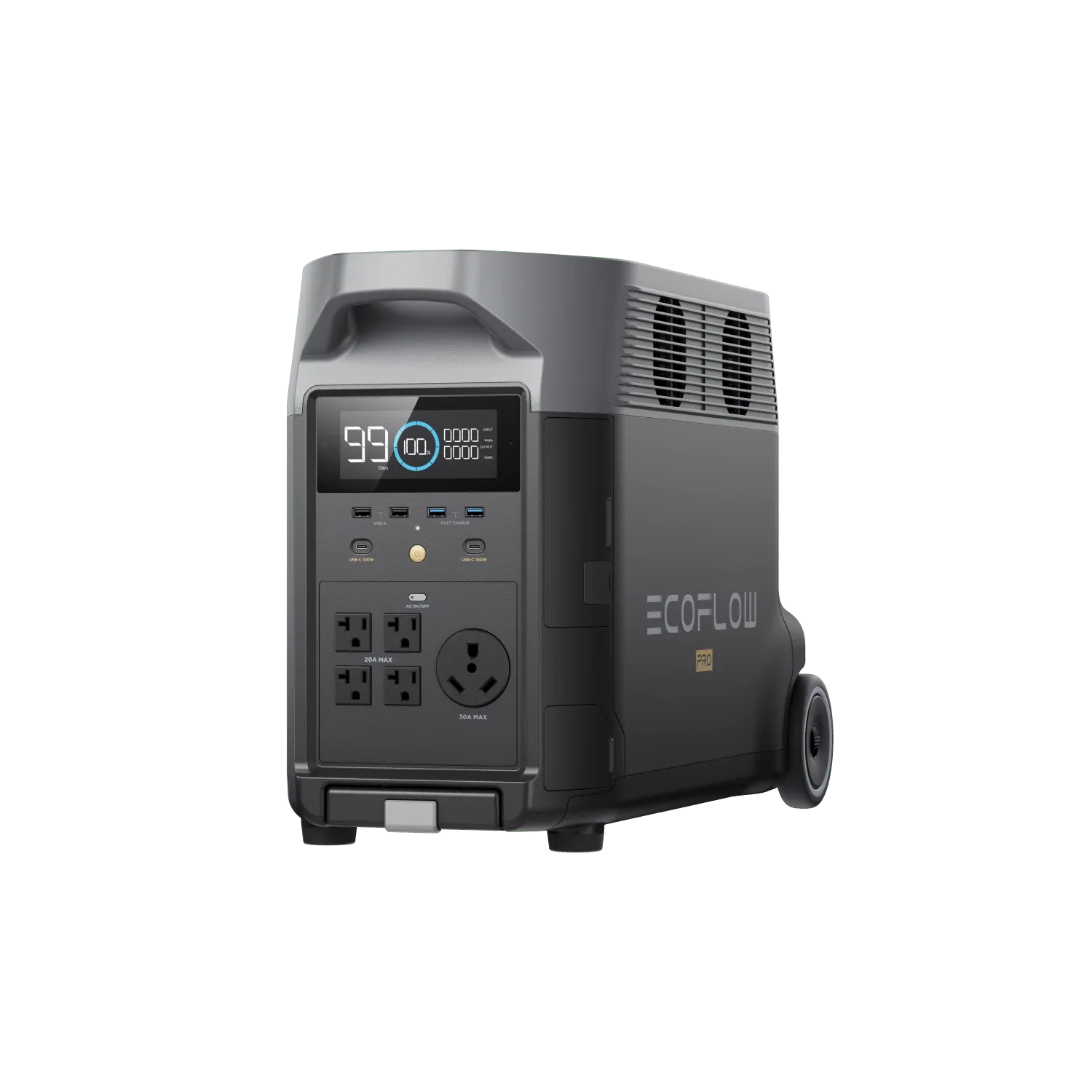
The EcoFlow DELTA Pro is still a formidable battery, but it is not a casual camping accessory. EcoFlow launched the original DELTA Pro on July 15, 2021, through its official product launch campaign. That date matters in 2026: this is an older platform that remains technically capable, but it now competes with newer stations that package similar capacity in more refined ways.
EcoFlow product page (Manufacturer product image)
Its proposition is easy to understand. EcoFlow rates the DELTA Pro at 3,600Wh with a 3,600W continuous pure-sine inverter, up to 1,600W of solar input, and up to 2,400W of AC charging. It can accept extra batteries, feed demanding appliances, and integrate with EcoFlow's broader home-energy accessories. The tradeoff is equally clear: the base station weighs about 99lb before you add anything.
That makes the DELTA Pro a strong choice for a buyer who needs high-output backup power in a garage, vehicle, workshop, or RV and can move it with wheels or a cart. It is a poor choice for anyone imagining a battery they will regularly carry down a trail. The word portable describes its form factor and transport options, not its lifting experience.
Design, Controls, and Setup
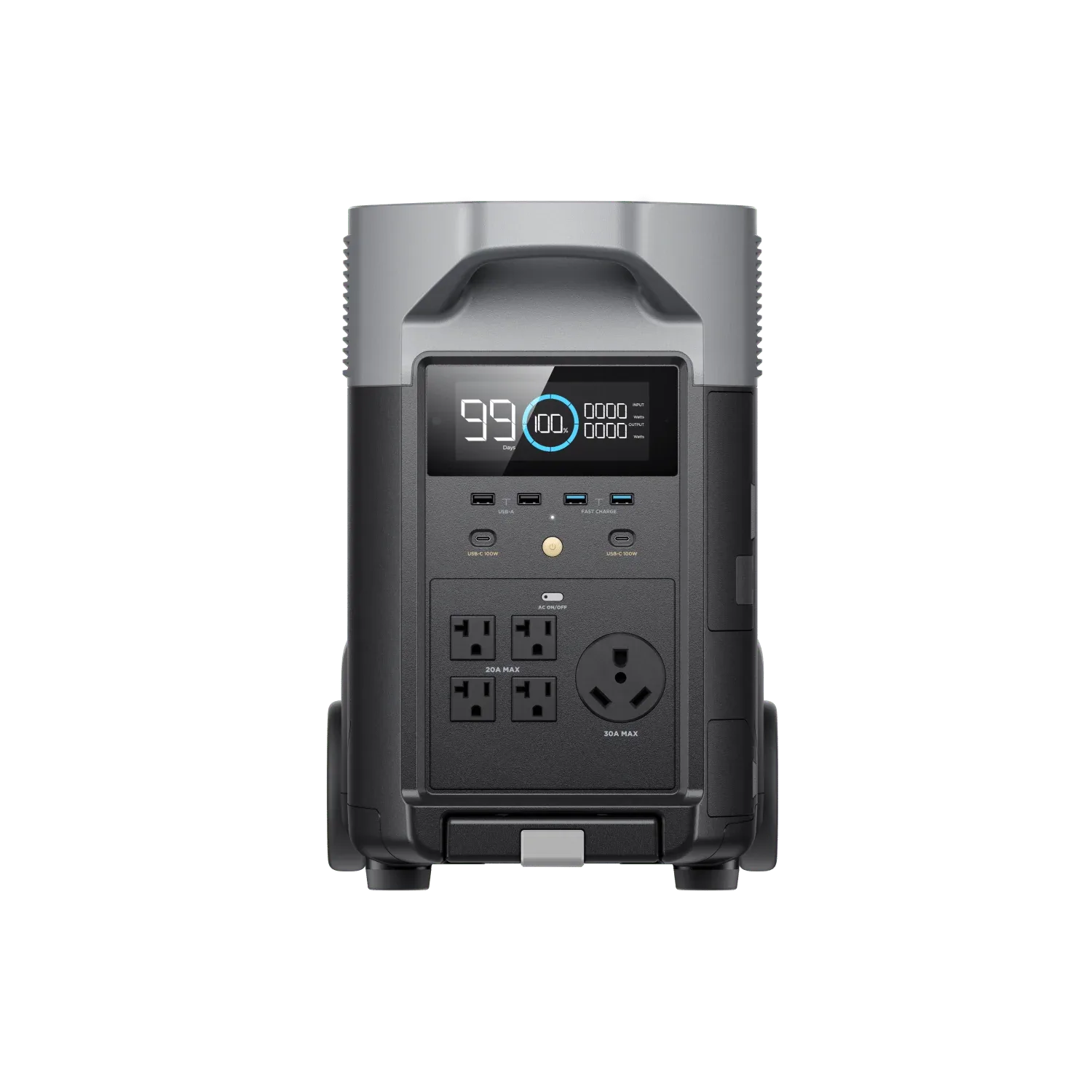
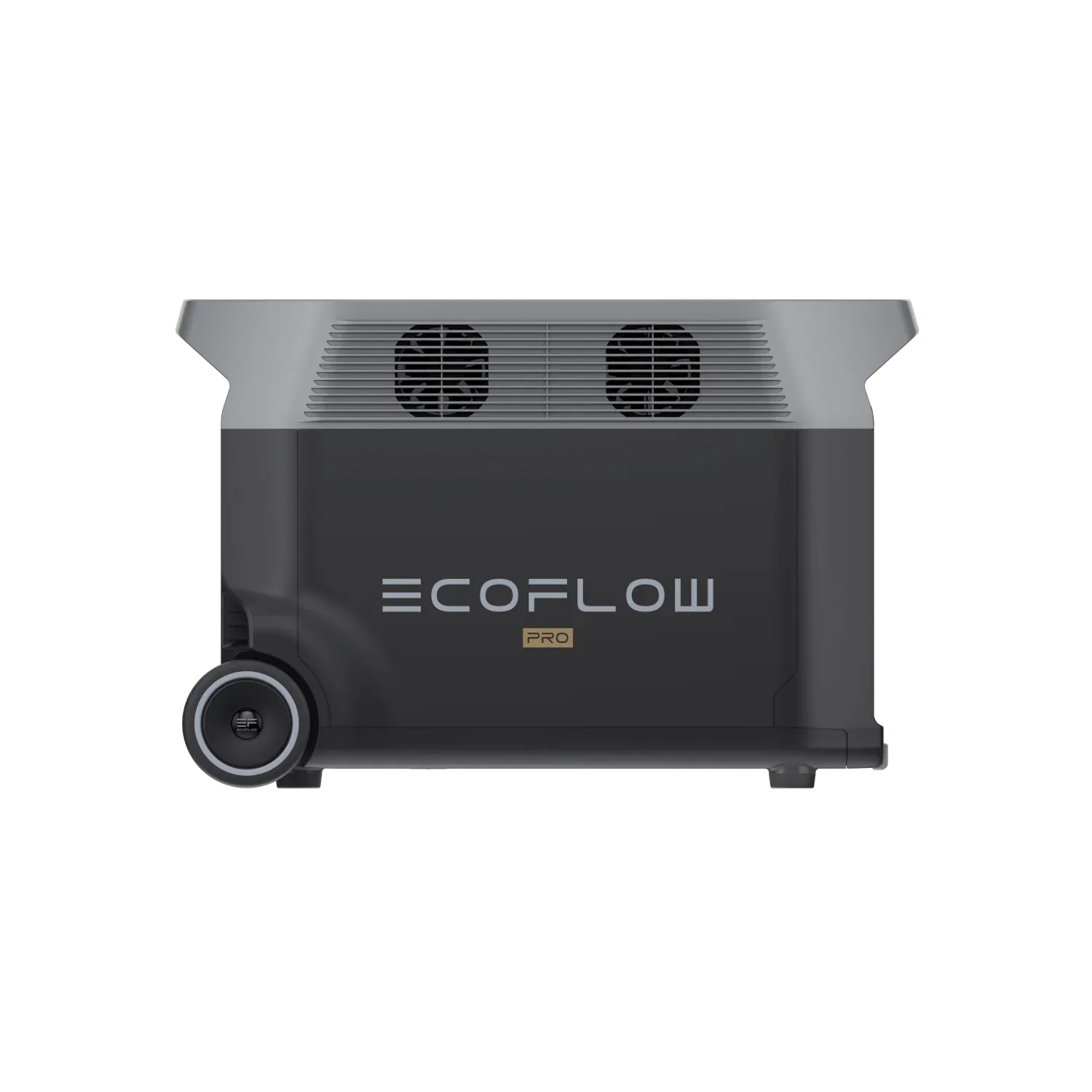
The DELTA Pro is built around a large central battery with wheels and a telescoping handle. That is the right solution for a 99lb object: on a flat driveway or garage floor, one person can roll it. Over steps, into a vehicle, or across rough ground, the weight becomes a two-person problem. This is closer to movable emergency equipment than to a large power bank.
EcoFlow product page (Manufacturer product image)
EcoFlow's product documentation gives the unit approximate dimensions of 25 by 11.2 by 16.4 inches. The footprint is manageable for a utility room or the cargo area of a large vehicle, but it needs deliberate storage. Leave access to the vents, charging ports, and handle rather than treating it like a box that can be buried under camping gear.
The display and app are important because a system of this size has more operating choices than a small station. The front panel reports charge and load information, while the EcoFlow app adds remote monitoring, output controls, charging settings, and firmware management. Independent reviews from TechRadar and PCMag both identify the interface and app as practical strengths rather than mere decoration.
Setup is straightforward for the station itself: charge it, connect a load, and select the relevant AC, DC, or USB output. The complicated part starts when you build a system around it. Extra batteries, solar panels, an alternator charger, a Smart Generator, or home-transfer equipment each add compatibility and installation decisions. EcoFlow's ecosystem is useful precisely because it is broad, but the accessories can turn a single purchase into a much larger project.
Battery and Charging Performance
The 3,600Wh LFP battery is the DELTA Pro's core advantage. EcoFlow's lithium iron phosphate chemistry is a better fit for regular cycling than the older lithium-ion chemistry used in many early high-capacity stations. The capacity is large enough to support an outage kit, RV loads, or a workshop without immediately forcing every device into a low-power compromise.
EcoFlow product page (Manufacturer product image)
Charging flexibility is unusually good for the platform's age. EcoFlow rates AC input at up to 2,400W and solar input at up to 1,600W. The company advertises roughly 0–80% AC charging in 2.7 hours under its stated conditions. That is a manufacturer rating, not a promise for every outlet, temperature, battery age, or charging mode. The last part of a charge can take longer as the system balances and tapers input.
Solar input is valuable when the DELTA Pro is being used away from the grid, but 1,600W is a ceiling rather than a daily harvest guarantee. Panel orientation, shading, temperature, cable losses, and the season determine how much energy actually arrives. A buyer planning multi-day off-grid use should size the panels around the expected weather and load instead of assuming the maximum input will be available.
The battery can power devices while charging, which suits outage and RV use. That does not erase conversion losses: the 3,600Wh label describes stored battery energy, not guaranteed energy delivered from AC outlets. Runtime depends on the load, inverter efficiency, reserve settings, temperature, and the age of the pack. Treat the capacity as a large budget, not a fixed number of appliance-hours.
Output, X-Boost, and Real-World Loads
The 3,600W continuous inverter is the number that should guide a purchase. It provides meaningful headroom for a refrigerator, microwave, power tools, networking equipment, lights, and chargers, assuming their combined running demand stays below the limit and their startup surges are compatible.
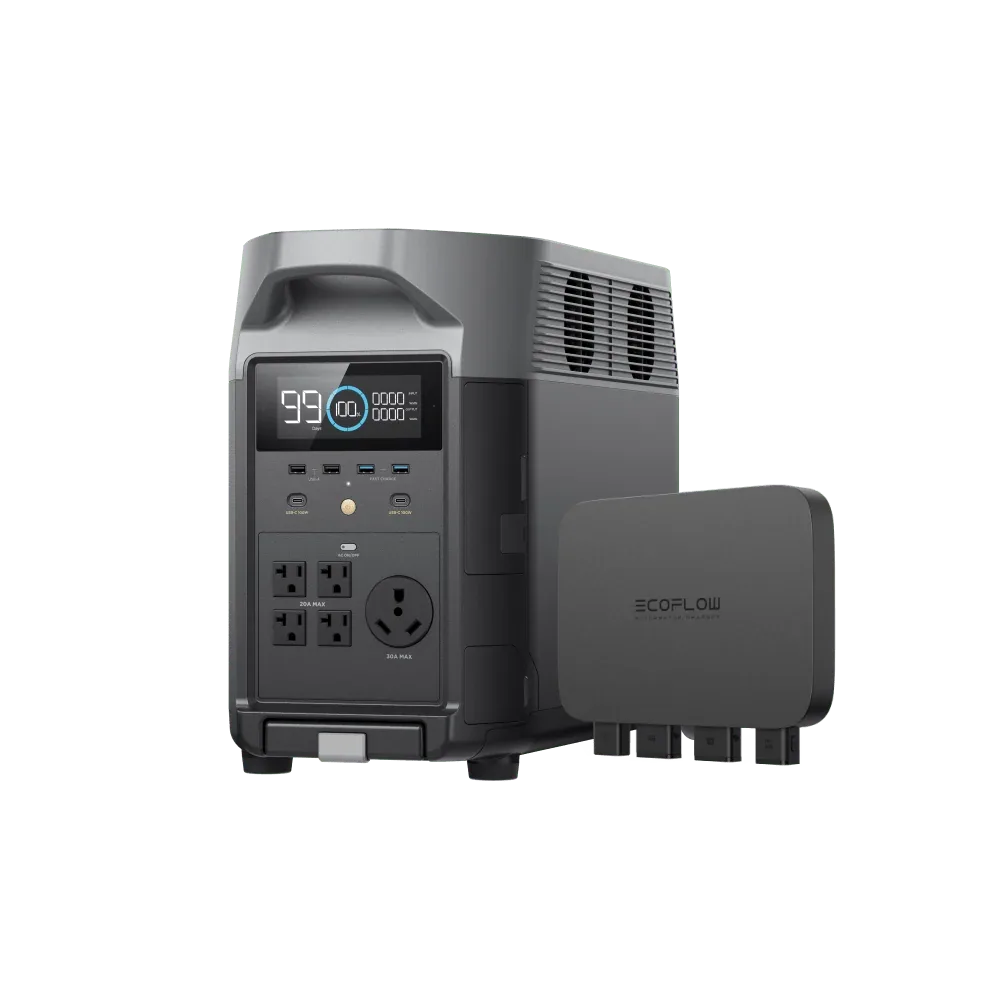
EcoFlow product page (Manufacturer product image)
EcoFlow advertises X-Boost up to 4,500W. That mode can let some compatible resistive appliances operate by reducing voltage or otherwise managing the load, but it does not turn the DELTA Pro into a 4,500W inverter. A compressor, pump, air conditioner, or tool with a difficult startup can still trip the station. Plan around 3,600W continuous output and verify the appliance's running and starting requirements.
That distinction is especially important for home backup. A refrigerator may run comfortably once its compressor is moving, yet still demand a short startup surge that exposes a marginal setup. The DELTA Pro's published 7,200W surge figure provides useful context, but surge behavior depends on duration and the exact load. Test critical equipment before an outage rather than relying on a headline number.
EcoFlow positions the DELTA Pro as an emergency backup system, and its approximately 20ms EPS transfer specification can keep many household electronics powered when the grid drops. EPS is not a universal guarantee of zero interruption, nor is it a substitute for a certified medical UPS. Test computers, network equipment, and any sensitive device in the actual configuration you intend to rely on.
Independent reviews from TechRadar, PCMag, and Tom's Guide broadly agree on the practical tradeoff: the DELTA Pro supplies unusually high output and capacity for a consumer station, but its weight and price make it equipment for planned deployment. Those reviews support the use-case conclusion, not a claim that every appliance will run for a fixed number of hours.
Expansion and Home Backup
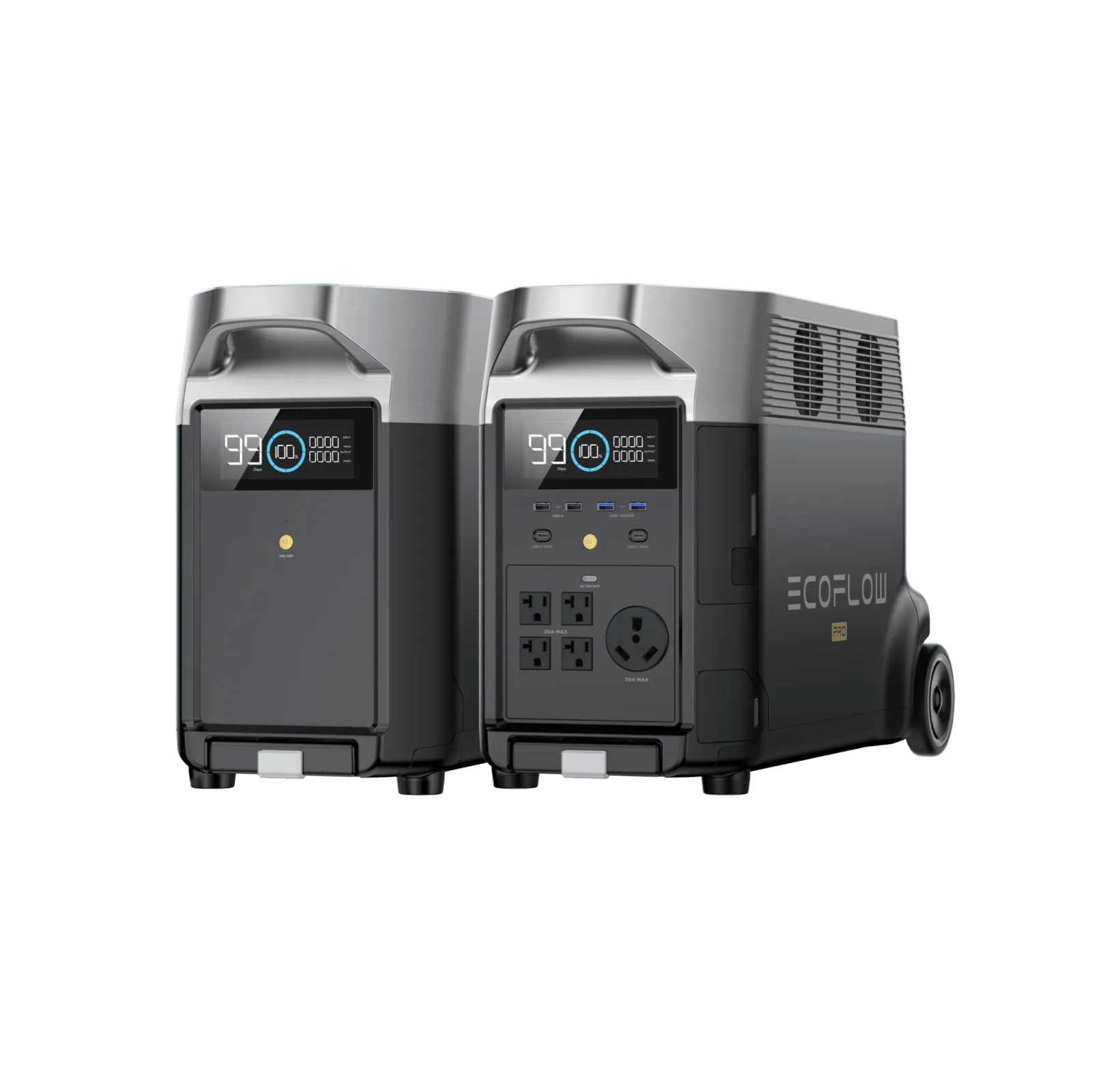
One DELTA Pro can expand to 10,800Wh with two compatible Smart Extra Batteries, according to EcoFlow. That is a substantial increase, but it is not free capacity hidden in the original box. Each battery adds cost, weight, storage requirements, and another component to monitor. The full system is best treated as a modular home-backup installation rather than a portable weekend kit.
EcoFlow also sells accessories aimed at longer off-grid operation and home integration. Solar panels extend endurance when conditions cooperate; an alternator charger can replenish the station while driving; and transfer or smart-home equipment can connect backup power to selected circuits. These accessories are where the DELTA Pro makes more sense than a simpler 2kWh station: the platform can grow around a real power plan.
There are limits to the marketing language. EcoFlow's current product page discusses much larger energy-security figures for an expanded ecosystem, but those figures refer to multiple batteries and system components, not one DELTA Pro's internal capacity. A buyer should price the complete configuration, including installation where required, rather than comparing a single-unit price with a whole-home claim.
EcoFlow DELTA Pro vs. the Alternatives
The BLUETTI AC500 with B300S batteries is the closest alternative for a stationary, modular setup. Its 5,000W-class head unit offers more output potential, while the DELTA Pro is simpler as an all-in-one starting point. Choose BLUETTI if you already know you want a configurable battery system; choose EcoFlow if app polish, rolling transport, and a self-contained base unit matter more.
The Anker SOLIX F3800 is a newer home-backup contender with approximately 3.84kWh per unit and a 6,000W output rating. It is more compelling for buyers prioritizing higher output and modern home-energy integration, but it is also substantial equipment. The original DELTA Pro makes the better value case only when its price is meaningfully lower or you already own compatible EcoFlow accessories.
The Jackery Explorer 2000 Plus gives up capacity and output, with about 2,042Wh and 3,000W per unit, but it is easier to place and move. It is the more sensible option for buyers whose real loads are refrigerators, electronics, lights, and occasional tools rather than large simultaneous appliances. The DELTA Pro earns its extra bulk when 3,600Wh and the higher inverter ceiling will actually be used.
The Goal Zero Yeti Pro 4000 is another high-capacity comparison, with roughly 4kWh of storage and a 3,600W-class output. The decision turns on the full ecosystem: expansion options, solar limits, service, physical handling, and the price of the exact bundle. Nominal capacity alone does not settle which platform is better.
Who Should Buy It?
Buy the original DELTA Pro if you need high continuous AC output, a large LFP battery, fast wall charging, and a credible path to extra storage. It suits outage-prepared households that can keep it on a ground floor, RV owners with a place to roll it, and workshop users who value quiet, fume-free power for selected loads.
Skip it if you need easy lifting, frequent stair transport, or a compact camping station. Also skip it if you would need to buy every accessory to make the system useful and the total cost approaches a newer home-backup platform. The DELTA Pro is most persuasive as discounted equipment with a defined role, not as an impulse purchase at its original premium.
Verdict
The EcoFlow DELTA Pro has aged into a specialized recommendation. Its 3,600Wh LFP battery, 3,600W inverter, 1,600W solar input, rapid AC charging, app, and expansion path remain genuinely useful in 2026. The original July 2021 launch date does not make those capabilities irrelevant, but it does make price and physical design more important.
Buy it for stationary backup, RV power, or a rolling workshop battery when you can use its output and expansion. Do not buy it because “portable” sounds like lightweight, or because X-Boost suggests a larger inverter than the hardware actually has. At the right current price, the DELTA Pro is a powerful foundation; at full premium pricing, newer and more manageable systems deserve the comparison.
FAQ
When did the EcoFlow DELTA Pro launch?
EcoFlow launched the original DELTA Pro on July 15, 2021, through its official launch campaign. That is the product launch date, not the publication date of a later review or the date of a particular retail delivery.
Is the original DELTA Pro still worth buying in 2026?
It can be, especially at a discounted price and when you need 3,600W output, 3,600Wh capacity, and EcoFlow expansion. It is less attractive when a newer station offers similar capability with easier handling at nearly the same total cost.
How much power can it deliver continuously?
EcoFlow rates the DELTA Pro at 3,600W continuous AC output, with a published surge rating of 7,200W. Plan your loads around the continuous number and check the startup behavior of motors and compressors.
Can X-Boost make it a 4,500W power station?
No. EcoFlow advertises X-Boost up to 4,500W for compatible loads, but that mode does not provide the same headroom as a 4,500W continuous inverter. Use the 3,600W rating for appliance planning.
How heavy is the DELTA Pro?
The base unit weighs approximately 99lb, or 45kg. Its wheels and telescoping handle help on flat surfaces, but stairs, vehicle loading, and rough ground usually require another person or a cart.
Can I expand the battery?
Yes. EcoFlow rates the system for up to 10,800Wh with two compatible DELTA Pro Smart Extra Batteries. Expansion adds useful runtime but also adds significant cost, weight, and storage needs.
How quickly can it charge from a wall outlet?
EcoFlow specifies up to 2,400W AC input and advertises roughly 0–80% charging in 2.7 hours under its stated conditions. Actual time varies with the outlet, settings, temperature, battery state, and the taper near full charge.
How much solar input can it accept?
The official specification is up to 1,600W of solar input. That is the maximum input rating, not a guarantee that a 1,600W array will produce that much energy throughout a day.
Can it power a refrigerator during an outage?
Often, yes, if the refrigerator's running load and compressor startup are compatible with the inverter. Test the exact refrigerator before relying on it, and keep a second plan for a long outage.
Does it function as a UPS?
EcoFlow specifies approximately 20ms EPS transfer behavior. That can keep many consumer electronics running, but it is not a universal zero-transfer UPS or a guarantee for medical equipment. Test sensitive devices in the intended setup.
Is it suitable for camping?
It is suitable for car camping and base-camp use where the station can be rolled from a vehicle to a site. It is a poor fit for backpacking, frequent stair carrying, or any trip where a 99lb battery must be lifted repeatedly.
Does it include everything needed for whole-home backup?
No. The base station is a substantial portable battery, not a complete permanently wired home system. Extra batteries, solar equipment, and transfer or smart-home hardware may be needed, and fixed electrical connections should be handled according to local requirements.
What is the best reason to choose it over a smaller station?
The best reason is the combination of 3,600W continuous output, 3,600Wh storage, fast charging, and expansion. If your loads never approach those limits, a smaller station will usually be easier to move and cheaper to own.