Introduction
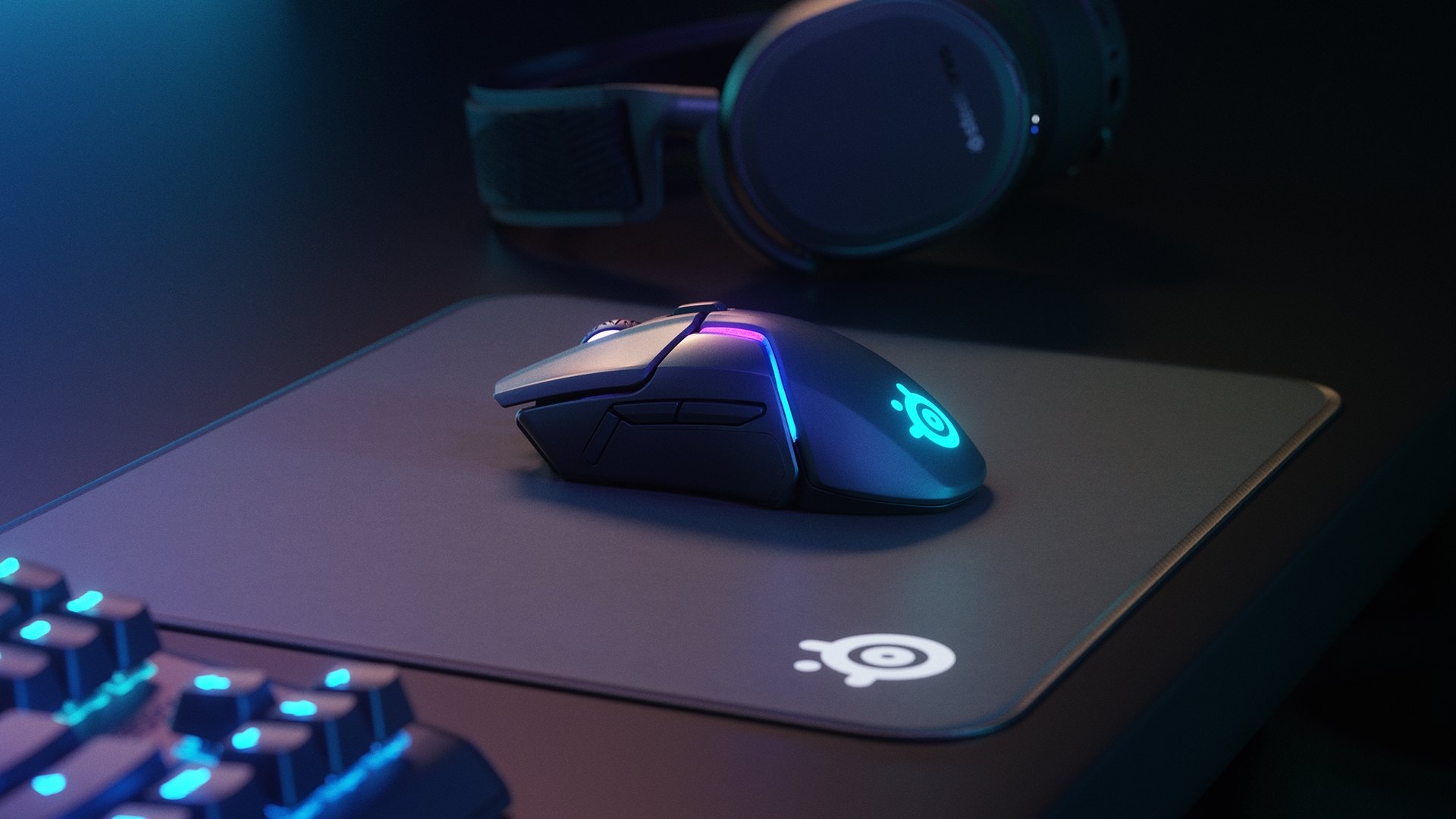
Wireless gaming mice exist in a defined paradox: the buyers who most benefit from wireless freedom — players who want maximum desk mobility and clean cable management — are often the same players who value low weight and low latency most, and wireless implementations traditionally added both mass and latency versus their wired counterparts. The SteelSeries Rival 650 addresses the latency half of this problem with its Quantum 2.4GHz wireless system while acknowledging the weight limitation honestly through its adjustable weight system.
The Rival 650's distinguishing technical feature is its TrueMove3+ dual sensor system — a combination of a primary optical tracking sensor with a secondary depth sensor that together provide the most precise lift-off detection available in a consumer gaming mouse. For players who use low sensitivity settings and frequently lift and reposition the mouse across a large pad, this matters in measurable ways.
At $99, it competes at the mid-premium tier for wireless gaming mice and offers a compelling combination of wireless performance, unique sensor technology, and fast charging that justify its price for the right type of player.
Sensor & Tracking
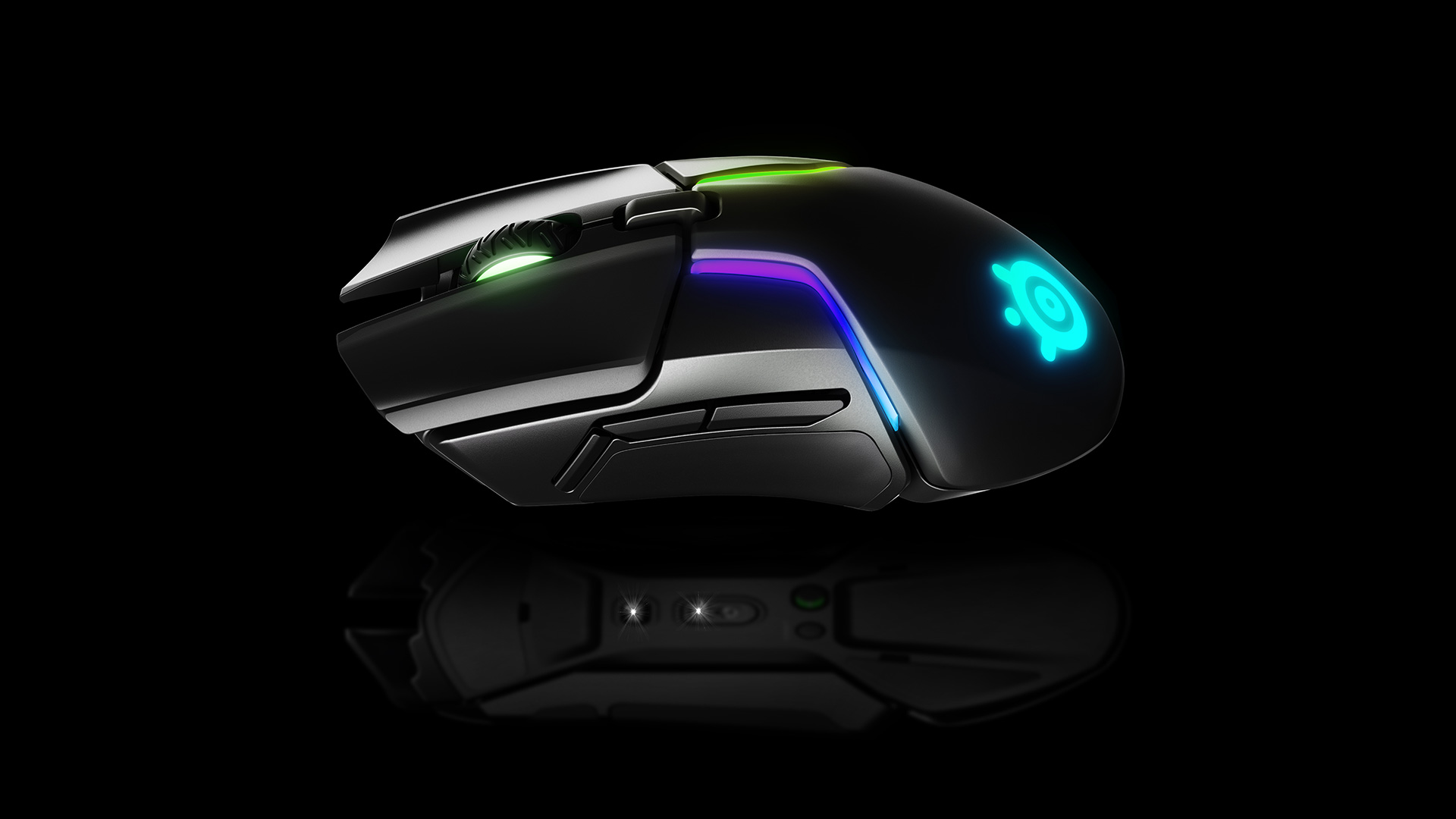
The TrueMove3+ dual sensor system is SteelSeries' most sophisticated tracking hardware and the technical centerpiece of the Rival 650's value proposition. The primary sensor is a custom optical sensor developed in partnership with PixArt, offering 100–12,000 DPI with 1:1 true tracking and no hardware smoothing or acceleration — the sensor reports physical mouse movement without interpretation artifacts.
SteelSeries (Manufacturer product image)
The secondary sensor is a depth sensor positioned near the primary sensor on the underside of the mouse. Its purpose is exclusive: detecting when the mouse is lifted from a surface and at what height. Traditional optical sensors use a simple lift-off distance parameter to determine when to stop tracking — once the sensor exceeds a configured height above the surface, tracking stops. The depth sensor in the TrueMove3+ provides continuous height data, allowing the mouse to stop tracking at a more precise and lower lift height than single-sensor implementations.
In practical terms, this means the Rival 650 stops tracking sooner after being lifted from the pad surface than competing mice — reducing the cursor drift that can occur when a mouse continues tracking briefly as it's lifted at an angle. For low-sensitivity FPS players who cover large pad distances and lift frequently to reposition, this produces cleaner repositioning behavior that translates to improved aim consistency over time.
Clicks & Buttons
The Rival 650 uses SteelSeries' proprietary mechanical switches with a rated lifespan of 60 million clicks. The primary clicks exhibit a clean, tactile actuation with a defined snap that is more satisfying than Omron switches and approaches the responsiveness of optical switch implementations. Click consistency across the left and right buttons is good — both actuate at similar force with similar feedback.
SteelSeries (Manufacturer product image)
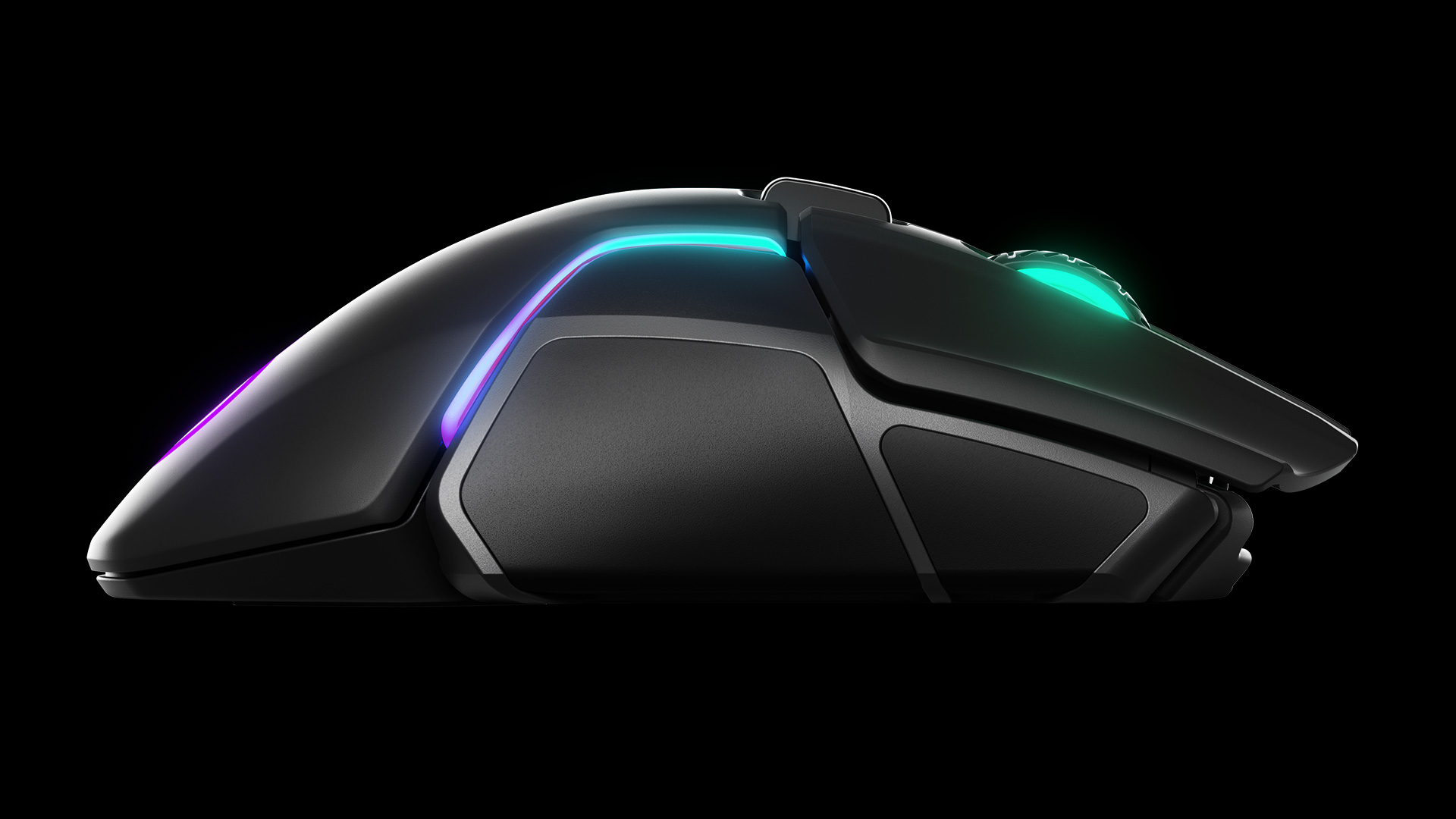
Seven total buttons include primary clicks, scroll wheel click (with notched encoder), two side buttons, a CPI (DPI) cycle button, and a profile cycle button. The side buttons are well-sized and positioned for comfortable thumb access on the left side of the mouse. The CPI button placement behind the scroll wheel allows quick sensitivity switching during play.
SteelSeries Engine 3 provides full button remapping, macro assignment, and CPI configuration. The onboard memory stores up to 5 profiles independent of the software.
Comfort & Ergonomics
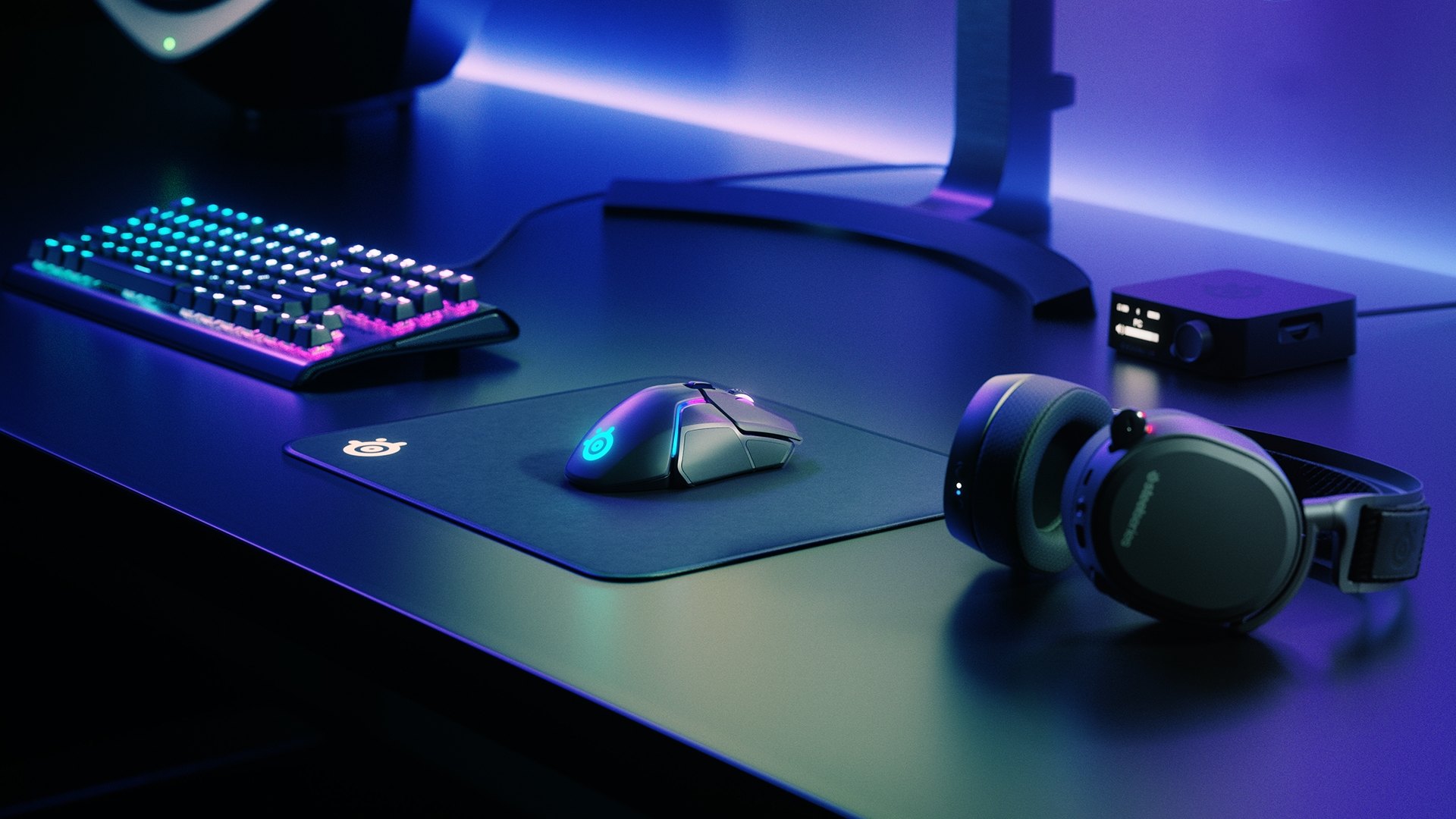
The Rival 650's ergonomic profile is a right-handed contoured shape optimized for palm and claw grip styles. The arched center section provides a natural palm rest position, and the left-side thumb shelf is positioned for comfortable reach to the side buttons without requiring a grip adjustment. For hands measuring 18–21cm in length, the fit is natural and sustained without fatigue.
SteelSeries (Manufacturer product image)
The adjustable weight system is a differentiating feature that allows meaningful customization. The base configuration without weights sits at approximately 96g; adding the included tungsten weight cartridges increases mass to up to 135g. Users can configure weight in the 96–135g range and, critically, distribute the mass by placing weights toward the front or rear of the mouse to influence balance point. Players who prefer a front-heavy mouse for precision during fast flicks configure weights forward; those who prefer rear-heavy balance for palm rest stability configure accordingly.
At 121g in the default weight configuration, the Rival 650 is heavier than competitive ultralight mice. For medium-to-high sensitivity players whose movements are primarily wrist-based, the weight difference versus a 60g competitor is not perceptible as fatigue during play. For low-sensitivity players who make full arm sweeps, the additional mass relative to ultralight mice accumulates over long sessions.
Build Quality
The Rival 650's construction uses a matte rubber-coated plastic shell that provides a secure grip in hand across all normal gaming scenarios. The coating is pleasant to touch and does not become slippery with hand moisture during extended play. The shell tolerances are excellent — no flex, no creak, no perceptible movement between shell halves under pressure.
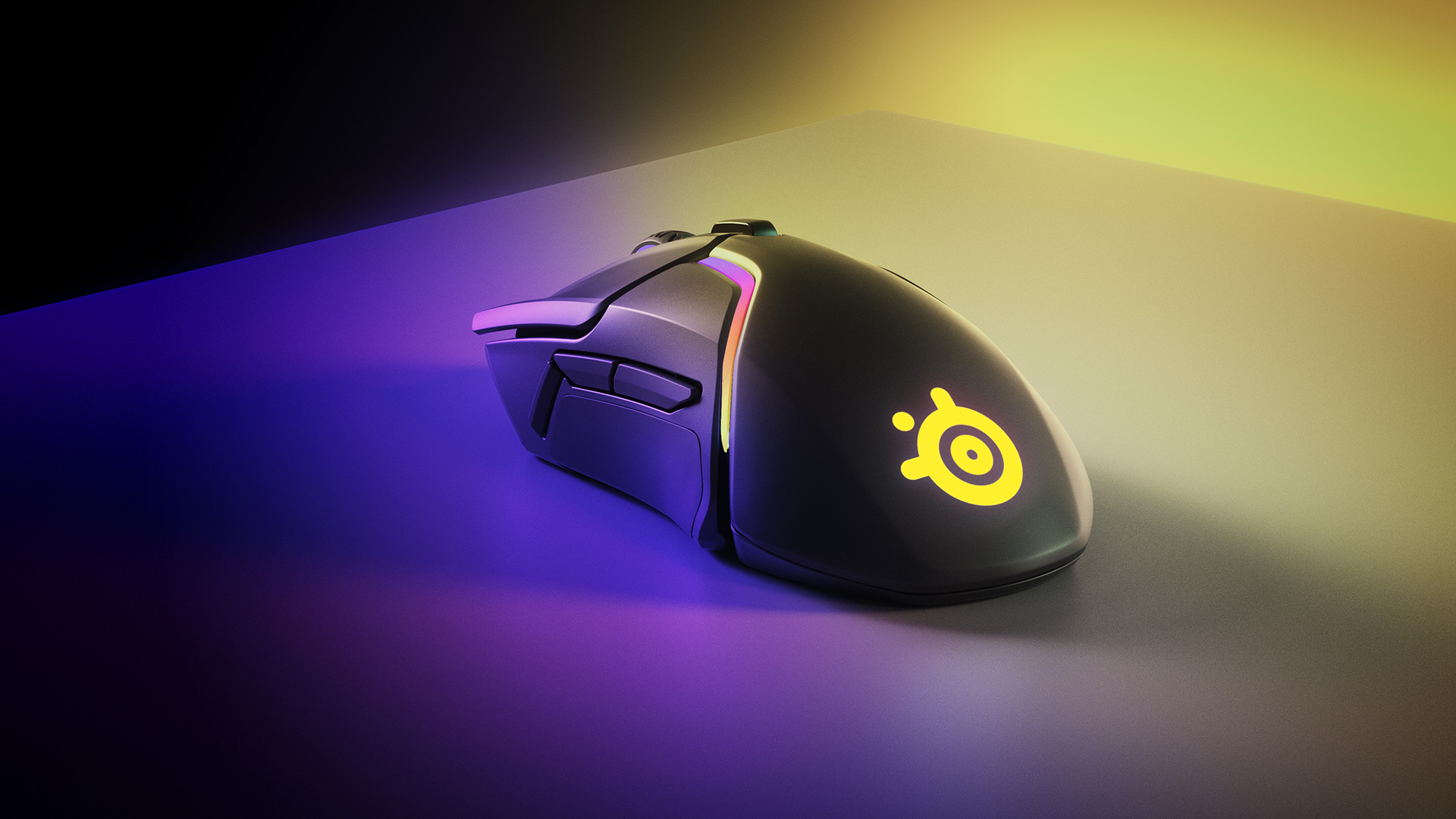
SteelSeries (Manufacturer product image)
The Quantum wireless receiver is a compact 2.4GHz dongle that stores in a slot on the underside of the mouse for travel. The wireless connection establishes within seconds of the mouse powering on and maintains stable connectivity across standard desktop distances (up to 10m) without interference from WiFi, other 2.4GHz devices, or standard office/gaming room environments in testing.
The micro-USB charging port is the most dated element of the Rival 650's construction. While functional and reliable, USB-C has become the standard for gaming peripherals, and the micro-USB connection is visibly a design decision from an earlier era. The fast-charge implementation (15 minutes for 10 hours of play) partially compensates for this by minimizing the frequency of charging connections required.
Who Should Buy It?
The SteelSeries Rival 650 is the right choice for:
- Low-sensitivity FPS players who frequently lift and reposition the mouse and want the most precise lift-off detection available
- Wireless mouse buyers who want the freedom of cable-free play without paying $150+ for a Logitech G Pro X Superlight 2 or similar
- Customizers who want to configure mouse weight and balance point to their specific preferences
- Palm and claw grip players with medium-to-large right hands who value ergonomic support during extended sessions
The Rival 650 is not ideal for fingertip grip players who prefer small, very light mice, left-handed users, or competitive players for whom the weight difference versus ultralight mice is a primary concern.
Verdict
The SteelSeries Rival 650 delivers a credible wireless gaming mouse at $99 with its defining advantage in dual-sensor lift-off precision and a fast-charge system that eliminates the dead battery anxiety of wireless gaming. Its TrueMove3+ sensor is excellent for its DPI range, the build quality is solid, and the adjustable weight system provides personalization that no fixed-weight competitor can match.
Its primary limitations — 121g base weight, 24-hour battery, and micro-USB charging — prevent it from challenging the ultralight wireless leaders. But as a feature-rich wireless option at a mid-premium price for right-handed palm and claw grip players who value sensor precision, the Rival 650 remains a strong recommendation.