Introduction
The original G Pro X Superlight set the template for the modern esports wireless mouse when it launched in 2020: obsessively light, technically flawless, aesthetically plain. The Superlight 2 refines that template with a new-generation HERO 2 sensor, a 2000Hz polling rate option, optical-mechanical switches rated for 90 million clicks, and a marginally improved shape — and in doing so, it makes the case that this category of mouse has reached a functional apex.
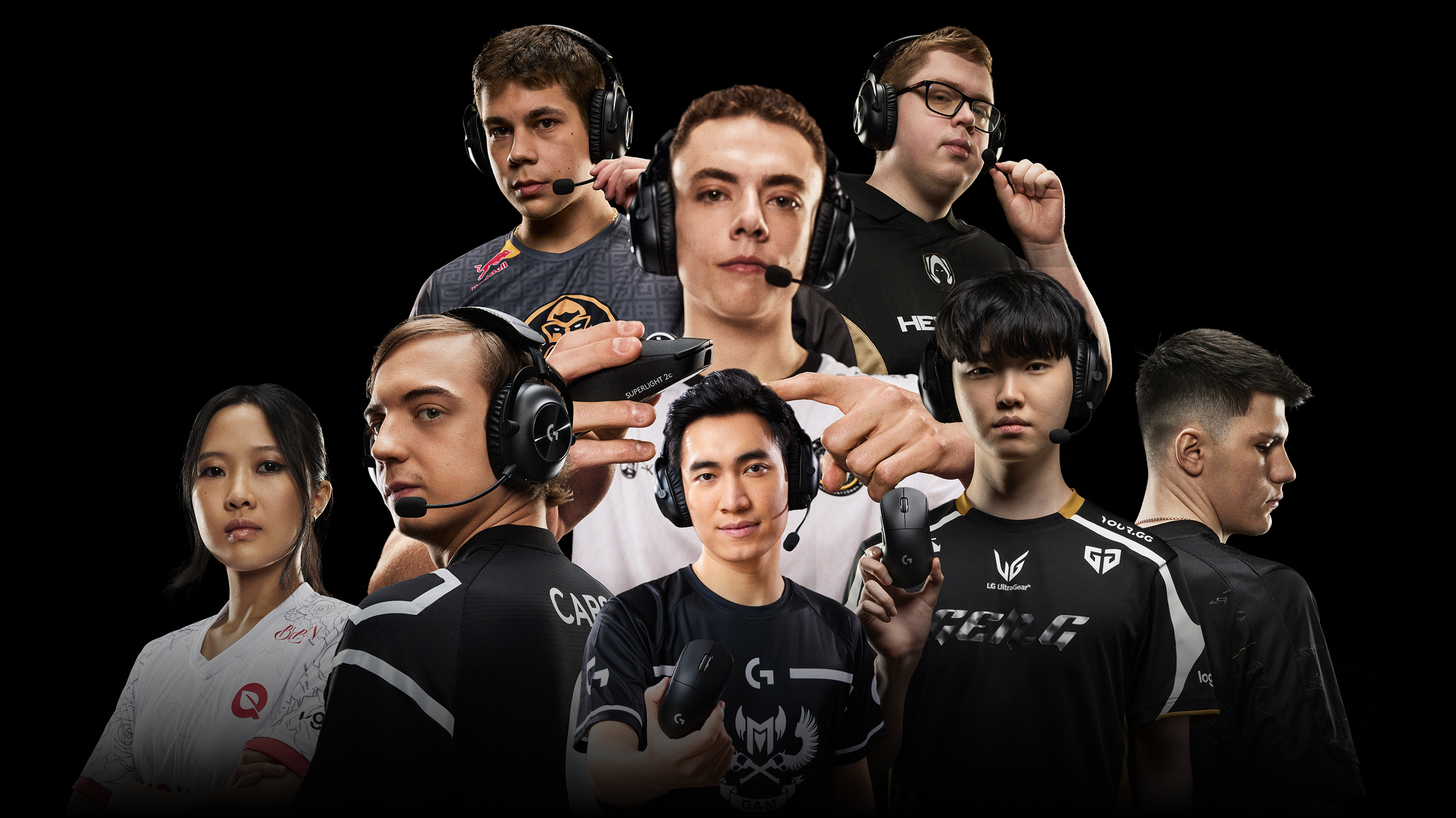
At $159, the G Pro X Superlight 2 is not positioned as a budget purchase. It is positioned as the tool that serious competitive players buy once and rely on for years. Its specifications are the result of Logitech's direct collaboration with professional CS2, Valorant, and Apex Legends players — a development process that consistently produces hardware fine-tuned not for benchmark sheets but for the actual demands of high-level competition. Whether you're a professional or a highly competitive amateur, the Superlight 2 earns the right to be considered the best wireless esports mouse currently available.
Design & Build
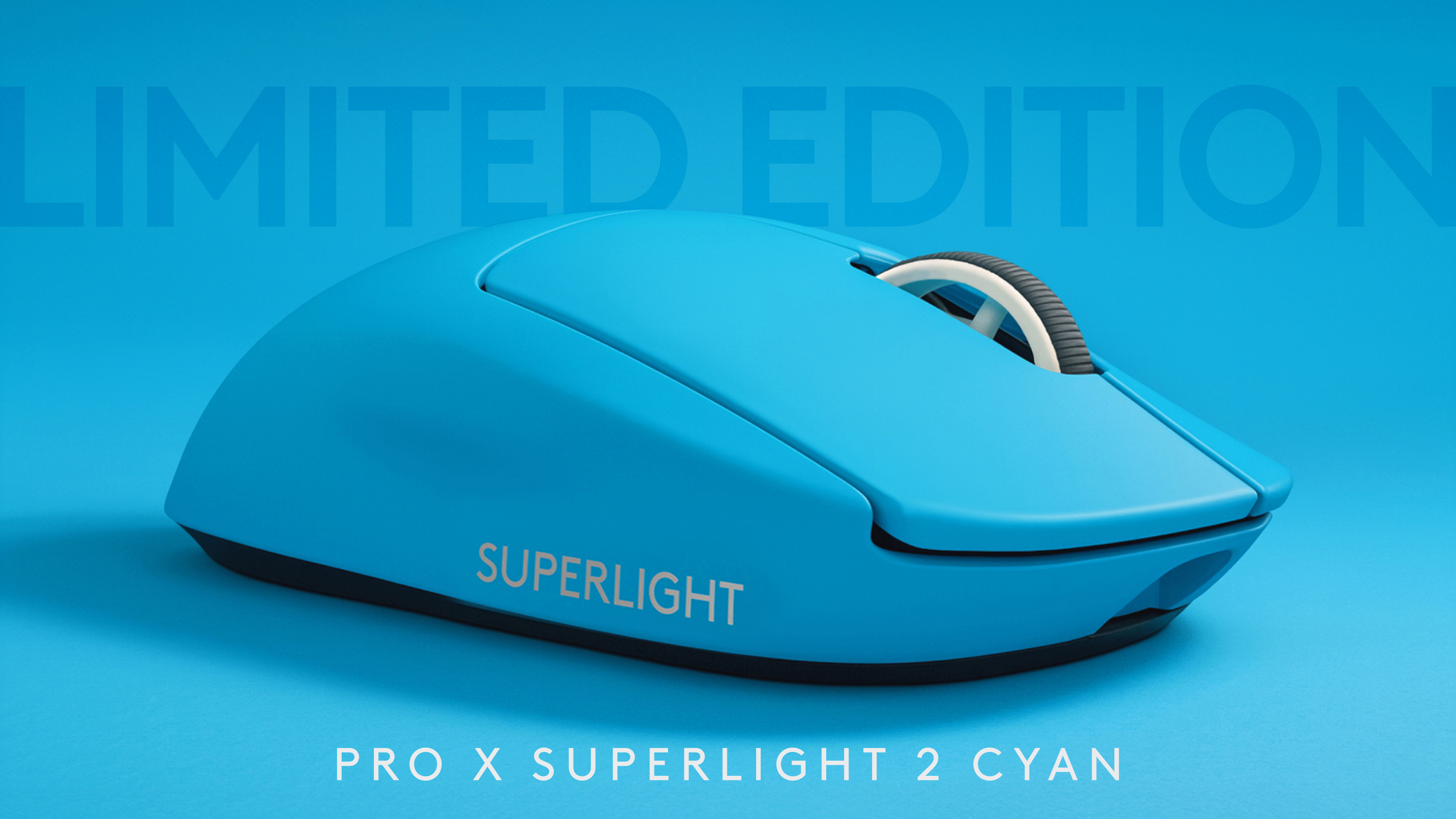
The G Pro X Superlight 2 is, by deliberate design, an exercise in restraint. There is no RGB lighting. There are no side grips, rubberized panels, or aggressive angular styling. The matte plastic shell (available in White and Black) is smooth, lightly textured on the top surface, and uniform in color. The five-button layout — left click, right click, middle click, two left-side thumb buttons — is the minimum viable configuration for the games this mouse is designed to serve.
Logitech (Manufacturer product image)
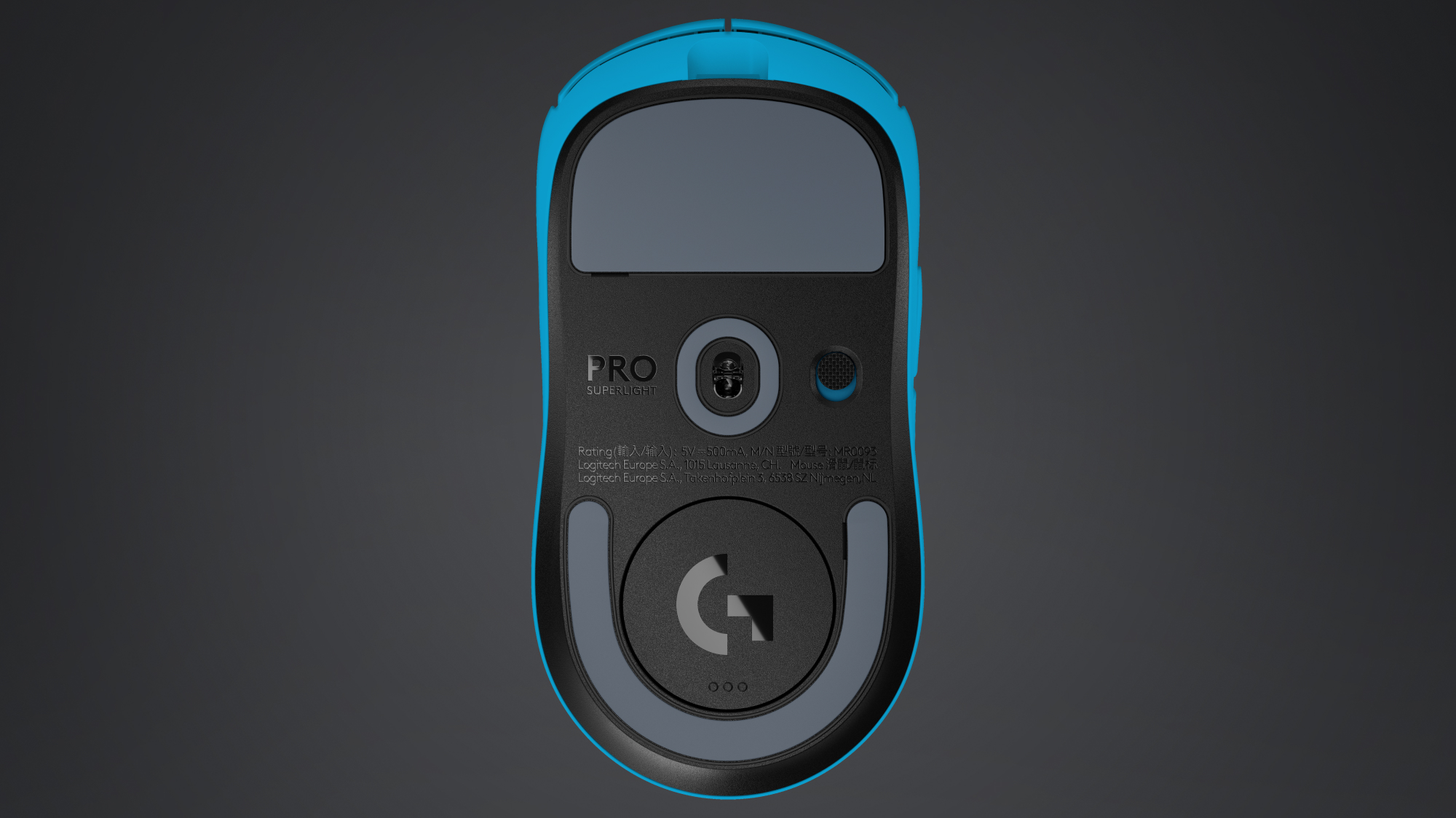
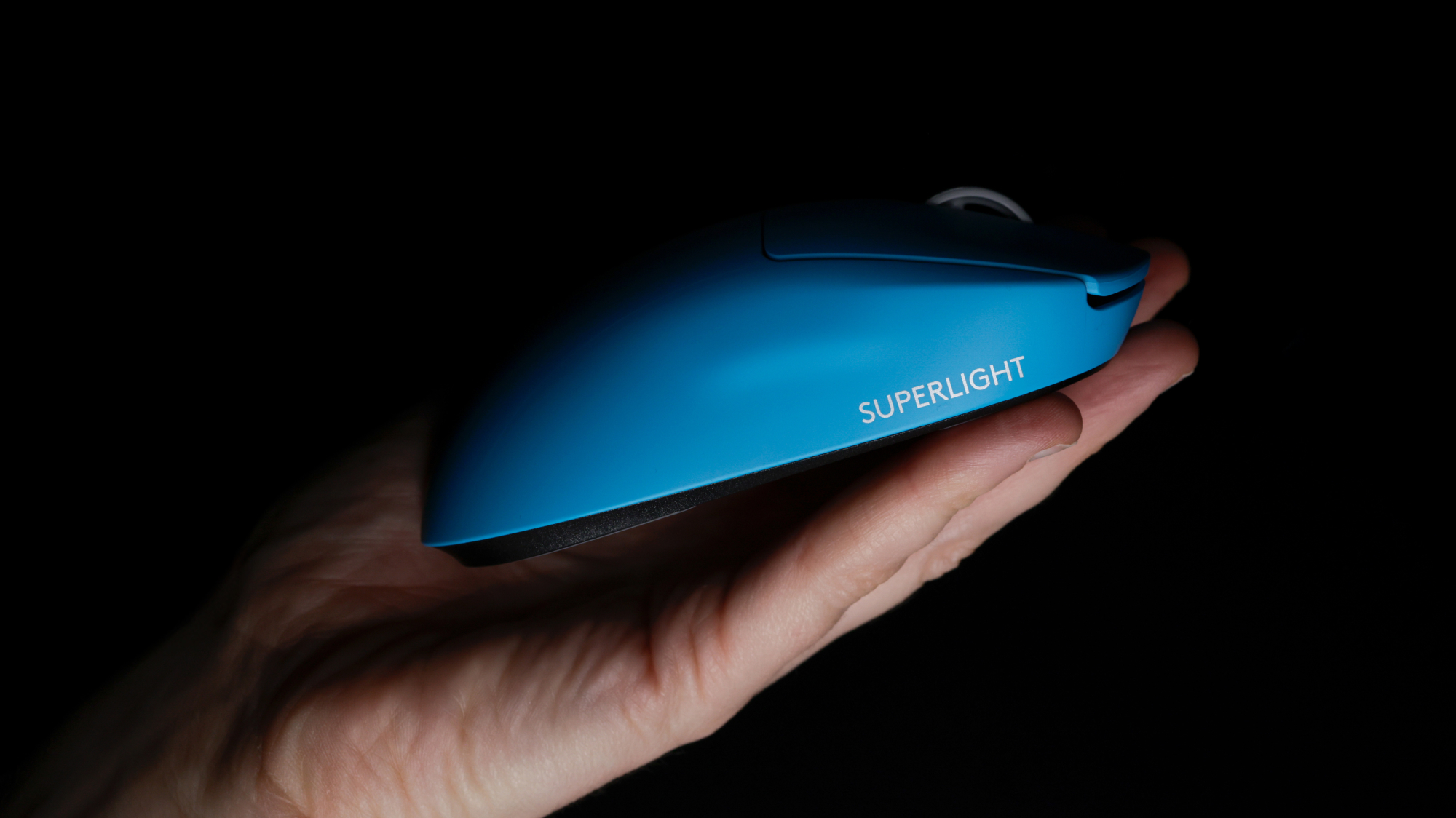
What Logitech chose to invest in instead is structural integrity at low mass. The Superlight 2 weighs 60 grams on a postal scale — a figure that places it among the lightest full-sized wireless mice ever produced. Unlike the honeycomb-shell mice that achieved similar weights through material removal, the Superlight 2 achieves its weight target through material selection and density optimization while maintaining a completely solid, hole-free exterior. There are no structural flex points, no panel gaps, and no creaking under firm grip pressure.
The shape is a slight evolution of the original Superlight's symmetrical low-profile hump: a moderate palm arch that sits comfortably under palm, claw, and hybrid grip styles for medium to large hands. The left-side thumb buttons are slightly repositioned from the original Superlight to reduce accidental activation during lateral swipes. The main left and right click surfaces have a gentle scoop that guides fingertip placement naturally. The mouse wheel has a tactile bump-per-notch resistance that reads as deliberate without being heavy.
The USB-C charging port is positioned at the front of the mouse, which allows charging while in use if you prefer wired operation as a backup. PTFE feet — four large pads — provide smooth, consistent glide across cloth, hard, and hybrid mouse pads with minimal break-in period.
Sensor Performance
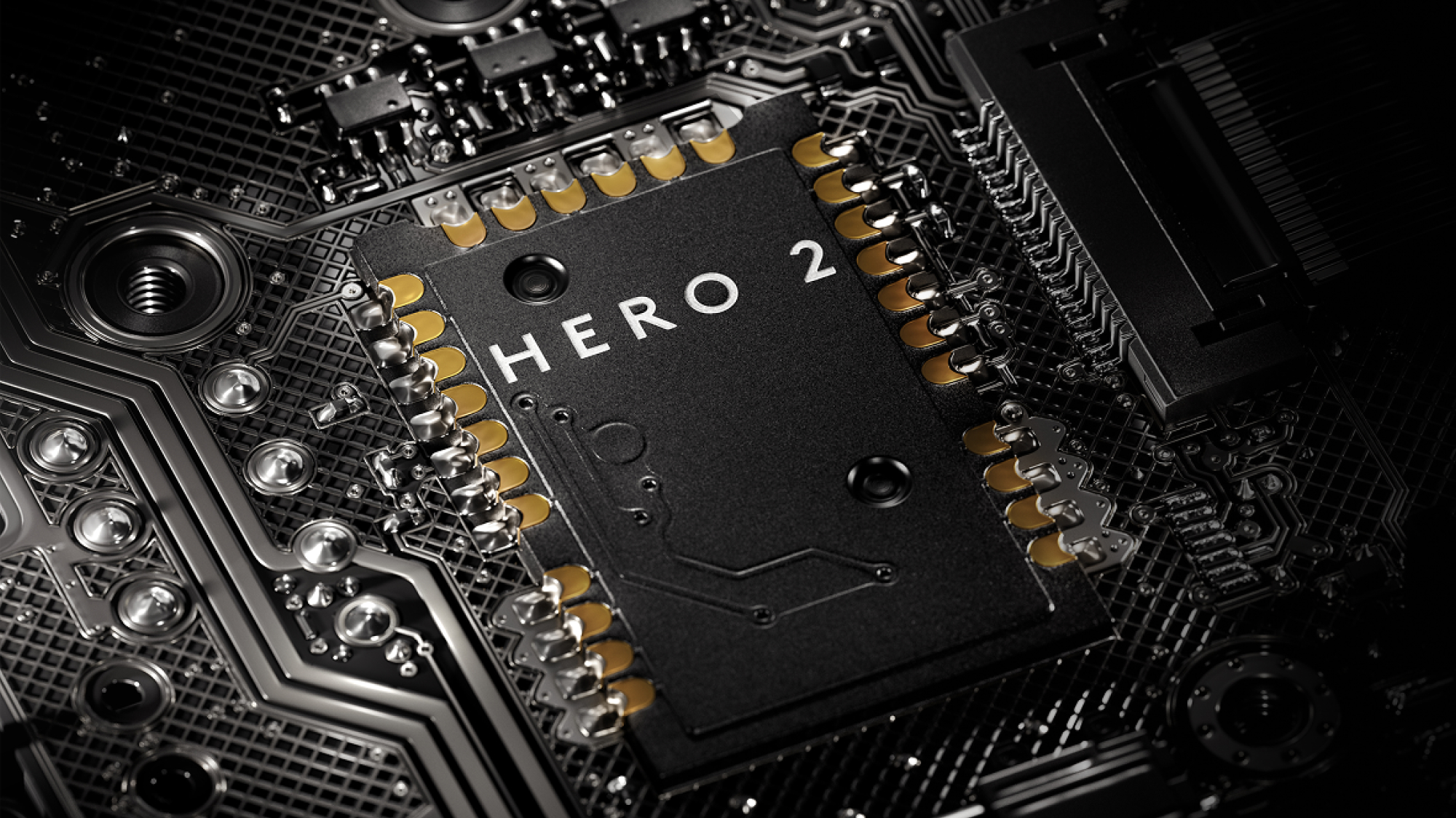
The HERO 2 sensor is the technical core of the Superlight 2, and it represents a significant step beyond the HERO 25K found in Logitech's previous generation. Logitech's HERO (High Efficiency Rated Optical) sensors have always been characterized by genuine zero-smoothing operation — the sensor reads and reports raw x/y movement data without applying any algorithmic interpolation — and the HERO 2 maintains that characteristic while extending the DPI ceiling to 32,000 and lifting the IPS tracking speed to 500 IPS at 40G acceleration.
Logitech (Manufacturer product image)
In practical terms, the HERO 2's zero-smoothing behavior is what matters most to competitive players. Sensors that apply smoothing introduce micro-delays and artificiality to cursor movement that can be perceived as "floaty" or imprecise during fast flick shots or micro-adjustments. The Superlight 2's sensor tracks faithfully at all sensitivity settings — from low 400 DPI configurations favored by CS2 professionals to higher 1600–3200 DPI settings used in faster-paced tactical shooters — without introducing the positional artifacts that plague cheaper optical sensors.
Lift-off distance is extremely low — approximately 1mm on most surfaces — which means the cursor does not travel when you lift the mouse for a repositioning swipe. This detail matters disproportionately in low-sensitivity gaming, where frequent repositioning is part of normal gameplay.
Mouse pad surface compatibility is broad. Reviewers report the HERO 2 tracks consistently across cloth, hard plastic, and hybrid surfaces, with no jitter or skipping except on visibly damaged or reflective surfaces.
Wireless & Battery
LIGHTSPEED wireless is Logitech's 2.4GHz proprietary wireless protocol, and it has set the benchmark for wireless gaming peripherals since its introduction. The Superlight 2's LIGHTSPEED implementation targets sub-1ms wireless latency — matching or exceeding wired USB at most polling rates — and independent reviews generally report no perceptible responsiveness difference between wired and wireless modes.
Logitech (Manufacturer product image)
The Superlight 2 introduces support for 2000Hz polling, which doubles the standard 1000Hz report rate and theoretically reduces maximum input latency to 0.5ms. The practical significance of 2000Hz depends on your system's ability to process updates at that frequency — you'll need a reasonably modern CPU and a game that benefits from sub-millisecond input processing. Critically, 2000Hz wireless operation requires the Logitech Powerplay charging mat, which wirelessly charges the mouse during play and handles the higher-frequency communication. Without a Powerplay mat, the mouse operates at 1000Hz wireless.
At 1000Hz, the Superlight 2's battery runs for approximately 95 hours — nearly four days of continuous use, or more realistically two to three weeks of typical gaming sessions. At 2000Hz via Powerplay, the effective battery drain is less relevant since the mat charges continuously. Charging from empty to full via USB-C takes approximately 2.5 hours.
The LIGHTSPEED USB receiver is extremely compact — barely larger than the USB port itself — and extends range to approximately 10 meters line-of-sight. Independent reviewers generally report stable connections without drops or signal interference across extended use, including in RF-dense environments with multiple wireless devices operating simultaneously.
Software
Logitech G HUB is the software layer for the Superlight 2, and it's the most capable but also most feature-heavy peripheral configuration software in the mainstream gaming mouse category. The Superlight 2's settings available in G HUB include DPI configuration (up to 5 saved profiles, each with up to 5 DPI stages), button remapping for all 5 programmable buttons, surface calibration for optimal lift-off distance, and report rate selection between 125, 500, 1000, and 2000Hz.
Logitech (Manufacturer product image)
Onboard memory stores up to 5 profiles directly in the mouse, which means your settings persist when moving to a different machine — a critical feature for tournament players who can't rely on having G HUB installed on competition PCs.
G HUB's interface is visually clean but menu-heavy, and the software occasionally requires a reinstall when Windows updates disrupt driver communication. This is a known irritant in the community. Logitech has addressed the worst instability issues through updates over the past two years, but the software remains below the hardware's standard of polish.
Who Should Buy It?
The G Pro X Superlight 2 is the right mouse for competitive PC gamers who play games where precision aiming, fast cursor control, and consistent input responsiveness are performance determinants. Its primary audience includes:
- FPS competitive players in CS2, Valorant, Apex Legends, Overwatch 2, or similar titles who play at a level where equipment matters
- Professional and semi-professional esports players who need a reliable, tested tool with a proven competitive pedigree
- Enthusiast gamers who want the best available wireless mouse technology and are willing to pay the premium
- Long-session gamers who accumulate 4+ hours of daily use and appreciate the fatigue reduction that comes with a genuinely light mouse
It is not the right choice for MMO or productivity users who need extensive button configurations, left-handed players, or buyers who want visual customization through RGB. Casual gamers and those on a budget will find strong value alternatives in the $60–$80 range that deliver 90% of the competitive performance at half the price.
Verdict
The Logitech G Pro X Superlight 2 is the most technically accomplished wireless esports mouse available today. The HERO 2 sensor is the most accurate optical sensor Logitech has produced, the 2000Hz polling capability pushes the ceiling of what wireless hardware can deliver, and the 60g weight removes physical friction from extended play in a way that you feel within the first session and appreciate more with every subsequent one.
It is an expensive, right-hand-only, feature-sparse mouse — and those limitations are appropriate caveats for any buyer considering it. But within its intended use case, competitive PC gaming, it is the current standard against which every other wireless mouse should be measured.