Introduction
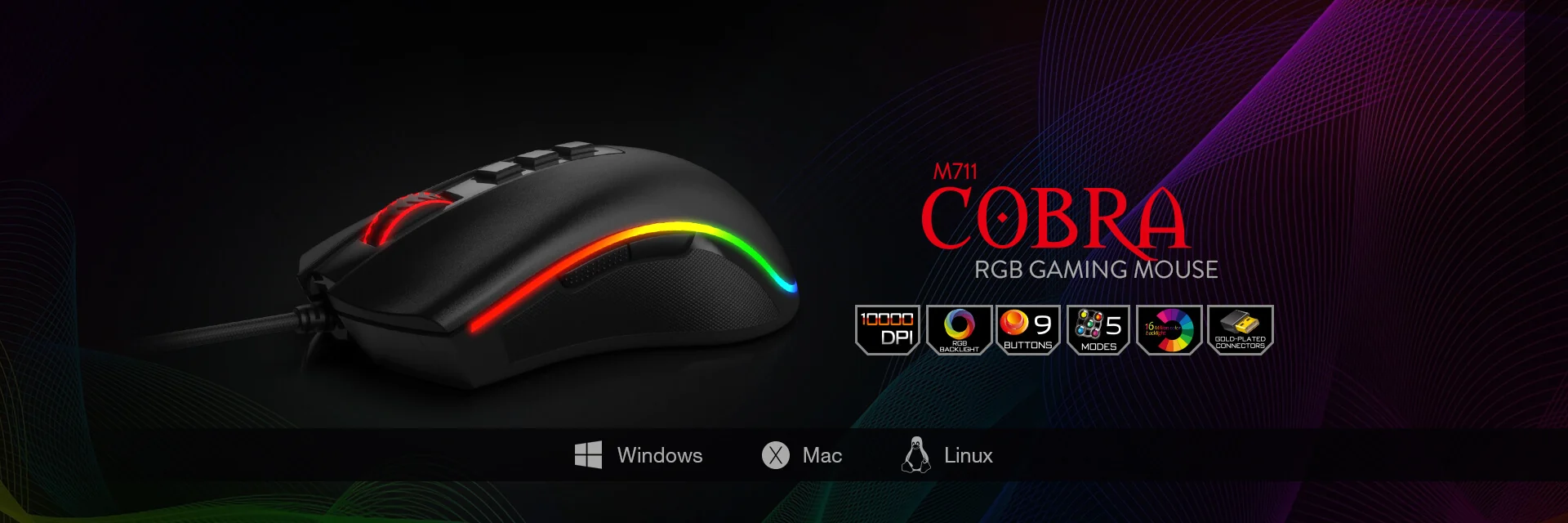
At $24, the Redragon M711 Cobra occupies a market position where most manufacturers cut corners aggressively: membrane switches, inaccurate sensors, rubber cables, and plastic construction that flexes under grip pressure. The Cobra resists most of these compromises. It uses a PixArt PMW3325 optical sensor that tracks accurately across real gaming surfaces, Omron switches in the primary buttons, a braided USB cable, and a right-handed ergonomic shape designed for palm and claw grip.
The result is a gaming mouse that doesn't feel like a budget product during actual gameplay. It feels like what it is: a capable gaming mouse that sacrifices weight optimization, software depth, and secondary feature refinement to achieve a price that makes genuine gaming performance accessible to buyers who cannot or will not spend $60–$100 on a peripheral.
Sensor & Tracking
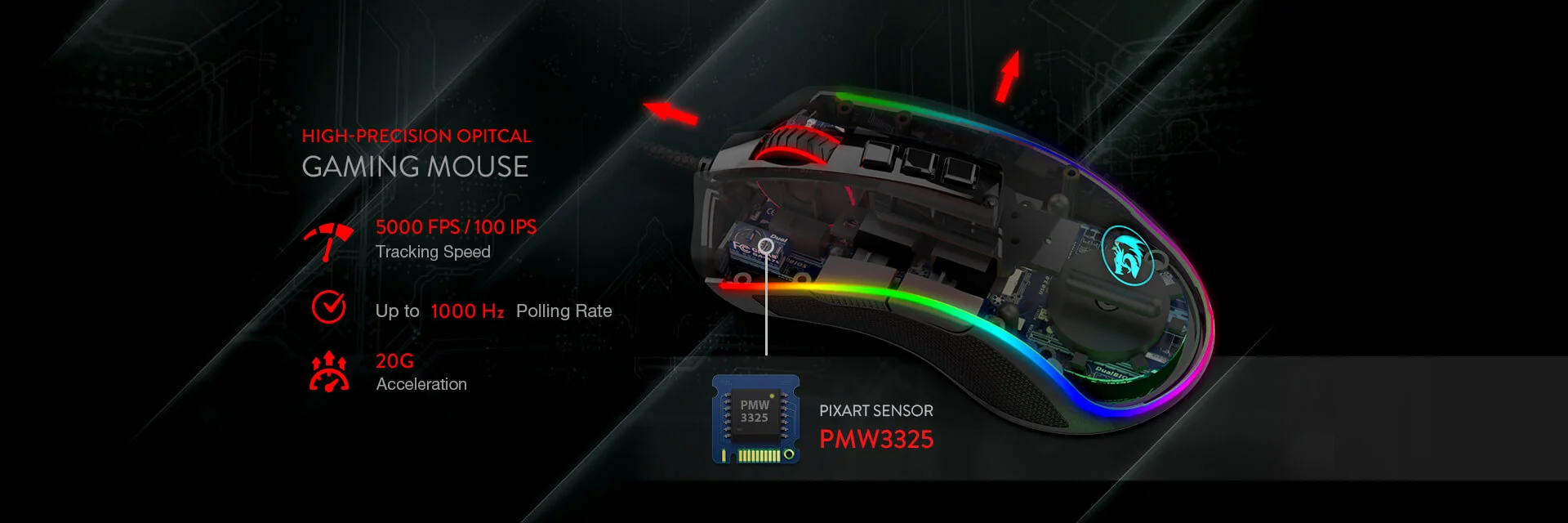
The PixArt PMW3325 is a proven mid-tier gaming sensor used across dozens of gaming mice in the $20–$60 price range. It delivers clean, accurate tracking up to 10,000 DPI with the 1000Hz polling rate, and its performance on standard gaming surfaces — cloth pads, hard pads, wood desks — is reliable and consistent.
Redragon (Manufacturer product image)
At the DPI settings most players actually use (400–3200 DPI), the PMW3325 tracks without jitter, cursor deviation at high movement speed, or the spinout behavior that affects lower-quality sensors. This is not the flawless perfection of a Focus Pro 30K or HERO 2 sensor — at very high movement speeds (>3m/s), slight accuracy degradation is detectable under controlled testing. But for the typical gaming scenario, the PMW3325 is genuinely adequate.
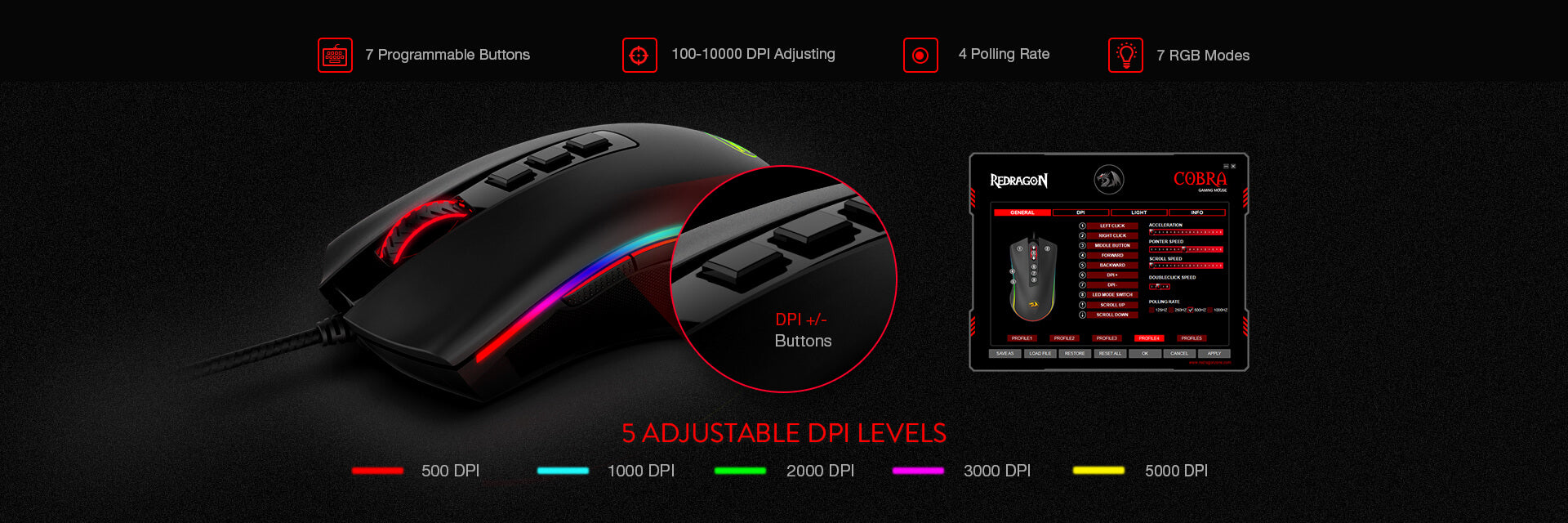
Five onboard DPI presets are adjustable via the Redragon software or cycle through using the DPI button behind the scroll wheel. The button provides tactile and visual (DPI indicator LED) confirmation when changing sensitivity, enabling rapid adjustments during play without software access.
Clicks & Buttons
The M711 uses Omron mechanical switches for primary left and right clicks. Omron is the global standard for quality mouse switch components — the same brand used in Logitech G Pro, Razer DeathAdder, and SteelSeries Rival at many times the M711's price point. Omron switches are rated for approximately 20 million actuations and provide consistent, reliable click feedback throughout their lifespan.
Redragon (Manufacturer product image)
The primary click feel is clean and responsive with adequate tactile feedback. It does not match the crispness of optical switches or premium mechanical variants, but it is meaningfully better than the no-name switches used in competing budget mice. Double-clicking defects — the primary failure mode for aging mechanical switches — are not present in new M711 units.
Seven total programmable buttons include the standard primary clicks, scroll wheel click, two side buttons, DPI toggle, and an additional button in front of the scroll wheel. The side buttons are well-positioned for right thumb access and sized large enough to actuate intentionally without difficulty. Button customization through the Redragon software allows reassignment to macros, application shortcuts, or alternative click functions.
Comfort & Ergonomics
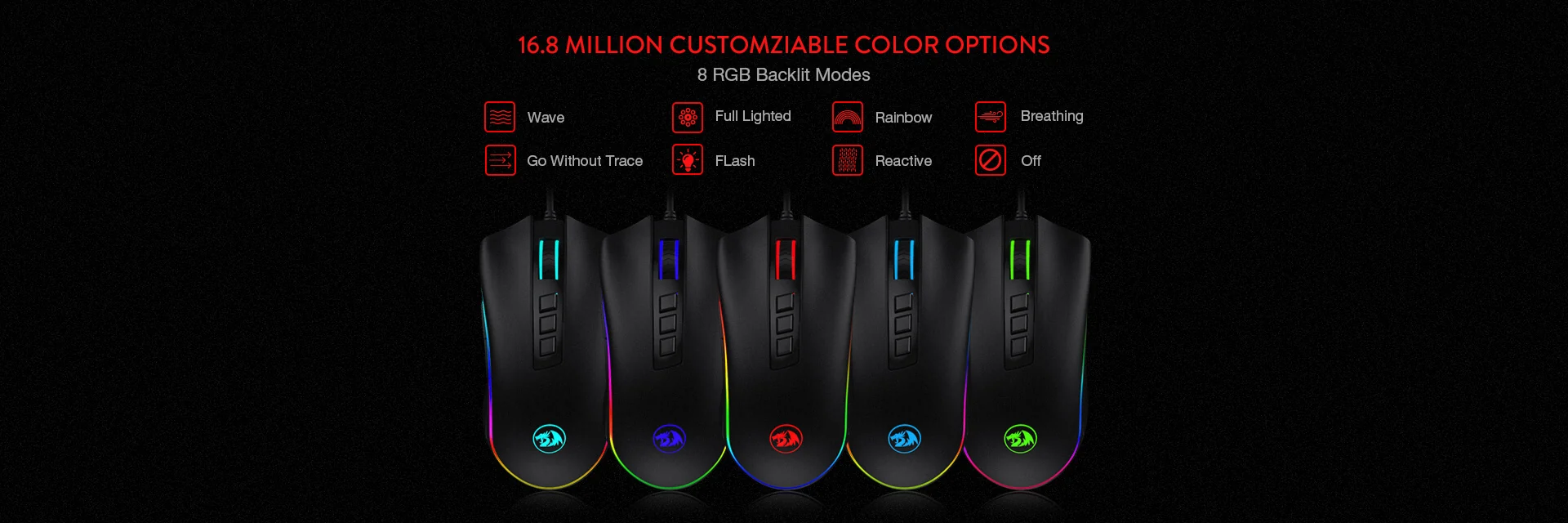
The M711's right-handed ergonomic shape provides thumb shelf support and a raised center arch that accommodates palm and claw grip styles for medium-sized right hands (16–19cm). The shape is conservative — not dramatically sculpted like the DeathAdder — but provides enough palm support for extended gaming sessions without wrist strain.
Redragon (Manufacturer product image)
At 130g, the Cobra is heavy by 2024 standards where competitive mice target 60–80g. For players who use high sensitivity settings (requiring only small wrist movements), the weight is largely irrelevant — the mouse is moved less per in-game action and the mass matters little. For low-sensitivity players who make broad arm sweeps across large pads, 130g becomes perceptible over extended sessions and creates more fatigue than lighter alternatives.
The textured side surfaces provide grip friction during normal hold positions. The left side texture is particularly important during rapid directional changes — it prevents the thumb from slipping forward off the mouse body during sudden movements. The right side is smooth, which is appropriate for the ring and pinky finger rest position.
Build Quality
The M711's plastic shell has adequate rigidity for a gaming mouse at this price. Light pressure from the sides produces minimal flex, and the shell tolerances are tight enough that there are no creaking sounds during normal use. The scroll wheel encoder has good resistance for precise scrolling with audible notch feedback.
Redragon (Manufacturer product image)
The braided USB-A cable is 1.8m long and provides noticeably better durability and flexibility than the unbraided rubber cables on competing budget mice. It is not as flexible as a paracord cable, but it avoids the stiffness and coiling tendency that makes rubber cables add noticeable drag during play.
PTFE mouse feet are present on the underside but are thin and cover minimal surface area. On cloth surfaces the glide is smooth initially but buyers who play on cloth pads heavily may find the feet wearing faster than premium aftermarket options. Hard pad users will notice no meaningful degradation over typical usage periods.
Who Should Buy It?
The Redragon M711 Cobra is the right choice for:
- Budget-conscious gamers who want a real optical sensor and Omron switches for under $25
- First-time gaming mouse buyers upgrading from a basic office mouse who want to experience dedicated gaming features
- Casual gamers who play at medium-to-high sensitivity and don't require the sub-80g weight of competitive mice
- Secondary or spare peripherals for LAN parties, travel setups, or backup configurations
- Gift purchases for young gamers where the risk of damage or loss makes a $100+ mouse inappropriate
The M711 is not suitable for competitive FPS players who need sub-80g weight and top-tier sensor performance, left-handed users, or players who require advanced software features like per-button lift-off distance adjustment.
Verdict
The Redragon M711 Cobra is the best gaming mouse available for under $25. The PMW3325 sensor tracks accurately, the Omron primary switches are reliable, the 7-button layout provides genuine programmability, and the ergonomic shape covers the majority of right-handed grip styles. Its 130g weight is the most limiting factor for low-sensitivity competitive players — but for its target audience of budget-focused and casual gamers, it represents exceptional value that no direct competitor can match.