Introduction
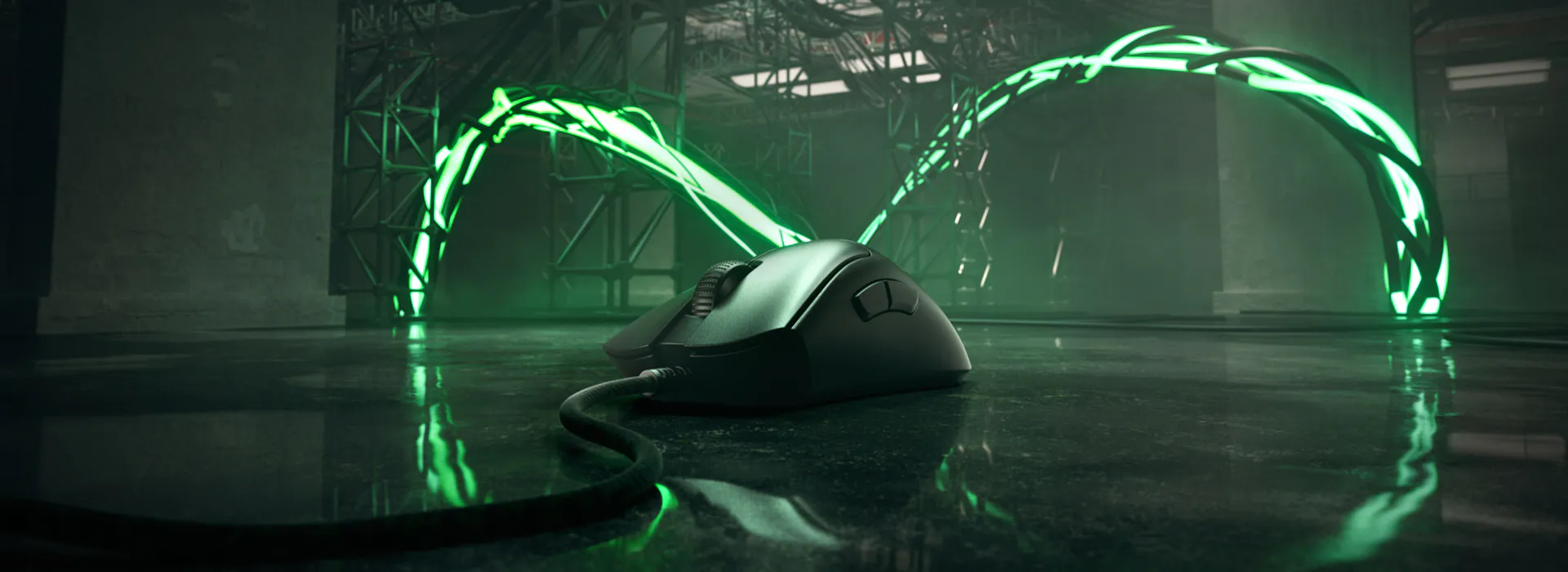
The DeathAdder is the best-selling gaming mouse series in history — a distinction earned over two decades of iterative refinement of an ergonomic right-handed shape that suits the broadest range of hand sizes and grip styles of any mouse design. The DeathAdder V3 represents the most significant departure from the series' historical formula: the same fundamental ergonomic geometry, redesigned from scratch to achieve 64 grams with a paracord cable, equipped with the Focus Pro 30K sensor, and fitted with third-generation optical switches.
What Razer has built in the V3 is a convergence of the DeathAdder's foundational strengths — its shape, its right-hand ergonomics, its switch reliability — with the technical performance requirements of modern competitive gaming. At $99, it sits at the mid-premium price point and delivers performance that previously required $150+ purchases.
Sensor & Tracking
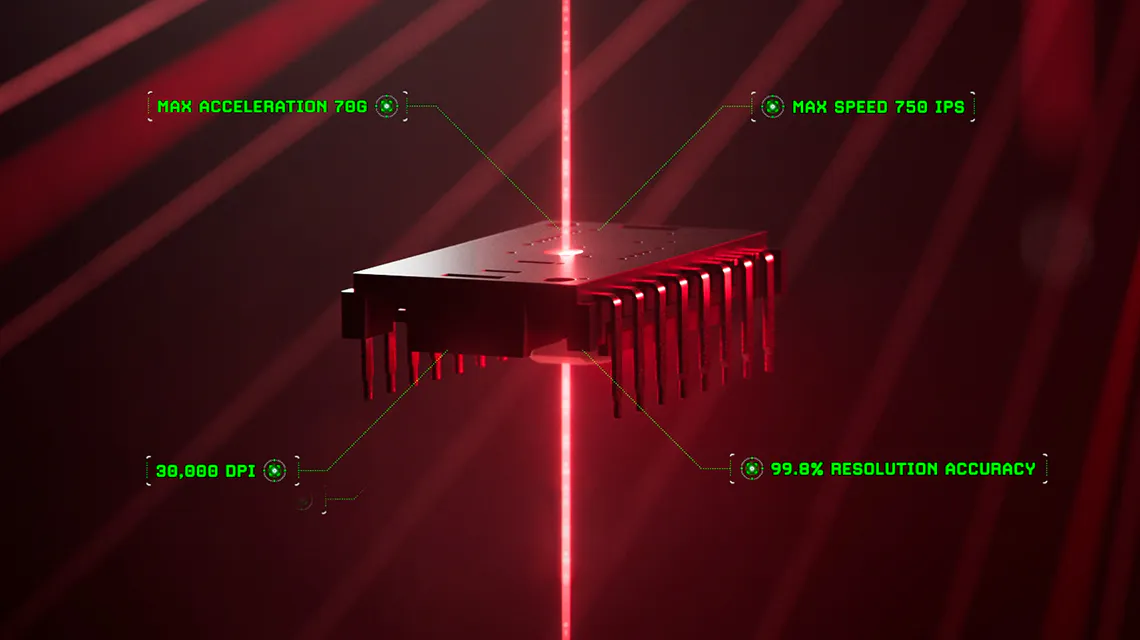
The Focus Pro 30K sensor is Razer's flagship optical sensor and one of the top three sensors available in production gaming mice. Its 30,000 DPI ceiling is well beyond practical use — most competitive players operate between 400 and 1600 DPI — but the sensor's accuracy at working sensitivities is what matters, and it is excellent. Cursor tracking is smooth and precisely responsive across the full DPI range, with no jitter, no cursor deviation at high-speed movements, and zero malfunction points.
Razer (Manufacturer product image)
The Focus Pro includes two intelligent tracking algorithms that distinguish it from competing sensors: Smart Tracking compensates for sensor angle inconsistency that occurs as a mouse lifts slightly from a surface, and Motion Sync synchronizes the sensor's polling to reduce latency between physical movement and cursor response. Both functions are toggleable in Synapse 3 and produce genuinely perceptible improvements on cloth mouse pads with varied surface texture.
Surface calibration in Synapse 3 allows optimization for specific mouse pad materials — users who invest time in calibration for their specific surface will notice improved tracking consistency compared to uncalibrated use.
At 1000Hz native polling, the V3 performs at the competitive gaming standard. Users who purchase the HyperPolling wireless dongle (sold separately at approximately $30) unlock 4000Hz polling, which reduces maximum latency from 1ms to 0.25ms. The difference is relevant for top-tier competitive players and largely imperceptible for casual-to-intermediate users.
Clicks & Buttons
The third-generation Razer optical mouse switches are the primary click mechanism, and they represent a meaningful advancement over the mechanical switches in most competing mice. Optical switches use an infrared light gate rather than a physical metal contact to detect click actuation. The results are a 0.2ms actuation time, elimination of double-click failure (which is a physical contact degradation issue), and a 90 million click rating that exceeds the typical 20–60 million rating of mechanical switch competitors.
Razer (Manufacturer product image)
The primary left and right click buttons exhibit excellent tactile feedback — a clean, sharp actuation with a satisfying return that doesn't feel mushy or over-dampened. The click force is appropriately light for gaming without being so sensitive that resting fingers trigger inputs inadvertently.
The two side buttons (forward/back) are well-positioned for thumb access without requiring a deliberate reach, and their actuation force is firm enough to prevent accidental inputs during grip adjustments. The scroll wheel uses a notched encoder with medium resistance — enough texture for precise scrolling without snagging.
Comfort & Ergonomics
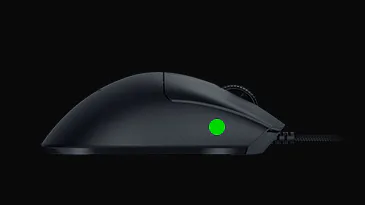
The DeathAdder V3's ergonomic profile is its defining strength. The right-handed shape creates a natural rest position for the full palm and curled fingers with a thumb shelf on the left side and a flared right edge that supports the ring and pinky fingers. For medium-to-large right hands (17–21cm measured from heel of palm to tip of middle finger), the fit is immediate and intuitive across all three grip styles.
Razer (Manufacturer product image)
Palm grip users will find the V3 accommodating — the arched center section elevates the palm naturally and the length (128mm) covers most hand sizes without requiring a reach for the primary buttons. Claw grip users benefit from the elevated primary button section that provides good feedback at the fingertip position. Fingertip grip is functional but less optimal given the mouse's larger footprint — smaller, lighter mice like the G Pro X Superlight 2 serve fingertip grip better.
The 64g weight is the headline ergonomic specification. At this weight, the mouse can be held at full extension, swiped rapidly across the pad, and lifted for repositioning without fatigue during extended sessions. Users accustomed to heavier mice (90–130g) will notice the reduced inertia immediately, and most players who make the transition report improved low-sensitivity precision within a few sessions.
Build Quality
The V3's construction uses a matte plastic shell with textured rubber side grips. The shell feels smooth and professional without the premium density of metal-bodied mice, which is appropriate given the weight priority — heavier materials would compromise the 64g target. Tolerances between shell sections are tight, with no flex or creak detectable in normal use.
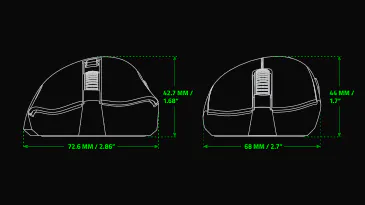
Razer (Manufacturer product image)
The paracord USB-C cable is the most drag-resistant stock cable on any wired gaming mouse. Its ultra-lightweight braiding has virtually no memory of being coiled, meaning it hangs freely from the mouse without stiffening or bunching against the mouse pad. The drag difference compared to standard rubber or standard braided cables is perceptible — the V3 wired experience approaches wireless in terms of cable interference during play.
The PTFE feet on the underside are smooth and glide consistently across cloth and hard pad surfaces, with enough surface area to prevent the slight pivoting sensation that thinner feet can produce during rapid directional changes.
Who Should Buy It?
The Razer DeathAdder V3 is the right choice for:
- Right-handed gamers with medium-to-large hands who want the most refined ergonomic gaming mouse available at under $100
- FPS and battle royale players who use low-to-medium DPI sensitivity settings and benefit from the 64g weight for wide, controlled swipes
- Buyers transitioning from heavier mice who want a significant weight reduction without abandoning ergonomic shape support
- Long-session gamers who experience wrist or shoulder fatigue with heavier mice and want the ergonomic benefit of reduced inertia
The V3 is not ideal for left-handed users (the shape is right-hand specific), fingertip grip players who prefer very small mouse bodies, or users who need wireless connectivity without the premium of the V3 Pro model.
Verdict
The Razer DeathAdder V3 is the best ergonomic gaming mouse at its price point. The Focus Pro 30K sensor is among the finest tracking hardware available, the optical switches eliminate the double-click degradation that plagues long-term mechanical switch users, and the 64g weight achieves a balance of low mass and ergonomic shape that competing lightweight mice sacrifice shape comfort to achieve. The paracord cable brings the wired experience closer to wireless than any previous production mouse cable.
Its limitations — wired-only at the base price, right-hand-only shape, single-zone RGB — are inherent to its design priorities. For the target user, they are acceptable trade-offs for a mouse that may be the best ergonomic gaming mouse ever made at under $100.