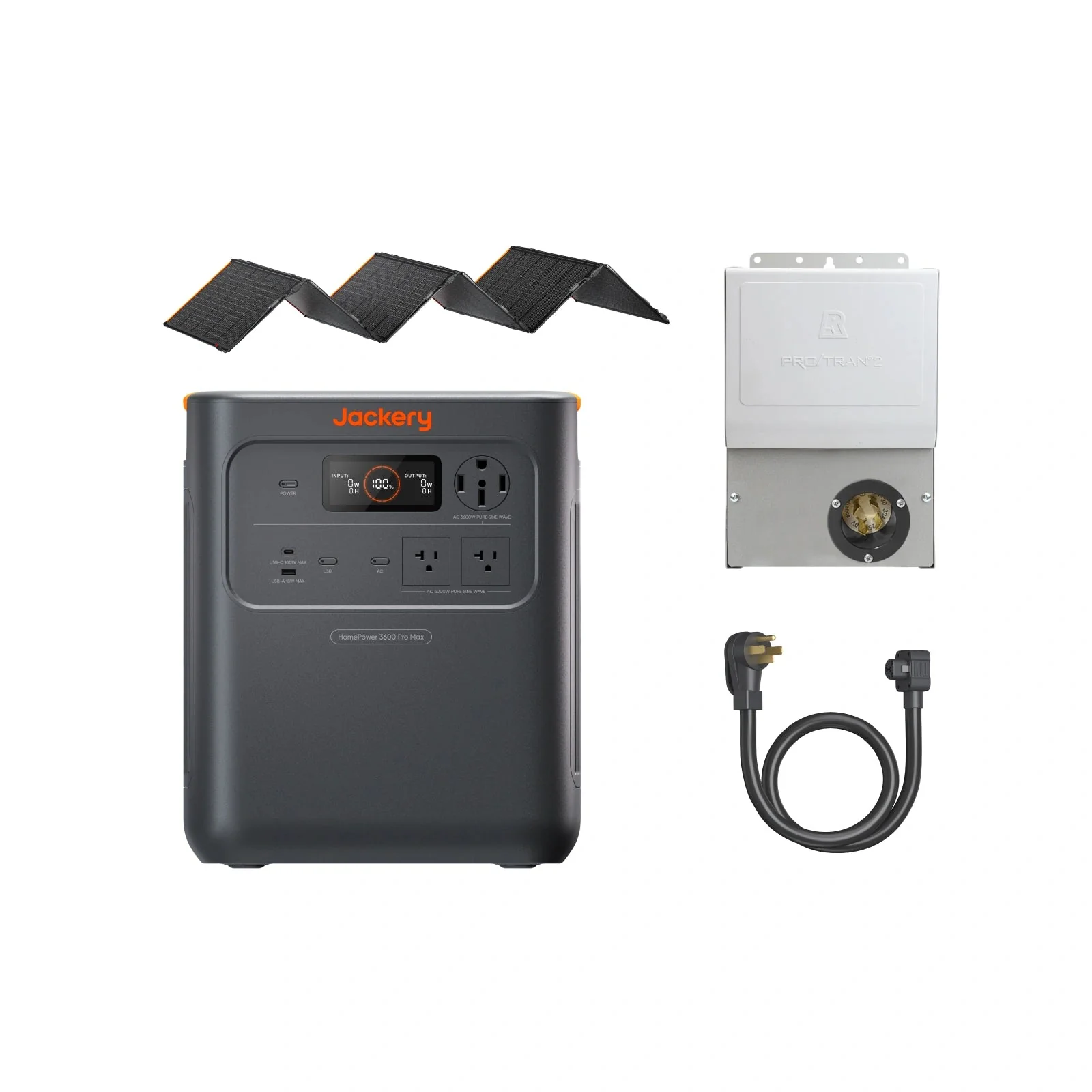
Introduction
Most portable power stations that call themselves "home backup" quietly mean 120V backup:
they will keep your fridge, your router and your outlets alive, but the split-phase 240V
loads that define an actual house — a well pump, a central furnace blower, a dryer, an EV
charger — are beyond them. Jackery's HomePower 3600 Pro Max is built specifically to cross
that line. It produces true split-phase 240V from a single chassis, carries UL 9540
certification, and asks $2,099 to do it. That combination is unusual, and it reframes what
the unit is competing against.
The pitch Jackery makes is essentially financial. Wire the 3600 Pro Max to your panel
through a manual transfer switch, the company argues, and you get automatic-style backup of
whole 240V circuits at a fraction of the cost of a permanently installed automatic transfer
switch and battery. On the input side, a Time-of-Use mode is meant to charge the pack when
electricity is cheap and discharge it when rates spike, which Jackery claims can save up to
$4,238 a year. That saving figure is a best-case marketing number rather than a
specification, and it should be read as one; the hardware underneath it, however, is
genuinely capable.
What makes this review harder to write than it should be is that Jackery is strangely
reticent about some basic facts. The product page headlines a 4,000W-at-240V output while
the store catalogue badge lists the same unit at 3,600W, and nowhere on the page could we
find a stated weight, a set of dimensions, or a maximum solar input in watts. For a
several-thousand-dollar home fixture, those are exactly the numbers a buyer needs, and
their absence is a fair criticism in its own right.
Design and Build
The HomePower 3600 Pro Max is built around EV-grade lithium iron phosphate cells, the same
chemistry family used in electric vehicles, and Jackery rates the pack for 6,000 charge
cycles and a service life of more than sixteen years. That is a materially higher cycle
rating than the 4,000 cycles Jackery quotes on its consumer-tier units such as the HomePower
3000, and it signals that this product is meant to be installed and left in place for the
long term rather than cycled occasionally and replaced.
Jackery (Manufacturer product image)
Jackery (Manufacturer product image)
The safety story is the clearest differentiator. The unit carries UL 9540 certification —
the standard for energy storage systems, as opposed to the UL 1973 battery-level listing that
covers many portable units — and adds 5VA-grade fireproofing and a dedicated EPO (emergency
power off) stop. UL 9540 is the certification that matters when a jurisdiction or an insurer
asks whether a battery can be permanently integrated with a home, and finding it on a
$2,099 unit is rare; EcoFlow's DELTA Pro Ultra reaches both UL 1973 and UL 9540, but it
starts at $4,199.
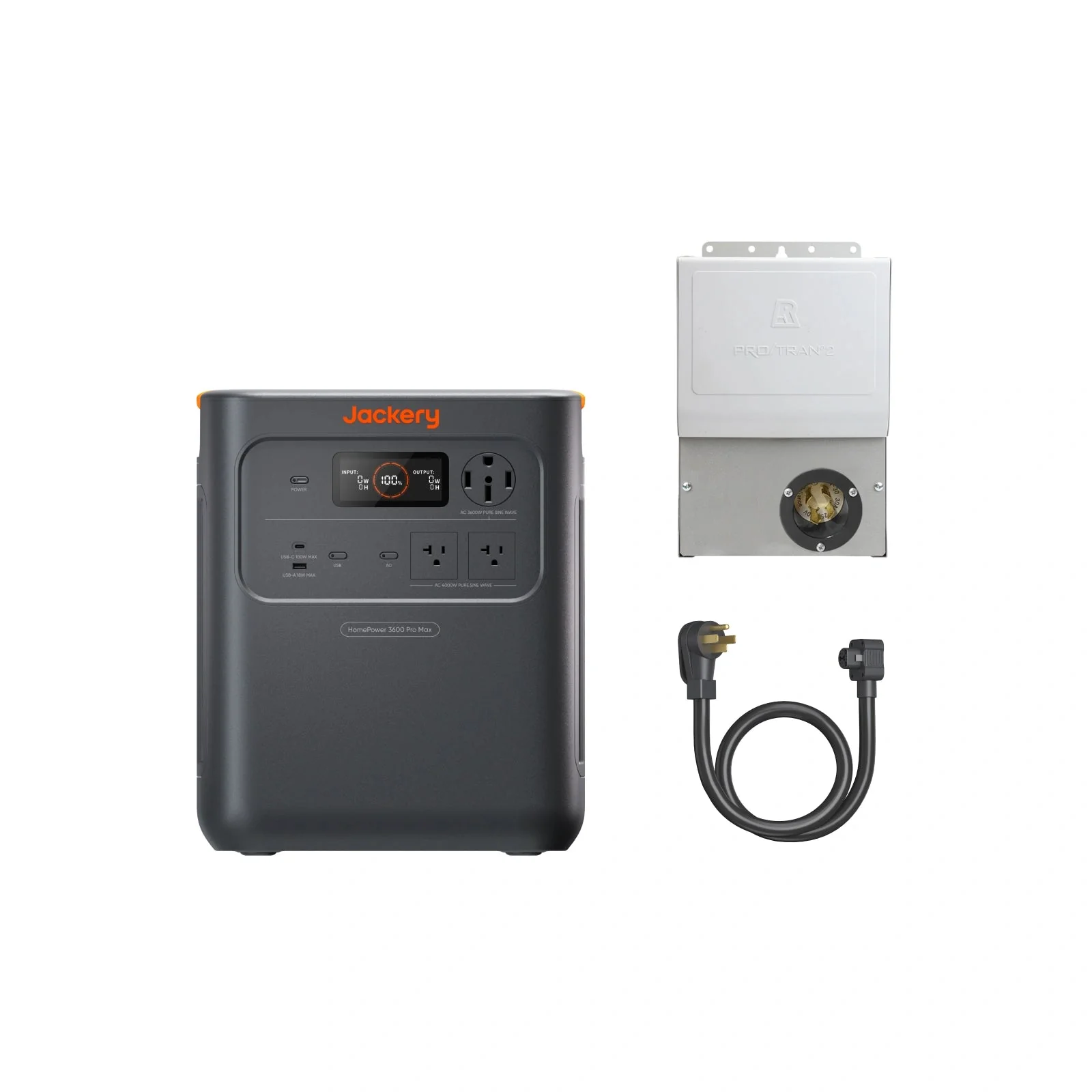
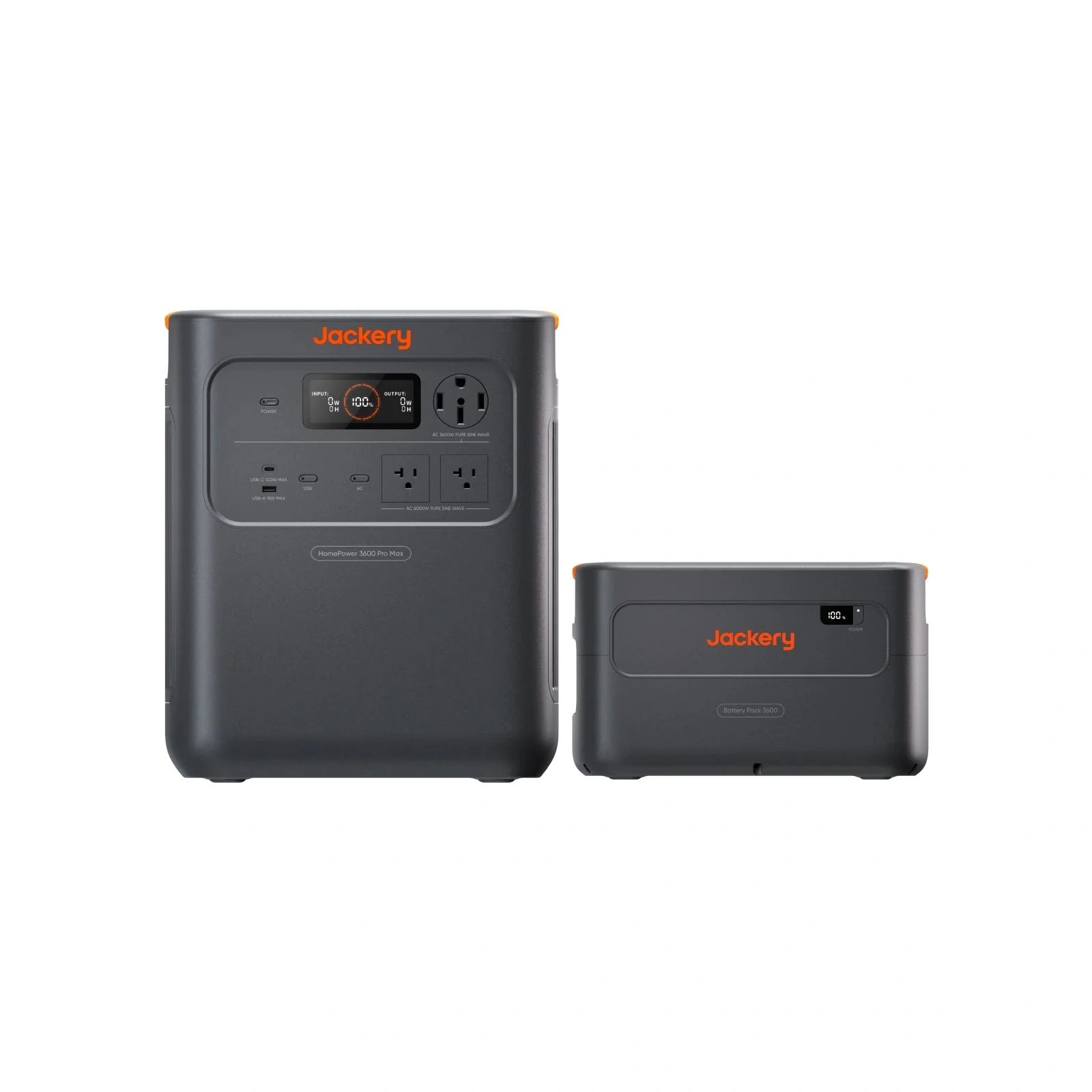
Connectivity is oriented toward the panel rather than the campsite. The output side includes
a NEMA 14-50R receptacle — the 50A 240V socket familiar from ranges and EV chargers —
alongside a NEMA 5-20R outlet, plus USB-C and USB-A ports for devices. In operation Jackery
rates the unit at under 30dB, quiet enough to sit in a utility room or hallway closet without
becoming a nuisance.
Here the build assessment hits its wall. Jackery does not publish a weight or a set of
dimensions for the HomePower 3600 Pro Max on its product page, and the retail listing carries
a placeholder weight. This is emphatically not a unit anyone should expect to carry; between
the 3,584Wh pack, the split-phase inverter and the expansion hardware, it belongs to the
class of heavy, fixed-location home batteries. But a buyer planning where to put it, or
whether one person can reposition it at all, is left without the figures to decide, and we
will not invent them.
Performance and Home Integration
The defining capability is split-phase output. Jackery says a single HomePower 3600 Pro Max
delivers 4,000W at 240V or 2,000W at 120V, and can run 240V and 120V appliances
simultaneously. That is the feature that lets it back up a well pump or a dryer circuit
rather than just a wall of outlets, and it is the reason the unit competes with permanently
installed home batteries rather than with camp-and-outage portables. The one frustration is
that Jackery's own numbers do not fully agree: the marketing headlines 4,000W while the
catalogue badge lists the unit at 3,600W output, and there is no single clean continuous-output
specification table to reconcile them. Buyers who need to size a specific circuit should
confirm the exact continuous rating with Jackery before committing.
Jackery (Manufacturer product image)
Jackery (Manufacturer product image)
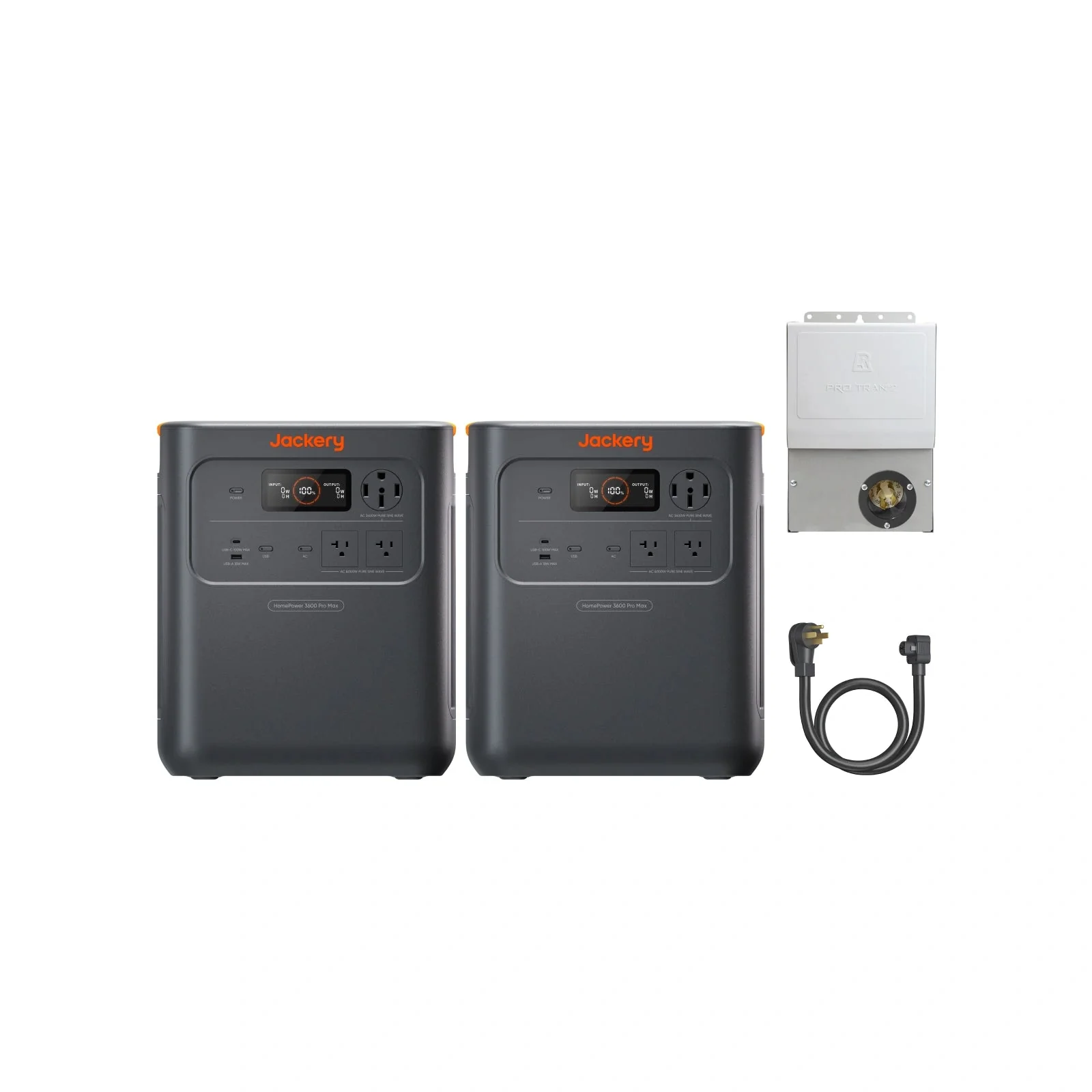
Capacity scales aggressively. The 3,584Wh base can grow to 21.5kWh within a single unit
through add-on batteries, and to 43kWh across units wired in parallel. That expansion path is
the strategic opposite of Jackery's fixed-capacity HomePower 3000, and it is what turns the
3600 Pro Max from a large backup box into the foundation of a home-energy system that can be
built out over time as budget allows.
As an uninterruptible supply the unit is specified at a sub-10ms switchover, which is fast
enough that computers and appliances continue through a grid cut without rebooting. That is
quicker than the roughly 20ms Jackery quotes for the HomePower 3000, and it moves the Pro Max
toward the behaviour buyers expect from a proper home UPS — though a switchover in the
low-single-digit milliseconds is still a backup UPS, not a true 0ms online design like the
one on Jackery's Explorer 5000 Plus.
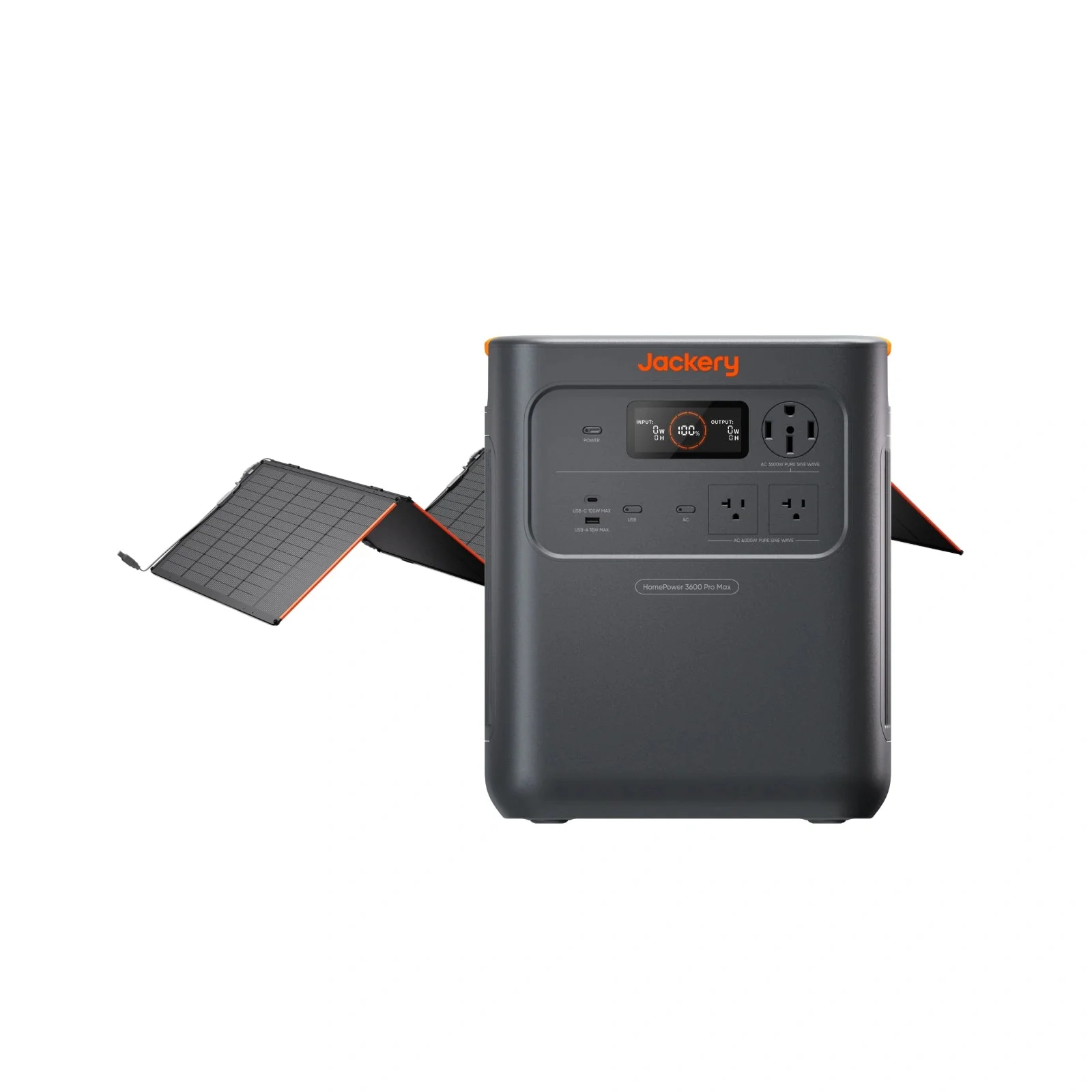
Recharging is flexible, with Jackery citing eight methods including compatibility with a gas
generator — a useful "backup for your backup" during a multi-day outage when neither the grid
nor the sun is available. Solar is one of those paths, through two DC8020 input ports, but
here again Jackery declines to publish a maximum solar input figure in watts on the product
page, which makes it impossible to state how quickly the pack can be refilled from panels.
For a unit whose whole premise is riding out extended outages, that is a meaningful omission,
and it is one buyers should press the company on.
Competitive Comparison
vs. EcoFlow DELTA Pro Ultra ($4,199, 6,144Wh). The DELTA Pro Ultra is the natural
benchmark: it is the unit certified to both UL 1973 and UL 9540, produces 7.2kW to 21.6kW of
output, and expands from 6kWh to 90kWh. It is a more powerful and larger system in every
dimension, but it also starts at roughly double the HomePower 3600 Pro Max's $2,099. For a
buyer who wants UL 9540-grade home integration and 240V output at the lowest entry price, the
Jackery is the value proposition; for one building toward whole-home, multi-day autonomy, the
EcoFlow is the more complete platform.
vs. Goal Zero Yeti PRO 4000 ($3,999.95, 3,994Wh). The Goal Zero holds a similar amount of
energy — 3,994Wh against 3,584Wh — and expands to 20kWh, but it costs nearly twice as much,
weighs 115.7 pounds, and is fundamentally a 120V-oriented design. The HomePower 3600 Pro Max's
native split-phase 240V and its UL 9540 listing make it the better fit for anyone whose backup
plan includes 240V house loads.
vs. Jackery Explorer 5000 Plus ($3,499, 5,040Wh). Jackery's own larger unit holds more
energy, expands to 60kWh, and offers a 0ms online-UPS mode the Pro Max does not. It is the
step up for buyers who want maximum capacity and the fastest possible transfer. The 3600 Pro
Max undercuts it by $1,400 and adds explicit UL 9540 certification, making it the more
affordable route to permitted 240V backup.
vs. Jackery HomePower 3000 ($1,499, 3,072Wh). The in-house comparison is the sharpest way
to understand the Pro Max. The HomePower 3000 is $600 cheaper but 120V only, fixed at 3,072Wh,
rated for 4,000 cycles, and switches in about 20ms. The Pro Max adds 240V, expansion to
21.5kWh, a 6,000-cycle pack, ~10ms transfer and UL 9540. The gap between them is far larger
than the $600 price difference suggests.
Who It's For
Buy the HomePower 3600 Pro Max if your backup requirement genuinely includes 240V loads and
you want a permitted, expandable system without the four-figure premium of the biggest home
batteries. A household with a well pump, an electric dryer, a 240V mini-split or Level 2 EV
charging — the loads that 120V portables simply cannot serve — is the buyer this unit was
designed for, and the UL 9540 certification makes it a defensible choice for a permanent,
transfer-switched install.
It also suits the buyer thinking in stages. Because capacity expands to 21.5kWh in a single
unit and 43kWh in parallel, a household can start at 3,584Wh and grow the system as budget
allows, treating the initial $2,099 as an entry point rather than a ceiling. The Time-of-Use
mode adds an economic angle for anyone on a time-varying utility rate, provided you treat the
$4,238-a-year headline as an optimistic bound rather than a promise.
Look elsewhere if you want anything portable, or if you need the missing numbers before you
can commit. This is a heavy, fixed-location home unit, and Jackery's failure to publish its
weight, dimensions and maximum solar input makes it a harder unit to plan an installation
around than it should be. Buyers who want the fastest possible transfer should also note that
the sub-10ms rating, while good, is not the 0ms online mode found on the Explorer 5000 Plus.
Final Verdict
The HomePower 3600 Pro Max is one of the more interesting home-backup products at its price,
because it delivers two things that are usually reserved for far more expensive systems: true
split-phase 240V from a single unit, and UL 9540 certification. Add a 3,584Wh base that
expands to 21.5kWh, a 6,000-cycle EV-grade pack rated for sixteen-plus years, a sub-10ms
transfer and under-30dB operation, and the $2,099 asking price starts to look like a genuine
value against $4,000-plus rivals.
The reservations are real, and several of them are about information Jackery simply does not
provide. The product page does not publish the unit's weight, its dimensions, or its maximum
solar input in watts, and it headlines a 4,000W-at-240V output that the store catalogue
contradicts with a 3,600W badge. The $4,238 annual utility saving is a marketing best case,
and extracting the 240V value at all requires a manual transfer switch and an electrician. None
of these undercut the underlying hardware, but together they make the unit harder to evaluate
and to plan for than a product this capable should be.
Judged on capability per dollar, the HomePower 3600 Pro Max is a strong buy for the specific
household that needs certified, expandable 240V backup without a five-figure budget. Judged on
transparency, Jackery leaves too many basic questions unanswered. Confirm the weight, the
dimensions, the continuous output rating and the solar input directly with the company before
you build an installation around it.
Frequently Asked Questions
Can the HomePower 3600 Pro Max really back up 240V appliances?
unit — Jackery cites 4,000W at 240V or 2,000W at 120V — and can run 240V and 120V loads
simultaneously. That makes it suitable for well pumps, electric dryers and Level 2 EV charging,
which 120V-only units cannot serve.
What is UL 9540 and why does it matter here?
into a home rather than just the cells themselves. It is the certification a jurisdiction or
insurer often looks for before a battery can be permanently wired to a house. Finding UL 9540
on a $2,099 unit is uncommon; the more powerful EcoFlow DELTA Pro Ultra also carries it, but
costs $4,199.
How much can I expand the capacity?
to 43kWh when units are wired in parallel. That is a substantial expansion path, and it is the
main structural advantage over Jackery's fixed-capacity HomePower 3000.
How much does it weigh, and how big is it?
product page, and the retail listing shows a placeholder weight. It is unambiguously a heavy,
fixed-location home unit rather than something to carry, but the exact figures are not
available, so confirm them with Jackery before planning an install location.
How fast does it switch over during an outage?
appliances keep running through a grid cut without rebooting. That is quicker than the roughly
20ms on the HomePower 3000, though it is still a backup-UPS design rather than a true 0ms
online UPS like the one on the Explorer 5000 Plus.
How much solar can it accept?
maximum solar input wattage on the product page. Because of that omission, it is not possible
to state how quickly the pack can be refilled from panels alone — a figure worth requesting
from Jackery directly given the unit's outage-focused purpose.
Is the $4,238 annual saving realistic?
Time-of-Use peak-shaving mode, which charges the unit when electricity rates are low and
discharges it when they are high. Actual savings depend entirely on your utility's rate
structure and your usage, and will typically be well below the headline number.
Do I need an electrician to use it for home backup?
panel through a manual transfer switch, which should be installed by a qualified electrician.
You can still plug devices directly into its outlets without any installation, but that does
not use the split-phase capability that justifies the price.
How does it compare to buying an automatic transfer switch system?
automatic-style backup of 240V circuits for far less than a permanently installed automatic
transfer switch and battery, which the company frames as a saving of up to $3,000. The
trade-off is that a manual transfer switch requires you to be present to operate it, whereas a
true automatic transfer switch cuts over on its own.
How long will the battery last before it degrades?
sixteen years. That is a longer rating than the 4,000 cycles Jackery quotes for its
consumer-tier units, and it reflects the product's intended role as a long-term, installed
home fixture rather than an occasionally used portable.