Introduction
Jackery built its reputation on orange-cased boxes you toss in a trunk before a weekend
of camping. The Explorer 5000 Plus is the company reaching past that identity toward the
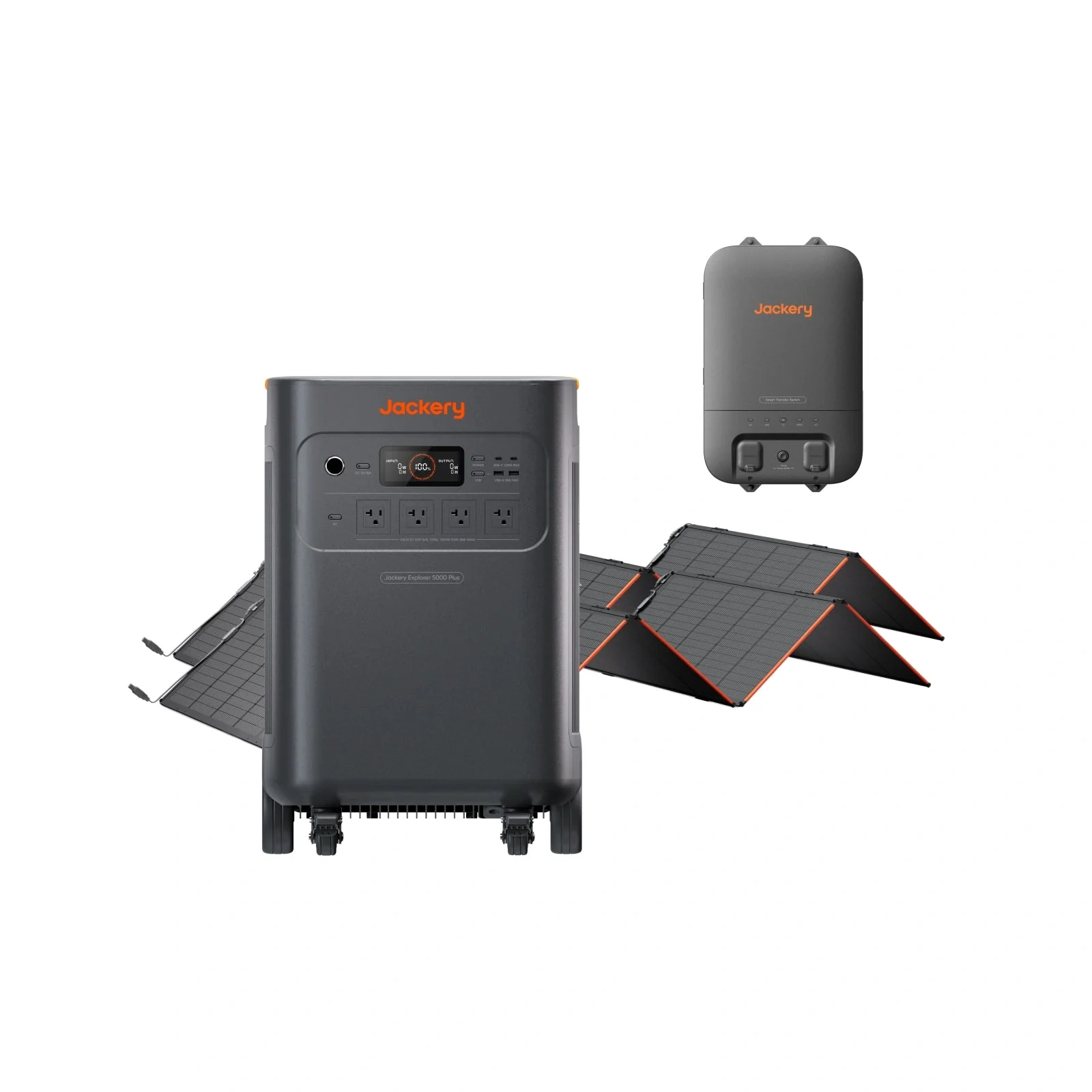
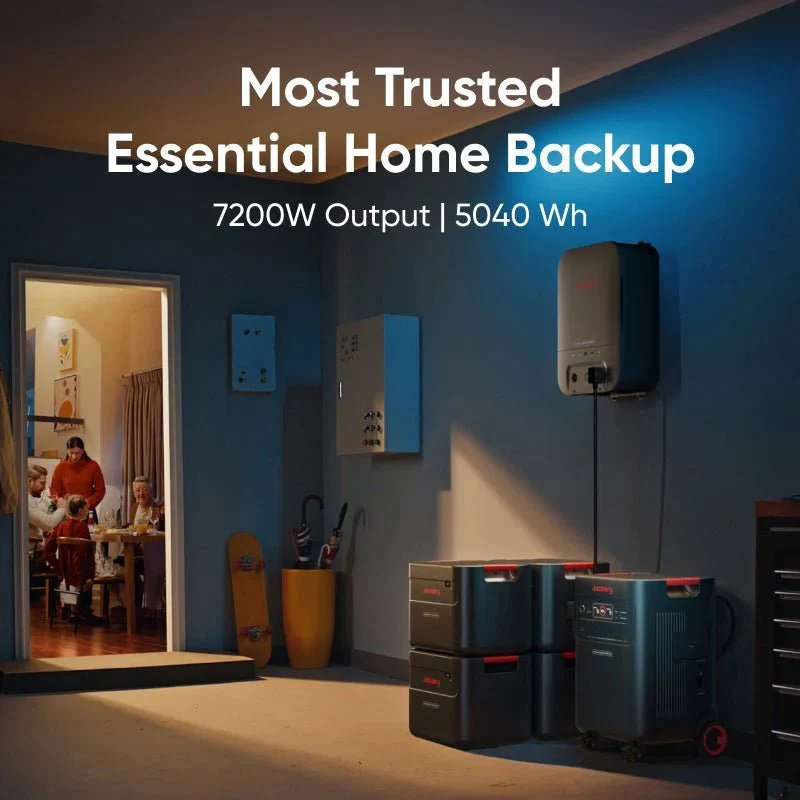
utility closet. With a 5,040Wh LiFePO4 base that expands to 60kWh, 7,200W of continuous
output and true 120V/240V dual-voltage, this is aimed at people who want to back most of
a home rather than charge a few phones at a picnic table.
The pitch is endurance and scale. Jackery claims the system can keep multiple devices
running for up to 30 days, which is the kind of headline that means little without
knowing which devices, but which does communicate the intended scope: outages measured in
days, not hours. Stacking up to five battery packs pushes the ceiling to 60kWh, and a
Smart Transfer Switch turns the collection of boxes into whole-room backup that flips
over automatically when the grid drops.
There is one claim, though, that earns this review's closest scrutiny, and it is the
"0ms Power Transition" printed on the marketing. It is technically true and practically
misleading in equal measure, and untangling it is the single most useful thing a buyer
can read before spending $3,499. We will get to it — the short version is that the zero
applies to one specific mode, and Jackery's own FAQ quietly quotes a different number for
the other.
Design and Build
Physically the Explorer 5000 Plus follows the modular playbook that every serious
home-backup unit now uses: a main power unit that houses the inverter and outlets, and
separate battery packs that dock alongside it to add capacity. That is what lets a
5,040Wh starter grow to 60kWh without replacing anything you already own — you buy the
first unit, then bolt on batteries as your budget and needs expand. Up to five packs can
join a single system.
Jackery (Manufacturer product image)
Jackery (Manufacturer product image)
The chemistry is LiFePO4, which is the correct and expected choice here. Lithium iron
phosphate trades a little energy density for thermal stability and longevity, and in a
unit destined to live in a basement or garage and cycle for years, that trade is exactly
right. Jackery rates the pack for up to 4,000 charge cycles, though with an important
qualifier we will return to under performance: that rating is measured to 70% of original
capacity, not the 80% endpoint several rivals quote.
Where the writeup has to stop short is the physical particulars. Jackery does not publish
a net weight, external dimensions or a full per-port breakdown on the fetched product
record. For a whole-home unit the weight is close to academic — nobody is carrying a
5kWh-to-60kWh system anywhere on purpose, and the low portability score reflects that —
but the missing port list is a genuine gap for anyone planning exactly what they will
plug in. We do not have the hardware in hand, and we will not manufacture a spec Jackery
withholds. Confirm the outlet count with a retailer before you buy if your plan depends
on it.
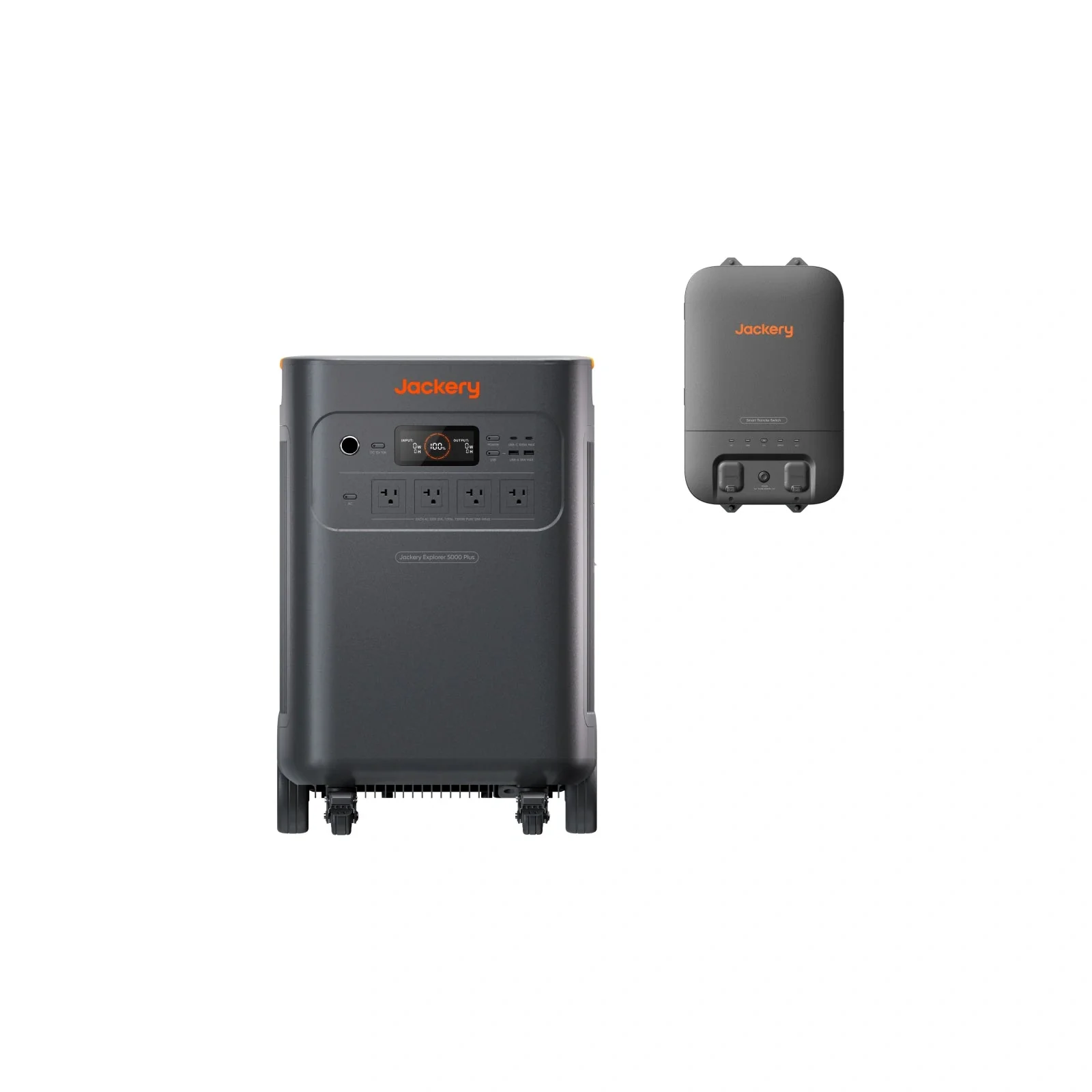
Integration is handled by the Smart Transfer Switch, which is the component that elevates
this from a large battery to a backup system. Wired in, it gives whole-room automatic
cutover, and the Jackery app layers on remote monitoring, control and scheduling — the
last of which is genuinely useful for a fixed installation, letting you set the system to
charge off-peak or reserve capacity for a forecast outage.
Charging and Performance
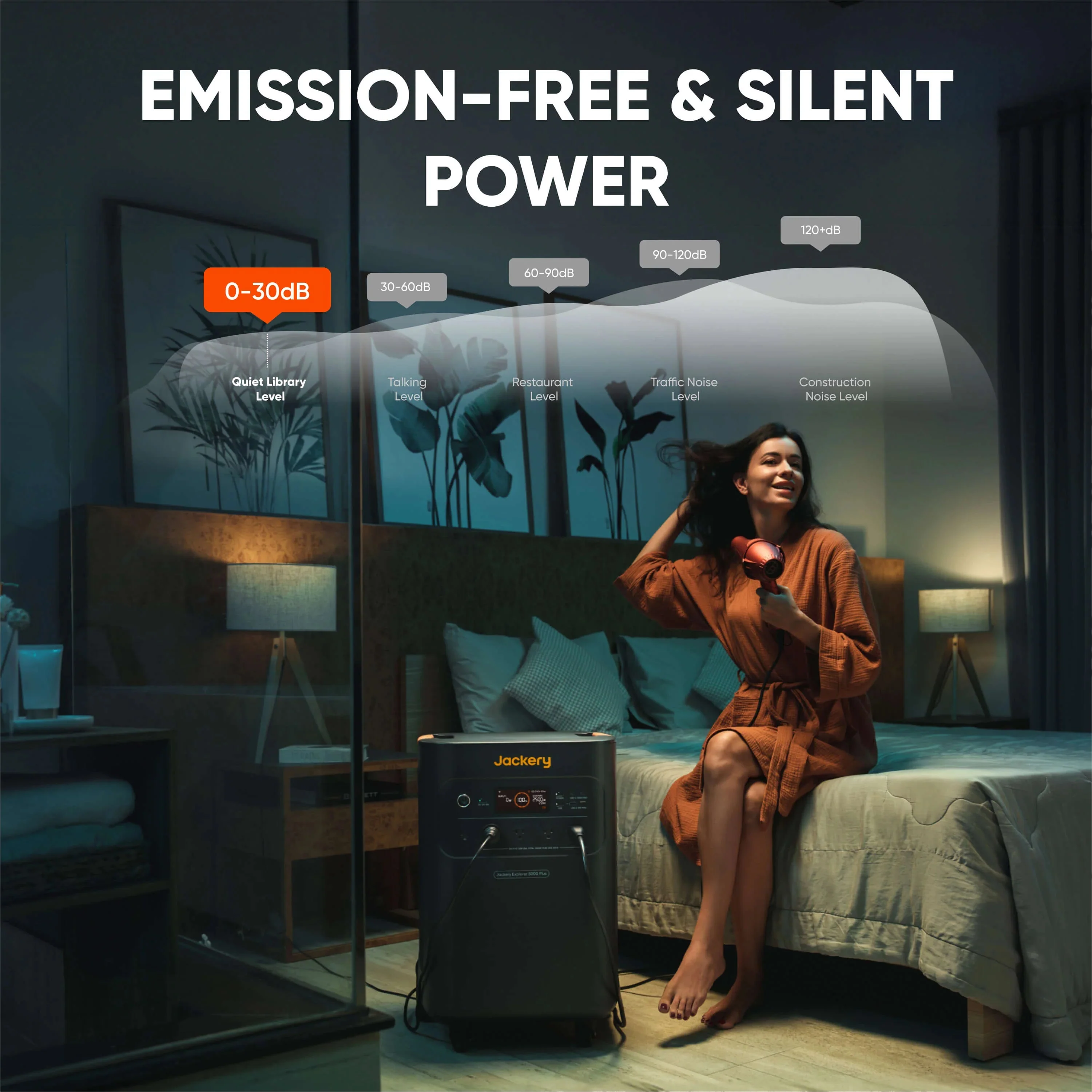
Start with output, because it is the strongest column on the sheet. The Explorer 5000
Plus delivers 7,200W continuous with a 14,400W surge, and it does so as 120V/240V
dual-voltage. That dual-voltage capability is the part that matters: it means the system
can feed a 240V circuit directly, so an electric range, a dryer or a well pump is on the
table rather than off it. A 7,200W ceiling is enough to run a substantial fraction of a
household's simultaneous load.
Jackery (Manufacturer product image)
Jackery (Manufacturer product image)
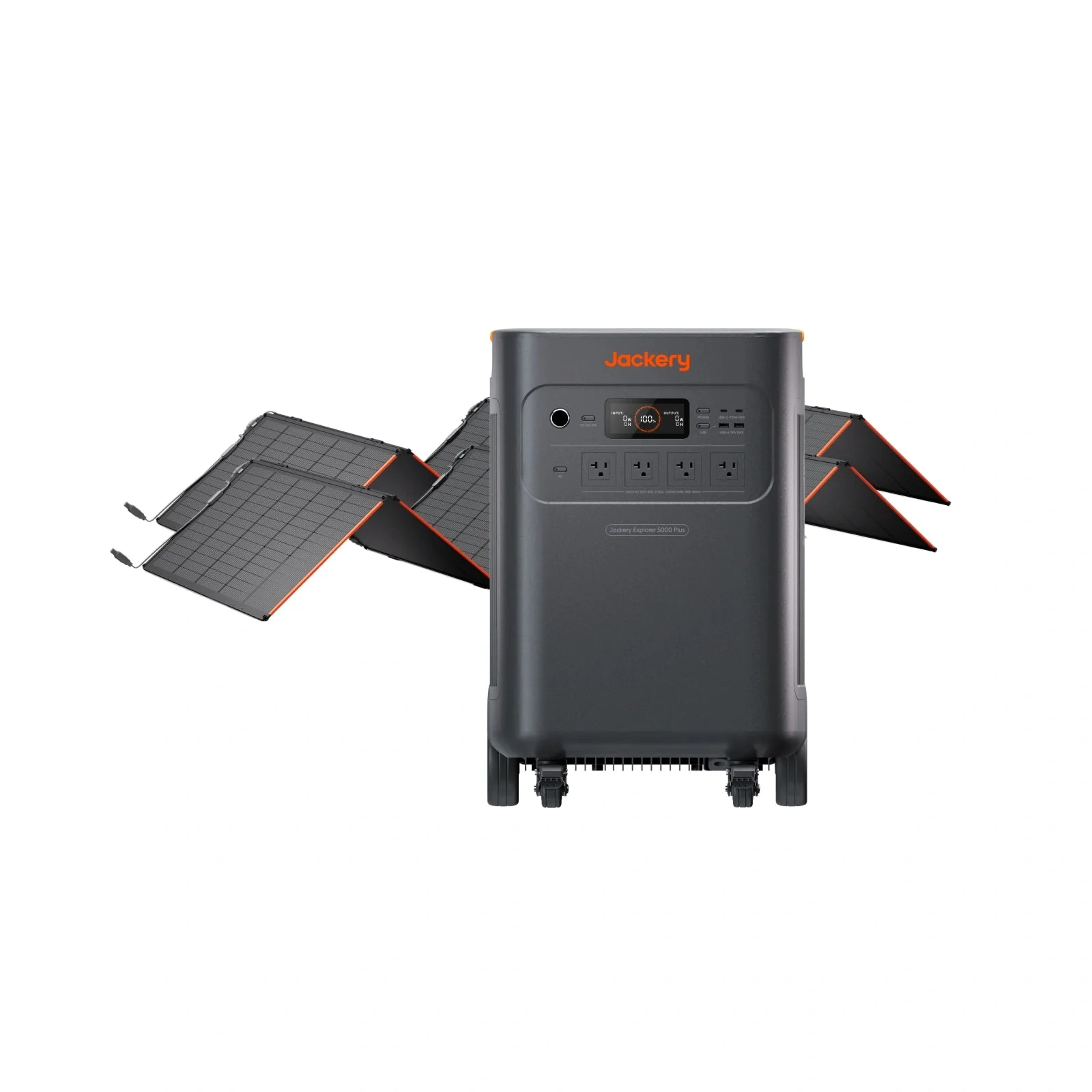
Charging is quick, at least by Jackery's numbers. The company claims a full 0-100%
recharge in 1.7 hours, and lists five ways to charge overall. Solar is a real strength
here: up to 4,000W of high-voltage PV input, plus a separate 1,200W low-voltage PV path.
Four kilowatts of solar against a 5,040Wh base is a fast off-grid refill by any standard,
and it is one of the more generous solar ceilings in the class. We would flag that
Jackery's 1.7-hour AC figure is a manufacturer claim measured under favourable
conditions; independent testing of Jackery's smaller units has historically landed longer
than the marketing, so treat it as a best case rather than a guarantee.
Now the asterisk. Jackery markets a "0ms Power Transition," and it is accurate — but only
for online UPS mode, where the load runs continuously through the inverter and there is
genuinely no switchover gap. Jackery's own FAQ distinguishes this from backup UPS mode,
which it states transitions in 20ms. Twenty milliseconds is still fast enough for most
electronics to ride through without rebooting, so this is not a scandal. But the
unqualified "0ms" on the marketing implies every configuration is seamless, and that is
not what Jackery's documentation says. If a truly zero-gap transition matters for
sensitive equipment, you need to be running online UPS mode specifically, and you should
confirm that mode's efficiency trade-offs for your setup.
Longevity is the other place the fine print rewards attention. The pack is rated for up
to 4,000 cycles, which sounds identical to competitors until you read the endpoint:
Jackery specifies 4,000 cycles to 70% capacity. Many rivals quote their cycle counts to
80%. Rating to a lower remaining-capacity threshold makes the cycle number look better for
the same physical wear, so a 4,000-cycle-to-70% pack is not directly comparable to a
4,000-cycle-to-80% one. It is not a bad pack — LiFePO4 at this scale will outlast most
households' patience — but the comparison deserves an honest footnote.
Competitive Comparison
vs. EcoFlow DELTA Pro Ultra ($4,199 base, 6,144Wh). EcoFlow's whole-home flagship
starts higher in both price and single-unit capacity, and it carries a certification
Jackery does not advertise: EcoFlow states it is the only portable power station certified
to both UL1973 and UL9540. Both units offer 7,200W and 240V output, and both scale deep
(EcoFlow to 90kWh, Jackery to 60kWh). The Jackery's counter is a $700-lower entry price and
a faster claimed solar ceiling; the EcoFlow's is the system-level certification that
smooths a permitted installation.
vs. Goal Zero Yeti PRO 4000 ($3,999.95, 3,994Wh). Goal Zero sits between the two on
capacity at 3,994Wh, outputs 3,600W (7,200W surge), weighs a documented 115.7 lb, recharges
in under 3 hr with an 1,800W charger, takes 3,000W of solar and expands to 20kWh. Jackery
beats it on single-unit capacity, output and claimed solar input, and undercuts it on
price. Goal Zero's edge is transparency — it publishes weight, size and a 5-year warranty
without ambiguity, where Jackery leaves weight blank and ties its longest warranty to a
Canadian listing.
vs. Jackery Explorer 2000 v2 ($999, 2,042Wh). The in-house contrast is instructive.
The 2000 v2 is a light, fixed 2,042Wh appliance at 39.5 lb with 2,200W output, 400W solar
and no expansion at all. The 5000 Plus is its opposite: heavier, dearer, dual-voltage and
built to grow. Anyone weighing the two is really deciding between a portable backup box and
a home energy system, and they should not treat the larger model as merely "more of the
same."
vs. DJI Power 2000 ($1,299, 2,048Wh). DJI's larger unit expands remarkably far — up to
22,528Wh across ten batteries — but its 3,000W output and 2,048Wh single-unit capacity put
it a tier below the Jackery on raw muscle, and it lacks the 240V capability. For a buyer
who wants deep expansion but not necessarily 240V loads, the DJI is an interesting
alternative; for whole-home 240V backup, the Explorer 5000 Plus is the more direct answer.
Who Should Buy It
Buy the Explorer 5000 Plus if you want a home-backup system with a low barrier to entry
and a long runway. The $3,499 starting price for 5,040Wh is competitive, the 60kWh ceiling
means the system can follow your ambitions for years, and the 240V dual-voltage output
opens up the heavy circuits that a 120V-only box leaves stranded. Households with electric
ranges, dryers or well pumps that want backup without the highest-priced flagship should
have this on the shortlist.
It also suits the buyer who values Jackery's software. The app's scheduling and remote
monitoring, paired with the Smart Transfer Switch, make for a genuinely hands-off backup
experience — set reserves, charge off-peak, and let the switch handle cutover when the
grid fails.
Look elsewhere if you need a certified, permit-ready installation and want that on paper:
Jackery does not advertise the UL9540 system certification EcoFlow leans on. Look elsewhere,
too, if you need something you can move — this is furniture, not luggage, and the
portability score says so. And read the warranty terms for your own country before you rely
on "five years plus two," because that figure is confirmed on the Canadian listing and the
US terms are not separately verified here.
Verdict
The Explorer 5000 Plus is a strong, well-priced entry into serious home backup, and its
core numbers back the ambition: 5,040Wh expanding to 60kWh, 7,200W continuous at 120V/240V,
up to 4,000W of solar input and a claimed 1.7-hour recharge. Jackery has clearly built a
system rather than a scaled-up camping box, and the Smart Transfer Switch plus app make it
feel like one.
The criticisms are about precision, not capability. The "0ms" transition is real only in
online UPS mode; backup UPS mode is 20ms, and the marketing does not make that distinction.
The 4,000-cycle rating is measured to 70% capacity, so it flatters the pack relative to
rivals rating to 80%. Jackery withholds weight, dimensions and a full port list on the
fetched record, and pins its longest warranty to a Canadian listing. None of these are
dealbreakers, but together they mean the marketing runs a little ahead of the
documentation.
Judged on what it delivers for the money — deep, expandable, dual-voltage home backup from
a major brand at an aggressive entry price — the Explorer 5000 Plus is easy to recommend to
the right buyer. Just read the fine print on the transition mode, the cycle endpoint and
the warranty before you sign, and you will get exactly the system you thought you were
buying.
Frequently Asked Questions
Is the "0ms" power transition claim accurate?
through the inverter with no switchover gap. Jackery's own FAQ states that backup UPS mode
transitions in 20ms instead. Both are fast enough for most electronics, but the unqualified
"0ms" on the marketing only holds in the online mode specifically.
How large can the system get?
system. Jackery also sells a Home Backup Kit 5000 Plus configured at 20kWh, so there is a
clear path from a single starter unit to a house-sized bank.
Can it run 240V appliances?
14,400W surge, so it can feed a 240V circuit directly for an electric range, a dryer or a
well pump — loads a 120V-only station cannot handle.
How fast does it recharge?
Treat the 1.7-hour figure as a manufacturer best case; independent measurement of Jackery's
other units has tended to run longer than the marketing, so plan with some margin.
How much solar can it take?
against a 5,040Wh base is a fast off-grid refill and one of the more generous solar ceilings
in this class.
What does the cycle-life rating really mean?
lower endpoint than the 80% several rivals quote, which makes a direct cycle-count comparison
misleading. In practical terms the pack will still last most households well over a decade of
regular use.
Do I need the Smart Transfer Switch?
as a large power station you plug loads into manually. The Smart Transfer Switch is what makes
cutover automatic when the grid fails, and it is sold in bundles from $4,439 upward.
How much does a full home system cost?
Transfer Switch brings that to $6,089, and the fully built 20kWh Home Backup Kit reaches
$13,489. Costs scale steeply as you add capacity, so plan the final configuration before you
start.
Is the warranty really seven years?
not separately verified here, so check the warranty for your own market rather than assuming
the seven-year total applies everywhere.
How does it compare to the EcoFlow DELTA Pro Ultra?
the only portable power station certified to both UL1973 and UL9540. Both offer 7,200W and 240V
output. Jackery undercuts on entry price and claims a higher solar ceiling; EcoFlow answers with
system-level certification that eases a permitted installation.