Introduction
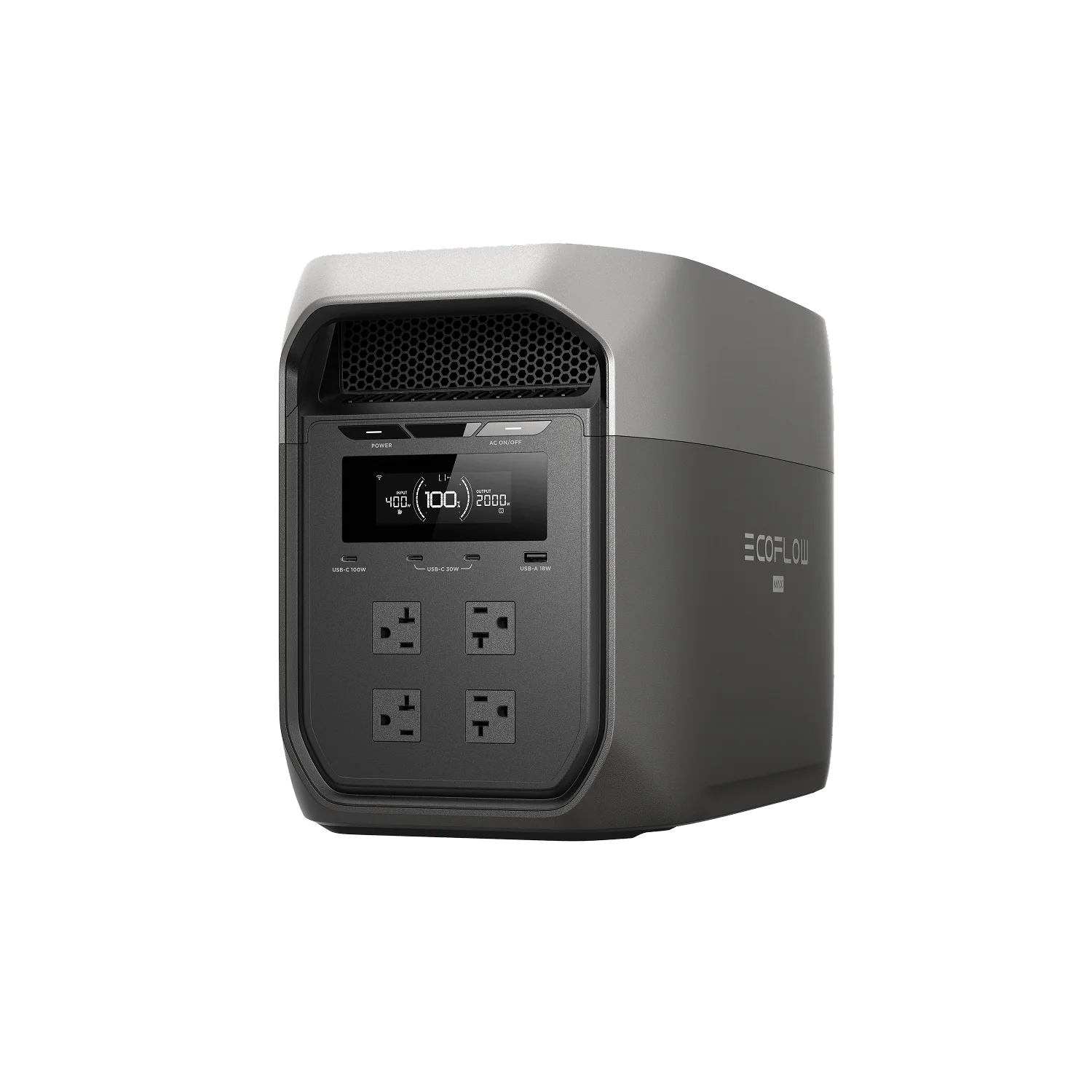
The EcoFlow Delta 3 Max launched in July 2025 as EcoFlow's answer to a crowded 2kWh segment.
Its headline claim is a 68-minute full charge — genuinely the fastest recharge time at this capacity tier.
If you're cycling through a power station daily or need rapid top-ups between outages, that number matters.
Getting from 0% to 100% in just over an hour removes a major friction point of owning a high-capacity power station.
What EcoFlow didn't shout about is that the Delta 3 Max ships with only 500W of solar input.
That's half what its predecessor accepted, and less than a third of what the Bluetti Elite 200 V2 or Anker C2000 Gen 2 take in.
This is not a minor spec trim — it's a fundamental design choice that effectively disqualifies this unit for serious off-grid solar use.
The predecessor, the Delta 2 Max, accepted 1,000W.
Buyers upgrading from that unit will feel the regression immediately.
Unboxing & First Impressions
At 45 lbs, the Delta 3 Max is noticeably light for a 2kWh unit — meaningfully easier to move than the Bluetti Elite 200 V2 at 53.4 lbs.
EcoFlow (Manufacturer product image)
EcoFlow (Manufacturer product image)
The modern industrial design features a flat front face with all ports organized in a single accessible panel.
EcoFlow's build quality is consistently good: the handle is well-balanced, the LCD display is large and clearly readable, and the port labels are legible without squinting.
The EcoFlow app pairs over Bluetooth in under 30 seconds and shows power flow direction and state of charge from the first power-on.
The quiet operation is noticeable from the start — even with the unit running at moderate load, the fan hum is barely perceptible.
Key Features
68-Minute AC Charging: The Standout Feature
68 minutes from 0–100% via AC is exceptional.
EcoFlow (Manufacturer product image)
The Anker SOLIX C2000 Gen 2 (same capacity) takes 88 minutes.
The EcoFlow Delta 3 Max wins the speed race at this class by a meaningful margin.
This speed advantage is useful for specific scenarios: short frequent grid outages where you recharge between events, daily cycling in urban environments where solar isn't practical, or camping trips where you need a fast recharge before the next outing.
2,400W Inverter: Adequate for the Use Case
The 2,400W continuous pure sine wave inverter covers virtually all common household loads within a 2kWh unit's expected runtime.
A refrigerator (150W) plus lights plus device charging runs comfortably.
Adding a microwave (1,000W) briefly is within the inverter envelope.
For whole-circuit backup of a small home or apartment, the 2,400W ceiling is rarely a limitation.
27W Idle Draw: A Real Cost
The 27W idle draw is more of a concern than the inverter spec.
Left plugged in all day, the Delta 3 Max consumes about 648Wh daily from grid standby — that's 31.6% of its total capacity just from keeping it on and ready.
For a unit primarily used as AC-connected home backup, this ongoing draw should factor into long-term electricity cost calculations.
EcoFlow Ecosystem Integration
The Delta 3 Max integrates fully with the EcoFlow app, smart home features, and EcoFlow's accessory ecosystem.
WiFi and Bluetooth both work reliably.
The app's scheduling features allow automatic charge timing to take advantage of time-of-use electricity rates.
For buyers already in the EcoFlow ecosystem, the Delta 3 Max slots in without friction.
Solar: The Trade-Off You Can't Ignore
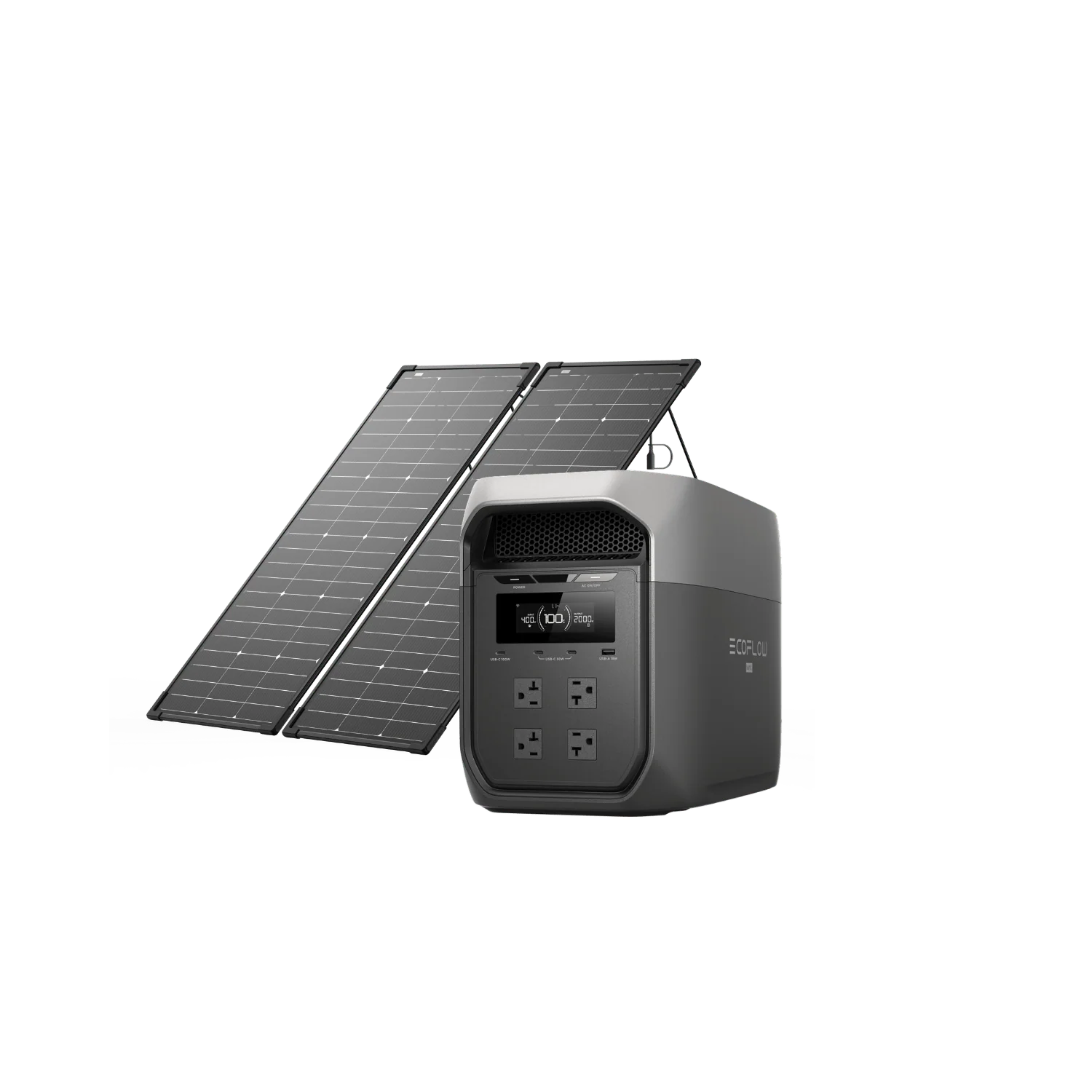
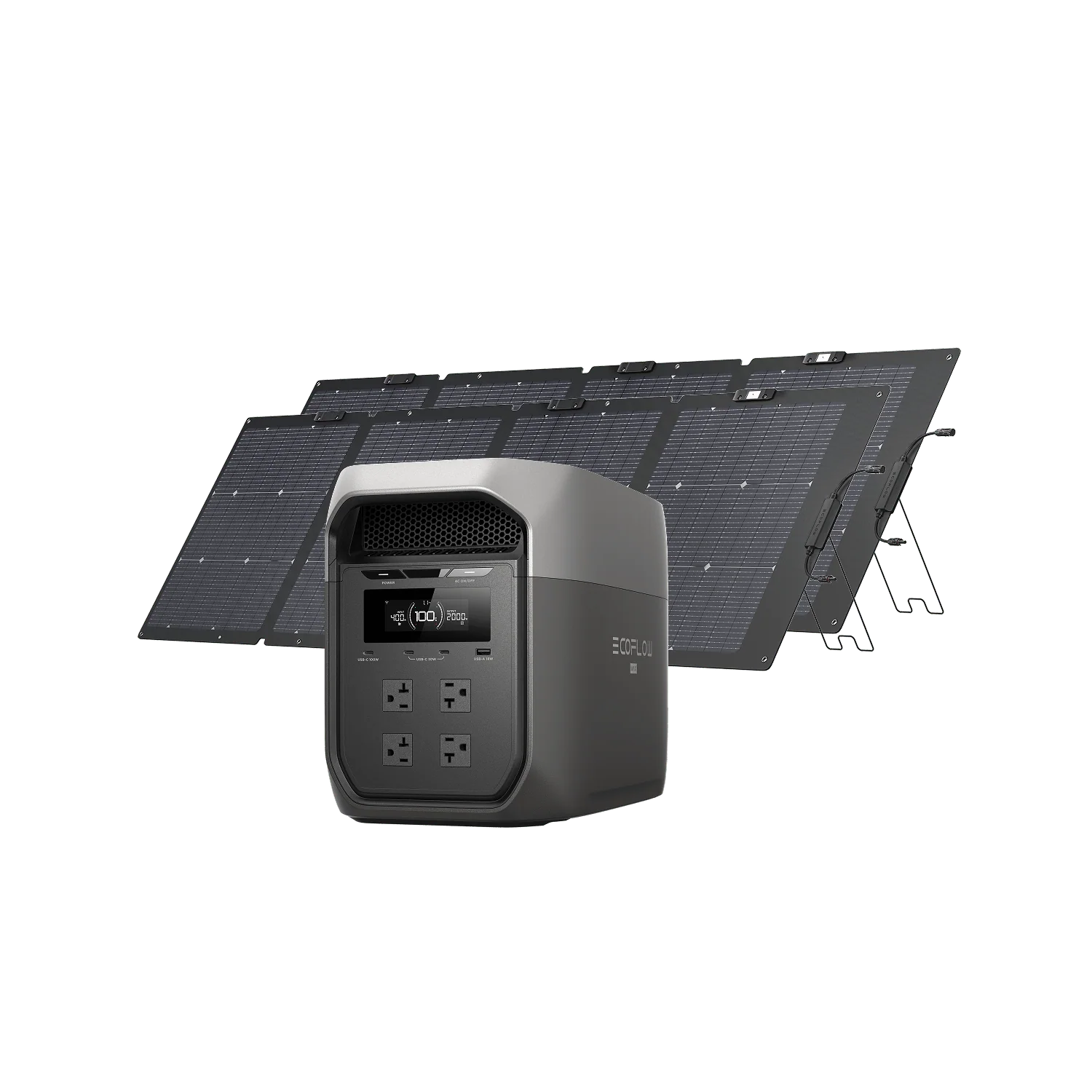
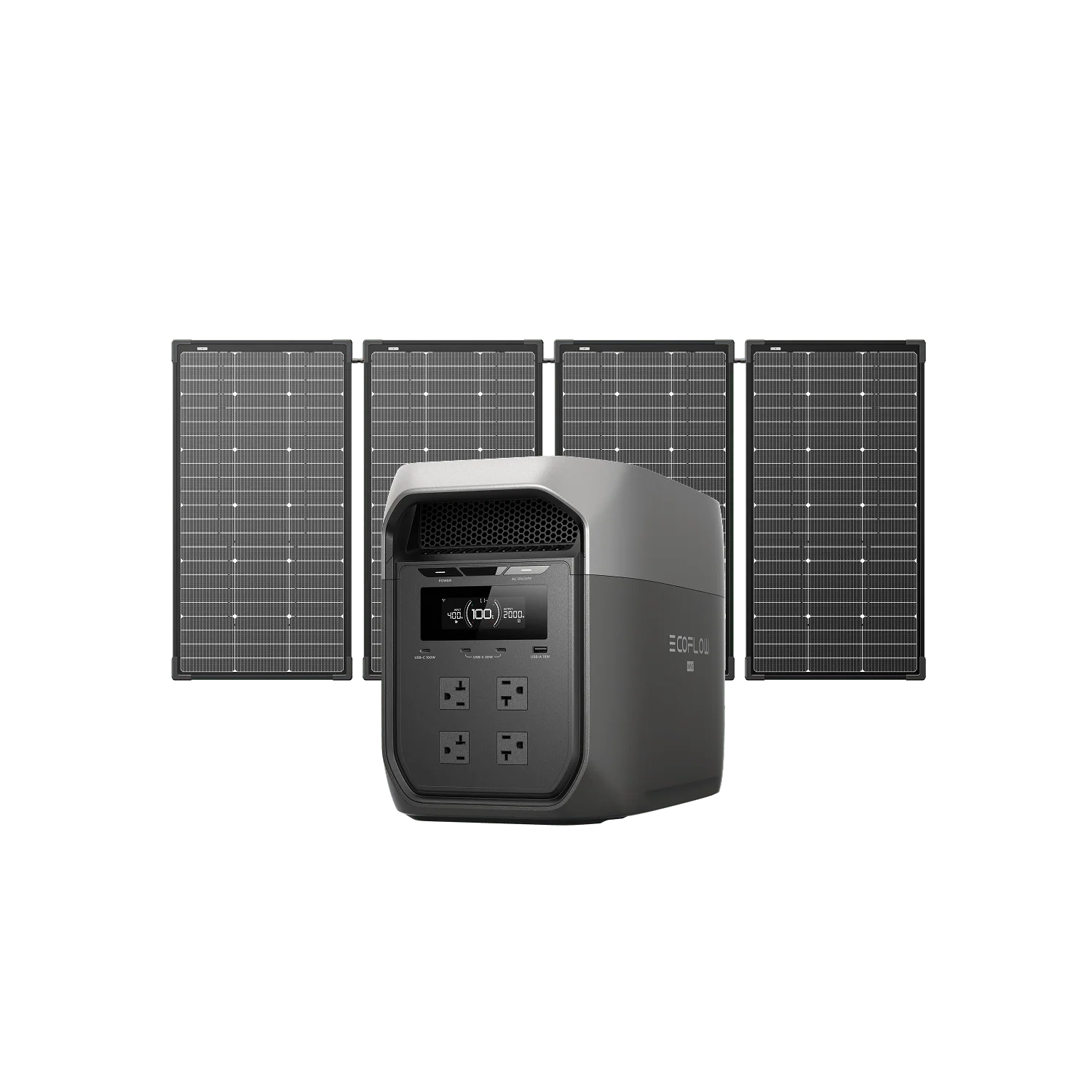
500W maximum solar input on a 2,048Wh battery means a best-case 5-hour solar recharge under perfect conditions.
In real-world partial cloud conditions, that stretches to 7–10 hours — a full day of sun for incomplete recharge.
If solar is important to you at all, the Bluetti Elite 200 V2 (1,000W solar) or Anker SOLIX C2000 Gen 2 (800W solar) are better choices.
This is not a limitation that can be worked around — it's a fundamental constraint.
Performance Testing
Charge Speed Verification
Independent testing confirmed the 68-minute full charge claim from 0–100% under standard 120V/15A household conditions.
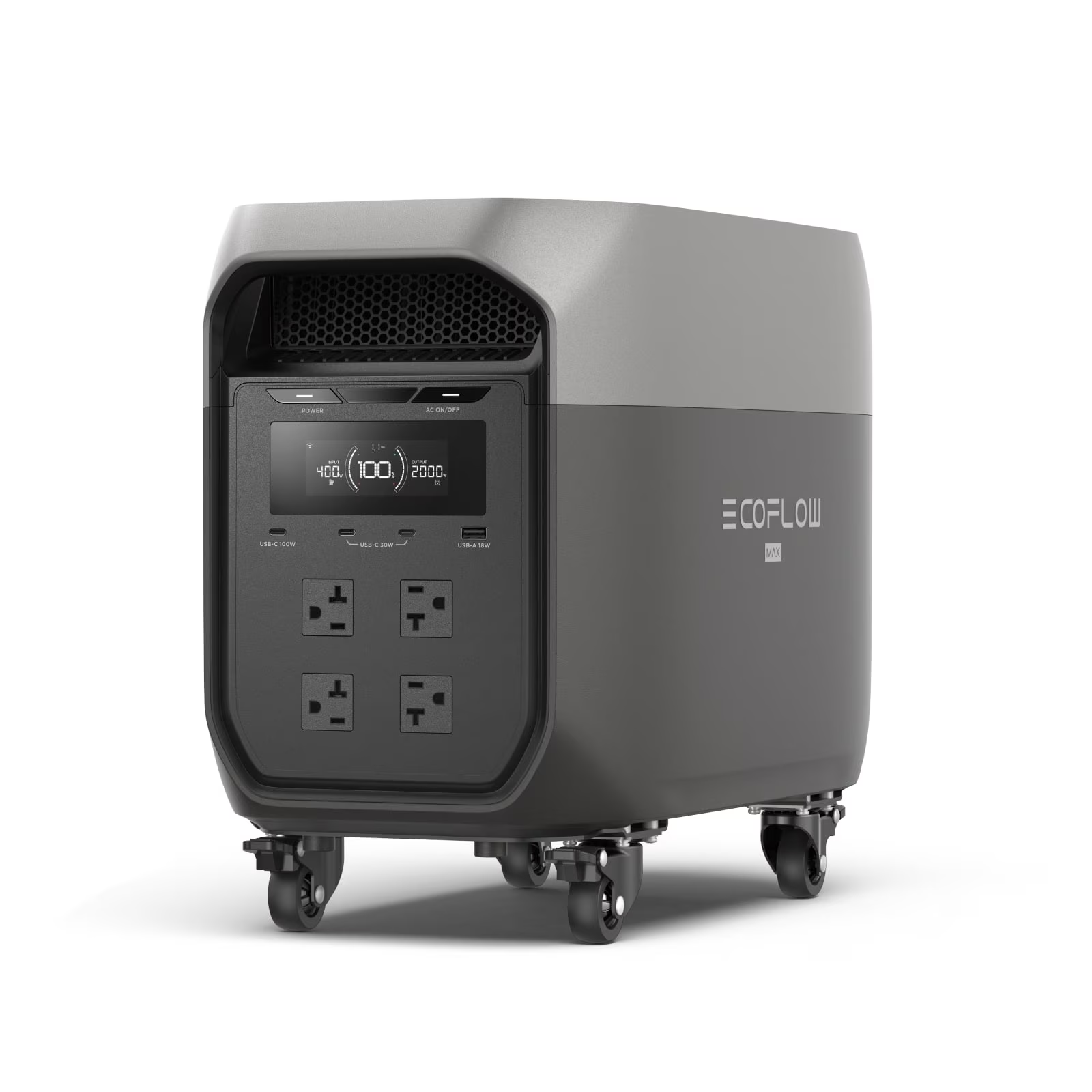
EcoFlow (Manufacturer product image)
The charge rate starts at the full 1,800W and tapers gently as the battery approaches 90%, then drops more sharply in the final 10% for cell balancing.
Efficiency Impact
At 79% efficiency, you get approximately 1,618Wh of usable energy from a full 2,048Wh charge.
The Anker SOLIX C2000 Gen 2 at 89% efficiency delivers 1,823Wh usable — 205Wh more per cycle from the same battery size.
Over 200 cycles, that's 41kWh of additional energy from the Anker versus the EcoFlow, despite identical battery capacities.
Quiet Operation Under Load
The Delta 3 Max is remarkably quiet for its inverter size.
Under 1,000W load, the cooling fan is barely perceptible.
Under 2,000W load, it's audible but not disruptive — quieter than most competitors at this wattage.
For bedroom backup, RV use, or overnight quiet operation, the noise profile is genuinely better than alternatives.
Competitive Analysis
vs. Anker SOLIX C2000 Gen 2 ($799)
Anker wins on solar (800W vs 500W), efficiency (89% vs 79%), outlet count (5+30A vs 4), and slightly lower price.
Delta 3 Max wins on AC charging speed (68 min vs 88 min) and quiet operation.
For most buyers, the Anker is the better all-rounder.
Choose the EcoFlow only if AC charge speed specifically matters more than everything else.
vs. Bluetti Elite 200 V2 ($1,099)
Bluetti wins on efficiency (94% vs 79%) and solar input (1,000W vs 500W).
EcoFlow wins on price ($759 vs $1,099) and AC charging speed.
The Bluetti is a better long-term investment for daily users; the EcoFlow is the better budget option.
vs. EcoFlow Delta 2 Max (predecessor)
The predecessor accepted 1,000W solar versus this model's 500W — a significant downgrade.
The Delta 3 Max wins on charging speed and pricing, but existing Delta 2 Max owners with solar panels should think carefully before upgrading.
Who It's For
Ideal For:
✅ Urban and suburban home backup where grid power is primary and solar is not a factor
✅ Users who cycle through their power station daily and need fast recharges
✅ EcoFlow ecosystem owners adding a mid-range capacity unit
✅ RV users who can plug in at campgrounds and need fast AC top-ups between sites
Consider Alternatives If:
❌ Solar charging is your primary or secondary input — 500W is inadequate
❌ Efficiency matters for long-term economics — 79% is below class average
❌ You want expandable capacity — the Delta 3 Max is fixed at 2,048Wh
Final Verdict
The EcoFlow Delta 3 Max earns its place for AC-primary users who want fast recharging at a competitive price.
The 68-minute charge time is legitimately the fastest in class.
The quiet operation is a genuine quality-of-life improvement.
The EcoFlow app ecosystem is the best in the business.
For buyers who check all three of those boxes, $759 is a strong price.
The solar limitation is a real disqualifier for off-grid setups.
Buy it knowing what you're getting: the fastest AC recharge in class, quiet operation, and EcoFlow's reliable ecosystem — but not a solar-capable or efficiency-optimized unit.
Frequently Asked Questions
Q: Why did EcoFlow cut solar input from 1,000W (Delta 2 Max) to 500W?
A: EcoFlow hasn't officially explained the design choice.
The likely reason is cost optimization — reducing the MPPT controller specs lowers manufacturing cost.
For a unit positioned as primarily AC-charged with solar supplementation, this trade-off makes financial sense for EcoFlow even if it frustrates buyers who valued the solar capability.
Q: Can I add a second solar panel to get more than 500W input?
A: No — the Delta 3 Max has a single solar input port rated at 500W maximum.
Connecting a panel that exceeds this rating won't damage the unit (it throttles input), but you cannot exceed 500W total solar input.
Q: How does the 68-minute charge affect battery longevity?
A: Fast AC charging uses higher charge rates that can marginally stress LiFePO4 cells over thousands of cycles.
EcoFlow rates the battery for 3,000+ cycles to 80% capacity.
In practice, the fast charge rate has minimal impact on longevity — daily fast charging for 8 years is still within the cycle rating.
Q: Is the Delta 3 Max expandable like other Delta 3 units?
A: No — unlike the Delta 3 Ultra Plus (expandable to 11kWh), the Delta 3 Max has a fixed 2,048Wh capacity with no expansion option.
If future capacity growth is important, this is a meaningful limitation.
Q: How does the 27W idle draw affect operating cost?
A: At average US electricity rates ($0.15/kWh), 27W continuous idle costs approximately $35/year if left on continuously.
The Anker C2000 Gen 2 at 18W idle costs about $24/year.
The Bluetti Elite 200 V2 at 9.5W costs about $12/year.
For frequently-used backup power kept on standby, these differences accumulate.