Introduction
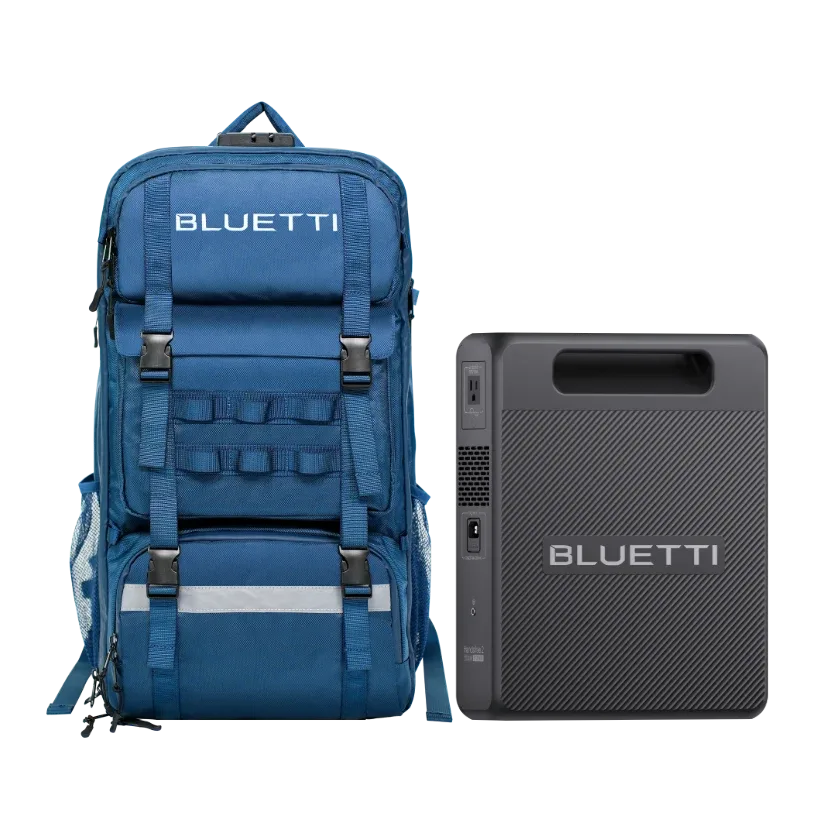
The BLUETTI Handsfree 2 is a very specific kind of portable power station: it is designed to be worn like a backpack, with a 60L storage compartment and a 512Wh battery in the same package. BLUETTI published the product on its official storefront on March 5, 2025, which is the product's manufacturer-listed launch date and the date we use here. That matters because the Handsfree 2 is not trying to be a universal power station in the same way a larger AC unit is. It is built around mobility, carrying convenience, and a form factor that tries to merge gear storage with energy delivery.
That makes the right question less about “How much battery capacity does it have?” and more about “Who benefits from carrying the battery instead of setting it down?” For creators, field workers, and anyone who moves around while needing power, this pitch is easy to understand. For people who want a single, quiet, stationary backup unit for home use, the Handsfree 2 is a narrower and less obvious fit.
Design and Carrying Experience
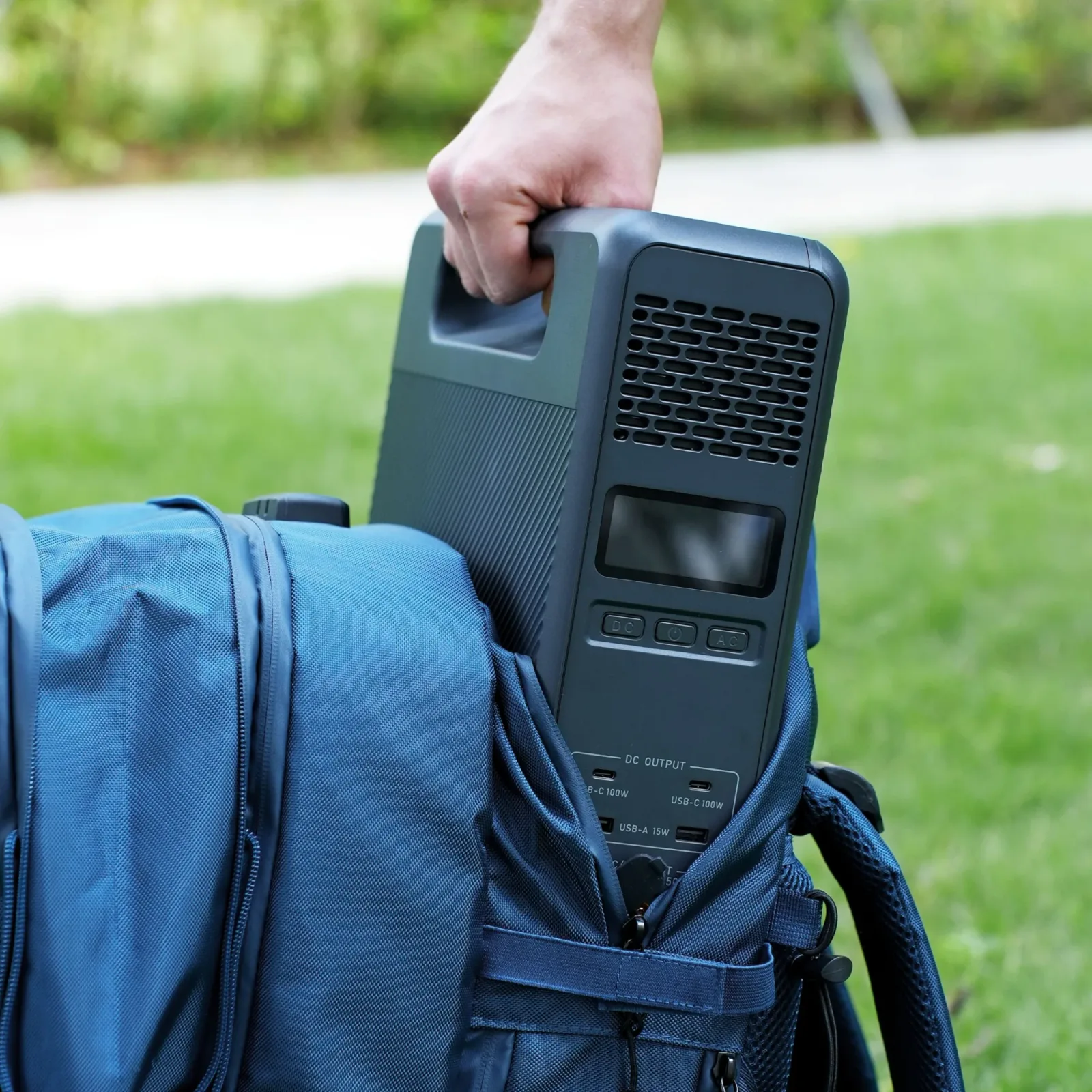
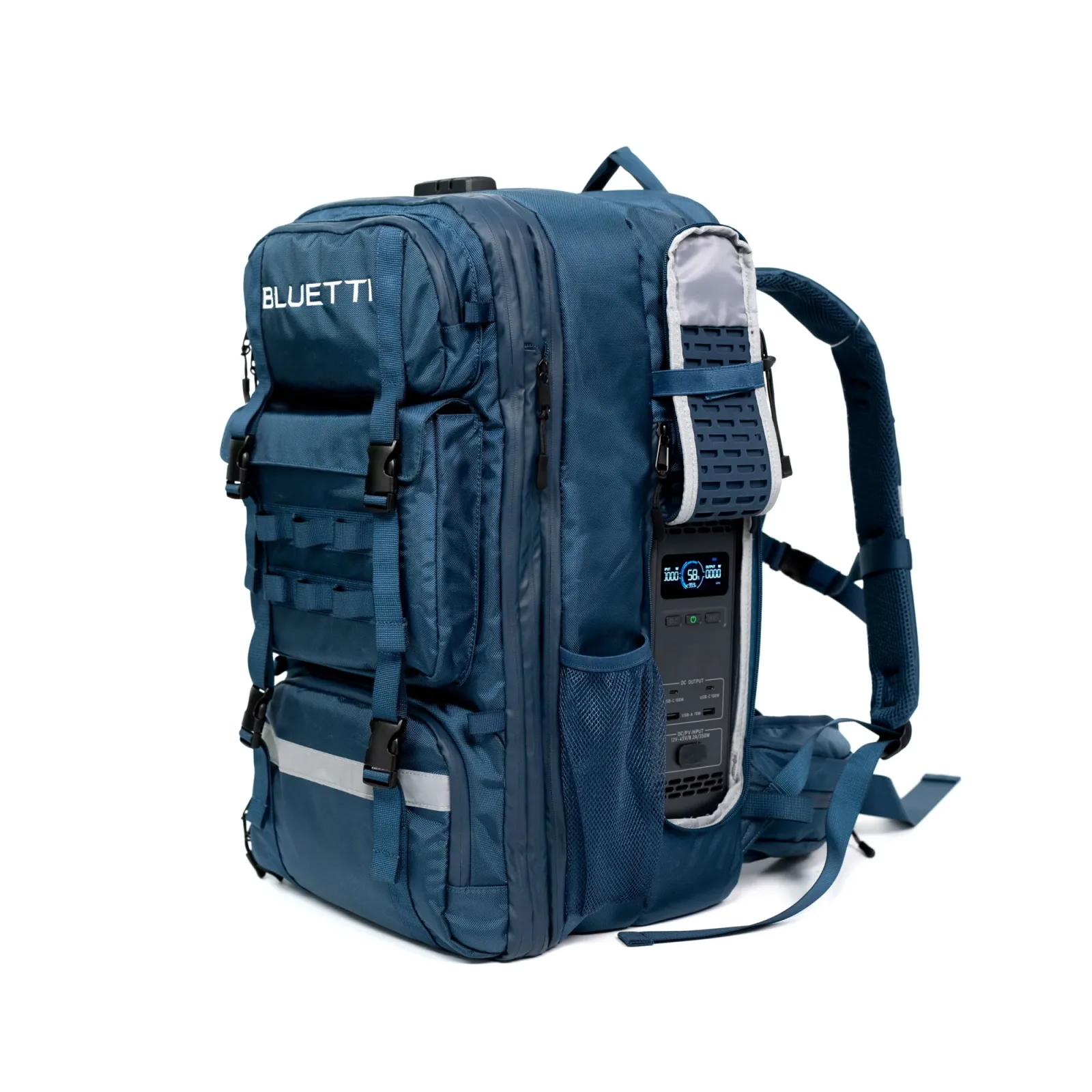
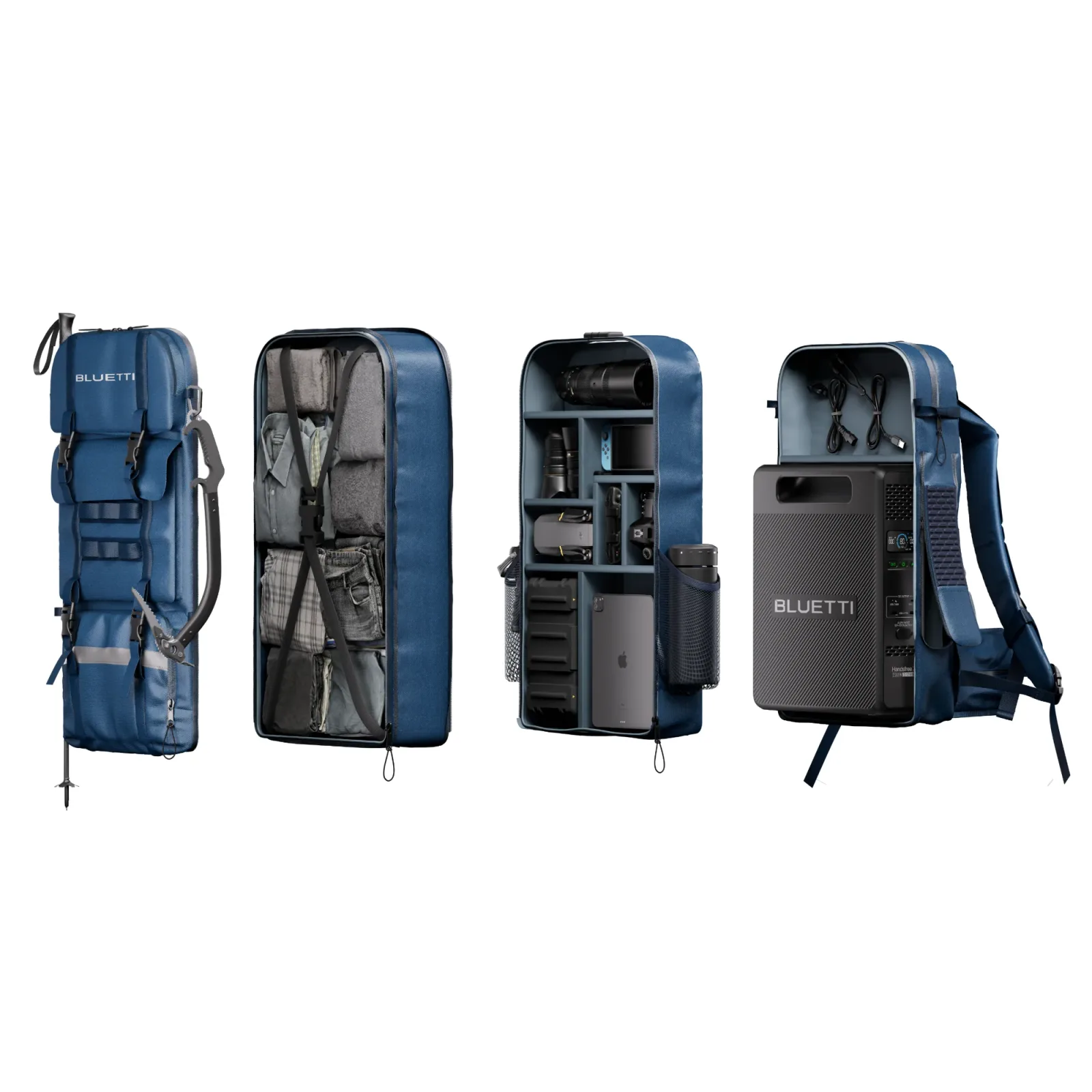
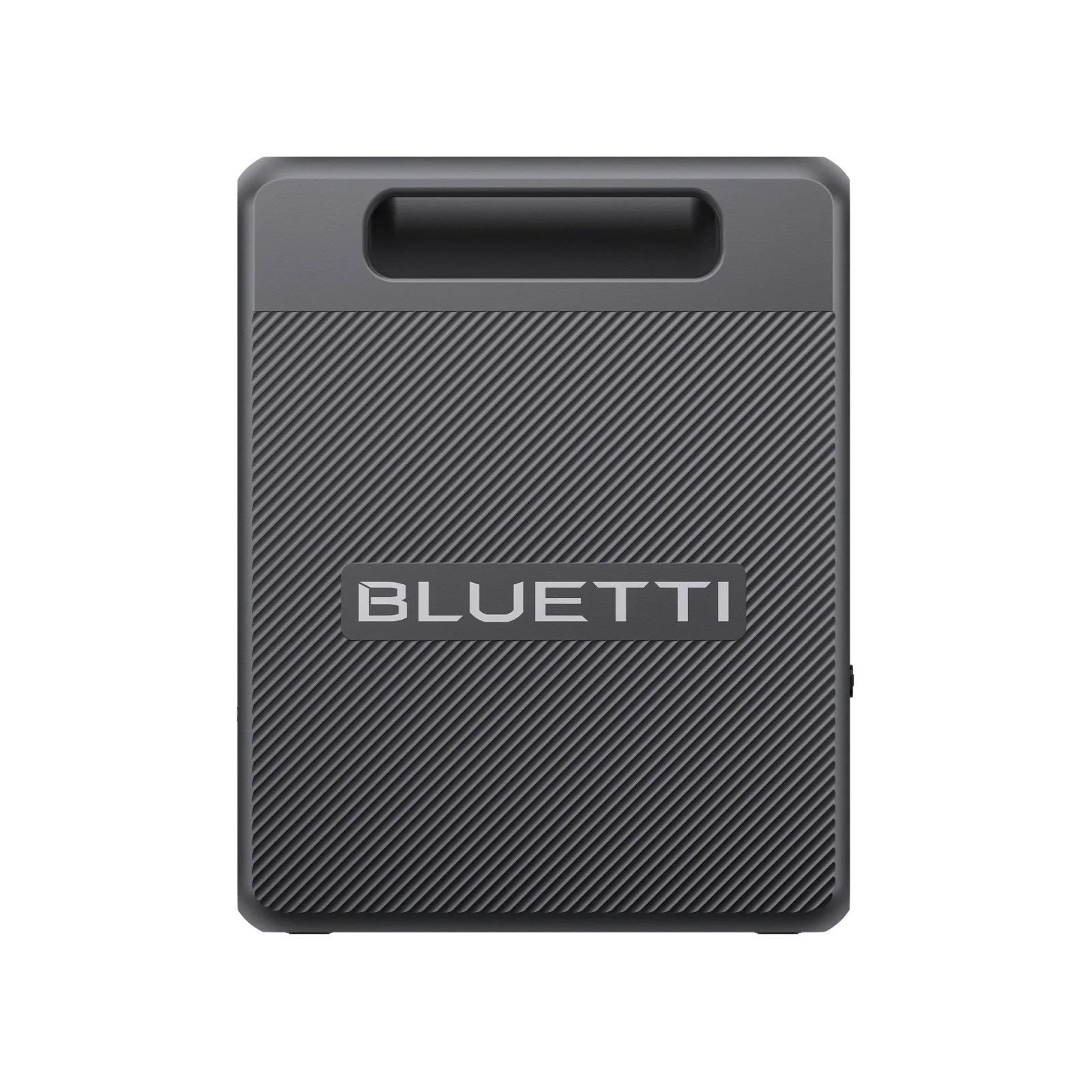
The most obvious idea behind the Handsfree 2 is that it should feel less like a portable battery and more like a work pack you can live with all day. The product page frames it as a backpack power station with 60L storage, which makes the storage function part of the value proposition rather than a side benefit. In other words, you are not just carrying a battery; you are carrying a bag for tools, chargers, layers, or personal gear, with power available as part of the system.
BLUETTI product page (Manufacturer product image)
BLUETTI product page (Manufacturer product image)
That design choice gives the unit a clear identity. It suits people who already move around with gear and want one bag to do two jobs. It is less compelling for anyone shopping for a conventional power station that sits in a garage, cabin, or home office and stays put. For a backpack-first product, the benefit is obvious: less separate hardware, less fumbling around for power, and a tidier way to carry both energy and essentials at once.
The tradeoff is that this is a specialized item, not a universal one. The unit's format makes it easier to travel with a load of gear, but it also means the battery is constrained by the same practicality rules as a backpack. The design makes sense when mobility matters more than maximum battery density or a large number of expansion options.
Performance and Real-World Use
The Handsfree 2's headline numbers are simple and important: 512Wh battery capacity, 700W output, and a backpack form factor. That combination makes it far more useful for mobile work than a tiny power bank, but still far less capable than a larger, stationary power station for long outages or higher-draw appliances. This is a practical middle ground rather than a pure performance monster.
BLUETTI product page (Manufacturer product image)
For a day on the move, the power station can plausibly cover phones, laptop charging, lights, camera gear, and small accessories. It is also a useful fit for people who need to carry power alongside tools or devices while moving between locations. That makes sense for on-site work, field operations, camping trips, outdoor content creation, and other situations where a conventional power station would be awkward to move.
The company describes the unit as having 5 output ports, which is a reasonable feature count for a power station of this size. It is enough to run a few devices at once without turning the whole setup into an extension-cord puzzle. But the numbers also set guardrails: 512Wh is not large enough to support multi-day off-grid living or heavy, continuous use from demanding appliances. It is best thought of as a portable energy layer for a day or weekend out, not a full-room backup solution.
The appeal of the product is in context, not brute force. If you are carrying your gear and need to power it while moving, the Handsfree 2 is easy to understand. If you need a battery that simply sits in one place and runs a lot of power-hungry loads for a long time, the backpack format becomes a liability rather than an advantage.
Where the Handsfree 2 Makes Sense
The strongest case for the BLUETTI Handsfree 2 is a user who already has a mobile workflow. That includes field technicians, event crews, mobile creators, and outdoor workers who need power in transit without dragging a bulky box. It also suits travelers who want one pack to carry personal gear and battery power rather than manage a separate battery tote.
BLUETTI product page (Manufacturer product image)
This type of user is not buying the Handsfree 2 for maximum runtime. They are buying it for convenience, portability, and the ability to power their essentials while staying mobile. In that role, the backpack form factor is not a gimmick; it is the point. It gives the product a real use case that a conventional portable battery does not.
The weaker case is for households, RV owners, or people who want a single backup unit that can run a wider set of appliances for longer periods. Those buyers will usually want more capacity, more output, and a more traditional footprint. The Handsfree 2 is not trying to cover that lane. It is trying to cover the “carry it with me” lane, and it does that better than a standard boxy power station does.
Competitive Positioning
The Handsfree 2 sits in a niche that is still fairly crowded but not as mainstream as the traditional portable power station category. Compared with more conventional offerings such as the Jackery Explorer 1000, EcoFlow DELTA 2, and Anker Solix C1000, the BLUETTI design stands out because it is built around a backpack form factor instead of a compact case or rolling handle.
That difference matters. A Jackery Explorer 1000 or a DELTA 2 may deliver a larger battery or more flexible output expansion, but they are not designed to be worn or carried as personal gear. The Handsfree 2 is not trying to win on raw capacity; it is trying to win on convenience and mobility. That is a different buying argument.
Where the BLUETTI wins is in the marriage of storage and power. That is a legitimate selling point for anyone who already carries a case, bag, or work kit. Where the conventional models win is in sheer flexibility and capacity planning. They are easier to live with as a single, static home backup or outdoor base station. This means the Handsfree 2 is not the better product in a vacuum; it is better for a narrower, more active use case.
Value, Tradeoffs, and the Bottom Line
The base configuration at roughly $199 puts the Handsfree 2 in a very different value discussion than a full-size power station. That price is not obviously unreasonable when the product is viewed as a wearable tool and a storage platform rather than a pure battery. It becomes less compelling if you are simply comparing it to larger portable stations that offer more capacity for the money.
The right way to evaluate the Handsfree 2 is to ask whether the backpack format is worth the tradeoff. If the answer is yes, then the product is clearly attractive. If the answer is no, it starts to look like a clever concept with a smaller payoff than a standard portable battery.
That is why the verdict is narrower than “good for everyone.” The Handsfree 2 is best at fitting into an active workflow rather than replacing an all-purpose backup hub. It is an excellent fit for mobile work and outdoor carry, and a weaker fit for static backup and maximum capacity.
Verdict
The BLUETTI Handsfree 2 is a strong example of a product that knows exactly what it is. It is not trying to be the biggest or most flexible power station on the market. It is trying to make portable power more wearable, less awkward, and more useful for people who are already moving around with gear. On that goal, it makes sense.
The 512Wh battery and 700W output are practical numbers for a day of mobile work, and the 60L backpack form factor gives the product a real identity that many bulkier units lack. The tradeoff is that the design narrows the use case substantially. If you want a true all-purpose power station for outages, more demanding loads, or long off-grid stays, this is not the model to reach for.
If you need a power source that can travel with you and live inside a work pack, the Handsfree 2 has a clear argument. If you want maximum capacity and a conventional stationary setup, look elsewhere.
FAQ
Is the BLUETTI Handsfree 2 a good choice for home backup?
No, not in the same way a larger portable power station is. It is a mobile, wearable design aimed at carrying gear and power together, not a long-duration home backup option.
How much battery capacity does it offer?
The official product listing positions the Handsfree 2 at 512Wh. That is enough for phones, laptop charging, lights, and other moderate loads, but not a full day of heavy appliance use.
What kind of output does it provide?
The product page lists the unit as a 700W power station with 5 output ports. That makes it a plausible fit for mobile tasks and everyday electronics, though not for larger, longer-running loads.
Is the backpack design a real advantage?
Yes, for the right buyer. If you already carry work gear or outdoor equipment and need to power it while on the move, the combined pack-and-battery design is genuinely practical.
Is this better than a regular power station?
It depends on your use case. A traditional power station is usually better for fixed backup use and larger battery systems. The Handsfree 2 is better when mobility and carry convenience are the main priorities.
Can it handle solar charging?
BLUETTI sells the Handsfree 2 in configurations that include solar capacity options, but the value proposition is still rooted in the backpack design rather than maximum off-grid duration. It is best thought of as a mobile carrying solution with power added.
Who should buy it?
Field workers, mobile creators, and people who move around with gear and expect to power it while on the go will find the most value here.
Who should skip it?
Anyone shopping for a large-capacity, stationary backup unit or for extended high-draw power use should look elsewhere. The product is specialized and does not try to be all things to all buyers.
Is it a good value?
It is a reasonable value if you want the backpack format and the convenience it provides. It is less compelling if you are simply shopping for raw battery capacity per dollar.
What is the biggest caveat?
The biggest caveat is that the product's main strength is also its limiting factor: it is built around carrying and portability, not around maximum output and maximum runtime.
The BLUETTI Handsfree 2 is a careful product for a carefully defined user. It does not try to dominate the portable power market by sheer size or capacity. It tries to solve a more practical problem: how do you carry energy without carrying a separate clumsy battery case? On that question, it has a clear and useful answer.