Introduction: redemption is possible, but not automatic
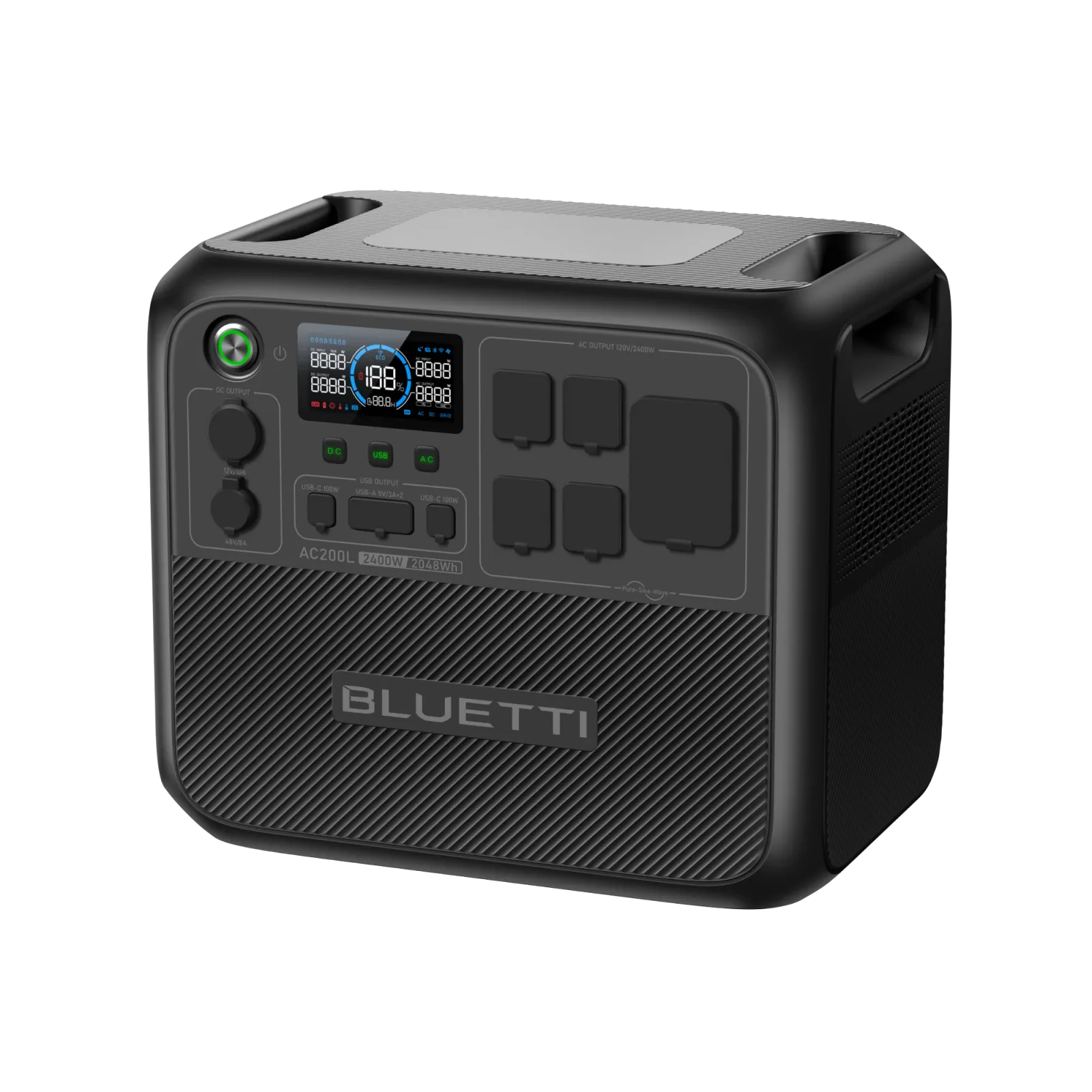
“Bluetti Power Station Redemption” sounds like a brand story, not a product review, and that is exactly the point. The useful question is not whether Bluetti once made good specifications. It did. The useful question is whether a buyer can trust a current Bluetti station when the lights go out, after an older AC200L reportedly went from normal operation to a collection of fatal error codes.
BLUETTI product page (Manufacturer product image)
The answer is a qualified yes. Bluetti has a more coherent modern lineup, fewer obviously proprietary cabling traps, and a support process capable of replacing the failed unit described by The Solar Lab. Those are meaningful improvements. They are not proof that every older station is suddenly safe, and they do not turn a two-year-old AC200L into a new-generation purchase.
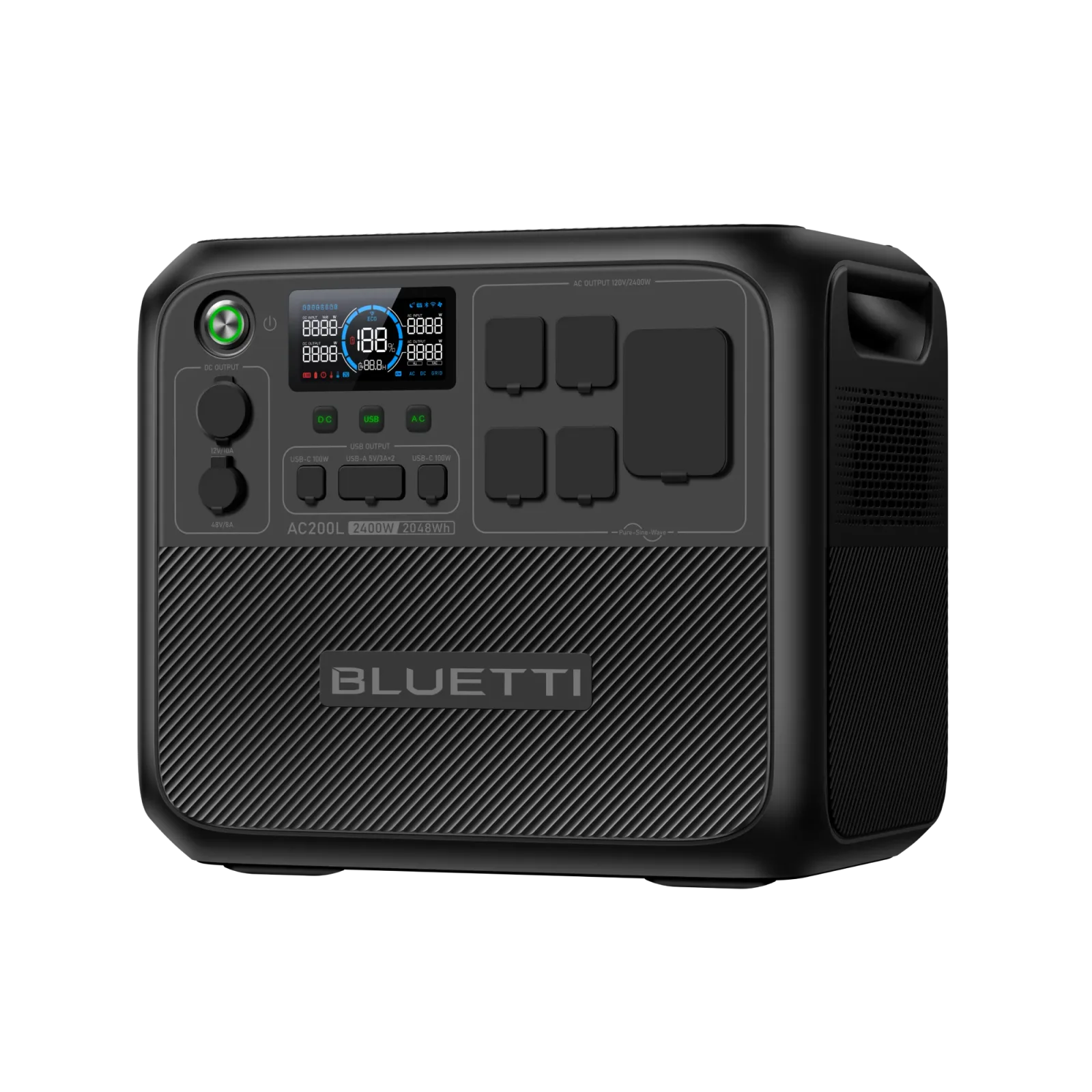
I am treating the discovery review as an independent long-term reliability report, not as a specification sheet. It describes standardized charge, discharge, surge, idle-consumption, and load tests on an AC200L that initially behaved normally before a BMS communication failure and system initialization failure appeared while the unit was charging. Bluetti's official product page confirms the hardware class—2,048Wh and 2,400W—but cannot prove reliability over time.
One date also needs careful handling. Bluetti's current product JSON gives the AC200L an earliest record date of October 31, 2023. That is the earliest primary-source date I could verify, not a dated launch announcement. The page currently shows a later publication timestamp, February 24, 2026, after years of product availability. I will not pretend that the storefront timestamp is an original launch event.
What the AC200L gets right on paper
The AC200L is still a serious mid-size power station. Its 2,048Wh LiFePO4 battery and 2,400W pure-sine inverter cover the normal outage brief: refrigerator, networking gear, lights, medical electronics, and a selection of kitchen loads. A 2,400W inverter is also enough headroom for motor startup that overwhelms smaller 1,000W-class stations, although surge behavior is load- and duration-dependent.

BLUETTI product page (Manufacturer product image)
Bluetti lists up to 1,200W of solar input and up to 2,400W of AC charging. Those are manufacturer maximums, not results I independently measured. They matter because the AC200L can be replenished quickly in a planned backup setup, but only if the input source, cable, temperature, and state of charge allow it. A solar array that looks large on paper is not a guarantee of 1,200W at the battery.
The battery can expand to 8,192Wh with two B210 batteries. That is a useful path for a home office or refrigeration backup, but it changes the product from a portable box into a small modular energy system. Expansion batteries cost money, add weight, and create another component whose connector, firmware, and warranty matter. Buy the expansion path because you need the runtime—not because the maximum number looks impressive.
The AC200L's LiFePO4 chemistry is a sensible choice for a device expected to sit charged between outages. It is generally associated with longer cycle life and better thermal stability than older lithium chemistries, but chemistry alone does not prevent a battery-management or control-board failure. The reported failure is a reminder that the electronics around the cells are just as important as the cells.
Design, setup, and the cost of ownership
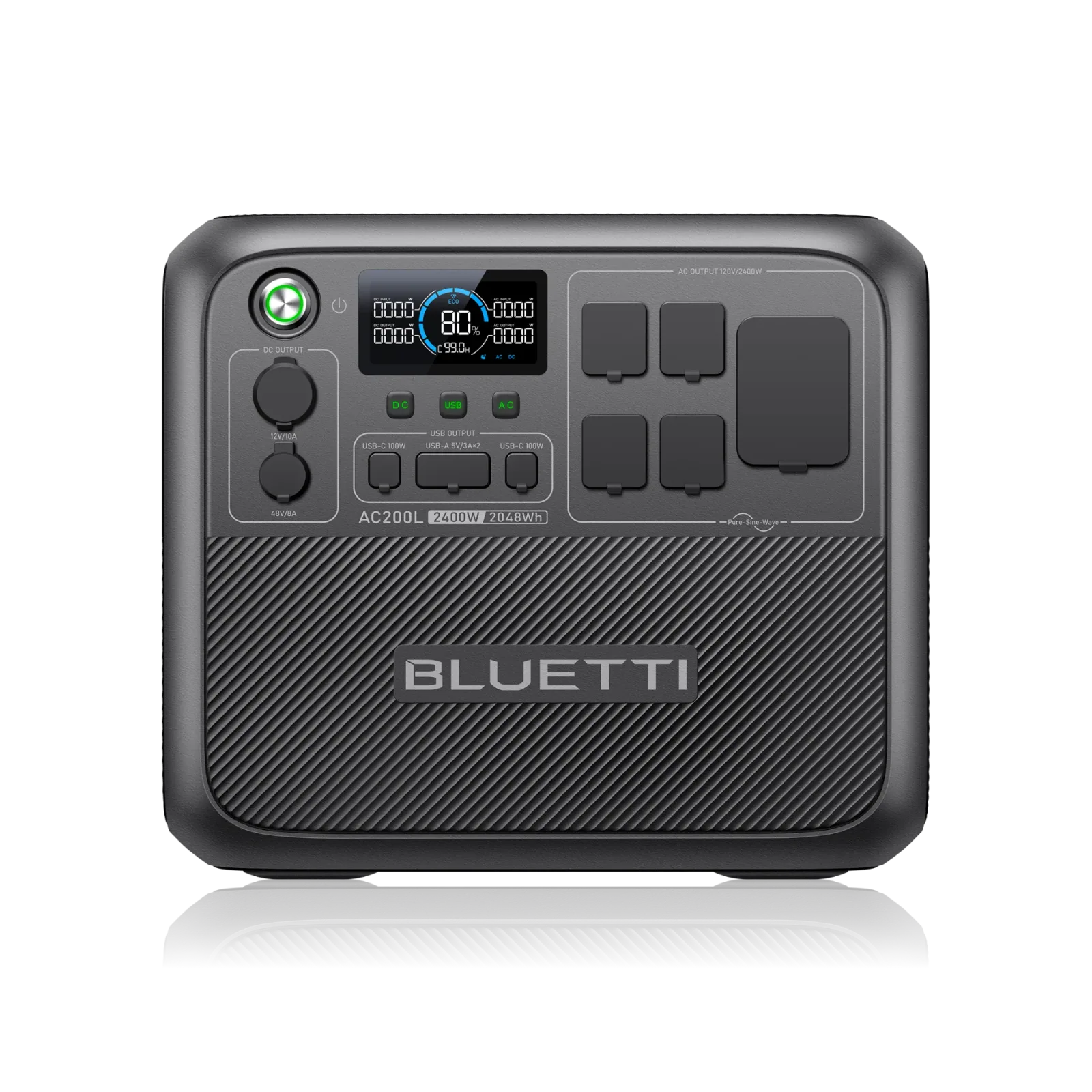
The AC200L's appeal is practical rather than elegant: substantial stored energy, a generous inverter, and a familiar front-panel layout. The tradeoff is mass. A station in the 2kWh class is portable in the sense that it can be moved, not in the sense that you will casually carry it from a car to a campsite every morning. Plan its parking location before you buy it.
BLUETTI product page (Manufacturer product image)
Older Bluetti ownership also had a cable problem. The Solar Lab's account describes a lineup that leaned heavily on proprietary connectors, while competing products more often used readily replaceable generic cables. Newer Bluetti models appear to be moving toward more standard input and output arrangements. That is the kind of boring change that helps after the warranty ends: a lost cable is annoying, not a reason to retire the entire station.
The app is useful for checking state of charge, changing settings, and reading fault information on supported units. It is not a substitute for the display or a reason to install the station where Wi-Fi is unavailable. For emergency use, configure the app while the unit is healthy, keep the relevant cables with the station, and test the system under a modest load before storing it.
The hidden bill is larger than the AC200L listing. Expansion batteries, solar panels, a transfer switch or inlet box, replacement cables, and a cart can turn an $899 station into a four-figure backup system. If your goal is only to charge phones and a router, this is too much hardware. If your goal is several hours of refrigeration and a freezer during an outage, the capacity is easier to justify.
Performance and the reliability question
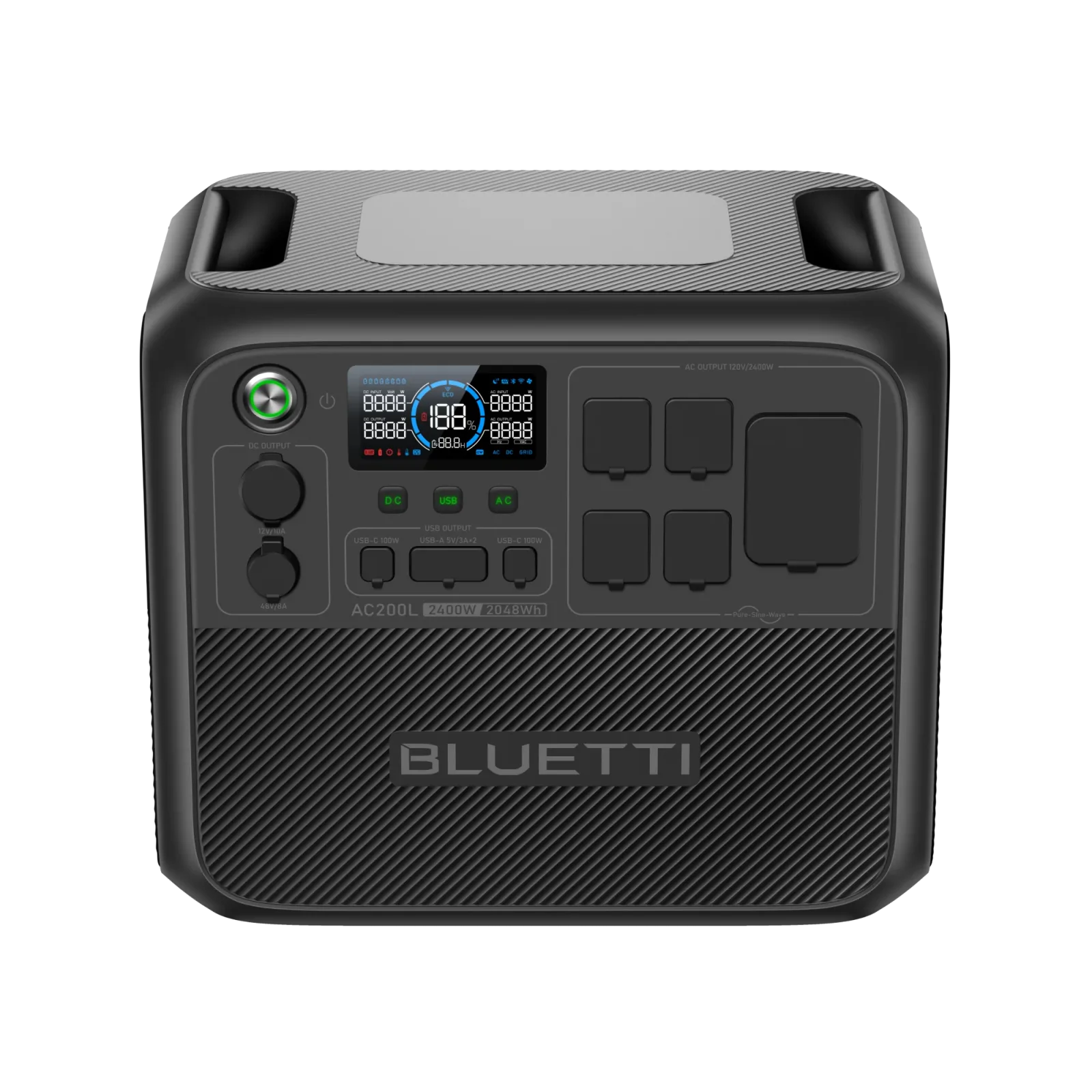
The most uncomfortable detail in this review is that the AC200L did not fail immediately. The Solar Lab says it passed most of its standardized tests before errors appeared during later filming while plugged into the wall. The screen flashed errors, the LED behavior became erratic, and the app pointed to BMS communication and system initialization failures. Bluetti reportedly said the internal failure required a full replacement.
BLUETTI product page (Manufacturer product image)
That account does not establish a fleet-wide defect rate. One failed sample cannot tell us how many AC200L units fail, when they fail, or whether storage conditions contributed. It does establish a credible buyer risk: a station may look healthy during a short checkout and still fail later. That is why I would not choose old, deeply discounted inventory as the only emergency power source for a refrigerator, CPAP, or sump pump.
The redemption case comes from the same source. The Solar Lab reports that newer Bluetti products, including the Elite 400, performed properly through harsh testing and regular use, and that Bluetti offered a replacement for the failed AC200L. The support response is not the same as a flawless ownership experience—the buyer still loses time and trust—but replacement is materially better than being told that a $1,000-class device is simply your problem.
The current product strategy is also more legible. The Apex 300 is positioned around high output and 120V/240V capability; the Elite 400 emphasizes stored energy and built-in mobility; the AC200L occupies the familiar 2kWh/2.4kW middle ground. Specialization makes comparison easier than a catalog in which every model claims to be the best power station.
Bluetti versus EcoFlow, Anker SOLIX, and Pecron
EcoFlow is the safer recommendation for buyers who value polished software, fast charging, and a mature accessory ecosystem. EcoFlow's interface and product segmentation are usually easier for a first-time owner to understand. Bluetti counters with a more conservative, battery-forward feel and useful expansion options. If you need a station that multiple family members can operate without explanation, EcoFlow has the edge; if you care more about capacity and port flexibility, Bluetti remains competitive.
Anker SOLIX is the stronger alternative when support confidence is the deciding factor. The discovery source specifically says Bluetti's current support still trails Anker's, even while acknowledging improvement. Anker's lineup can be more expensive and its accessories are not interchangeable with Bluetti's, so compare the complete system price rather than the base unit. Choose Anker when a dependable support relationship is worth paying for.
Pecron deserves attention from budget-focused buyers willing to accept a less polished ecosystem. It can undercut mainstream brands on capacity, but availability, app experience, and accessory support vary by model. Bluetti is the more established choice for a buyer who wants a broad catalog and documented expansion path. Pecron is the value gamble; an old Bluetti is a reliability gamble. Neither should be treated as free insurance.
The comparison that matters most is not brand versus brand. It is mission versus mission. A small EcoFlow or Anker may be the better camping companion. A modular Bluetti may be the better outage battery. A permanently wired home-backup system may beat all three if you need automatic transfer and cannot tolerate manual setup.
Who should buy, and who should skip it
Buy a current Bluetti station if you want a substantial LiFePO4 battery, need more than a few USB ports, and are prepared to verify the exact model, accessory list, and warranty before paying. The AC200L makes sense for a home office, refrigerator rotation, workshop tools within its inverter limit, or a solar-charging setup where manual intervention is acceptable.
Skip it if you are buying an old AC200L solely because a liquidation listing looks cheap. Skip it if you need automatic whole-home backup, cannot lift or reposition a large station, or expect the app to replace an electrician-designed transfer system. Also skip it if your household will not perform a test charge and discharge every few months. A power station that remains boxed for years is not a tested emergency plan.
The best compromise is a current model from an authorized channel, with the serial number and warranty terms recorded, plus a second small power source for communications. That costs more than a single bargain unit, but it avoids making one battery-management board your only plan.
FAQ
Is “Bluetti Power Station Redemption” a specific model?
No. It is a review of Bluetti's trust recovery through the AC200L failure story and the newer lineup. The AC200L is the concrete reference platform because it has a published 2,048Wh/2,400W specification and the independent failure report.
When did the AC200L launch?
Bluetti's current primary product record shows October 31, 2023 as its creation date. That is the earliest official date I could verify. The storefront also contains a February 24, 2026 publication timestamp, but that is clearly a later catalog event, not proof of the original launch.
Should I buy a discounted AC200L?
Only if the seller is authorized, the warranty is explicit, and you can accept the risk of an older platform. A steep discount does not compensate for a station that fails during an outage. For critical backup, choose a current model and keep a second fallback.
Can the AC200L run a refrigerator?
Its 2,400W continuous inverter is ample for many household refrigerators, but startup surge varies by compressor. Test your specific refrigerator before relying on it, and remember that runtime depends on duty cycle, temperature, battery reserve, and conversion losses.
Can I expand the AC200L later?
Bluetti lists expansion to 8,192Wh using two B210 batteries. Confirm compatibility with the exact regional model and firmware before buying used expansion batteries. The additional batteries also make the system less portable.
Does Bluetti require a subscription?
The core station functions without a subscription. App features require a compatible phone connection and, for remote functions, network access. Do not make emergency operation dependent on cloud connectivity.
What accessories are easy to overlook?
Budget for the correct AC charging cable, solar cables, expansion batteries if needed, and transfer equipment for home circuits. A cart may also be sensible for a large station. Verify which accessories are included in the exact listing.
How often should I test a stored power station?
Use the manufacturer's storage guidance, but do not wait for an outage to discover a fault. Periodically inspect the battery, charge it as directed, and run a modest known load. Record the result so a gradual change is visible.
Is Bluetti more reliable now?
There is evidence of improvement, not a public failure-rate dataset. The independent source reports newer units working through demanding use and a replacement for the failed AC200L. That supports cautious confidence, not a blanket guarantee.
Is Bluetti better than EcoFlow or Anker SOLIX?
Not universally. EcoFlow is often easier to operate, Anker SOLIX has the stronger support reputation in the source comparison, and Bluetti is attractive when capacity and expansion matter. Match the brand to your backup mission and total system budget.
Verdict: redemption earned a cautious recommendation
Bluetti is no longer an automatic skip, but it is not entitled to automatic trust either. The AC200L failure described by The Solar Lab is too specific to dismiss, especially for a device marketed as backup power. At the same time, newer units, a clearer product strategy, more standard accessories, and a replacement response show a company addressing real ownership friction.
My recommendation is narrow: buy a current Bluetti model from an authorized seller when its capacity and expansion plan fit your use, but do not make an old discounted AC200L your only emergency battery. Bluetti has earned a second look, not a blank check.