Introduction
The BLUETTI Pioneer Na+ is the kind of portable power station that tries to solve a very specific problem: keeping power available when ordinary lithium batteries struggle in cold weather. BLUETTI positions it as a sodium-ion unit with a 900Wh capacity and a 1,500W output, which puts it squarely in the practical “camping, backup, and mobile off-grid” camp rather than the ultra-luxury home battery category. The product's central pitch is not raw capacity alone; it is chemistry, cold tolerance, and the promise that you can still generate useful power when the weather turns rough.
That makes the Pioneer Na+ interesting, but also a little more complicated than a simple spec-sheet comparison. The manufacturer-backed description says the battery can deliver power at temperatures down to -25°C and that charging is safe at -15°C, which is a meaningful difference in winter use. For anyone who has lived with a portable power station in a cold climate, that claim matters more than a generic power rating. The question is whether the tradeoff is worth it for everyday buyers, and whether the sodium-ion promise actually delivers helpful advantages without introducing new compromises.
Design and Build
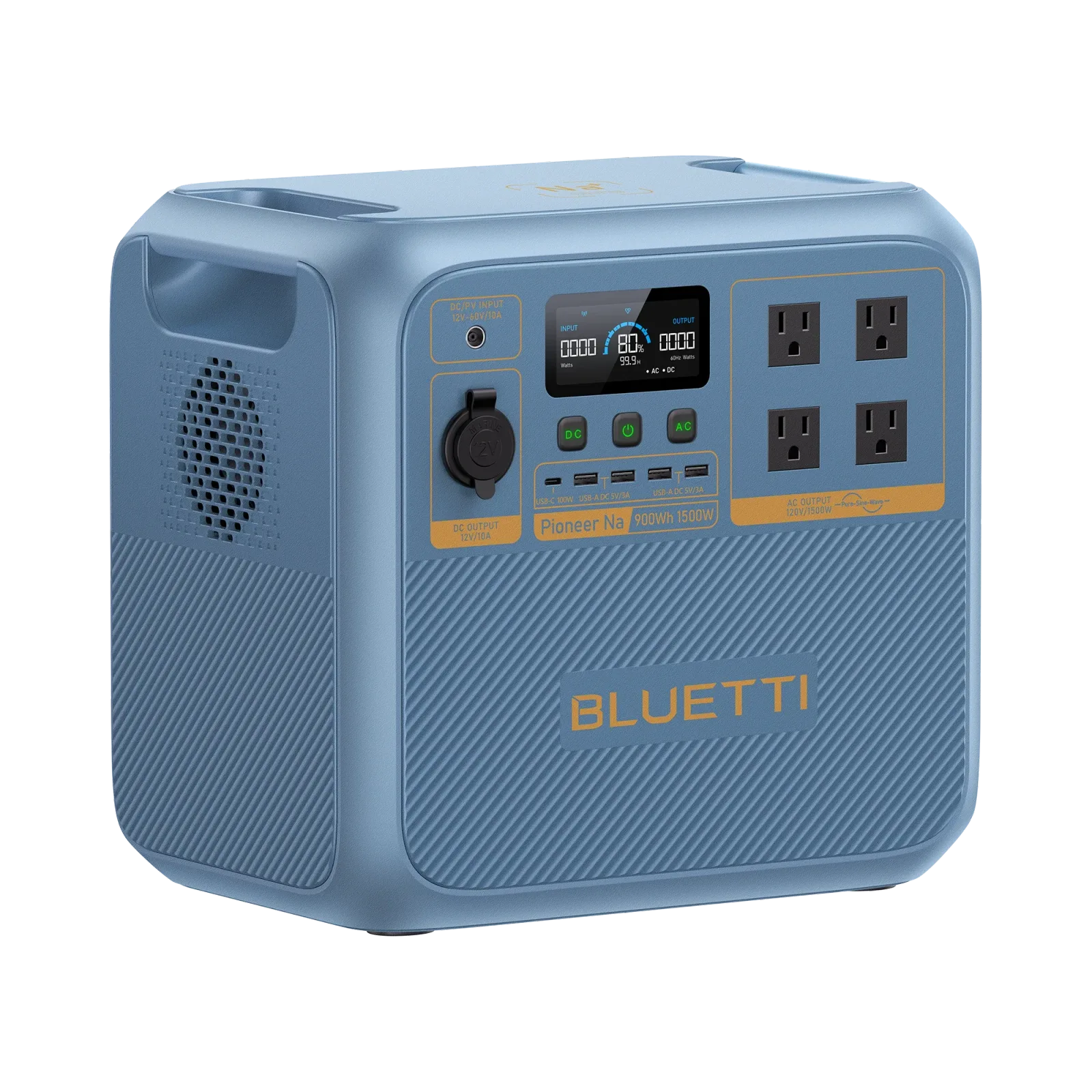
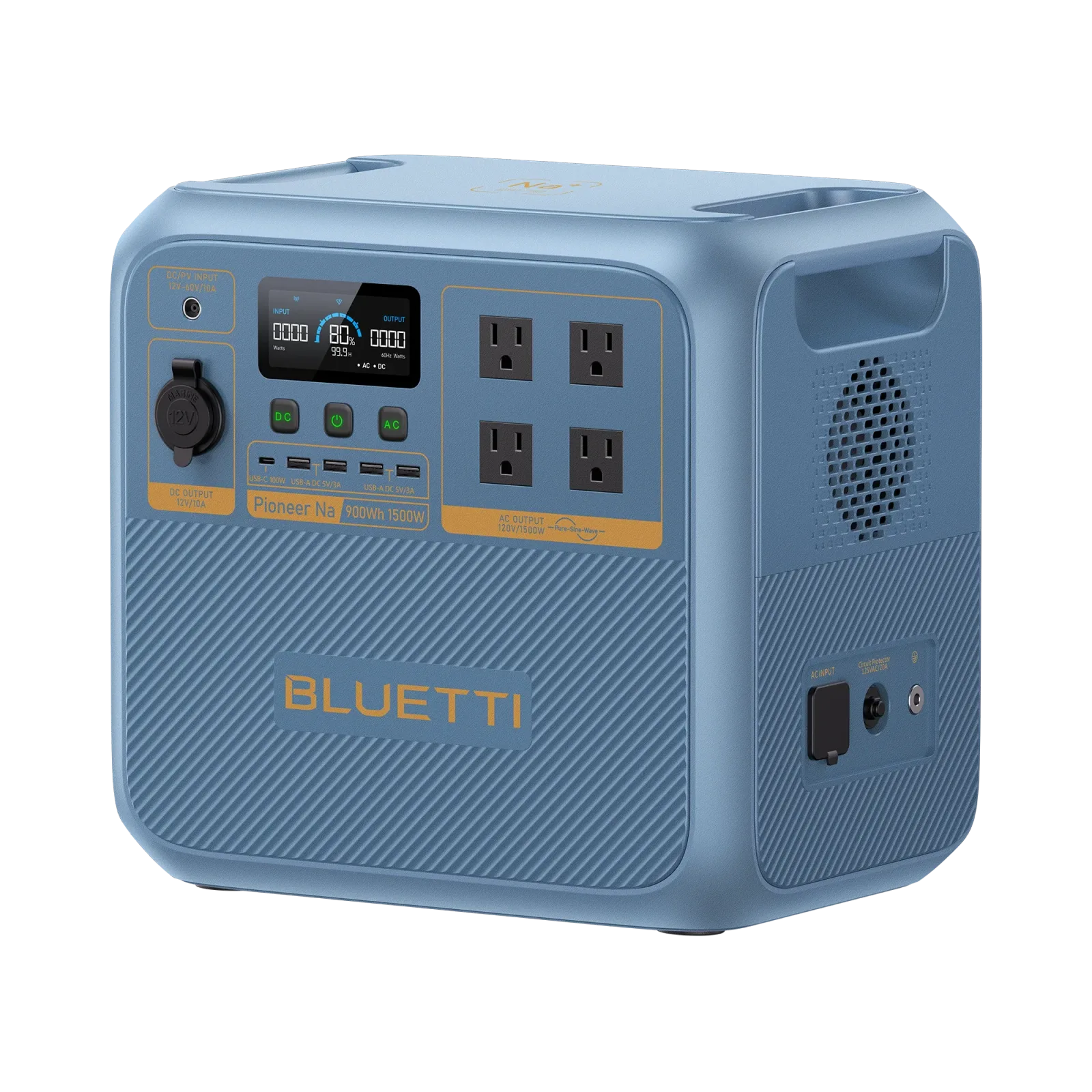
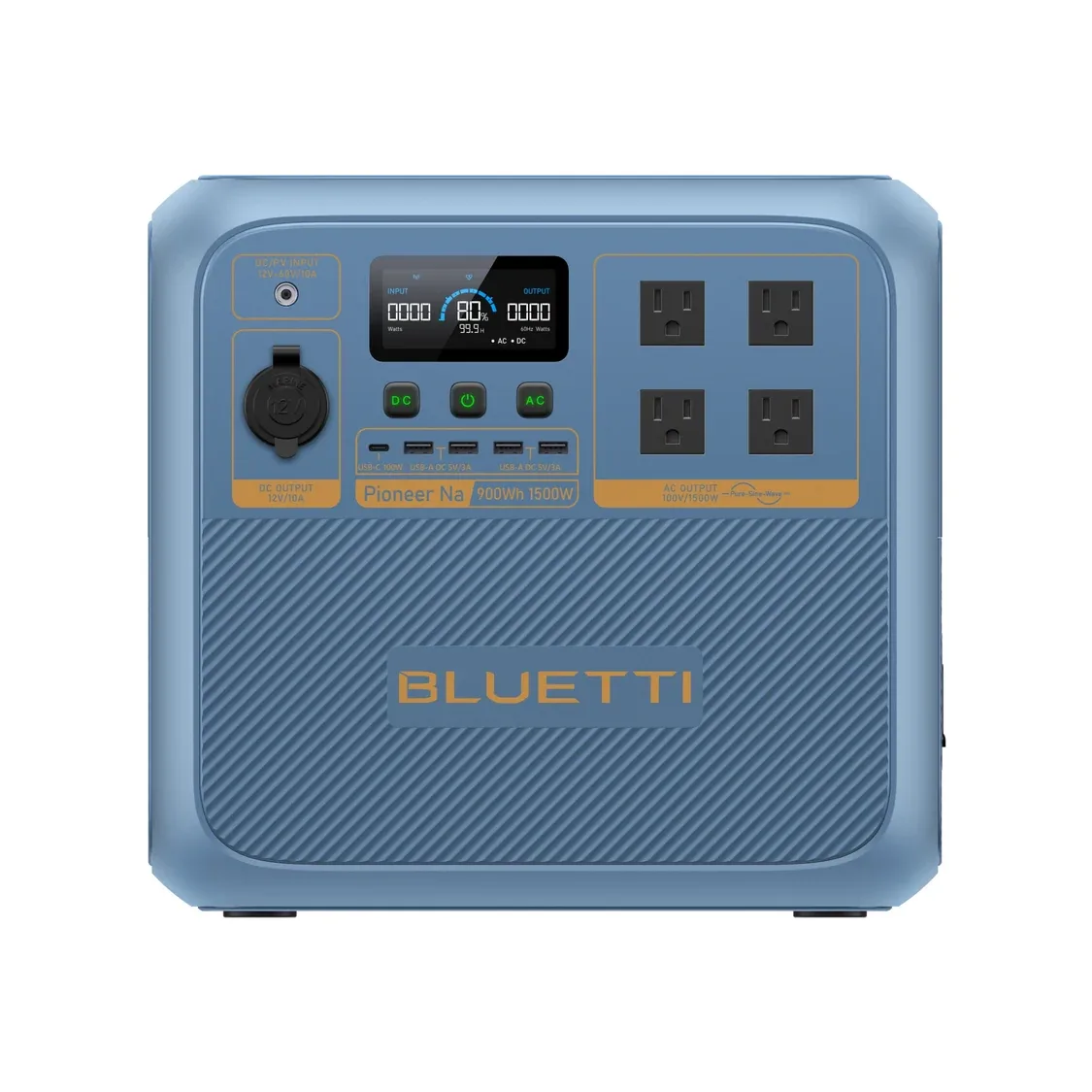
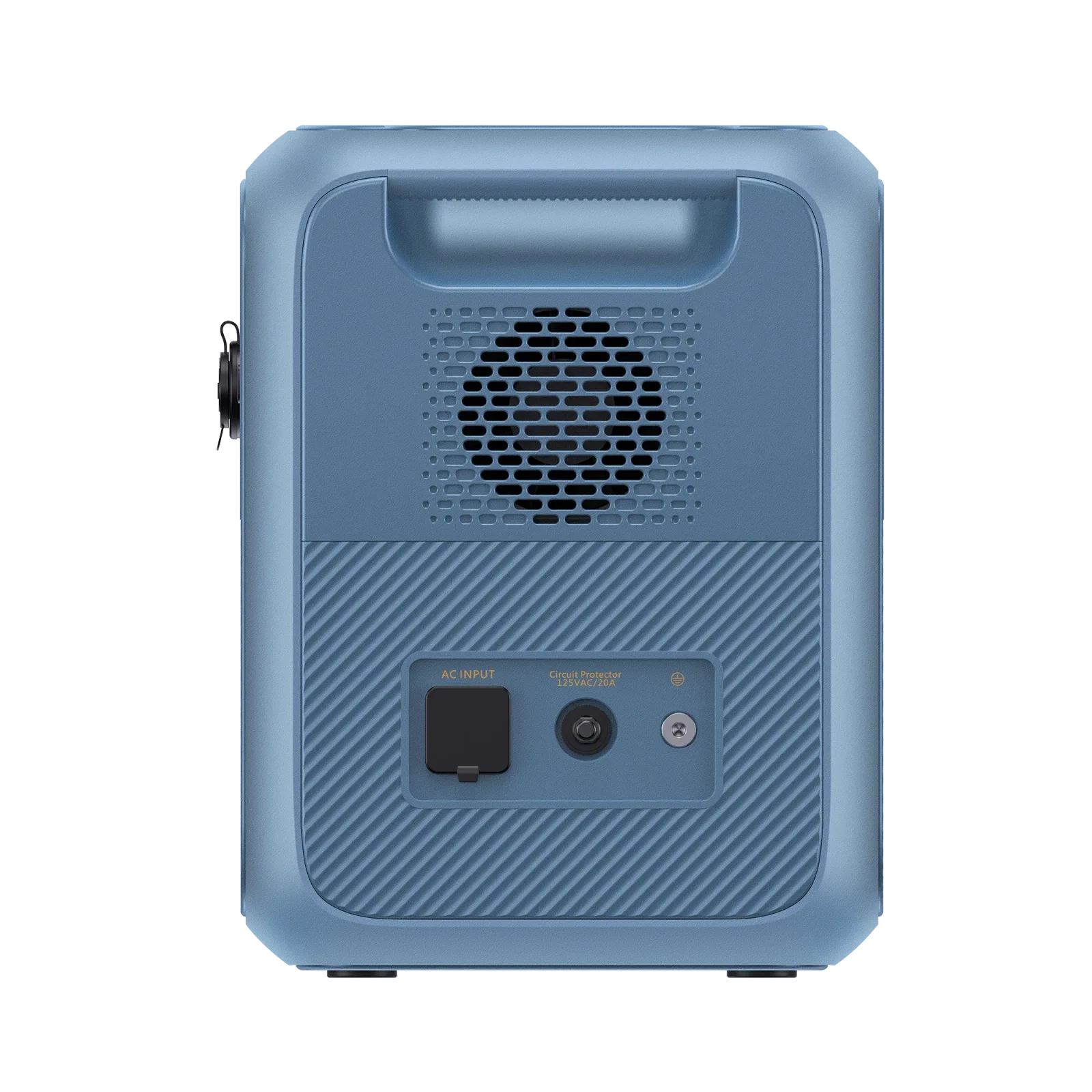
BLUETTI's product page presents the Pioneer Na+ as a conventional portable power-station form factor rather than a weirding-out industrial battery block. That is a strength. This category benefits from clear, familiar ergonomics: a durable shell, obvious ports, and an upright design meant to sit in a garage, RV, cabin, or camp setup without demanding a dedicated battery cabinet. The product is designed to be practical first and dramatic second.
BLUETTI product page (Manufacturer product image)
BLUETTI product page (Manufacturer product image)
The standout design decision is the sodium-ion battery chemistry rather than size or flashy features. In a category crowded with lithium-iron-phosphate (LiFePO4) devices, sodium-ion is the differentiator. BLUETTI is telling buyers that this is not just another 900Wh unit but a deliberately colder-weather-focused one. In practical terms, that matters most if you camp in winter, keep gear in an unheated shed, or need a power source that stays stable when the temperatures swing hard.
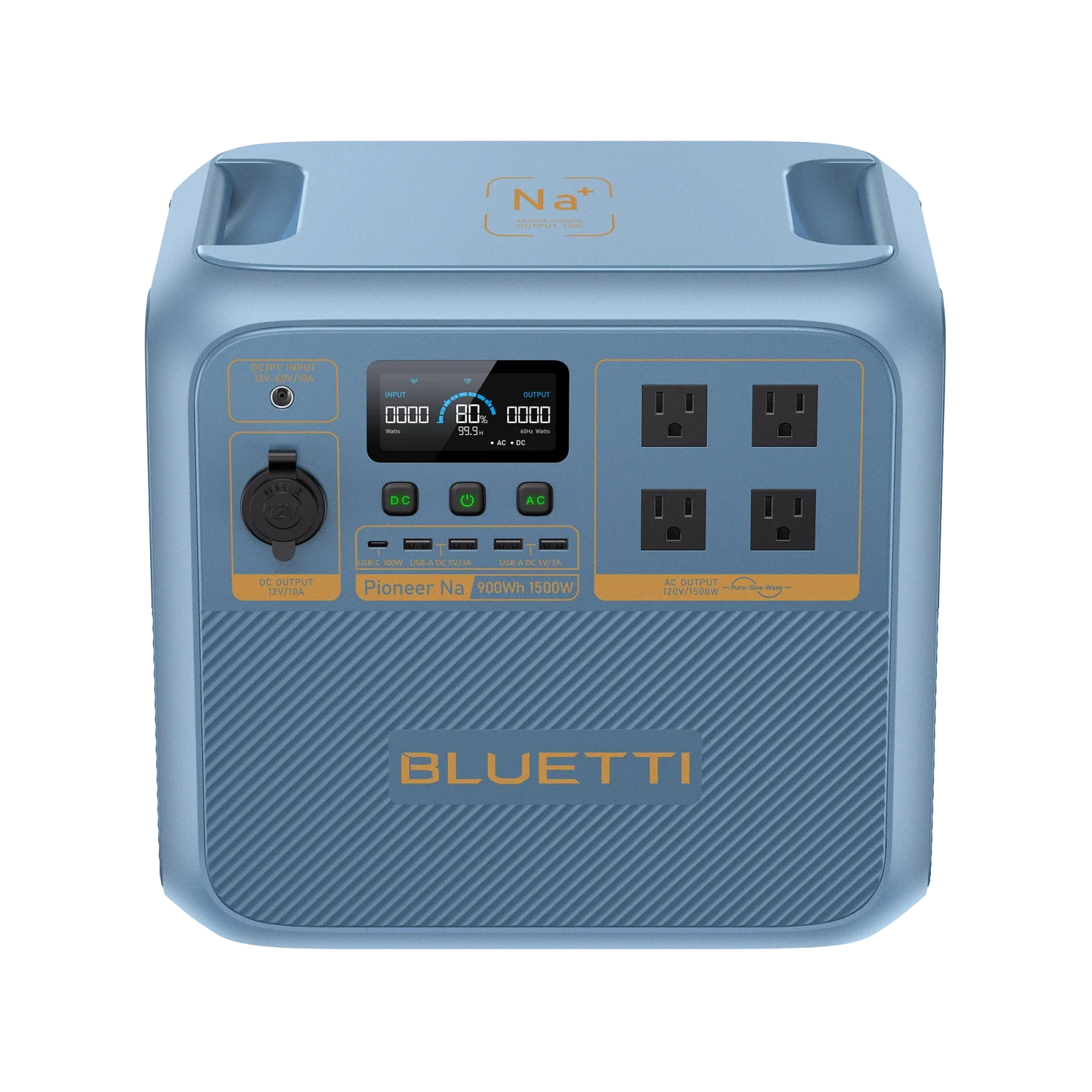
The tradeoff is that the official listing leaves some details more open than many buyers would like. The page gives the headline capacity and output numbers, but it does not fully enumerate every port arrangement or exact dimensions in the same way a more exhaustive product sheet would. That is not a deal-breaker, but it does subtly reduce confidence for buyers comparing the unit to more fully documented competitors.
Performance and Real-World Use
The Pioneer Na+ is positioned as a flexible, mid-range portable station rather than a super-capacity household battery. At 900Wh, it is not trying to run an entire household for days. It is trying to be dependable for the essentials: lights, communication gear, phones, laptops, routers, medical devices, and a few small appliances when needed. On paper, that is a sensible use case, and BLUETTI's marketing speaks directly to outdoor and emergency backup applications.
BLUETTI product page (Manufacturer product image)
The most important performance claim is cold-weather operation. BLUETTI says the unit can deliver power down to -25°C and that charging remains safe at -15°C. For most buyers, that is not just a niche feature. It is a genuine differentiator if you live in an area with winter camping, cold-weather RV travel, or seasonal cabin use. In the portable power world, cold tolerance is often one of the first real-world constraints people run into, and this product is clearly trying to address it head-on.
The output rating of 1,500W continuous power makes it a usable all-rounder for common devices. That includes many appliances that sit in the “useful but not heavy-duty” range: a television, laptop docks, routers, phone battery packs, a power tool or two, and small kitchen equipment. It is not a 3kW+ off-grid beast, and it is not positioned as one. The product reads most naturally as a practical solution for people who need flexibility without the bulk and cost of a large home backup system.
If BLUETTI's claims are accurate, the Pioneer Na+ fits a very specific buyer profile. It is ideal for users who spend time outdoors in cold conditions, value a battery that is less temperamental in winter, and want a portable unit that is not just a warm-weather convenience item. It is less compelling if your main need is maximum runtime for high-draw loads or if you are comparing it against large-capacity lithium units with long track records and more complete documentation.
Comparison to the Field
The Pioneer Na+ is best compared with mid-range portable power stations that stress portability and flexibility rather than maximum home-backup capacity. The direct nearest comparison is with established lithium-based units such as the Jackery Explorer 1000, the EcoFlow River 2 Pro, and the Anker Solix C1000. Those products are familiar, well-documented, and easy to compare side by side.
BLUETTI product page (Manufacturer product image)
The gap is not necessarily capacity. The Pioneer Na+ does not dominate the market on raw numbers; its 900Wh capacity is respectable but not class-leading. The advantage is chemistry and cold-weather capability. In a category where many units become less reliable or less efficient when they get cold, BLUETTI is effectively arguing that sodium-ion matters. If the outdoor-use use case is real, the Pioneer Na+ becomes more compelling than a standard lithium unit with the same ballpark capacity.
The more conventional products still have advantages. They often have broader third-party reviews, more transparent port breakdowns, better ecosystem support, and more reliable public benchmarks. That becomes especially important for buyers who want to compare charge times, run times, and real-world reliability across many use cases. The Pioneer Na+ is an interesting niche product, but the niche is narrow. If you are not in a cold-weather or off-grid-use scenario, a lithium option may still feel more comfortable and easier to trust.
Who Should Buy It
The Pioneer Na+ makes the most sense for a narrow but real audience. It is a strong fit for:
- winter campers and cold-weather road trippers;
- cabin owners and off-grid users looking for dependable seasonal power;
- people who want a portable station that is less likely to struggle in the cold;
- emergency-prep households that need a practical backup unit for equipment, communications, and small appliances.
It is a weaker choice for buyers who want a big, highly documented capacity machine with broad consensus from independent reviewers. It is also not the obvious pick for someone who only needs power in mild temperatures and wants a simpler, more commonly reviewed lithium option. In other words, this product is most convincing when the cold-weather angle is not a side feature but the main reason to buy it.
Verdict
The BLUETTI Pioneer Na+ is a thoughtful entry in the portable power space, but it needs to be judged on its own terms. It is not the largest or the most exhaustive power station in the market, and it is not trying to be. What it offers is a more specific proposition: a sodium-ion portable station designed to work where conventional lithium units can be frustrating, especially when the temperature drops below freezing.
That is a compelling tradeoff for the right buyer, but only if you actually value the cold-weather advantage. The Pioneer Na+ is most attractive to people who camp, travel, or store equipment in cold environments and want a battery chemistry that officially promises stronger cold tolerance. For everyone else, it is still a smart-looking, practical unit, but not necessarily the obvious default choice.
If you want a portable station for power outages, outdoor trips, and off-grid mobility, the Pioneer Na+ deserves attention. If you want the safest “everyone else” choice based on broad public review volume and conventional lithium chemistry, the decision is less clear. The Pioneer Na+ is a specialist product and should be treated as one.
FAQ
Is the Pioneer Na+ a good option for winter camping?
It is one of the more interesting options in the portable power category if you camp in cold climates. BLUETTI's key claim is that it can discharge at temperatures as low as -25°C and charge safely at -15°C, which matters more than a lot of marketing language in a winter-use product. If your use case involves snow, freezing nights, or an unheated RV, this is a meaningful advantage.
How much power does it actually provide?
The official product page lists 900Wh capacity and 1,500W continuous output. That is enough for many essential devices but not large enough to run an entire household or to sustain very heavy appliances for a long time. It is best understood as a flexible mid-range backup or outdoor unit rather than a whole-home system.
Why does sodium-ion matter?
Sodium-ion chemistry is the main reason this product stands out. Traditional lithium packs are often less comfortable in cold conditions, and real-world winter performance can become a problem. BLUETTI is explicitly positioning this unit around that weakness, which is a legitimate reason to pay attention if you live somewhere cold.
Is it better than a normal lithium portable power station?
Not automatically. The better question is whether cold-weather performance is important to you. If you are a mild-climate user, a well-reviewed LiFePO4 or lithium unit may still be the simpler and more predictable pick. If cold-weather reliability is a real need, the Pioneer Na+ becomes much more compelling.
Can it handle travel and RV use?
It appears designed for exactly that use case. The format is portable and flexible, and the cold-weather angle is especially useful in an RV or cabin environment. It is most appealing if you want a self-contained power source for winter travel or seasonal off-grid setups rather than a giant, fixed home battery.
Is it a good emergency-backup product?
Yes, as long as your backup plan is focused on essential loads rather than whole-home coverage. It can power phones, Wi-Fi, lights, laptop gear, and other core equipment. That makes it a practical solution for outages, but less valuable if your priority is running large loads or powering an entire residence for multiple days.
Is public pricing a problem?
It can be, because the product is not given a clean, stable MSRP in the same way some more mature product ranges are. That makes value comparisons harder. Buyers should compare local retailer pricing and check whether the cold-weather advantage is worth any premium before buying.
Who should skip it?
Buyers who want maximum runtime, broad third-party validation, or a simpler lithium-based pick for mild climates should likely look elsewhere. This is not a generic utility product; it is a specialized, cold-weather-focused portable power station with a distinct value proposition.
What is the biggest tradeoff?
The biggest tradeoff is specificity. The Pioneer Na+ is strongest when its sodium-ion cold-weather story is relevant. If that use case does not matter, the product becomes more ordinary. It is not a bad unit; it is just a smart niche solution rather than a universal answer.
Is the Pioneer Na+ a future-looking product or a mainstream one?
It feels like a future-looking product in the sense that it is trying to point the category toward a different battery chemistry and a more weather-tolerant use model. But it is still sold as a practical power station, not a concept device. For buyers who value the next-generation angle and actually need cold-weather reliability, it is worth serious consideration.