Introduction
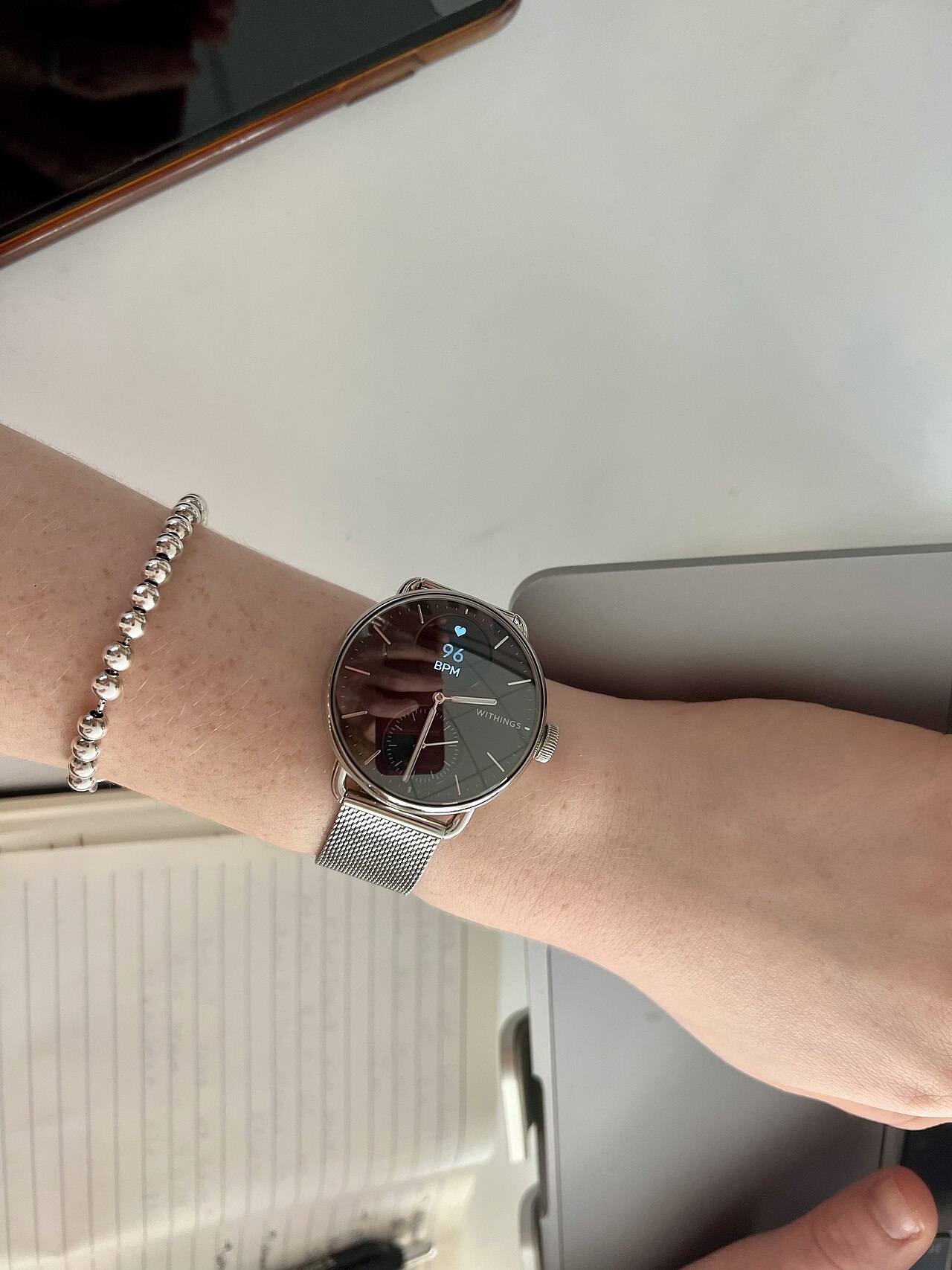
Most health tracking wearables make a visual statement that says "technology device." The Withings ScanWatch 2 makes a different statement entirely. From across a room, it looks like a classic Swiss-inspired dress watch — analog hands, round case, leather or stainless steel band, sapphire crystal glass. The tiny OLED subdial at six o'clock that displays step counts, heart rate, and battery level is barely visible at normal conversational distance. For users who have rejected fitness trackers and smartwatches because they don't want to wear something that looks like a tech device, the ScanWatch 2 is the answer.
What makes the ScanWatch 2 remarkable is how much medical-grade health technology is concealed beneath that traditional exterior. Withings — the French health technology company that pioneered connected smart scales and has maintained strong ties to clinical research — has packed medical-grade ECG with AFib detection, a proprietary Respiratory Scan system, optical heart rate monitoring, SpO2, skin temperature tracking, and comprehensive sleep monitoring into a 38mm case that runs for 30 days between charges.
At $349, the ScanWatch 2 is positioned at the same price as the Google Pixel Watch 3 but offers a radically different proposition: less smart functionality, far more battery life, a completely different aesthetic philosophy, and medical-grade health sensor credentials.
Design & Display
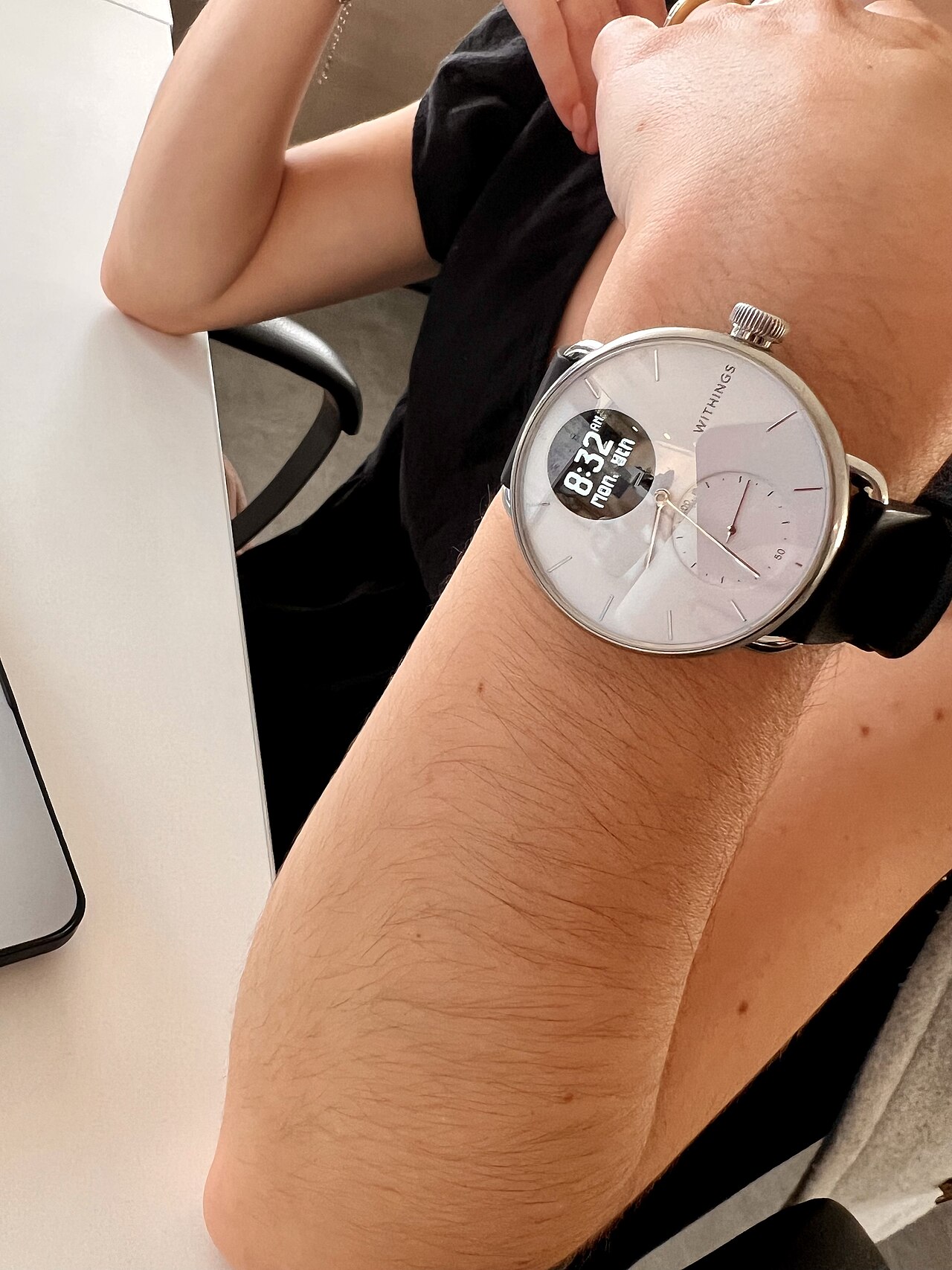
The ScanWatch 2's design philosophy is the most distinctive in the wearable category. Rather than optimizing a watch face display for data density, Withings chose to preserve the analog watch dial as the primary visual element and relegate digital information to a small subdial — a compromise between classic watch aesthetics and health tracking utility.
Susie Felber / Wikimedia Commons (CC0)
The 38mm case is available in white or black, with a stainless steel case and either a stainless steel bracelet or leather strap. The sapphire crystal glass provides scratch resistance that is genuinely superior to Gorilla Glass in daily wear — high-end mechanical watchmakers use sapphire for a reason. The 30-day battery life means you wear the ScanWatch 2 continuously for weeks at a time without interruption, which contributes to its traditional watch character.
The small OLED subdial displays one metric at a time: the current step count, heart rate reading, battery level, or a notification icon. It's a functional information channel but not a rich display experience. For users who want to read detailed health data, the Health Mate app on the paired smartphone is the primary interface. The watch is the sensor; the phone is the display. This is a deliberate product philosophy that diverges from every smartwatch in the category.
The overall aesthetic result is a watch that genuinely belongs in formal environments — business meetings, dinners, events — where an Apple Watch Ultra 2 or Garmin Fenix 7 Pro would feel conspicuously out of place. No other health tracking device in the wearable market successfully occupies this space.
Health & Fitness Tracking
The ScanWatch 2's most impressive health credential is its medical-grade ECG. Withings has pursued clinical validation more aggressively than most consumer wearable manufacturers, and the ScanWatch 2's ECG carries CE Class IIa medical device certification in Europe and FDA 510(k) clearance in the United States for atrial fibrillation detection. Users initiate ECG readings by touching the side button, which completes the electrical circuit from the heart sensor in the watch back through the user's finger. The resulting rhythm trace is viewable in the Health Mate app and can be shared with a cardiologist in PDF format.
Respiratory Scan is Withings' proprietary differentiation in the ScanWatch 2. Beyond standard SpO2 monitoring (which measures blood oxygen saturation), Respiratory Scan combines SpO2 with breathing irregularity detection during sleep — identifying breathing disturbances that correlate with sleep-disordered breathing patterns. Withings partnered with clinical researchers to validate this metric against polysomnography (the clinical gold standard for sleep apnea diagnosis). The result isn't a medical diagnosis tool, but it provides a credible screening indicator for users concerned about sleep breathing issues.
Sleep tracking covers all four sleep stages with a Sleep Score and a dedicated Snoring Detection algorithm that uses the watch's accelerometer to detect snoring vibrations. The Health Mate app provides a comprehensive sleep dashboard that includes estimated respiratory disturbances per hour — the metric used clinically to classify sleep apnea severity — as a trend indicator.
Heart rate monitoring runs continuously via the optical HR sensor. The V02 Max estimation protocol requires a 12-minute outdoor walking test, producing a fitness score that Withings tracks over time as a cardiovascular fitness indicator. Skin temperature monitoring is used to detect unusual nightly variations.
Step counting, calorie estimation, elevation tracking (using the barometric altimeter), and activity auto-detection for walking, running, and swimming complete the fitness tracking feature set. Running route tracking requires a connected phone — the ScanWatch 2 lacks built-in GPS, using the phone's GPS chipset instead. This is a meaningful limitation for runners who want accurate route records without phone dependency.
Battery Life
30 days of battery life is the ScanWatch 2's signature achievement and the feature that makes the device's analog design philosophy viable. Traditional smartwatches require daily or every-other-day charging; the ScanWatch 2 can be worn continuously through an entire month's worth of health data collection on a single charge. The charging ritual — connecting Withings' magnetic charging cable for approximately two hours once per month — is so infrequent that the ScanWatch 2 feels like a passive health device that happens to need occasional attention rather than a daily technology dependency.
This battery profile is made possible by the analog watch architecture: the watch hands are driven by a traditional quartz movement, the OLED subdial is low-power by nature, and the digital health sensors run at optimized sampling frequencies rather than continuous full-power operation. The resulting health data is still comprehensive — Withings' algorithms extract strong signal from appropriately sampled data — but it requires different engineering trade-offs than an always-on AMOLED smartwatch.
For sleep tracking specifically, the 30-day battery means the ScanWatch 2 never needs to be removed at night for charging. Every night contributes to the sleep database, creating the most comprehensive long-term sleep dataset possible. Users who want to detect gradual changes in sleep quality over months — respiratory health trends, seasonal variation — benefit from the ScanWatch 2's uninterrupted tracking capability.
Withings Health Mate & Ecosystem
The Health Mate app is Withings' unified health platform, connecting the ScanWatch 2 with Withings' broader ecosystem including the Body+ smart scale, BPM Core blood pressure monitor, and other Withings health devices. For users invested in the Withings ecosystem, the cross-device health correlation — weight trend vs. sleep quality vs. heart health vs. activity level — provides a more holistic long-term health picture than any single-device platform.
Health Mate works with both iPhone and Android. Integration with Apple Health, Google Fit, and medical record platforms allows ScanWatch 2 data to flow into broader health databases. The ECG PDF export is specifically designed for physician review, providing a clinical-format rhythm trace rather than a consumer-friendly summary.
Smartwatch notification handling is basic: the ScanWatch 2 vibrates and displays a notification icon and sender name on the OLED subdial for incoming calls, texts, and app alerts. There is no interaction capability — you can acknowledge that a notification arrived, but you cannot read its full content, respond, or dismiss it from the watch. This limitation is appropriate for the device's design philosophy but will frustrate users who expect smartwatch-level notification interaction.
Withings ScanWatch 2 vs Garmin Venu 3
The comparison between the ScanWatch 2 and the Garmin Venu 3 illustrates the category's breadth. Both are premium health-focused smartwatches at approximately similar price points ($349 vs. $449). The Venu 3 offers a vibrant AMOLED display, 14-day battery, Garmin's deeper training analytics, and Garmin Pay NFC payments. The ScanWatch 2 offers 30-day battery, medical-grade ECG certification, Respiratory Scan, and an analog aesthetic that looks nothing like a tech device.
The choice is fundamentally aesthetic and philosophical: do you want a modern smartwatch that can do everything well, or a watch that looks like a traditional timepiece and focuses on medical-grade health sensing with exceptional battery life?
Who Should Buy It?
The Withings ScanWatch 2 is the ideal choice for health-conscious adults who want comprehensive medical-grade health monitoring — particularly ECG and respiratory health tracking — in a watch that looks like a traditional dress watch rather than a tech device. Professionals who wear the watch in formal environments, users with specific cardiac or respiratory health concerns who want validated monitoring tools, and anyone who prioritizes never having to think about charging their watch will find the ScanWatch 2 uniquely compelling.
Fitness athletes who need built-in GPS, active sports tracking, or training analytics should look at Garmin or Polar devices instead. Users who want rich smartwatch notification management, NFC payments, or app ecosystems should look at Apple Watch, Samsung Galaxy Watch, or Google Pixel Watch.
Verdict
The Withings ScanWatch 2 occupies a uniquely valuable position in the wearable market: the best health tracking device for users who refuse to wear something that looks like a fitness tracker. Its medical-grade ECG, Respiratory Scan, 30-day battery, and sapphire crystal construction create a health monitoring instrument disguised as a classic watch — a device for cardiologists' waiting rooms, boardrooms, and formal dinners as much as for morning runs.
The analog display's information limitations are real, and the absence of built-in GPS and NFC payments are meaningful feature gaps compared to full smartwatches at the same price. But for the buyer who has been waiting for health-tracking technology that respects traditional watch aesthetics, the ScanWatch 2 has no equal.